
Best Crypto Cards in Switzerland (2026)
Compare 36 crypto cards available in Switzerland. Zero capital gains tax for private investors, FINMA-regulated issuers, and Crypto Valley innovation.
Verified for Switzerland
50 crypto cards available
Local currency: CHF
Switzerland does not tax capital gains on crypto for private investors. This single fact changes every calculation. In France, 30% of your gains vanish when you spend through a card. In Germany, you need to hold for a year. In Italy, gains are taxed at 26% (rising to 33% in 2026). In Switzerland, you can spend BTC that has appreciated 1,000% through a crypto card and keep every franc of cashback tax-free.
There is no holding period, no threshold, no exemption to track. The gain simply is not taxed.
This makes Switzerland the most profitable country in Europe for crypto card spending. A Swiss resident earning 8% cashback on CHF 5,000/month in card spending collects CHF 4,800/year in pure, untaxed profit. The same spending in Germany would generate EUR 4,800 in cashback but potentially trigger thousands in capital gains tax on the crypto sold to fund it. In Switzerland, the cashback is the entire story.
The second layer is FX savings. Switzerland uses the Swiss franc (CHF), one of the world's strongest and most volatile major currencies. Every EUR, USD, or GBP transaction through a UBS or Raiffeisen debit card triggers a 1.5-2.5% FX markup. A crypto card with 0% FX eliminates this on all foreign-currency spending. Between zero CGT and zero FX, a Swiss crypto card user operates in the most favorable financial environment on the continent.
| Card | Max Cashback | Annual Fee | FX Fee | Card Type | Why It Fits Switzerland |
|---|---|---|---|---|---|
| Bitget | 8% BGB | Free | 0% + 0.9% tx | Debit | Highest net return (7.1%) in zero-CGT Switzerland |
| Gnosis Pay | 5% GNO | Free | 0% | Debit | Self-custody for Crypto Valley |
| Kolo | 5% BTC | Free | 0% | Prepaid | 5% BTC cashback, $5/txn cap, $200/mo cap |
| Tria Signature | 4.5% | $109/yr | 0% | Visa Signature | Self-custody, 0% FX, Visa perks |
| Crypto.com Icy | 4% | CRO stake | 0% | Prepaid | Zurich/Geneva lounge access, metal card |
| Plutus | 9% | EUR 6.99-19.99/mo | 2.5% | Debit | Perk rebates only (2.5% FX penalizes CHF spending) |
| Bitpanda | 1% | Free | 0% | Debit | DACH neighbor, 600+ assets |
We tested all major cards for Swiss residents - Bitget delivers up to 8% BGB cashback (7.1% net after the 0.9% transaction fee) and benefits from Switzerland's zero CGT: with no tax erosion, the effective return exceeds every other country's net-of-tax yield.
Gnosis Pay earns 5% GNO through one of the stronger reward cards with self-custody from a Safe wallet, a natural fit for the Crypto Valley ecosystem where on-chain sovereignty is a professional value. Kolo delivers 5% BTC cashback with zero FX and no annual fee - the $5/transaction cap and $200/month cap limit total rewards but the zero-cost entry makes it an easy secondary card.
Tria Signature offers 4.5% yield-linked rewards with self-custody and 0% FX at $109/year - strong for professionals who want Visa Signature perks alongside their crypto.
Plutus reaches up to 9% with subscription rebates (1-3 perks), but the 2.5% non-domestic FX fee hits every CHF transaction since the card settles in EUR. Bitpanda, headquartered in neighboring Vienna with BaFin regulation, offers the simplest DACH-native entry at 1%.
Best Card For Every Need in Switzerland
Top 5 Crypto Cards in Switzerland
Zero capital gains tax for private investors means every franc of cashback and every appreciated-asset disposal is pure profit in Switzerland - no tax drag whatsoever, making this the highest effective-return country in Europe for crypto card spending.
Bitget leads at 8% (7.1% net after 0.9% tx fee) with zero tax erosion. Gnosis Pay earns 5% GNO cashback with self-custody from a Safe wallet - a natural fit for the Crypto Valley (Zug) ecosystem. Kolo provides 5% BTC cashback at zero cost ($5/txn cap, $200/mo cap).
Tria Signature offers 4.5% yield-linked rewards with self-custody and 0% FX. Crypto.com Icy delivers 4% CRO cashback plus Zurich/Geneva lounge access. All five have 0% FX fees, critical because Switzerland uses CHF (not EUR) and Swiss bank cards charge 1.5-2.5% on non-CHF purchases.
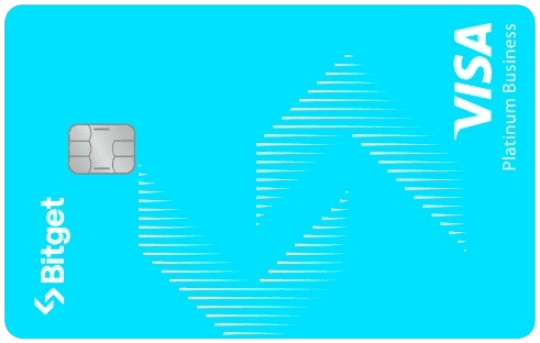
1. Bitget Card
Trade and Spend: Up to 8% BGB Cashback for Bitget Traders
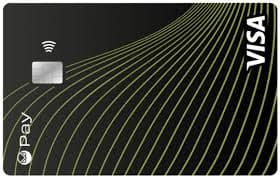
2. Gnosis Pay Card
Your Keys, Your Card, Your Money
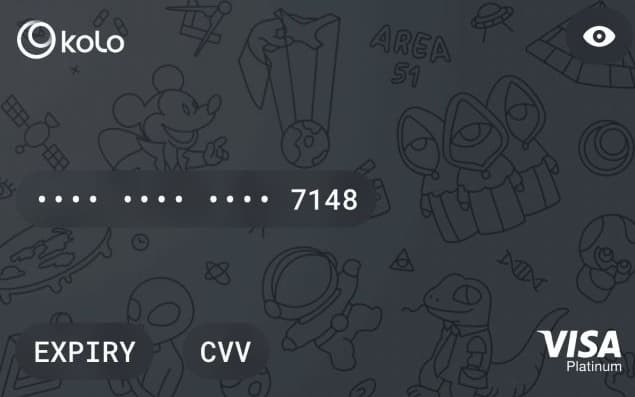
3. Kolo Card
Earn Bitcoin on Every Purchase: 5% BTC Cashback + Visa Platinum + 170+ Countries
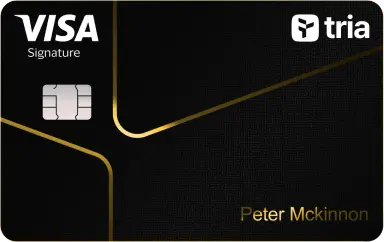
4. Tria Signature Card
High-Yield Mastery: 15% APY + Visa Signature Perks
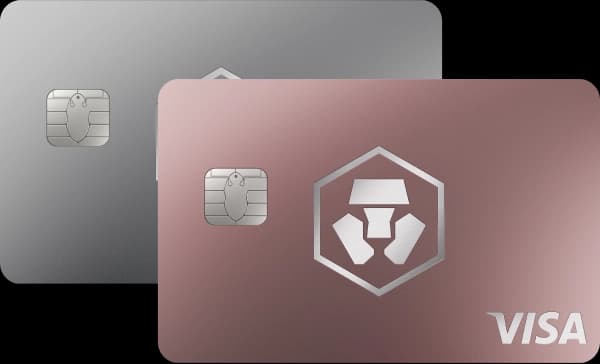
5. Private (Icy White / Rose Gold)
Elite Private Status: 4% Uncapped Cashback + Guests
Crypto Card Regulation in Switzerland
Switzerland is not in the EU or EEA. It does not fall under MiCA. Instead, FINMA (Eidgenossische Finanzmarktaufsicht, Swiss Financial Market Supervisory Authority) regulates financial services including crypto under existing Swiss financial market laws: the Banking Act (BankG), the Financial Market Infrastructure Act (FinfraG), the Anti-Money Laundering Act (GwG), and the DLT Act.
The DLT Act (Bundesgesetz zur Anpassung des Bundesrechts an Entwicklungen der Technik verteilter elektronischer Register), which entered force in stages between August 2021 and August 2022.
Switzerland's approach is principles-based rather than crypto-specific. FINMA classifies tokens into three categories: payment tokens (BTC, ETH), utility tokens, and asset tokens (securities). This taxonomy, published in FINMA's 2018 ICO Guidelines and updated in subsequent guidance, determines which regulations apply. Payment tokens used for card spending fall under AML requirements but not securities regulation.
FINMA-licensed crypto banks operate in Switzerland: Sygnum (Zurich, full banking license since August 2019) and AMINA (formerly SEBA Bank, Zug, full banking license since August 2019). Both offer institutional-grade custody, trading, and tokenization. Bitcoin Suisse operates as a regulated financial intermediary under FINMA's SRO (Self-Regulatory Organization) framework and has been processing crypto transactions in Switzerland since 2013.
None of these institutions currently offer Visa/Mastercard consumer spending cards in our comparison, but they provide Swiss-regulated on-ramps and custody.
Crypto Valley in Zug is the world's densest blockchain ecosystem. The Canton of Zug began accepting BTC for municipal tax payments in 2016. The Ethereum Foundation is headquartered in Zug. Cardano (IOHK), Polkadot (Web3 Foundation), Solana Foundation, Tezos Foundation, Dfinity, and hundreds of blockchain startups are incorporated in the Zug-Zurich corridor. This concentration means crypto card adoption in Switzerland is not an early-adopter novelty.
It is infrastructure used by professionals who build blockchain technology for a living.
FinIA reform (October 2025): The Federal Council launched a public consultation on amendments to the Financial Institutions Act (FinIA), proposing two new FINMA-supervised license categories. Payment instrument institutions replace the fintech license, remove the CHF 100 million deposit cap, and allow issuance of stablecoins pegged to a single fiat currency with full backing and par redemption.
Crypto-institutions cover custody and trading of crypto-based assets under direct FINMA supervision, lighter than a securities firm license. The consultation closed February 2026 and implementation is expected 2026-2027. These categories will replace the existing SRO framework for virtual asset trading platforms.
CARF (Crypto-Asset Reporting Framework): Switzerland has committed to implementing the OECD's CARF for automatic exchange of crypto-related information between tax authorities. Swiss crypto service providers will report user transaction data to the Federal Tax Administration (ESTV/AFC), which will share it with partner jurisdictions. Implementation is expected 2026-2027, aligning with the EU's DAC8 timeline.
Card issuer access: Despite Switzerland's non-EEA status, most EEA-licensed crypto card issuers serve Swiss residents. Switzerland has bilateral agreements with the EU that facilitate cross-border financial services. Bybit, Bitget, Crypto.com, Gate.io, KuCoin, Kraken, Plutus, Gnosis Pay, Bitpanda, Wirex, Ready, Bleap, and others all include Switzerland in their European coverage.
PostFinance (Swiss post bank) launched crypto trading in early 2024 through a partnership with Sygnum, further normalizing crypto in mainstream Swiss banking.
Tax Treatment of Card Rewards in Switzerland
Capital gains on movable private assets, including crypto, are tax-free for individual private investors in Switzerland. This is not a special crypto rule. It is a general principle of Swiss tax law (Art. 16 para. 3 DBG, Federal Direct Tax Act). Spending crypto through a card, selling crypto on an exchange, or swapping crypto all generate zero capital gains tax for a private investor.
The professional trader exception (gewerbsmassiger Handler):
The one risk to zero-CGT status is being classified as a professional trader. The Federal Tax Administration (ESTV/AFC) and cantonal tax authorities assess professional status based on criteria published in ESTV Circular No. 36 (updated 2024):
- Holding period: Short holding periods (frequent day-trading) indicate professional activity
- Volume: Trading volume significantly exceeding your other income
- Leverage: Use of margin or borrowed capital for trading
- Frequency: Very high number of transactions
- Income share: Crypto gains representing the majority of your total income
- Third-party funds: Trading on behalf of others
No single criterion is decisive. A Swiss resident who buys BTC, holds it for years, and spends it through a crypto card is clearly a private investor. A person executing hundreds of leveraged trades monthly with crypto as their primary income source risks professional classification.
If classified as professional: Gains become self-employment income, taxed at cantonal income tax rates (varying by canton, approximately 22-42% including federal, cantonal, and communal taxes) PLUS AHV/IV social contributions (approximately 10.6% for self-employed individuals). This is severe. The difference between private (0%) and professional (32-52%) is the widest tax gap in European crypto.
Wealth tax (Vermogenssteuer):
Switzerland levies an annual wealth tax on net assets, including crypto holdings. The rate varies dramatically by canton:
| Canton | Wealth Tax Rate (approx.) | Crypto Profile |
|---|---|---|
| Zug | 0.15-0.35% | Crypto Valley, lowest wealth tax |
| Schwyz | 0.15-0.30% | Low-tax neighbor to Zug |
| Zurich | 0.35-0.65% | Largest city, highest crypto density |
| Geneva | 0.45-1.0% | International finance hub |
| Basel-Stadt | 0.55-0.80% | Pharma/biotech hub |
| Ticino | 0.30-0.50% | Italian-speaking, moderate |
You must report crypto holdings at their December 31 market value on your cantonal tax return. The ESTV publishes official crypto valuations (Kursliste) for major tokens annually. For tokens not on the ESTV list, use the exchange rate on December 31 from a recognized exchange. This means your taxable wealth includes all crypto held in personal wallets, exchange accounts, and staked positions.
Worked example: Crypto Valley resident (Zug)
| Scenario | Crypto Holdings | Wealth Tax (Zug, 0.25%) | CGT | Annual Tax Cost |
|---|---|---|---|---|
| CHF 100,000 in BTC | CHF 100,000 | CHF 250 | CHF 0 | CHF 250 |
| CHF 500,000 in ETH | CHF 500,000 | CHF 1,250 | CHF 0 | CHF 1,250 |
| CHF 1,000,000 mixed | CHF 1,000,000 | CHF 2,500 | CHF 0 | CHF 2,500 |
Even at CHF 1 million in holdings, the annual wealth tax in Zug is CHF 2,500. Compare this to France (30% flat tax on every disposal) or Austria (27.5% on every gain). Switzerland's wealth tax is a rounding error.
Cashback treatment: Since there is no CGT, cashback received in BTC, GNO, PLU, or any other token is not taxed on receipt or when spent. The tokens become part of your December 31 wealth calculation. A Swiss resident earning CHF 5,000/year in crypto cashback adds CHF 5,000 to their taxable wealth, costing approximately CHF 12.50-50 in wealth tax depending on canton. The effective tax rate on cashback is under 1%.
We verified this as of 2026: no stablecoin strategy needed. Unlike almost every other country covered on this site, Swiss residents should spend whatever crypto maximizes their cashback. There is no tax penalty for spending appreciated BTC or ETH. The freedom to spend any token without tax consequence is Switzerland's greatest advantage for crypto card users.
How to Apply from Switzerland
Swiss crypto card applications require a Schweizer Identitaetskarte / Carte d'identite suisse (Swiss national ID card) or Schweizer Pass (Swiss passport) for citizens. Foreign residents present their Auslaenderausweis (residence permit): B-permit (annual renewable), C-permit (permanent settlement), or L-permit (short-term). The AHV-Nummer / Numero AVS (13-digit social security number, format 756.XXXX.XXXX.XX) may be required by some issuers for tax reporting purposes.
Proof of address via Wohnsitzbestaetigung (certificate of residence from your Gemeinde/Commune, typically free or CHF 10-20), utility bills from Axpo or Alpiq (electricity), Swisscom or Sunrise (telecoms), or bank statements from UBS, ZKB, Raiffeisen, PostFinance, or Cantonal Banks. The Wohnsitzbestaetigung is the most universally accepted Swiss proof of address and can be requested at your local Einwohnerkontrolle.
EU/EEA citizens with Swiss residency use their home-country passport or ID plus Swiss residence permit. Swiss banks already perform thorough KYC (driven by FINMA's AML framework and Switzerland's FATF membership), so Swiss residents are well-documented by default.
Physical cards ship to Swiss addresses within 7-14 business days via Die Post / La Poste. Virtual cards are available immediately for Apple Pay and Google Pay.
Spending Tips for Switzerland
What Swiss Bank Cards Actually Cost You
Switzerland's retail banking sector is dominated by UBS (absorbed Credit Suisse in June 2023, now the world's largest wealth manager), Zuercher Kantonalbank (ZKB) (Canton of Zurich's state-guaranteed bank), Raiffeisen (cooperative banking network, 800+ branches, Switzerland's third-largest bank), and PostFinance (Swiss Post's banking arm, 1.5 million customers).
Standard debit cards from all four earn zero cashback. UBS charges CHF 5-10/month for its personal banking packages (UBS Personal, UBS Comfort). ZKB's ZKB privat runs CHF 3.50-8/month. Raiffeisen's account packages cost CHF 2-6/month. PostFinance charges CHF 5-7/month for PostFinance e-finance. Annual banking cost: CHF 24-120/year before any transaction fees.
FX fees are where Swiss banks extract the most value. UBS, ZKB, and Raiffeisen all charge 1.5-2.5% on non-CHF card transactions. Given that EUR, USD, and GBP transactions are routine for Swiss residents (EUR-priced online shopping, holiday spending across five bordering countries, USD-billed subscriptions), the FX cost compounds rapidly.
| Category | UBS Debit Card | Crypto Card (Bitget 7.1% net) | Annual Difference |
|---|---|---|---|
| Annual fee | CHF 60-120 | CHF 0 | CHF 60-120 saved |
| Cashback on CHF 5,000/mo | CHF 0 | CHF 4,260 | CHF 4,260 earned |
| FX on CHF 1,500/mo non-CHF | CHF 270-450 | CHF 0 | CHF 270-450 saved |
| Total annual advantage | - | - | CHF 4,590-4,830 |
CHF 4,200+ per year, entirely tax-free. At Swiss cost of living, that covers 2-3 months of groceries at Migros or Coop, or a year's worth of SBB Half-Fare travelcard renewals.
Spend Appreciated Crypto Freely
This is the core strategic difference between Switzerland and nearly every other country on this site. In most countries, we advise USDC funding to avoid capital gains tax. In Switzerland, spend whatever you want. If your ETH is up 500%, spend the ETH. The gain is not taxed. If your BTC doubled, spend the BTC. Zero tax.
The only considerations are:
- Wealth tax timing: If you plan to spend down holdings, doing so before December 31 reduces your taxable wealth for the year. A CHF 100,000 reduction in December 31 holdings saves CHF 250-1,000 in wealth tax depending on canton.
- Professional trader risk: Keep your trading frequency reasonable. Holding and spending through cards does not trigger professional classification. Aggressive short-term trading might.
- Maximize cashback rate: Since tax does not erode returns, chase the highest cashback. Bitget at 7.1% net returns CHF 4,260/year on CHF 5,000/month spending, all of it yours.
Card Selection for Swiss Residents
- Bitget (up to 8%, 7.1% net): Highest return in a zero-CGT jurisdiction. Zero FX fee and no annual fee maximize the untaxed cashback.
- Plutus (up to 9%): Subscription rebates on Netflix (CHF 12.90-25.90/mo), Spotify (CHF 12.90/mo), and Amazon Prime. However, 2.5% FX on all CHF transactions (EUR-settled card) and no free tier (Starter GBP 6.99/mo) reduce net value. Most Swiss residents earn more from a zero-FX alternative at typical spending levels.
- Crypto.com Icy (4%): Best for frequent flyers. crypto cards with airport lounges at Zurich Airport (ZRH, Switzerland's main hub), Geneva Airport (GVA), and international Priority Pass lounges. ZRH is a major hub for SWISS/Lufthansa.
- Gnosis Pay (5% GNO): Best self-custody option. Spend from a Safe wallet with 0% FX. In Crypto Valley, this is not an exotic feature, it is the expectation.
- Tria Signature (4.5%): Self-custody Visa Signature at $109/year with 0% FX. Visa Signature perks (auto rental CDW, baggage protection, concierge) add value for frequent travelers.
- ether.fi (3%, 1% FX): Even in zero-CGT Switzerland, borrowing against staked ETH has value: you preserve your staked position and earn staking yield while spending. The 1% FX fee reduces net return but yield preservation justifies it for large ETH holders.
- Bitpanda (1%): DACH-native from Vienna, simplest setup. Popular with Swiss-German speakers who prefer a familiar regional brand.
- Kolo (5% BTC): Zero-cost entry at 5% BTC cashback. The $5/transaction cap and $200/month cap limit total rewards to CHF 2,400/year, but zero annual fee and zero FX make it an ideal secondary card.
- KAST (2%): The KAST Card starts at 2% POINTS with 0.5% FX and no annual fee. Higher tiers exist but require significant annual spend.
Cost of Living Context: Why Cashback Matters More in Switzerland
Switzerland is the most expensive country in Europe. Monthly costs for a single professional:
- Zurich: CHF 1,800-2,800 rent (1-bedroom, Kreis 3/4/5 central, Oerlikon/Altstetten cheaper), CHF 500-700 groceries, CHF 200-350 dining out, CHF 80-150 transit (ZVV monthly)
- Geneva: CHF 1,600-2,500 rent, CHF 450-650 groceries (slightly cheaper than Zurich), CHF 200-300 dining
- Basel: CHF 1,200-2,000 rent, CHF 400-600 groceries
- Zug: CHF 1,500-2,400 rent (Crypto Valley premium), CHF 400-600 groceries
- Bern: CHF 1,100-1,800 rent, CHF 400-550 groceries
Total monthly living costs (excluding rent): CHF 2,000-3,500. This is card-eligible spending. At 8% cashback on CHF 3,000/month: CHF 2,880/year, tax-free. At Switzerland's prices, that is meaningful money, roughly equivalent to a ski weekend in Zermatt or Verbier.
Spending Scenario: CHF 5,000/month Zurich Professional
| Category | Monthly | Annual | Where It Goes |
|---|---|---|---|
| Groceries | CHF 600 | CHF 7,200 | Migros, Coop, Aldi, Lidl |
| Dining/coffee | CHF 500 | CHF 6,000 | Restaurants, Starbucks, local cafes |
| Transport | CHF 200 | CHF 2,400 | ZVV, SBB, occasional taxi |
| Subscriptions | CHF 250 | CHF 3,000 | Spotify, Netflix, gym, cloud, insurance apps |
| Shopping | CHF 1,500 | CHF 18,000 | Manor, Globus, Bahnhofstrasse, Jelmoli |
| Healthcare co-pay | CHF 200 | CHF 2,400 | Pharmacy, dental, specialist visits |
| Travel/leisure | CHF 1,750 | CHF 21,000 | SBB, flights, hotels, ski passes |
Total: CHF 60,000/year. At Bitget's 7.1% net (8% minus 0.9% tx fee): CHF 4,260/year, entirely tax-free. Add CHF 900-1,500 in FX savings on non-CHF spending. Total annual value: CHF 5,160-5,760. That is a week's ski holiday in Verbier, paid for by switching from a UBS debit card to a crypto card.
Local Payment Infrastructure: Migros, Coop, and TWINT
Migros and Coop are the two dominant Swiss retailers, together controlling approximately 70% of the grocery market. Both accept contactless Visa/Mastercard at every location (Migros: 600+ stores, Coop: 900+ stores). Aldi Suisse (200+ stores), Lidl Schweiz (160+ stores), Denner (800+ stores, Migros subsidiary), and Volg (600+ rural stores) similarly accept contactless.
TWINT is Switzerland's dominant mobile payment app, equivalent to Sweden's Swish. Developed jointly by UBS, Credit Suisse (now UBS), ZKB, Raiffeisen, PostFinance, and Swisscom, TWINT has 5+ million active users. TWINT is bank-linked and does not work with crypto cards. It handles P2P payments, some merchant QR-code payments, and parking. For all card-terminal spending (which is the vast majority of Swiss retail), a crypto card replaces your bank debit card directly.
SBB/CFF/FFS (Swiss Federal Railways): The SBB app and ticket machines accept contactless Visa/Mastercard. SBB Half-Fare travelcard (CHF 185/year) can be purchased by card. ZVV (Zurich), TPG (Geneva), BVB (Basel), and Bernmobil all accept contactless at ticket machines and increasingly at gates.
Apple Pay and Google Pay adoption is very high in Switzerland. Samsung Pay also has Swiss market presence.
Cross-Border Spending: Five Countries Within an Hour
Switzerland borders five countries, creating extensive cross-border spending opportunities:
Germany (EUR): Konstanz, Lorrach, Waldshut, and other German border towns are regular shopping destinations for Swiss residents seeking lower prices. German groceries are 30-40% cheaper than Swiss equivalents. A Zurich or Basel resident doing a monthly CHF 200-400 grocery run in Germany saves CHF 60-160 on prices and an additional CHF 3-10 in FX fees with a zero-FX crypto card.
France (EUR): Geneva residents shop in neighboring Haute-Savoie (Annemasse, Ferney-Voltaire, Divonne-les-Bains) where prices are 20-35% lower than Geneva. The border is minutes away. French supermarkets (Carrefour, Leclerc, Intermarche) accept contactless.
Italy (EUR): Ticino residents cross into Como, Varese, and Milan for shopping and dining at Italian prices. Lugano to Milan is 80 km.
Austria (EUR): Eastern Swiss residents (St. Gallen, Appenzell) shop in Bregenz and the Vorarlberg region. Prices are 15-25% lower.
Liechtenstein (CHF): Uses the Swiss franc, so no FX applies. Vaduz shopping is niche but card-accepting.
All four EUR-border countries trigger 1.5-2.5% FX fees on Swiss bank cards. A zero-FX crypto card eliminates this across every border crossing.
Supported Exchanges & Wallets in Switzerland
Switzerland's crypto infrastructure is among the world's deepest. Bitcoin Suisse (founded 2013, Zug) is the longest-operating Swiss crypto financial intermediary, regulated under FINMA's SRO framework.
Sygnum Bank (FINMA banking license, Zurich/Singapore) and AMINA Bank (formerly SEBA, FINMA banking license, Zug) are fully licensed Swiss crypto banks offering custody, trading, tokenization, and staking. None of these institutions currently offer Visa/Mastercard consumer spending cards, but they provide FINMA-regulated on-ramps and custody that complement the card ecosystem.
PostFinance (1.5 million customers) launched crypto trading in partnership with Sygnum in early 2024, allowing Swiss residents to buy, sell, and hold BTC and ETH directly from their PostFinance app. This brought crypto access to mainstream Swiss banking customers who would never open an account at a crypto-native institution.
Among exchange-linked card issuers, Bitget provides up to 8% BGB cashback through its exchange card (0% FX, 0.9% transaction fee) and the wallet card via Immersve. Crypto.com offers CRO-staking metal cards with lounge access.
Gate.io, KuCoin, and Kraken provide additional exchange-linked options.
EEA-passported issuers serving Switzerland: Plutus with PLU-based subscription rebates and cashback tiers up to 9% (note: 2.5% FX fee on all non-EUR transactions penalizes CHF-based spending). Gnosis Pay for on-chain self-custody from a Safe wallet, earning 5% GNO.
Wirex with the Standard (free) and Elite (8%, EUR 29.99/mo). Bitpanda from Vienna, familiar across the DACH region. Ready for Starknet self-custody (the Lite Card is free with 0.5% STRK cashback). Bleap for account abstraction.
In a zero-CGT jurisdiction, ether.fi still offers strategic value: borrow against staked ETH to spend without selling your position, preserving staking yield. You do not need to borrow for tax reasons in Switzerland, but yield preservation is always smart. Nexo provides similar borrow-to-spend across a broader collateral range.
Self-custody card options: MetaMask (Virtual at 1%, Metal at 3%), Ledger CL Card (hardware wallet integration), Solflare and COCA for Solana and multi-chain users. 1inch Card (custodial via Baanx, 2% BXX cashback) rounds out the DeFi-adjacent options.
Global-reach alternatives: Tria with self-custody Visa cards up to 6% yield-linked rewards and 0% FX, Kolo with 5% BTC cashback at zero cost.
KAST starting at 2% POINTS with 0.5% FX, RedotPay with Virtual and Physical variants, xPlace with its Solana-based tiered system, and Jupiter for Solana ecosystem users.
Switzerland's combination of zero capital gains tax, FINMA regulatory clarity, the Crypto Valley ecosystem, and access to the full range of EEA-passported card issuers makes it the single most profitable country for crypto card spending in Europe. Every franc of cashback is yours to keep.
Written by SpendNode Editorial
Frequently Asked Questions
Is crypto card spending tax-free in Switzerland?
Yes, for private investors. Switzerland does not tax capital gains on movable private assets (Art. 16 para. 3 DBG). Professional traders are taxed at cantonal income rates (22-42% plus AHV). Annual wealth tax (0.15-1%) applies to crypto holdings reported on December 31st. CARF reporting begins 2026-2027.
Which crypto card is best for Swiss residents?
Bitget Card delivers up to 8% BGB cashback (7.1% net after 0.9% tx fee), 0% FX, zero annual fee. Gnosis Pay earns 5% GNO with self-custody. Kolo offers 5% BTC cashback at zero cost. Since Switzerland has zero CGT, all cashback is pure untaxed profit.
Do European crypto cards work in Switzerland?
Yes. Most European issuers serve Switzerland despite it not being in the EU/EEA. Bitget, Gnosis Pay, Crypto.com, Tria, Kolo, COCA, Plutus, and Bitpanda all accept Swiss residents under bilateral agreements.
How does Swiss wealth tax affect crypto holdings?
Cantons levy annual wealth tax on total net assets including crypto. Report market value on December 31st using ESTV/AFC-published valuations (Kursliste). Rates vary by canton (Zug 0.15-0.35%, Geneva 0.45-1%). Most cantons exempt the first approx. CHF 100,000 per person. This tax applies to holdings, not to card spending or cashback rewards.
Other Countries
View all 108 countries →


Recent Updates to Best Crypto Cards in Switzerland
- Fixed Gnosis Pay cashback from 4% to 5% (verified against source JSON)
- Fixed Crypto.com from generic 5% to Icy 4% (matching topCardSlugs)
- Fixed KAST from 'up to 12%' to 2% base with 0.5% FX
- Added Tria Signature (4.5%, 0% FX, self-custody) and Kolo (5% BTC, 0% FX, free) to table and recommendations
- Added ether.fi 1% FX fee disclosure
- Added FinIA reform (Oct 2025 consultation, two new FINMA license categories) and CARF reporting framework to regulatory section
- Fixed spending scenario from 8% gross to 7.1% net for consistency
- Updated topCardSlugs: replaced Plutus (2.5% FX) and ether.fi (1% FX, 3%) with Kolo and Tria
- Updated FAQs with CARF, wealth tax exemption threshold, corrected card recommendations