


Best Crypto Cards in Ireland (2026)
Compare crypto cards available in Ireland. Full EEA access with EUR settlement from a key licensing hub for European crypto card issuers.
Verified for Ireland
50 crypto cards available
Local currency: EUR
We compared fees for Irish residents against the Big Three banks: AIB charges EUR 5/quarter for a standard debit card with zero cashback. Bank of Ireland's fees are similar. Permanent TSB offers marginally better terms but still returns nothing on spending. All three charge 1.75-2% FX markup on every non-EUR transaction, which matters significantly for anyone who shops across the border in Northern Ireland (GBP) or buys from US-billed services.
Ireland's traditional banks are among the most unrewarding in the eurozone, and the 2023 exit of KBC Bank Ireland and Ulster Bank from the market reduced competition further.
Crypto cards fill this gap with 3-8% from cards with cashback on every purchase, zero FX fees (critical for Northern Ireland spending), and full EEA regulatory protection. Ireland is a eurozone member, so every EUR-denominated crypto card works at face value on domestic purchases.
Dublin's status as Europe's tech capital means the population skews tech-literate: the same tech workers at Google, Meta, Apple, and Stripe who understand crypto are the natural audience for crypto card products.
The dominant consideration for Irish users is tax. Ireland's 33% CGT on crypto gains is among the highest rates in Europe, and the double-taxation on crypto cashback (income tax on receipt plus CGT on subsequent disposal) is arguably the harshest in the EEA. Funding strategy and the EUR 1,270 annual CGT exemption require careful attention.
| Card | Max Cashback | Annual Fee | FX Fee | Type | Best For |
|---|---|---|---|---|---|
| Bitget | 8% | $0 | 0% + 0.9% tx | Debit | Highest raw cashback (BGB staking) |
| Plutus | 9% | EUR 6.99-19.99/mo | 2.5% | Debit | Domestic perk optimizer, subscription rebates |
| Tria | Up to 6% | $20-$250 | 0% | Debit | Yield-linked rewards, zero FX |
| Gnosis Pay | 5% GNO | $0 | 0% | Debit | Self-custody Visa |
| Kolo | 5% BTC | $0 | 0% | Prepaid | Highest free-tier BTC rewards |
| Crypto.com Icy | 4% | CRO stake | 0% | Prepaid | Metal + lounge access at DUB |
| ether.fi | 3% | $0 | 1% | Debit | Borrow against staked ETH (33% tax deferral) |
| KAST | 2% | $0 | 0.5% | Prepaid | Free prepaid for GBP-border spending |
| Wirex | 8% | $0 | 0% | Debit | Multi-currency + Northern Ireland GBP |
Bitget leads on raw return: 8% cashback (net 7.1% after 0.9% transaction fee) with 0% FX. Plutus targets domestic perk optimizers: subscription rebates (1-3 perks depending on plan) on top of up to 9% cashback, though the EUR 240/year Premium cost, EUR 1,000/month eligible spend cap, and 2.5% non-EUR FX fee restrict it to domestic spending. The rebates themselves may qualify as non-taxable perks rather than income.
ether.fi is the essential tax tool at Ireland's 33% rate: borrow against staked ETH to avoid triggering any disposal. Gnosis Pay provides self-custody at 5% GNO for DeFi users. Tria offers up to 6% with 0% FX and yield-linked rewards. Kolo delivers 5% BTC cashback at $0.
Best Card For Every Need in Ireland
Top 8 Crypto Cards in Ireland
Ireland's 33% CGT rate is the highest in the EEA - with only a EUR 1,270 annual exemption, a single month of crypto card spending can put you deep into taxable territory, making disposal avoidance the core strategy. Bitget leads on raw return (8% BGB staking, net 7.1%). Plutus reaches 9% with subscription rebates (1-3 perks), though the EUR 240/year cost and 2.5% FX on non-EUR purchases keep it domestic-only.
The essential Irish pick is ether.fi: borrow against staked ETH to avoid the 33% CGT entirely. Gnosis Pay provides self-custody spending from a Safe wallet. Wirex rounds out the list with multi-currency support useful for Irish users shopping on UK sites (GBP) post-Brexit, where FX savings stack on top of cashback.
1. Bitget Card
Trade and Spend: Up to 8% BGB Cashback for Bitget Traders
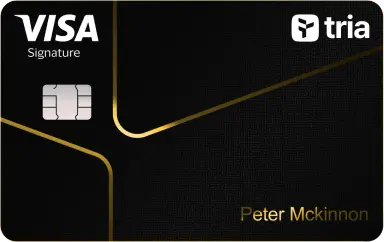
2. Tria Signature Card
High-Yield Mastery: 15% APY + Visa Signature Perks
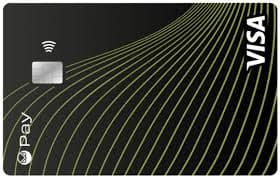
3. Gnosis Pay Card
Your Keys, Your Card, Your Money
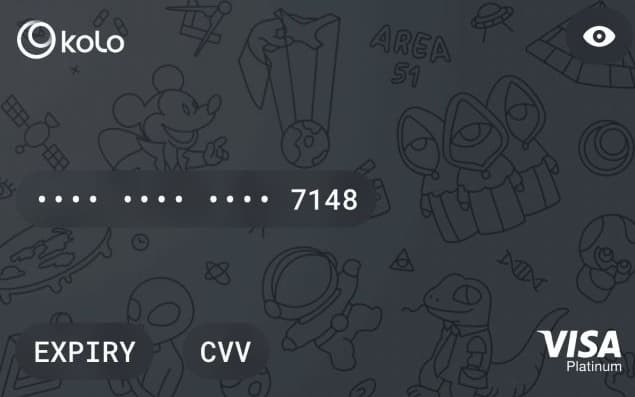
4. Kolo Card
Earn Bitcoin on Every Purchase: 5% BTC Cashback + Visa Platinum + 170+ Countries
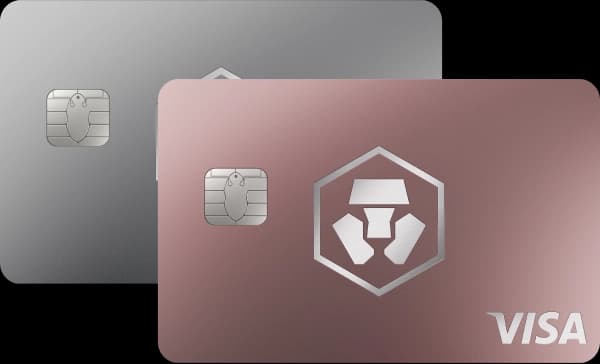
5. Private (Icy White / Rose Gold)
Elite Private Status: 4% Uncapped Cashback + Guests
6. Plutus Visa Card
Non-Custodial PLU Rewards on Eligible Spend + Lifestyle Perks

7. ether.fi Core Card
Zero Barriers: 3% Back on Every Purchase, No Stake Required
8. Wirex Standard Card
The Free Travel Essential: 0% FX Fees Worldwide
Crypto Card Regulation in Ireland
Central Bank of Ireland: Europe's Licensing Hub
The Central Bank of Ireland (CBI, Banc Ceannais na hEireann) regulates all financial services including crypto under the Criminal Justice (Money Laundering and Terrorist Financing) Act 2010 (as amended). Ireland has become one of the most important jurisdictions for EEA crypto licensing, partly due to Dublin's concentration of tech and fintech companies, and partly due to the CBI's thorough but business-oriented regulatory approach.
Under MiCA, the CBI is Ireland's designated competent authority for CASP (Crypto-Asset Service Provider) authorization. Ireland's significance in the European crypto sector extends beyond its domestic market: several major international crypto companies hold their primary European licenses through Irish entities. This means that when a card issuer states "EEA-licensed," the license may literally be Irish.
Revenue (the Irish Revenue Commissioners, Na Coimisineiri Ioncaim) handles all tax matters and has been particularly aggressive about crypto enforcement. Revenue has active data-sharing agreements with international exchanges and domestic financial institutions. The Tax and Duty Manual (TDM) Part 02-01-03 provides Revenue's published guidance on the tax treatment of cryptocurrency, updated regularly.
Revenue has also been proactive in issuing public notices about crypto reporting obligations. Under DAC8 (effective 2026), crypto platforms will automatically report Irish user transaction data to Revenue, further tightening compliance.
For crypto card users, Ireland's regulatory position is advantageous: EEA-licensed card issuers serve Ireland through MiCA passporting, and the CBI's oversight provides strong consumer protection.
Gnosis Pay operates under a Lithuanian EMI license, Plutus under UK/EU authorizations, and exchange cards from Bybit, Crypto.com, use EEA-licensed third-party issuers. Bitpanda holds its Austrian license valid across the EEA.
Revenue's data-sharing agreements mean that all crypto transactions on regulated exchanges are effectively visible to the Irish tax authority. Use only EEA-licensed issuers and maintain thorough records for your annual self-assessment.
Tax Treatment of Card Rewards in Ireland
33% CGT and the Double-Taxation Trap
Per our 2026 Ireland update, the crypto tax regime is among the most punitive in Europe. The headline rate is 33% Capital Gains Tax (CGT) on all crypto disposals, with a small EUR 1,270 annual exemption. But the true pain comes from the double-taxation structure on crypto cashback, which can push effective rates above 70%.
How the 33% CGT Works
Every disposal of cryptocurrency, including spending through a card, is a taxable event. The gain is calculated as the disposal value minus the allowable cost (acquisition price plus incidental costs). The 33% rate applies regardless of holding period. There is no distinction between short-term and long-term holdings. The EUR 1,270 annual exemption covers all capital gains from all sources combined (not just crypto).
The Double-Taxation Trap on Cashback
When you receive BTC cashback, Revenue treats it as income subject to your marginal income tax rate. Ireland's income tax has two bands: 20% (standard rate, up to EUR 42,000 for single filers) and 40% (higher rate, above EUR 42,000).
On top of income tax, you pay USC (Universal Social Charge, 0.5-8% depending on income level) and PRSI (Pay Related Social Insurance, 4% for employees). For a typical Dublin tech worker earning EUR 80,000+, the combined marginal rate on cashback received is approximately 52% (40% + 8% USC + 4% PRSI).
Then, when you later spend or sell that BTC cashback and it has appreciated, you owe 33% CGT on the gain. The combined burden:
Example: EUR 1,000 in BTC cashback. Received: income tax at 52% marginal = EUR 520 tax. BTC appreciates 50% to EUR 1,500 and you sell. Gain = EUR 500. CGT at 33% = EUR 165 (assuming exemption already used). Total tax: EUR 685 on EUR 1,500 of final value. Effective rate: 45.7%.
If the BTC triples instead of gaining 50%, the CGT portion grows further. This makes USDC cashback vastly preferable in Ireland.
Worked Tax Examples
Example 1: BTC spending. You acquired ETH at EUR 2,000. It appreciates to EUR 6,000. You spend EUR 600 through your card. Gain on portion sold = EUR 400. CGT = EUR 132 (33%). Your EUR 600 purchase cost EUR 732 after tax. If this is your only gain and it is under EUR 1,270, the exemption covers it and you owe EUR 0.
Example 2: USDC spending (optimal). Same EUR 600 spend, funded with USDC. Gain = EUR 0. Tax = EUR 0. Cost = exactly EUR 600. This is the only rational funding method in Ireland.
Example 3: Annual spending across the exemption threshold. Annual card spending of EUR 18,000, funded from ETH that has tripled. Gains portion = EUR 12,000. First EUR 1,270 is exempt (CGT = EUR 0). Remaining EUR 10,730 taxed at 33% = EUR 3,541. With USDC funding, total CGT = EUR 0. Annual saving: EUR 3,541.
Example 4: Borrow-to-spend (essential in Ireland). You hold 10 ETH worth EUR 30,000 (acquired at EUR 10,000). Instead of selling, you borrow EUR 3,000 via ether.fi and spend through the card. No disposal = no CGT. Your ETH continues staking at 3-4% APY. At 33%, deferring EUR 3,000 of gains saves EUR 990 per year. Over multiple years, the compounding deferral is substantial. This is arguably the most important card in Ireland.
| Funding Method | CGT Rate | Income Tax on Cashback | Combined Annual Impact (EUR 1,500/mo) |
|---|---|---|---|
| USDC/USDT (stablecoin) | 0% on disposal | 20-52% on cashback value | CGT-free; cashback taxed at income rate |
| BTC/ETH (3x appreciated) | 33% (after EUR 1,270 exemption) | 20-52% on cashback | approx. EUR 3,541 CGT on gains |
| PLU perks/rebates | N/A | Likely 0% (non-cash benefit) | Potentially tax-free |
| Borrow-to-spend (ether.fi, Nexo) | 0% (deferred) | 20-52% on cashback | EUR 0 current-year CGT |
The EUR 1,270 Exemption Strategy
The annual CGT exemption is small but free. If your only crypto disposals come from card spending and the total gains are under EUR 1,270, you pay zero CGT. At a typical monthly spend of EUR 1,500 funded with stablecoins, the disposal gains are near-zero, preserving the full EUR 1,270 exemption for any trading gains you realize during the year. Never waste the exemption on avoidable card spending gains.
Loss Carry-Forward
Ireland allows capital losses to be carried forward indefinitely (no time limit), which is more flexible than many EU jurisdictions. If you have accumulated crypto losses from past years, they can offset current-year gains from card spending. This makes Ireland one of the few countries where past losses provide ongoing tax relief on crypto card usage.
File CGT returns by October 31 (for gains January-September) and December 15 (for gains October-December) via Revenue Online Service (ROS). The split payment dates are unique to Ireland. Maintain records for 6 years.
How to Apply from Ireland
KYC: Irish Identity Documents
Irish crypto card applications require an Irish passport (pas Eireannach), Irish driving licence (ceadunas tiomana), or Public Services Card (PSC) for identity verification. The passport card (carta pas) is also accepted by most platforms. EU/EEA citizens can use their national ID card.
The PPS number (Personal Public Service Number, formerly RSI number, 7 digits + 1-2 letters) is required for all tax reporting to Revenue but is not always requested during initial card registration. Non-Irish EU residents with Irish tax residency will have been assigned a PPS number through Employment Services.
Proof of address: utility bill (Electric Ireland, Bord Gais, SSE Airtricity for electricity/gas; Irish Water for water charges), bank statement (AIB, Bank of Ireland, Permanent TSB), or Revenue correspondence (Notice of Assessment, Tax Credit Certificate). Eircode (Ireland's postcode system, format A65 F4E2) speeds up address verification with most EEA issuers.
Physical cards ship to Irish addresses within 5-10 business days via An Post or courier services. Virtual cards activate immediately and can be added to Apple Pay or Google Pay, both of which have very high adoption in Ireland.
Spending Tips for Ireland
The Irish Imperative: Stablecoin + Borrow-to-Spend
At 33% CGT and potential 52% income tax on cashback, Ireland demands the most disciplined funding strategy of any EEA country. The two-pronged approach: (1) fund all personal spending with stablecoins to eliminate CGT on disposal, and (2) use borrow-to-spend cards for any spending sourced from appreciated holdings.
The 33% CGT Cost of Wrong Funding
| Annual Spend: EUR 18,000 | ETH (3x appreciated) | USDC (stablecoin) | Difference |
|---|---|---|---|
| Gross cashback at 7.1% (Bitget net) | EUR 1,278 | EUR 1,278 | EUR 0 |
| CGT on disposal gains (33%) | EUR 3,541 | EUR 0 | EUR 3,541 |
| Income tax on cashback (40%+USC+PRSI) | EUR 665 | EUR 665 | EUR 0 |
| Net annual position | -EUR 2,928 | +EUR 613 | EUR 3,541 |
The ETH spender loses EUR 2,928 per year (CGT far exceeds net cashback). The USDC spender gains EUR 613 net after cashback income tax. The gap is EUR 3,541. At Ireland's tax rates, stablecoin funding is not a recommendation but a mathematical requirement.
Card Selection for Irish Residents
- ether.fi (3%, free): The most important card in Ireland. At 33% CGT, avoiding disposal events through borrowing is worth more than chasing higher cashback rates. Borrow against staked ETH, spend the loan, defer tax indefinitely. For anyone with significant appreciated crypto, this card should be the primary spending instrument.
- Bitget (net 7.1% after 0.9% tx fee): Highest raw cashback for USDC-funded daily spending. 0% FX for Northern Ireland GBP purchases.
- Plutus (3-9% + perks): The subscription optimizer. PLU rebates (Netflix EUR 13.99, Spotify EUR 10.99, Amazon Prime EUR 8.99) may be classified as non-cash benefits rather than income, potentially making them the most tax-efficient form of return in Ireland.
- Tria (up to 6%, 0% FX): Signature at 4.5% ($109/yr) or Premium at 6% ($250/yr). Yield-linked rewards avoid volatile token CGT exposure at Ireland's 33% rate.
- Gnosis Pay (5% GNO, free): Self-custody Visa from a Safe wallet. No staking requirements.
- Kolo (5% BTC, 0% FX, $0): Free BTC rewards on everyday spending. $5/txn cap, $200/mo cap.
- Crypto.com Icy (4%, CRO stake): Metal card with lounge access at Dublin Airport (DUB).
- KAST (2%, 0.5% FX, free): Prepaid option for Irish users who want GBP or US-billed subscriptions working before committing to a larger setup.
Break-Even: Bitget vs Plutus vs Gnosis Pay
| Monthly Spend | Bitget (7.1% net) | Plutus (3% + 3 perks) | Gnosis Pay (5%) |
|---|---|---|---|
| EUR 600 | EUR 511/yr | EUR 216 + approx. EUR 420 perks = EUR 636/yr | EUR 360/yr |
| EUR 1,000 | EUR 852/yr | EUR 360 + approx. EUR 420 perks = EUR 780/yr | EUR 600/yr |
| EUR 1,500 | EUR 1,278/yr | EUR 540 + approx. EUR 420 perks = EUR 960/yr | EUR 900/yr |
| EUR 2,500 | EUR 2,130/yr | EUR 900 + approx. EUR 420 perks = EUR 1,320/yr | EUR 1,500/yr |
At lower spending, Plutus with perks leads thanks to the fixed rebate value. At EUR 1,000+, Bitget pulls ahead. Gnosis Pay is the no-maintenance middle path. Note: all figures are pre-income-tax on cashback, which reduces net value by 20-52% depending on your marginal rate.
Dublin Cost of Living
Dublin is among Europe's most expensive cities, driven by the housing crisis and tech sector salaries. A realistic monthly budget for a single person: rent EUR 1,400-2,200 (Ranelagh, Rathmines EUR 1,500-2,000; Grand Canal/Silicon Docks EUR 1,800-2,400; Drumcondra, Phibsborough EUR 1,200-1,600; suburban Swords, Blanchardstown EUR 1,000-1,400).
Groceries EUR 300-450 (Tesco, Dunnes Stores, Aldi, Lidl, SuperValu), dining/pubs EUR 150-400 (pub pint EUR 6-8, restaurant meal EUR 15-30, Grafton Street fine dining EUR 40-70).
Leap Card transit EUR 100-130 (Dublin Bus, DART, Luas combined), utilities EUR 120-180, subscriptions EUR 50-80. Total: EUR 2,120-3,440/month of card-eligible spending.
Cork, Galway, and Limerick run 15-25% cheaper on rent (EUR 1,000-1,600). Smaller towns (Kilkenny, Waterford, Sligo) cheaper still.
At EUR 2,000/month on Bitget with USDC funding: EUR 1,704/year in gross cashback. After income tax at 40% + USC (approx. 52% marginal): net cashback approx. EUR 818. That covers 2 months of groceries from Dunnes Stores.
Northern Ireland Cross-Border: The GBP Advantage
For residents of border counties (Louth, Monaghan, Cavan, Donegal, Leitrim, Sligo) and Dublin residents who make regular trips north, the cross-border FX saving is substantial. Newry, Derry/Londonderry, and Belfast are common shopping destinations for Irish residents. AIB charges 1.75% FX on GBP. A 0% FX crypto card eliminates this entirely:
- Newry shopping trip (EUR 500 in GBP): Saving of EUR 8.75 per trip. Monthly trips = EUR 105/year in FX savings alone.
- Belfast weekend (EUR 300 in GBP): Saving of EUR 5.25 per trip. Plus cashback on the spending itself.
For border county residents who shop in Northern Ireland weekly, annual FX savings can reach EUR 200-400 before cashback, making the combined value case overwhelming.
Local Payment Infrastructure
Ireland has near-universal contactless acceptance. Visa and Mastercard contactless works at every Tesco, Dunnes Stores, Aldi, Lidl, SuperValu, and Centra. Pubs, restaurants, and cafes throughout Dublin, Cork, Galway, and smaller towns all accept tap-to-pay. The Leap Card system handles Dublin Bus, DART, and Luas, though it is a separate transit card (not bank card compatible yet, unlike London's TfL).
Apple Pay and Google Pay have very high adoption in Ireland. Most contactless-enabled terminals accept both. Revolut has penetrated the Irish market deeply (many Irish users already understand the concept of alternative card products), which creates a natural pipeline toward crypto cards.
Cash usage has declined sharply since COVID, with most businesses now preferring card payments. Even traditional pubs in rural areas increasingly accept contactless. The only reliably cash-dependent scenarios are some farmers' markets, car boot sales, and very small rural businesses.
Supported Exchanges & Wallets in Ireland
Card Issuers Serving Ireland
Ireland's status as Europe's tech and financial services hub creates a unique dynamic: the population is disproportionately crypto-aware (Dublin's tech workers at Google, Meta, Apple, Stripe, and dozens of fintech startups), and several major crypto companies have their European headquarters here.
This does not always translate to card availability (some Dublin-headquartered companies offer cards only in other markets), but it means Irish residents generally have excellent support and onboarding experiences with EEA-licensed issuers.
Exchange-linked cards provide the highest potential yields. Bitget delivers 8% (net 7.1%) for BGB stakers, making it the top all-around recommendation for Irish residents who fund with stablecoins.
Crypto.com has a significant Irish user base, with crypto debit cards with lounge access at Dublin Airport on the Icy tier (4%, CRO stake) providing tangible travel value. Gate.io, KuCoin, and Kraken round out the exchange options.
EEA-native issuers are fully available through MiCA passporting. Plutus has strong adoption among Irish tech workers who understand its subscription rebate mechanics (the Revolut-savvy Irish market is primed for this). Gnosis Pay serves Ireland's Ethereum developer community.
Bitpanda provides 1% flat cashback from its Austrian base. Ready brings Starknet self-custody at 0.5-3% STRK. Wirex offers up to 8% at higher tiers and handles GBP natively, making it useful for Northern Ireland cross-border spending. Bleap adds EEA-focused account abstraction.
Borrow-to-spend is arguably more important in Ireland than in any other EEA country due to the 33% CGT rate. ether.fi lets ETH stakers borrow and spend without triggering any disposal event. At 33%, deferring EUR 10,000 in gains saves EUR 3,300 in current-year tax.
Nexo offers similar mechanics with broader collateral and 2% cashback. For Irish residents with appreciated crypto holdings, these cards should be the primary spending instruments, with USDC-funded cards used for daily purchases where no appreciated crypto is involved.
Local context: Ireland does not have a major domestic crypto exchange with card products. The Irish fintech ecosystem is built around international companies headquartered in Dublin (Stripe, Coinbase European ops, Circle European ops) rather than native Irish crypto platforms. AIB, Bank of Ireland, and Permanent TSB do not offer crypto services. Revolut (which many Irish residents use as a secondary bank) has crypto trading but no dedicated crypto card product.
Self-custody and wallet-based cards complete the ecosystem. MetaMask (1-3%), Ledger CL (1%, hardware wallet), COCA (up to 8% with 6% APY on reserves), and Solflare provide non-custodial spending for users who want sole key control.
Ireland's 33% CGT makes borrow-to-spend and stablecoin funding non-negotiable strategies. The EUR 1,270 exemption and indefinite loss carry-forward provide small but useful optimization levers. Dublin's tech hub status, universal contactless acceptance, and cross-border GBP savings to Northern Ireland round out a market where crypto cards deliver significant value despite the tax headwinds.
Written by SpendNode Editorial
Frequently Asked Questions
What is the crypto tax rate in Ireland?
Ireland charges 33% CGT on crypto gains above the EUR 1,270 annual exemption. This applies to every card transaction that results in a gain. BTC cashback is also subject to income tax (20-40% plus USC and PRSI) when received, making USDC cashback the tax-efficient choice.
Why are many crypto card issuers based in Ireland?
Ireland is a popular jurisdiction for EEA crypto licensing due to its English-speaking legal system, established fintech infrastructure, and favorable business environment. Coinbase, among others, has its European headquarters in Dublin. This means Irish users often benefit from the smoothest onboarding experience.
How do crypto cards compare to Irish bank cards?
AIB, Bank of Ireland, and Permanent TSB cards offer zero cashback and charge 1.75-2% on non-EUR transactions. Crypto cards offer 1-9% cashback and many charge 0% FX fees. On EUR 1,000/month spending, an 8% card earns EUR 960/year. For border county residents shopping in Northern Ireland (GBP), the FX savings alone are significant.
Can I use a crypto card in Northern Ireland?
Yes. Any Visa or Mastercard crypto card works across the UK and Northern Ireland. Cards with 0% FX fees save 1.75-2% on every GBP transaction compared to Irish bank cards, which is valuable for regular cross-border shopping in Newry, Derry, or Belfast.
Other Countries
View all 108 countries →


Recent Updates to Best Crypto Cards in Ireland
- Fixed Gnosis Pay from 4% to 5% throughout (intro, card selection, break-even table). Recalculated break-even: EUR 360/600/900/1,500 at 5% (was 288/480/720/1,200). Fixed ether.fi FX 0% to 1%. Fixed KAST from 'up to 4% $MOVE' to 2%. Fixed KAST FX 0.5-1.75% to 0.5%. Fixed Crypto.com to Icy 4%
- Added Tria (up to 6%, 0% FX, yield-linked) and Kolo (5% BTC, 0% FX, $0) to table, card selection, and topCardSlugs. Added DAC8 reporting note (effective 2026, automatic platform reporting to Revenue)