


Best Crypto Cards in France (2026)
Compare crypto cards available in France. Full EEA access with EUR settlement, including Ledger's self-custody card and 30% flat crypto tax rate.
Verified for France
48 crypto cards available
Local currency: EUR
France taxes crypto capital gains at a flat 30%, one of the highest rates in the EU. But France also exempts crypto-to-crypto swaps from taxation entirely. This combination creates the continent's most powerful tax planning strategy for card users: swap your appreciated BTC or ETH to USDC (not taxable), then spend the USDC through your card (near-zero gain, near-zero tax).
The 30% prelevement forfaitaire unique (PFU) applies only to fiat conversion. The swap is invisible to the fisc. A French crypto card user who understands this distinction can reduce their effective card-spending tax rate from 30% to essentially zero.
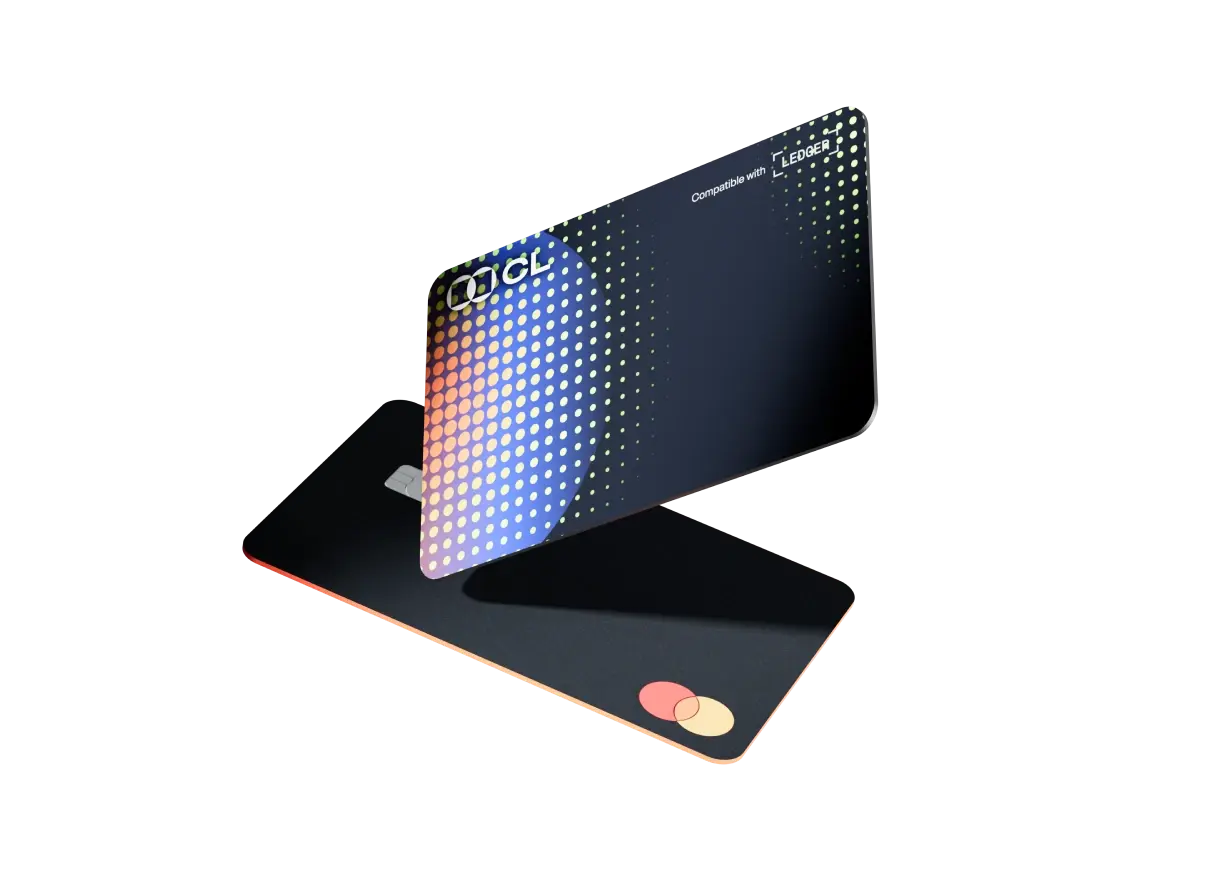
France is also where Ledger was founded (2014, Paris, by Eric Larcheveque and six co-founders), making the Ledger CL Card a uniquely French product: a hardware wallet-integrated spending card designed and sold by a company headquartered on Rue du Caire in the 2nd arrondissement. For a country that takes pride in its industrial champions, Ledger fills the same role in crypto that Dassault fills in aviation.
We flag two major restrictions for French residents: Bybit and Bitget are both banned in France by AMF blacklisting. With those removed, Plutus, Crypto.com, Ledger, and Gnosis Pay lead the French market.
| Card | Max Cashback | Annual Fee | FX Fee | Card Type | Why It Fits France |
|---|---|---|---|---|---|
| Plutus | 9% | EUR 6.99-19.99/mo | 2.5% | Debit | Domestic perk optimizer, subscription rebates |
| COCA | Up to 8% | Free | 0% | Debit | $COCA tiers (1% free) + 6% APY |
| Tria | Up to 6% | $20-$250 | 0% | Debit | Yield-linked rewards, zero FX |
| Gnosis Pay | 5% GNO | Free | 0% | Debit | Self-custody, DeFi-native |
| Kolo | 5% BTC | Free | 0% | Prepaid | Highest free-tier BTC rewards |
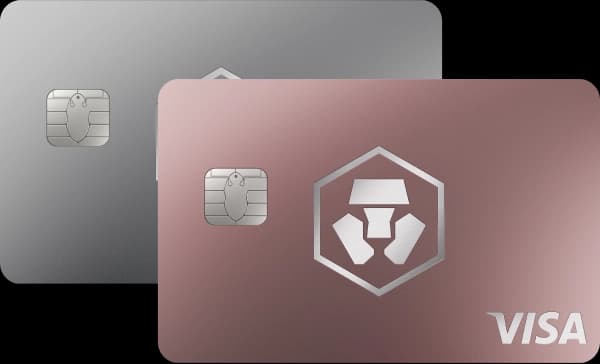
| Crypto.com Icy | 4% | CRO stake | 0% | Prepaid | Metal + lounge access at CDG/ORY |
| Kraken | 1% | Free | 0% | Debit | 0% fees, trusted exchange |
| Ledger | 1% | Free | 1.75% | Debit | French-made, hardware wallet self-custody |
Plutus delivers up to 9% through one of the strongest cashback cards with subscription rebates on Netflix, Spotify, and Amazon Prime, though the EUR 240/year Premium cost and 2.5% non-EUR FX fee restrict it to domestic perk optimization.
COCA scales to 8% with staking $COCA (1% at free Starter) plus 6% APY and 0% FX. Tria offers up to 6% with 0% FX and yield-linked rewards that avoid volatile token PFU exposure — Signature at 4.5% ($109/yr) or Premium at 6% ($250/yr).
Kolo delivers 5% BTC cashback with 0% FX at $0 ($5/txn cap, $200/mo cashback cap). Crypto.com Icy adds 4% cashback with airport lounge access at Charles de Gaulle (CDG) and Orly (ORY) (requires CRO stake).
Gnosis Pay earns 5% GNO cashback with self-custody from a Safe wallet. Ledger provides the unique value of spending directly from your Ledger hardware wallet, though its 1.75% FX fee on non-EUR transactions makes it less suitable for travel.
Best Card For Every Need in France
Top 8 Crypto Cards in France
The AMF's ban on Bybit and Bitget removes the two highest-cashback exchange cards available elsewhere in Europe - while France's 30% PFU flat tax has no holding period exemption to soften the blow. The saving grace is the crypto-to-crypto swap exemption under Article 150 VH bis, which lets you convert appreciated crypto to USDC tax-free before spending.
Plutus reaches 9% as the highest cashback rate available in France with subscription rebates, though the EUR 240/year Premium cost and 2.5% non-EUR FX fee limit it to domestic perk optimization. COCA at up to 8% (1% at free Starter, scaling with staking $COCA) plus 6% APY is the highest non-subscription option and non-custodial.
Tria Signature at 4.5% with 0% FX ($109/yr) offers yield-linked rewards that avoid volatile token PFU exposure - no BTC, CRO, or GNO price risk. Kolo at 5% BTC with 0% FX is the highest genuinely free card.
Kraken fills the zero-fee exchange gap left by the bans: 0% FX, 1% cashback, trusted European exchange. ether.fi offers an alternative tax path - borrow-to-spend avoids PFU entirely, useful when you want to keep ETH staked rather than swapping to USDC.
Ledger earns its spot as France's own hardware wallet card, designed in Paris, providing the highest-security self-custody spending option. Crypto.com Icy (4%, CRO stake) adds Priority Pass lounges at Charles de Gaulle and Orly with Netflix and Spotify rebates.
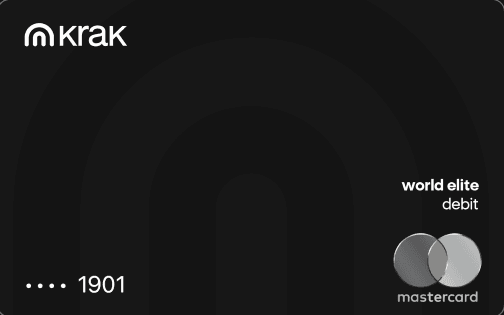
1. Krak Mastercard
Transparent Spending: Mid-Market Rates + 1% Back
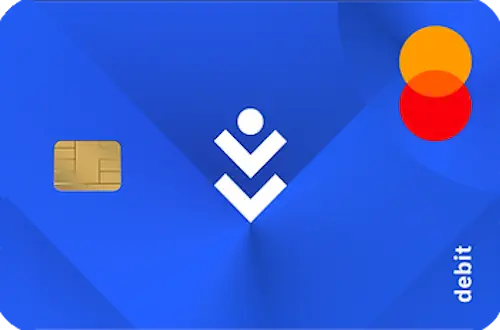
2. COCA Visa Card
Self-Banking: 8% Cashback + 6% APY + 0% FX
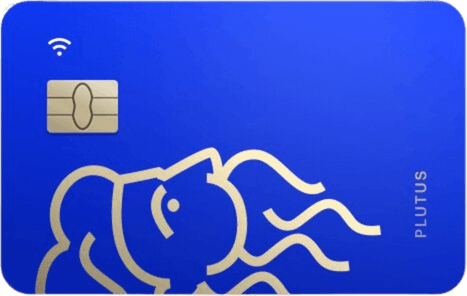
3. Plutus Visa Card
Non-Custodial PLU Rewards on Eligible Spend + Lifestyle Perks
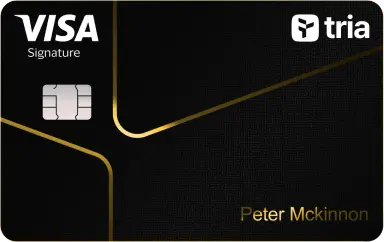
4. Tria Signature Card
High-Yield Mastery: 15% APY + Visa Signature Perks
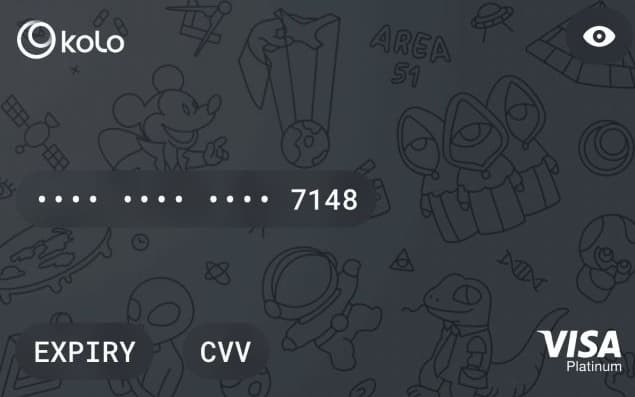
5. Kolo Card
Earn Bitcoin on Every Purchase: 5% BTC Cashback + Visa Platinum + 170+ Countries

6. ether.fi Core Card
Zero Barriers: 3% Back on Every Purchase, No Stake Required
7. Ledger CL Card
Safe Off-Ramp for Hardware Wallets: 1% BTC Back
8. Private (Icy White / Rose Gold)
Elite Private Status: 4% Uncapped Cashback + Guests
Crypto Card Regulation in France
France was the first EU country to create a comprehensive crypto regulatory framework. The Loi PACTE (Plan d'Action pour la Croissance et la Transformation des Entreprises), enacted May 22, 2019, established the PSAN (Prestataire de Services sur Actifs Numeriques) registration system. Since January 1, 2024, mandatory PSAN registration (enregistrement renforce) requires enhanced compliance with AML, cybersecurity, and governance standards, going beyond the original voluntary framework.
The AMF (Autorite des Marches Financiers) maintains the PSAN register and an active blacklist of unauthorized providers. The ACPR (Autorite de Controle Prudentiel et de Resolution, the banking regulator under the Banque de France) co-supervises alongside the AMF. Together, they have published joint guidance on crypto advertising (requiring balanced risk warnings), influencer marketing (the Loi du 9 juin 2023 specifically targets crypto promotion by influencers), and consumer protection.
Under MiCA (applicable from December 30, 2024 for CASP provisions), France's PSAN framework transitions to EU-wide CASP licensing. Ordinance 2024-936 (October 15, 2024) and Decree 2025-169 (February 21, 2025) adapted French law for MiCA. Existing PSAN-registered entities have an 18-month transition period, ending July 1, 2026.
The AMF is accepting CASP authorization applications, with review taking up to 4 months once complete files are submitted. DASPs unable to achieve MiCA compliance by July 1, 2026 must begin orderly wind-down by March 30, 2026. France's early PSAN framework means its crypto firms are well-positioned for MiCA compliance.
Critical: Bybit and Bitget are BANNED in France. The AMF added both to its blacklist for operating without PSAN registration. Neither Bybit nor Bitget cards are available to French residents. Do not attempt to apply.
Available issuers: Crypto.com holds French DASP registration. Plutus, Gnosis Pay, Bitpanda, Wirex, Ready, Bleap operate under EEA passporting. Ledger, headquartered in Paris, operates natively under French regulatory oversight. Gate.io, KuCoin, and Kraken serve French users through their EEA licenses.
Coinhouse is France's most prominent PSAN-registered domestic exchange (founded 2015, Paris, formerly La Maison du Bitcoin). It offers EUR/crypto trading but does not currently offer a consumer spending card.
Tax Treatment of Card Rewards in France
France applies the PFU (Prelevement Forfaitaire Unique), a flat 30% tax on crypto capital gains. The PFU breaks down as:
- 12.8% income tax (impot sur le revenu)
- 17.2% social contributions (CSG 9.2% + CRDS 0.5% + prelevement de solidarite 7.5%)
Every conversion of crypto to fiat, including spending through a card (which converts crypto to EUR at the merchant), triggers PFU on the gain. There is no holding period exemption. One week or ten years, the rate is always 30%.
The crypto-to-crypto swap exemption (Article 150 VH bis du CGI):
This is France's most important rule for card users. Exchanging one crypto-asset for another (BTC to ETH, ETH to USDC, SOL to USDT) is not a taxable event. Only conversion to fiat (euros) or payment for goods/services in crypto triggers PFU. The strategic implication is profound:
- Buy BTC at EUR 1,000
- BTC appreciates to EUR 5,000
- Swap BTC to USDC (NOT taxable - crypto-to-crypto)
- Spend USDC through your card (taxable, but gain is near-zero since USDC barely fluctuates)
- Effective PFU: approximately EUR 0 instead of EUR 1,200 (30% of EUR 4,000 gain)
This strategy is legal under current French tax law and confirmed by the Direction Generale des Finances Publiques (DGFiP) interpretation of Article 150 VH bis.
Worked examples at French spending levels:
| Scenario | Cost Basis | Card Spend | Gain | PFU (30%) | Net Cost | Strategy |
|---|---|---|---|---|---|---|
| Direct BTC spend (appreciated 100%) | EUR 500 | EUR 1,000 | EUR 500 | EUR 150 | EUR 150 tax | Avoidable |
| Swap BTC to USDC, spend USDC | EUR 500 (BTC) | EUR 1,000 | approx. EUR 0 | approx. EUR 0 | EUR 0 tax | Optimal |
| Direct USDC buy and spend | EUR 1,000 | EUR 1,002 | EUR 2 | EUR 0.60 | EUR 0.60 tax | Also optimal |
| ETH cashback, later spent | EUR 0 (free at receipt) | EUR 100 | EUR 100 | EUR 30 | EUR 30 tax | Use points-based cashback instead |
Cashback treatment under PFU:
Cashback received in crypto tokens (BTC, PLU, GNO, CRO) has a cost basis of EUR 0 at receipt (it was free). When you later spend or sell that cashback token, the entire value is taxable gain at 30%. This makes volatile-crypto cashback expensive in France. Stablecoin cashback or points-based perks (like Plutus subscription rebates) avoid this issue.
Professional trader classification (activite habituelle):
If the administration fiscale classifies your crypto activity as professional, gains shift from PFU (30% flat) to BIC (Benefices Industriels et Commerciaux) or BNC (Benefices Non Commerciaux), taxed at your marginal income tax rate (up to 45%) plus social contributions (approximately 17.2-45% depending on regime). The criteria include trading frequency, use of automated tools, leverage, portfolio turnover, and the proportion of crypto income to total income.
De minimis exemption: When the total of all crypto-to-fiat transfer prices in a calendar year is under EUR 305 per household, no PFU applies. This threshold is small but covers minimal USDC spending.
DAC 8 reporting (from January 1, 2026): The Finance Act for 2025 transposed EU Directive 2023/2226 (DAC 8), requiring service providers and digital asset operators to report users' crypto transactions to French tax authorities. This means exchanges and card issuers will now share transaction data with the DGFiP, making under-reporting significantly riskier.
Tax reporting: Crypto gains are declared on Formulaire 2086 (Annexe 2086 to the annual income tax return). French taxpayers must also declare all crypto exchange accounts held abroad on Formulaire 3916-bis (Declaration des comptes d'actifs numeriques detenus a l'etranger). Failure to declare foreign accounts carries a penalty of EUR 750 per undeclared account.
Compared to neighbors: Spain charges 19-28% (progressive), Germany 0% after 1 year (or up to 45% within 1 year), Belgium is technically 0% for "good management" but ambiguous, Italy 26% above EUR 2,000, Luxembourg 0% after 6 months. France's 30% flat rate is high, but the crypto-to-crypto swap exemption creates the most effective legal avoidance path.
How to Apply from France
French crypto card applications require a Carte Nationale d'Identite (CNI, French national ID card, the laminated version issued since March 2021 is biometric) or a Passeport (French passport). EU/EEA citizens residing in France can use their home-country national ID.
Justificatif de domicile (proof of address, dated within 3 months): acceptable documents include an avis d'imposition (tax notice, most universally accepted), electricity bill from EDF or Engie, gas bill from Engie or TotalEnergies, telecom bill from Orange, SFR, Bouygues Telecom, or Free, water bill, or bank statement from BNP Paribas, Societe Generale, Credit Agricole, La Banque Postale, or CIC/Credit Mutuel.
French landlord attestations (attestation d'hebergement) are also accepted by some issuers for residents without bills in their name.
Your numero fiscal (13-digit tax identification number, found on your avis d'imposition or at impots.gouv.fr) may be requested. Your numero de Securite Sociale (15-digit social security number, format 1/2 YY MM Department...) is not typically required for crypto card KYC.
Physical cards ship via La Poste to French addresses within 7-14 business days. Colissimo or Lettre Suivie tracking is standard. Virtual cards are available immediately for Apple Pay and Google Pay.
Spending Tips for France
What French Bank Cards Actually Cost You
France's retail banking sector includes BNP Paribas (France's largest bank), Societe Generale, Credit Agricole (the largest cooperative bank in Europe), La Banque Postale (postal bank, 10 million customers), and CIC/Credit Mutuel. Standard Visa or Mastercard debit cards from all five earn zero cashback.
Monthly account maintenance (frais de tenue de compte) ranges from EUR 1-3/month. Annual card fees (cotisation carte bancaire) for a standard Visa/MC debit run EUR 30-45/year. Visa Premier or Mastercard Gold: EUR 120-150/year.
FX fees on non-EUR transactions: 1.5-2% across all major French banks. This primarily affects online shopping in USD (Amazon.com, US subscriptions) and travel outside the eurozone (UK, Switzerland, US, Turkey).
| Category | French Bank Card (Visa Classic) | Crypto Card (Plutus 9%) | Annual Difference |
|---|---|---|---|
| Annual fee | EUR 30-45 | EUR 0 (free tier) | EUR 30-45 saved |
| Cashback on EUR 2,000/mo | EUR 0 | EUR 2,160/yr (at 9%) | EUR 2,160 earned |
| FX on EUR 200/mo non-EUR | EUR 36-48 | EUR 0 | EUR 36-48 saved |
| Total annual advantage | - | - | EUR 2,226-2,253 |
With Bybit (banned) and Bitget (banned) off the table, Plutus at 9% (GBP 19.99/month, GBP 1,000 eligible spend cap) or Crypto.com at 5% are among the French resident's best options for domestic EUR spending. Note: Plutus no longer has a free tier - plans start at GBP 6.99/month.
The Swap-Then-Spend Strategy in Practice
This is France's single most important crypto card tactic. Here is the complete workflow:
- Hold appreciated crypto (BTC, ETH, SOL, etc.) in your exchange or wallet
- Swap to USDC on the exchange or via a DEX (this is a crypto-to-crypto transaction, NOT taxable under Article 150 VH bis)
- Fund your crypto card with USDC (stablecoins)
- Spend through the card (the conversion from USDC to EUR at the merchant is a taxable event, but the gain is near-zero because USDC tracks the dollar)
- Report on Formulaire 2086: the gain is EUR 0.01-0.05 per EUR 100 spent (FX fluctuation only)
This legally converts a 30% tax liability into approximately 0%. The entire gain from your BTC/ETH appreciation is preserved untaxed in the swap step. The DGFiP has confirmed this treatment. It is not a loophole. It is how Article 150 VH bis is designed to work.
Card Selection for French Residents
- Plutus (up to 9%): France's best all-around card. Subscription rebates on Netflix, Spotify, Amazon Prime, Disney+. At 9% with USDC funding, the annual return on EUR 2,000/month spend exceeds EUR 2,000.
- Crypto.com (up to 5%): Best for travelers. Lounge access at CDG (Terminal 1 and 2E lounges), Orly, Nice Cote d'Azur (NCE), Lyon Saint-Exupery (LYS), and 1,400+ Priority Pass lounges globally.
- Kraken (1%): 0% fees, exchange-linked Mastercard. With Bybit and Bitget banned, Kraken is one of the strongest compliant exchange card options in France.
- Gnosis Pay (5% GNO): Self-custody Visa. Spend from a Safe wallet with 5% cashback. For French DeFi users.
- Ledger (1%): The French-made hardware wallet card. Lower cashback, but the cultural resonance matters: Ledger is France's blockchain flagship. The 1.75% FX fee limits its travel utility, but for domestic EUR spending it is the most secure option.
- ether.fi (3%): Borrow against staked ETH without triggering PFU. Since the swap-to-USDC strategy already avoids PFU, ether.fi's main French advantage is preserving your staked position while accessing liquidity.
- Tria (up to 6%, 0% FX): Signature at 4.5% ($109/yr) or Premium at 6% ($250/yr). Yield-linked rewards, no volatile token exposure. Zero FX on all EUR and non-EUR spending.
- Kolo (5% BTC, 0% FX, $0): Zero-cost BTC accumulation on EUR purchases. Capped at $5/txn and $200/mo
- KAST (2%, 0.5% FX, free): Cheapest prepaid route for spending without paying for Plutus or staking into Crypto.com.
Cost of Living and Spending Scenarios
Monthly costs vary dramatically between Paris and the regions:
- Paris: EUR 1,200-2,000 rent (studio/1-bed, 11th/12th/18th/19th arrondissement affordable, 6th/7th/8th expensive), EUR 300-450 groceries, EUR 200-400 dining/cafes, EUR 84.10 Navigo monthly transit pass
- Lyon: EUR 700-1,200 rent, EUR 250-350 groceries, EUR 150-300 dining
- Marseille: EUR 600-1,000 rent, EUR 250-350 groceries, EUR 150-250 dining
- Toulouse/Nantes/Bordeaux: EUR 600-1,000 rent, EUR 250-350 groceries
Total card-eligible monthly spending (excluding rent, which is usually wire transfer): EUR 1,000-2,500 depending on city and lifestyle.
Spending Scenario: EUR 1,800/month Paris Professional
| Category | Monthly | Annual | Where It Goes |
|---|---|---|---|
| Groceries | EUR 400 | EUR 4,800 | Carrefour, Leclerc, Monoprix, Franprix |
| Dining/cafes | EUR 300 | EUR 3,600 | Brasseries, boulangeries, cafes |
| Transport | EUR 84 | EUR 1,008 | Navigo pass (all zones) |
| Subscriptions | EUR 100 | EUR 1,200 | Netflix, Spotify, Canal+, Amazon Prime |
| Clothing/personal | EUR 250 | EUR 3,000 | Galeries Lafayette, Zara, FNAC |
| Electronics/misc | EUR 300 | EUR 3,600 | FNAC, Darty, Boulanger, Amazon.fr |
| Travel/entertainment | EUR 366 | EUR 4,392 | SNCF, flights, events, cinema |
Our local cost analysis puts total card-eligible spending at EUR 21,600/year for a Paris professional. At 5% cashback (Crypto.com, USDC funded): EUR 1,080/year, tax-free via swap strategy. At 9% (Plutus): EUR 1,944/year. That covers 23 months of the Navigo transit pass.
Local Payment Infrastructure
Carte Bancaire (CB) is France's domestic payment network, processed through the GIE Cartes Bancaires interbank group. Nearly all French payment terminals accept CB, and crypto cards (Visa/Mastercard) work at CB-enabled terminals, which is essentially every merchant in France. Contactless payment (paiement sans contact) has a standard limit of EUR 50 per transaction.
Named retail chains with universal contactless: Carrefour (France's largest retailer, 5,800+ stores including Carrefour City, Carrefour Market, Carrefour Express), E.Leclerc (700+ hypermarkets), Auchan (125+ hypermarkets), Intermarche (1,800+ stores), Monoprix (300+ urban stores), Franprix (900+ Paris-area stores), Lidl France (1,600+ stores), Casino/Monoprix/Franprix group. All accept contactless Visa/Mastercard.
RATP Paris transit: The Navigo card (monthly/annual pass) is the standard but can be purchased and topped up at ticket machines using contactless cards. Individual metro/bus tickets can be purchased via the Ile-de-France Mobilites app with any Visa/MC card.
SNCF (train) tickets purchased on sncf-connect.com or in the SNCF Connect app accept all major cards. TGV bookings from Paris Gare de Lyon to Marseille (EUR 20-90), Lyon (EUR 30-60), or Bordeaux (EUR 40-80) are card-eligible spending that generates cashback.
Online shopping: Amazon.fr (France's largest e-commerce site), Cdiscount (Bordeaux-based competitor), FNAC.com (electronics and media), Veepee (flash sales, formerly Vente-Privee), La Redoute (fashion), and Leboncoin (secondhand marketplace, card payments for delivery). All EUR-denominated, zero FX issues.
Cross-Border Spending
France borders seven countries. Four use EUR (Belgium, Luxembourg, Germany, Italy/Monaco) creating zero-FX spending. Three use non-EUR currencies where a zero-FX crypto card saves 1.5-2% versus a French bank card:
- Switzerland (CHF): Geneva residents cross to Annemasse/Haute-Savoie daily. Reverse flow: French residents near the Swiss border shop in Geneva or Basel.
- Spain (EUR): Perpignan/Toulouse to Barcelona. EUR spending, zero FX.
- UK (GBP): Eurostar Paris-London (from EUR 39). GBP spending triggers French bank FX fees.
Corsica and overseas departments (Guadeloupe, Martinique, Reunion, French Guiana) use EUR and are part of France. Card spending works identically.
Supported Exchanges & Wallets in France
France's domestic crypto exchange scene includes Coinhouse (PSAN-registered, founded 2015 as La Maison du Bitcoin, Paris), Paymium (PSAN-registered, founded 2011, one of Europe's first exchanges), and Meria (PSAN-registered, formerly Just Mining). None currently offer consumer spending cards, but they provide EUR/crypto on-ramps via SEPA bank transfers.
Critical reminder: Bybit and Bitget are BANNED in France. The AMF has blacklisted both for operating without PSAN registration. Their cards are not available to French residents.
Among exchange-linked card issuers available in France, Crypto.com holds French DASP registration and offers CRO-staking metal card tiers with up to 5% cashback and airport lounge access. Gate.io offers the Classic Visa Platinum. KuCoin and Kraken provide additional exchange-linked options through their EEA licenses.
France's self-custody card market is led by Ledger, the Paris-headquartered hardware wallet company. The CL Card integrates with Ledger Live and the Ledger Nano/Stax hardware wallet, providing the highest security tier for card spending.
For users who want software-based self-custody: Gnosis Pay provides 5% GNO cashback from a Safe wallet, MetaMask offers the Virtual Card (1%) and Metal Card (3%), and Solflare covers Solana ecosystem spending.
1inch Card (custodial via Baanx, 2% BXX cashback) serves DeFi users who want wallet-ecosystem integration without true self-custody.
EEA-passported issuers rounding out the French market: Plutus delivers up to 9% with subscription rebates and PLU staking tiers. Wirex offers the Standard (free) and Elite (8% cashback, EUR 29.99/mo).
Bitpanda provides 1% EUR-native cashback. Ready for Starknet self-custody (the Lite Card at 0.5% STRK cashback is free). Bleap for account abstraction spending.
ether.fi lets French holders borrow against staked ETH, spending without triggering PFU while earning staking yield. Combined with the swap-to-USDC strategy, French residents have two independent paths to zero-tax card spending. Nexo provides similar borrow-against-collateral functionality.
Tria offers 0% FX across all tiers — Signature at 4.5% ($109/yr) and Premium at 6% ($250/yr). Yield-linked rewards avoid volatile token PFU exposure. Kolo (5% BTC, 0% FX, $0) delivers the highest free-tier return. Cypher provides self-custody spending across 500+ tokens on 15+ blockchains.
Global-reach alternatives: KAST (2%, 0.5% FX, free), RedotPay with Virtual, Solana, and Physical variants, COCA for non-custodial spending, and Jupiter for Solana ecosystem users.
Common Mistakes
1. Applying for Bybit or Bitget cards. Both are AMF-blacklisted for operating without PSAN registration. Applications will be rejected, and using VPN workarounds risks account freezes and loss of funds. French residents have lost deposits when blacklisted platforms restricted access mid-cycle. Bybit offered 10% and Bitget 8% - tempting rates, but unavailable in France.
How to avoid it: Check the AMF's liste noire at amf-france.org before applying for any crypto card. Use Plutus (9%), Crypto.com (5%), or Kraken (1%) instead - all legally available in France with competitive rates.
2. Spending appreciated crypto directly without the swap-to-USDC step. France's PFU is 30% flat with no holding period exemption. Every euro of gain on a direct crypto-to-fiat card transaction is taxed. A French professional spending EUR 2,000/month in BTC that has doubled pays EUR 3,600/year in PFU (30% on EUR 12,000 in gains). The same spending via the swap-then-spend strategy costs approximately EUR 0 in PFU.
How to avoid it: Always swap appreciated crypto to USDC before loading your card. The crypto-to-crypto swap is tax-free under Article 150 VH bis. The USDC-to-EUR conversion at the point of sale generates near-zero gain. This is not a loophole - it is how the law is designed.
3. Forgetting to declare foreign crypto accounts on Formulaire 3916-bis. Every crypto exchange account held outside France (Crypto.com, Plutus, any non-French platform) must be declared annually on Formulaire 3916-bis. The penalty for each undeclared account is EUR 750. A French resident using three international card issuers who forgets this form faces EUR 2,250 in fines.
How to avoid it: Keep a list of every crypto platform you hold an account with, including card issuers. File Formulaire 3916-bis alongside your annual declaration de revenus. The form is straightforward: platform name, country, account number.
Closing Outlook
France's crypto card market is shaped by three forces. First, the MiCA transition deadline (July 1, 2026) will replace PSAN with EU-wide CASP licensing. DASPs unable to comply must begin wind-down by March 30, 2026, meaning some card issuers currently available in France may exit. Conversely, MiCA may open France to issuers who obtain CASP authorization from other EU member states.
Second, DAC 8 reporting (from January 1, 2026) means service providers now share transaction data with the DGFiP, significantly increasing tax visibility - the swap-then-spend strategy remains legal, but must be properly reported. Third, the AMF's active enforcement posture (blacklisting Bybit and Bitget, the influencer marketing law of June 9, 2023) means France takes regulatory compliance seriously.
The swap-then-spend strategy under Article 150 VH bis remains secure with no legislative proposals to remove the crypto-to-crypto exemption. Ledger's continued growth as a French national champion strengthens the self-custody card category.
France's combination of the swap-then-spend tax strategy, Ledger as a national champion, strong AMF regulatory framework, and full EEA card passporting makes it one of Europe's most strategically interesting crypto card markets - provided you know which issuers are actually allowed to operate here.
Written by SpendNode Editorial
Frequently Asked Questions
Is spending crypto through a card taxable in France?
Yes. France applies a flat 30% PFU (12.8% income tax + 17.2% social charges) on crypto gains when you spend through a card. However, spending stablecoins like USDC generates near-zero gains, effectively making the tax rate 0%. The swap-then-spend strategy (convert BTC to USDC first, which is not taxable) lets you avoid PFU entirely.
Which crypto card is best for French residents?
For self-custody, Ledger CL Card is the obvious choice as a French-made product. For maximum cashback, Plutus offers up to 9% but costs EUR 240/year (Premium plan) and charges 2.5% on non-EUR purchases. COCA (up to 8% with staking, 0% FX) is the highest no-fee option. Kraken Card (0% FX, 1% cashback, free) is a strong exchange-linked fallback. IMPORTANT: Bitget and Bybit are AMF-blacklisted and banned in France - do not apply.
How do crypto cards compare to French bank cards?
French bank cards (Carte Bancaire) offer zero cashback and charge 1.5-2% on non-EUR transactions. Crypto cards offer 1-9% cashback and many charge 0% FX fees. On EUR 1,500/month spending, a crypto card with 8% cashback earns EUR 1,440/year that a bank card would not.
Can I use a crypto card at Carte Bancaire terminals in France?
Yes. All Visa and Mastercard crypto cards work at CB-enabled terminals, which covers virtually all French merchants. Contactless (sans contact) is widely supported. Apple Pay and Google Pay compatibility depends on the specific card issuer.
Other Countries
View all 108 countries →


Recent Updates to Best Crypto Cards in France
- Updated MiCA transition section with specific legal instruments: Ordinance 2024-936 (Oct 2024), Decree 2025-169 (Feb 2025). Corrected deadline from June 30 to July 1, 2026. Added wind-down guidance (March 30, 2026 for non-compliant DASPs). Added AMF CASP application acceptance and 4-month review timeline
- Added DAC 8 reporting requirement (Finance Act 2025, effective Jan 1, 2026) - service providers must now report crypto transactions to DGFiP. Added EUR 305 de minimis exemption for annual transfer prices. Updated closing outlook with DAC 8 implications
- Fixed FAQ that incorrectly recommended Bitget (AMF-blacklisted and banned in France). Replaced with COCA (up to 8%, 0% FX) and explicit warning about Bitget/Bybit ban
- Fixed KAST 'up to 12%' to 2%. Expanded table with COCA, Tria, Kolo, Icy. Updated intro and rationale with all new cards. Swapped Royal Indigo to Icy in topCardSlugs. Added Cypher to exchanges