


Best Crypto Cards in Estonia (2026)
Compare 30+ crypto cards available in Estonia. Eurozone member with 22% personal tax (increased Jan 2025), 0% corporate on retained earnings, e-Residency hub, and EUR settlement.


Verified for Estonia
50 crypto cards available
Local currency: EUR
Estonia built the world's first blockchain-backed government registry in 2008, years before Bitcoin hit mainstream awareness. If you already bank with Swedbank or SEB, you know the drill: decent online banking, solid security, but near-zero yield on deposits and no native crypto integration. LHV Pank stands out as the most crypto-tolerant of Estonia's banks, but even LHV does not offer crypto card products.
The gap between Estonia's digital infrastructure and its traditional banking services is exactly where crypto cards deliver the most value: you get EUR-denominated spending with zero FX overhead, cashback up to 10%, and in some cases self-custody that mirrors Estonia's own philosophy of citizen-controlled digital identity.
Estonia joined the eurozone in 2011, which means every EUR-denominated crypto card works at face value with zero currency conversion. No spread, no markup, no hidden FX fee. For a country that was still using the kroon a decade ago, this is a structural advantage that residents of non-euro EEA countries (Denmark, Sweden, Czech Republic, Poland) simply do not have.
| Card | Max Cashback | Annual Fee | FX Fee | Type | Best For |
|---|---|---|---|---|---|
| Bitget | 8% | $0 | 0% + 0.9% tx | Debit | Highest raw cashback (BGB staking) |
| Gnosis Pay | 5% | $0 | 0% | Debit | Self-custody on Gnosis Chain |
| Plutus | 9% | EUR 6.99-19.99/mo | 2.5% | Debit | Domestic perk optimizer, subscription rebates |
| Crypto.com Icy | 4% | CRO stake | 0% | Prepaid | Metal card, CRO staking tiers |
| KAST | 2% | $0 | 0.5% | Prepaid | Free prepaid, simplest entry |
| ether.fi | 3% | $0 | 1% | Debit | Borrow against staked ETH (22% tax deferral) |
| Ready | 0.5-3% | $0-$120/yr | 0-1% | Debit | Self-custody on Starknet |
Best Card For Every Need in Estonia
Top 5 Crypto Cards in Estonia
Estonia's self-sovereignty ethos - the country that built blockchain-backed government registries in 2008 - makes self-custody and decentralized options carry more weight here than in most EEA markets. Bitget leads on raw cashback (net 7.1% after tx fee), while Gnosis Pay resonates with Estonia's cypherpunk-adjacent tech community by keeping funds in a user-owned Safe until settlement.
Plutus earns its spot through subscription rebates that align with Estonia's high digital-service adoption. ether.fi solves the flat 22% tax problem: borrow against staked ETH to defer disposal tax indefinitely. KAST fits users who want a prepaid stablecoin rail in place before deciding whether a larger exchange balance and compliance stack are worth carrying.
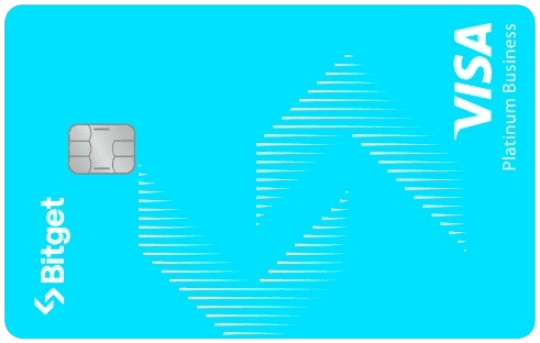
1. Bitget Card
Trade and Spend: Up to 8% BGB Cashback for Bitget Traders
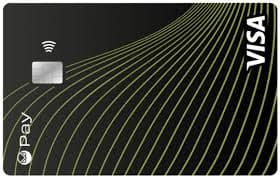
2. Gnosis Pay Card
Your Keys, Your Card, Your Money

3. ether.fi Core Card
Zero Barriers: 3% Back on Every Purchase, No Stake Required

4. Plutus Visa Card
Non-Custodial PLU Rewards on Eligible Spend + Lifestyle Perks
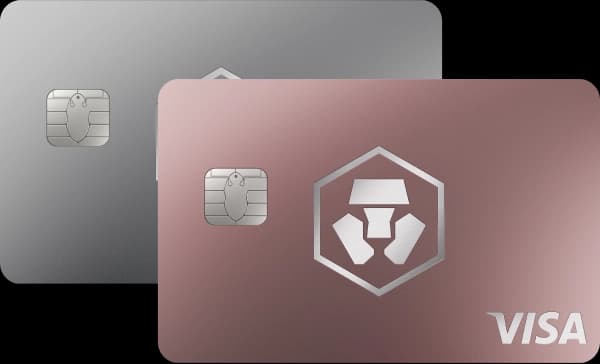
5. Private (Icy White / Rose Gold)
Elite Private Status: 4% Uncapped Cashback + Guests
Crypto Card Regulation in Estonia
From Licensing Pioneer to Regulatory Tightening
Estonia's crypto regulatory story is a cautionary tale of rapid growth followed by equally rapid contraction. The Rahapesu Andmeburoo (RAB, Financial Intelligence Unit) began issuing crypto licenses in 2017 under the Money Laundering and Terrorist Financing Prevention Act (RahaPTS).
By 2020, Estonia had issued over 1,200 crypto activity licenses, more than any other EU member state combined. The low bar (EUR 12,000 share capital, one compliance officer) attracted companies from across the globe, many using Estonia's e-Residency program to establish legal presence without physical operations.
The backlash came in 2022. The Estonian government passed amendments to RahaPTS that dramatically raised requirements: minimum share capital jumped to EUR 100,000-350,000 depending on service type, companies needed genuine local management and operations, and the RAB gained authority to revoke licenses with immediate effect.
The result was devastating for the numbers: by mid-2023, active crypto licenses had dropped from over 1,200 to roughly 100. Companies like Coinmetro relocated to other jurisdictions. The RAB's message was clear: paper-only Estonian crypto companies were no longer welcome.
For crypto card users, the practical impact is limited. The major card issuers serving Estonia operate under EU-wide licenses, not Estonian-specific ones. Gnosis Pay holds a Lithuanian EMI license, Plutus operates under its UK and EU authorizations, and exchange-linked cards from Bybit and Crypto.com use third-party issuers like UAB PayrNet or Foris DAX MT.
The Finantsinspektsioon (FSA, Financial Supervision and Resolution Authority) oversees banking and securities but defers to MiCA for crypto asset service providers as of 2024.
FSA transition (July 2026 deadline): VASP licenses previously issued by the RAB/FIU remain valid only until July 1, 2026, with no automatic conversion. From that date, the CASP license from the FSA becomes the only valid authorization for crypto activities in Estonia. The FSA is now the primary regulator under the Crypto Asset Market Act (CMA), which supplements MiCA at the national level.
Under MiCA, Estonia follows the EU-wide CASP licensing framework. The RAB's 2022 purge actually positions Estonia well: the surviving licensed entities are genuinely operational, well-capitalized companies rather than shell registrations.
e-Residency and Crypto Business
Estonia's e-Residency program, launched in 2014, created a unique intersection with crypto regulation. Over 100,000 e-Residents from 170+ countries have established Estonian companies (OU, osaUhing). For crypto businesses, this meant easy EU legal entity formation.
After the 2022 tightening, e-Residents running crypto companies must maintain genuine Estonian substance: a local director, physical office address (not just a registered agent), and enhanced AML compliance. The days of a "digital shell" crypto license from a laptop in Bali are over.
Tax Treatment of Card Rewards in Estonia
Estonia's Unique Tax Architecture: Corporate vs Personal
Estonia's tax system is unlike any other in the EU. The headline: 0% corporate tax on retained earnings, 22% flat personal income tax on crypto gains (increased from 20% in January 2025), no capital gains tax category (all gains are income). This dual structure creates genuine tax planning opportunities that do not exist in neighboring Latvia, Lithuania, or Finland.
Personal Crypto Tax (22% Flat, from January 2025)
For individuals, every disposal of cryptocurrency (including spending through a card) is a taxable event. Estonia does not distinguish between short-term and long-term holdings. There is no holding period exemption. There is no annual threshold below which gains are tax-free. The rate is always 22% on the gain (increased from 20% in January 2025).
Example 1: Appreciated BTC spending. You bought 0.05 BTC at EUR 500. It is now worth EUR 2,500. You spend EUR 2,500 through your crypto card on a new laptop. Gain = EUR 2,000. Tax = EUR 440 (22%). Your laptop effectively cost EUR 2,940 after tax.
Example 2: Stablecoin spending (optimal). You load EUR 2,500 of USDC onto your card and spend it. Gain = EUR 0 (stablecoin, no appreciation). Tax = EUR 0. Your laptop costs exactly EUR 2,500. This is the optimal funding method for personal use.
Example 3: Cashback received in volatile tokens. You earn EUR 576 in GNO cashback from Gnosis Pay over a year. The MTA (Maksu- ja Tolliamet, Tax and Customs Board) treats this as income at fair market value when received: tax = EUR 126.72 (22%). If GNO appreciates 50% to EUR 864 and you sell, additional gain = EUR 288, additional tax = EUR 63.36. Total tax burden: EUR 190.08 on EUR 864 of value. Effective rate: 22%.
Example 4: Borrow-to-spend (tax deferral). You hold 10 ETH worth EUR 30,000. Instead of selling, you borrow EUR 3,000 against it via ether.fi and spend through the card. No disposal occurred, so no tax is triggered. Your ETH continues staking (approx. 3-4% APY). You only owe tax when you eventually close the position or sell ETH to repay. This is the most tax-efficient strategy for holders with appreciated positions.
| Funding Method | Taxable Event? | Rate | When Triggered | Net Effect |
|---|---|---|---|---|
| USDC/USDT (stablecoin) | No | 0% | Never (no gain) | Full cashback retained |
| BTC/ETH (appreciated) | Yes | 22% | At point of spend | Cashback reduced by 22% of gain |
| GNO/PLU cashback received | Yes | 22% | When received | Income tax on fair value |
| Borrow-to-spend (ether.fi, Nexo) | No | 0% | Deferred until repayment/liquidation | Full cashback, tax deferred |
| Corporate OU (retained) | No | 0% | Deferred until distribution | 0% while retained in company |
Corporate Crypto Tax (The Estonian OU Advantage)
This is where Estonia becomes genuinely unique. An Estonian OU (osaUhing, private limited company) pays 0% tax on retained earnings. If the company holds crypto, trades crypto, or receives crypto income, no tax applies as long as profits stay inside the company. Tax only triggers when profits are distributed to shareholders as dividends, at which point the rate is 20/80 (effectively 20% on the gross amount, or 25% on the net).
Worked example: Your OU accumulates EUR 50,000 in crypto trading profits over 3 years. Tax while retained: EUR 0. You distribute EUR 10,000 as dividends. Tax: EUR 2,500 (20/80 of EUR 10,000). The remaining EUR 40,000 continues growing tax-free inside the OU.
For crypto card users, this creates a two-tier strategy: personal daily spending funded with USDC (0% tax), and business/investment crypto held in an OU (0% tax until distribution). Estonia is the only EU country where this corporate deferral structure exists.
Report all personal crypto transactions to the MTA via the e-Tax portal (e-MTA). Use Form A for annual income declaration. The MTA has access to exchange data through DAC8 information sharing starting 2026.
How to Apply from Estonia
KYC: Estonia's Digital ID Advantage
Estonian crypto card applications benefit from the country's world-leading digital identity infrastructure. The isikutunnistus (Estonian ID card) contains a cryptographic chip that enables digital authentication and signing, accepted by most EEA-licensed card issuers for remote verification. The isikukood (personal identification code, 11-digit format like 39001011234) is the primary identifier for all financial services.
For citizens and permanent residents, the ID card or pass (passport) suffices for all platforms. The mobiil-ID (Mobile-ID) and Smart-ID app provide additional digital authentication methods that some platforms accept for step-up verification. EU/EEA citizens residing in Estonia can use their national ID card under eIDAS mutual recognition.
e-Residents hold a special case: the e-Residency digital ID card is a government-issued identity document, but it does not prove Estonian residency. For card issuers requiring proof of EEA residence, e-Residents must provide a separate elamisluba (residence permit) or proof of address in their actual country of residence. If that country is outside the EEA, the EEA-only cards (Plutus, Gnosis Pay, Bleap) will not be available, even with Estonian e-Residency.
Proof of address: kommunaalarve (utility bill from Eesti Energia, Elisa, or Telia), pangavaljavote (bank statement from LHV, Swedbank, or SEB), or uurileping (rental agreement). Tallinn addresses are typically verified fastest due to higher database coverage.
Physical cards ship to Estonian addresses within 7-14 business days via standard EU postal services. Virtual cards activate immediately and can be added to crypto cards with Apple Pay or Google Pay within minutes, which aligns perfectly with Estonia's near-universal contactless payment infrastructure.
Spending Tips for Estonia
The Estonian Advantage: Zero FX + Flat Tax + Digital Infrastructure
Estonia's spending optimization strategy rests on three pillars: eurozone membership (zero FX fees on EUR cards), a simple flat 22% tax rate (no brackets to work through), and near-universal card acceptance. The combination makes crypto card usage more straightforward here than in most EU countries, but the 22% tax on appreciated crypto means funding strategy matters enormously.
The USDC Imperative
With a flat 22% rate on all crypto gains and no holding period exemption, the math is unambiguous: fund with stablecoins. Every euro spent from appreciated BTC or ETH triggers a 22% tax liability on the gain portion. At a moderate EUR 1,200/month spend:
| Annual Spend: EUR 14,400 | BTC (3x appreciated) | USDC (stablecoin) | Difference |
|---|---|---|---|
| Gross cashback at 4% | EUR 576 | EUR 576 | EUR 0 |
| Tax on disposal gains (22%) | EUR 2,112 | EUR 0 | EUR 2,112 |
| Tax on cashback received (22%) | EUR 126.72 | EUR 0 | EUR 126.72 |
| Net annual position | -EUR 1,662.72 | +EUR 576 | EUR 2,238.72 |
According to our regional data, the BTC spender loses EUR 1,663 (disposal tax exceeds cashback), while the USDC spender gains EUR 576 net. The gap is EUR 2,239 per year. On appreciated holdings, stablecoin funding is not merely "better", it is the only rational choice for personal spending.
Card Selection for Estonian Residents
- Bitget (net 7.1% after 0.9% tx fee): Highest raw return for BGB stakers. Best if you already trade on Bitget and can accumulate BGB positions. At EUR 1,200/month, net annual cashback is approx. EUR 1,022.
- Gnosis Pay (up to 5%, free): The self-sovereignty pick. Your EUR sits in your own Gnosis Safe until the transaction settles. Ideal for Estonia's cypherpunk-adjacent tech community. Cashback in GNO tokens.
- Plutus (3-9%, GBP 6.99-19.99/mo, no free tier): The subscription optimizer. Plans start at GBP 6.99/month (Starter: 1 perk, GBP 250 eligible spend cap) up to GBP 19.99/month (Premium: 3 perks, GBP 1,000 cap). Rebates on Netflix, Spotify, and Prime can offset the subscription cost. 2.5% FX on non-EUR transactions. Math only favors Plutus if you use 2+ rebate perks to offset the monthly subscription.
- ether.fi (3%, free): The tax deferral play. Borrow against staked ETH, spend the loan, and defer the 22% tax indefinitely. Only makes sense if you hold ETH and want to avoid triggering a taxable disposal.
- Ready (0.5-3% STRK): Self-custody on Starknet via Kulipa. The Lite card is free with 0.5% STRK cashback. The Metal card (EUR 120/year) offers 3% STRK and 0% FX. Worth considering if you are already in the Starknet ecosystem.
- KAST (2%, 0.5% FX, free): Prepaid card for users who want a stablecoin spend rail in place before deciding whether a larger exchange setup is worth the extra compliance overhead.
Break-Even: Gnosis Pay vs Plutus vs Bitget
| Monthly Spend | Gnosis Pay (5%) | Plutus (3% + 3 perks) | Bitget (8% - 0.9% tx) |
|---|---|---|---|
| EUR 600 | EUR 360/yr | EUR 216 + approx. EUR 360 perks = EUR 576/yr | EUR 511/yr |
| EUR 1,000 | EUR 600/yr | EUR 360 + approx. EUR 360 perks = EUR 720/yr | EUR 852/yr |
| EUR 1,500 | EUR 900/yr | EUR 540 + approx. EUR 360 perks = EUR 900/yr | EUR 1,278/yr |
| EUR 2,500 | EUR 1,500/yr | EUR 900 + approx. EUR 360 perks = EUR 1,260/yr | EUR 2,130/yr |
At low spend (EUR 600/month), Plutus with subscription perks leads because the fixed rebate value dominates. At EUR 1,000+, Bitget pulls ahead on raw cashback. Gnosis Pay is the consistent middle ground: no staking requirement, no subscription management, pure 5% in GNO.
Tallinn Cost of Living Context
A realistic monthly budget for a single person in Tallinn: rent EUR 600-900 (Kalamaja, Telliskivi), groceries EUR 250-350 (Selver, Prisma, Rimi), dining out EUR 100-200 (Telliskivi, Rotermann Quarter, Old Town), transport EUR 0-40 (Tallinn has free public transport for registered residents), utilities EUR 100-150, subscriptions EUR 50-80. Total: EUR 1,100-1,720/month of card-eligible spending.
In Tartu, Estonia's second city and university town, costs run 15-25% lower: rent EUR 400-650, groceries EUR 200-300. Parnu and smaller towns are cheaper still.
At EUR 1,200/month on Gnosis Pay with USDC funding: EUR 576/year in GNO cashback, tax-free on disposal (stablecoin funded). That covers 2 months of groceries from Selver or a year of gym membership at MyFitness.
Local Payment Infrastructure
Estonia ranks among Europe's most cashless societies. Contactless Visa and Mastercard acceptance is near-universal: Ulemiste Keskus and Viru Keskus shopping centers, every Selver, Prisma, Rimi, and Coop supermarket, Bolt Food and Wolt delivery, R-Kiosk convenience stores, and virtually all restaurants and cafes in Tallinn's Telliskivi Creative City, Rotermann Quarter, and Old Town.
Tallinn's public transport is free for registered residents (the Uhiskaart system), so transport spending is minimal. For those commuting between cities, Elron trains and Lux Express buses accept contactless payments. Apple Pay and Google Pay work everywhere that contactless terminals exist, which in Estonia means essentially everywhere except some rural kiosks and market stalls.
Online shopping frequently involves EUR-denominated EU merchants: Amazon.de, Zalando, and local platforms like Kaup24 and Hansapost. All EUR transactions on EUR-denominated crypto cards incur zero conversion fees. For USD-billed subscriptions (AWS, ChatGPT, some SaaS tools), cards with 0% FX fees avoid the 1-2% markup that Swedbank or SEB would charge.
Cross-Border Spending
Estonia's geographic position makes cross-border travel routine. Helsinki is a 2-hour ferry ride (Tallink, Viking Line), Riga is 4 hours by bus, and Stockholm is an overnight ferry. For these trips, a zero-FX card saves real money:
- Helsinki day trip (EUR zone): Zero FX on any EUR card. Same as domestic spending.
- Riga weekend (EUR zone since 2014): Zero FX. Latvia and Estonia share the euro.
- Stockholm trip (SEK zone): Swedbank charges 1.5% FX markup on SEK. A 0% FX crypto card saves EUR 15 on EUR 1,000 of spending.
- London trip (GBP zone): SEB charges 1.75% FX on GBP. A 0% FX crypto card saves EUR 17.50 per EUR 1,000 spent.
For frequent Helsinki commuters (common for Estonian professionals working in Finland), the annual FX savings are zero since both countries use EUR, but the 3-8% cashback on ferry tickets, Helsinki restaurants, and Finnish Alko runs represents pure value that traditional cards do not match.
Supported Exchanges & Wallets in Estonia
Card Issuers Serving Estonia
Estonia's card ecosystem reflects its dual identity: a small domestic market of 1.3 million people, but a disproportionately tech-savvy population with high crypto awareness. The country that gave the world Skype, Wise (formerly TransferWise), and Bolt understands fintech better than most.
Exchange-linked cards form the broadest category. Bybit serves Estonia under its EEA authorization with Mastercard card access. Crypto.com has been in the Estonian market since the Midnight Blue launch, with the Ruby Steel tier (EUR 350 CRO stake, 2% cashback) being the most popular entry point.
Gate.io rounds out the exchange options, operating under EEA passporting. KuCoin and Kraken also serve Estonian residents, though with lower cashback rates.
EEA-native issuers are where Estonia's EU membership pays dividends. Plutus is London-headquartered but holds EU authorization and has strong adoption among Estonian tech workers who value its subscription rebate system. Gnosis Pay resonates with Estonia's blockchain-native community, especially developers who already interact with Gnosis Chain.
Bitpanda operates from Vienna and offers 1% flat cashback with access to 600+ assets. Ready (formerly Argent) brings Starknet self-custody to Estonia with 0.5-3% STRK cashback. Wirex has been available in Estonia since its early days and offers up to 8% for higher tiers. Bleap rounds out the EEA-native options with account abstraction technology.
Borrow-to-spend platforms have particular appeal in Estonia due to the flat 22% tax on all disposals. ether.fi lets ETH stakers borrow against their position and spend without triggering a taxable event, effectively deferring the 22% indefinitely. At current staking yields of 3-4% APY, the staking income can partially offset borrowing costs.
Nexo offers a similar borrow-to-spend model with broader collateral options (BTC, ETH, stablecoins) and 2% cashback on the card. For Estonians with significant appreciated crypto holdings, these cards are functionally tax-optimization tools.
Local context: LHV Pank remains Estonia's most crypto-adjacent traditional bank, having processed crypto company banking when Swedbank and SEB refused. However, LHV does not offer crypto card products. Several Estonian-licensed crypto companies survived the 2022 RAB purge, including Change (now part of Bitget ecosystem) and CoinMetro (relocated to Lithuania). The local exchange scene is thin compared to the card options available through EEA passporting.
Self-custody and wallet-based options round out the Estonian ecosystem. MetaMask (1-3% cashback), Ledger CL (1%, hardware wallet backup), COCA (up to 8% with 6% APY on reserves), and Solflare (Solana ecosystem) provide non-custodial spending.
Given Estonia's history of digital sovereignty, the fact that self-custody cards let users maintain sole control of their funds until the moment of purchase fits the national ethos.
Estonia's crypto card market is defined by the gap between ambition and size: the digital infrastructure and regulatory maturity of a country ten times its population, served by virtually every EEA-licensed card issuer precisely because those EU-wide licenses make a 1.3-million-person market effortless to reach.
Written by SpendNode Editorial
Frequently Asked Questions
What is Estonia's crypto tax rate?
22% flat rate on personal crypto gains (increased from 20% in January 2025). Corporate gains (Estonian OU) remain tax-free until distributed. VASP licenses from the FIU expire July 2026 - FSA is now the MiCA supervisor. Fund personal spending with USDC to avoid the 22% tax.
Which crypto card is best for Estonia?
Bitget (8%, 7.1% net) and Gnosis Pay (5% GNO, self-custody) lead. EUR settlement means zero FX overhead. Estonia's digital-first culture and near-universal card acceptance make crypto cards seamless.
Can e-Residents use crypto cards?
E-Residents can verify identity with their digital ID for most crypto card applications. However, e-Residency does not prove Estonian residency - EEA-only cards require proof of actual EEA residence.
Is Estonia still crypto-friendly?
Estonia tightened licensing in 2022 (1,200+ licenses down to approx. 100). The FSA is now the MiCA supervisor under the Crypto Asset Market Act. FIU-issued VASP licenses expire July 1, 2026. EU-licensed card issuers serve Estonian residents fully.
Other Countries
View all 108 countries →


Recent Updates to Best Crypto Cards in Estonia
- Major tax update: Estonia personal income tax increased from 20% to 22% from January 2025. All examples, tables, and calculations recalculated throughout
- Added FSA transition: FIU-issued VASP licenses expire July 1, 2026. FSA is now MiCA supervisor under Crypto Asset Market Act
- Fixed Crypto.com from generic 5% to Icy 4%
- Fixed ether.fi FX from 0% to 1%, card type from Credit to Debit
- Fixed KAST FX from '0.5-1.75%' to 0.5%, rate from '2% + 4% $MOVE' to 2%
- Fixed Gnosis Pay from 4% to 5% in break-even summary text