


Best Crypto Cards in Czech Republic (2026)
Compare 36 crypto cards available in the Czech Republic. 3-year holding exemption for tax-free spending, CZK settlement, and Prague crypto hub.

Verified for Czech Republic
50 crypto cards available
Local currency: CZK
Ceska sporitelna (Erste Group), CSOB (KBC Group), and Komercni banka (Societe Generale Group) dominate Czech retail banking with cards that earn zero cashback and charge significant FX fees. Ceska sporitelna's standard debit card adds a 1.5% FX markup on non-CZK transactions plus a CZK 5 per-transaction foreign currency fee. CSOB charges 1.75% FX. Komercni banka's debit card adds 1.5% FX with an additional CZK 39/month maintenance fee on international-enabled accounts.
Since the Czech Republic uses CZK and not EUR, every single transaction through a EUR-denominated card involves FX conversion - making the difference between 0% FX (crypto cards) and 1.5-1.75% FX (Czech bank cards) a constant, compounding saving.
The Czech Republic offers one of Europe's most generous crypto tax provisions: a 3-year holding exemption under the 2024 tax reform (Zakon c. 349/2023 Sb., effective January 1, 2025) that makes long-term crypto spending completely tax-free when annual crypto income stays under CZK 100,000.
Combined with Prague's status as a European crypto hub (home to SatoshiLabs/Trezor, Coinmate, and a thriving Bitcoin community), full EEA card access, and 0% FX crypto cards that save 1.5-1.75% on every CZK purchase, the Czech Republic is one of the most strategically advantageous crypto card jurisdictions in the EU.
| Card | Max Cashback | Annual Fee | FX Fee | Type | Best For |
|---|---|---|---|---|---|
| Plutus | 9% | EUR 240 | 2.5% | Debit | Domestic-only perk optimizer (2.5% FX on CZK) |
| COCA | Up to 8% | $0 | 0% | Debit | Self-custody, $COCA tiers (1% free) + 6% APY |
| Bitget | 8% | $0 | 0% | Debit | Exchange-linked, BGB cashback |
| Wirex | 8% | Varies | 0% | Debit | WXT staking tiers |
| Gnosis Pay | 5% GNO | $0 | 0% | Debit | Self-custody on Gnosis Chain, 5% GNO cashback |
| Crypto.com Icy | 4% | CRO stake | 0% | Prepaid | Metal card, airport lounge perks at PRG |
| KAST | 2% | $0 | 0.5% | Prepaid | Free prepaid, simplest entry |
Best Card For Every Need in Czech Republic
Top 5 Crypto Cards in Czech Republic
The Czech Republic's 3-year holding exemption combined with the CZK 100,000 annual threshold creates a two-tier system - hold long enough and stay under the cap, and every transaction is completely tax-free, while CZK's non-eurozone status means every card purchase involves FX conversion.
COCA leads with up to 8% cashback plus 6% APY on USDC reserves - especially valuable for managing the CZK 100,000 threshold, since users keeping a USDC reserve for above-threshold spending earn yield on that idle capital.
Bitget at 8% (7.1% net after 0.9% tx fee) with true 0% FX is critical for CZK users. Gnosis Pay earns 5% GNO cashback with self-custody - a natural fit for Prague's SatoshiLabs/Trezor community. ether.fi (3%, 1% FX) bridges the gap for crypto approaching the 3-year exemption mark - borrowing at 5-6% APR beats paying 15% disposal tax. Crypto.com Icy at 4% adds PRG airport lounge access for Czech professionals.
1. COCA Visa Card
Self-Banking: 8% Cashback + 6% APY + 0% FX
2. Bitget Card
Trade and Spend: Up to 8% BGB Cashback for Bitget Traders
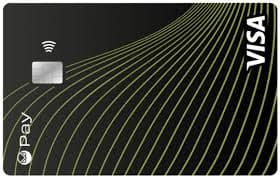
3. Gnosis Pay Card
Your Keys, Your Card, Your Money

4. ether.fi Core Card
Zero Barriers: 3% Back on Every Purchase, No Stake Required
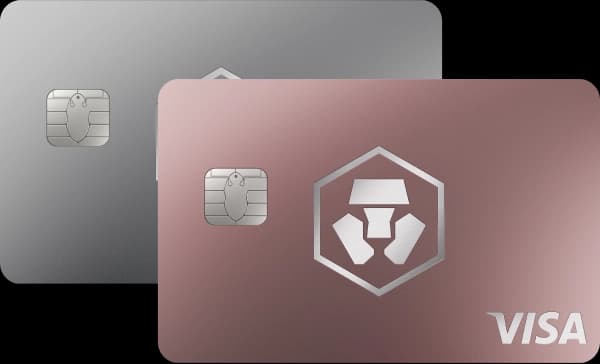
5. Private (Icy White / Rose Gold)
Elite Private Status: 4% Uncapped Cashback + Guests
Crypto Card Regulation in Czech Republic
The CNB (Ceska narodni banka / Czech National Bank) is the Czech Republic's central bank and primary financial market regulator. The CNB oversees banking, capital markets, insurance, and - under MiCA - crypto asset service providers. The CNB has taken a moderate regulatory approach: implementing EU directives faithfully without adding burdensome national requirements, while maintaining clear guidance on VASP registration and AML compliance.
The CNB requires all Crypto Asset Service Providers operating in the Czech Republic to register and comply with AML/KYC requirements under the Zakon c. 253/2008 Sb. (Act on Selected Measures Against Legitimisation of Proceeds of Crime and Financing of Terrorism). The CNB's VASP register is publicly available at cnb.cz. As an EEA member, Czech-registered VASPs benefit from passporting to serve customers across the entire European Economic Area.
The Ministerstvo financi (Ministry of Finance) oversees tax policy for digital assets. The landmark 2024 tax reform (Zakon c. 349/2023 Sb., amending the Income Tax Act) introduced the 3-year holding period exemption effective January 1, 2025 - one of the most significant pro-crypto tax provisions in any EU country. The reform also clarified the CZK 100,000 annual crypto income threshold, below which qualifying disposals are tax-free.
Under MiCA, the Czech Republic benefits from full EEA-wide passporting. Crypto.com, Bybit, Bitget, and Plutus all serve Czech residents through their European entities. No major crypto card issuer has been banned or restricted in the Czech Republic. The CNB has not implemented crypto-specific advertising restrictions beyond standard EU-mandated risk disclosures.
Prague's crypto ecosystem is among the strongest in Central Europe. SatoshiLabs (maker of the Trezor hardware wallet) is headquartered in Prague, as are Coinmate (the leading Czech crypto exchange), Anycoin Direct (Czech-Dutch exchange), and several blockchain startups. The Paralelni Polis community space in Prague's Holesovice district has been a prominent Bitcoin-only venue since 2014. This ecosystem creates strong local awareness of crypto cards and self-custody options.
Digital Finance Act (No. 31/2025 Coll.): Since February 15, 2025, this act designates the CNB as the official MiCA supervisor in the Czech Republic. All crypto asset service providers must comply with MiCA through the CNB.
DAC8/CARF (from January 1, 2026): Crypto service providers must automatically report Czech user transaction data to the Financni urad. This aligns with the EU-wide DAC8 directive and OECD CARF standard.
The Czech Republic's 3-year exemption, CNB's moderate regulation, MiCA passporting, and Prague's thriving crypto scene make it one of the EU's most attractive crypto card jurisdictions.
Tax Treatment of Card Rewards in Czech Republic
Czech crypto taxation was fundamentally reformed by Zakon c. 349/2023 Sb. (effective January 1, 2025). The key provisions:
Standard tax rates:
- 15% on annual income up to CZK 1,935,552 (approx. EUR 77,000)
- 23% on annual income above CZK 1,935,552
The 3-year holding exemption (Section 10, paragraph 3(c) of the amended Income Tax Act): Crypto gains are completely tax-free if BOTH conditions are met:
- You held the crypto for 3 or more years before disposal
- Your total annual crypto income from all disposals is under CZK 100,000 (approx. EUR 4,000)
Both conditions must be satisfied. If your annual crypto income exceeds CZK 100,000, even 10-year-old crypto becomes fully taxable. If your crypto is under 3 years old, even CZK 1,000 in gains is taxable at 15%. Note: a combined CZK 40,000,000 annual gross income cap also applies (shared with securities), but this is irrelevant for typical card spending.
Example 1 (exempt - long-term holder): You bought 0.1 BTC at CZK 25,000 in January 2022. In March 2025, BTC is at CZK 2,500,000 (0.1 BTC = CZK 250,000). You load your card with CZK 80,000 throughout the year. The CZK 72,000 in gains (approx.) is completely tax-free: held 3+ years AND annual crypto income under CZK 100,000.
Example 2 (taxable - threshold exceeded): Same scenario but you spend CZK 200,000 through your card in a single year. Your annual crypto income exceeds CZK 100,000 - the ENTIRE amount becomes taxable at 15%. CZK 180,000 in gains x 15% = CZK 27,000 in tax. Manage your annual spending to stay under CZK 100,000 in crypto income (approximately CZK 8,300/month in gains, not total spending).
Example 3 (taxable - recent purchase): You bought ETH 6 months ago at CZK 60,000 and load your card when it reaches CZK 80,000. Gain: CZK 20,000. Tax: 15% = CZK 3,000. The 3-year clock has not been met, so the exemption does not apply regardless of amount.
Example 4 (stablecoin funding): USDC purchased at any time and loaded onto a card produces near-zero disposal gain. No tax regardless of holding period or threshold. This is the default strategy for Czech residents with crypto under 3 years old.
CZK 100,000 threshold management: The threshold counts gross crypto income from disposals, not only gains. If you sell CZK 100,000 worth of BTC (even if your gain is only CZK 10,000), some interpretations treat the entire CZK 100,000 as crypto income. The Ministry of Finance has issued guidance clarifying that "income" means the total proceeds from the sale, not just the profit.
This is critical: a Czech resident loading CZK 8,500/month of 3+ year crypto onto their card stays under the CZK 100,000 annual income threshold and owes zero tax.
Loss offsetting: Crypto losses can offset crypto gains within the same tax year. Losses from crypto held under 3 years can offset gains from under-3-year crypto. Losses cannot offset non-crypto income.
| Scenario | Holding Period | Annual Crypto Income | Tax Rate | Tax on CZK 50,000 Gain |
|---|---|---|---|---|
| Long-term, under threshold | 3+ years | Under CZK 100,000 | 0% | CZK 0 |
| Long-term, over threshold | 3+ years | Over CZK 100,000 | 15% | CZK 7,500 |
| Short-term, any amount | Under 3 years | Any | 15% (or 23%) | CZK 7,500 |
| USDC funding (any scenario) | Any | Near-zero | 0% | CZK 0 |
Tax reporting: Czech residents file their annual Danove priznani k dani z prijmu fyzickych osob (income tax return for individuals) with the Financni urad (Tax Office) by April 1, or by May 2 for electronic filing via the datova schranka (data box) system. Self-employed individuals and those using a tax advisor can file by July 1.
Crypto gains go in Section 10 (ostatni prijmy / other income) of the tax return. Czech tax software options include Koinly, CoinTracking, and Blockpit, all of which support Czech tax law.
The 3-year exemption makes the Czech Republic one of only a handful of EU countries where crypto card spending can be completely tax-free. Manage your annual threshold carefully.
How to Apply from Czech Republic
Czech crypto card applications require an obcansky prukaz (Czech citizen's identity card, credit-card format with chip, issued by the Ministerstvo vnitra / Ministry of Interior) for citizens. EU/EEA citizens can use their national ID card. Non-EU residents need a valid passport plus povoleni k pobytu (residence permit).
The rodne cislo (birth number / personal identification number) is the Czech Republic's primary 9 or 10-digit identifier (format: YYMMDD/XXXX, with a slash between the birthdate and sequence number). The rodne cislo appears on your obcansky prukaz and is required for tax reporting and most financial service registrations.
Proof of Czech address via ucet za energie (energy bill from CEZ, E.ON, innogy/RWE, or PRE for Prague residents), vypis z uctu (bank statement from Ceska sporitelna, CSOB, Komercni banka, or mBank), or registration confirmation from the Ministerstvo vnitra (Ministry of Interior). Some issuers also accept a najemni smlouva (rental agreement) with a notarized signature or official stamp.
EEA issuers use standard European verification via Onfido, Jumio, or Sumsub. Physical cards ship to Czech addresses within 5-10 business days via Ceska posta (Czech Post) or private couriers (PPL, Zasilkovna/Packeta, DPD). Virtual cards are available immediately for cards with Apple Pay and Google Pay use.
Spending Tips for Czech Republic
The 3-Year Exemption: Czech Republic's Strategic Advantage
The 3-year holding exemption transforms crypto card strategy for Czech residents. With crypto held 3+ years and annual income under CZK 100,000, your card spending produces:
- 0% tax on disposal (exemption applies)
- 0% FX fee (crypto card vs 1.5-1.75% at Czech banks)
- 4-9% cashback (vs 0% at Czech banks)
This triple benefit - tax-free + zero FX + high cashback - is one of the most profitable combinations in any EU country.
The CZK 100,000 Annual Threshold: How to Stay Under It
The threshold is the key constraint. CZK 100,000 in annual crypto income (gross proceeds from disposals, not just gains) translates to approximately:
- CZK 8,333/month (approx. EUR 333/month) in total crypto sold/loaded
- This is TOTAL PROCEEDS, not gains - even if your cost basis is CZK 90,000 and you sell CZK 100,000, you have hit the threshold
Strategy for staying under CZK 100,000:
- Load your card with long-held crypto in small, regular amounts (CZK 8,000/month max)
- Use USDC for spending above the threshold - stablecoin disposals have near-zero income
- Split spending between crypto (under threshold) and USDC (above threshold)
- Track your cumulative annual crypto income monthly - do not exceed CZK 100,000 by year-end
Example: A Prague professional wanting to spend CZK 25,000/month through a card:
- First CZK 8,000/month: fund with 3+ year BTC (CZK 96,000 annual income, under threshold - tax-free)
- Remaining CZK 17,000/month: fund with USDC (zero disposal gain)
- Combined: CZK 25,000/month card spending, effectively zero tax
FX Savings: Critical for CZK Users
The Czech Republic uses CZK (Czech Koruna), which floats against EUR at approximately 25.0-25.5 CZK per EUR. Unlike Bulgaria's fixed EUR peg, the CZK rate fluctuates. This means:
- Every EUR-denominated card transaction involves CZK conversion
- Czech bank cards charge 1.5-1.75% FX on non-CZK purchases
- 0% FX crypto cards save this entire markup on every transaction
- On CZK 25,000/month of card spending: CZK 4,500-5,250/year saved in FX fees alone
The FX savings alone (before cashback) make a 0% FX crypto card worthwhile for Czech users. Add 4-8% cashback on top, and the math is overwhelming.
Card Selection for Czech Users
- Bitget (8%, free, 0.9% tx fee): Best exchange-linked option. 0% FX critical for CZK users. Net effective rate approx. 7.1% after transaction fee. For users already holding BGB
- COCA (up to 8% with staking $COCA, 1% free): Self-custody + 6% stablecoin APY at all tiers. The stablecoin yield is especially attractive for the USDC portion of spending (above the CZK 100,000 threshold)
- Plutus (9%, EUR 280/yr Premium): Highest rate but capped at GBP 1,000/month eligible spend. 3 subscription perks. Charges 2.5% FX on CZK transactions (EUR-settled card). No free tier
- Gnosis Pay (5% GNO, free): Self-custody from a Safe wallet with 5% GNO cashback. Natural fit for Prague's Trezor/SatoshiLabs community
- Crypto.com Icy (4%): Metal card with airport lounge access at PRG (Vaclav Havel Airport Prague). CRO stake required
- KAST (2%, 0.5% FX, free): Simplest prepaid entry for CZK spending
COCA vs Bitget vs KAST: Czech Break-Even
Under the 3-year exemption (0% disposal tax) with 0% FX savings already factored:
| Monthly Spend (CZK) | COCA Elite 8% | Bitget 7.1% net | Gnosis Pay 5% GNO |
|---|---|---|---|
| CZK 15,000 | CZK 14,400/yr | CZK 12,780/yr | CZK 9,000/yr |
| CZK 25,000 | CZK 24,000/yr | CZK 21,300/yr | CZK 15,000/yr |
| CZK 40,000 | CZK 38,400/yr | CZK 34,080/yr | CZK 24,000/yr |
COCA leads at every spending level. At CZK 25,000/month: CZK 24,000/year in cashback, which covers 4+ months of groceries at Albert or Lidl. Bitget trails slightly due to the 0.9% transaction fee but remains strong for BGB holders. Gnosis Pay at 5% GNO with zero cost and self-custody provides a strong middle ground, especially for Prague's Trezor-heritage crypto community.
Spending Scenario: Prague Developer at CZK 30,000/month
A Prague-based software developer (average IT salary CZK 65,000-85,000/month) spending CZK 30,000/month on cards:
| Funding Strategy | Annual Spend | COCA Cashback (8%) | Tax on Disposal | FX Savings vs Bank | Net Annual Benefit |
|---|---|---|---|---|---|
| 3+ yr BTC (CZK 8,000/mo) + USDC (CZK 22,000/mo) | CZK 360,000 | CZK 28,800 | CZK 0 | CZK 5,400 | CZK 34,200 |
| All USDC | CZK 360,000 | CZK 28,800 | CZK 0 | CZK 5,400 | CZK 34,200 |
| All recent BTC (1yr, doubled) | CZK 360,000 | CZK 28,800 | CZK 27,000 | CZK 5,400 | CZK 7,200 |
The optimal strategy combines 3+ year BTC (under CZK 100,000 threshold) with USDC for the remainder: CZK 34,200 annual benefit. The FX savings alone (CZK 5,400) are a meaningful bonus unique to non-eurozone countries like the Czech Republic.
Borrow-to-Spend: Bridging to the 3-Year Exemption
For Czech residents with crypto approaching the 3-year mark, ether.fi (3% cashback) and Nexo (2%) offer a bridge strategy similar to Croatia's 2-year approach:
- Deposit ETH or BTC purchased 2 years ago as collateral
- Borrow USDC and spend through your card (no disposal, no tax)
- Your crypto continues aging toward the 3-year threshold
- After 3 years, repay by selling tax-free (if under CZK 100,000 annual income)
Borrowing at 5-6% APR for 12 months on a CZK 200,000 position costs approx. CZK 10,000-12,000 in interest, but avoids CZK 30,000 in tax (15% on CZK 200,000 gain). Clear arbitrage for large unrealized gains approaching the 3-year mark.
Czech Cost of Living Context
- Prague: Rent CZK 18,000-30,000/1BR center (bankovni prevod/bank transfer, not card-eligible). Groceries CZK 6,000-9,000/month at Albert, Kaufland, Lidl, Billa, Tesco. Dining CZK 200-400 per meal (svickova or gulas at a traditional hospoda runs CZK 180-250). Prague DPP (public transit) annual Litacka pass CZK 3,650. Beer at a local pub CZK 40-60/0.5L. Monthly card-eligible spending: CZK 15,000-35,000.
- Brno: Rent CZK 12,000-20,000. Groceries CZK 5,000-7,500. Dining CZK 150-350. Czech Republic's second city with a strong IT sector and university scene. Significantly cheaper than Prague.
- Ostrava: Rent CZK 8,000-15,000. Groceries CZK 4,500-6,500. Mining heritage transitioning to tech and services. Lowest cost among major Czech cities.
- Cesky Krumlov/Olomouc/Plzen: Smaller cities with CZK 7,000-12,000 rent. Tourist spending in Cesky Krumlov is seasonal. Plzen (Pilsner Urquell) has a strong beer tourism economy.
Where Cards Work in the Czech Republic
Contactless Visa/Mastercard acceptance is strong in Czech cities. Prague: Shopping centers (Palladium, Chodov, Novy Smichov, Letnany), all major supermarkets (Albert, Kaufland, Lidl, Billa, Tesco), restaurants throughout Prague 1-7, cafes, and bars. Most Prague hospody (traditional pubs) accept cards, though some in the outer districts prefer cash for small amounts. Brno: Galerie Vankovka, Olympia Brno, central restaurants and shops. Ostrava: Forum Nova Karolina, Avion Shopping Park.
Cash culture note: The Czech Republic is more cash-friendly than Western Europe. While major cities have strong card acceptance, traditional hospody (pubs), trafikanti (tobacconists/newspaper shops), and smaller shops outside Prague may prefer cash. Weekly trznice (markets) and podomni prodejci (street vendors) are cash-only. Carry CZK 500-1,000 for smaller purchases outside city centers.
Apple Pay and Google Pay work at all NFC-enabled terminals. Prague DPP (public transit) accepts contactless bank card tap-to-pay at metro gates and on trams/buses. Czech Railways (Ceske drahy/CD) tickets can be purchased online or at station machines with Visa/Mastercard. Bolt and Liftago (Czech ride-hailing) accept card payments. Rohlik.cz and Kosik.cz (online grocery delivery) accept card payments.
Cross-Border FX: Where 0% Matters Most
The Czech Republic borders Germany (EUR), Austria (EUR), Slovakia (EUR), and Poland (PLN). Since CZK floats, every cross-border trip involves FX:
- Germany (EUR): Dresden, Munich shopping trips from Prague/Brno. 0% FX saves 1.5-1.75% on every purchase vs Czech bank cards.
- Austria (EUR): Vienna is 4 hours from Prague, 2 hours from Brno. 0% FX saves 1.5-1.75%. Austrian ski resorts (Arlberg, Kitzbuhel) are popular Czech holiday destinations.
- Slovakia (EUR): Bratislava is 1 hour from Brno. 0% FX saves 1.5-1.75%. Many Czech-Slovak cross-border commuters and shoppers.
- Poland (PLN): Krakow and Wroclaw trips from Ostrava/Prague. 0% FX saves 1.5-2% on PLN purchases.
For Czech residents making frequent cross-border trips (common in a landlocked country surrounded by 4 neighbors), the FX savings from a 0% crypto card compound quickly - CZK 5,000-10,000/year for active cross-border shoppers.
Supported Exchanges & Wallets in Czech Republic
The Czech Republic's crypto ecosystem centers on Prague, which has one of the most developed Bitcoin communities in Europe. SatoshiLabs, maker of the Trezor hardware wallet, is headquartered in Prague and has been a pillar of the global crypto self-custody movement since 2013.
This local heritage creates natural interest in self-custody card options - Czech Trezor users migrating to spending have a philosophical alignment with cards like Gnosis Pay, MetaMask Card, and Ledger CL Card.
For pure cashback maximization, COCA at up to 8% (1% free Starter, scaling with staking $COCA tokens) with 6% stablecoin APY is the strongest self-custody option for Czech users. The stablecoin yield is especially relevant for Czech residents who keep a USDC reserve for above-threshold spending (the CZK 100,000 annual limit). Plutus at 9% leads on rate with subscription perks that stretch further at Czech subscription prices.
ether.fi (3%) and Nexo (2%) serve the specific Czech use case of bridging to the 3-year exemption. Czech holders with crypto 2-2.5 years old can borrow against it, spend the borrowed stablecoins, and wait for the exemption to apply. The interest cost is typically far less than the 15% disposal tax. Wirex at up to 8% via WXT staking competes at higher tiers.
Additional self-custody options beyond Gnosis Pay include Ready (Starknet self-custody with STRK cashback), Bleap, and Solflare. 1inch Card (custodial via Baanx, 2% BXX cashback) serves DeFi users who already use the 1inch wallet ecosystem.
Bitpanda at 1% has strong Central European presence with EUR integration and 600+ tradeable assets, though its cashback rate is the lowest in the EEA.
Our exchange section for the Czech Republic starts locally: Coinmate (coinmate.io) is the leading Czech crypto exchange with CZK trading pairs and Czech banking integration (SEPA and domestic transfers). Anycoin Direct (Czech-Dutch) offers simple buy/sell in CZK.
Paralelni Polis in Prague's Holesovice district operates as a Bitcoin-only community space and coworking venue - one of the first in the world to accept only BTC. Neither Coinmate nor Anycoin Direct offers card products. The traditional Czech banks (Ceska sporitelna, CSOB, Komercni banka) have shown no interest in crypto card products.
The Czech Republic's 3-year holding exemption, CZK 100,000 threshold, Prague's SatoshiLabs heritage, full EEA card access, and the compounding FX savings for non-eurozone CZK users make it one of the EU's most rewarding crypto card jurisdictions for patient holders.
Written by SpendNode Editorial
Frequently Asked Questions
Is crypto card spending tax-free in the Czech Republic?
Yes, if you meet two conditions: held the crypto for 3+ years AND your annual crypto income is under CZK 100,000 (approx. EUR 4,000). Otherwise 15% tax applies (23% on high incomes). The CNB is the MiCA supervisor since the Digital Finance Act (Feb 2025). DAC8/CARF reporting starts January 2026.
Which crypto card is best for Czech residents?
COCA (up to 8%, self-custody), Bitget (8%, 7.1% net), and Gnosis Pay (5% GNO, self-custody) lead. CZK users benefit most from 0% FX cards since Czech banks charge 1.5-1.75% on every non-CZK transaction. For long-term holders, the 3-year exemption makes spending tax-free.
How does the CZK 100,000 annual limit work?
The threshold counts gross crypto income (total proceeds from sales, not just gains). If exceeded, the 3-year holding exemption does not apply to that year. Strategy: fund CZK 8,000/month from 3+ year crypto (CZK 96,000/yr, under threshold), use USDC for the rest.
When did the 3-year crypto holding exemption take effect?
Introduced by Zakon c. 349/2023 Sb., effective January 1, 2025. A CZK 40 million combined annual cap (with securities) also applies but is irrelevant for typical card spending. This makes the Czech Republic one of the EU's most crypto-friendly jurisdictions for patient holders.
Other Countries
View all 108 countries →


Recent Updates to Best Crypto Cards in Czech Republic
- Fixed Gnosis Pay from 0% to 5% GNO cashback
- Fixed KAST from 4% to 2% in topCardsRationale, card selection, and break-even table
- Fixed KAST FX from '0.5-1.75%' to 0.5%
- Fixed Crypto.com from generic 5% to Icy 4%
- Added Digital Finance Act (No. 31/2025 Coll., CNB = MiCA supervisor from Feb 2025)
- Added DAC8/CARF reporting from January 2026
- Added CZK 40M combined annual cap note
- Recalculated break-even table (replaced KAST 4% with Gnosis Pay 5%)
- Updated topCardSlugs: replaced plutus-visa-card and kast-card with gnosis-pay-card