


Best Crypto Cards in Canada (2026)
Compare crypto debit cards available to Canadian residents. Verified CAD spending options with 0% FX fees, cashback up to 6%, and CRA tax treatment explained.



Verified for Canada
32 crypto cards available
Local currency: CAD
TD, RBC, and Scotiabank all charge 2.5% foreign currency conversion fees on every USD purchase, whether online or in-store. Canadians spend heavily on US-priced platforms (Amazon.com, Netflix, Shopify stores) and travel south frequently. A crypto card with 0% FX fees on a USD-settled balance saves that 2.5% on every cross-border transaction - the core value proposition for Canadian crypto card users.
Canada has no domestic crypto card issuers. Every option available to Canadians comes from global providers. The selection narrowed significantly in 2023 when Binance withdrew and the CSA tightened requirements, pushing out several exchanges. What remains: a focused set of globally available cards that ship to Canadian addresses and work with Apple Pay, Google Pay, and contactless terminals nationwide. Exchange-linked cards from Bitget, Bybit, and Wirex do not cover the Canadian market.
| Card | Max Cashback | Annual Fee | FX Fee | Type | Best For |
|---|---|---|---|---|---|
| Tria | Up to 6% | $20-$250 | 0% | Debit | Yield-linked rewards, zero FX |
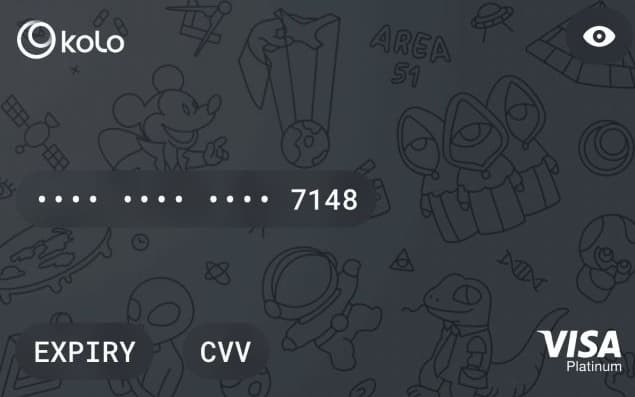
| Kolo | 5% BTC | $0 | 0% | Prepaid | Highest free-tier cashback |
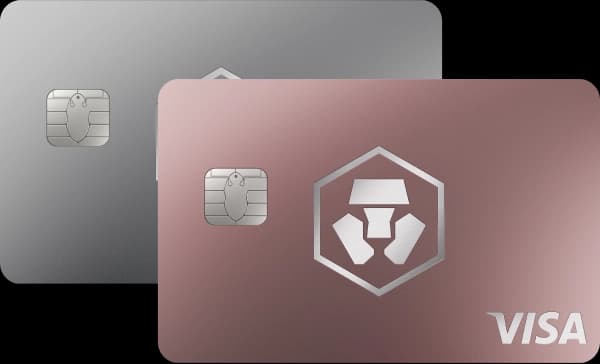
| Crypto.com Icy | 4% | CRO stake | 0% | Prepaid | Metal + airport lounge perks at YYZ/YVR/YUL |
| ether.fi | 3% | $0 | 1% | Credit | Borrow-to-spend, keep staking yield |
| MetaMask Metal | 3% | $199/yr | 0% | Debit | Self-custody wallet, 0% FX |
| KAST | 2% | $0 | 0.5% | Prepaid | Low-overhead prepaid for Canadians testing crypto spend |
| Ledger | 1% | $0 | 1.75% | Debit | Hardware wallet self-custody |
Tria leads with up to 6% with 0% FX and yield-linked rewards - Signature at 4.5% ($109/yr) or Premium at 6% ($250/yr). Kolo delivers 5% BTC cashback with 0% FX at $0 ($5/txn cap, $200/mo cashback cap) - the highest free-tier return available in Canada.
Crypto.com Icy is the most established global issuer serving Canada, with 4% cashback and Priority Pass lounge access at YYZ, YVR, and YUL (requires CRO stake). KAST is the best low-overhead prepaid option: 2% rewards, $0 annual fee, 0.5% FX.
Best Card For Every Need in Canada
Top 5 Crypto Cards in Canada
Canada has no domestic crypto card issuer, and CSA enforcement removed several major exchanges from the Canadian market. Tria leads with up to 6% and 0% FX - Signature at 4.5% ($109/yr) and Premium at 6% ($250/yr) - with yield-linked rewards that simplify CRA tracking since there is no volatile token to track separately. Kolo at 5% BTC with 0% FX is the highest genuinely free option ($5/txn cap, $200/mo cashback cap).
Crypto.com is the most established issuer still serving Canada, with the Icy tier (4%, CRO stake) adding Priority Pass lounge access at Pearson (YYZ), Vancouver (YVR), and Montreal (YUL). ether.fi is uniquely valuable here because every single card swipe triggers a CRA disposition requiring ACB calculation - borrowing against staked ETH avoids triggering those taxable events entirely.
KAST at 2% with 0.5% FX fills the low-overhead slot for Canadians learning the CRA workflow. The core Canadian value beyond cashback is eliminating the 2.5% FX fee that the Big Five banks charge on every USD transaction.

1. Tria Signature Card
High-Yield Mastery: 15% APY + Visa Signature Perks
2. Kolo Card
Earn Bitcoin on Every Purchase: 5% BTC Cashback + Visa Platinum + 170+ Countries
3. Private (Icy White / Rose Gold)
Elite Private Status: 4% Uncapped Cashback + Guests

4. ether.fi Core Card
Zero Barriers: 3% Back on Every Purchase, No Stake Required

5. KAST K Card
Early Adopter Access: 2% Points + 4% $MOVE on Every Swipe
Crypto Card Regulation in Canada
Canada regulates crypto through a combination of federal oversight by FINTRAC (Financial Transactions and Reports Analysis Centre of Canada) and provincial securities commissions coordinated by the CSA (Canadian Securities Administrators). This dual-layer structure creates one of the stricter regulatory environments globally.
Crypto trading platforms must register as Money Service Businesses (MSBs) with FINTRAC and comply with AML/KYC requirements under the Proceeds of Crime (Money Laundering) and Terrorist Financing Act (PCMLTFA). The CSA has taken an aggressive enforcement approach since 2022, requiring all crypto exchanges serving Canadians to register as restricted dealers or face action.
We flag a Canada-specific risk: this regulatory pressure directly caused Binance to withdraw from Canada in June 2023, citing concerns with CSA pre-registration requirements. KuCoin similarly restricted Canadian access. Bybit does not serve Canadian residents. The pattern is clear: exchange-linked card products from APAC-based exchanges are unreliable for Canadians.
The CSA also introduced the restricted dealer registration category specifically for crypto platforms, requiring pre-registration undertakings (PRUs) that include limitations on margin, leverage, and certain altcoin offerings. Platforms that did not sign PRUs were forced to exit. This has created a smaller but more compliant crypto ecosystem in Canada.
Provincial regulators add complexity. Ontario's OSC (Ontario Securities Commission) has been particularly active in enforcement, including a high-profile case against Bybit in 2022. Quebec's AMF (Autorite des marches financiers) applies additional financial product requirements - Quebec residents should verify availability separately with any card issuer.
The BCSC (British Columbia Securities Commission), ASC (Alberta Securities Commission), and other provincial regulators generally follow CSA guidelines.
Card issuers serving Canadians must either hold MSB registration or operate through a registered intermediary. Global card issuers like Crypto.com, Tria, Kolo, KAST, and MetaMask operate under their own jurisdictions but serve Canadian residents. Crypto.com has maintained Canadian access through regulatory changes and is the safest bet for a proven card product with established regulatory compliance.
Verify each issuer's current Canadian eligibility before applying. CSA enforcement actions can restrict access quickly, and the regulatory environment continues to shift.
Tax Treatment of Card Rewards in Canada
Our Canada tax breakdown explains the core issue: the CRA (Canada Revenue Agency) treats cryptocurrency as a commodity. Every crypto card transaction is a disposition, triggering capital gains or losses based on the difference between your adjusted cost base (ACB) and the fair market value at the time of spending. This applies to every purchase, no matter how small.
The CRA Disposition Trap
Buy a C$7 coffee with BTC you acquired at C$40,000 when it is worth C$120,000, and you owe capital gains on the proportional appreciation. The CRA uses the average cost method (weighted average ACB across all identical properties) for calculating gains. Across hundreds of small card transactions per year, the record-keeping is brutal.
Stablecoin funding eliminates this entirely. USDC in at approx. C$1.36, out at approx. C$1.36, near-zero gain per transaction. This is the single most important Canadian tax optimization for crypto card users.
Capital Gains Inclusion Rate
Only a portion of capital gains is taxable. For most individual Canadians, the inclusion rate is 50% (you pay tax on half the gain). For gains above C$250,000 in a single year, the inclusion rate increased to 66.7% in 2024. For corporations and trusts, the 66.7% rate applies from the first dollar.
| Taxable Income Bracket | Federal Rate | Combined (incl. provincial avg) | Capital Gains Tax (50% inclusion) |
|---|---|---|---|
| Up to C$55,867 | 15% | approx. 25% | approx. 12.5% |
| C$55,867-$111,733 | 20.5% | approx. 30% | approx. 15% |
| C$111,733-$154,906 | 26% | approx. 36% | approx. 18% |
| C$154,906-$220,000 | 29% | approx. 41% | approx. 20.5% |
| Over C$220,000 | 33% | approx. 48% | approx. 24% |
Even at the highest bracket, the effective capital gains rate is approximately 24% (50% inclusion x 48% marginal rate). Compare this to Japan at 15-55% on total gains or India at 31.2% flat. Canada's inclusion rate makes crypto card spending more tax-efficient than many peer jurisdictions, but stablecoin funding still dominates the optimal strategy.
Double Taxation on Volatile Cashback
When you receive C$100 in BTC cashback, that is C$100 of ordinary income (taxable at receipt at fair market value). If BTC appreciates to C$150 before you spend or sell it, you owe capital gains on the C$50 appreciation on disposal. Two tax events on one cashback reward. USDC cashback avoids this entirely - received at approx. C$1.36, disposed at approx. C$1.36, negligible gain.
| Cashback Type | Tax When Received | Tax When Spent/Sold | Complexity |
|---|---|---|---|
| BTC cashback | Ordinary income at FMV | Capital gains (50% inclusion) | High |
| USDC cashback | Ordinary income at approx. C$1.36 | Near-zero gain on disposal | Low |
| Points/rewards | Generally not taxable | Taxable when converted | Medium |
Tax tools: Koinly, CoinTracker, and CryptoTaxCalculator all support Canadian CRA reporting formats. These tools import transactions from exchanges and card issuers to calculate ACB and generate T-slips compatible with CRA filing. Stablecoin-only card usage dramatically simplifies these reports.
TFSA and RRSP: Crypto cannot be held directly in Tax-Free Savings Accounts or Registered Retirement Savings Plans. There is no sheltered account for crypto card cashback. All gains are taxable in the year of disposition. Some ETFs (like Purpose Bitcoin ETF, CI Galaxy Bitcoin ETF) hold crypto within TFSA-eligible structures, but these do not help with card spending.
Loss harvesting: Crypto losses can offset crypto gains within the same tax year. If you have unrealized losses, strategically realizing them before December 31 can offset gains from card spending dispositions. Carry forward of net capital losses is allowed indefinitely against future gains.
Provincial Tax Variation
Canada's combined capital gains tax rate varies significantly by province because each province adds its own income tax on top of the federal rate. Alberta has the lowest provincial rate, while Quebec, Nova Scotia, and the territories have the highest.
| Province | Top Combined Marginal Rate | Effective CGT (50% inclusion) | Impact on C$10K Crypto Gain |
|---|---|---|---|
| Alberta | 48.0% | 24.0% | C$2,400 |
| Ontario | 53.5% | 26.8% | C$2,675 |
| British Columbia | 53.5% | 26.8% | C$2,675 |
| Quebec | 53.3% | 26.7% | C$2,665 |
| Nova Scotia | 54.0% | 27.0% | C$2,700 |
The difference between Alberta and Nova Scotia is only C$300 on a C$10,000 gain, so province alone should not drive your strategy. But for high-volume spenders in Alberta, the slightly lower rate means the stablecoin-funding imperative is marginally less urgent. Quebec adds a unique wrinkle: the Revenu Quebec (provincial tax agency) has its own reporting requirements separate from the CRA, and crypto dispositions must be reported on both federal and provincial returns.
Canada's Crypto ETF Advantage (Context)
Canada was the first country to approve a spot Bitcoin ETF (Purpose Bitcoin ETF, February 2021), well before the US SEC approved in January 2024. The country also has Ethereum ETFs, Solana ETFs, and multi-asset crypto ETFs available in TFSAs and RRSPs. This means Canadian investors can hold crypto exposure in tax-sheltered accounts via ETFs - but these ETFs cannot fund a crypto card.
The distinction matters: your TFSA holds Purpose Bitcoin ETF for long-term tax-free growth, while your separate crypto wallet funds a card for daily spending. Running both in parallel is the optimal Canadian setup.
How to Apply from Canada
Canadian crypto card applications require a valid Canadian passport or provincial driver's license (permis de conduire), proof of Canadian address (utility bill from Hydro-Quebec/BC Hydro/Ontario Hydro/ATCO, bank statement from TD/RBC/Scotiabank/BMO/CIBC/Desjardins, or CRA notice of assessment), and your Social Insurance Number (SIN) for tax reporting purposes.
Issuers with established Canadian operations (like Crypto.com) typically offer instant verification for users with existing accounts. New users should expect 1-3 business days. Global issuers may ship physical cards from international fulfillment centers, which can take 2-4 weeks to arrive at a Canadian address via Canada Post. Virtual card access is usually available within minutes of KYC approval and works immediately with crypto cards with Apple Pay and Google Pay.
Quebec residents should verify availability separately. Some financial products have additional requirements under the AMF (Autorite des marches financiers), and some card issuers do not serve Quebec. Always check province-specific availability.
Permanent residents and work permit holders can apply with their PR card (IMM 5444) or work permit (open or employer-specific) plus proof of Canadian address. International students on valid study permits may also qualify with some issuers, though availability varies. Temporary Foreign Workers should verify eligibility with each issuer individually.
Bilingual considerations: Most global card issuers provide English-language apps and support. French-language support varies - Crypto.com offers partial French localization, while smaller issuers may be English-only. Quebec's language laws (Bill 96) require consumer-facing services to offer French, which may affect future issuer availability in the province.
Spending Tips for Canada
The Cross-Border FX Advantage
The biggest win for Canadian crypto card users is eliminating the 2.5% FX fee that TD, RBC, Scotiabank, BMO, and CIBC charge on foreign currency transactions. A 0% FX crypto card saves C$25 on every C$1,000 spent in USD.
| Card | FX Markup on USD Purchases | Cost on C$1,500/month USD Spend |
|---|---|---|
| TD Visa Debit | 2.5% | C$450/yr |
| RBC Visa | 2.5% | C$450/yr |
| Scotiabank (non-USD) | 2.5% | C$450/yr |
| Tangerine Mastercard | 0% | C$0/yr |
| Tria/Kolo/Crypto.com (0% FX) | 0% | C$0/yr |
| KAST (0.5% FX) | 0.5% | C$90/yr |
For Canadians who shop on Amazon.com (vs .ca), subscribe to US-priced services (Netflix, Spotify, Disney+, Apple iCloud), or cross into the US for shopping trips (Buffalo, Bellingham, Plattsburgh), this is C$300-600/year in pure savings even before counting cashback.
Card Selection by Use Case
- Tria (up to 6%, 0% FX): Signature at 4.5% ($109/yr) or Premium at 6% ($250/yr). Yield-linked rewards simplify CRA tracking.
- Kolo (5% BTC, 0% FX, $0): Strongest free-tier BTC rewards. $5 per-transaction cap, $200 monthly ceiling
- Crypto.com Icy (4%, 0% FX, CRO stake): Most established issuer in Canada, metal + airport lounge perks at YYZ/YVR/YUL
- MetaMask Metal (3%, 0% FX, $199/yr): Self-custody spending from your own wallet
- ether.fi (3%, 1% FX, borrow-to-spend): Best for ETH holders avoiding CRA dispositions
- KAST (2%, 0.5% FX, free): Best no-fee trial card for Canadians learning the workflow
Card Returns: Canadian Spending Math
All cards below have 0% FX (except KAST at 0.5%). Fund with USDC for simplest CRA reporting.
| Monthly Spend (CAD) | Tria Prem (6%, 0% FX) | Kolo (5%, 0% FX) | Crypto.com Icy (4%, 0% FX) | KAST (1.5% net) |
|---|---|---|---|---|
| C$1,500 | C$1,080/yr | C$900/yr | C$720/yr + lounges | C$270/yr |
| C$2,500 | C$1,800/yr | C$1,500/yr | C$1,200/yr + lounges | C$450/yr |
| C$4,000 | C$2,880/yr | C$2,400/yr | C$1,920/yr + lounges | C$720/yr |
Tria Premium at 6% with 0% FX ($250/yr) leads on raw return for spenders above C$350/month (where cashback exceeds the fee). Kolo at 5% BTC with 0% FX is the highest genuinely free option. Crypto.com Icy makes sense if you value Priority Pass lounge access at YYZ, YVR, and YUL plus Spotify/Netflix rebates (requires CRO stake).
Spending Scenario: C$2,000/month (USDC Funded)
| Factor | USDC Funding | BTC Funding (appreciated) |
|---|---|---|
| Capital gains per purchase | Near-zero | Taxable (50% inclusion) |
| Cashback (5% Kolo on C$2,000) | C$100/mo | C$100/mo |
| Tax on cashback (33% bracket) | -C$33/mo | -C$33/mo |
| FX savings (2.5% on approx. 50% USD spend) | C$25/mo | C$25/mo |
| Cost basis tracking | Minimal | Every transaction |
| Net annual value | approx. C$1,104 | approx. C$1,104 minus CGT |
That C$1,200/year in Kolo BTC cashback is taxable as ordinary income. At a 33% marginal rate, the after-tax value is roughly C$804/year. Add C$300/year in FX savings (assuming half your spend is USD-denominated), and the total annual benefit is approximately C$1,104. Fund with USDC and each transaction generates near-zero capital gains, keeping your CRA filing simple.
Borrow-to-Spend: Avoiding the CRA Disposition
ether.fi (3% cashback) offers a particularly compelling strategy for Canadians. By borrowing against staked ETH rather than selling, you avoid triggering the capital gains disposition entirely. At the highest bracket (approx. 24% effective CGT rate), borrowing at 7% annual interest costs far less than realizing a large gain. You keep your ETH position, continue earning staking yield, and spend the borrowed funds through the card.
Common Mistakes and How to Avoid Them
Mistake 1: Not realizing that every single card swipe is a CRA disposition. A Canadian user buys groceries (C$150), gas (C$80), and coffee (C$5) in one day. That is 3 separate taxable dispositions requiring ACB calculation for each. Over a month, 60-90 transactions generate 60-90 individual gain/loss calculations. Without tax software, filing becomes impossible. Some users simply do not report, which is increasingly risky as CRA data-sharing agreements with exchanges expand.
How to avoid it: Set up Koinly or CoinTracker before your first card transaction. Fund exclusively with USDC to reduce each calculation to near-zero gain. Budget C$50-150/year for tax software.
Mistake 2: Relying on an exchange-linked card from an APAC provider that may exit Canada. Binance left in June 2023 with limited notice. KuCoin is geo-banned. A Canadian user who built their spending strategy around one of these issuers lost card access and had to scramble. The CSA continues to enforce pre-registration requirements, and any non-compliant exchange can be next.
How to avoid it: Use Crypto.com (long Canadian track record, maintained access through regulatory changes) or globally available issuers (Tria, Kolo, KAST, ether.fi) that are not subject to CSA exchange registration. Do not keep more than one month of spending funds on any single platform.
Mistake 3: Ignoring the C$250,000 capital gains inclusion rate increase. Since 2024, gains above C$250,000 in a single year have a 66.7% inclusion rate (up from 50%). For high-net-worth Canadians spending large amounts of appreciated crypto through cards, this threshold can be reached faster than expected, especially in a bull market. C$500,000 in crypto spending with 50% average appreciation means C$250,000 in gains, right at the threshold.
How to avoid it: Track cumulative annual capital gains. If approaching C$250,000, switch to USDC funding or ether.fi borrow-to-spend for the remainder of the tax year. Plan large dispositions across calendar years to stay under the threshold.
Local Payment Infrastructure
Contactless tap payments are ubiquitous in Canada - adoption rates are among the highest globally. Every major retailer (Loblaws, Metro, Sobeys, Shoppers Drug Mart, Canadian Tire, Walmart, Costco), every coffee chain (Tim Hortons, Starbucks, Second Cup), and virtually all restaurants accept Visa and Mastercard contactless. Apple Pay and Google Pay penetration is extremely high.
Transit: Presto (Ontario), Compass (Vancouver), Opus (Montreal), and other transit systems are increasingly accepting contactless Visa/Mastercard for fare payment. Toronto's TTC accepts Presto and tap-to-pay. TransLink in Vancouver accepts Compass and contactless cards. These work directly with crypto card virtual cards added to Apple Pay or Google Pay - earning cashback on daily commutes.
Interac: Interac e-Transfer dominates domestic person-to-person payments and is bank-linked (not compatible with crypto cards). Use crypto cards for merchant purchases and Interac for P2P. Interac Debit is accepted almost everywhere but cannot be linked to crypto card funding.
Subscription optimization: Canadian streaming and digital subscriptions (Netflix, Spotify, Disney+, Crave, Apple iCloud, YouTube Premium) are recurring charges that earn cashback automatically. At 8% on C$80/month in subscriptions, that is C$76.80/year returned. Crypto.com Jade/Indigo tier and above offers Spotify rebates, and Icy White adds Netflix.
Airport spending: All major Canadian airports (YYZ Pearson, YVR Vancouver, YUL Montreal-Trudeau, YOW Ottawa, YYC Calgary) accept Visa/Mastercard contactless at all retailers and restaurants. Crypto.com Icy White and above include Priority Pass lounge access, saving the C$400-700/year cost of a separate membership.
The Snowbird Strategy
An estimated 500,000-1,000,000 Canadian "snowbirds" spend 3-6 months annually in the US (primarily Florida, Arizona, Texas, and Hawaii). During those months, nearly 100% of their spending is in USD. The Big Five banks charge 2.5% FX on every USD transaction.
At C$3,000/month USD spending over 5 winter months, that is C$375/year in FX fees alone with a bank card - eliminated entirely with a 0% FX crypto card (Tria, Kolo, and Crypto.com all charge 0% FX). Add 5% BTC cashback from Kolo on C$15,000 in seasonal US spending and the total annual benefit is approximately C$1,125.
Snowbirds should also note: under the Canada-US tax treaty, spending more than 183 days in the US in a calendar year (or meeting the substantial presence test) can trigger US tax obligations. Crypto card transaction records serve as evidence of spending patterns and days present in each country, which is useful documentation for cross-border tax compliance.
Cross-Border Shopping
Millions of Canadians live within driving distance of the US border. Common cross-border shopping destinations include Buffalo/Niagara Falls NY (from southern Ontario), Bellingham WA (from Vancouver), Plattsburgh NY (from Montreal), and Calais ME (from New Brunswick). US prices are typically 20-40% lower on electronics, clothing, and groceries after exchange rate.
A 0% FX crypto card eliminates the 2.5% banking fee on top of the favorable prices. Duty-free exemptions allow C$200 for 24-48 hour trips and C$800 for trips of 7+ days. Costco memberships work at US locations, and the price difference on bulk goods often justifies the drive for border-adjacent Canadians.
Supported Exchanges & Wallets in Canada
Crypto.com is the most established global issuer serving Canadian users, offering card tiers from Midnight Blue (0%) to Obsidian (5%). Crypto.com has maintained Canadian access through regulatory changes and is the safest bet for a proven card product. The Icy White tier is popular with Canadian frequent travelers for lounge access at Pearson and Vancouver.
Who left Canada: Binance withdrew in June 2023 citing CSA pre-registration requirements. KuCoin is geo-banned for Canadian users. Bybit does not serve Canada. This pattern means exchange-linked card products from APAC exchanges are unavailable, and Canadians must rely on global issuers.
Tria offers 0% FX across all tiers - Signature at 4.5% ($109/yr) and Premium at 6% ($250/yr). Yield-linked rewards simplify CRA tracking since there is no volatile token to manage separately. For Canadian snowbirds spending in USD, the 0% FX eliminates the 2.5% Big Five markup entirely.
Kolo (5% BTC cashback, 0% FX, $0 annual fee) is the highest free-tier return available in Canada ($5/txn cap, $200/mo cashback cap). BTC cashback is taxable at receipt and creates a CRA disposition when spent - pair with tax software.
ether.fi (3%, 1% FX) serves Canadian ETH holders with its borrow-to-spend model. Given Canada's capital gains taxation on every crypto disposition, the ability to borrow rather than sell is particularly valuable.
MetaMask Metal (3%, 0% FX, $199/yr) provides self-custody spending from your MetaMask wallet. Cypher provides self-custody spending across 500+ tokens on 15+ blockchains. Ledger CL Card (1%, 1.75% FX) offers hardware wallet spending.
Domestic Canadian exchanges: Shakepay, Newton, and Wealthsimple Crypto are popular for CAD on-ramping but none offer a Visa/Mastercard spending card. Shakepay's Bitcoin rewards program (earn BTC for daily shaking) is notable but is not a card product. Coinsquare and NDAX also serve the Canadian market. All are registered with FINTRAC as MSBs.
For the CAD-to-USDC-to-card pipeline, Shakepay and Newton offer instant Interac e-Transfer deposits with competitive spreads, making the process straightforward: deposit CAD via e-Transfer (instant), buy USDC, transfer to your card wallet. Total time: under 30 minutes.
KAST (2%) and RedotPay (stablecoin-native, high limits) are the lower-friction prepaid options for Canadians who want stablecoin spending live before taking on a more involved exchange or custody setup. xPlace (up to 2%) adds a self-custody option with Solana integration.
What Changes Next
The CSA's regulatory trajectory suggests further tightening. More exchanges may be forced to register as restricted dealers or exit, potentially further narrowing card availability. However, Canada's early leadership on crypto ETFs (first spot BTC ETF, February 2021, years before the US) signals that regulators want crypto within the system, not eliminated.
Stablecoin Act (Budget 2025): The Government of Canada released draft legislation within the Budget 2025 Implementation Act (November 4, 2025) creating Canada's first national framework for fiat-referenced stablecoins. The draft Stablecoin Act requires fully backed, bankruptcy-remote reserves held with qualified custodians, strict redemption obligations, and Bank of Canada oversight. This could eventually simplify the stablecoin-to-card funding pipeline.
CARF (Crypto-Asset Reporting Framework): Canada will implement CARF through amendments to the Income Tax Act, effective January 1, 2026, with the first automatic reporting due in 2027 for the 2026 calendar year. Relevant crypto-assets include cryptocurrencies, stablecoins, NFTs, and other blockchain-based instruments.
The 66.7% capital gains inclusion rate above C$250,000 is new (2024) and could be adjusted in future federal budgets. The CAD-to-USDC pipeline through Shakepay and Newton remains efficient, and new Canadian-registered exchanges could add card products if CSA provides clearer guidance.
Canada's regulatory strictness has narrowed the card selection compared to more permissive markets, but the remaining options are reliable. Tria's yield-linked 0% FX rewards, Kolo's 5% BTC free-tier return, Crypto.com's established presence with lounge access, and ether.fi's borrow-to-spend model cover the main Canadian use cases: maximum returns, zero FX on cross-border spending, and capital gains avoidance.
Written by SpendNode Editorial
Frequently Asked Questions
Which crypto cards actually ship to Canada?
Crypto.com, Tria, Kolo, MetaMask, KAST, ether.fi, Cypher, Ledger, and RedotPay all serve Canadian residents. Crypto.com is the most established. Verify current eligibility on each issuer's website before applying.
How much do I save vs my Canadian bank card on USD purchases?
Canadian banks charge 2.5% on foreign currency transactions. A 0% FX crypto card saves C$25 per C$1,000 spent in USD. If you spend C$500/month on US-priced services (Amazon, Netflix, SaaS tools), that is C$150/year in FX savings alone, before cashback.
Is every crypto card purchase a taxable event in Canada?
Yes. The CRA treats spending crypto as a disposition. You owe capital gains on any appreciation since acquisition, with a 50% inclusion rate (66.7% above $250,000 in gains). Spending USDC minimizes this, as the gain per transaction is near-zero. BTC or ETH spending triggers capital gains on every purchase.
Should I take cashback in BTC or stablecoins?
BTC cashback has upside if BTC appreciates, but creates double taxation: ordinary income when received, then capital gains when spent. Stablecoin cashback is simpler for CRA reporting. If you are a long-term BTC holder, BTC cashback is effectively dollar-cost averaging with your spending. Choose based on your tax tolerance.
Other Countries
View all 108 countries →


Recent Updates to Best Crypto Cards in Canada
- Removed COCA (not available). Added MetaMask Metal (3%, 0% FX, available per vendor-level availableCountries), Tria, Kolo, Cypher, Ledger. Fixed KAST FX to 0.5%. Fixed Crypto.com to Icy 4%. Rebuilt break-even table and spending scenario with Kolo 5%. Added Stablecoin Act (Budget 2025) and CARF effective date (Jan 1, 2026). Updated topCardSlugs and FAQs