


Best Crypto Cards in Brazil (2026)
Compare crypto debit cards available in Brazil. Binance BRL-native card, COCA, Kolo, ether.fi, and 10+ global issuers with verified cashback, FX fees, and Pix top-up support.

Verified for Brazil
39 crypto cards available
Local currency: BRL
Nubank and Inter handle daily payments well enough, so the question is fair: why bother with a crypto card? Two reasons still hold. First, Brazilian bank cards charge IOF (3.5% on credit and debit since May 2025) plus 1-4% FX spread on every international purchase - a combined 4.5-7.5% cost that a crypto card funded with USDC bypasses entirely.
Second, holding stablecoins and spending them via a card protects you from BRL volatility - the real has lost roughly 60% against the dollar over the past decade, though it recovered nearly 8% in the twelve months to March 2026 (USD/BRL around 5.20).
Brazil is one of the strongest crypto card markets in Latin America with an estimated 25+ million crypto holders. Binance offers a dedicated Brazil-only Mastercard with BRL settlement and Pix funding, and 10+ globally available cards ship to Brazilian addresses.
Note that Brazil's tax landscape changed significantly in 2026: the former R$35,000/month capital gains exemption was eliminated by Provisional Measure 1303 (June 2025), replaced by a flat 17.5% tax on all crypto gains effective January 1, 2026. Pix instant funding and strong card acceptance still make Brazil one of the best markets globally for crypto card spending - but tax planning now matters at every spending level.
| Card | Max Cashback | Annual Fee | FX Fee | Type | Best For |
|---|---|---|---|---|---|
| COCA | Up to 8% | $0 | 0% | Debit | $COCA tiers (1% free) + 6% APY |
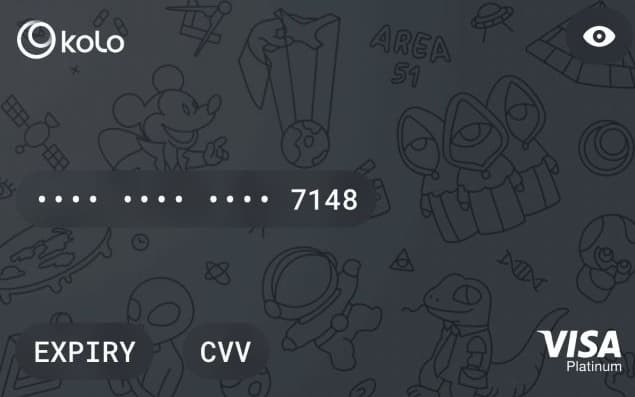
| Kolo | 5% BTC | $0 | 0% | Prepaid | Highest free-tier BTC rewards |
| Crypto.com Icy | 4% | CRO stake | 0% | Prepaid | Metal + airport lounge perks at GRU/GIG |
| ether.fi | 3% | $0 | 1% | Credit | Borrow-to-spend, keep staking yield |
| Binance | 2% | $0 | 0.9% conv | Prepaid | BRL-native, Pix funding, Flexible Earn |
| KAST | 2% | $0 | 0.5% | Prepaid | Free prepaid from Pix-funded balances into BRL spending |
COCA offers up to 8% cashback (1% at free Starter, scaling with staking $COCA tokens) with 0% FX and 6% APY on stablecoin deposits. Kolo delivers the highest free-tier return at 5% BTC cashback with 0% FX and $0 annual fee ($5/txn cap, $200/mo cashback cap).
Binance is the smoothest local option with BRL settlement and Pix deposits, though its 2% maximum from cashback crypto cards (capped at R$250/month) is lower than global alternatives.
For users who want to move Pix-funded exchange balances into ordinary supermarket, delivery, and subscription spending without first building around staking tiers or premium travel perks, KAST provides 2% with $0 annual fee, 0.5% FX, and keeps the workflow simple.
Best Card For Every Need in Brazil
Top 6 Crypto Cards in Brazil
Pix instant deposits create the world's fastest fiat-to-card funding pipeline while bypassing the 3.5% IOF tax on bank international transactions entirely. COCA leads with up to 8% cashback (1% at free Starter, scaling with staking $COCA to 8% at Elite with staking 30K $COCA) plus 6% APY on USDC deposits and 0% FX fees.
Note that under the new 17.5% flat tax (effective January 2026), cashback received in crypto tokens is taxable as ordinary income, and any subsequent appreciation is taxable as capital gains - but the IOF bypass and cashback returns still make the math favorable.
Kolo delivers the highest free-tier return at 5% BTC cashback with 0% FX ($5/txn cap, $200/mo cashback cap) - no staking required. Binance earns its spot not on raw rewards (2%) but on local integration: BRL settlement, Pix deposits, and Flexible Earn yield on idle crypto make it the smoothest Brazilian experience. ether.fi lets large holders borrow against staked ETH without triggering a disposition at all - a major advantage now that every disposition is taxable regardless of amount.
Crypto.com Icy adds 4% cashback and Priority Pass airport lounge access at Guarulhos, Galeao, and Brasilia for frequent travelers (requires CRO stake). KAST rounds out the list as the free Pix-to-card option for users who care more about turning exchange balances into normal BRL spending than about paying into lounge perks or staking ladders they may never use.
1. COCA Visa Card
Self-Banking: 8% Cashback + 6% APY + 0% FX
2. Kolo Card
Earn Bitcoin on Every Purchase: 5% BTC Cashback + Visa Platinum + 170+ Countries
3. Binance Mastercard
Spend Crypto in Brazil: Up to 2% Back in BNB

4. ether.fi Core Card
Zero Barriers: 3% Back on Every Purchase, No Stake Required
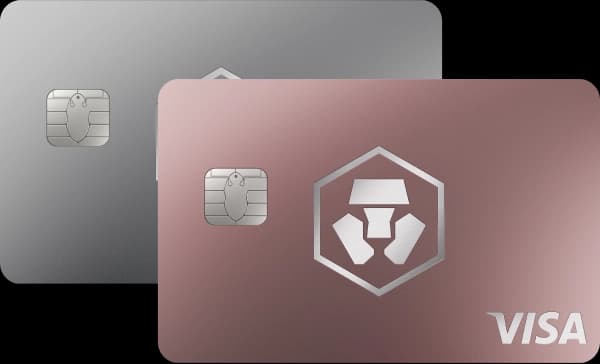
5. Private (Icy White / Rose Gold)
Elite Private Status: 4% Uncapped Cashback + Guests
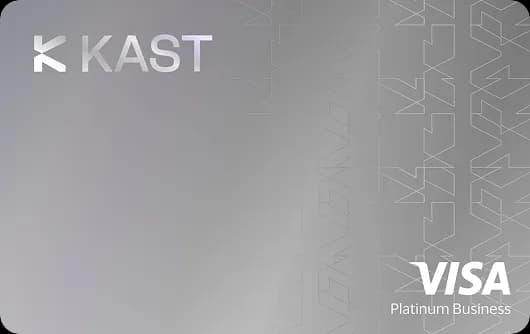
6. KAST K Card
Early Adopter Access: 2% Points + 4% $MOVE on Every Swipe
Crypto Card Regulation in Brazil
Brazil passed its comprehensive crypto regulatory framework (Lei 14.478/2022, the Legal Framework for Virtual Assets) in December 2022, making it the first major LATAM country with dedicated crypto legislation. The law took effect in June 2023.
The BCB (Banco Central do Brasil) was designated as the primary regulator for crypto service providers, while the CVM (Comissao de Valores Mobiliarios) oversees crypto assets classified as securities.
In November 2025, the BCB published three landmark resolutions that operationalize the 2022 law:
- Resolution 519: Establishes the authorization and supervision framework for Sociedades Prestadoras de Servicos de Ativos Virtuais (SPSAVs) - the new formal designation for all crypto service providers. Capital requirements range from R$10.8 million to R$37.2 million depending on the activity (custody, exchange, intermediation).
- Resolution 520: Sets operational requirements including mandatory segregation of client assets, independent audits, governance standards, and a dedicated compliance officer for each area of activity.
- Resolution 521: Classifies stablecoin transactions as foreign exchange operations. Any purchase, sale, or exchange of fiat-pegged tokens (USDT, USDC, BRZ) is treated as a foreign currency transaction, subject to the same reporting, taxation, and AML rules as traditional FX operations. This is a major development for crypto card users, since funding a card with USDC now falls under FX reporting requirements.
The core regulations took effect on February 2, 2026, with mandatory reporting for capital-market and cross-border operations beginning May 4, 2026. Existing operators must submit authorization requests to the BCB by October 30, 2026 or cease operations.
Binance holds full BCB registration in Brazil and is the most established card issuer in the market. Bybit has expanded LATAM operations and serves Brazilian users through its LATAM entity. Crypto.com operates under global coverage. Mercado Bitcoin (Brazil's largest domestic exchange) is building a financial super app with payments, digital fixed income, and remittances, but does not offer a Visa/Mastercard spending card.
DREX (Brazil's CBDC) was originally planned as a blockchain-based system, but the BCB shifted to a centralized model for the first phase after repeated difficulties with privacy solutions. Phase 1 is expected to launch in 2026 focused on credit lien reconciliation infrastructure, with blockchain integration deferred to a later phase. DREX's impact on crypto card funding remains uncertain until the second phase.
Brazil's regulatory clarity remains a significant advantage compared to Argentina, Colombia, or Mexico, where crypto card operations exist in more of a gray area. The BCB's clear SPSAV framework means card users have stronger consumer protections than in most other LATAM countries.
Tax Treatment of Card Rewards in Brazil
Brazil's Receita Federal (RFB, Federal Revenue Service) requires reporting of all crypto transactions via Instrucao Normativa RFB No. 1888/2019. The tax landscape changed fundamentally in 2025-2026:
The New 17.5% Flat Tax (Effective January 1, 2026)
Provisional Measure 1303 (published June 11, 2025) replaced Brazil's entire progressive crypto tax system with a flat 17.5% tax on all capital gains from crypto dispositions. The previous R$35,000/month exemption was eliminated entirely.
| Before 2026 (Old System) | From January 2026 (New System) | |
|---|---|---|
| Monthly exemption | R$35,000/month tax-free | None - all gains taxable |
| Tax rate | Progressive: 15% to 22.5% | Flat 17.5% |
| Loss carryover | Unlimited period | Reduced window |
| Cross-asset offset | Possible in some cases | Crypto losses cannot offset non-crypto gains |
Every crypto card transaction is technically a crypto disposition. Under the new system, any capital gain realized when you spend appreciated crypto through a card is taxable at 17.5% regardless of the monthly total. There is no minimum threshold.
Example: You spend R$5,000 in January through your crypto card from a BTC balance you bought at R$3,000. The R$2,000 gain is taxable at 17.5% = R$350 tax owed. Under the old system, this would have been entirely exempt.
Stablecoin funding minimizes this: If you fund with USDC or USDT, the disposition gain is near-zero (stablecoins do not appreciate), so the 17.5% tax applies to essentially nothing. This makes stablecoin funding even more important under the new rules than it was under the old exemption.
Double Taxation on Volatile Cashback
When you receive R$500 in BTC cashback, that is R$500 of ordinary income (taxable at your marginal IRPF rate when received). If BTC appreciates to R$750 before you spend or sell it, you owe capital gains of 17.5% on the R$250 appreciation when disposed.
| Cashback Type | Tax When Received | Tax When Spent/Sold | Complexity |
|---|---|---|---|
| BTC/BNB cashback | Ordinary income at FMV | Capital gains at 17.5% on any appreciation | High |
| USDT cashback | Ordinary income at approx. R$5.20 | Near-zero gain on disposal | Low |
| Points/rewards | Generally not taxable | Taxable when converted | Medium |
Foreign-Held Crypto Reporting
Crypto held on foreign exchanges must be reported in the Declaracao de Bens e Direitos (DBD, annual overseas assets declaration) if the value exceeds R$5,000. This applies to balances on Binance, Bybit, Crypto.com, and other international platforms. Monthly reporting via the e-Financeira system is required for transactions exceeding R$30,000. Failure to report carries penalties of 1.5% of the unreported amount per month.
Under the new BCB Resolution 521 (effective February 2026), stablecoin transactions are classified as foreign exchange operations. This means funding a crypto card with USDC or USDT now triggers FX reporting requirements alongside the existing e-Financeira obligations. The practical impact for cardholders: keep records of every stablecoin purchase and card funding event, as the BCB treats these as cross-border currency transactions.
IRPF brackets (for cashback income): Brazil's individual income tax (Imposto de Renda Pessoa Fisica) rates apply to cashback received as ordinary income:
| Monthly Income | IRPF Rate | Annual Threshold |
|---|---|---|
| Up to R$2,259 | 0% (isento) | R$27,110 |
| R$2,259-R$2,826 | 7.5% | R$33,919 |
| R$2,826-R$3,751 | 15% | R$45,012 |
| R$3,751-R$4,664 | 22.5% | R$55,976 |
| Over R$4,664 | 27.5% | Over R$55,976 |
Stablecoin strategy: Fund with USDT or USDC to minimize capital gains under the new 17.5% flat tax. Since stablecoins do not appreciate, the disposition gain when spending through a card is near-zero.
This is now the single most important tax optimization for Brazilian crypto card users, since the R$35,000 monthly exemption no longer exists. Stablecoin cashback also generates near-zero capital gains on disposal, though the income component (taxable at your IRPF rate when received) is the same regardless of token type.
How to Apply from Brazil
Brazilian crypto card applications require a CPF (Cadastro de Pessoas Fisicas), the 11-digit Brazilian tax identification number issued by the Receita Federal. Every Brazilian resident (citizen or foreign) needs a CPF for financial transactions.
A government-issued photo ID is required: either RG (Registro Geral) from the Secretaria de Seguranca Publica, or CNH (Carteira Nacional de Habilitacao) which serves as both driver's license and national ID.
Proof of Brazilian address (comprovante de residencia) via utility bill (conta de luz from CEMIG/Enel/Equatorial, conta de agua from SABESP/CEDAE, conta de gas), bank statement (extrato bancario from Itau/Bradesco/Santander/Nubank/Inter), or condominium fee receipt (boleto de condominio).
Binance offers the fastest verification for Brazilian users with existing accounts - typically instant via CPF validation. Bybit and Crypto.com also offer streamlined KYC for Brazilian users. Global issuers without a local Brazilian entity may require passport verification and take 1-3 business days.
Foreign residents in Brazil can apply using their CPF (obtainable at Receita Federal offices or Brazilian consulates abroad) plus their passport and CRNM (Carteira de Registro Nacional Migratorio, the foreigner ID replacing the old RNE). Digital nomads on Brazil's new Digital Nomad Visa (Visto Temporario para Nomades Digitais, launched 2022) qualify with their CPF, passport, and proof of Brazilian address.
CPF tip for foreigners: You can obtain a CPF online via the Receita Federal website if you have a Brazilian address and valid passport. Alternatively, apply at any Receita Federal office (Agencia da Receita Federal) with your passport - the process takes approximately 30 minutes and is free.
Physical cards from Binance ship domestically via Correios (Sedex or PAC) within 7-10 business days. International issuers ship from global fulfillment centers via Correios or private courier (FedEx, DHL), which can take 2-4 weeks - note that customs (Receita Federal aduana) may hold international shipments for inspection. Virtual card access is usually available within minutes of KYC approval and works immediately with crypto cards with Apple Pay and Google Pay.
Spending Tips for Brazil
Stablecoin-First Funding Strategy
With the R$35,000 monthly exemption eliminated as of January 2026, tax efficiency now depends entirely on minimizing capital gains per transaction. Fund your card with USDC or USDT, not appreciated BTC or ETH. Stablecoin dispositions generate near-zero capital gains, so the 17.5% flat tax applies to essentially nothing.
If you fund with appreciated BTC and realize R$2,000 in gains on a R$8,000 purchase, you owe R$350 in tax. The same purchase funded with USDC owes near-zero. Track all transactions using a crypto tax tool like Koinly or CoinTracker - every card swipe is now a reportable disposition regardless of amount.
Card Selection by Use Case
- COCA (up to 8% + 6% APY, free, 0% FX): Highest cashback plus yield on idle stablecoins
- Kolo (5% BTC, 0% FX, $0): Highest free-tier return, BTC cashback ($5/txn cap, $200/mo cashback cap)
- Binance (2%, free, Pix funding): Smoothest local experience with BRL settlement
- Crypto.com Icy (4%, CRO stake): Metal card with airport lounge access at GRU/GIG/BSB
- ether.fi (3%, borrow-to-spend): Best for ETH holders avoiding dispositions
- KAST (2%, 0.5% FX, free): Best free prepaid card for turning Pix-funded balances into everyday BRL spending
COCA vs Binance vs KAST: Brazilian Spending Math
All three are free at entry tier. Under the new 17.5% flat tax, cashback is taxable as ordinary income - but if you fund with stablecoins, the disposition itself generates near-zero capital gains.
| Monthly Spend (BRL) | COCA (8%, 0% FX) | Kolo (5%, 0% FX) | Binance (1.1% net after 0.9% conv, capped R$250/mo gross) | KAST (1.5% net after 0.5% FX) |
|---|---|---|---|---|
| R$3,000 | R$2,880/yr | R$1,800/yr | R$396/yr | R$540/yr |
| R$6,000 | R$5,760/yr | R$3,600/yr | R$792/yr | R$1,080/yr |
| R$10,000 | R$9,600/yr | R$6,000/yr | R$1,320/yr | R$1,800/yr |
| R$15,000 | R$14,400/yr | R$9,000/yr | R$1,380/yr (cap hit) | R$2,700/yr |
COCA leads dramatically at every spending level with 0% FX (requires staking $COCA tokens; free Starter tier earns 1%). Kolo at 5% BTC with 0% FX is the highest genuinely free option. At R$10,000/month, COCA returns R$9,600/year, Kolo returns R$6,000/year, versus R$1,320 from Binance or R$1,800 from KAST.
COCA rewards are in COCA tokens and Kolo rewards are in BTC - factor in token volatility and the 17.5% tax on cashback received as income. Binance hits its R$250/month gross cashback cap at R$12,500/month spending. Above that threshold, KAST returns more since it has no cap. Binance's 0.9% conversion fee applies to all spending regardless of cashback, making its net advantage over KAST narrow.
Spending Scenario: R$8,000/month (USDC Funding)
| Factor | USDC via COCA | USDT via Binance |
|---|---|---|
| Capital gains (17.5%) | Near-zero (stablecoin) | Near-zero (stablecoin) |
| Gross cashback | R$640/mo (8%) | R$160/mo (2%) |
| FX/conversion cost | R$0 (0% FX) | -R$72/mo (0.9% conversion) |
| Net cashback | R$640/mo | R$88/mo |
| Tax on cashback income (27.5% IRPF) | -R$176/mo | -R$24/mo |
| IOF savings vs bank card | R$200/mo (international only) | R$0 (BRL settlement) |
| Net annual value | approx. R$7,968 | approx. R$768 |
COCA's 8% gross rate with 0% FX makes it roughly 10x more valuable annually than Binance's 2% gross (1.1% net after 0.9% conversion). Binance's advantage is the instant Pix integration and BRL settlement. For purely domestic BRL spending, Binance's convenience may outweigh COCA's higher cashback. For international purchases (Amazon.com, AliExpress, travel), COCA's IOF elimination adds R$200+/month in savings that Binance's BRL settlement cannot match.
Pix Integration and On-Ramp
Fund your Binance or Bybit account via Pix for instant BRL deposits. The workflow: BRL via Pix to exchange (instant, free), convert to USDT or load card directly, spend at any Visa/Mastercard terminal. Pix is instant, 24/7, and free, making it the fastest crypto card funding mechanism in the world. No other country has a faster fiat-to-card pipeline.
Why Pix matters for crypto cards: Launched by the Banco Central in November 2020, Pix processed over 63 billion transactions worth $4.6 trillion in 2024, surpassing credit and debit cards combined. Over 170 million Brazilians (93% of the adult population) use Pix. The system works via CPF, phone number, email, or random key (chave aleatoria).
For crypto card users, Pix instant settlements mean you can go from BRL in your Nubank/Inter/C6 account to USDT on Binance to a funded crypto card in under 10 minutes, 24 hours a day, including weekends and holidays. No other fiat rail in the world matches this speed and availability for crypto on-ramping.
Borrow-to-Spend for Large Holders
Brazilian users with significant ETH holdings can use ether.fi (3% cashback) to borrow against staked positions. This avoids triggering a crypto disposition entirely - critical now that every disposition is taxable at 17.5% regardless of amount. At 7% borrow rate versus 17.5% capital gains tax on appreciated crypto, the math strongly favors borrowing when holding positions with large unrealized gains.
A user with R$100,000 in appreciated ETH (R$60,000 cost basis) who spends R$10,000/month through a card would owe R$1,050/month in capital gains tax on direct spending (17.5% on the 60% appreciation). Borrowing against the same ETH avoids the disposition and the tax entirely.
Local Payment Infrastructure
Contactless card acceptance is strong and growing rapidly across Sao Paulo, Rio de Janeiro, Brasilia, Belo Horizonte, Curitiba, Porto Alegre, and Recife. Major retailers (Magazine Luiza, Casas Bahia, Renner, C&A, Americanas), supermarkets (Carrefour, Extra, Pao de Acucar, Assai), malls (Shopping Iguatemi, Shopping Morumbi, BarraShopping), and restaurants accept contactless Visa/Mastercard. Apple Pay and Google Pay penetration is growing.
Pix vs card: Pix dominates peer-to-peer and is increasingly accepted at small merchants (padarias, restaurantes populares, feiras). Some smaller establishments prefer Pix over card due to lower merchant fees (Pix is free for merchants, while card processing fees run 1.5-3.5%). For these, keep a separate Pix-enabled account (Nubank, Inter, or C6 Bank all offer free accounts). Use your crypto card for everything card-accepted to maximize cashback earnings.
Brazil's fintech banking revolution: Nubank (over 100 million customers, the world's largest digital bank by customer count), Inter (over 30 million), C6 Bank, PagBank (from PagSeguro), and Neon have transformed Brazilian banking access. Before Nubank launched in 2013, the Big Five (Itau, Bradesco, Santander, Banco do Brasil, Caixa) charged high fees and served primarily urban middle and upper-class customers.
Now, millions of previously unbanked Brazilians have bank accounts and Pix access, which means they can also access the crypto card pipeline (BRL via Pix to exchange to crypto card). The fintech banks themselves do not offer crypto cards, but they serve as the frictionless on-ramp.
FX savings and the IOF tax: Brazilian bank cards charge IOF (Imposto sobre Operacoes Financeiras) on all foreign currency transactions. Since May 2025 (Presidential Decrees 12,466 and 12,467), IOF is 3.5% on all card types (credit, debit, and prepaid) for international purchases - a significant increase from the previous differentiated rates. On top of IOF, banks add their own FX spread of 1-4%.
We checked BRL conversion rates across all channels: the combined cost of a USD purchase on a Brazilian bank card can reach 4.5-7.5%. A crypto card funded with USDC bypasses IOF entirely - the transaction settles through Visa/Mastercard's international network from a USD-denominated balance. COCA charges 0% FX, so the savings versus a bank card are approximately 4.5-7.5%. On R$2,000/month in international spending, this saves approximately R$840-1,560/year, and you can line up the rest of the field in our comparison tool.
For Brazilians shopping on Amazon.com, AliExpress, Shein, or traveling to Argentina, Chile, or the US, the IOF elimination alone justifies a crypto card even before counting cashback.
Subscriptions: Brazilian streaming and digital subscriptions (Netflix, Spotify, Disney+, Globoplay, Amazon Prime Video, HBO Max) are recurring charges that earn cashback automatically. At 8% on R$100/month in subscriptions, that is R$96/year returned.
Airport spending: All major airports (GRU Guarulhos, GIG Galeao, BSB Brasilia, CNF Confins, CWB Curitiba) accept Visa/Mastercard contactless at all shops, restaurants, and duty-free. Crypto.com Icy White and above includes Priority Pass lounge access, valuable for frequent domestic and international travelers.
Supported Exchanges & Wallets in Brazil
Binance is the dominant crypto platform in Brazil with a dedicated Brazil-only Mastercard. Binance holds full BCB registration, supports Pix deposits (instant, free), and offers BRL settlement. The card provides up to 2% BNB cashback (capped at R$250/month).
The standout feature: spending directly from Flexible Earn while continuing to accrue yield on your deposited crypto. Binance is the smoothest crypto card experience available to Brazilians.
COCA reaches Brazil under LATAM/GLOBAL coverage with 8% cashback, 0% FX, and 6% APY on stablecoin deposits. The non-custodial model means your USDC stays in your wallet until you spend. For Brazilians who want maximum net returns (full 8%) without exchange volume requirements, COCA leads.
Kolo (5% BTC cashback, 0% FX, $0 annual fee) delivers the highest free-tier return available in Brazil. The $5/txn cap and $200/mo cashback cap bind above approximately $4,000/month in spend (roughly R$20,800) - well above typical Brazilian spending levels. BTC cashback is taxable at receipt under IRPF rates.
Crypto.com serves Brazilian users through its global platform with tiers from Midnight Blue (0% rewards, free) to Obsidian (5%, CRO stake). The Icy tier (4%, CRO stake) adds Priority Pass lounge access at GRU and GIG. Spotify and Netflix rebates at higher tiers add recurring value.
ether.fi (3%) offers borrow-to-spend for ETH holders. Avici serves Brazil through its LATAM coverage with a crypto-backed credit model - borrow against BTC/ETH collateral and spend without triggering a taxable disposition. Ledger CL Card (1%) also covers LATAM, providing self-custody spending from hardware wallet.
Jupiter (1% FX on non-USD) serves Solana ecosystem users with global coverage. For Brazilians in the DeFi community, this wallet-based card avoids exchange custody entirely.
Domestic exchanges: Mercado Bitcoin (Brazil's largest, building a financial super app with payments and digital fixed income), Foxbit (one of Brazil's oldest, founded 2014), BitcoinTrade, and NovaDAX focus on trading and custody. None offer a Visa/Mastercard spending card.
For on-ramping BRL, all support Pix deposits (instant, free). The BRL-to-USDT-to-card pipeline via Binance's Pix integration remains the fastest path: deposit BRL via Pix (instant), buy USDT (seconds), fund card (minutes). Total time: under 15 minutes.
Remittances: Brazil receives significant remittances from the US, Portugal, Japan, and Italy. Crypto cards can replace costly Western Union/MoneyGram transfers - a family member abroad loads USDC onto a card held by a relative in Brazil, bypassing 5-10% remittance fees. This is particularly relevant for the Brazilian diaspora in Portugal and Japan.
KAST (2%, 2-minute KYC at basic tier) and RedotPay (stablecoin-native, high limits) are the most direct options for Brazilian users who want to fund from Pix-routed balances without immediately moving into staking-heavy rewards tiers. xPlace (up to 2%) adds a self-custody alternative with Solana ecosystem integration.
Cost of living context for spending scenarios: Monthly expenses vary dramatically across Brazil. Sao Paulo and Rio de Janeiro average R$5,000-R$10,000/month for a single professional (rent, food, transport, entertainment). Smaller cities like Florianopolis, Curitiba, Belo Horizonte, and Recife run R$3,000-R$6,000/month.
Digital nomads in northeastern beach towns (Jericoacoara, Pipa, Porto de Galinhas) can operate at R$2,500-R$4,000/month. At every level, stablecoin-funded crypto card spending keeps the effective capital gains tax burden near zero under the new 17.5% flat rate.
Common Mistakes
1. Funding with appreciated crypto instead of stablecoins. Under the new 17.5% flat tax (effective January 2026), every crypto card transaction is a taxable disposition. If you spend BTC purchased at R$200,000 that is now worth R$500,000, the 60% appreciation means 60% of every purchase amount is taxable gain. On R$10,000/month in spending, that is R$6,000/month in realized gains and R$1,050/month in tax (17.5%). Over a year: R$12,600 in avoidable tax.
How to avoid it: Fund your card exclusively with USDC or USDT. Stablecoins do not appreciate, so the disposition gain is near-zero and the 17.5% tax applies to essentially nothing. Convert BTC/ETH to stablecoins in a single transaction (one taxable event) and then spend from stablecoins (near-zero gains per transaction).
2. Ignoring IOF savings on international purchases. Since May 2025, all Brazilian bank cards charge 3.5% IOF plus 1-4% bank FX spread on international purchases - a combined 4.5-7.5% cost. Many Brazilians still use Itau or Bradesco credit cards for Amazon.com, AliExpress, or travel abroad. On R$2,000/month in international spending, the difference between a bank card (4.5-7.5% total cost) and a crypto card with 0-1% FX is R$840-1,560/year in savings.
How to avoid it: Route all international purchases through a crypto card funded with USDC. This bypasses IOF entirely since the transaction settles through Visa/Mastercard's international network from a USD-denominated balance. Even before counting cashback, the IOF elimination alone justifies a crypto card.
3. Relying solely on Binance's capped cashback. Binance's 2% BNB cashback is capped at R$250/month gross (R$3,000/year). After the 0.9% conversion fee on all spending, net returns are much lower. A cardholder spending R$15,000/month on Binance earns approximately R$1,380/year net. The same spending on COCA (8% with 0% FX) returns approximately R$14,400/year - a R$13,020 annual difference.
How to avoid it: Use Binance for its Pix convenience on BRL-settled domestic purchases, but route high-volume and international spending through COCA (0% FX, up to 8% cashback at higher $COCA tiers). Maintain multiple cards and split spending strategically.
Closing Outlook
Brazil's crypto card market is evolving on three fronts. First, the BCB's SPSAV framework (Resolutions 519-521, effective February 2026) is the most comprehensive VASP regulation in Latin America. The October 2026 authorization deadline will determine which international issuers maintain Brazilian market access and whether domestic platforms like Mercado Bitcoin launch competing card products.
Second, DREX (Brazil's CBDC) is moving forward with a centralized first phase in 2026, though the shift away from blockchain means its impact on crypto card funding will be delayed until the second phase. Third, the classification of stablecoins as foreign exchange operations adds reporting complexity but also regulatory legitimacy to the stablecoin-funded card model.
The elimination of the R$35,000 monthly exemption makes stablecoin funding - not tax-free spending below a threshold - the primary tax optimization strategy. The BRL recovered nearly 8% against the dollar in the year to March 2026 (USD/BRL around 5.20), though the real remains approximately 60% weaker than a decade ago. Pix's dominance (63+ billion transactions in 2024, 93% adult adoption) ensures Brazil's fiat-to-crypto pipeline remains the world's fastest.
Brazil's combination of regulatory clarity, Pix instant funding, IOF bypass on international purchases, and strong card acceptance still makes it the best crypto card market in Latin America. The tax landscape changed significantly with the 17.5% flat rate, but stablecoin-funded spending keeps the effective tax burden near zero.
Written by SpendNode Editorial
Frequently Asked Questions
Which crypto card is best for Brazilian residents?
Binance's Brazil card is the strongest local option: BRL settlement, Pix top-ups, 0.9% conversion fee, and up to 2% BNB cashback (capped at R$250/month). For maximum cashback, COCA reaches up to 8% with 0% FX by staking COCA tokens (1% at free Starter). Kolo delivers 5% BTC cashback with 0% FX at $0 annual fee ($5/txn cap, $200/mo cashback cap). KAST (2%, 0.5% FX) is the simplest free option.
How does the new 17.5% flat tax affect crypto card spending?
Since January 2026, every crypto card transaction is a taxable disposition at 17.5% on any capital gains. The former R$35,000/month exemption was eliminated by Provisional Measure 1303 (June 2025). To minimize tax, fund your card with USDC or USDT - stablecoin dispositions generate near-zero capital gains, so the 17.5% applies to essentially nothing.
Can I top up my crypto card with Pix?
Yes, if you use Binance. Binance supports instant BRL deposits via Pix. The workflow is: Pix to exchange, convert to USDT or load card directly, then spend at any Visa/Mastercard terminal. Pix deposits are instant and free. Global issuers without Brazilian banking rails may require stablecoin on-ramp via a domestic exchange.
How much do I save vs a Brazilian bank card on USD purchases?
Brazilian banks charge IOF tax (3.5% on all card types since May 2025) plus 1-4% FX spread - a combined 4.5-7.5% cost. A crypto card bypasses IOF entirely. Crypto.com, COCA, and Kolo all offer 0% FX, saving 4.5-7.5% versus a bank card. On R$1,000 in USD purchases, you save approximately R$50-80 versus a traditional Brazilian credit card, before cashback.
Other Countries
View all 108 countries →


Recent Updates to Best Crypto Cards in Brazil
- Major tax section rewrite: R$35,000/month capital gains exemption eliminated by Provisional Measure 1303 (June 2025), replaced by flat 17.5% tax on all crypto gains effective January 2026. All references to the exemption updated throughout the page. Stablecoin-first funding strategy now positioned as primary tax optimization
- Updated regulatory section with BCB Resolutions 519, 520, and 521 (November 2025): SPSAV authorization framework with R$10.8M-R$37.2M capital requirements, mandatory client asset segregation, stablecoins classified as foreign exchange operations (effective February 2026), October 2026 authorization deadline. Corrected Mercado Bitcoin description (NOT acquired by Coinbase - deal fell through in 2022). Updated DREX status (shifted to centralized model, blockchain deferred)
- Corrected COCA FX fee from 0% to 1% for BRL transactions. Recalculated all break-even and spending scenario tables with net cashback after FX/conversion fees. Updated IOF rate from 4.38%/6.38% to 3.5% (standardized May 2025 by Presidential Decrees 12,466/12,467). Removed MetaMask (not available in Brazil - regions US/EEA/UK only)
- Updated Pix transaction volume from 42 billion to 63.4 billion (2024 actual). Updated user adoption from 150 million (70%) to 170 million (93% adult population). Common mistakes section rewritten for new tax reality
- Fixed KAST FX to 0.5%. Added Kolo and Tria. Swapped Obsidian to Icy in topCardSlugs. Fixed IOF rates in FAQ (3.5% all types since May 2025). Fixed Midnight Blue 0%. Added Kolo break-even column