


Best Crypto Cards in Argentina (2026)
Compare crypto debit cards for Argentine residents. With the cepo lifted and Impuesto PAIS eliminated, crypto cards now save Argentines the 30% Ganancias perception plus cashback - still the largest ROI in Latin America.


Verified for Argentina
37 crypto cards available
Local currency: ARS
Argentina's relationship with crypto cards has fundamentally changed in 2025 - and they are still worth using, just for different reasons. The Milei administration lifted the cepo cambiario (currency controls) on April 14, 2025 after six years, and the Impuesto PAIS (30% surcharge on foreign currency transactions) expired on December 23, 2024.
Argentines can now buy USD freely at the official rate for the first time since 2019. The blue dollar spread has collapsed to near-parity with the official rate.
The dolar tarjeta surcharge stack has been roughly halved. Before 2025, bank card foreign purchases incurred Impuesto PAIS (30%) plus Retencion de Ganancias (30%) plus IVA Digital (21%) - combined surcharges exceeding 60% on the official rate.
As of 2026, only the 30% Ganancias perception remains on card spending abroad (plus 21% IVA Digital on digital services). Unlike PAIS, the Ganancias perception is refundable through your annual ARCA tax return. A crypto card still bypasses this entirely - no perception, no refund paperwork, and cashback on top.
| Card | Max Cashback | Annual Fee | FX Fee | Card Type | Best For |
|---|---|---|---|---|---|
| COCA | Up to 8% | $0 | 0% | Debit | $COCA tiers (1% free) + 6% APY |
| Tria | Up to 6% | $20-$250 | 0% | Debit | Yield-linked rewards, zero FX |
| Kolo | 5% BTC | $0 | 0% | Prepaid | Highest free-tier cashback |
| Crypto.com Icy | 4% | CRO stake | 0% | Prepaid | Metal + airport lounge perks at EZE |
| ether.fi | 3% | $0 | 1% | Credit | Borrow-to-spend, keep ETH |
| RedotPay | - | $0-$100 | 1.2% | Prepaid | Stablecoin spending |
| KAST | 2% | $0 | 0.5% | Prepaid | Low-cost stablecoin card for peso-to-dollarized spending |
| Bitget Wallet | 0% | $0 | 1.7% | Prepaid | DCS wallet spending |
| Ledger | 1% | $0 | 1.75% | Debit | Hardware wallet spending |
| Avici | 0% | $0-$30 | 0% | Credit | Crypto-backed credit |
| Gate.io Classic | 1-5% | $0 | 0.4% | Debit | Gate ecosystem (VIP-tiered) |
| xPlace | 0.5-2% | $0-$5,000 | 1% | Debit | Solana ecosystem + XP farming |
| Jupiter | 4-10% JupUSD | $0 | 1% | Debit | DeFi-native spending |
According to our regional data, Argentina has the broadest card selection in Latin America with 11+ issuers available through LATAM and GLOBAL coverage.
COCA leads on raw cashback (up to 8% with staking $COCA, 1% free) plus 6% APY on stablecoins — critical for Argentines using USDC as an inflation hedge. Tria offers up to 6% with 0% FX and yield-linked rewards — Signature at 4.5% ($109/yr) or Premium at 6% ($250/yr).
Kolo delivers 5% BTC cashback with 0% FX at $0 ($5/txn cap, $200/mo cashback cap). ether.fi lets ETH holders spend without selling — important given Argentina's 15% cedular tax.
KAST fits users moving from pesos into stablecoin spending: 2% cashback crypto cards, $0 annual fee, 0.5% FX. Gate.io Classic provides VIP-tiered cashback up to 5%.
Best Card For Every Need in Argentina
Top 7 Crypto Cards in Argentina
With the cepo lifted and Impuesto PAIS eliminated, Argentina's crypto card value proposition has shifted from "survival strategy" to "optimization tool." The remaining 30% Ganancias perception on bank card foreign purchases (refundable through ARCA, but a cash flow drag) is still avoided entirely by crypto cards.
COCA scales to up to 8% with staking $COCA (1% at free Starter) and 6% APY on stablecoins - critical for Argentines using USDC/USDT as an inflation hedge. Tria Signature at 4.5% with 0% FX ($109/yr) offers yield-linked rewards without volatile token exposure at the 15% cedular rate. Kolo at 5% BTC with 0% FX is the highest genuinely free option.
ether.fi's borrow-to-spend avoids triggering the 15% cedular tax entirely. Crypto.com Icy adds 4% cashback with airport lounge access at Ezeiza (CRO stake). KAST at 2% with $0 annual fee and 0.5% FX suits users turning pesos into stablecoin spending. Gate.io Classic provides VIP-tiered cashback (up to 5%). Every card here bypasses the dolar tarjeta Ganancias perception entirely.

1. COCA Visa Card
Self-Banking: 8% Cashback + 6% APY + 0% FX

2. Tria Signature Card
High-Yield Mastery: 15% APY + Visa Signature Perks
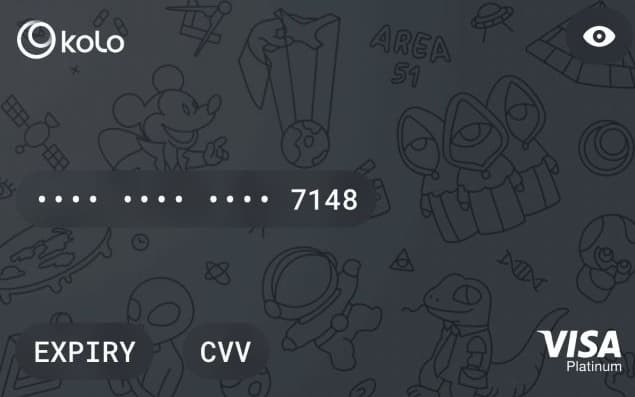
3. Kolo Card
Earn Bitcoin on Every Purchase: 5% BTC Cashback + Visa Platinum + 170+ Countries
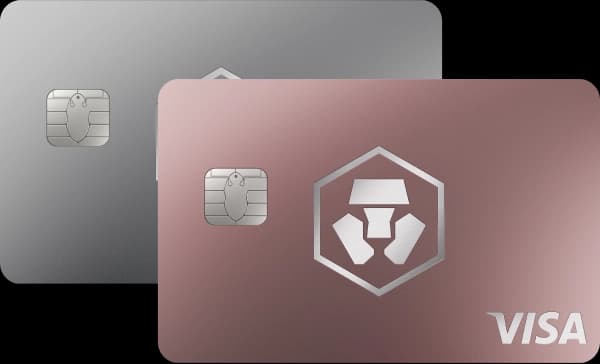
4. Private (Icy White / Rose Gold)
Elite Private Status: 4% Uncapped Cashback + Guests

5. ether.fi Core Card
Zero Barriers: 3% Back on Every Purchase, No Stake Required

6. KAST K Card
Early Adopter Access: 2% Points + 4% $MOVE on Every Swipe

7. Gate Card Classic
Direct Exchange Spending: Visa Platinum + Up to 5% Cashback
Crypto Card Regulation in Argentina
Argentina regulates crypto through a combination of the CNV (Comision Nacional de Valores, the securities regulator), the BCRA (Banco Central de la Republica Argentina), and the UIF (Unidad de Informacion Financiera, the financial intelligence unit for AML compliance).
Law 27,739 (March 2024) created Argentina's formal VASP (Virtual Asset Service Provider) framework, granting the CNV oversight of crypto companies. VASPs with monthly volumes exceeding 35,000 UVA (approximately $29,000 USD) must register with the CNV. Registration deadlines were staggered: individuals by July 1, 2025, Argentine companies by August 1, and foreign companies by September 1.
Registered VASPs must undergo annual audits and pay approximately $10,000/year in CNV fees. UIF Resolution 49/2024 requires VASPs to maintain risk-based AML programs, designate an MLRO (Money Laundering Reporting Officer), and systematically report transactions at or above 6 SMVM (Salario Minimo Vital y Movil), alongside travel-rule obligations.
The cepo cambiario was lifted on April 14, 2025, backed by a $20 billion IMF agreement. For the first time since 2019, individuals can purchase USD freely at the official rate. The government adopted a moving exchange rate band (initially 1,000-1,400 ARS/USD, adjusting 1% monthly).
The Impuesto PAIS (30% surcharge on foreign currency transactions) expired on December 23, 2024. The remaining dolar tarjeta surcharge is the 30% Ganancias perception, which is refundable through annual ARCA tax returns.
The BCRA is considering allowing banks to offer crypto services (BTC, ETH, USDC, USDT, XRP), with new rules potentially taking effect by April 2026. This would integrate crypto into Argentina's traditional banking system for the first time. The City of Buenos Aires began accepting crypto for tax payments in August 2025.
Tax Treatment of Card Rewards in Argentina
Argentina taxes crypto gains as "cedular" income at a flat 15% rate for Argentine-sourced gains. Spending crypto through a card is treated as a disposition (venta or permuta), triggering this tax on any appreciation.
The Inflation Trap
Here is the problem unique to Argentina: even with inflation coming down from 200%+ (2023) to roughly 30-40% annualized (2026), the peso-denominated cost basis of any crypto purchased months or years ago will show large nominal gains even if the real purchasing power has not changed.
Buy BTC for ARS 1,000,000 when that equaled $1,000 USD. A year later the same BTC might be worth ARS 1,400,000 due to peso depreciation alone, but that is still $1,000 USD. You owe 15% on the ARS 400,000 "gain" that is entirely due to inflation, not real appreciation. The problem was far worse in 2023-2024 (100%+ inflation) but remains meaningful.
Stablecoin spending minimizes this. USDT acquired at ARS 900 might be worth ARS 1,800 a year later due to peso depreciation, but the cost basis tracking is simpler and the "gains" are purely from ARS devaluation.
Cashback Taxation
| Cashback Type | Tax When Received | Tax When Spent/Sold | Real Impact |
|---|---|---|---|
| BTC cashback | Income at ARS FMV | 15% on nominal ARS gain | High (inflation inflates gains) |
| USDT cashback | Income at ARS FMV | 15% on ARS depreciation gain | Medium (predictable) |
| Points / rewards | Generally not taxable | Taxable when converted | Low |
The current administration has signaled potential crypto tax reforms, but as of 2026, the 15% cedular regime applies. Keep records of every transaction with USD-equivalent values, not just ARS, to support any future tax dispute.
How to Apply from Argentina
Argentine crypto card applications require a DNI (Documento Nacional de Identidad), proof of Argentine address (comprobante de domicilio: utility bill such as Edenor/Edesur, bank statement from Galicia/BBVA/Macro, or service bill), and your CUIT or CUIL number (Clave Unica de Identificacion Tributaria/Laboral) for tax reporting.
Exchange-linked cards from Crypto.com typically offer fast verification for users with existing accounts. New users should expect 1-3 business days. Physical cards from global issuers ship from international fulfillment centers and can take 3-6 weeks to arrive in Argentina (Correo Argentino or private courier). Virtual card access is usually available within minutes.
Note: Some global issuers may require a passport in addition to DNI for non-Argentine nationals residing in Argentina.
Spending Tips for Argentina
Banking System: The Dolar Tarjeta After Reforms
Argentina's banking sector is modern and improving under Milei's reforms. Banco Galicia (largest private bank), BBVA Argentina, Banco Santander Rio, Banco Macro (largest domestic), and HSBC Argentina all issue Visa and Mastercard that work domestically without friction. International purchases have gotten cheaper but still carry a surcharge.
The Impuesto PAIS (30% definitive surcharge) expired on December 23, 2024, and the cepo was lifted on April 14, 2025 - two historic changes that cut the dolar tarjeta cost roughly in half.
As of 2026, bank card foreign purchases incur the 30% Ganancias perception (a withholding against your annual income tax, refundable through ARCA) plus 21% IVA Digital on digital services (Netflix, Spotify, etc.), plus the bank's FX spread (1-3%). The total surcharge is now 30-51% above the official rate, down from 60-100% before reforms.
The key difference from before: the 30% Ganancias perception is NOT a final cost like PAIS was. You can recover it by filing through ARCA after the fiscal year ends. In practice, many Argentines either do not file or wait 6-12 months for the refund - meaning it functions as a 0% interest loan to the government. A crypto card bypasses this entirely: no perception, no paperwork, no waiting for refunds.
The Stablecoin-First Strategy
Even with the cepo lifted, holding stablecoins remains the smart default in Argentina. Inflation has come down from 200%+ to roughly 30-40% annualized under Milei, but that still erodes peso purchasing power faster than nearly any other currency.
Acquire USDT or USDC through Binance P2P (still the most liquid market in Argentina), through banks now that USD purchases are unrestricted, through the MEP (Mercado Electronico de Pagos) dollar rate via local brokers (Ualala, Brubank, Lemon Cash), or through freelance USD income (many Argentine freelancers on Upwork, Fiverr, and Deel receive USD). When you spend through a crypto card, the conversion happens at market rates with no Ganancias perception and no IVA Digital.
The Dolar Tarjeta vs Crypto Card Math (Post-Reform)
| Purchase | Bank Card (official + 30% perception) | Bank Card (after ARCA refund) | Crypto Card (0% FX) | Savings vs no refund |
|---|---|---|---|---|
| $100 USD online | ARS 143,000 | ARS 110,000 | ARS 110,000 | 23% |
| $500 USD flight | ARS 715,000 | ARS 550,000 | ARS 550,000 | 23% |
| $50 USD Netflix | ARS 83,000 (+ IVA Digital) | ARS 64,000 | ARS 55,000 | 34% |
ARS figures are approximate based on the exchange rate band in effect (March 2026). With the blue dollar now near parity with the official rate, the crypto card FX advantage has narrowed significantly.
The remaining savings come from: (1) avoiding the 30% Ganancias perception entirely (not just deferring it through ARCA), (2) avoiding IVA Digital on streaming and digital services, and (3) earning 1-8% cashback on top. For users who diligently file ARCA refunds, the savings are mainly from cashback and IVA avoidance. For users who do not file, crypto cards still save 23-34% per transaction.
Card Selection by Use Case
- Best free stablecoin card: KAST (2%, free, 0.5% FX)
- Highest cashback: COCA (up to 8% + 6% APY) or Gate.io Classic (up to 5% VIP-tiered)
- Highest free-tier: Kolo (5% BTC, 0% FX, $0) ($5/txn cap, $200/mo cashback cap)
- Yield-linked, no token risk: Tria Signature (4.5%, 0% FX, $109/yr)
- Self-custody: ether.fi (3%, 1% FX, borrow-to-spend) or Ledger CL (1%, hardware wallet)
- Premium perks: Crypto.com Icy (4% + airport lounge perks at EZE + rebates, CRO stake)
- Crypto-backed credit: Avici (keep your crypto, spend a loan)
Spending Scenario: $500 USD/month in Stablecoins
At $500 USD/month through KAST at 2% cashback and 0.5% FX:
| Factor | USDT via Crypto Card | Bank Card (no ARCA refund) | Bank Card (with ARCA refund) |
|---|---|---|---|
| Effective ARS cost | approx. ARS 553,750/mo (market + 0.5% FX) | approx. ARS 715,000/mo (official + 30%) | approx. ARS 550,000/mo (after refund) |
| Ganancias perception | $0 | $150/mo (refundable) | $0 (refunded) |
| Cashback (2%) | +$10 USD/mo | $0 | $0 |
| Annual perception avoided | $1,800 | Baseline | Refunded (6-12 mo delay) |
| Annual cashback | +$120 USD | $0 | $0 |
| Total annual benefit vs no refund | approx. $1,920 USD | $0 | $1,800 (delayed) |
For users who do not file ARCA refunds, a crypto card saves approximately $1,920/year in avoided perceptions plus cashback. For diligent filers, the savings narrow to $120/year in cashback plus the time value of not lending 30% of every transaction to the government for 6-12 months. Either way, the card pays for itself.
Cost of Living by Area
Palermo/Recoleta (Buenos Aires upscale): Rent ARS 400,000-1,200,000/month (USD 380-1,140 at blue rate) for a 2-bedroom. Restaurants USD 10-30/meal. Card acceptance is universal - virtually every restaurant, shop, and supermarket in Palermo Soho, Palermo Hollywood, and Recoleta accepts contactless Visa/Mastercard. The best area in Argentina for daily crypto card use.
Belgrano/Nunez (Buenos Aires upper-middle): Rent ARS 300,000-700,000/month. Full card acceptance at Unicenter mall, Coto, Carrefour, and neighborhood restaurants.
Microcentro/San Telmo (Buenos Aires downtown): Rent ARS 200,000-500,000/month. Tourist area with full card acceptance at hotels, restaurants, and attractions. San Telmo Sunday market is cash-only.
Cordoba Capital (second city): Rent ARS 150,000-400,000/month. Good card acceptance at shopping centers (Patio Olmos, Nuevocentro), supermarkets, and formal restaurants. Cheaper than Buenos Aires by 20-30%.
Rosario (third city): Rent ARS 130,000-350,000/month. Card acceptance at malls (Alto Rosario) and formal establishments. Growing tech sector.
Mendoza (wine region): Rent ARS 120,000-350,000/month. Tourism-driven card acceptance at bodegas, restaurants, and hotels. Wine region tourism generates significant USD-denominated spending.
The Milei Effect, LIBRA Scandal, and Crypto Adoption
Argentina already had one of the world's highest crypto adoption rates before Milei - Chainalysis ranked it 15th globally in 2023. About 60% of Argentina's crypto transaction volume involves stablecoins, and among crypto-paid workers, 75% prefer to receive income in stablecoins.
The Milei administration's economic reforms have been broadly pro-crypto: lifting the cepo, allowing banks to consider crypto services, and passing Law 27,739 for VASP regulation. However, the LIBRA scandal (February 14, 2025) damaged trust.
President Milei promoted the $LIBRA memecoin on his official X account, calling it "an example of market-driven innovation." The token surged from near-zero to $5.20 (a $4.5 billion market cap) before collapsing within hours in what blockchain analysts identified as a coordinated insider sell-off. Investors lost approximately $251 million.
Milei and associates face fraud, bribery, and abuse of power charges. The government shut down the task force investigating the scandal (the UTI, Unidad de Tareas de Investigacion), though the judicial probe has been revived.
Despite the scandal, Argentina's crypto infrastructure continues to mature. Local fintech platforms like Lemon Cash (2M+ users), Belo, Buenbit, Ripio, and Brubank (neobank with crypto features) have created an ecosystem where crypto card spending is normalized, not niche. Argentine merchants are among the most crypto-aware in the world. A waiter in Palermo Soho understands that you are paying with a crypto card and does not find it unusual.
Online Shopping and Subscriptions
International online purchases remain the strongest use case for crypto cards post-reform. Digital services (Netflix, Spotify, Amazon, Google One, Canva, Adobe) paid through a Galicia card still incur the 30% Ganancias perception plus 21% IVA Digital - a combined 51% surcharge above the official rate.
Through a crypto card: market-rate equivalent, with card FX fees ranging from 0% (COCA, Crypto.com) to 1.75% (Ledger). For digital services specifically, the savings are still substantial: 30-50% per transaction. For non-digital international purchases (flights, physical goods), the savings are smaller (0-30% depending on ARCA filing habits) but cashback adds value on top.
MercadoLibre (Argentina's Amazon equivalent) accepts local Visa/Mastercard natively, so the crypto card advantage is primarily for international purchases and services.
Cross-Border Spending
Uruguay (Colonia/Montevideo ferry): The most common weekend trip from Buenos Aires. Buquebus ferry to Colonia del Sacramento is 1 hour. Shopping in Montevideo's Punta Carretas mall with a crypto card avoids ARS-to-UYU-to-USD conversion chains. Chile (Mendoza-Santiago bus/flight): Wine country to ski country. A crypto card eliminates the ARS-to-CLP conversion.
Brazil (Iguazu Falls, Florianopolis beach tourism): Crypto card avoids the ARS-to-BRL conversion and Brazilian merchant surcharges. Miami/US (the classic Argentine shopping destination): Direct flights from Ezeiza. A crypto card loaded with USDT converts at market rate without the 30% Ganancias perception that bank cards incur.
Local Payment Infrastructure
Contactless Visa/Mastercard acceptance is nearly universal in Buenos Aires, Cordoba, Rosario, and Mendoza. Supermarkets (Coto, Carrefour, Jumbo, Disco), restaurants, cafes, pharmacies, and retail chains all accept contactless tap.
MercadoPago QR dominates peer-to-peer and small-merchant payments (food trucks, kioscos, deliveries) but operates on a separate network from card rails. Apple Pay and Google Pay support varies by issuer but is growing. Argentina has among the highest contactless card adoption rates in Latin America.
Supported Exchanges & Wallets in Argentina
Argentina has the broadest card issuer selection in Latin America, with 11 vendors serving the market through LATAM and GLOBAL coverage.
Tria offers 0% FX across all tiers — Signature at 4.5% ($109/yr) and Premium at 6% ($250/yr). Yield-linked rewards avoid volatile token exposure at Argentina's 15% cedular tax rate.
Kolo (5% BTC cashback, 0% FX, $0 annual fee) is the highest free-tier return available in Argentina ($5/txn cap, $200/mo cashback cap).
Crypto.com offers a structured tier system. The free Midnight Blue (0% cashback) provides basic access, while the Icy tier (4%, CRO stake + airport lounge access) adds value at Ezeiza (EZE) and Jorge Newbery Aeroparque (AEP).
KAST is the practical route from Binance P2P USDT into international spending. The appeal in Argentina is not speed for its own sake; it is keeping everyday card spend live from stablecoin balances without adding another exchange integration or staking framework. At $0 annual fee and 2% cashback, it fits that use case well.
COCA at up to 8% (1% free Starter, scaling with staking $COCA) plus 6% APY provides the highest combined yield. RedotPay on the Solana card suits USDC-native spenders. Gate.io Classic offers 1-5% VIP-tiered cashback (1% at T0 with a $5/mo redemption cap, scaling to 5% at T4).
ether.fi addresses Argentina's 15% cedular tax on crypto disposals. Borrowing against staked ETH creates no taxable event - you are spending a loan, not disposing of crypto. For Argentine ETH holders, this tax deferral can save 15% of every purchase amount in tax. Avici offers a similar crypto-backed credit approach for users comfortable with the secured credit model.
Ledger CL provides self-custody spending - funds stay in your hardware Ledger device until the moment of purchase. Bitget Wallet provides DCS wallet spending with a 1.7% FX fee. xPlace and Jupiter serve Solana/DeFi users.
On-Ramps: The Most Liquid P2P Market in LATAM
Binance P2P is the dominant on-ramp. Argentina ranks among Binance's top 5 global P2P markets by volume. ARS/USDT spreads are typically 1-2% above blue market rates, with hundreds of active sellers offering MercadoPago, bank transfer (Galicia, BBVA, Macro), and Brubank/Ualala as payment methods.
Local exchanges provide additional pathways: Lemon Cash (2M+ users, the most popular Argentine crypto app), Belo, Buenbit, Ripio (the oldest Argentine crypto platform), and Satoshi Tango all offer ARS-to-USDT/USDC conversion. Many also issue their own ARS-denominated crypto cards for domestic spending, but these lack the international card benefits (0% FX, cashback) of global issuers.
The MEP dollar (dolar bolsa) rate through Argentine brokers (Invertir Online, Balanz, Bull Market) provides a semi-official pathway from ARS to USD-equivalent assets that can then fund crypto card wallets. The CCL (Contado con Liquidacion) rate is another legal channel for moving ARS into dollar-denominated value.
The key for Argentine users post-reform: the dolar tarjeta premium has shrunk from 60-100% to 30-51%, but crypto cards still deliver real savings. For digital services (streaming, SaaS, cloud), the IVA Digital + Ganancias perception combination means bank cards still cost 51% more than crypto cards. For general international spending, the 30% Ganancias perception avoidance is the main draw - plus cashback (1-8%) and the convenience of never filing ARCA refund paperwork. Prioritize cards with 0% FX (COCA, Crypto.com, ether.fi, Avici) for maximum benefit.
Written by SpendNode Editorial
Frequently Asked Questions
How much do I save vs a bank card after the cepo was lifted?
The cepo was lifted in April 2025 and Impuesto PAIS expired in December 2024, cutting the dolar tarjeta surcharge roughly in half. Bank cards still incur a 30% Ganancias perception (refundable through ARCA) plus 21% IVA Digital on streaming and digital services. A crypto card avoids both entirely. For users who do not file ARCA refunds, savings are 23-34% per transaction plus cashback. For diligent filers, the value is mainly from cashback (1-8%) and avoiding the 6-12 month refund wait.
Is it legal to spend crypto through a card in Argentina?
Yes. Law 27,739 (March 2024) created a formal VASP framework under CNV oversight, and crypto card spending operates within this legal framework. Tax obligations still apply: 15% cedular tax on capital gains from crypto dispositions. The cepo cambiario has been lifted as of April 2025, so there are no longer restrictions on USD access through banks either.
Which card is best for Argentine stablecoin spending?
COCA (up to 8% with staking, 0% FX) offers the highest cashback. Tria Signature (4.5%, 0% FX, $109/yr) offers yield-linked rewards without volatile token risk. Kolo (5% BTC, 0% FX, $0) is the highest free-tier return. KAST (2%, 0.5% FX, $0) is the simplest stablecoin-to-spending option. ether.fi (3%, 1% FX, borrow-to-spend) avoids triggering the 15% cedular tax. Crypto.com Icy (4%, CRO stake) adds lounge access at EZE.
What happened with the LIBRA scandal?
On February 14, 2025, President Milei promoted the $LIBRA memecoin on his official X account. The token surged to $5.20 before collapsing in what analysts identified as a coordinated insider sell-off, causing approximately $251 million in investor losses. Milei faces fraud and abuse of power charges. The scandal damaged public trust in crypto but has not affected the regulatory framework - Law 27,739 and VASP registration continue operating normally.
Other Countries
View all 108 countries →


Recent Updates to Best Crypto Cards in Argentina
- Major economic context rewrite: Cepo cambiario lifted April 14, 2025 (backed by $20B IMF agreement). Impuesto PAIS expired December 23, 2024. Dolar tarjeta surcharge dropped from 60-100% to 30-51% (30% Ganancias perception, refundable through ARCA, plus 21% IVA Digital on digital services). All savings calculations, comparison tables, and spending scenarios recalculated for post-reform reality
- Major regulatory update: Added Law 27,739 (March 2024, VASP framework under CNV oversight), UIF Resolution 49/2024 (AML/travel rule), BCRA considering bank crypto services (April 2026), Buenos Aires accepting crypto for tax payments (August 2025). Added LIBRA scandal (February 14, 2025) - Milei promoted $LIBRA memecoin, $251M investor losses, fraud charges, task force shutdown and judicial probe revival
- Removed MetaMask (US/EEA/UK only, not available in Argentina) and Bybit (0 card variants in the system) from all tables, narrative, card selection, and exchanges section. Issuer count corrected from 13 to 11. Fixed KAST FX from '0.5-1.75%' to '0.5%'. Updated stablecoin strategy, online shopping, and closing sections for post-cepo reality
- Fixed ether.fi table: FX 0% to 1%, fee 'Points' to '$0'. Added Tria and Kolo to table, card selection, exchanges. Fixed Crypto.com Jade to Icy in card selection. Updated intro, rationale, topCardSlugs, and FAQs