
Best Crypto Cards for High Spenders (2026)
Compare premium crypto cards for high spenders with break-even math, cashback caps, staking tradeoffs, and annual-fee alternatives. Built for $8K+ monthly spend.
Featured


Curated for High Spenders
23 matching cards
Filtered by metal card, lounge access, subscription rebates
At $8,000/month in spending, the difference between a 2% card and an 8% card is $5,760/year. At $15,000/month, it is $10,800. We rate premium crypto cards as essential for people at these spending levels, where the staking requirements and annual fees are trivially justified by the cashback math.
The cards on this page all offer some combination of metal construction, airport lounge access, subscription rebates, and cashback rates between 2% and 10%.
The real question is not whether a premium card is worth it. At high spending volumes, it obviously is. The question is which entry model fits your risk tolerance: staking a volatile token, maintaining VIP trading status, or paying a known annual fee. Each model has a different risk profile, and at the dollar amounts involved, getting this wrong costs thousands.
If monthly volume is not the main filter, our best cards overall give the cleaner market-wide starting point.
Premium Card Models Compared
| Card | Max Cashback | Entry Model | Entry Cost | Risk Profile | Extra Perks |
|---|---|---|---|---|---|
| Plutus | 9% (capped) | PLU staking + fee | PLU stake + $240/yr | Medium (PLU + spend cap) | 3 perk slots |
| Wirex Elite | 8% | Annual fee | $360/year | None (known cost) | Priority Pass, ATM |
| COCA Elite | 8% | Stake $COCA | $COCA stake (30-day cooldown) | Token price volatility | 6% APY, 0% FX |
| Bitget Card | 8% | BGB balance | BGB tiers | Token price volatility | No annual fee |
| Tria Premium | 6% | Annual fee | $250/year | None (known cost) | 0% FX, 0% ATM, up to 15% APY |
| Crypto.com Obsidian | 5% | CRO staking | approx. $400K in CRO | High (token volatility) | Priority Pass, rebates |
| Crypto.com Icy White | 4% | CRO staking | approx. $40K in CRO | Medium (token volatility) | Lounge + guest |
| ether.fi Pinnacle | Points | Points (50K) | 50,000 points | None | Metal, self-custody |
The core trade-off: Staking a volatile token is a bet. An annual fee is a known cost. VIP trading volume is free if you already trade. Run the numbers for your specific spending volume before committing capital.
How Premium Tier Systems Actually Work
Premium crypto cards use three fundamentally different models to gate access to top-tier rates. Understanding how each one works prevents expensive surprises.
The Staking Model (Lock Capital, Unlock Rate)
How it works: You buy a specific token (CRO, PLU, $COCA) and lock it by staking. The amount you stake determines your cashback tier. Higher stake = higher cashback rate.
The catch: Your staked capital is exposed to token price volatility. If CRO drops 50%, your $40,000 stake becomes $20,000 but your cashback rate stays the same. You cannot unstake without dropping to a lower tier (and lower cashback rate). The card effectively holds your capital hostage: sell the token and you lose the premium rate.
Best for: Users who already hold the token and believe in its long-term value. The staking is not a cost if you would hold the token anyway.
Worst for: Users who buy the token solely for card benefits. If the only reason you hold CRO is for the Icy White card, you are making a leveraged bet on a single token to earn 4% cashback.
The Token Holding Model (Hold, Do Not Lock)
How it works: You hold a specific token (BGB for Bitget) in your wallet to unlock higher cashback tiers. Unlike the staking model, your tokens are NOT locked - you can sell at any time, though selling drops your tier.
The catch: Your tier depends on the dollar value of your holdings. If BGB drops 40%, your holdings may fall below the threshold for your current tier. You can sell to limit losses, but you lose the premium rate. The token's price risk is real but not trapped by a lock period.
Best for: Users who want premium rates without capital lockup. The flexibility to exit at any time makes this the middle ground between staking (locked, high risk) and annual fees (fixed, zero risk).
The Annual Fee Model (Pay Fixed, Earn Variable)
How it works: You pay a flat annual fee ($360 for Wirex Elite) and receive the premium cashback rate immediately. No token exposure, no staking risk, no volume requirements.
The catch: The fee is a sunk cost regardless of how much you spend. At $8,000/month, the $360 fee is trivial (0.4% of annual spend). Below $750/month, the fee erodes most of the cashback advantage over a free 4% card.
Best for: Anyone who wants predictable, risk-free premium returns. The fee is your insurance against token volatility.
What High Spenders Need in a Crypto Card
3%+ cashback rate that holds up at high monthly volumes (check for caps)
Airport lounge access - Priority Pass or equivalent network
Monthly spending limits of $25,000+ without manual approval
Subscription rebates (Spotify, Netflix, Amazon Prime) that stack with cashback
Metal card - because you are spending enough to justify one
Top 6 Cards for High Spenders
At $8,000/month, a 1% cashback difference is $960/year, so premium card costs pay for themselves in weeks. Plutus offers up to 9% with 3 perk slots on Premium (GBP 19.99/month) but the GBP 1,000/month eligible spend cap means it flatlines at approx. $1,400/year cashback regardless of how much you spend, making it poorly suited for high spenders. Wirex Elite at 8% is the known-cost option: $360/year, no token risk, Priority Pass included.
COCA matches 8% within a $10,000/month allowance with no annual fee, but requires staking $COCA tokens (locked during membership, 30-day cooldown). Crypto.com Obsidian and Icy represent the staking model at different capital levels: Obsidian demands roughly $400K in CRO for 5% plus Priority Pass with a guest, while Icy enters at roughly $40K for 4% plus Priority Pass. ether.fi Pinnacle adds a self-custody metal card with restaking yield for high spenders who refuse to deposit to exchanges.

1. Plutus Visa Card
Non-Custodial PLU Rewards on Eligible Spend + Lifestyle Perks

2. Wirex Elite Card
Elite Travel Status: 8% Rewards + Priority Support
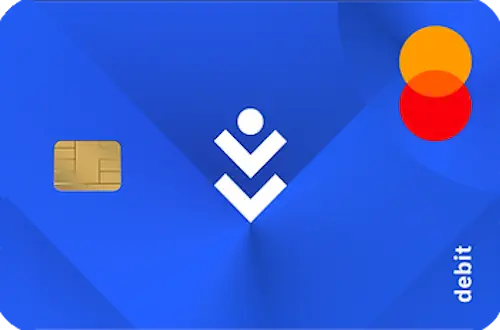
3. COCA Visa Card
Self-Banking: 8% Cashback + 6% APY + 0% FX
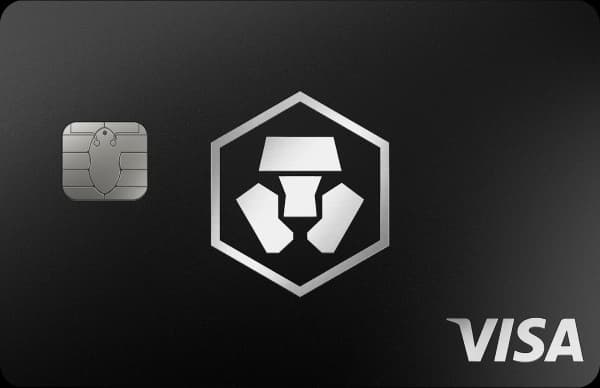
4. Private (Obsidian)
The Pinnacle: 5% Cashback + Private Jet Perks
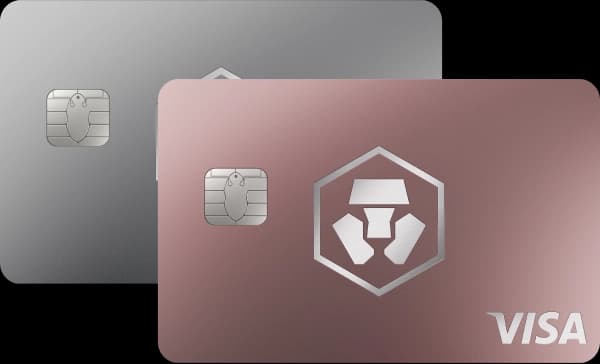
5. Private (Icy White / Rose Gold)
Elite Private Status: 4% Uncapped Cashback + Guests

6. ether.fi Pinnacle Card
Black Metal Elite: 50 Virtual Cards + $200K Monthly On-Ramp
What $8,000/Month Looks Like
$720
/month in cashback (based on Plutus Visa Card at 9%)
Profile 1: $8,000/month
| Card | Rate | Monthly Cashback | Annual Cashback | Minus Costs | Net Annual Value |
|---|---|---|---|---|---|
| COCA Elite | 8% | $640 | $7,680 | $0 (stake $COCA) | $7,680 (+ token risk) |
| Wirex Elite | 8% | $640 | $7,680 | -$360 fee | $7,320 |
| Bitget Card | 7.1% net | $568 | $6,816 | $0 | $6,816 |
| CRO Icy White | 4% | $320 | $3,840 | +$800 perks | $4,640 (+ $40K CRO risk) |
| Bank card | 0% | $0 | $0 | $0 | $0 |
At $8,000/month, COCA Elite and Wirex Elite are neck-and-neck at the top. COCA delivers $7,680/year but requires staking $COCA tokens (locked during membership, 30-day cooldown). Wirex Elite delivers $7,320/year with zero token exposure - the $360 fee is the only cost. CRO Icy White delivers $4,640 in total value including lounge access and rebates, but you carry price risk on a $40,000 CRO position.
Profile 2: $15,000/month
| Card | Rate | Annual Cashback | Minus Costs | Net Annual Value | Effective Rate |
|---|---|---|---|---|---|
| COCA Elite | 8% ($10K/mo cap) | $10,200 | $0 | $10,200 | 5.7% |
| Wirex Elite | 8% | $14,400 | -$360 fee | $14,040 | 7.8% |
| Bitget Card | 7.1% net | $12,780 | $0 | $12,780 | 7.1% |
| CRO Obsidian | 5% | $9,000 | +$800 perks | $9,800 | 5.4% |
At $15,000/month, COCA Elite's $10,000/mo allowance cap reduces its effective rate to 5.7% (first $10,000 at 8% + remaining $5,000 at 1% = $10,200/year). COCA requires staking $COCA tokens (locked during membership, 30-day cooldown to unstake) while Obsidian requires $400,000 locked in CRO. Wirex Elite at $14,040/year outperforms both at this spending level with zero token exposure of any kind.
Profile 3: $20,000/month
| Card | Annual Cashback | Costs | Net Value | 5-Year Total |
|---|---|---|---|---|
| COCA Elite | $10,800 | $0 | $10,800 | $54,000 |
| Wirex Elite | $19,200 | -$360 | $18,840 | $94,200 |
| Bitget Card | $17,040 | $0 | $17,040 | $85,200 |
| CRO Obsidian | $12,000 | +$800 perks | $12,800 | $64,000 |
The 5-year column is the real story. At $20,000/month, COCA Elite's $10,000/mo allowance cap limits annual cashback to $10,800 (first $10K at 8%, remaining $10K at 1%). Wirex Elite at $18,840/year outperforms COCA by $8,040 annually at this spending level, generating $94,200 over five years versus COCA's $54,000 - all with zero token exposure.
Named Scenario: Marcus, Real Estate Investor in Dubai ($20,000/month)
Context: Marcus spends $20,000/month across property management, client entertainment, flights between Dubai and London, and luxury retail. UAE has zero crypto tax, so Marcus optimizes purely for maximum cashback with no tax concern.
Setup: Wirex Elite (Visa, 8%, $360/year, Priority Pass lounge) as primary. Coinbase Card (Visa, 4%, free) as backup from a different issuer.
Monthly flow:
- $15,000 on Wirex Elite (property expenses, client dinners, flights, retail)
- $5,000 on Coinbase (online purchases, smaller merchants, backup)
- Priority Pass lounge access: 3-4 times/month during DXB-LHR commute
Annual result:
- Wirex cashback: $14,400 (8% on $180,000)
- Coinbase cashback: $2,400 (4% on $60,000)
- Wirex fee: -$360
- Lounge savings: $720 (24 visits x $30)
- Tax: $0 (UAE)
- Total: $17,160/year
"I considered the Obsidian but the $400K CRO stake makes zero sense when Wirex gives me more cashback with no capital at risk. The $360 annual fee is what I spend on a single client dinner."
Named Scenario: Elena, C-Suite Executive in Singapore ($12,000/month)
Context: Elena splits spending between Singapore (no capital gains tax), quarterly trips to Tokyo and Hong Kong, and annual family holidays. She values lounge access for both herself and her partner.
Setup: Crypto.com Icy White (4%, Priority Pass + 1 guest, CRO stake) for travel and subscription rebates. COCA Elite (8%, self-custody, 6% APY) for daily spending. Two cards, two roles.
Monthly flow:
- $4,000 on CRO Icy White (flights, hotels, subscriptions, travel expenses)
- $8,000 on COCA Elite (daily spending, online shopping, business expenses)
- Subscription rebates: Netflix ($15.49), Spotify ($10.99), Amazon Prime ($14.99)
Annual result:
- Icy White cashback: $1,920 (4% on $48,000)
- COCA cashback: $7,680 (8% on $96,000)
- Subscription rebates: $497
- COCA yield on idle balance (avg $5,000 at 6%): $300
- Lounge savings: $600 (20 visits x $30, both partners covered)
- Tax: $0 (Singapore)
- Total: $10,997/year
"The Icy White is my lounge card. COCA is my cashback machine. Together they cover everything. The key is keeping most spending on the 8% card and only using the 4% card for travel and subscription rebates."
Named Scenario: James, Tech Entrepreneur Splitting NYC and London ($8,000/month)
Context: James bills clients in USD and GBP. He spends roughly evenly between New York and London. He needs a card that handles both currencies without FX friction, and clean expense tracking for his accountant.
Setup: Bitget Card (7.1% net, free, 0% FX) as primary. Coinbase Card (4%, free, best CSV export) for US business expenses. Different issuers, different use cases.
Monthly flow:
- $5,000 on Bitget (London: restaurants, transport, retail, client entertainment)
- $3,000 on Coinbase (NYC: business expenses, SaaS subscriptions, domestic purchases)
- Coinbase for US expenses because the CSV export maps cleanly to IRS Schedule C categories
- Bitget for international because 0% FX + 7.1% net is the best free option
Annual result:
- Bitget cashback: $4,260 (7.1% net on $60,000)
- Coinbase cashback: $1,440 (4% on $36,000)
- FX savings vs bank: $2,100 (3.5% on $60,000 international)
- Total: $7,800/year
"I keep two cards specifically for the expense separation. My US accountant gets clean Coinbase CSVs. My UK accountant gets Bitget statements. Neither sees the other country's spending."
The FX Fee Impact at High Volumes
For high spenders who travel or spend internationally, even small FX fees compound fast:
| Card | FX Fee | Annual FX Cost on $50K Intl | Annual FX Cost on $100K Intl |
|---|---|---|---|
| Wirex Elite | 0% | $0 | $0 |
| Crypto.com | 0% | $0 | $0 |
| COCA | 0% | $0 | $0 |
| Coinbase | 0% | $0 | $0 |
| Ready Metal | 0% | $0 | $0 |
At $100,000/year in international spending, a 0.5% FX fee costs $500. A 0% FX card eliminates this entirely. For high spenders, the FX fee matters as much as the cashback rate.
Subscription Rebates: Do They Still Matter at High Spend?
At $15,000/month spending, Netflix ($15.49) and Spotify ($10.99) rebates total $317/year. That is 0.18% of annual spending: meaningful in absolute dollars but trivial as a percentage. Should high spenders choose cards based on rebates?
The answer is no, but they are a tiebreaker. Between two cards with identical cashback rates, choose the one with rebates. Between a 5% card with rebates and an 8% card without, the 8% card wins by $5,400/year on $15K/mo spending, and the rebates only save $317. The cashback rate dominates at high volumes. See our rebates guide for the full comparison.
Multi-Card Strategy for High Spenders
The Three Numbers Every High Spender Should Check
Number 1: Monthly Cashback Cap
Our side-by-side comparison tool reveals that a card advertising 8% might cap rewards at $100/month. At $8,000/month spending, that cap drops your effective rate from 8% to 1.25%. This is the single most common gotcha for high spenders.
| Advertised Rate | Monthly Cap | Your Spend ($8K/mo) | Effective Rate | Annual Cashback |
|---|---|---|---|---|
| 8% | No cap | $640/mo | 8% | $7,680 |
| 8% | $500/mo cap | $500/mo | 6.25% | $6,000 |
| 8% | $200/mo cap | $200/mo | 2.5% | $2,400 |
| 8% | $100/mo cap | $100/mo | 1.25% | $1,200 |
Always confirm the monthly cashback ceiling before committing to any staking or annual fee. A free 4% card with no cap ($3,840/year at $8K/mo) outperforms a staked 8% card capped at $200/month ($2,400/year). The reward guide explains cap mechanics in detail.
Number 2: Staking Opportunity Cost
Capital locked in a staking tier could be earning returns elsewhere. This is the true cost of staking, not the token price alone:
| Staking Amount | Cashback Earned ($10K/mo, 5%) | Alternative Return (5% treasuries) | Opportunity Cost | Net Benefit of Staking |
|---|---|---|---|---|
| $40,000 (Icy White) | $4,800/yr | $2,000/yr | $2,000 lost | $2,800 net benefit |
| $400,000 (Obsidian) | $6,000/yr | $20,000/yr | $20,000 lost | -$14,000 net loss |
| $0 (Wirex Elite, $360 fee) | $9,600/yr | $0 (no capital locked) | $0 | $9,240 net benefit |
The Obsidian math is devastating. Locking $400,000 in CRO to earn 5% cashback on $10,000/month spending ($6,000/year) makes no sense when the same $400,000 in US treasuries earns $20,000/year risk-free. You are paying $14,000/year in opportunity cost for the privilege of 5% cashback. The Wirex Elite at $360/year and 8% cashback generates $9,240/year net with zero capital locked.
The math changes if CRO appreciates significantly. But relying on token appreciation to justify the staking is speculation, not card optimization.
Number 3: Effective Rate After ALL Costs
The true comparison between cards requires accounting for every cost: transaction fees, annual fees, FX fees, and staking opportunity cost.
| Card | Gross Rate | Tx Fee | Annual Fee | FX Fee | Effective Rate ($10K/mo) |
|---|---|---|---|---|---|
| Plutus (max) | 9% (GBP 1K cap) | 0% | $240 | 2.5% | 0.97% (capped) |
| Wirex Elite | 8% | 0% | $360 | 0% | 7.7% |
| COCA Elite | 8% | 0% | $0 | 0% | 8.0% |
| Bitget Card | 8% | 0.9% | $0 | 0% | 7.1% |
| Tria Premium | 6% | 0% | $250 | 0% | 5.8% |
| CRO Icy White | 4% | 0% | $0 | 0% | 4.0% (+ opportunity cost) |
Token Volatility: What If Your Staking Token Crashes?
For high spenders considering the staking model, this table shows the net outcome after one year:
| CRO Price Change | Icy White ($40K stake, 4% CB) | Cashback Earned ($10K/mo) | Staking Gain/Loss | Net Position |
|---|---|---|---|---|
| CRO +50% | $60,000 stake value | $4,800 | +$20,000 | +$24,800 |
| CRO flat | $40,000 stake value | $4,800 | $0 | +$4,800 |
| CRO -30% | $28,000 stake value | $4,800 | -$12,000 | -$7,200 |
| CRO -50% | $20,000 stake value | $4,800 | -$20,000 | -$15,200 |
| CRO -80% | $8,000 stake value | $4,800 | -$32,000 | -$27,200 |
Compared to Wirex Elite (no staking): $9,240/year net, every year, regardless of any token's price. At -30% CRO, the Icy White holder has lost $6,000 net while the Wirex Elite holder has gained $9,240. The staking model only wins if CRO appreciates more than 8% per year (to offset the lower cashback rate and the opportunity cost).
The Multi-Card Strategy for $10K+ Spenders
High spenders should never rely on a single card. At these volumes, a frozen card or exchange outage costs real money (you fall back to a 0% bank card on thousands in spending).
Primary card: Highest uncapped cashback rate for domestic spending. Wirex Elite (8%), COCA Elite (8%), or Bitget Card (7.1% net).
Travel/FX card: A 0% FX card for international spending. Coinbase Card (4%, 0% FX, Visa) or 1inch (2%, 0% FX, Mastercard, EEA/UK).
Backup: Different network (Visa vs Mastercard) from your primary, different issuer. If your primary is Visa (Wirex), carry a Mastercard backup (1inch, Kraken).
| Role | Card | Network | Rate | Monthly Allocation | Annual Cashback |
|---|---|---|---|---|---|
| Primary (bulk spend) | Wirex Elite | Visa | 8% | $7,000 | $6,720 |
| Travel / backup | Coinbase | Visa | 4% | $3,000 | $1,440 |
| Blended | 6.8% | $10,000 | $8,160 |
Self-Custody Premium Options
For high spenders who want self-custody (funds in your own wallet, not on an exchange), several premium options exist:
| Card | Cashback | Annual Fee | FX Fee | Custody | Best For |
|---|---|---|---|---|---|
| COCA Elite | 8% USDC | Stake $COCA | 0% | Self-custody | Yield + cashback combo |
| Tria Premium | 6% | $250/yr | 0% | Self-custody | Zero token risk, up to 15% APY |
| ether.fi Pinnacle | Points | 50K points | 0% | Self-custody | ETH ecosystem users |
| Ready Metal | 3% STRK | $120/yr | 0% | Self-custody | EEA/UK, stablecoin spenders |
| Gnosis Pay | Up to 5% GNO | Hold GNO | 0% | Self-custody | EURe spenders, EEA |
COCA Elite at 8% USDC cashback with Morpho vault yield is the strongest self-custody play for high spenders. Your idle stablecoins earn 6-8% APY between purchases while the card generates 8% back on every transaction.
Common Mistakes to Avoid
1. Ignoring Cashback Caps
What happens: You stake $40,000 in CRO for the Icy White tier (4% cashback). But the monthly cashback is capped at $500. At $10,000/month spending, your effective rate is 4% and the $500 cap does not bite at this level. But on some cards, caps are far lower than you would expect from the headline rate.
Dollar cost: A card capped at $200/month on $8,000/month spending effectively gives 2.5%, not 8%. That is $5,280/year left on the table compared to an uncapped 8% card.
How to avoid it: Before committing to any staking or annual fee, confirm the monthly cashback ceiling at your specific spending level. Calculate your effective rate: (monthly cap / monthly spending) x 100.
2. Treating Staking as Free
What happens: You lock $40,000 in CRO for the Icy White tier. CRO drops 50% over the next year (it has happened before). Your $40,000 stake is now worth $20,000: a $20,000 paper loss.
Dollar cost: At 5% cashback on $10,000/month spending, the card generates $6,000/year. The $20,000 staking loss takes 3.3 years of cashback to recover. If CRO drops 80%, the $32,000 loss takes 5.3 years to recover.
How to avoid it: Use annual fee cards (Wirex Elite at $360) that achieve comparable or higher cashback without token exposure. If you choose to stake, only stake capital you would hold in that token regardless of card benefits. Never buy a token solely to unlock a card tier.
3. Overlooking Counterparty Risk at High Balances
What happens: You maintain $20,000+ on an exchange for ongoing card spending. The exchange has a security incident, regulatory action, or insolvency. Your funds are locked for weeks, months, or permanently.
Dollar cost: Potentially your entire balance. High spenders by definition maintain larger balances, amplifying the risk.
How to avoid it: Never hold more than 2 weeks of spending on any single exchange. Load weekly, not monthly. Use self-custody cards (COCA, Gnosis Pay, Ready Metal) for large balances: your funds stay in your own wallet until the moment of purchase. Split large balances across multiple issuers.
4. Fragmenting Spend Across Too Many Cards
What happens: You spread $15,000/month across four cards trying to optimize every category. Each card earns below its potential because volume-dependent tiers require concentrated spending to maintain.
Dollar cost: A $15,000/month spender using one 8% card earns $14,400/year. The same spender splitting across four cards at lower tiers might earn $9,000-$11,000/year. The fragmentation costs $3,000-$5,000/year.
How to avoid it: Consolidate aggressively onto one primary card. The only reasons to carry a secondary card are: (1) network backup (Visa vs Mastercard), (2) international spending on a 0% FX card if your primary charges FX fees, (3) cashback cap overflow.
5. Not Factoring Tax on Large Cashback Amounts
What happens: At $15,000/month spending with 8% cashback, you earn $14,400/year in cashback tokens. In some jurisdictions, this may be treated as taxable income rather than a purchase rebate. If the cashback tokens (BGB, PLU) also appreciate, you owe capital gains when you sell.
Dollar cost: At a 20% tax rate on $14,400: $2,880 in taxes. If the tokens appreciate 50% before you sell: additional capital gains tax on $7,200 appreciation.
How to avoid it: Choose cards that pay cashback in stablecoins (USDC) like COCA. Stablecoin cashback has near-zero appreciation and may be more likely treated as a purchase rebate. Consult a tax professional before your first full year of high-volume cashback. See our tax-conscious guide for jurisdiction-specific strategies.
6. Undervaluing Lounge Access at High Travel Volume
What happens: You choose an 8% card without lounge access over a 5% card with Priority Pass. You fly 30 times per year and eat airport meals at $25-$40 each.
Dollar cost: 30 airport meals x $35 average = $1,050/year in airport dining that would have been free in a lounge. The cashback difference between 8% and 5% on $10,000/month is $3,600/year, so the 8% card still wins. But if the gap is smaller (e.g., 8% vs 7%), the lounge access tips the math.
How to avoid it: Calculate your lounge value: (annual flights x average lounge visit value). If you fly 30+ times per year and value lounges at $30+ per visit, that is $900+ per year in tangible value. Factor this into the total card value comparison, not just the cashback rate. See our lounge guide.
Card Selection by High-Spender Profile
No-risk maximizer ($8K+/month): Wirex Elite ($360/year, 8% cashback, Priority Pass). Zero staking risk, zero token exposure, predictable $7,320+/year return. The $360 fee is less than 0.4% of annual spending at $8K/month.
Active trader ($10K+/month): Bitget Card (up to 8%, BGB balance tiers). If you already trade on Bitget and hold BGB, this is the highest-return free card available. The 0.9% transaction fee brings the net rate to 7.1%.
Known-cost premium ($5K+/month): Tria Premium ($250/year, 6% cashback, 0% FX, 0% ATM, self-custody). Zero token risk like Wirex but at a lower fee with self-custody. At $8K/month: $5,510/year net after fee. Up to 15% APY on idle USDC between purchases.
Self-custody maximizer: COCA Elite (8%, self-custody, 6% APY on idle balance). Your funds stay in your wallet and earn yield between purchases. Strongest self-custody option for high spenders. See our DeFi users guide.
Traveling high spender (10+ flights/year): Crypto.com Icy White (4%, Priority Pass + 1 guest) if you travel with a partner. Pair with Wirex Elite (8%) for non-travel spending. The Icy White handles lounge access and subscription rebates while Wirex handles bulk cashback. See our travelers guide.
European high spender: Wirex Elite (8%, $360/year, 0% FX, no cap) or Bitget Card (7.1% net, free, 0% FX). Plutus's GBP 1,000/month eligible spend cap makes it the worst choice for high spenders despite the 9% headline rate - effective rate drops to under 1% at $10K+/month spending. See our Europeans guide.
High-spending couple: Partner A on Wirex Elite (8%, Visa, lounge), Partner B on Bitget Card (7.1% net, Visa) or 1inch (2%, Mastercard for network diversity, EEA/UK). At $15,000/month combined, the two-card setup generates $12,000+/year. See our couples guide.
Privacy-conscious high spender: Gnosis Pay (up to 5%, Safe smart account) or COCA Elite (8%, self-custody). On-chain transparency without exchange custody risk. See our privacy guide.
Business expense high spender: Wirex Elite or Coinbase Card for clean expense reporting. Separate business and personal onto different cards. See our business guide and freelancers guide.
Key takeaway: High spenders have the most to gain from crypto cards and the most to lose from choosing wrong. At $10,000/month, the difference between an 8% card ($9,600/year) and a 0% bank card is nearly $10,000/year. Over five years, that is $48,000-$114,000 depending on your card and spending level.
The key decisions are to avoid staking models where the opportunity cost exceeds the cashback (the Obsidian trap), consolidate spending onto one primary uncapped card, fund with USDC to simplify tax reporting, and carry a backup on a different network. Wirex Elite at $360/year is the highest-conviction recommendation: 8% cashback, zero token risk, zero volume requirements, Priority Pass lounge access, and the $360 fee pays for itself in the first 5 days at $8,000/month spending.
Disclaimer: SpendNode is a data comparison platform. We are not financial advisors. Crypto cards involve risks including asset volatility, custodial risk, and tax complexity. Verify all terms directly with issuers before applying.
Written by Aleksandar Dukic
Frequently Asked Questions
Which card offers the highest cashback for big spenders?
Wirex Elite and COCA both hit 8%. Bitget reaches 8% with BGB staking tiers. Tria Premium offers 6%. CRO Obsidian offers 5%. The achievable rate depends on your staking commitment, token holdings, or willingness to pay an annual fee.
Is staking $500,000 in CRO worth it for the Obsidian card?
At $10,000/month spending, Obsidian generates roughly $5,600/year in total value (cashback + lounges + rebates). That is a 1.4% annual return on the staked capital - comparable to a savings account. The risk is CRO price volatility. If you believe in CRO long-term, the card benefits are a bonus. If not, the annual-fee cards (Wirex Elite, Tria Premium) achieve similar cashback without token exposure.
Do premium cards have spending caps on cashback?
This varies significantly between issuers and is the most important detail to check. Some cards cap monthly cashback (making the effective rate much lower at high volumes), while others have no cap. Always verify the specific cap for your card tier before committing to a staking requirement or annual fee.
Is the lounge access actually worth it?
A Priority Pass visit costs $30-50 if purchased individually. If you fly 12+ times per year, that is $360-600 in value from lounge access alone. For frequent business travelers, it often justifies a card upgrade by itself. For infrequent travelers, it is a nice perk but should not drive your card decision.
Recent Updates to Best Crypto Cards for High Spenders
- Corrected Crypto.com Icy White cashback from 5% to 4% and recalculated all dependent tables and scenarios