


Best Crypto Cards in United States (2026)
Compare crypto debit cards available to US residents. Coinbase, Gemini, and more with verified fees, cashback rates, and state-by-state eligibility.



Verified for United States
41 crypto cards available
Local currency: USD
Chase Sapphire and Amex Gold holders often ask: why would you also want a crypto card? The answer is not the rewards - your traditional cards may match or beat crypto card cashback rates. The answer is what you can fund it with. A crypto card lets you spend stablecoins, BTC, or ETH directly at any merchant, converting to USD at the point of sale. No bank withdrawal, no ACH wait, no exchange-to-bank transfer. If your wealth sits on-chain, a crypto card is the shortest path to spending it.
The US market has fewer crypto cards than Europe's 30+ options. State-by-state licensing requirements (New York's BitLicense being the most restrictive) mean many European-first issuers have not launched here. But the viable options are solid, and several globally available cards explicitly serve US residents.
| Card | Max Cashback | Annual Fee | FX Fee | Card Type | Best For |
|---|---|---|---|---|---|
| Gemini Credit Card | 4% | Free | 0% | Credit | 4% gas/transit, 3% dining, 2% groceries |
| Coinbase Card | Up to 4% | Free | 0% | Debit | Rotating rewards, widest state availability |
| Coinbase One (Amex) | 4% | $49 | 0% | Credit | Amex purchase protection |
| Tria Signature | 4.5% | $109/yr | 0% | Debit | Yield-linked rewards, zero FX |
| Uphold Elite | 4% XRP | $99.99/yr | 0% | Debit | 300+ assets, precious metals spending |
| ether.fi Core | 3% | Free | 1% | Debit | Borrow-to-spend, no taxable event |
| MetaMask Metal | 3% | $199/yr | 0% | Debit | Self-custody wallet, 0% FX |
| Crypto.com Ruby | 2% | $49.9 | 0% | Debit | CRO ecosystem + Spotify rebate |
| Ledger CL Card | 1% | Free | 1.75% | Debit | Hardware wallet self-custody |
Our US availability check confirms Gemini is the strongest US-native option: a real credit card (not prepaid) with 4% gas/EV/transit/rideshare, 3% dining, 2% groceries, 1% all else in 50+ cryptos and 0% FX. Coinbase has the broadest state coverage and the simplest setup. If you want to line those up against the rest of the field, open the comparison tool.
ether.fi offers a borrow-to-spend model via staking yield, meaning you access liquidity without triggering a taxable disposition. MetaMask and Ledger provide true self-custody spending from your own wallet.
Best Card For Every Need in United States
Top 7 Crypto Cards in United States
The IRS treats every crypto card swipe as a taxable disposition - and the US already has the world's strongest traditional card lineup competing for the same wallet spot. Gemini leads as the only free crypto credit card with category rewards (4% gas/EV/transit/rideshare, 3% dining, 2% groceries, 1% all else) while building credit history - something no prepaid debit achieves. Coinbase offers up to 4% with rotating crypto rewards and the widest state coverage, plus direct tax software integration via Koinly, CoinTracker, and TurboTax.
ether.fi Core solves the IRS disposition problem entirely through borrow-to-spend: no sale, no capital gain, no Form 8949 entry. Coinbase One adds Amex purchase protection for users who want credit card safeguards. MetaMask Metal provides the strongest self-custody option at 3% for users who refuse exchange custody.
Uphold Elite rounds out the lineup with 4%/3% XRP rewards on 300+ assets including precious metals - the only card that lets you spend Gold and Silver directly - though the $99.99/year fee means it only makes sense above $420/month in spending. Gemini's Solana Edition adds auto-staking yield on rewards for users who want compound crypto earnings.
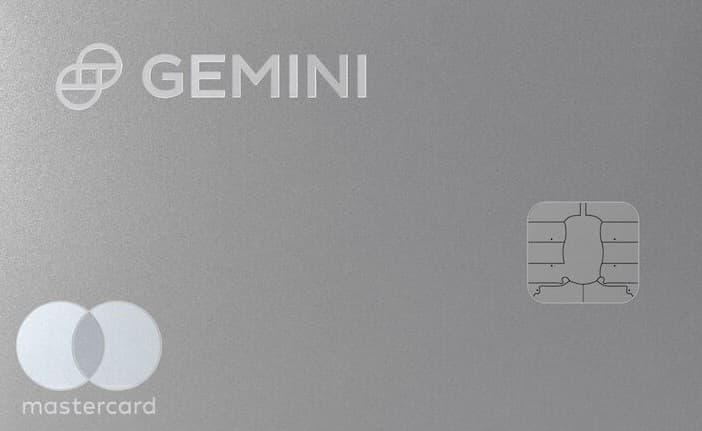
1. Gemini Credit Card
Category Crypto Rewards: 4% Gas/Transit/Rideshare, 3% Dining, 2% Groceries
2. Coinbase Card (Prepaid Visa)
Safe & Simple: US Regulated Prepaid Visa with Rotating Crypto Rewards

3. Tria Signature Card
High-Yield Mastery: 15% APY + Visa Signature Perks

4. ether.fi Core Card
Zero Barriers: 3% Back on Every Purchase, No Stake Required

5. Coinbase One Card (Amex)
Elite US Credit: Tiered BTC Rewards + Full Amex Protection Suite

6. MetaMask Metal Card
Premium Metal: 3% Cashback + 0% FX + Self-Custody + Mastercard Rails

7. Uphold Elite Card
The Premium Multi-Asset Visa: 4% XRP, 0% FX, Metal Card
Crypto Card Regulation in United States
Crypto cards in the US operate under a patchwork of federal and state regulations. Card issuers typically partner with US-licensed banks (e.g., WebBank for Gemini, Sutton Bank for others) and must comply with FinCEN money transmission rules.
The SEC and CFTC continue to debate jurisdiction over digital assets, but card-based spending of crypto (converting to USD at point of sale) is generally treated as a taxable disposition under IRS guidance. Some states like New York require a BitLicense for crypto businesses, which limits card availability there. Hawaii's money transmitter rules and other state-level restrictions further limit certain products.
How US Crypto Regulation Got Here
The regulatory trajectory matters for understanding which cards are available and why. The IRS fired the first shot in 2014 with Notice 2014-21, classifying crypto as property (not currency), making every spend a taxable disposition. In 2019, the Form 1040 added its now-famous digital asset question, signaling enforcement intent to every filer.
The 2021 Infrastructure Investment and Jobs Act introduced broker reporting requirements for crypto, eventually leading to the Form 1099-DA mandate taking effect in 2026. Throughout 2023-2024, the SEC's enforcement-first approach (suing Coinbase, Kraken, and others) created uncertainty that slowed card launches. The 2025 Clarity Act and stablecoin legislation began providing the regulatory framework the industry had been requesting, with clearer definitions of which tokens are securities vs commodities and a federal licensing path for stablecoin issuers.
For crypto cards specifically, the regulatory arc means this: US-licensed issuers like Gemini and Coinbase operate with the most compliance overhead globally, but also the most legal certainty. European issuers avoid the US not because it is illegal but because the state-by-state licensing cost (50 separate applications, each with different requirements) makes it economically unviable for smaller players. This is why the US has fewer but higher-quality card options than Europe.
Coinbase has the broadest coverage, but even they are not available in every state for every feature. Cards like ether.fi and KAST are expanding US coverage. Globally available cards like MetaMask, KAST, and Crypto.com explicitly include the US in their regions. Verify your state eligibility before applying.
Tax Treatment of Card Rewards in United States
Every crypto card transaction in the US is a taxable event. The IRS treats spending crypto as selling the asset at fair market value. You owe capital gains tax on any appreciation since you acquired the crypto.
The IRS Disposition Trap
Buy a $5 coffee with BTC you acquired at $30,000 when it is worth $90,000, and you owe capital gains on the proportional appreciation. Across hundreds of small transactions per year, the record-keeping burden is brutal. Stablecoin funding eliminates this entirely - USDC in at $1, out at $1, near-zero gain per transaction.
Double Taxation on Volatile Cashback
When you receive $100 in BTC cashback, that is $100 of ordinary income (taxable when received). If BTC then appreciates to $150 before you spend or sell it, you owe capital gains on the $50 appreciation when disposed. Two tax events on one cashback reward.
| Cashback Type | Tax When Received | Tax When Spent/Sold | Complexity |
|---|---|---|---|
| BTC cashback | Ordinary income at FMV | Capital gains on appreciation | High |
| Stablecoin cashback | Ordinary income at $1 | Near-zero gain on disposal | Low |
| Points / rewards | Generally not taxable | Taxable when converted | Medium |
If this complexity bothers you, choose a card that pays cashback in stablecoins or points instead of volatile crypto. The ether.fi borrow-to-spend model avoids the disposition entirely - you are spending a loan, not selling crypto.
How to Apply from United States
US crypto card applications require full KYC: government-issued photo ID (driver's license or passport), Social Security Number, and proof of address. Some issuers also require a selfie for biometric verification.
Approval is typically instant for Coinbase and Gemini if you already have a verified account. New users should expect 1-3 business days for verification. Physical cards ship to US addresses only - APO/FPO military addresses may not be supported by all issuers. KAST offers 2-minute KYC tiers for basic access.
Spending Tips for United States
The Crypto Card vs Traditional Card Question
The US has the world's most competitive credit card market. Chase Sapphire Preferred (3x dining/travel, $95/yr), Amex Gold (4x dining/groceries, $250/yr), Discover it (5% rotating categories, free), and Capital One SavorOne (3% dining/groceries, free) are all excellent. So the crypto card question is different in the US than anywhere else: you are not replacing a zero-rewards bank debit card. You are either (a) spending crypto wealth that already sits on-chain, or (b) earning crypto rewards instead of points/miles.
The case for crypto cards alongside traditional cards: Gemini Credit Card earns 4% on gas/EV/transit/rideshare, 3% on dining, and 2% on groceries while being free (vs Amex Gold at $250/yr). The rewards are in crypto, not points - which appreciates if the token rises.
Coinbase Card at up to 4% rotating crypto rewards competes with flat-rate traditional cards (Citi Double Cash 2%, Capital One Quicksilver 1.5%). ether.fi lets you access on-chain wealth without a taxable event - no traditional card does this.
The case for crypto cards instead of traditional cards: if your net worth is primarily on-chain and you want to avoid bank-to-exchange transfers, a crypto card is the most direct spending path. Load USDC, spend USDC, earn rewards. No ACH wait, no exchange withdrawal limits, no bank compliance questions about incoming crypto wire transfers.
The Tax-First Strategy
Our US tax breakdown is clear: tax efficiency should drive every decision. The IRS treats every crypto card transaction as a disposition at fair market value. Across 200+ small transactions per year, the cost basis tracking burden is brutal. Three strategies:
-
Stablecoin funding (simplest): USDC purchased at $1.00, spent at $1.00. Near-zero gain per transaction. Software like Koinly or CoinTracker still needs to track it, but the calculations are trivial.
-
ether.fi borrow-to-spend (most tax-efficient): Borrow against staked ETH. The card spending is a loan drawdown, not a disposition. Zero capital gains trigger. At the 24% federal bracket, deferring a $10,000 unrealized gain saves $2,400 in immediate tax.
-
Specific identification (for appreciated crypto): If you do spend appreciated BTC/ETH, use specific identification (FIFO, LIFO, or specific lot) to minimize gain. Spending the highest-cost-basis lots first reduces the taxable gain per transaction.
Card Selection by Use Case
- Best US-native credit card: Gemini Credit Card (4% gas/transit, 3% dining, 2% groceries, 1% all, free, 0% FX, rewards in 50+ cryptos)
- Widest availability, simplest setup: Coinbase Card (up to 4% rotating rewards, free) - integrates with Koinly, CoinTracker, TurboTax
- Avoid taxable events entirely: ether.fi Core (3%, free, borrow-to-spend against staked ETH)
- Amex purchase protection: Coinbase One (4%, $49/yr) - the only crypto credit card with Amex benefits
- Yield-linked, no token risk: Tria Signature (4.5%, 0% FX, $109/yr) or Tria Premium (6%, 0% FX, $250/yr)
- Premium perks + travel: Crypto.com Icy (4% + lounges + rebates, CRO stake)
- Self-custody spending: MetaMask Metal (3%, $199/yr, 0% FX) or Ledger CL Card (1%, hardware wallet)
- 2-minute KYC access: KAST (2%, free, globally available)
Gemini vs Coinbase vs Traditional Break-Even Math
| Monthly Spend Profile | Gemini (category rewards) | Coinbase (up to 4% rotating) | Chase Sapphire Preferred (3x travel/dining, $95/yr) |
|---|---|---|---|
| $500 (mostly gas/transit) | $240/yr (4% gas/transit) | up to $240/yr | $180/yr - $95 = $85 |
| $1,000 (mixed) | $300/yr (blended 2.5%) | up to $480/yr | $270/yr - $95 = $175 |
| $1,500 (heavy dining/groceries) | $504/yr (2.8% blended) | up to $720/yr | $360/yr - $95 = $265 |
| $2,500 (mixed) | $750/yr (2.5% blended) | up to $1,200/yr | $540/yr - $95 = $445 |
Coinbase at up to 4% rotating rewards can beat Chase Sapphire Preferred at every spending level when the 4% category aligns with your spend. Gemini wins on gas/EV/transit (4%) and dining (3%) - its strongest categories. However, Gemini is a real credit card with purchase protection, fraud liability, and credit-building benefits that a prepaid debit cannot offer. The Coinbase One Amex bridges this gap at $49/year with Amex benefits.
Spending Scenario: $2,500/month
At $2,500/month through Coinbase Card at up to 4% rotating rewards, you can earn up to $100/month in crypto rewards.
| Factor | USDC Funding | BTC Funding (appreciated) | ether.fi Borrow-to-Spend |
|---|---|---|---|
| Capital gains per purchase | Near-zero | Taxable on appreciation | None (loan, not sale) |
| Cashback (4% / 4% / 3%) | $100/mo | $100/mo | $75/mo |
| Tax on cashback (24% bracket) | -$24/mo | -$24/mo | -$18/mo |
| Cost basis tracking | Minimal | Every transaction | Minimal |
| Net after-tax annual value | approx. $912 | approx. $912 minus CGT | approx. $684 + no CGT |
USDC funding through Coinbase yields the highest raw cashback. But if you hold appreciated ETH and want to avoid triggering capital gains, ether.fi at 3% with zero disposition tax may net more after accounting for the CGT you would have paid.
State-by-State Availability
The US crypto card market is complicated by state-level licensing. New York's BitLicense (2015) is the most restrictive - many issuers do not serve NY residents or offer limited features. Hawaii requires money transmitters to hold fiat reserves equal to the crypto value they hold, which effectively blocked most crypto services until 2024 (when the Digital Currency Innovation Lab expired and new legislation was pending). Wyoming is the most crypto-friendly state with its Special Purpose Depository Institution (SPDI) charter.
Coinbase has the broadest state coverage (licensed in 40+ states). Gemini operates in all 50 states plus DC and Puerto Rico. Crypto.com covers most states but has limitations in some. ether.fi and KAST are expanding US state coverage. Avici excludes 20 states due to Rain's licensing status. Always verify your state eligibility before applying.
Tax Software Ecosystem
The US has the most developed crypto tax reporting ecosystem in the world. Koinly integrates with Coinbase, Gemini, Crypto.com, and MetaMask - auto-importing card transactions and calculating cost basis per IRS rules. CoinTracker partners directly with Coinbase and TurboTax for smooth tax filing. TokenTax and ZenLedger are alternatives.
The IRS now requires digital asset questions on Form 1040 (since 2019) and Form 8949 reporting for all dispositions. Starting in 2026, exchanges must issue Form 1099-DA for certain transactions. These tools turn thousands of small card transactions into a manageable tax filing process.
Cost of Living Context
The crypto card value proposition scales with spending. A New Yorker spending $4,000/month earns $1,920/year at 4% Coinbase cashback. A San Francisco resident at $3,500/month earns $1,680/year. An Austin, TX resident at $2,500/month earns $1,200/year. A Boise, ID resident at $1,800/month earns $864/year. These are real dollars that traditional bank debit cards never provide.
US Expats and Digital Nomads Abroad
For the estimated 4.4 million US citizens living abroad (250,000+ in Mexico, Colombia, Portugal, Thailand, and other popular destinations), crypto cards solve two problems traditional banks create.
First, the FX fee problem: Chase charges 3% foreign transaction fee on non-Sapphire products, Bank of America charges 3% plus a $5 international ATM fee, Wells Fargo charges 3%. A crypto card with 0% FX and free ATM withdrawals saves $50-100/month for an active expat spending $1,500-2,500/month locally.
Second, the account access problem: US banks routinely close accounts when they detect prolonged overseas usage or a foreign address change. Crypto cards funded from on-chain assets do not depend on maintaining a US bank relationship.
Tax obligations follow you. The US is one of two countries (with Eritrea) that taxes citizens on worldwide income regardless of where they live. A US expat in Portugal spending crypto through a card still owes IRS reporting on every disposition. The Foreign Earned Income Exclusion (FEIE, up to $126,500 for 2024) applies to earned income, not investment income or cashback rewards. Crypto card cashback is ordinary income, not earned income, and is not excludable under FEIE.
FBAR filing ($10,000 aggregate foreign account threshold) applies to any offshore exchange accounts. FATCA (Form 8938) has higher thresholds for expats ($200,000 end of year / $300,000 at any point during the year) but still catches many crypto holders.
Optimal expat setup: Gemini Credit Card (0% FX, real credit card, works internationally) as primary spend. MetaMask Card as self-custody backup that does not depend on any exchange. Fund with USDC purchased through Coinbase (zero USDC purchase fee) to minimize per-transaction tax complexity. File FBAR by October 15 and Form 8938 with your tax return.
Common Mistakes and How to Avoid Them
Mistake 1: Using a crypto card for hundreds of small transactions without tax software. Every $4 coffee, every $12 lunch, every $3 parking meter is a separate taxable disposition requiring cost basis calculation on Form 8949. A user making 300 card transactions per year at an average $15 each generates 300 line items. Without Koinly, CoinTracker, or equivalent software, you are facing a manual tracking nightmare at tax time, or worse, not reporting at all (the IRS now cross-references Form 1040 digital asset disclosures against exchange-reported data).
How to avoid it: Set up Koinly or CoinTracker before your first card transaction. Connect your exchange and wallet. Fund with USDC to minimize per-transaction gain calculations. Budget $100-200/year for tax software - it pays for itself in avoided penalties.
Mistake 2: Ignoring FBAR and FATCA for offshore crypto exchanges. If you hold crypto on a non-US exchange (Binance international, OKX, Bybit, or any non-US platform) and the aggregate value exceeds $10,000 at any point during the year, you must file FinCEN Form 114 (FBAR). The penalty for non-willful failure to file is up to $10,000 per account per year. FATCA (Form 8938) has higher thresholds ($50,000 for domestic filers, $200,000 for expats) but similar reporting requirements. Many crypto card users fund cards from offshore exchanges without realizing they have triggered FBAR obligations.
How to avoid it: Use US-based exchanges (Coinbase, Gemini) as your primary on-ramp. If you use non-US exchanges, file FBAR by April 15 (automatic extension to October 15). The filing is free and takes 15 minutes through the BSA E-Filing System.
Mistake 3: Stacking volatile cashback in a high tax bracket without a plan. A user in the 32% federal bracket (taxable income $191K-$383K) earning $1,200/year in BTC cashback from Coinbase owes $384 in federal income tax on receipt. If BTC then drops 30%, the cashback is now worth $840 but the tax bill was calculated at $1,200. Net position: $840 in BTC minus $384 in tax = $456 in actual value from $1,200 in gross rewards. That is a 62% effective cost.
How to avoid it: If you are in the 32%+ bracket, choose stablecoin cashback or points-based rewards that do not trigger income tax at receipt. Or use ether.fi borrow-to-spend to avoid the disposition entirely.
Mistake 4: Assuming all states treat crypto cards the same. A New York resident signs up for KAST and funds it, not realizing KAST may not hold a BitLicense for NY. A Hawaii resident applies for Crypto.com without checking state coverage. State-level restrictions can mean blocked transactions, frozen accounts, or compliance issues. New York (BitLicense), Hawaii (money transmitter reserves), and several other states have specific requirements that limit which cards function.
How to avoid it: Before applying for any card, check the issuer's terms of service for state restrictions. Coinbase (40+ states) and Gemini (all 50 states + DC + PR) have the broadest coverage. Avici explicitly excludes 20 states.
Mistake 5: Not separating long-term and short-term holdings before card spending. BTC held over 1 year qualifies for long-term capital gains rates (0%, 15%, or 20% depending on income) versus short-term rates (ordinary income, up to 37%). If you load a card with BTC purchased 11 months ago and spend it, you pay ordinary income rates on the gain. Waiting one more month would have saved 12-22% on the tax.
How to avoid it: Never spend crypto through a card that you have held for less than 12 months unless it is a stablecoin. Use specific lot identification (not FIFO) and instruct your tax software to select only lots with 12+ month holding periods for card transactions.
Local Payment Infrastructure
Card acceptance in the US is near-universal. Visa and Mastercard are accepted at virtually all merchants: grocery chains (Walmart, Kroger, Costco, Target, Whole Foods), gas stations (Shell, Chevron, BP), restaurants, and online retailers (Amazon, eBay). Contactless (tap-to-pay) is standard at most major retailers. Costco accepts Visa only (not Mastercard) - relevant for Mastercard-only crypto issuers.
Apple Pay and Google Pay are supported by most crypto cards and work at the vast majority of US retailers with NFC terminals. Transit systems like NYC MTA, SF BART/Muni, Chicago CTA, LA Metro, and DC Metro all accept contactless payments. Venmo and Cash App dominate P2P transfers but are separate from crypto card spending.
ATM networks are extensive: Allpoint (55,000+ surcharge-free ATMs at CVS, Walgreens, Target) and MoneyPass work with most Visa/Mastercard debit cards. Cards with free ATM allowances (like Crypto.com higher tiers) can access these networks at zero cost. Note: KAST charges $3 + 2% per ATM withdrawal even in the US.
Supported Exchanges & Wallets in United States
The US crypto card market is smaller than Europe's 30+ issuers, but it has a unique advantage: the only true crypto credit cards in the world. Europe's crypto cards are all prepaid debit. The US has real credit cards with purchase protection, fraud liability, and credit-building.
Gemini is the standout US-native issuer. The Gemini Credit Card is a Mastercard World Elite issued by WebBank - a real credit card with 4% gas/EV/transit/taxis/rideshare, 3% dining, 2% groceries, and 1% everything else, paid in your choice of 50+ cryptocurrencies. No annual fee, 0% FX.
The Solana Edition adds auto-staking at up to 6.12% APR on SOL rewards - earn crypto rewards that earn more crypto. Available in all 50 states plus DC and Puerto Rico.
Coinbase has the broadest state coverage and the simplest user experience. The Coinbase Card offers up to 4% with rotating crypto rewards (choose your reward asset in-app). Integrates directly with Koinly and CoinTracker for tax reporting.
The Coinbase One Amex at 4% is the only crypto credit card on the Amex network - purchase protection, extended warranty, and the Amex dispute resolution reputation. $49/year for Coinbase One membership (includes zero trading fees). Uphold adds the Elite (4% XRP, $99.99/yr, Visa) and free Essential (2% XRP, Visa), both supporting 300+ assets including precious metals.
Tria offers 0% FX across all tiers - Virtual at 1.5% ($20/yr), Signature at 4.5% ($109/yr), and Premium at 6% ($250/yr). Yield-linked rewards avoid the volatile token double-taxation problem that makes BTC cashback expensive at 24%+ federal brackets.
Crypto.com provides the most structured tier system available to US residents. Midnight Blue (free, 0% cashback) through Ruby (2%, $49.9/yr, Spotify rebate) to Icy (4%, CRO stake, crypto cards with airport lounges, Netflix rebate) and the Obsidian (5%, CRO stake, full rebate suite).
The lounge access via Priority Pass is valuable at major US hubs (JFK, LAX, ORD, ATL, SFO, MIA, DFW).
ether.fi is the tax-optimization card. The Core card (free) lets you borrow against staked ETH and spend the loan - zero taxable disposition. At the 24% federal bracket plus state tax, this deferral is worth 28-37 cents on every dollar of unrealized gains depending on your state (California 13.3%, New York 10.9%, Texas 0%). The Luxe tier adds 3% cashback. US state coverage is expanding.
MetaMask at 1% and the Metal card at 3% provide self-custody Mastercard spending from your own wallet. Ledger CL Card lets hardware wallet users spend at 1% directly from their Ledger device. These are for users who refuse to custody their crypto with an exchange.
Avici offers crypto-backed Visa credit through Rain. Deposit crypto collateral, receive a credit line, spend without selling. No disposition, no capital gains. Available in 48 countries but 20 US states are currently excluded - check eligibility before applying. KAST (2%, free, 2-minute KYC options) serves under GLOBAL coverage.
Also serving US via GLOBAL coverage: RedotPay (stablecoin-native, high limits), xPlace (up to 2%), Jupiter (Solana DeFi-native), Cypher (self-custody, 500+ tokens on 15+ chains). Verify current availability directly with each issuer.
Not available in the US: Most European-first issuers have not launched card products due to the complex state-by-state licensing requirements. Bybit, Binance, Plutus, Gnosis Pay, Bitpanda, Wirex, Nexo, KuCoin, Kraken, Gate.io, and Bitget are all absent.
BitPay was historically available but its card program has been paused since June 2023.
On-Ramps: The Deepest Liquidity in the World
The US has the most liquid crypto on-ramps globally. Coinbase (NASDAQ-listed, FDIC-insured USD balances) supports instant ACH deposits and same-day wire transfers. Gemini (NYDFS-regulated, SOC 2 certified) provides similar instant on-ramping. Kraken and Robinhood (stock + crypto) are additional on-ramps with direct bank connections. Debit card purchases provide instant crypto access at 2-3% fees on most exchanges.
We confirmed this with multiple exchanges: for tax-optimized on-ramping, buying USDC directly through Coinbase (zero fee for USDC purchases) and loading to a crypto card creates the cleanest tax trail. No conversion, no gain/loss, no cost basis complexity.
What Changes Next
Form 1099-DA is now live. Brokers began reporting gross proceeds for transactions from January 1, 2025, with cost basis reporting starting January 1, 2026. Congress used the Congressional Review Act to overturn the extension of broker reporting to non-custodial DeFi actors, so only custodial brokers (exchanges, hosted wallets, kiosks) are subject to 1099-DA for 2025-2026.
The IRS now has automated cross-referencing between what you report on Form 8949 and what exchanges report. Users who have been under-reporting card transaction dispositions face increased audit risk. The upside: tax software integration is improving as exchanges standardize their data formats.
The GENIUS Act (Guiding and Establishing National Innovation for U.S. Stablecoins), passed June 17, 2025, provides the first comprehensive federal stablecoin framework. Stablecoins must be backed one-for-one by USD or low-risk assets, with OCC oversight. This gives card issuers regulatory certainty for USDC/USDT-funded cards and could eventually bring European issuers into the US market if paired with state-level preemption.
The self-custody card category is growing. MetaMask, Ledger, and ether.fi are all expanding US state coverage. As DeFi protocols mature and wallet UX improves, expect more cards that connect directly to on-chain assets without requiring an exchange intermediary.
The US crypto card market is smaller than Europe's but uniquely powerful: real credit cards (Gemini, Coinbase One Amex), the world's deepest on-ramp liquidity, sophisticated tax software integration, and flat 4% cashback rates that beat every traditional US card on raw return.
Written by SpendNode Editorial
Frequently Asked Questions
Which crypto card has the broadest US availability?
Coinbase Card has the widest state coverage among US crypto cards. Crypto.com, Uphold, and Gemini are also established US options. BitPay's card program is currently paused. Newer cards (ether.fi, MetaMask, Tria) are expanding but may not be available in all states yet.
Is every single card purchase a taxable event?
Yes. The IRS treats spending crypto as selling it. You owe capital gains on any appreciation since you acquired the crypto. Spending USDC (pegged at $1) results in near-zero gains per transaction. Spending appreciated BTC or ETH triggers capital gains on every purchase.
How does a crypto card compare to Chase Sapphire or Amex?
Traditional premium cards often have better travel perks and purchase protection. Crypto cards offer comparable or higher cashback (up to 6% for Tria Premium) and the ability to spend on-chain assets directly. Many US users carry both - a traditional card for travel and a crypto card for everyday spending funded by stablecoins.
Should I take cashback in BTC or stablecoins?
BTC cashback has upside if BTC appreciates, but creates a second taxable event when you spend it later. Stablecoin cashback is simpler for tax purposes. If you are a long-term BTC holder, BTC cashback is essentially dollar-cost averaging with your spending. Choose based on your tax tolerance and conviction.
Other Countries
View all 108 countries →


Recent Updates to Best Crypto Cards in United States
- Fixed Gemini categories: was 4% dining/3% groceries, correct is 4% gas-EV-transit-rideshare/3% dining/2% groceries/1% all. Fixed Coinbase from 'flat 4%' to 'up to 4% rotating rewards'. Added Tria Signature (yield-linked, avoids double-tax at 24%+ brackets). Swapped MetaMask Virtual to Metal in table. Fixed Crypto.com Ruby fee to $49.9. Fixed Midnight Blue 0%. Updated GENIUS Act (passed June 2025). Updated 1099-DA (now live, DeFi broker reporting overturned by Congress)