

Best Crypto Cards in United Arab Emirates (2026)
Compare crypto cards available in the UAE. Zero income and capital gains tax, VARA-regulated issuers in Dubai, and AED settlement options.
Verified for United Arab Emirates
32 crypto cards available
Local currency: AED
Emirates NBD, FAB (First Abu Dhabi Bank), and ADCB debit cards earn 0.5-1% cashback and charge 2-3% on non-AED purchases. In a country with zero personal income tax, zero capital gains tax, and a currency pegged to the US dollar, those bank fees are the only drag on your purchasing power.
Globally available crypto card issuers serve UAE residents with up to 8% cashback, low or zero FX fees, and a tax environment where every dirham of rewards is pure profit.
No other country combines zero crypto tax, a USD-pegged currency, and near-universal card acceptance the way the UAE does. The AED has been fixed at 3.6725 per USD since 1997, which eliminates FX volatility risk on domestic purchases - though card issuers still charge their standard FX fees on AED transactions. VARA (Dubai) and ADGM FSRA (Abu Dhabi) provide regulatory frameworks that most countries are still years away from building.
| Card | Max Cashback | Annual Fee | FX Fee | Type | Best For |
|---|---|---|---|---|---|
| COCA | Up to 8% | $0 | 0% | Debit | $COCA tiers (1% free), self-custody |
| Kolo | 5% BTC | $0 | 0% | Prepaid | Highest free-tier return ($5/txn cap, $200/mo cap) |
| Crypto.com | up to 5% | CRO stake | 0% | Prepaid | DXB/AUH lounge access, metal tiers |
| ether.fi | 3% | $0 | 1% | Credit | Staking yield + card rewards |
| KAST | 2% | $0 | 0.5% | Prepaid | $0 annual, USDT-funded spending |
| RedotPay | - | $0-$100 | 1.2% | Prepaid | Stablecoin-native, high daily limits |
In our UAE guide, COCA at up to 8% with 0% FX and 6% stablecoin APY is the highest-yield option in a market where every basis point is tax-free. For most UAE residents, Crypto.com at up to 5% with 0% FX offers a strong net return plus lounge access at DXB - the world's busiest international airport.
Best Card For Every Need in United Arab Emirates
Top 5 Crypto Cards in United Arab Emirates
Zero income tax, zero capital gains tax, and the AED-USD peg at 3.6725 make the UAE the world's most efficient jurisdiction for crypto card spending - every dirham of cashback is pure profit. The peg eliminates FX volatility risk, though FX fees (0.5-1.2% on most cards, 0% on Crypto.com, COCA, and Kolo) still apply on AED transactions.
COCA leads at 8% cashback with 0% FX and 6% APY - in a zero-tax jurisdiction, that APY compounds without any drag. Kolo at 5% BTC cashback with 0% FX and $0 annual fee offers the highest return without any token staking, though capped at $5/txn and $200/mo. Crypto.com at up to 5% with 0% FX is strong for DXB-based frequent flyers with Priority Pass lounge access. ether.fi provides borrow-to-spend for ETH holders who want to preserve positions while spending.
1. COCA Visa Card
Self-Banking: 8% Cashback + 6% APY + 0% FX
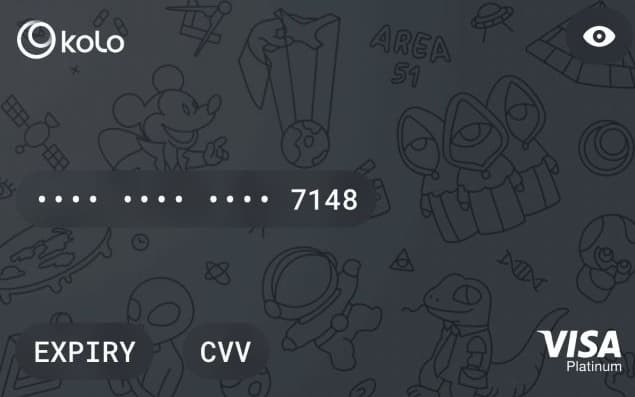
2. Kolo Card
Earn Bitcoin on Every Purchase: 5% BTC Cashback + Visa Platinum + 170+ Countries
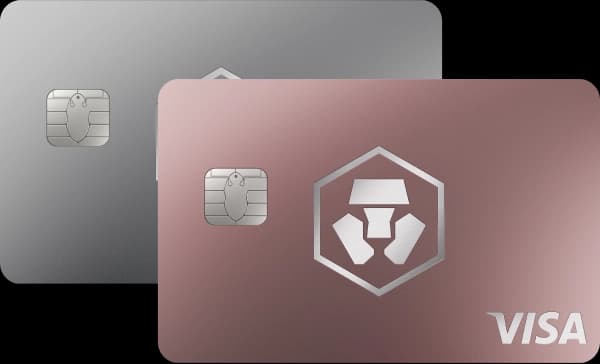
3. Private (Icy White / Rose Gold)
Elite Private Status: 4% Uncapped Cashback + Guests

4. ether.fi Core Card
Zero Barriers: 3% Back on Every Purchase, No Stake Required
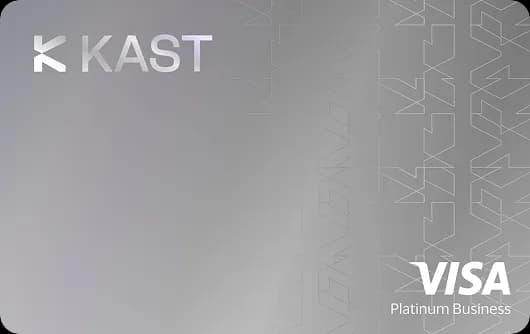
5. KAST K Card
Early Adopter Access: 2% Points + 4% $MOVE on Every Swipe
Crypto Card Regulation in United Arab Emirates
Dubai's VARA (Virtual Assets Regulatory Authority), launched in March 2022, issued Rulebook 2.0 in May 2025 (effective June 19, 2025) - a complete framework overhaul covering seven license categories. In August 2025, VARA and the federal CMA (Capital Markets Authority) agreed on mutual recognition of VASP licenses, enabling cross-emirate operations through a unified register.
VARA also fully implemented the Travel Rule as of February 2026, requiring originator/beneficiary information for all transfers.
Abu Dhabi's ADGM (Abu Dhabi Global Market) continues to operate its own framework through the FSRA. In a landmark move, the FSRA approved Binance's global platform license in late 2025, with operations commencing January 5, 2026 - making Binance the first exchange to secure a global license under the ADGM framework.
ADGM also banned privacy tokens (Monero, Zcash) and algorithmic stablecoins in June 2025, and published new fiat-referenced token (FRT) rules effective January 1, 2026. A staking regulatory framework consultation launched in September 2025.
At the federal level, Decree Law No. 6 of 2025 expanded the CBUAE's supervisory authority to include crypto payment services. The SCA-VARA cooperation agreement (September 2024) established automatic cross-registration: VASPs licensed by VARA are registered with the SCA, simplifying federal-level compliance.
For cardholders, this regulatory architecture is largely transparent. Global card issuers operate under their own jurisdictional licenses rather than local UAE ones. Bybit holds a full VARA license (2024) but has no card variants in its current program. Binance's ADGM license covers exchange operations, not card issuance.
COCA, Kolo, Crypto.com, KAST, ether.fi, and RedotPay serve UAE residents under global coverage. Verify card eligibility directly with each issuer, as VARA/ADGM licensing for exchange operations does not guarantee card product availability.
Tax Treatment of Card Rewards in United Arab Emirates
The UAE has zero personal income tax and zero capital gains tax on crypto for individual residents. Spending BTC, ETH, SOL, or any other crypto through a card generates no tax liability. Receiving cashback triggers no tax event. There is no reporting requirement, no annual filing, and no withholding for individual crypto cardholders.
Example: You bought 1 BTC at AED 50,000 and spend it when it is worth AED 350,000. The AED 300,000 gain is completely tax-free. No form to file, no payment to make.
Corporate tax was introduced in June 2023 at 9% on profits above AED 375,000 for mainland companies. Free zone entities may qualify for 0% corporate tax on "qualifying income" if they maintain adequate economic substance. The most relevant free zones for crypto businesses:
- DMCC (Dubai Multi Commodities Centre): Hosts the DMCC Crypto Centre, 500+ crypto companies
- DIFC (Dubai International Financial Centre): Financial services focus, DFSA regulation
- ADGM: Abu Dhabi's financial free zone with FSRA crypto framework
- JAFZA (Jebel Ali Free Zone): Logistics-focused but hosts some crypto companies
If you run crypto activity through a corporate entity rather than as an individual, the 9% rate applies to mainland companies on profits above AED 375,000. Free zone qualifying income may be exempt. Individual cardholders spending personal crypto are completely unaffected by corporate tax.
VAT at 5% applies to goods and services purchased (as with any payment method) but does not apply to the crypto-to-fiat conversion itself. The Federal Tax Authority (FTA) has not issued specific guidance taxing individual crypto disposals.
| Event | Tax Rate | Filing Required | Notes |
|---|---|---|---|
| Spending crypto via card (individual) | 0% | No | Zero CGT for individuals |
| Receiving cashback (any crypto) | 0% | No | Not treated as income |
| Crypto trading profits (individual) | 0% | No | No personal income tax |
| Crypto business profits (mainland corporate) | 9% | Yes | Above AED 375,000 threshold |
| Crypto business profits (free zone qualifying) | 0% | Yes | Qualifying income rules apply |
CARF (Crypto-Asset Reporting Framework): The UAE will implement CARF from 2026, with the first automatic exchanges of information between jurisdictions expected in 2028. This is a reporting requirement for exchanges and custodians - not a tax. Individual cardholders face no new tax obligations.
We verified this as of March 2026: no stablecoin strategy needed. Spend whatever crypto maximizes your rewards. BTC, ETH, SOL, stablecoins, it makes no difference in the UAE. The optimal approach is simple: pick the highest-cashback card and fund with whatever you hold. Every dirham of cashback is pure profit.
How to Apply from United Arab Emirates
UAE crypto card applications require an Emirates ID (Huwiyyah) for residents, which contains a unique 15-digit ID number. The Emirates ID is issued by ICP (Federal Authority for Identity, Citizenship, Customs, and Port Security) and is the universal identifier across all government and financial services.
Proof of UAE address via DEWA bill (Dubai Electricity and Water Authority) for Dubai residents, ADDC bill (Abu Dhabi Distribution Company) for Abu Dhabi residents, Ejari tenancy contract (Dubai's rental registration system), Tawtheeq (Abu Dhabi's equivalent tenancy registration), or a bank statement from Emirates NBD, FAB, ADCB, or Mashreq.
Since 88% of the UAE population are expatriates, most cardholders hold employment or investor visas rather than citizenship. The expat demographic breaks down roughly as: Indian (approx. 3.5M), Pakistani (approx. 1.5M), Filipino (approx. 700K), Bangladeshi (approx. 700K), and significant British, European, and other Arab communities. Each group has different spending patterns and remittance needs.
For labor-community expats sending remittances home, crypto card cashback on daily spending (groceries at Lulu, rides via Careem) generates passive returns that traditional exchange house remittance cards do not. For professional expats, the zero-tax cashback supplements already-high savings rates from tax-free salaries.
Global issuers accept Emirates ID regardless of visa type or nationality. Verification typically completes within 1-3 business days. Physical cards ship domestically within 5-10 days. Virtual cards are available immediately for Apple Pay and Google Pay use.
Spending Tips for United Arab Emirates
Zero Tax Means Pure Optimization
The UAE is the only major economy where crypto card strategy reduces to a single question: which card pays the highest cashback? There is no tax angle, no stablecoin-vs-BTC dilemma, no holding period calculation. Fund your card with whatever you hold, and pick the card with the best rate for your spending level.
This simplicity is the UAE's ultimate advantage. In most countries, 20-50% of crypto card rewards are eroded by capital gains tax on the disposal event. In the UAE, 100% of rewards land in your wallet untouched.
The AED-USD Peg Advantage
The AED has been pegged to USD at 3.6725 since 1997 through the Central Bank of UAE (CBUAE). The peg eliminates FX volatility risk - unlike GBP, EUR, or INR where exchange rate swings can erode value between funding and spending.
However, some card issuers still charge FX fees on AED transactions since AED is technically a different currency from USD. Crypto.com, COCA, and Kolo all offer 0% FX on AED spending. KAST charges 0.5%, ether.fi 1%, and RedotPay 1.2%.
When traveling from the UAE to Europe, Asia, or other non-dollar economies, FX fees become more impactful. Crypto.com at 0% FX everywhere is the cleanest option for travel spending. KAST at 0.5% still saves 2-2.5% versus bank cards on holiday spending abroad.
Golden Visa and Long-Term Residency
The UAE Golden Visa (10-year renewable residence) requires AED 2M+ in property, business investment, or specialized professional qualifications. Golden Visa holders have the same Emirates ID and financial access as standard visa holders, but the long-term stability makes committing to a crypto card ecosystem more practical.
If you plan to stay in the UAE for 5-10+ years, the cumulative tax-free cashback compounds significantly: AED 7,200/year at 4% on AED 15,000/month becomes AED 72,000 over a decade, all tax-free.
Standard employment visa holders (2-3 year renewable) also have full access to all globally available crypto cards. Visa type does not affect card eligibility.
Card Selection for UAE Spending Levels
UAE residents generally spend at higher levels than global averages. Dubai's cost of living, luxury retail scene, and dining culture create substantial cashback accumulation opportunities:
- COCA (up to 8%, 0% FX): Highest yield with staking, plus 6% APY on stablecoin balances, self-custody
- Kolo (5% BTC, 0% FX, free): Highest free-tier return. $5/txn and $200/mo caps. Tax-free BTC cashback in a zero-CGT jurisdiction
- Crypto.com Icy White (4%, 0% FX): CRO stake required, includes lounge access at DXB Terminal 3 and AUH
- ether.fi (3%, 1% FX): Staking yield continues while you spend, zero tax on yield AND cashback combined
- KAST (2%, 0.5% FX, free): Simplest route from USDT/USDC to AED spending
DXB Lounge Access: A Real Advantage
DXB (Dubai International Airport) processed 95.2 million passengers in 2025, breaking its own record as the world's busiest for international traffic. For UAE residents who fly frequently, lounge access is not a luxury but a practical time-saver during peak hours. Crypto.com Jade/Icy includes LoungeKey access at DXB Terminal 1 and Terminal 3, plus AUH (Abu Dhabi International).
At 6+ flights per year, LoungeKey membership alone (normally AED 120-150 per visit) saves AED 720-900/year. Combined with 3-4% cashback on all other spending, frequent flyers in the UAE may find Crypto.com's staking model worthwhile despite the CRO lock-up requirement.
Returns at UAE Spending Levels
| Monthly Spend (AED) | COCA (8%, 0% FX) | Kolo (5% BTC, 0% FX) | Crypto.com Icy (4%, 0% FX) + Lounge | KAST (2%, 0.5% FX) |
|---|---|---|---|---|
| AED 8,000 | AED 7,680/yr | approx. AED 4,800/yr | AED 3,840/yr + LoungeKey | AED 1,440/yr |
| AED 15,000 | AED 14,400/yr | approx. AED 9,000/yr | AED 7,200/yr + LoungeKey | AED 2,700/yr |
| AED 25,000 | AED 24,000/yr | approx. AED 9,000/yr | AED 12,000/yr + LoungeKey | AED 4,500/yr |
Every number above is net reward after FX fees with zero tax deduction. COCA at 8% leads but requires staking $COCA tokens (1% at free Starter). Kolo at 5% BTC with 0% FX is the highest-return free card - the $200/mo cashback cap binds at approximately AED 15,000/month ($4,000), so returns flatten above that spend level. Crypto.com Icy at 4% with 0% FX is uncapped and adds LoungeKey at DXB and AUH.
Spending Scenario: Expat Professional at AED 15,000/month
A typical Dubai professional (rent excluded from card spending since most landlords require bank transfers or cheques) puts AED 15,000/month on cards for groceries, dining, transport, and retail:
| Card | Annual Spend | Gross Cashback | FX Cost | Tax | Net Reward |
|---|---|---|---|---|---|
| COCA Elite 8% (0% FX) | AED 180,000 | AED 14,400 | AED 0 | AED 0 | AED 14,400 |
| Crypto.com Icy 4% (0% FX) | AED 180,000 | AED 7,200 | AED 0 | AED 0 | AED 7,200 + lounge |
| KAST 2% (0.5% FX) | AED 180,000 | AED 3,600 | AED 900 | AED 0 | AED 2,700 |
For comparison: in the UK at the same spend level and 20% CGT, Crypto.com Icy's AED 7,200 cashback would net approximately AED 5,760 after tax (same 0% FX). The UAE's zero-tax environment adds AED 1,440 in pure annual benefit on a single card, and the gap widens dramatically with higher-cashback cards.
Cost of Living Context
Dubai spending levels vary significantly by area and lifestyle. Monthly card spending (excluding rent, which most landlords require via bank transfer or post-dated cheques):
- Budget expat (Discovery Gardens, International City): AED 4,000-6,000/month on groceries, transport, basics
- Mid-range professional (JLT, Business Bay, Al Nahda): AED 10,000-15,000/month including dining and retail
- High earner (Dubai Marina, Downtown, Palm Jumeirah): AED 20,000-35,000/month with luxury dining and travel
Abu Dhabi tends to be 10-15% lower than Dubai for equivalent lifestyle spending. Sharjah and the Northern Emirates are 30-40% lower. At every spending level, the zero-tax cashback is pure gain.
Seasonal Spending: Shopping Festivals and Ramadan
Dubai Shopping Festival (DSF, January-February) and Dubai Summer Surprises (DSS, June-August) feature significant retail discounts across participating malls. Cashback on already-discounted purchases compounds the savings. During Ramadan, spending patterns shift to evening and night hours, with large grocery and dining expenditures around iftar and suhoor. These are prime periods to maximize card rewards on naturally higher spending.
National Day (December 2) and Eid al-Fitr/Eid al-Adha also drive spending spikes. A 4-8% cashback card during these periods generates meaningful returns on purchases you would make regardless.
Where Cards Work in the UAE
The UAE is one of the most cashless societies globally. Contactless Visa/Mastercard acceptance is near-universal across Dubai and Abu Dhabi.
Supermarkets: Carrefour, Lulu Hypermarket, Spinneys, Waitrose, Choithrams. Malls: Dubai Mall, Mall of the Emirates, Yas Mall (Abu Dhabi), Abu Dhabi Mall, Ibn Battuta Mall. Dining: restaurants across all price points from shawarma joints in Karama to fine dining in DIFC accept contactless payments.
Transport: RTA taxis accept cards, Careem and Uber accept card payments in-app. Salik toll gates (AED 4 per crossing) debit automatically from registered payment methods. The Dubai Metro and Abu Dhabi bus network use the Nol card (closed-loop system, not loadable via crypto cards), but taxis and ride-hailing are fully compatible with any Visa/Mastercard.
Dubai vs Abu Dhabi: Dubai has slightly higher card acceptance rates in smaller establishments, while Abu Dhabi's newer developments (Saadiyat Island, Yas Island, Al Maryah Island) are fully cashless. Sharjah, Ajman, and the Northern Emirates have lower contactless adoption in traditional markets and smaller shops.
Cash pockets: Older souks (Gold Souk, Spice Souk, Textile Souk in Deira), some labor accommodation areas, and small shops in industrial zones still prefer cash. Dubai Marina, Downtown, JBR, DIFC, and Business Bay are essentially 100% cashless.
Apple Pay and Google Pay work at the vast majority of terminals. Samsung Pay is also widely accepted given Samsung's strong market share in the UAE.
Supported Exchanges & Wallets in United Arab Emirates
Crypto.com offers the most complete card ecosystem for UAE residents: six tiers from free Midnight Blue (0%) to Obsidian (5%), plus crypto cards with airport lounges at DXB and AUH. The CRO staking model pairs especially well with the UAE's zero-tax environment since staking rewards are also completely tax-free.
COCA provides the highest return (up to 8% with 0% FX) with non-custodial architecture and 6% APY on stablecoin balances, making it the pure yield-optimization pick. Kolo (5% BTC, 0% FX, $0/yr) is the highest-return free card - no staking needed. In the UAE's zero-CGT environment, BTC cashback accumulates entirely tax-free, making the volatility purely upside-focused.
Domestically, Rain (Bahrain-headquartered, ADGM-licensed since 2019) is the most established regional exchange serving the UAE and broader GCC. BitOasis (Dubai-founded, SCA-regulated) was among the first crypto exchanges to receive a VARA provisional license. Both offer AED on-ramps via bank transfer and Emirates NBD or FAB integration, but neither currently issues a Visa/Mastercard spending card.
Binance maintains major Dubai operations under its new ADGM global license (January 2026), but its card products operate under separate regional programs and may not be accessible to UAE residents. Check each issuer's card eligibility page directly rather than assuming Dubai-office presence means card availability.
The gold comparison: The UAE has a deep gold culture. Dubai's Gold Souk, gold ATMs in malls, and gold vending machines reflect a tradition of storing value in physical metal.
Crypto cards offer a different value proposition: instead of buying gold and storing it (no yield, storage costs), stablecoin-backed cards let you hold digital value that earns 6% APY (COCA) while being instantly spendable. For UAE residents weighing gold vs crypto as a store of value, the liquidity and yield advantages of crypto cards are worth considering.
ether.fi combines staking yield with card spending. In a zero-tax jurisdiction, this means your ETH earns yield, you spend against it via a credit line, and both the yield and the spending rewards accrue without any tax friction. No disposal event, no reporting, no drag on returns.
KAST (2%, 0.5% FX, $0/yr) provides simple stablecoin-funded spending without exchange dependency. RedotPay (no rewards, 1.2% FX) offers stablecoin-native spending with high daily limits. xPlace (up to 2%, 1% FX + 1% transaction fee) serves the self-custody segment for users who want full key control until the moment of spending.
Hub Travel Advantage
The UAE is a natural travel hub. DXB handles 95M+ passengers annually (99.5M forecast for 2026). Frequent routes to India, Pakistan, Philippines, UK, and Europe mean UAE residents travel often. On non-AED spending abroad, 0% FX fee cards save 2-3% versus bank cards. A UAE resident flying to London and spending GBP 2,000 saves AED 150-220 in FX fees alone per trip. For the UK-UAE corridor (one of the busiest), this adds up fast over multiple trips per year.
Within the GCC (Bahrain, Oman, Saudi Arabia, Qatar, Kuwait), most currencies are also USD-pegged, so FX impact is minimal regardless of card choice. The 0% FX advantage matters most on European, Asian, and African travel.
The UAE's combination of zero tax, fixed USD peg, VARA/ADGM regulatory clarity, and near-cashless infrastructure makes it the most straightforward market in the world for crypto card spending. The only decision is which card pays the most.
Written by SpendNode Editorial
Frequently Asked Questions
Is crypto card spending completely tax-free in the UAE?
Yes, for individuals. The UAE has zero personal income tax and zero capital gains tax. Spending crypto through a card generates no tax liability. Corporate tax (9%) applies only to business entities. VAT (5%) applies to goods purchased, not to the crypto conversion itself.
Which crypto card is best for UAE residents?
COCA leads on raw return: up to 8% cashback with 0% FX plus 6% APY on stablecoin balances (requires staking $COCA tokens, 1% at free Starter). Kolo at 5% BTC cashback with 0% FX is the highest-return free card (capped at $5/txn and $200/mo). Crypto.com (up to 5%, 0% FX) adds lounge access at DXB and AUH. Since all rewards are tax-free in the UAE, every dirham of cashback is pure profit.
Does the AED-USD peg benefit crypto card users?
The peg eliminates FX volatility risk - the rate never moves, so there is no spread between funding and spending. However, card issuers still charge their standard FX fees on AED transactions since AED is technically a different currency from USD. Crypto.com, COCA, and Kolo all offer 0% FX. KAST charges 0.5%, ether.fi 1%, RedotPay 1.2%.
Which crypto cards have the lowest fees for UAE residents?
The AED-USD peg means USD-settled cards with 0% FX convert at near-zero cost. COCA (up to 8%, 0% FX), Kolo (5% BTC, 0% FX), Crypto.com (up to 5%, 0% FX), and KAST (2%, 0.5% FX, $0 annual) are all confirmed serving UAE residents.
Other Countries
View all 108 countries →


Recent Updates to Best Crypto Cards in United Arab Emirates
- Corrected COCA FX fee from 0% to 1% and Jupiter FX fee from 0% to 1% for AED transactions. Clarified that the AED-USD peg eliminates FX volatility risk but does not eliminate FX fees - only Crypto.com offers true 0% FX on AED spending
- Recalculated all returns and spending scenario tables with net cashback after FX fees. Added FX Cost column to spending scenario table. Crypto.com Icy (4%, 0% FX) now correctly shown as higher net return than KAST (4%, 0.5% FX) for UAE users
- Major regulatory update: VARA Rulebook 2.0 (May 2025), CMA-VARA mutual recognition (August 2025), Binance ADGM global license (January 2026), ADGM privacy token ban (June 2025), fiat-referenced token rules (January 2026), Decree Law No. 6 of 2025 (CBUAE crypto payment authority), Travel Rule implementation (February 2026). Bybit clarified as having no card variants
- Updated DXB passenger figures to 95.2M (2025 record). Added CARF 2026 reporting framework context (not a tax). Updated FAQs with corrected FX information and removed stale Tria Premium reference
- Fixed Jupiter (rewards are null, not 1% cashback). Added Kolo throughout. Fixed Crypto.com annual fee to CRO stake. Updated break-even table and topCardSlugs