

Best Crypto Cards in Turkey (2026)
Compare 30+ crypto cards available in Turkey. Spend stablecoins to hedge Lira depreciation, with verified fees and global card options for Turkish residents.
Verified for Turkey
31 crypto cards available
Local currency: TRY
Turkish debit cards from Ziraat Bankasi, IS Bankasi, or Garanti BBVA earn TRY-denominated rewards that lose value daily to inflation. With the lira regularly depreciating 40-60% per year, holding stablecoins and spending through crypto cards is not just an upgrade - it is a survival strategy. Over 30 crypto card variants from 12+ global issuers turn USDC and USDT into spending power at market rates, converting to TRY only at the moment of purchase.
Turkey ranks among the top 5 countries globally for crypto adoption, driven largely by the lira's collapse. An estimated 15-25% of the adult population holds crypto - one of the highest rates in the world. Crypto cards function as a dollarization tool: hold USDT or USDC to preserve purchasing power, then spend through Visa/Mastercard at any Turkish merchant. The gap between holding TRY in a bank account versus holding stablecoins can exceed 50% annually in real purchasing power.
Card availability is limited to global issuers since Turkey has no domestic crypto card product. Exchange-linked cards from Bitget do not cover the Turkish market (Bitget serves EEA and APAC only, not GLOBAL). This means Turkish users rely on globally available issuers like Crypto.com, KAST, ether.fi, Kolo, and RedotPay.
| Card | Cashback | Annual Fee | FX Fee | Type | Best For |
|---|---|---|---|---|---|
| Kolo | 5% BTC | $0 | 0% | Prepaid | Highest free-tier return ($5/txn cap, $200/mo cap) |
| Crypto.com | up to 5% | CRO stake | 0% | Prepaid | Metal tiers + lounge access at IST |
| ether.fi | 3% | $0 | 1% | Credit | Borrow-to-spend, keep staking yield |
| KAST | 2% | $0 | 0.5% | Prepaid | Cheapest route from stablecoins to TRY spending |
| RedotPay | - | $0-$100 | 1.2% | Prepaid | Stablecoin-native, high daily limits |
We reviewed Turkey-specific compliance and geo-availability. Kolo leads the free tier at 5% BTC cashback with 0% FX, though capped at $5 per transaction and $200 per month - at TRY 10,000/month spending (approx. $310), that cap still returns roughly $186/year in BTC. Crypto.com at up to 5% with 0% FX offers the highest uncapped return but requires CRO staking.
KAST at 2% with 0.5% FX is the simplest free card for moving USDT or USDC into ordinary TRY spending.
But the real value of any card here is not the cashback - it is the inflation hedge. Converting TRY to stablecoins and spending via card preserves purchasing power that would otherwise evaporate.
Best Card For Every Need in Turkey
Top 4 Crypto Cards in Turkey
Forty-to-sixty percent annual lira inflation erodes purchasing power faster than any Turkish bank deposit rate can offset - every card recommendation here is fundamentally an inflation hedge before it is a cashback tool. Kolo leads the free tier at 5% BTC cashback with 0% FX and $0 annual fee, making it the highest-return option that requires no staking or token holdings.
The $5/txn and $200/mo caps mean it works best for everyday spending under approximately $4,000/month - well within typical Turkish spending patterns. Note that BTC cashback adds price volatility, which can work for or against you.
Crypto.com offers the highest uncapped return (up to 5% at Obsidian, 4% at Icy White) with 0% FX and IST lounge access, but requires CRO staking at higher tiers.
ether.fi preserves ETH positions that many Turkish users hold as a long-term inflation hedge, letting them borrow-to-spend at 3% cashback without selling. KAST at 2% with 0.5% FX is the simplest free card for users who want straightforward stablecoin-to-TRY spending without managing BTC rewards or CRO stakes.
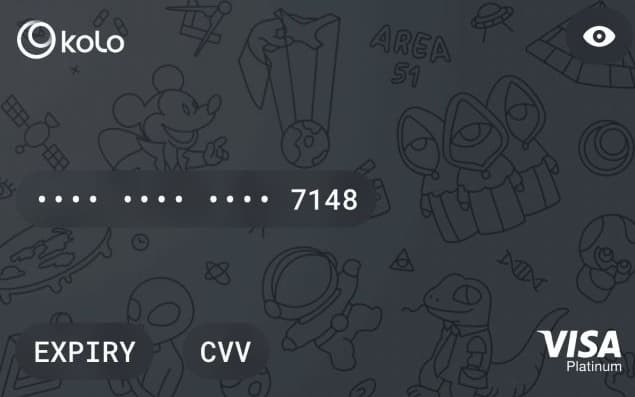
1. Kolo Card
Earn Bitcoin on Every Purchase: 5% BTC Cashback + Visa Platinum + 170+ Countries
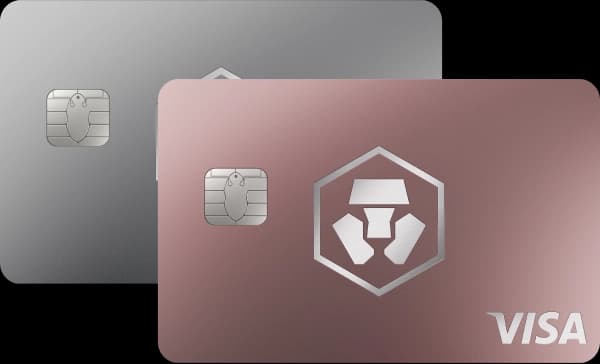
2. Private (Icy White / Rose Gold)
Elite Private Status: 4% Uncapped Cashback + Guests

3. ether.fi Core Card
Zero Barriers: 3% Back on Every Purchase, No Stake Required
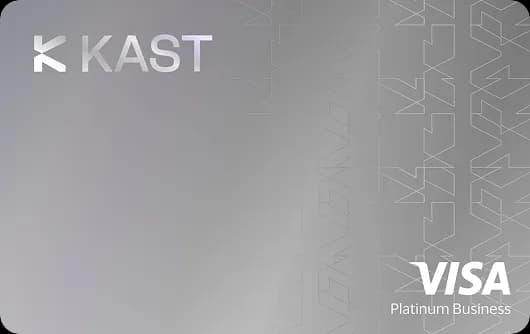
4. KAST K Card
Early Adopter Access: 2% Points + 4% $MOVE on Every Swipe
Crypto Card Regulation in Turkey
The CBRT (Turkiye Cumhuriyet Merkez Bankasi, Central Bank of the Republic of Turkey) banned the use of crypto assets for direct payments at merchants in April 2021 (Regulation on the Disuse of Crypto Assets in Payments, published in the Official Gazette No. 31456). However, crypto cards operate differently: they convert crypto to TRY through Visa/Mastercard payment networks, so the merchant receives fiat currency.
This is legally distinct from the banned direct crypto payment. No enforcement action has targeted crypto card users to date.
The CMB (Sermaye Piyasasi Kurulu, Capital Markets Board of Turkey) enacted the Digital Assets Law (Law No. 7518) on July 2, 2024, establishing Turkey's first legal framework for crypto assets. On March 13, 2025, the CMB published implementing regulations (Communiques III-35/B.1 and III-35/B.2) setting comprehensive rules for Crypto Asset Service Providers (CASPs) covering licensing, governance, and capital adequacy.
Minimum charter capital: TRY 150 million for exchanges, TRY 500 million for custodians. Existing providers had until June 30, 2025 to apply for operational licenses and until December 31, 2025 to sign custodian agreements and renew customer contracts.
Unlicensed platforms were blocked en masse in July 2025. Turkey's crypto Travel Rule was fully implemented as of February 25, 2025.
MASAK (Mali Suclar Arastirma Kurulu, Financial Crimes Investigation Board) oversees AML compliance for crypto exchanges. MASAK's General Circular No. 29 (June 28, 2025) requires CASPs to monitor customer transactions on a risk-based basis and report suspicious transactions within 72 hours. All exchanges operating in Turkey must register with MASAK and implement KYC/AML procedures. MASAK has blocked suspicious accounts and frozen assets at Turkish exchanges as part of enforcement.
BDDK (Bankacilik Duzenleme ve Denetleme Kurumu, Banking Regulation and Supervision Agency) regulates the banking infrastructure that crypto exchanges rely on. Turkish banks have intermittently restricted TRY transfers to crypto exchanges under BDDK guidance, though this varies by bank and period. IS Bankasi and Garanti BBVA have been among the most restrictive, while some smaller banks like Fibabanka and Akbank maintain more consistent crypto transfer access.
Turkey also experienced the Thodex collapse in April 2021, where the exchange's CEO fled the country with an estimated $2 billion in user funds. This event accelerated MASAK's enforcement push and the public demand for the Digital Assets Law. It also explains why self-custody card options resonate strongly with Turkish users.
BtcTurk and Paribu are Turkey's two largest domestic exchanges (both MASAK-registered), but neither offers a Visa/Mastercard card. Binance TR served Turkish users extensively before facing MASAK compliance challenges and operational restructuring.
Globally available card issuers like KAST, Crypto.com, and ether.fi serve Turkish residents under global coverage without requiring Turkish regulatory registration.
The CBRT payment ban applies to direct crypto-to-merchant transactions, NOT to crypto cards settling through Visa/Mastercard in TRY. Card spending is legally distinct and no enforcement has targeted this model.
For Turkish expats abroad: If you hold a T.C. Kimlik but reside in Germany, the Netherlands, or Austria, you may have access to EEA-specific cards (Bitget, Wirex, Gnosis Pay) unavailable from a Turkish address. Your tax obligations follow your residency, not citizenship.
Tax Treatment of Card Rewards in Turkey
Turkey does not currently have a specific crypto tax framework. The GIB (Gelir Idaresi Baskanligi, Revenue Administration) has not issued comprehensive crypto tax guidance. Crypto gains are not explicitly taxed under existing Turkish income tax law, placing Turkey in a regulatory gray area that benefits card users today but may change.
Example: You bought 0.01 BTC at TRY 50,000 and spend it when it is worth TRY 200,000. Under current law, the TRY 150,000 gain has no specific tax treatment. The General Income Tax Code (Gelir Vergisi Kanunu No. 193) does not define crypto assets as a taxable asset class. Compare this to Japan where this same gain would be taxed at 15-55%, or India at 31.2%.
The enacted Digital Assets Law (Law No. 7518) focused on licensing and oversight, not taxation. As of early 2026, there is no specific crypto tax, but a transaction tax is considered possible in 2026. Draft proposals have considered a flat 10-20% capital gains tax on crypto disposals, potentially with an annual exemption threshold.
Some tax advisors recommend voluntary reporting of significant gains under general income provisions (Article 37 on commercial income). Future taxation could include retroactive provisions covering recent years, though retroactive taxation is constitutionally challenged.
| Cashback Type | When Received | When Spent via Card | Total Tax Burden |
|---|---|---|---|
| BTC cashback | Gray area | Gray area | Currently 0% |
| USDC cashback | Gray area | approx. 0% (no gain) | Currently 0% |
| Points/perks | Not taxed | N/A | 0% |
Our Turkey tax breakdown confirms: stablecoin spending simplifies compliance regardless of how future laws develop. If retroactive taxation is enacted, stablecoin transactions generate minimal or zero gains and create clean records. USDC-first funding is Turkey's strongest defensive strategy - you get the inflation hedge without creating complex gain calculations that might matter later.
VAT (KDV, Katma Deger Vergisi): Turkey's standard VAT rate is 20%. Crypto card purchases at merchants include standard KDV, same as any other card payment. There is no additional crypto-specific VAT on the stablecoin-to-TRY conversion.
Income tax brackets (for reference if crypto is classified as income): Turkey's Gelir Vergisi brackets for 2024 are 15% (up to TRY 110,000), 20% (TRY 110K-230K), 27% (TRY 230K-870K), 35% (TRY 870K-3M), and 40% (over TRY 3M). If the Digital Assets Law classifies crypto gains as gelir (income), these rates could apply. If classified as a standalone asset class, a flat 10-20% rate is more likely based on draft proposals.
Withholding tax (stopaj): Turkey currently applies BSMV (Banking and Insurance Transaction Tax) of 10% on crypto exchange transactions through licensed Turkish exchanges. This is a transaction tax on the exchange's commission, not a tax on your gains. It does not apply to international crypto card purchases.
Keep records of all transactions. Even in the current gray area, maintaining a complete transaction history (dates, TRY amounts, crypto amounts, exchange rates) protects you if legislation is enacted with lookback provisions. BtcTurk and Paribu both provide downloadable transaction histories. International card issuers also provide transaction statements.
How to Apply from Turkey
Turkish crypto card applications require a T.C. Kimlik Numarasi (Turkish Republic Identity Number, 11 digits) and Kimlik Karti (new biometric chip ID card) or the older Nufus Cuzdani (ID booklet, being phased out). The T.C. Kimlik number is linked to the MERNIS (Merkezi Nufus Idare Sistemi) central population registry managed by the Interior Ministry.
Foreign residents need a passport plus ikamet tezkeresi (residence permit) issued by the Provincial Directorate of Migration Management (Il Goc Idaresi Mudurlugu). Short-term (turistik ikamet), student (ogrenci ikamet), family (aile ikamet), and work (calisma izni) permits all qualify. The ikamet tezkeresi includes a foreigner identification number (yabanci kimlik numarasi, starts with 99).
Proof of Turkish address via utility bill (elektrik faturasi from TEDAS/local distributor, dogalgaz faturasi from IGDAS/BASKENTGAZ/ESGAZ, su faturasi from ISKI/ASKi), bank statement (hesap ekstresi from any Turkish bank), or the ikamet tezkeresi itself which shows registered address.
International card issuers may accept passport verification alongside the T.C. Kimlik for Turkish citizens, or passport plus proof of Turkish address for residents. Verification typically completes within 1-3 business days for global issuers.
Turkish phone number: Most card issuers require a mobile number for 2FA. Turkish SIM cards from Turkcell, Vodafone, or Turk Telekom work. Prepaid SIMs are available at airport kiosks and electronics stores (Teknosa, MediaMarkt) with passport registration.
E-devlet integration: Turkey's e-Government portal (e-devlet, turkiye.gov.tr) maintains digital copies of your address registration (adres bilgisi), tax number (vergi numarasi), and identity information. While no crypto card issuer currently integrates directly with e-devlet, you can download official documents from the portal to use as address verification with international issuers.
Physical cards ship to Turkish addresses within 7-14 business days via PTT (Posta ve Telgraf Teskilati, Turkish postal service) or private courier (Yurtici Kargo, Aras Kargo, MNG Kargo). PTT delivery to smaller cities and eastern Turkey may take longer (10-21 days). Virtual cards are available immediately for Apple Pay and Google Pay use at supporting retailers.
Spending Tips for Turkey
Inflation Hedge: The Core Turkish Strategy
Turkey's persistent inflation (40-60% annually in recent years) makes stablecoin holding the single most important financial decision - more important than card selection. Hold USDT or USDC, convert to TRY only at the moment of purchase. On TRY 15,000/month spending (~$460), the inflation hedge alone preserves TRY 90,000-108,000/year in purchasing power versus holding TRY in a bank savings account. The crypto card cashback is a bonus on top of this structural advantage.
Even Turkey's high-yield TRY deposit accounts (45-50% interest in 2024-2025) fail to fully offset inflation because the real interest rate remains negative after accounting for true cost-of-living increases. Stablecoins pegged to USD eliminate this problem entirely.
To put this in perspective: TRY 100,000 held in a bank in January 2023 was worth approximately TRY 145,000 by January 2024 with interest. But prices rose by approximately 65%, meaning the same goods that cost TRY 100,000 now cost TRY 165,000. Net loss: TRY 20,000 in purchasing power despite earning "45% interest." The same TRY 100,000 converted to USDC at the start would have preserved its full purchasing power and then some, as the dollar also appreciated against the lira.
Real Price Erosion: What Inflation Looks Like Daily
The inflation numbers are abstract until you see them in daily purchases. A standard loaf of ekmek (bread) cost approximately TRY 3 in 2020 and TRY 10-12 in 2025. A monthly metro pass in Istanbul (IETT + Metro) went from TRY 295 to over TRY 900. A basic iPhone that cost TRY 12,000 in 2021 costs TRY 60,000+ in 2025 for the equivalent model.
Rent in central Istanbul (Besiktas, Kadikoy, Sisli) has tripled or quadrupled in TRY terms since 2020. Every month you hold TRY without spending it, these prices move further out of reach. Holding stablecoins and converting only at the moment of purchase freezes your purchasing power at the conversion point.
Gold (Altin) Culture vs Stablecoins
Turkey has one of the world's strongest gold-holding traditions. Turkish families have historically stored wealth in gold bracelets (bilezik), gold coins (Cumhuriyet altini, ceyrek, yarim, tam), and gold bars. The phrase "yastik alti" (under the mattress) describes the estimated $250+ billion in gold held by Turkish households outside the banking system. Gold serves the same function that stablecoins serve: protection against lira depreciation.
Stablecoins offer several advantages over physical gold for daily spending: instant convertibility to TRY at point of sale (gold requires selling at a kuyumcu with a 2-5% spread), no storage risk, no purity concerns, and the ability to earn yield through DeFi protocols. Gold remains better for very long-term multi-generational storage with no counterparty risk. The optimal Turkish strategy may combine both: gold for savings, stablecoins for spending via crypto card.
Card Selection by Use Case
- Kolo (5% BTC, 0% FX, free): Highest free-tier return. $5/txn and $200/mo cashback caps. BTC rewards add volatility but also upside potential
- Crypto.com (up to 5%, 0% FX, CRO stake): Highest uncapped return with metal tiers and lounge access at Istanbul Airport (IST). Icy White (4%) adds IST lounges + subscription rebates
- ether.fi (3%, 1% FX, free): Best for ETH holders who want to borrow-to-spend without selling their inflation hedge
- KAST (2%, 0.5% FX, free): Simplest card for turning USDT or USDC into TRY spending. No token requirements, no staking
Card Comparison: Turkish Spending Math
No crypto tax under current law. Kolo has a $5/txn and $200/mo cashback cap (paid in BTC). Crypto.com Icy requires $50,000 CRO stake.
| Monthly Spend (TRY) | Kolo (5% BTC, 0% FX) | Crypto.com Icy (4%, 0% FX) | Crypto.com Ruby (2%, 0% FX) | KAST (2%, 0.5% FX) |
|---|---|---|---|---|
| TRY 10,000 | approx. TRY 6,000/yr | TRY 4,800/yr | TRY 2,400/yr | TRY 1,800/yr |
| TRY 20,000 | approx. TRY 12,000/yr | TRY 9,600/yr | TRY 4,800/yr | TRY 3,600/yr |
| TRY 35,000 | approx. TRY 21,000/yr | TRY 16,800/yr | TRY 8,400/yr | TRY 6,300/yr |
Kolo leads at every spend level shown because the $200/mo cashback cap only binds above approximately TRY 130,000/month ($4,000) - far above typical Turkish spending. The $5/txn cap reduces effective returns on individual purchases over TRY 3,250 ($100), but everyday spending (groceries, dining, transport) stays well under that threshold. The catch: Kolo pays in BTC, which adds price volatility. If BTC rises, your returns amplify; if it drops, they shrink.
Crypto.com Icy White at 4% with 0% FX is the strongest uncapped, stable-value option - cashback is in CRO but the return is predictable at earn time. Icy requires a $50,000 CRO stake but adds IST lounge access and subscription rebates. For users who want zero commitment and stable-value rewards, KAST (2%, 0.5% FX) is the simplest entry.
Spending Scenario: TRY 20,000/month (~$615)
| Strategy | Annual Spend | Net Cashback | Inflation Saved | Tax | Net Benefit |
|---|---|---|---|---|---|
| USDC via Crypto.com Icy (4%, 0% FX) | TRY 240,000 | TRY 9,600 | TRY 120,000+ | TRY 0 | TRY 129,600+ |
| TRY via bank debit card | TRY 240,000 | TRY 0 | TRY 0 | N/A | TRY 0 |
Our Turkey card selection drives this point: the real comparison is not between crypto cards. It is between spending stablecoins via crypto card versus holding TRY in a Turkish bank. The inflation hedge (TRY 120,000+) dwarfs the cashback (TRY 12,000). The card is the vehicle; the stablecoin strategy is the engine.
Borrow-to-Spend for ETH Holders
Turkish users holding ETH as an inflation hedge face a dilemma: converting ETH to fund spending means giving up a position that may continue appreciating against TRY. ether.fi (3% cashback) solves this by letting you borrow against staked ETH. You keep earning staking yield while spending borrowed funds. The 1% FX fee is minor compared to preserving a position in an asset that has historically outpaced TRY inflation.
Subscription and Recurring Spend Optimization
Turkish streaming subscriptions (Netflix, Spotify, YouTube Premium, beIN CONNECT, BluTV, Exxen) are recurring charges that earn cashback month after month. At 4% on TRY 500/month in subscriptions via Crypto.com Icy, that is TRY 240/year returned automatically. Crypto.com at Jade/Indigo tier and above offers Spotify rebates, and Icy White adds Netflix, effectively making these subscriptions free for CRO stakers.
FX Savings for Travelers and Online Shopping
Turkish bank cards charge 1.5-3.5% on foreign currency purchases. For online shopping on international sites (Amazon, AliExpress, Temu) or travel to Greece, Bulgaria, or Georgia, a 0% FX crypto card saves significantly.
| Card | FX Markup | Cost on $200/month Foreign Spend |
|---|---|---|
| Ziraat Bankasi Debit | 3.5% | TRY 2,730/yr |
| IS Bankasi Debit | 2.5% | TRY 1,950/yr |
| Crypto.com (0% FX) | 0% | TRY 0/yr |
| KAST (0.5% FX) | 0.5% | TRY 390/yr |
Local Payment Infrastructure
Card acceptance is strong across Istanbul, Ankara, Izmir, Antalya, and Bursa. Modern merchants, shopping malls (Istinye Park, Zorlu Center, Forum Istanbul, Cevahir, ANKAmall, Forum Bornova), restaurants, and supermarkets (Migros, BIM, A101, SOK, CarrefourSA) all accept contactless Visa/Mastercard.
Transit: Istanbulkart handles Istanbul Metro, Metrobus, ferries, and trams. Ankarakart covers Ankara Metro and buses. These are closed-loop transit cards and do not accept Visa/Mastercard contactless, so load them separately. Use your crypto card for everything else.
Mobile payments: Apple Pay and Google Pay are supported at major retailers and growing rapidly. Papara and Tosla are popular Turkish fintech wallets but are bank-linked and do not support crypto card funding. BKM Express handles domestic online payments (bank-only, not compatible with international crypto cards).
Cash vs card: While card acceptance is strong in cities, smaller shops in the Grand Bazaar, Spice Bazaar, and rural Anatolian towns still prefer cash. Most kebabcis in tourist areas accept cards, but neighborhood lokantasis and smaller esnaf (tradespeople) may not. Antalya, Bodrum, and other tourist destinations have near-universal card acceptance.
Online shopping: Major Turkish e-commerce platforms (Trendyol, Hepsiburada, N11) accept Visa/Mastercard. International sites (Amazon.com.tr, AliExpress) also work with crypto cards. This is where FX savings stack: buying imported goods priced in USD/EUR through a 0% FX card saves 2-3.5% versus a Turkish bank card.
Airport spending: Istanbul Airport (IST) is one of the world's busiest transit hubs and a major connecting point for flights between Europe, Asia, and the Middle East. All terminals accept Visa/Mastercard contactless at shops, restaurants, and duty-free (Unifree, ATU). Crypto.com Icy White and above include Priority Pass lounge access at IST, saving the cost of a separate lounge membership. Sabiha Gokcen (SAW) and Antalya (AYT) airports also have full contactless acceptance.
Remittances: Turkey's diaspora numbers over 6 million people, with the largest communities in Germany (approx. 3 million), the Netherlands (approx. 500,000), Austria (approx. 300,000), France (approx. 700,000), and Belgium (approx. 250,000). Western Union and MoneyGram charge 5-8% on Turkey corridor transfers.
A crypto card replaces this entirely: a family member in Germany loads USDC onto a card held by a relative in Turkey, bypassing transfer fees.
At TRY 5,000/month in remittances, the savings versus Western Union are approximately TRY 3,000-4,800/year.
For the Turkish diaspora in EEA countries, cards like Bitget, Wirex, and Gnosis Pay are available under EEA regional coverage and offer another route for cross-border family financial support.
University Students and Young Professionals
Turkey's crypto adoption skews young. University students in Istanbul, Ankara, and Izmir were early adopters, and the 18-35 age demographic drives most of Turkey's crypto volume. For students on tight budgets (many spending TRY 5,000-10,000/month), Kolo at 5% BTC cashback with 0% FX returns approximately TRY 3,000-6,000/year - meaningful when textbooks and course materials are increasingly priced in USD or EUR.
For students who prefer stable-value rewards without BTC volatility, KAST at 2% with 0.5% FX returns TRY 1,200-2,400/year. Both are free.
The stablecoin inflation hedge is even more impactful: a student who converts their monthly budget from TRY to USDC at the start of each semester locks in purchasing power that would otherwise erode 4-5% per month during high-inflation periods.
Supported Exchanges & Wallets in Turkey
Crypto.com serves Turkey through its global platform with the full tier range from Midnight Blue (0%) to Obsidian (5%), all at 0% FX. The Icy White tier is one of the clearer crypto debit cards with airport lounges at IST, plus Spotify and Netflix rebates and 4% cashback. For Turkish travelers flying through IST regularly, the lounge benefit alone can justify the CRO staking requirement given IST's massive terminal sprawl and long connection times.
ether.fi (3%) offers borrow-to-spend for ETH holders. In Turkey's context, where crypto is used as an inflation hedge, this preserves positions while enabling spending. The staking yield continues earning while you spend borrowed funds against it.
Kolo (5% BTC cashback, 0% FX, $0/yr) is the highest-return free card available in Turkey. The $5/txn and $200/mo cashback caps are generous enough for typical everyday spending. Cashback is paid in BTC, which adds volatility but also aligns with Turkey's strong crypto culture. Kolo operates on 7 chains (ETH, Solana, Arbitrum, Base, BNB, Stellar, Polygon) and supports Apple Pay and Google Pay.
Jupiter (4% base cashback, 1% FX) serves Solana ecosystem users with global coverage as a spending tool, though the monthly cap matters for heavy spenders.
xPlace (up to 2%, 1% FX + 1% transaction fee) adds a self-custody option with Solana ecosystem integration, appealing to Turkey's growing DeFi community. The combined 2% in fees offsets the base 0.5% cashback on the free Standard tier, making xPlace practical only at Silver (1%, $200/yr) or above.
Domestic exchanges: BtcTurk (Turkey's oldest, founded 2013, MASAK-registered, Kakao/Dunamu-backed since 2023) and Paribu (largest by Turkish user count, 5M+ users) dominate the domestic market. Neither offers a Visa/Mastercard spending card.
They serve as TRY-to-crypto on-ramps: deposit TRY via bank transfer, buy USDC/USDT, transfer to your card issuer's wallet. Binance TR operated extensively before facing MASAK and CMB challenges - many Turkish users still hold funds on Binance but the platform's Turkish operations are in flux.
Other domestic options include Bitexen (MASAK-registered). Note: ICRYPEX founders were detained in 2025 in connection with enforcement actions - verify operational status before using.
KAST (2%, 0.5% FX, $0/yr) gives Turkish users the simplest route from USDT or USDC into everyday TRY spending - no tokens to hold, no staking, no complexity. RedotPay (no rewards, 1.2% FX, $0-$100) offers stablecoin-native spending with high daily limits, useful for larger transactions where the card limit matters more than the cashback rate.
On-ramp pipeline: Deposit TRY via bank transfer to BtcTurk or Paribu (most Turkish banks support this, though some periodically restrict transfers), buy USDC or USDT, transfer to your card wallet. Total time: under 1 hour. Some Turkish users prefer P2P platforms to bypass bank transfer restrictions when their primary bank blocks crypto exchange transfers.
Bank transfer workarounds: If your primary bank (IS Bankasi, Garanti BBVA) blocks transfers to crypto exchanges, options include: opening an account at a crypto-friendlier bank (Fibabanka, Akbank, Denizbank have been more consistent), using Papara as an intermediary (TRY deposit via bank, then transfer to exchange), or P2P USDT purchase via BtcTurk's OTC desk. The extra step adds 15-30 minutes but preserves access to the full crypto card ecosystem.
Turkey's unique position as a high-inflation, high-adoption market makes the crypto card value proposition stronger here than almost anywhere else. The question is not whether a crypto card is worth it - the inflation math makes the answer obvious - but which card best fits your spending pattern and risk tolerance.
Written by SpendNode Editorial
Frequently Asked Questions
Can I use stablecoins to hedge Lira inflation through a crypto card?
Yes, and this is the primary use case in Turkey. Hold USDT or USDC to preserve purchasing power. Convert to TRY only at the moment of purchase through Visa/Mastercard. On TRY 15,000/month spending, the inflation hedge alone saves TRY 90,000+/year versus holding TRY.
Are crypto cards legal in Turkey despite the CBRT payment ban?
Yes. The CBRT banned direct crypto-to-merchant payments, but crypto cards convert to TRY through Visa/Mastercard networks. The merchant receives fiat currency. This is legally distinct from the banned direct crypto payment.
Are crypto gains taxed in Turkey?
No specific crypto tax exists yet. The Digital Assets Law (Law No. 7518, enacted July 2024) focused on licensing and oversight, not taxation. A transaction tax is considered possible in 2026. Fund with USDC to minimize gain calculations and keep clean records regardless of future legislation.
Which crypto card is best for Turkish residents?
Kolo at 5% BTC cashback with 0% FX and $0/yr leads on returns for typical spending (capped at $5/txn and $200/mo). Crypto.com Icy White at 4% cashback with 0% FX offers uncapped returns plus lounge access at Istanbul Airport (IST), but requires CRO staking. KAST (2%, 0.5% FX) is the simplest free option. ether.fi (3%, 1% FX) suits ETH holders who want to borrow-to-spend without selling.
Other Countries
View all 108 countries →


Recent Updates to Best Crypto Cards in Turkey
- Updated regulatory section: Digital Assets Law (Law No. 7518) enacted July 2024, CMB licensing regulations (March 2025), CASP capital requirements (TRY 150M exchanges, TRY 500M custodians), Travel Rule implementation (February 2025), MASAK Circular No. 29 (72-hour reporting), and unlicensed platform blocking (July 2025)
- Corrected COCA FX fee from 0% to 1% for TRY transactions across all tables and narrative. Recalculated break-even comparison and spending scenario tables with net cashback after FX fees
- Fixed FX savings comparison table: COCA and KAST now show actual FX costs (TRY 780/yr and TRY 390/yr respectively) instead of incorrectly showing TRY 0
- Updated FAQs: Digital Assets Law no longer described as pending, best card recommendation changed from KAST to COCA based on cashback and APY advantage. Removed GittiGidiyor (shut down 2022) and flagged ICRYPEX founder detentions
- Removed coca-card (not available in Turkey). Fixed KAST FX 0.5-1.75% to 0.5%. Added Kolo (5% BTC, 0% FX, $0). Fixed Crypto.com Midnight Blue 1% to 0%. Updated topCardSlugs and FAQs