


Best Crypto Cards in Philippines (2026)
Compare crypto cards available in the Philippines. High adoption driven by remittances, BSP-regulated issuers, and PHP settlement options.

Verified for Philippines
34 crypto cards available
Local currency: PHP
BDO, BPI, and Metrobank debit cards earn zero cashback and charge 1.5-2.5% on non-PHP purchases. The Philippines' crypto cards offer up to 8% cashback, low or zero FX fees, and a unique advantage no traditional bank matches: remittance-free spending from overseas crypto.
For the 10+ million OFW (Overseas Filipino Worker) families receiving $35.6 billion annually from abroad, a crypto card funded with USDC sent from the US, UAE, or Saudi Arabia eliminates the 5-10% remittance fees charged by Western Union, MoneyGram, and Palawan Express.
The Philippines ranks consistently among the top 5 countries globally for crypto adoption, driven by the OFW remittance corridor, a young and digitally native population (median age 25), and widespread familiarity with digital wallets through GCash (90+ million users) and Maya.
Our Philippines availability check shows card access is more limited than it first appears because several major APAC exchanges are geo-banned in the Philippines: Bybit, Bitget, KuCoin, and Kraken have all restricted Philippine access following SEC Philippines enforcement actions. This narrows the field significantly, but globally available cards and Avici still provide strong options.
| Card | Max Cashback | Annual Fee | FX Fee | Type | Best For |
|---|---|---|---|---|---|
| COCA | Up to 8% | $0 | 0% | Debit | $COCA tiers (1% free) + 6% APY |
| Kolo | 5% BTC | $0 | 0% | Prepaid | Highest free-tier cashback card |
| Crypto.com Icy | 4% | CRO stake | 0% | Prepaid | Metal + lounge access at NAIA |
| ether.fi | 3% | $0 | 1% | Credit | Borrow-to-spend, keep staking yield |
| KAST | 2% | $0 | 0.5% | Prepaid | No-fee starter, remittance spending |
COCA offers the highest base cashback at up to 8% (scaling with staking $COCA tokens, 1% at free Starter) with 0% FX and 6% APY on stablecoin deposits. For OFW families holding USDC as a remittance buffer, COCA effectively pays you to hold the funds before spending them.
Kolo delivers the highest free-tier return at 5% BTC cashback with 0% FX and $0 annual fee ($5/txn cap, $200/mo cashback cap). KAST is the best entry for remittance recipients: 2% rewards, $0 annual fee, 0.5% FX, minimal documentation at basic tier.
Crypto.com Icy adds 4% cashback and lounge access at NAIA Terminal 3 (requires CRO stake). At the Philippines' progressive tax rates (up to 35%), stablecoin funding is strongly recommended.
Important: Bybit, Binance, Bitget, KuCoin, and Kraken are not available in the Philippines due to geo-restrictions following Philippine SEC enforcement. Do not rely on these platforms for card products despite their strong APAC presence elsewhere.
Best Card For Every Need in Philippines
Top 5 Crypto Cards in Philippines
Five major vendors are geo-banned in the Philippines (Bybit, Binance, Bitget, KuCoin, Kraken) - the heaviest ban list in APAC - while $35.6B in annual OFW remittances and progressive tax rates up to 35% shape what remains. COCA leads at up to 8% cashback (scaling with staking $COCA tokens, 1% at free Starter) with 6% APY. Kolo delivers the highest free-tier return at 5% BTC cashback with 0% FX ($5/txn cap, $200/mo cashback cap).
Crypto.com Icy provides 4% cashback and lounge access at NAIA Terminal 3. ether.fi's borrow-to-spend model avoids triggering the 35% top marginal rate. KAST is the best entry for OFW families receiving stablecoin remittances - $0 annual fee, 0.5% FX, minimal documentation at basic tier.
1. COCA Visa Card
Self-Banking: 8% Cashback + 6% APY + 0% FX
2. Kolo Card
Earn Bitcoin on Every Purchase: 5% BTC Cashback + Visa Platinum + 170+ Countries
3. Private (Icy White / Rose Gold)
Elite Private Status: 4% Uncapped Cashback + Guests

4. ether.fi Core Card
Zero Barriers: 3% Back on Every Purchase, No Stake Required
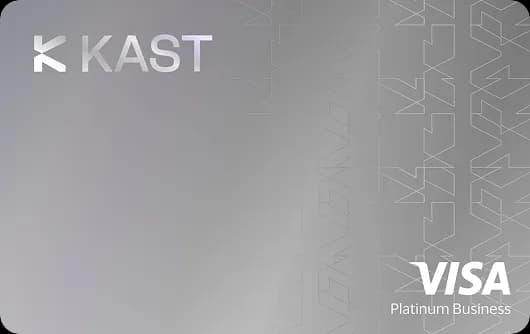
5. KAST K Card
Early Adopter Access: 2% Points + 4% $MOVE on Every Swipe
Crypto Card Regulation in Philippines
The BSP (Bangko Sentral ng Pilipinas) regulates crypto through its VASP framework under BSP Circular No. 1108, Series of 2021 (Guidelines for Virtual Asset Service Providers). All VASPs must register with the BSP, comply with AML/CTF requirements under the Anti-Money Laundering Act (AMLA, as amended by RA 11521), and maintain minimum capital of PHP 50 million.
As of mid-2025, only 9 active VASPs hold BSP registration, and the BSP has extended its moratorium on new VASP licenses - signaling a preference for consolidation over expansion. The BSP has been among Southeast Asia's most progressive regulators, explicitly recognizing crypto's role in financial inclusion and the remittance corridor.
The SEC Philippines (Securities and Exchange Commission) oversees token offerings and crypto asset service providers. In May-July 2025, the SEC finalized its CASP (Crypto Asset Service Provider) Rules, requiring all platforms (local and foreign) serving Filipinos to register with a minimum paid-up capital of PHP 100 million. Marketing rules were expanded to cover social media, airdrops, events, and advertisements.
The SEC also continued enforcement against unregistered platforms, blocking Bybit, Bitget, KuCoin, and Kraken among others. This enforcement directly affects card availability - these platforms' card products are restricted or unavailable to Philippine residents.
The AMLC (Anti-Money Laundering Council) enforces financial crime prevention for crypto transactions. The Philippines was on the FATF gray list until 2023, and the subsequent delisting led to strengthened VASP oversight.
CEZA (Cagayan Economic Zone Authority) has issued crypto-related Offshore Virtual Currency Exchange (OVCE) licenses for operations within the Cagayan special economic zone. These licenses are separate from BSP registration and primarily serve platforms with offshore operations.
Crypto.com serves Filipino users through its global platform and has maintained Philippine access. COCA, Kolo, KAST, RedotPay, ether.fi, xPlace, and Jupiter serve under global coverage. Local platforms Coins.ph (acquired by Coins Group, millions of users) and PDAX (BSP-registered) operate domestically.
Check SEC Philippines advisories at sec.gov.ph for the latest list of restricted platforms. The enforcement picture changes frequently.
Tax Treatment of Card Rewards in Philippines
The BIR (Bureau of Internal Revenue, Kawanihan ng Rentas Internas) taxes crypto gains under the general income tax framework. The BIR has not issued crypto-specific legislation or Revenue Memorandum Circulars dedicated to virtual assets, so crypto dispositions (including card spending) are treated as regular income taxed at progressive rates under the TRAIN Law (Tax Reform for Acceleration and Inclusion, RA 10963):
| Annual Taxable Income (PHP) | Tax Rate |
|---|---|
| Up to PHP 250,000 | 0% (exempt) |
| PHP 250,001-400,000 | 15% |
| PHP 400,001-800,000 | 20% |
| PHP 800,001-2,000,000 | 25% |
| PHP 2,000,001-8,000,000 | 30% |
| Over PHP 8,000,000 | 35% |
The PHP 250,000 annual exemption is significant. Many Filipino card users, particularly OFW family members whose primary income is remittances (not classified as Philippine-source employment income), may fall below this threshold. If your total taxable income (including crypto gains) stays under PHP 250,000, you pay zero tax.
Example: An OFW family member with no Philippine employment income receives USDC remittances and spends them via card. The disposal of USDC generates near-zero gains. Cashback received (say PHP 20,000/year in USDC at 2%) is taxable income but falls well under the PHP 250,000 exemption. Total tax: PHP 0.
Example (taxable): A Manila professional earning PHP 600,000/year in salary spends appreciated BTC through a card, realizing PHP 100,000 in gains. The gain is added to their income, pushing total to PHP 700,000. The marginal rate on the gain is 20% = PHP 20,000 in tax.
| Cashback Type | Tax When Received | Tax When Spent/Sold | Total Burden |
|---|---|---|---|
| BTC cashback | Income at receipt (0-35%) | Income on any gain (0-35%) | Up to 35% + 35% |
| USDC cashback | Income at receipt (0-35%) | approx. 0% gain | 0-35% only |
| Points/perks | Generally not taxed | Varies | Low |
Our Philippines tax breakdown confirms stablecoin funding is the clear winner for employed Filipinos above the PHP 250,000 exemption. For OFW families whose members have minimal or no Philippine employment income, the exemption often covers all card-related income anyway.
BIR enforcement: The BIR has focused on exchange-level compliance rather than individual card transaction tracking. However, BIR has signaled increasing attention to crypto income, and maintaining records protects you against future enforcement. The annual Income Tax Return (ITR, BIR Form 1700/1701) should include crypto income.
How to Apply from Philippines
Philippine crypto card applications require any of the following primary IDs: PhilID (Philippine Identification System/PhilSys card, the newest national ID rolled out since 2020), UMID (Unified Multi-Purpose ID), Philippine passport, driver's license (LTO-issued), PRC ID (Professional Regulation Commission, for licensed professionals), voter's ID (COMELEC), or NBI Clearance (National Bureau of Investigation).
A TIN (Tax Identification Number) from BIR may be required by some issuers.
Proof of Philippine address via utility bill (Meralco for electricity in Luzon, VECO/MECO in Visayas/Mindanao, Manila Water/Maynilad for water), bank statement (BDO, BPI, Metrobank, Landbank, UnionBank), or barangay certificate (cedula ng barangay) - the barangay clearance is unique to the Philippines and widely accepted as address verification.
GCash and Maya verification: Some APAC issuers accept GCash or Maya (formerly PayMaya) account verification as supplementary KYC, since both platforms have already verified the user's identity through their own processes. This can speed up onboarding.
For OFW family members: If the card applicant is a family member in the Philippines receiving remittances, they apply with their own Philippine ID. The OFW abroad sends USDC to the family member's wallet, not to the card directly. This two-step process (OFW sends crypto, family member loads card) works within existing KYC frameworks.
Physical cards ship to Philippine addresses within 7-14 business days via PhilPost or private courier (LBC Express, J&T Express, Ninja Van). Metro Manila delivery is fastest (5-7 days). Provincial addresses may take longer, particularly in Visayas and Mindanao. Virtual cards are available immediately for Apple Pay and Google Pay use - Apple Pay works at select SM and Ayala group merchants, while Google Pay adoption is growing.
Spending Tips for Philippines
Remittance Replacement: The #1 Philippine Advantage
Over 10 million OFWs send $35.6 billion annually to the Philippines (2025 record), primarily from the US, Saudi Arabia, UAE, Hong Kong, Singapore, Japan, and Canada. Traditional remittance channels are expensive:
| Transfer Method | Fee on $500 Sent | Recipient Gets (approx.) | Fee % |
|---|---|---|---|
| Western Union (cash pickup) | $15-30 + FX spread | PHP 26,500-27,500 | 5-8% |
| MoneyGram | $10-20 + FX spread | PHP 27,000-27,800 | 4-7% |
| Palawan Express Padala | PHP-only, bank-to-bank | Varies | 2-4% |
| GCash International Transfer | $5-10 + FX spread | PHP 27,500-28,000 | 3-5% |
| USDC via crypto card | Under $1 (network fee) | PHP 28,000+ | 0.1-0.5% |
The workflow: OFW buys USDC on a US/UAE/HK exchange, sends to family member's wallet (under $1 network fee, arrives in minutes), family member loads onto KAST, COCA, or Kolo card, spends at any Visa/Mastercard merchant. At $500/month in remittances, the annual savings versus Western Union are approximately PHP 18,000-30,000 ($320-535). For families receiving remittances from multiple OFW members, the savings multiply.
Coins.ph already facilitates crypto-to-peso conversions for remittances. The crypto card adds the spending layer: instead of converting to peso in Coins.ph and withdrawing to a bank, the family member spends directly from the card, earning cashback on top.
Card Selection by Use Case
- COCA (up to 8% with staking $COCA, 1% free, + 6% APY): Highest cashback plus yield on stablecoins held between remittances
- Kolo (5% BTC, 0% FX, $0): Free BTC accumulation on PHP spending. $5/txn cap, $200/mo cashback cap
- Crypto.com Icy (4%, CRO stake): Metal card with lounge access at NAIA Terminal 3
- ether.fi (3%, borrow-to-spend): Best for ETH holders avoiding BIR disposals
- KAST (2%, 0.5% FX, free): Best low-friction entry for OFW remittance spending
COCA vs KAST: Philippine Spending Math
Both free at entry tier. Fund with USDC to stay within the PHP 250K exemption.
| Monthly Spend (PHP) | COCA (8%, 0% FX) | Kolo (5%, 0% FX) | Crypto.com Icy (4%, 0% FX) | KAST (2%, 0.5% FX) |
|---|---|---|---|---|
| PHP 10,000 | PHP 9,600/yr | PHP 6,000/yr | PHP 4,800/yr | PHP 1,800/yr |
| PHP 20,000 | PHP 19,200/yr | PHP 12,000/yr | PHP 9,600/yr | PHP 3,600/yr |
| PHP 35,000 | PHP 33,600/yr | PHP 21,000/yr | PHP 16,800/yr | PHP 6,300/yr |
COCA at 8% with 0% FX returns the highest cashback (requires staking $COCA tokens; free Starter tier earns 1%). Kolo at 5% BTC with 0% FX is the highest genuinely free option. At PHP 20,000/month, COCA nets PHP 19,200/year, Kolo nets PHP 12,000/year, Crypto.com Icy nets PHP 9,600/year, and KAST nets PHP 3,600/year. PHP 12,000/year from Kolo alone covers approximately 8 months of mobile data (Globe/Smart) or 40+ Grab rides.
Spending Scenario: PHP 15,000/month (~$270)
| Factor | USDC Funding (COCA) | BTC Funding (appreciated) |
|---|---|---|
| Annual spend | PHP 180,000 | PHP 180,000 |
| Net cashback (8%, 0% FX) | PHP 14,400 | PHP 14,400 |
| Tax on gains (20%) | approx. PHP 0 | -PHP 18,000 (100% appreciation) |
| FX savings vs BDO (1-1.5%) | PHP 1,800-2,700 | PHP 1,800-2,700 |
| Net annual value | PHP 16,200-17,100 | approx. PHP -900 |
USDC funding nets over PHP 16,000/year in combined cashback and FX savings. BTC funding with 100% appreciation erases the benefit due to the 20% tax on gains. This makes funding source the most critical decision for Filipino card users above the PHP 250,000 income threshold.
Local Payment Infrastructure
Card acceptance is strong and growing across Metro Manila, Cebu City, Davao City, and other urban centers. Contactless Visa/Mastercard works at malls (SM Supermalls - SM North EDSA, SM Mall of Asia, SM Megamall; Ayala Malls - Glorietta, Greenbelt, TriNoma; Robinsons Malls), supermarkets (SM Supermarket, Robinsons Supermarket, Puregold, Rustan's), and chain restaurants (Jollibee, McDonald's, KFC, Shakey's, Max's).
GCash and Maya: These dominate digital payments in the Philippines (GCash has 90+ million users). They operate as QR-code mobile wallets linked to bank accounts. They do not support crypto card funding, but they cover the payment gap at small merchants, sari-sari stores, and informal businesses where Visa/Mastercard is not accepted. Use your crypto card where cards are accepted, GCash/Maya where they are not.
Cash-heavy areas: Sari-sari stores (neighborhood convenience shops), jeepneys, tricycles, wet markets, and many smaller businesses remain cash-only. This is changing gradually but cash is still essential for daily life outside malls and formal retail. Carry PHP cash alongside your crypto card.
Transit: Beep cards (stored-value) handle MRT, LRT, and select bus routes in Metro Manila. Visa/Mastercard contactless is not accepted on public transit. Use your crypto card for Grab (ridesharing), which is the primary alternative transportation in Metro Manila, Cebu, and Davao. Grab accepts Visa/Mastercard payments and is a significant monthly spending category for many Filipinos.
Apple Pay and Google Pay adoption is growing but lower than in Singapore or Hong Kong. More merchants in Ayala and SM malls are adding NFC terminal support. Samsung Pay is also available through Samsung's partnership with UnionBank.
Online shopping: Lazada, Shopee, and Zalora accept Visa/Mastercard for online purchases. International sites (Amazon, AliExpress) also work with crypto cards. Crypto cards with 0-1% FX save 0.5-2.5% versus BDO/BPI cards (1.5-2.5% markup) on every international online purchase.
Supported Exchanges & Wallets in Philippines
Who is geo-banned in the Philippines: Bybit, Binance, Bitget, KuCoin, and Kraken have all restricted Philippine access following SEC Philippines enforcement actions. Do not rely on these platforms for card products.
This is a significant constraint on card availability for Filipino users and distinguishes the Philippines from neighboring APAC markets like Singapore or Thailand where these platforms operate more freely.
COCA reaches the Philippines under global coverage with up to 8% cashback (scaling with staking $COCA tokens, 1% at free Starter), 0% FX, and 6% APY on stablecoin deposits. The non-custodial model keeps your USDC in your wallet until spending. For OFW families holding USDC between remittances, the 6% APY generates passive income on funds that would otherwise sit idle. Rewards are in COCA tokens.
Crypto.com serves Filipino users through its global platform with the full tier range. The Icy White tier adds crypto cards with airport lounges at NAIA Terminal 3 - useful for frequent OFW travelers. Spotify and Netflix rebates at higher tiers add recurring value.
ether.fi (3%) offers borrow-to-spend for ETH holders. At the Philippines' progressive rates (up to 35%), borrowing rather than selling avoids triggering BIR income tax on disposal gains.
RedotPay offers stablecoin-native spending with instant virtual card activation (free) and a physical card option ($100). The Solana variant is popular across APAC crypto communities.
Kolo (5% BTC cashback, 0% FX, $0 annual fee) delivers the highest free-tier return available in the Philippines. The $5/txn cap and $200/mo cashback cap bind above approximately $4,000/month in spend - well above typical Filipino spending levels. BTC cashback is taxable at receipt.
xPlace (up to 2%, Solana, 1% FX + 1% transaction fee) provides self-custody spending for Filipino DeFi users. Jupiter (4% base cashback, 1% FX) serves Solana ecosystem users who want stablecoin spending with a stronger rewards profile.
Domestic platforms: Coins.ph (acquired by Coins Group, BSP-registered, integrated with GCash) is the most recognized domestic platform with millions of users. Coins.ph handles P2P crypto trading, bill payments, and PHP-to-crypto conversions. PDAX (Philippine Digital Asset Exchange, BSP-registered) offers spot trading with PHP pairs. Neither offers a Visa/Mastercard spending card, but both serve as PHP on-ramps.
The PHP-to-USDC-to-card pipeline: deposit PHP via bank transfer or GCash to Coins.ph (instant), buy USDC, transfer to your card wallet. Total time: under 30 minutes.
KAST (2%, 0.5% FX, 2-minute KYC at basic tier) and RedotPay (stablecoin-native, 1.2% FX, APAC issuer) provide the simplest entry points for OFW families who want to start spending stablecoin remittances through a card without extensive documentation.
The Philippines' massive OFW remittance corridor, BSP regulatory clarity, and growing card acceptance make it one of APAC's most impactful markets for crypto card adoption. The SEC enforcement against major exchanges narrows the card selection, but globally available cards still provide strong options for the 10+ million families who stand to save thousands annually on remittance fees.
Written by SpendNode Editorial
Frequently Asked Questions
Can OFWs use crypto cards to send remittances to the Philippines?
Yes. An OFW sends USDT or USDC to a family member's wallet, who loads it onto a crypto card (like KAST, COCA, or Kolo) and spends at any Visa/Mastercard merchant. Total cost is under 1% versus 5-10% through Western Union or MoneyGram. On PHP 20,000/month, that saves PHP 12,000-24,000/year.
Which crypto card offers the best value in the Philippines?
COCA leads at up to 8% cashback with 0% FX plus 6% APY on stablecoin balances (requires staking $COCA tokens, 1% at free Starter). Kolo delivers 5% BTC cashback with 0% FX at $0 annual fee ($5/txn cap, $200/mo cashback cap). Crypto.com Icy adds 4% cashback with lounge access at NAIA Terminal 3 (requires CRO stake). KAST (2%, 0.5% FX, $0 annual) is the simplest entry for OFW families. Note: Bybit, Binance, Bitget, KuCoin, and Kraken are all geo-banned.
Are crypto card gains taxed in the Philippines?
Yes, crypto gains are taxable as regular income at progressive rates up to 35% under the TRAIN Law. The PHP 250,000 annual exemption is significant - OFW family members with no Philippine employment income often fall below this threshold. Fund with USDC/USDT to minimize taxable gains.
Do crypto cards work at GCash and Maya merchants?
GCash and Maya are separate QR-based payment systems. Crypto cards work at Visa/Mastercard terminals, which are different from GCash/Maya QR codes. Most malls, formal restaurants, and chain stores accept both systems. Sari-sari stores and jeepneys are cash-only.
Other Countries
View all 108 countries →


Recent Updates to Best Crypto Cards in Philippines
- Removed Wirex from topCardSlugs (not available in Philippines - only 35 specific countries). Removed Avici from editorial (US/LATAM only, not APAC). Replaced with RedotPay. Removed Bitget from both FAQs (geo-banned in Philippines by SEC enforcement)
- Corrected COCA FX fee from 0% to 1% for PHP transactions. Recalculated break-even table and spending scenario with net cashback after FX fees. Added Crypto.com (3%, 0% FX) column to break-even comparison
- Updated regulatory section: SEC CASP Rules finalized (May-July 2025, PHP 100M minimum capital, expanded marketing rules), BSP VASP moratorium extended with only 9 active registered VASPs
- Updated OFW remittance figure from $36B to $35.6B (actual 2025 record per BSP data). Updated FAQs with correct card recommendations and PHP 250K tax exemption context
- Added Binance to geo-ban list (was missing). Fixed KAST FX to 0.5%. Added Kolo. Replaced redotpay-solana-card with kolo-card in topCardSlugs. Fixed Crypto.com to Icy (4%). Fixed Jupiter to no rewards