


Best Crypto Cards in Nigeria (2026)
Compare 29 crypto cards available in Nigeria. Africa's largest crypto market with stablecoin-to-NGN spending and verified global card options.
Verified for Nigeria
30 crypto cards available
Local currency: NGN
Nigerian debit cards from GTBank, Access Bank, or First Bank work domestically but struggle internationally - high FX markups, limited acceptance, and no meaningful rewards. Over 29 crypto card variants from global issuers offer up to 8% rewards, low or zero FX fees, and the most powerful use case in Africa: stablecoin spending at market rates to bypass Naira volatility.
Nigeria is Africa's largest crypto market and consistently ranks in the global top 5 for adoption. Driven by Naira depreciation, capital controls, and the gap between official and parallel exchange rates, Nigerians use USDT and USDC as savings vehicles. Crypto cards convert these stablecoins to NGN through Visa/Mastercard at point of sale, giving spenders access to fair market rates.
| Card | Max Cashback | Annual Fee | FX Fee | Type | Best For |
|---|---|---|---|---|---|
| COCA | Up to 8% | $0 | 0% | Debit | $COCA tiers (1% free) + 6% APY |
| Kolo | 5% BTC | $0 | 0% | Prepaid | Highest free-tier return ($5/txn cap, $200/mo cap) |
| Crypto.com | up to 5% | CRO stake | 0% | Prepaid | Metal tiers + airport lounge perks at LOS |
| ether.fi | 3% | $0 | 1% | Credit | Borrow-to-spend, staking yield |
| KAST | 2% | $0 | 0.5% | Prepaid | USDT-funded NGN spending from remittance balances |
| RedotPay | - | $0-$100 | 1.2% | Prepaid | Stablecoin-native, high daily limits |
Based on our Nigeria research, KAST best fits households converting remittance-funded USDT into ordinary NGN purchases: 2% cashback, 0.5% FX fee, zero annual fee, and a way to make offshore balances usable at ordinary NGN merchants.
The primary value is not the cashback but the ability to spend stablecoins at market rates. For remittance recipients, loading USDT from family abroad and spending through a card eliminates the 5-10% fees charged by traditional channels.
Best Card For Every Need in Nigeria
Top 5 Crypto Cards in Nigeria
Nigeria's CBN restrictions cap bank card international spending at $100/month while the naira has lost over 70% of its value since 2020 - the real priority for an estimated 28 million Nigerian crypto holders is not cashback but stablecoin access at fair market rates and bypassing documentation barriers. KAST leads because it lets remittance recipients and P2P buyers take offshore USDT into ordinary NGN card spend, with 2% cashback and $0 annual fee.
COCA at up to 8% (scaling with staking $COCA tokens, 1% at free Starter) with 0% FX plus 6% APY on USDC deposits combines the highest cashback with yield on idle stablecoins - critical for users who hold USDC as a savings vehicle against NGN depreciation. Kolo at 5% BTC cashback with 0% FX and $0 annual fee offers the highest return without token staking, though capped at $5/txn and $200/mo - well suited to typical Nigerian spending patterns.
ether.fi adds borrow-to-spend for holders with appreciated ETH or BTC who want liquidity without a taxable disposition. Crypto.com Icy White at 4% cashback with 0% FX adds Priority Pass lounge access at Lagos (LOS) for frequent travelers.
1. COCA Visa Card
Self-Banking: 8% Cashback + 6% APY + 0% FX
2. Kolo Card
Earn Bitcoin on Every Purchase: 5% BTC Cashback + Visa Platinum + 170+ Countries
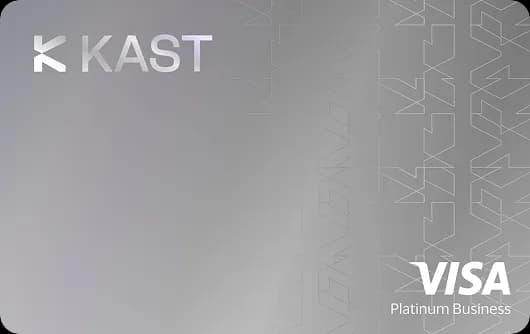
3. KAST K Card
Early Adopter Access: 2% Points + 4% $MOVE on Every Swipe

4. ether.fi Core Card
Zero Barriers: 3% Back on Every Purchase, No Stake Required
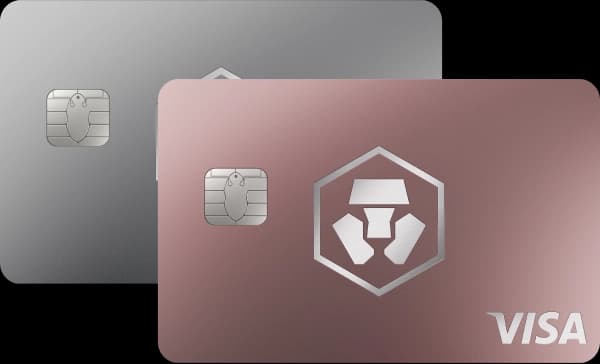
5. Private (Icy White / Rose Gold)
Elite Private Status: 4% Uncapped Cashback + Guests
Crypto Card Regulation in Nigeria
The CBN (Central Bank of Nigeria) banned banks from facilitating crypto transactions in February 2021, then partially reversed course in December 2023 by allowing banks to service licensed VASPs. This reversal significantly improved the infrastructure for crypto card funding in Nigeria.
The Investments and Securities Act (ISA) 2025 formally classified digital assets as securities under Section 357, giving the SEC Nigeria full statutory authority to license, supervise, and sanction all crypto operators. All VASPs must now hold a full SEC license (registration fee: NGN 30 million).
This is a significant upgrade from the earlier provisional framework under the Accelerated Regulatory Incubation Programme (ARIP). Licensed VASPs can partner with Nigerian banks, enabling smoother fiat on-ramps.
The eNaira (Nigeria's CBDC, launched October 2021 as Africa's first CBDC) coexists awkwardly with crypto. The CBN views the eNaira as the official digital payment solution, but adoption has been sluggish - fewer than 10 million wallets activated despite 200+ million population, compared to an estimated 28 million Nigerians holding crypto.
The eNaira's NFC-based spending works at POS terminals but offers no cashback, no stablecoin hedge, and no international utility. It solves a different problem than crypto cards.
The FMDQ Securities Exchange also launched a digital asset custody framework. Nigeria's regulatory architecture has moved decisively from prohibition to structured integration since the CBN's December 2023 reversal.
COCA, Kolo, KAST, Crypto.com, ether.fi, RedotPay, xPlace, and Jupiter serve Nigerian residents under global coverage. Card availability may vary - verify current eligibility with each issuer before depositing funds.
Tax Treatment of Card Rewards in Nigeria
The Nigeria Tax Administration Act (NTAA) 2025, effective January 2026, brought digital assets comprehensively into the national tax net. Capital gains tax on crypto profits applies at up to 25% from 2026 - a significant increase from the previous 10% CGT under the Capital Gains Tax Act. Income tax at progressive rates (up to 24%) may apply if crypto activity is classified as trading income.
Example: You bought 0.001 BTC at NGN 100,000 and spend it when it is worth NGN 500,000. The NGN 400,000 gain is now subject to up to 25% CGT = up to NGN 100,000. Enforcement is still developing for individual card users, but the legal framework is now explicit.
The FIRS (Federal Inland Revenue Service) is building infrastructure to track digital asset transactions. With ISA 2025 classifying digital assets as securities and the NTAA bringing them into the tax net, Nigeria's crypto regulatory environment has moved from gray area to formal framework. Stablecoin spending minimizes taxable gains regardless of enforcement level.
| Cashback Type | When Received | When Spent via Card | Total Tax Burden |
|---|---|---|---|
| BTC cashback | Uncertain | Up to 25% CGT on gain | Up to 25% |
| USDC cashback | Uncertain | approx. 0% (minimal gain) | approx. 0% |
| Points/perks | Not taxed | N/A | 0% |
Stablecoin spending generates minimal taxable gains regardless of enforcement level. Even at the new 25% CGT rate, the biggest benefit for Nigerian users is the Naira hedge, not the tax treatment - stablecoin funding avoids creating taxable gains entirely.
How to Apply from Nigeria
Nigerian crypto card applications require a NIN (National Identification Number, 11 digits) and BVN (Bank Verification Number, 11 digits). Valid photo ID includes an international passport (ecowas biometric), driver's license, voter's card (INEC PVC), or national ID card (NIMC slip or NIN card).
Proof of Nigerian address via utility bill (PHCN/DisCo electricity, water), bank statement, or tenancy agreement. Global issuers may require phone number verification with a Nigerian number (+234). Some issuers have additional screening for Nigerian applicants due to compliance requirements.
Physical card shipping to Nigeria may take 10-21 business days depending on the issuer and courier service. Virtual cards are available immediately for Apple Pay and Google Pay use.
Spending Tips for Nigeria
What Nigerian Bank Cards Actually Cost You
Nigerian banks offer increasingly digital products but international spending remains painful.
| Bank | Debit FX Markup | Dollar Card Fee | International Limit | Cashback |
|---|---|---|---|---|
| GTBank | 3-5% | NGN 1,500/yr | $100/month (CBN cap) | 0% |
| Access Bank | 3-5% | NGN 1,000-2,000/yr | $100/month cap | 0-0.5% |
| First Bank | 3-5% | NGN 1,000-2,000/yr | $100/month cap | 0% |
| Zenith Bank | 3-5% | NGN 1,500-3,000/yr | $100/month cap | 0% |
| UBA | 3-5% | NGN 1,000-2,000/yr | $100/month cap | 0% |
The $100/month CBN cap on international spending via naira-denominated cards is the critical constraint. This cap (introduced to defend the naira) makes Nigerian bank cards nearly useless for significant international purchases. A crypto card funded with USDC has no such cap. This alone makes crypto cards essential for Nigerian professionals who need to pay for international services.
Cost of Living by City
| City/Area | 1-Bed Rent/Month | Groceries/Month | Card-Eligible Spending |
|---|---|---|---|
| Lagos (Lekki/VI) | NGN 1M-3M | NGN 150K-300K | NGN 300K-800K |
| Lagos (Ikeja/Maryland) | NGN 400K-1M | NGN 100K-200K | NGN 200K-500K |
| Abuja (Maitama/Asokoro) | NGN 800K-2M | NGN 120K-250K | NGN 250K-600K |
| Port Harcourt (GRA) | NGN 300K-800K | NGN 80K-180K | NGN 150K-400K |
| Ibadan | NGN 100K-300K | NGN 50K-120K | NGN 80K-200K |
| Kano | NGN 80K-250K | NGN 50K-100K | NGN 80K-200K |
The Lagos tech professional earning NGN 500K-2M/month ($325-1,300) is the core crypto card demographic. Lagos alone has an estimated 1+ million crypto users.
The Tech Ecosystem: Lagos as Africa's Crypto Capital
Lagos is the undisputed crypto capital of Africa. Yaba (nicknamed "Yabacon Valley") hosts a concentration of fintech startups: Flutterwave (valued at $3B+, payment infrastructure), Paystack (acquired by Stripe for $200M), Interswitch (payment switching), Kuda (digital-only bank, 5M+ accounts), OPay (Opera-backed, dominant mobile payments), PalmPay (Chinese-backed, fast-growing).
This ecosystem creates a tech-literate workforce comfortable with digital financial products.
Nigerian developers, designers, and product managers earning in both NGN and USD (freelancers on Upwork, Toptal, Andela) are natural crypto users. Receiving payment in USDC and spending via a crypto card is both a currency hedge and a banking bypass.
The $20B+ Remittance Economy
Nigeria receives over $20 billion in annual remittances (largest in Africa, 6th globally). The major corridors: United States (400,000+ Nigerian Americans concentrated in Houston, Dallas, Atlanta, New York), United Kingdom (200,000+ in London, Manchester, Birmingham), Canada (100,000+ in Toronto, Calgary, Edmonton), Gulf states (UAE and Saudi Arabia, significant labor migration), and South Africa.
Traditional channels (Western Union, MoneyGram, WorldRemit, Remitly) charge 5-10% on the Nigeria corridor - among the highest rates globally. A family member abroad sending $500/month through Western Union loses $25-50 in fees monthly, $300-600 annually. The same $500 sent as USDC to a family member's crypto card costs under $1. That $300-600 annual saving represents weeks of groceries at Shoprite Lagos or a term of school fees at a mid-tier secondary school.
The Naira Story: Why Stablecoins Are Survival
We checked NGN conversion rates across all card issuers - the NGN/USD rate progression tells everything: 360 in early 2020, 411 (official rate) in mid-2021, 460 in 2022, then the CBN's June 2023 exchange rate "unification" - eliminating the managed official rate - sent the naira past 800. By late 2024, the parallel market breached 1,500.
The naira has since recovered somewhat - in March 2026, the NAFEM official rate sits around 1,360-1,390 and the parallel market tracks closely at 1,390-1,410, with the spread between official and street rates narrowing to under 2%.
Someone holding NGN 1 million in a savings account in January 2020 ($2,778 at the time) now holds roughly $720 of purchasing power - a 74% loss against the dollar in six years. Meanwhile, GTBank, Access, and Zenith savings accounts pay 3-5% annual interest on naira deposits, which does not begin to cover 30-40% annual depreciation.
This is why USDT is Nigeria's de facto savings currency. The strategy is universal among Lagos tech workers: convert NGN to USDT the day salary arrives, hold in USDT, spend only at the moment of purchase through a crypto card. The card converts USDT to NGN at point-of-sale at current market rates, preserving purchasing power that a naira bank account destroys. On NGN 200,000/month spending, the purchasing power preservation over a year far exceeds any cashback rewards.
Card Selection by Use Case
- COCA (up to 8% with staking $COCA, 1% free): Highest cashback + 6% APY on stablecoin balances. Combined returns compound.
- Kolo (5% BTC, 0% FX, free): Highest free-tier return. $5/txn and $200/mo caps. BTC cashback adds volatility
- KAST (2%, 0.5% FX, free): Simplest route from remittance-funded USDT to day-to-day NGN spending
- Crypto.com (up to 5%, 0% FX): Metal tiers + airport lounge perks at Murtala Muhammed International (LOS)
- ether.fi (3%, 1% FX, free): Borrow against ETH without selling. Staking yield on top.
Break-Even Math: Free Cards Compared
| Monthly Spend | Kolo (5% BTC, 0% FX) | KAST (2%, 0.5% FX) | COCA (8%, 0% FX) | Crypto.com Icy (4%, 0% FX) |
|---|---|---|---|---|
| NGN 100,000 | approx. NGN 60,000/yr | NGN 18,000/yr | NGN 96,000/yr | NGN 48,000/yr + lounges |
| NGN 200,000 | approx. NGN 120,000/yr | NGN 36,000/yr | NGN 192,000/yr | NGN 96,000/yr + lounges |
| NGN 500,000 | approx. NGN 300,000/yr | NGN 90,000/yr | NGN 480,000/yr | NGN 240,000/yr + lounges |
| NGN 1,000,000 | approx. NGN 600,000/yr | NGN 180,000/yr | NGN 960,000/yr | NGN 480,000/yr + lounges |
COCA at 8% with 0% FX dominates on return but requires staking COCA tokens (1% at free Starter, 8% requires 30K COCA staked). Kolo at 5% BTC with 0% FX is the highest-return free option - no staking needed. The $200/mo cashback cap only binds above approximately $4,000/month in spend (roughly NGN 6,000,000) - well above every spend level in the table, so for typical Nigerian spending Kolo's 5% rate applies uncapped.
Crypto.com Icy White at 4% with 0% FX offers uncapped returns plus lounge access at LOS, but requires a $50,000 CRO stake. KAST fits users turning offshore stablecoin balances into everyday NGN purchases while keeping the setup free. The real value for Nigerian users is the Naira hedge and the $100/month cap bypass, not the cashback alone.
Spending Scenario: NGN 200,000/month (approx. $130)
| Funding Method | Annual Spend | Net Cashback (1.5% after FX) | Naira Hedge Value | Total Benefit |
|---|---|---|---|---|
| USDT (stablecoin) | NGN 2,400,000 | NGN 36,000 | NGN 500,000+ saved | NGN 536,000+ |
| NGN (bank savings) | NGN 2,400,000 | approx. NGN 0 | NGN 0 (lost to depreciation) | approx. NGN 0 |
The cashback (NGN 36,000 net after FX) is secondary. The Naira hedge (NGN 500,000+ in preserved purchasing power) is the primary value.
Online Shopping: Breaking the $100/month Bank Cap
The CBN's $100/month international spending cap on naira-denominated cards makes online shopping painful. Nigerian professionals need access to Amazon (no direct shipping to Nigeria - uses forwarders like ShipBuy, Heroshe, Buyam), AliExpress (ships directly, popular for electronics and fashion), Jumia (Africa's e-commerce leader, NGN pricing), and Konga (Nigerian e-commerce).
International subscriptions add up fast: Netflix (NGN 4,400/month), Spotify, Adobe Creative Cloud ($659/year), Microsoft 365, Apple iCloud+, and Coursera/Udemy courses popular for upskilling. A Lagos designer paying $54/month for Adobe alone uses 54% of their bank card's monthly international allowance. A crypto card has no cap.
Cross-Border and Travel Spending
Nigerian international travel creates significant FX needs across key corridors: UK (GBP, London is the top destination for shopping, education, and medical tourism), UAE (AED, Dubai Mall shopping trips and growing business connections), US (USD, business, education, family visits), Ghana (GHS, frequent business travel to Accra and Tema), South Africa (ZAR, business connections and medical tourism in Johannesburg), and Turkey (TRY, growing vacation destination for Istanbul and Antalya, lira weakness amplifies savings).
Every international purchase through a bank card hits the $100/month cap and adds 3-5% FX markup. A crypto card with 0-1% FX removes both constraints.
The Japa Generation
"Japa" (Yoruba slang for "run" or emigrate) describes the massive wave of Nigerian professionals leaving since 2020. Tens of thousands of doctors (over 2,000 in 2022 alone per the Medical and Dental Council), nurses, engineers, and tech workers have relocated to the UK (Health and Care Worker visa), Canada (Express Entry), Australia (Skilled Worker visa), and the US (H-1B, EB-2).
These recent emigrants maintain Nigerian bank accounts, support family at home, and manage two financial systems simultaneously. A crypto card bridges both worlds: earn in GBP/CAD/AUD, convert to USDC, spend locally with zero FX, and send to family's crypto card in Lagos for their spending. The Japa generation is both a crypto card user base (abroad) and a remittance driver (sending home).
Education: The 100,000-Student Corridor
Over 100,000 Nigerian students study abroad annually, primarily in the UK (Student Route visa, 40,000+ Nigerians), US, Canada, Ghana (University of Ghana, KNUST), and South Africa (Wits, UCT). Annual tuition at UK universities ranges from 10,000-30,000 GBP.
Under the CBN's $100/month limit, paying a single month of London accommodation (800-1,200 GBP) would exhaust the bank card's entire annual international allowance ten times over. Nigerian parents funding children abroad and students paying rent, tuition, and living expenses are among the most natural crypto card users - the $100/month cap makes traditional banking cards functionally useless for education spending.
Local Payment Infrastructure
Card acceptance is growing but uneven across Nigeria. Lagos (Lekki, Victoria Island, Ikeja) has the strongest POS coverage: malls (Palms Shopping Centre, Ikeja City Mall, Lekki Mall, The Pavilion), restaurants, hotels, and supermarkets (Shoprite, SPAR, Hubmart, Ebeano) accept Visa/Mastercard contactless. Abuja (Jabi Lake Mall, Ceddi Plaza, Wuse II) and Port Harcourt (Port Harcourt Mall, Genesis Deluxe, Trans Amadi) have good coverage at larger merchants. Outside these three cities, POS availability drops sharply.
OPay (150M+ transactions monthly), Kuda (5M+ accounts), PalmPay, and Moniepoint dominate everyday mobile transfers but operate on domestic bank networks separate from Visa/Mastercard. Markets (Balogun, Computer Village in Ikeja, Alaba International), roadside vendors, and danfo/BRT buses are cash-only or OPay-only. Apple Pay is limited but growing among iPhone users in Lagos and Abuja.
Supported Exchanges & Wallets in Nigeria
Nigeria's crypto on-ramps are dominated by P2P trading. Binance P2P was the dominant platform until CBN regulatory pressure in 2024 - Binance executives Tigran Gambaryan and Nadeem Anjarwalla were detained in Abuja in February 2024. Gambaryan was released in October 2024 after charges were dropped (he later departed Binance in June 2025). Anjarwalla fled Nigeria. In February 2025, Nigeria filed a lawsuit seeking $79.5 billion from Binance for alleged economic damages plus $2 billion in back taxes. The Binance-Nigeria relationship remains severely damaged.
The market fragmented across Yellow Card (pan-African, Nigerian-founded, raised $40M Series B), Quidax (holds SEC Nigeria VASP license, full naira on/off-ramp), and Luno (acquired by Digital Currency Group). Roqqu and Patricia also serve the Nigerian market. None offer Visa/Mastercard spending cards, but they are the critical NGN-to-crypto on-ramp before loading onto globally available cards.
Among global card issuers, COCA leads with up to 8% on reward cards (scaling with staking $COCA tokens, 1% at free Starter) with 0% FX and non-custodial 6% APY on stablecoin balances - the highest combined return available to Nigerian users.
Kolo (5% BTC cashback, 0% FX, $0/yr) is the highest-return free card - no token staking required. The $5/txn and $200/mo cashback caps are generous for typical Nigerian spending. BTC cashback adds volatility but aligns with Nigeria's strong crypto culture.
Crypto.com provides metal tiers from Midnight Blue (0%, free) through Obsidian (5%), with Jade/Indigo adding airport lounge access at Murtala Muhammed International Airport (LOS). ether.fi with the Core Card offers borrow-to-spend: stake ETH, borrow against it, spend without triggering a taxable disposal - relevant under Nigeria's up to 25% CGT framework.
KAST (2%, 0.5% FX, $0/yr) is the simplest path from remittance-funded USDT to ordinary NGN purchases - no staking, no premium tier required. RedotPay (no rewards, 1.2% FX) offers stablecoin-native spending with high daily limits across Virtual (free), Solana, and Physical ($100) tiers.
xPlace (up to 2%, 1% FX + 1% transaction fee) and Jupiter (4% base cashback, 1% FX) serve the Solana ecosystem.
Nigeria is Africa's largest crypto market by volume. The Naira's over 70% depreciation, the $100/month bank card cap, SEC VASP licensing progress, and a massive tech-literate population combine to make it the continent's highest-impact market for crypto card adoption.
Written by SpendNode Editorial
Frequently Asked Questions
Can I receive remittances through a crypto card in Nigeria?
Yes. A family member abroad sends USDT or USDC to your wallet. You load it onto a crypto card (like KAST) and spend at any Visa/Mastercard POS terminal. Total cost is under 1% versus 5-10% through Western Union or MoneyGram. On NGN 200,000/month, that saves NGN 120,000-240,000/year.
Which crypto card is best for Nigerian users?
COCA Card leads on raw return: up to 8% cashback with 0% FX plus 6% APY on stablecoin balances (requires staking $COCA tokens, 1% at free Starter). Kolo at 5% BTC cashback with 0% FX is the highest-return free card (capped at $5/txn and $200/mo). KAST fits remittance recipients: 2% cashback, 0.5% FX, zero annual fee. Crypto.com Icy White at 4% adds lounge access at LOS. The real value is spending stablecoins at market rates instead of losing purchasing power to Naira depreciation.
Are crypto card gains taxed in Nigeria?
Yes. The Nigeria Tax Administration Act (NTAA) 2025, effective January 2026, applies capital gains tax of up to 25% on crypto profits. The ISA 2025 classified digital assets as securities, giving SEC Nigeria full enforcement authority. Enforcement is still developing for individual card users, but the legal framework is now explicit. Fund with USDT/USDC to minimize taxable gains.
How does the CBN banking ban affect crypto card usage?
The CBN partially reversed its crypto banking ban in December 2023, allowing banks to service licensed VASPs. Crypto cards from global issuers were less affected since they operate outside the Nigerian banking system. The card converts crypto to NGN through Visa/Mastercard, not through Nigerian banks.
Other Countries
View all 108 countries →


Recent Updates to Best Crypto Cards in Nigeria
- Corrected COCA FX fee from 0% to 1% and ether.fi FX fee from 0% to 1% for NGN transactions. Recalculated break-even table and spending scenario with net cashback after FX fees
- Updated regulatory and tax sections: ISA 2025 (digital assets classified as securities, NGN 30M VASP license), NTAA 2025 (CGT raised from 10% to up to 25%, effective January 2026). Cashback tax table updated to new rate
- Corrected NGN/USD exchange rate narrative: previous claim of 1,500-1,700 updated to actual March 2026 range of 1,360-1,410 (NAFEM and parallel). Naira depreciation recalculated from 77% to 74%. Crypto holder estimate updated from 30M+ to 28M per Statista projections
- Updated Binance-Nigeria section with full Gambaryan timeline (released October 2024, departed Binance June 2025), Anjarwalla escape, and $79.5B lawsuit. Updated FAQs with COCA as leading card option and correct CGT rate
- Fixed Kolo cap math (was NGN 500,000, correct is NGN 6,000,000). Changed break-even from Jade (3%) to Icy (4%) to match topCardSlugs. Added Kolo throughout. Updated topCardSlugs and FAQs