


Best Crypto Cards in Mexico (2026)
Compare crypto cards available in Mexico. Ley Fintech regulated market, $61.8B remittance corridor from the US, and MXN settlement.

Verified for Mexico
36 crypto cards available
Local currency: MXN
BBVA Mexico, Banorte, Citibanamex, and Santander Mexico debit cards earn zero cashback and charge 3-5% on non-MXN purchases. Mexico's crypto cards offer up to 8% rewards, zero FX fees, and access to the world's largest remittance corridor: $61.8 billion in 2025 from the United States (down 4.6% from the 2024 record of $64.7B, the first annual decline since 2013).
For the millions of Mexican families who receive remittances, a crypto card funded with USDC sent from the US eliminates the 3-8% fees charged by Western Union, MoneyGram, and traditional transfer services.
Mexico was the first Latin American country to enact comprehensive fintech regulation with the Ley Fintech in 2018. Bitso, founded in Mexico City, is Latin America's largest crypto exchange by volume and has processed billions in cross-border remittance payments through its partnership with Ripple/On-Demand Liquidity.
The regulatory framework is clear, domestic exchange infrastructure is strong, and card acceptance is widespread in major cities. MXN settlement means FX fees are a significant cost factor on every international transaction, making zero-FX-fee cards particularly valuable.
| Card | Max Cashback | Annual Fee | FX Fee | Type | Best For |
|---|---|---|---|---|---|
| COCA | Up to 8% | $0 | 0% | Debit | $COCA tiers (1% free) + 6% APY |
| Tria | Up to 6% | $20-$250 | 0% | Debit | Yield-linked rewards, zero FX |
| Kolo | 5% BTC | $0 | 0% | Prepaid | Highest free-tier reward card |
| Crypto.com Icy | 4% | CRO stake | 0% | Prepaid | Metal + lounge access at MEX/CUN |
| ether.fi | 3% | $0 | 1% | Credit | Borrow-to-spend, keep staking yield |
| KAST | 2% | $0 | 0.5% | Prepaid | Cheapest live card for USDC remittance spending |
Our Mexico fee comparison ranks COCA first with up to 8% cashback (1% free Starter, scaling with staking $COCA), 0% FX, and 6% APY on stablecoin deposits. KAST is the cheapest live card for remittance-funded spending: 2% cashback, $0 annual fee, 0.5% FX, and direct stablecoin loading without a paid tier. For high earners facing Mexico's progressive ISR rates (up to 35%), stablecoin funding minimizes taxable disposal gains.
Best Card For Every Need in Mexico
Top 6 Crypto Cards in Mexico
Mexico received $61.8B in remittances from the US in 2025 - and crypto cards that accept direct stablecoin loading can cut 5-8% traditional remittance fees to near zero while earning cashback on every peso spent. COCA leads with up to 8% cashback (scaling with staking $COCA, 1% at free Starter) and 6% APY - strong for users holding USDC as a peso-inflation hedge. Kolo delivers 5% BTC cashback with 0% FX at $0 annual fee ($5/txn cap, $200/mo cashback cap) - the highest genuinely free option.
Tria Signature offers 4.5% with 0% FX and yield-linked rewards that avoid volatile token ISR exposure ($109/yr). Crypto.com Icy adds 4% cashback with lounge access at MEX (Mexico City) and CUN (Cancun) (requires CRO stake). KAST is the cheapest live card for families already receiving stablecoins from the US: $0 annual fee, 0.5% FX, light documentation, and direct stablecoin-to-card spending.

1. COCA Visa Card
Self-Banking: 8% Cashback + 6% APY + 0% FX
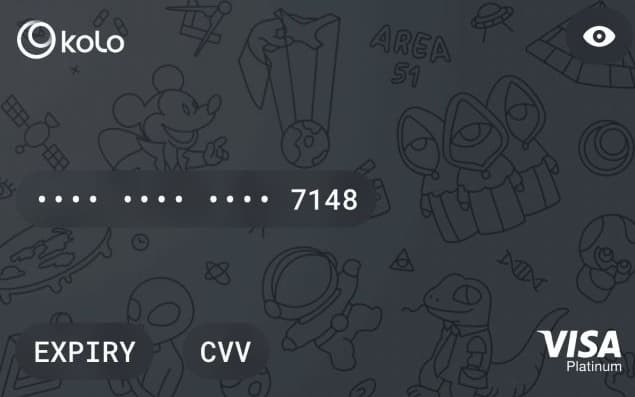
2. Kolo Card
Earn Bitcoin on Every Purchase: 5% BTC Cashback + Visa Platinum + 170+ Countries
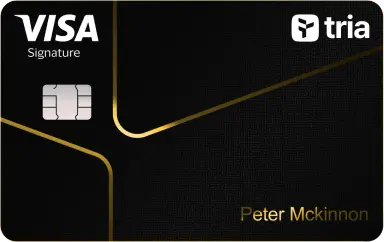
3. Tria Signature Card
High-Yield Mastery: 15% APY + Visa Signature Perks
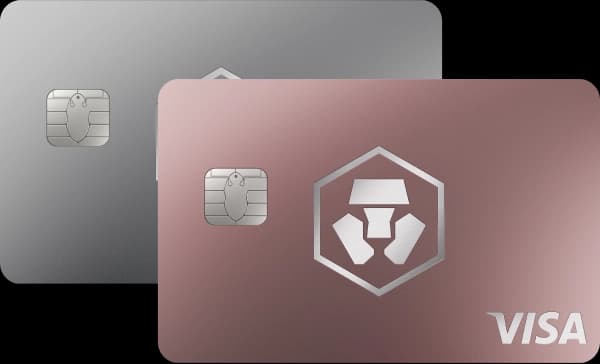
4. Private (Icy White / Rose Gold)
Elite Private Status: 4% Uncapped Cashback + Guests

5. ether.fi Core Card
Zero Barriers: 3% Back on Every Purchase, No Stake Required
6. KAST K Card
Early Adopter Access: 2% Points + 4% $MOVE on Every Swipe
Crypto Card Regulation in Mexico
The CNBV (Comision Nacional Bancaria y de Valores) and Banxico (Banco de Mexico) jointly regulate crypto under the Ley para Regular las Instituciones de Tecnologia Financiera (Ley Fintech), enacted on March 9, 2018. Mexico was the first LATAM country to create a comprehensive fintech regulatory framework. The law classifies crypto exchanges as ITFs (Instituciones de Tecnologia Financiera) and requires CNBV registration.
Under the Ley Fintech, ITFs must maintain minimum capital reserves, implement AML/KYC procedures, segregate customer funds, and submit regular reports to the CNBV. The CNBV has granted authorization to several domestic platforms, though the process has been slow - as of 2025, only a handful of platforms had received full authorization, and the regulatory sandbox has not yet authorized any entities.
Banxico has taken a restrictive stance on crypto within the regulated banking system. In March 2019, Banxico issued Circular 4/2019 which effectively prohibited regulated financial institutions (banks, brokerage houses, insurance companies) from offering crypto services to their customers. This means traditional Mexican banks cannot integrate crypto card functionality. However, the circular does not prohibit individuals from using crypto or crypto cards issued by international providers.
The SAT (Servicio de Administracion Tributaria) oversees crypto tax compliance. The SAT has not issued specific crypto tax guidance documents (unlike SARS in South Africa or the ATO in Australia), but crypto gains fall under the general income tax framework of the Ley del Impuesto sobre la Renta (LISR).
The CONDUSEF (Comision Nacional para la Proteccion y Defensa de los Usuarios de Servicios Financieros) handles consumer protection complaints related to financial services, including crypto platforms.
A major AML Law amendment enacted on July 16, 2025 redefined DNFBPs (Designated Non-Financial Businesses and Professions) to expressly include VASPs (Virtual Asset Service Providers). New reporting thresholds require VASPs to report transactions equal to or exceeding 210 UMA (approximately USD $1,180) to the UIF (Unidad de Inteligencia Financiera).
Mexico is also among jurisdictions adopting the OECD's CARF (Crypto-Asset Reporting Framework), targeting first automatic exchanges of crypto transaction data by 2028. Public consultations on a peso-backed stablecoin framework began in 2025 but have not yet resulted in regulatory action.
Bitso is the most prominent CNBV-registered platform and Mexico's dominant exchange. Crypto.com operates under global coverage. International card issuers are not regulated by the CNBV but their card products work at Mexican merchants through Visa/Mastercard payment networks.
Note: Binance's card is limited to Brazil-only (BRL settlement). It does not cover Mexico. Bitget card products cover EEA/APAC regions but not LATAM. Bybit has no card products in the current system.
Mexico's Ley Fintech provides one of LATAM's clearest regulatory frameworks. Verify card issuer availability directly, as Banxico restrictions on regulated banks do not extend to international card products used by individuals.
Tax Treatment of Card Rewards in Mexico
Mexico taxes crypto gains under the general income tax framework (ISR, Impuesto Sobre la Renta) established by the Ley del Impuesto sobre la Renta (LISR). The SAT treats every crypto card transaction as a disposal event (enajenacion de bienes), triggering ISR on any gain between acquisition cost and fair market value at the time of spending.
ISR Classification Challenge
The SAT has not issued definitive guidance on whether crypto gains should be classified as ganancias de capital (capital gains under Article 129 LISR, taxed at a flat 10% for publicly traded securities) or as otros ingresos (other income under Article 90 LISR, taxed at progressive rates up to 35%). Tax advisors are divided. The conservative and safer approach is to classify crypto gains as other income at progressive rates:
| Annual Taxable Income (MXN) | Marginal ISR Rate |
|---|---|
| Up to MXN 8,952 | 1.92% |
| MXN 8,953-75,984 | 6.4% |
| MXN 75,985-133,536 | 10.88% |
| MXN 133,537-155,229 | 16% |
| MXN 155,230-185,852 | 17.92% |
| MXN 185,853-374,837 | 21.36% |
| MXN 374,838-590,795 | 23.52% |
| MXN 590,796-1,127,926 | 30% |
| MXN 1,127,927-1,503,902 | 32% |
| MXN 1,503,903-4,511,707 | 34% |
| Over MXN 4,511,707 | 35% |
Example: You bought 0.01 BTC at MXN 50,000 and spend it when it is worth MXN 200,000. The MXN 150,000 gain, at the 30% bracket for someone earning MXN 800,000/year in salary, costs MXN 45,000 in ISR.
Cashback Tax Treatment
| Cashback Type | Tax When Received | Tax When Spent/Sold | Total Burden |
|---|---|---|---|
| BTC cashback | Potentially taxable as income | ISR on any appreciation | Up to 35% + 35% |
| USDC cashback | Potentially taxable as income | approx. 0% gain on disposal | Up to 35% |
| Points/perks | Generally not taxed | Taxable on conversion | Low |
ISR Provisional Payments
Mexico's ISR system requires pagos provisionales (provisional monthly payments) for certain income types. If your crypto income is significant, you may need to make monthly provisional ISR payments to the SAT via the Declaracion y Pago portal (sat.gob.mx). The annual declaration (declaracion anual, filed in April) reconciles provisional payments against actual liability.
Stablecoin funding is strongly recommended. At progressive rates reaching 35%, spending appreciated crypto through a card generates significant tax liability. USDC-funded spending produces near-zero disposal gains. Given the SAT's classification ambiguity, clean stablecoin records also protect against adverse future guidance.
IVA (Impuesto al Valor Agregado): Mexico's 16% VAT applies to goods and services purchased with a crypto card, same as any other payment method. There is no additional crypto-specific IVA on the stablecoin-to-MXN conversion.
How to Apply from Mexico
Mexican crypto card applications require an INE/IFE (Instituto Nacional Electoral) credential (voter ID card, Mexico's most common primary ID) or pasaporte mexicano (Mexican passport). The CURP (Clave Unica de Registro de Poblacion) - the 18-character unique population registry code assigned to every Mexican citizen and resident - is commonly requested.
The RFC (Registro Federal de Contribuyentes) - Mexico's tax identification number issued by the SAT - may be required by card issuers for compliance. Obtain one via the SAT portal (sat.gob.mx) or at a SAT office (Administracion Local de Servicios al Contribuyente). The RFC is required for anyone conducting financial transactions in Mexico.
Proof of Mexican address via comprobante de domicilio: utility bill (CFE for electricity, Telmex for telephone/internet, Izzi/Totalplay/Megacable for internet/TV, local water company receipts), bank statement (estado de cuenta from BBVA, Banorte, Citibanamex, Santander, Banco Azteca, or Nu Mexico), or property tax receipt (recibo de predial). The comprovante must be no more than 3 months old.
For foreign residents: A valid passport plus tarjeta de residente temporal or tarjeta de residente permanente issued by the INM (Instituto Nacional de Migracion). Digital nomads on a residente temporal visa qualify. The RFC for foreigners (RFC extranjeros) can be obtained at any SAT office with your passport and temporary residency card.
Bitso and other CNBV-registered platforms offer streamlined KYC for Mexican users with existing accounts - typically instant via INE validation. International card issuers may take 1-3 business days for manual verification.
Physical cards from international issuers ship to Mexican addresses within 7-14 business days via Correos de Mexico or private courier (Estafeta, FedEx Mexico, DHL). Delivery in Mexico City is faster (5-7 days) than in smaller cities. Virtual cards are available immediately for Apple Pay and Google Pay use.
Spending Tips for Mexico
Remittance Corridor: Mexico's #1 Crypto Card Advantage
Mexico received $61.8 billion in remittances in 2025 (down 4.6% from the 2024 record of $64.7B), primarily from Mexicans working in the United States. This is the world's largest bilateral remittance corridor. The 2025 decline - the first since 2013 - is attributed to tighter US immigration enforcement and the US federal 1% remittance tax. Traditional channels are expensive:
| Transfer Method | Fee on $500 Sent | Recipient Gets | Fee % |
|---|---|---|---|
| Western Union (cash pickup) | $15-25 + FX spread | approx. MXN 8,100-8,400 | 5-8% |
| MoneyGram | $10-20 + FX spread | approx. MXN 8,200-8,500 | 4-7% |
| Bank wire (Wells Fargo to BBVA) | $25-45 + FX spread | approx. MXN 8,000-8,300 | 6-10% |
| USDC via crypto card | $0 (network fee only) | approx. MXN 8,800+ | 0.1-0.5% |
The workflow: a family member in the US buys USDC on any exchange, sends it to the Mexican recipient's wallet (network fee typically under $1), the recipient loads it onto a KAST or COCA card, and spends at any Visa/Mastercard merchant in Mexico. The entire process bypasses banking intermediaries, FX spread markups, and transfer fees.
At $500/month in remittances, the annual savings versus Western Union are approximately MXN 6,000-12,000 ($330-660). Bitso has already proven this corridor at scale through its partnership with Ripple's On-Demand Liquidity service.
Card Selection by Use Case
- COCA (up to 8% + 6% APY, free, 0% FX): Highest cashback plus yield on idle stablecoins
- Tria (up to 6%, 0% FX): Signature at 4.5% ($109/yr) or Premium at 6% ($250/yr). Yield-linked rewards avoid volatile token ISR exposure.
- Kolo (5% BTC, 0% FX, $0): Free 5% BTC on MXN spending. $5/txn cap, $200/mo cashback ceiling
- Crypto.com Icy (4%, 0% FX, CRO stake): Metal card with lounge access at MEX (AICM) and CUN
- ether.fi (3%, 1% FX, borrow-to-spend): Best for ETH holders avoiding ISR disposals
- KAST (2%, 0.5% FX, free): Best for remittance recipients who want the cheapest live card for USDC spending
COCA vs Crypto.com vs KAST: Mexican Spending Math
All three are free at entry tier. Fund with USDC for simplest SAT reporting.
| Monthly Spend (MXN) | COCA (up to 8%, 0% FX) | Kolo (5%, 0% FX) | Crypto.com Icy (4%, 0% FX) | KAST (2%, 0.5% FX) |
|---|---|---|---|---|
| MXN 8,000 | MXN 7,680/yr | MXN 4,800/yr | MXN 3,840/yr + lounges | MXN 1,440/yr |
| MXN 15,000 | MXN 14,400/yr | MXN 9,000/yr | MXN 7,200/yr + lounges | MXN 2,700/yr |
| MXN 25,000 | MXN 24,000/yr | MXN 15,000/yr | MXN 12,000/yr + lounges | MXN 4,500/yr |
| MXN 40,000 | MXN 38,400/yr | MXN 24,000/yr | MXN 19,200/yr + lounges | MXN 7,200/yr |
COCA dominates at every spending level (requires staking $COCA tokens; free Starter tier earns 1%). Kolo at 5% BTC with 0% FX is the highest genuinely free option. At MXN 15,000/month, COCA returns MXN 14,400/year, Kolo returns MXN 9,000/year, versus MXN 2,700 from KAST (net after 0.5% FX).
Crypto.com Icy (4%, CRO stake) makes sense for frequent flyers who value lounge access at AICM (Mexico City) and CUN (Cancun) airports.
Spending Scenario: MXN 18,000/month (~$1,000)
| Factor | USDC Funding (COCA) | BTC Funding (appreciated) |
|---|---|---|
| Annual spend | MXN 216,000 | MXN 216,000 |
| Cashback (8%) | MXN 17,280 | MXN 17,280 |
| ISR on gains (30%) | approx. MXN 0 | -MXN 32,400 (100% appreciation) |
| FX savings vs BBVA (4%) | MXN 8,640 | MXN 8,640 |
| Net annual value | MXN 25,920 | -MXN 6,480 |
We track Mexico-specific ISR impact: USDC funding nets MXN 25,920/year. BTC funding with 100% appreciation costs money after ISR. This is critical: at Mexico's 30% bracket, spending appreciated crypto through a card can easily cost more in tax than you earn in cashback. Always fund with stablecoins unless your gains are very small.
FX Savings: Critical for MXN Users
Mexican bank cards charge punishing FX markups on international purchases. The markup includes the bank's own spread plus the interbank rate differential:
| Card | FX Markup | Cost on MXN 10,000/month Foreign Spend |
|---|---|---|
| BBVA Mexico Debit | 4-5% | MXN 4,800-6,000/yr |
| Banorte Debit | 3.5-4% | MXN 4,200-4,800/yr |
| Citibanamex Debit | 3-4% | MXN 3,600-4,800/yr |
| COCA (0% FX) | 0% | MXN 0/yr |
| KAST (0.5% FX) | 0.5% | MXN 600/yr |
For Mexicans who buy on Amazon (amazon.com.mx charges some items in USD), subscribe to US-priced services, or travel to the US, the FX savings are MXN 3,600-6,000/year on moderate international spending.
Local Payment Infrastructure
Card acceptance is strong in Mexico City (CDMX), Guadalajara, Monterrey, Puebla, Queretaro, and tourist zones. Contactless Visa/Mastercard works at modern retailers, malls (Palacio de Hierro, Liverpool, Sanborns, Coppel), supermarkets (Walmart Mexico, Soriana, Chedraui, HEB, Costco), and chain restaurants.
OXXO: Mexico's 20,000+ OXXO convenience stores are a critical part of daily life. Many OXXO locations now accept card payments, though some smaller locations remain cash-only. For OXXO locations that accept cards, running purchases through a crypto card earns cashback on what is, for many Mexicans, a daily spending category.
SPEI and CoDi: SPEI (Sistema de Pagos Electronicos Interbancarios) handles domestic bank transfers and is used for on-ramping to exchanges. CoDi (Cobro Digital) is Banxico's QR code payment system but adoption has been limited compared to Pix in Brazil. Neither interacts with crypto cards.
Cash culture: Despite growing card acceptance, Mexico remains partially cash-heavy. Street food vendors, tianguis (street markets), small shops in colonias populares, and informal services generally require cash. Major cities have strong card acceptance in formal retail and restaurants, but always carry some cash for these situations.
Tourist zones: Cancun, Playa del Carmen, Los Cabos, Puerto Vallarta, and Tulum have near-universal card acceptance at hotels, restaurants, and tourist-oriented businesses. These areas frequently price in USD, making a 0% FX crypto card particularly valuable.
Apple Pay is supported at major Mexican retailers. Adoption is growing but lower than in the US or Europe. Google Pay support is more limited but expanding.
Digital Nomad Angle
Mexico City has become one of the world's top destinations for digital nomads, alongside Lisbon, Bali, and Bangkok. The residente temporal visa allows stays of up to 4 years. Neighborhoods like Roma, Condesa, Polanco, Coyoacan, and San Miguel de Allende have strong coworking infrastructure and card acceptance.
A crypto card with 0% FX eliminates the markup on USD-earned income spent in MXN. For a nomad earning $4,000/month in USD and spending MXN 40,000/month locally, the FX savings versus a US bank card are approximately MXN 19,200/year ($1,060) - meaningful against Mexico City's cost of living.
Supported Exchanges & Wallets in Mexico
COCA reaches Mexico under global coverage with up to 8% on cashback cards (1% free Starter, scaling with staking $COCA) and 6% APY on stablecoin deposits. The non-custodial model keeps your USDC in your wallet until spending. For Mexican users focused on maximizing returns without exchange volume requirements, COCA leads the available options. Rewards are in COCA tokens.
Tria offers 0% FX across all tiers — Signature at 4.5% ($109/yr) and Premium at 6% ($250/yr). Yield-linked rewards avoid volatile token ISR exposure, which matters at Mexico's progressive rates up to 35%.
Kolo (5% BTC cashback, 0% FX, $0 annual fee) is the highest free-tier return available in Mexico ($5/txn cap, $200/mo cashback cap). BTC cashback is taxable income under ISR when received.
Crypto.com serves Mexico through its global platform with tiers from Midnight Blue (0% cashback, free) to Obsidian (5%, CRO stake). The Icy tier is one of the clearer crypto debit cards with airport lounges at AICM and CUN. Spotify and Netflix rebates at higher tiers add recurring value.
ether.fi (3%) offers borrow-to-spend for ETH holders. At Mexico's ISR rates (up to 35%), borrowing against staked ETH rather than selling avoids triggering disposal tax entirely. The staking yield continues earning while you spend borrowed funds.
Avici serves Mexico through LATAM coverage with its crypto-backed credit model. Borrow against BTC/ETH collateral and spend without triggering an ISR taxable event. The Platinum (free) and Signature ($30/yr, Visa Signature perks, lounge access, travel insurance) tiers are both available. Ledger CL Card (1%) also covers LATAM, providing self-custody spending from hardware wallet.
Jupiter (1%) serves Solana ecosystem users with global coverage, providing wallet-based spending without exchange custody.
Note on unavailable cards: Binance's card is limited to Brazil-only (BRL settlement) and does not cover Mexico despite Binance's strong LATAM presence. Bitget card products cover EEA/APAC but not LATAM. MetaMask Card is US/EEA/UK only. Wirex covers 35 countries (EEA, UK, and select others) but not Mexico (only Argentina and Brazil in LATAM). Mexican users should not rely on these platforms for card products.
Domestic exchanges: Bitso (Mexico City-founded 2014, CNBV-registered, LATAM's largest exchange) has processed over $10 billion in cross-border payments and dominates the Mexican market. Bitso supports SPEI deposits (instant, free) for MXN on-ramping. Volabit and Tauros also serve the Mexican market with CNBV registration. None offer Visa/Mastercard spending cards, but all serve as efficient MXN on-ramps.
The MXN-to-USDC-to-card pipeline: deposit MXN via SPEI to Bitso (instant), buy USDC, transfer to your card wallet. Total time: under 30 minutes.
KAST (2%, 2-minute KYC at basic tier) is ideal for remittance recipients who want the cheapest live card for direct USDC spending. RedotPay (stablecoin-native, high limits) and xPlace (up to 2%, Solana self-custody) provide additional options.
Mexico's Ley Fintech framework, the $61.8B US remittance corridor (despite 2025's decline), Bitso's established on-ramp infrastructure, and strong urban card acceptance make it LATAM's most impactful market for crypto card adoption.
The remittance savings alone - MXN 6,000-12,000/year for families receiving $500/month from the US - justify the switch even before counting cashback or FX savings. The new US 1% remittance tax makes stablecoin-based transfers even more competitive against traditional channels.
Written by SpendNode Editorial
Frequently Asked Questions
Can I receive US remittances through a crypto card in Mexico?
Yes. A family member in the US sends USDC to your wallet. Load it onto a card (like KAST, COCA, or Kolo) and spend at any Visa/Mastercard merchant. Total cost is under 1% versus 3-8% through traditional channels. On MXN 20,000/month, that saves MXN 7,200-19,200/year. The new US 1% federal remittance tax makes stablecoin transfers even more competitive.
Which crypto card is best for Mexican users?
COCA leads with up to 8% cashback (scaling with $COCA staking, 1% at free Starter), 0% FX, and 6% APY. Kolo delivers 5% BTC cashback with 0% FX at $0 annual fee ($5/txn cap, $200/mo cashback cap). Tria Signature offers 4.5% with 0% FX and yield-linked rewards ($109/yr). Crypto.com Icy adds 4% with lounge access at AICM and CUN (CRO stake). KAST ($0, 2%, 0.5% FX) is the cheapest for remittance recipients.
How are crypto gains taxed in Mexico?
The SAT taxes crypto gains under the general ISR (income tax) framework at progressive rates up to 35%. Whether gains qualify as capital gains (10% flat) or other income (up to 35%) remains ambiguous - the conservative approach is progressive rates. Fund with USDC to minimize taxable gains. A July 2025 AML amendment now requires VASPs to report transactions above 210 UMA (approx. $1,180).
Does the Ley Fintech regulate crypto cards?
The Ley Fintech regulates ITFs (fintech institutions) including crypto exchanges. International card issuers operating under global licenses are not directly regulated by the CNBV but work at Mexican merchants through Visa/Mastercard networks. Bitso is CNBV-registered and has the clearest Mexican regulatory standing.
Other Countries
View all 108 countries →


Recent Updates to Best Crypto Cards in Mexico
- Updated remittance figures from '$60+ billion' to '$61.8B in 2025' (4.6% decline from 2024 record $64.7B, first decline since 2013). Added context on US 1% federal remittance tax and immigration enforcement impact
- Removed MetaMask Card (US/EEA/UK only, not available in Mexico). Removed Bybit from issuer mentions (has 0 card variants). Added MetaMask to unavailable cards note
- Fixed COCA FX from '0-1%' to '0%' throughout page. Fixed KAST FX from '0.5-1.75%' to '0.5%' in intro table, FX comparison table, and FAQs. Corrected KAST FX cost in comparison table from MXN 0/yr to MXN 600/yr
- Added July 2025 AML Law amendment (VASPs as DNFBPs, 210 UMA reporting threshold), OECD CARF adoption (2028 target), peso-backed stablecoin consultation (2025), sandbox status update. Rewrote FAQs with corrected data
- Fixed Crypto.com to Icy 4%. Replaced redotpay-solana-card in topCardSlugs. Added Tria and Kolo to table, card selection, break-even, exchanges. Fixed Midnight Blue 0%. Recalculated break-even with Icy and Kolo columns