


Best Crypto Cards in Japan (2026)
Compare crypto cards available in Japan. FSA-regulated market with JPY settlement, 15-55% miscellaneous income tax on crypto, and a 20% flat rate reform endorsed for implementation around 2027.


Verified for Japan
36 crypto cards available
Local currency: JPY
MUFG, SMBC, and Mizuho debit cards earn zero crypto cashback and charge 2-3% on non-JPY purchases. Japan's crypto cards offer up to 8% cashback and zero FX fees, but there is a critical caveat that shapes every strategy on this page: Japan currently taxes crypto gains as miscellaneous income (zatsu shotoku) at rates up to 55% - the harshest among developed nations.
Japan was the first major economy to regulate crypto exchanges after the 2014 Mt. Gox collapse, and the FSA (Financial Services Agency) framework remains among the strictest globally. Card availability is more limited than in Singapore or Hong Kong because of FSA registration requirements, but Crypto.com's established Japanese operations plus APAC and global issuers fill the gap. Japan's crypto user base is estimated at 5-7 million active traders, making it the third-largest crypto market in Asia after South Korea and India.
A major reform is underway: the LDP endorsed a 20% flat tax (bunri kazei) for specified crypto assets in its December 2025 tax reform blueprint, with the FIEA reclassification bill expected before the Diet in 2026 and implementation around 2027. Until the reform takes effect, the current 15-55% miscellaneous income classification still applies, making stablecoin funding a financial necessity for every card strategy in Japan.
| Card | Max Cashback | Annual Fee | FX Fee | Type | Best For |
|---|---|---|---|---|---|
| Bitget | 8% BGB | $0 | 0% + 0.9% tx | Debit | Highest cashback, zero FX |
| COCA | Up to 8% | $0 | 0% | Debit | $COCA tiers (1% free) + 6% APY |
| Tria | Up to 6% | $20-$250 | 0% | Debit | Yield-linked rewards, avoids volatile token double-tax |
| Kolo | 5% BTC | $0 | 0% | Prepaid | Highest free-tier cashback card |
| Crypto.com Icy | 4% | CRO stake | 0% | Prepaid | FSA-registered, metal + lounge access |
| KAST | 2% | $0 | 0.5% | Prepaid | Free first card for stablecoin-funded spending |
We confirmed that stablecoin spending is non-negotiable in Japan. At tax rates up to 55%, spending appreciated crypto through a card triggers the most expensive taxable disposition in any developed country. Bitget offers 8% cashback with zero FX fee, making it the strongest choice for USDC-funded JPY spending.
COCA offers up to 8% (scaling with staking $COCA tokens, 1% at free Starter) and adds 6% APY on deposits, turning idle stablecoins into a yield-generating spending account. For users who value FSA-registered security above all else, Crypto.com Icy at 4% with 0% FX and lounge access is the safest institutional pick (requires CRO stake).
Best Card For Every Need in Japan
Top 6 Crypto Cards in Japan
Japan's 15-55% miscellaneous income tax (zatsu shotoku) on crypto gains is the harshest in any developed country, making stablecoin funding mandatory and borrow-to-spend uniquely valuable. Bitget and COCA both offer up to 8% cashback for USDC-funded spending where the taxable gain per transaction is near-zero - at 33%+ marginal rates, this discipline saves hundreds of thousands of yen annually.
Crypto.com is FSA-registered through Foris DAX JP, providing the regulatory safety that matters deeply in a market shaped by the Mt. Gox and Coincheck hacks. ether.fi enables borrow-to-spend, which at 33-55% marginal rates saves far more than any cashback rate could - borrowing at 5-8% APR beats a 33%+ tax rate on every transaction. KAST fits users who want a no-stake USDC card while they decide whether richer exchange-tier rewards are worth the extra moving parts. Bybit is excluded due to FSA restrictions.
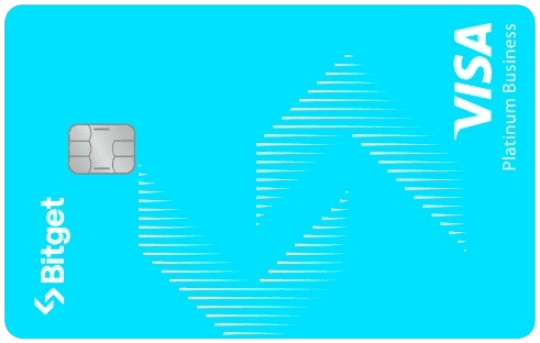
1. Bitget Card
Trade and Spend: Up to 8% BGB Cashback for Bitget Traders

2. COCA Visa Card
Self-Banking: 8% Cashback + 6% APY + 0% FX

3. Tria Signature Card
High-Yield Mastery: 15% APY + Visa Signature Perks
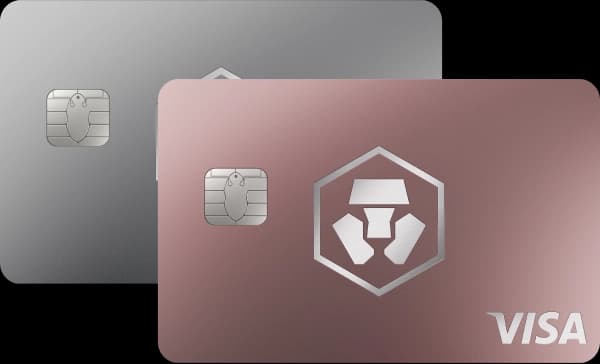
4. Private (Icy White / Rose Gold)
Elite Private Status: 4% Uncapped Cashback + Guests

5. ether.fi Core Card
Zero Barriers: 3% Back on Every Purchase, No Stake Required

6. KAST K Card
Early Adopter Access: 2% Points + 4% $MOVE on Every Swipe
Crypto Card Regulation in Japan
The FSA (Financial Services Agency, Kinyu-cho) regulates crypto under two primary statutes: the Payment Services Act (Shiharai Sabisu-ho, amended 2017) and the Financial Instruments and Exchange Act (Kinyu Shohin Torihiki-ho). All crypto exchanges must register as CAESP (Crypto-Asset Exchange Service Providers) and comply with comprehensive requirements: customer asset segregation in cold wallets, annual external audits, cybersecurity standards, and real-time transaction monitoring.
Japan's regulatory framework was born from crisis. The 2014 Mt. Gox collapse (approximately 850,000 BTC lost, worth approximately USD 470 million at the time) in Tokyo led directly to the 2017 Payment Services Act amendments. The 2018 Coincheck hack (approximately USD 530 million in NEM stolen) further tightened requirements. These disasters gave Japan the world's most prescriptive exchange regulatory framework.
The JVCEA (Japan Virtual and Crypto Assets Exchange Association, Nihon Kasou Tsuka Koukangyo Kyokai) is the FSA-approved self-regulatory organization. JVCEA sets additional standards including listing review processes, advertising guidelines, and user protection rules. All registered exchanges must be JVCEA members. As of 2025, approximately 30+ exchanges hold active FSA registration.
A May 2025 amendment to the PSA introduced a lighter ECISB (Electronic Payment Instrument and Crypto Asset Intermediary Service Business) registration framework. Where a person only intermediates the sale or exchange of crypto assets under mandate from a CAESP, a full CAESP licence is no longer required - an ECISB registration suffices.
FIEA reclassification (expected 2027): The FSA is preparing to reclassify crypto assets as "financial products" under the Financial Instruments and Exchange Act (FIEA), moving them from the Payment Services Act. This would extend disclosure requirements, insider-trading prohibitions, and administrative monetary penalties to all 105+ cryptocurrencies currently listed on licensed Japanese exchanges. The FSA's public consultation closed in February 2026, with a bill expected to be submitted to the Diet during the 2026 ordinary session and implementation expected around 2027.
Japan introduced a stablecoin regulation framework in June 2023, requiring stablecoins distributed in Japan to be issued by licensed banks, trust companies, or fund transfer businesses. In October 2025, Japan approved JPYC as its first legally recognized yen-backed stablecoin under the 2023 EPI (Electronic Payment Instrument) framework, maintaining a 1:1 JPY peg backed by bank deposits and government bonds.
SBI Holdings and Startale Group signed an MOU to launch JPYSC, a trust bank-backed yen stablecoin issued through SBI Shinsei Trust Bank, targeting Q2 2026 via SBI VC Trade. These domestic stablecoins could eventually simplify the fiat-to-stablecoin-to-card funding pipeline for Japanese residents. The FSA also implemented the Travel Rule for VASP-to-VASP transfers in 2023, requiring originator and beneficiary information for crypto transactions above JPY 100,000.
Japan's NFT and DeFi regulatory treatment remains under active discussion. Under the planned FIEA integration, insider-trading rules would extend to crypto assets, but NFTs and stablecoins would continue to be treated under the existing PSA regime. For card users, the practical impact is minimal since card spending involves straightforward crypto-to-fiat conversion, but DeFi yield used to fund cards could face additional scrutiny under the new framework.
Crypto.com holds FSA registration through its Japanese entity (Foris DAX JP). Bitget serves Japanese residents through its APAC entity. Bybit has restricted Japanese access under FSA pressure and is not available here. Always verify FSA registration status at fsa.go.jp before trusting funds to any issuer.
Tax Treatment of Card Rewards in Japan
Japan taxes crypto gains as miscellaneous income (zatsu shotoku), not capital gains. This classification is the core problem: miscellaneous income is added to your salary and taxed at your marginal rate. Combined national tax (shotoku-zei) and local residential tax (jumin-zei) rates range from 15% to 55% for high earners.
Example: You earn JPY 8,000,000/year as a software engineer and realize JPY 400,000 in crypto gains from card spending. The gains stack on top of your salary, pushing total income to JPY 8,400,000. At this bracket the marginal rate is approximately 33% (national 23% + local 10%), costing JPY 132,000 in tax on the crypto gains alone. That is JPY 132,000 in tax on what might have been routine grocery and restaurant spending.
No holding-period exemption exists (unlike Germany, which exempts gains after 1 year). No preferential rate exists. Every card swipe spending appreciated crypto is a taxable disposition. Japan does allow losses to offset gains within the miscellaneous income category, but crypto losses cannot offset salary or other income types.
Additionally, crypto-to-crypto swaps (e.g., converting BTC to USDC before loading a card) are themselves taxable events in Japan, adding friction to even the stablecoin conversion step.
| Annual Income Bracket | National Tax | Local Tax | Total Rate on Crypto Gains |
|---|---|---|---|
| Under JPY 1,950,000 | 5% | 10% | 15% |
| JPY 1,950,000 - 3,300,000 | 10% | 10% | 20% |
| JPY 3,300,000 - 6,950,000 | 20% | 10% | 30% |
| JPY 6,950,000 - 9,000,000 | 23% | 10% | 33% |
| JPY 9,000,000 - 18,000,000 | 33% | 10% | 43% |
| JPY 18,000,000 - 40,000,000 | 40% | 10% | 50% |
| Over JPY 40,000,000 | 45% | 10% | 55% |
The 20% flat rate reform (bunri kazei): The ruling LDP and Japan Innovation Party endorsed a 20% flat tax on crypto gains (15% national + 5% local) in the December 2025 tax reform blueprint (zeisei taikou). Under this reform, "specified crypto assets" traded on FSA-registered exchanges would be taxed under separate self-assessment taxation (shinkoku bunri kazei) at 20% - matching stocks and mutual funds. The reform also introduces a 3-year loss carryforward for eligible assets.
However, the scope is limited: DeFi yields, NFTs, airdrops, and trades on non-registered platforms would remain classified as miscellaneous income at 15-55%. The FIEA reclassification bill is expected before the Diet in 2026, with implementation around 2027. Until the reform takes effect, all crypto gains remain taxable as miscellaneous income at 15-55%. For a JPY 15,000,000/year earner, the reform would cut the crypto tax rate from 43% to 20% - a savings of JPY 230,000 per JPY 1,000,000 in gains.
At 30-55% effective rates, stablecoin spending is not optional, it is mandatory. USDC generates near-zero taxable gain. Filing is done through the kakutei shinkoku (final tax return) process by March 15 each year. The NTA provides worksheets specifically for crypto income calculation. Third-party tools like Cryptact, Gtax, and CryptoLinC (all Japan-focused) generate NTA-compatible tax reports from exchange transaction histories.
Airdrop and DeFi yield treatment: The NTA treats airdrops and yield farming rewards as miscellaneous income at fair market value when received. This means staking rewards used to fund card spending face double taxation: income tax when earned, plus additional tax if the tokens appreciate before being spent. Converting yield to USDC immediately upon receipt minimizes this double-hit.
| Cashback Type | Tax When Received | Tax When Spent via Card | Optimal Strategy |
|---|---|---|---|
| BTC/ETH cashback | Miscellaneous income (market value) | 15-55% on further gains | Avoid entirely |
| USDC cashback | Minimal (near-zero gain) | Near-zero | Best choice |
| Points/perks | Not taxed (rebate) | N/A | Best if available |
How to Apply from Japan
Japanese crypto card applications require a My Number Card (maina-nba- ka-do) issued by the JLIS (J-LIS, Chiho Kokyo Dantai Joho Shisutemu Kiko). The My Number (12-digit individual number) is mandatory for financial account registration under the Act on the Use of Numbers to Identify a Specific Individual. Alternatively, a combination of passport (ryoken) plus notification card (tsuuchi ka-do) or residence card (zairyu ka-do) for foreign residents works.
A Japanese driver's license (unten menkyo-sho) is accepted by most platforms as photo ID. Proof of Japanese address via juminhyo (certificate of residence from your city/ward office), utility bill (denki, gasu, suido), or NTT landline bill. Health insurance card (hoken-sho) is NOT accepted as standalone photo ID for financial KYC since it lacks a photograph.
Japan's FSA-mandated eKYC (electronic Know Your Customer) allows selfie-plus-ID verification that completes in minutes on platforms with CAESP registration. The eKYC standard was introduced in 2018 after the Coincheck hack to balance security with user convenience. Non-registered international issuers may use separate verification flows that take 3-7 business days. Some issuers still use the traditional hagaki (postcard) verification method, mailing a transfer-not-forward letter (tenso fuka) to your registered address, adding 3-5 days.
Foreign residents with a valid zairyu card can register for crypto cards using their residence card number. The zairyu card serves as both photo ID and address proof (address printed on back). Residents on work visas, student visas, or permanent residence all qualify. My Number Card issuance requires visiting your local city/ward office (shiyakusho/kuyakusho) and takes approximately 1 month for first-time applications, so plan ahead.
Physical cards ship domestically via Japan Post (Yu-bin) or Yamato Transport (Kuroneko Yamato) within 5-10 business days. Virtual cards are available immediately for Apple Pay use at FeliCa/NFC terminals. Note that Google Pay NFC payments have more limited merchant support in Japan compared to Apple Pay due to FeliCa dominance.
Spending Tips for Japan
Stablecoin-Only Strategy (Non-Negotiable at 15-55%)
Japan's current tax rates make stablecoin spending the only rational approach. At the 33% rate (common for tech professionals earning JPY 7-9M), a JPY 100,000 gain on a card transaction costs JPY 33,000 in tax. With USDC spending, that same purchase costs approximately JPY 0 in tax. At the 43% rate (JPY 9-18M earners), the penalty rises to JPY 43,000 per JPY 100,000 in gains. The math is unambiguous: do not spend appreciated crypto through a card in Japan until the 20% flat rate reform takes effect (expected around 2027).
Card Selection by Use Case
- Bitget (8% BGB, 0% FX + 0.9% tx, free): Best net return for daily spending, zero FX critical for JPY users
- COCA (up to 8% with staking $COCA, 1% free, + 6% APY): Best for holders who want yield on idle stablecoins alongside cashback
- Tria (up to 6%, 0% FX): Signature at 4.5% ($109/yr) or Premium at 6% ($250/yr). Yield-linked rewards avoid the volatile token double-taxation problem that makes BTC/BGB cashback expensive at 33-55% marginal rates.
- Kolo (5% BTC, 0% FX, $0): Highest free-tier return ($5/txn cap, $200/mo cashback cap). BTC cashback is taxable at receipt — convert to USDC immediately.
- Crypto.com Icy (4%, 0% FX, FSA-registered, CRO stake): Best for users who prioritize regulatory safety and lounge access
- KAST (2%, 0.5% FX, free): Best no-stake USDC card before moving into richer reward structures
Bitget vs COCA vs Crypto.com Break-Even
All three are free with 0% FX. The difference is net cashback after Bitget's 0.9% transaction fee.
| Monthly Spend | Bitget (8%, 0.9% tx) | COCA (up to 8%, 0% FX) | Tria Sig (4.5%, 0% FX) | Crypto.com Icy (4%, 0% FX) |
|---|---|---|---|---|
| JPY 100,000 | JPY 85,200/yr | JPY 96,000/yr | JPY 54,000/yr | JPY 48,000/yr + lounges |
| JPY 250,000 | JPY 213,000/yr | JPY 240,000/yr | JPY 135,000/yr | JPY 120,000/yr + lounges |
| JPY 400,000 | JPY 340,800/yr | JPY 384,000/yr | JPY 216,000/yr | JPY 192,000/yr + lounges |
COCA leads on raw cashback rate, but rewards are in COCA tokens (requires staking $COCA for 8%; 1% at free Starter). Bitget pays in BGB with broader exchange liquidity. Tria Signature at 4.5% with 0% FX offers yield-linked rewards — critically, these avoid the volatile token double-taxation that makes BTC/BGB cashback expensive at 33-55% marginal rates. Crypto.com Icy adds Priority Pass lounge access (requires CRO stake).
Borrow-to-Spend: Japan's Most Valuable Strategy
At 15-55% tax rates, borrowing against crypto holdings instead of selling them is uniquely valuable. ether.fi and Nexo let you borrow stablecoins against ETH or BTC collateral, then load a card without triggering a taxable disposition. The borrowing cost (typically 5-8% APR) is far cheaper than the 33-55% tax you would owe on selling appreciated assets. A JPY 5,000,000 portfolio appreciating 100% would trigger JPY 825,000-1,375,000 in tax if sold at 33-55%. Borrowing at 7% costs JPY 175,000/year for the same spending power.
Spending Scenario: JPY 200,000/month (USDC Funding, 33% Bracket)
| Funding Method | Annual Spend | Cashback (8%) | Tax | FX Savings (vs MUFG 3%) | Net Benefit |
|---|---|---|---|---|---|
| BTC (appreciated 100%) | JPY 2,400,000 | JPY 192,000 | JPY 396,000 (33%) | JPY 72,000 | -JPY 132,000 (net loss) |
| USDC (stablecoin) | JPY 2,400,000 | JPY 192,000 | approx. JPY 0 | JPY 72,000 | JPY 264,000 |
| Borrow via ether.fi | JPY 2,400,000 | JPY 72,000 (3%) | JPY 0 | JPY 48,000 (1% FX) | JPY 120,000 - borrow cost |
At the 33% bracket, spending appreciated BTC actually produces a net loss after tax, even with 8% cashback. USDC spending generates JPY 264,000 in combined benefit. This is why stablecoin funding is non-negotiable in Japan.
The 20% Flat Rate Reform: What Changes for Card Users
The LDP endorsed the bunri kazei reform in December 2025, targeting a 20% flat rate (15% national + 5% local) for specified crypto assets on registered exchanges. If enacted (expected around 2027), the calculus changes significantly: spending appreciated BTC at 20% instead of 33-55% makes volatile cashback strategies viable again for lower-bracket earners. For a 33% bracket earner, the savings per JPY 100,000 in gains would be JPY 13,000. However, DeFi yields, airdrops, and trades on non-registered platforms would still be miscellaneous income at 15-55%. The 3-year loss carryforward would also let card users offset volatile cashback losses against future gains. Follow NTA (Kokuzeicho) and FSA announcements for implementation timing.
FX Savings vs Japanese Bank Cards
Japanese megabank debit cards charge significant FX markups on non-JPY purchases. For Japanese residents who travel or shop internationally, the savings from 0% FX crypto cards are substantial.
| Card | FX Markup on USD Purchase | Cost on JPY 100,000 Equiv. |
|---|---|---|
| MUFG Debit | 3.0% | JPY 3,000 |
| SMBC Debit | 3.0% | JPY 3,000 |
| Mizuho Debit | 2.5% | JPY 2,500 |
| Rakuten Card | 1.63% | JPY 1,630 |
| Bitget (0% FX) | 0% + 0.9% tx | JPY 900 |
| Crypto.com (0% FX) | 0% | JPY 0 |
For frequent international shoppers or travelers to South Korea, Taiwan, or Southeast Asian destinations, a 0% FX crypto card saves JPY 25,000-36,000 per year on JPY 100,000/month in foreign purchases.
Local Payment Infrastructure
Contactless payments work at major retailers: konbini (Seven-Eleven, FamilyMart, Lawson, Ministop), supermarkets (Aeon, Ito-Yokado, Life, Summit), electronics stores (Bic Camera, Yodobashi Camera), department stores (Mitsukoshi Isetan, Takashimaya, Daimaru), and drugstores (Matsumoto Kiyoshi, Welcia, Sundrug). Restaurant chains (Sukiya, Matsuya, Yoshinoya, Saizeriya) accept Visa/Mastercard contactless broadly.
However, Japan remains more cash-reliant than other developed nations. Smaller izakaya, ramen shops, and rural establishments are cash-only. The IC card ecosystem (Suica, PASMO, ICOCA, manaca, TOICA) dominates transit payments and some convenience store spending. Crypto cards complement IC cards for larger purchases. Apple Pay works at FeliCa terminals alongside iD and QUICPay for tap-and-go checkout.
Airport spending: Narita (NRT) and Haneda (HND) airport duty-free shops, restaurants, and lounges universally accept Visa/Mastercard contactless. Kansai (KIX), Chubu (NGO), and Fukuoka (FUK) also have strong acceptance. Crypto.com Icy White/Rose Gold tiers include Priority Pass lounge access at major Japanese airports. For frequent domestic travelers (Shinkansen routes), station shops (ekiben vendors, NewDays, Kiosk) at JR stations increasingly accept Visa contactless alongside IC cards.
The domestic cashless push (led by LINE Pay, PayPay, Rakuten Pay, d-Barai, au PAY) has increased card acceptance dramatically since 2019, but these QR-code apps compete directly with Visa/Mastercard contactless for merchant acceptance. PayPay alone has 60+ million users and 4+ million merchant locations. Japan's government set a target of 40% cashless payment ratio by 2025 (up from 20% in 2016), driving merchant terminal upgrades nationwide.
Subscription optimization: Many Japanese residents pay for international subscriptions (Netflix, Spotify, Adobe, AWS, GitHub) in USD or EUR. Running these through a 0% FX crypto card instead of a MUFG or SMBC card saves 2.5-3% on every recurring payment, adding up to JPY 3,000-6,000/year for typical tech professionals with 5-8 international subscriptions.
Supported Exchanges & Wallets in Japan
Crypto.com is the strongest institutional pick for Japanese card users. It holds FSA registration through Foris DAX JP, operates a domestic Japanese platform, and serves all Crypto.com card tiers to Japanese residents. The Icy tier (4%, 0% FX, CRO stake) adds Priority Pass lounges at Narita, Haneda, and Kansai.
Tria offers 0% FX across all tiers — Signature at 4.5% ($109/yr) and Premium at 6% ($250/yr). Tria's yield-linked rewards are uniquely suited to Japan's tax environment: unlike BTC/BGB/CRO cashback that faces double taxation (miscellaneous income at receipt + capital gains on appreciation), yield-linked rewards avoid the volatile token price risk that compounds Japan's already punishing tax rates.
Bitget serves Japan through its APAC operations without direct FSA registration. The Bitget Card (Visa debit, 8% BGB cashback, 0% FX, 0.9% transaction fee) and Bitget Wallet Card (Mastercard prepaid, 1.7% FX with JPY 60,000/month zero-fee quota) provide the highest cashback rates available to Japanese residents. Japanese users should note the 0.9% transaction fee that reduces net returns to approximately 7.1%.
We flag a restriction for Japanese users: Bybit has limited access. Bybit restricted access for Japanese residents in late 2025 under mounting FSA pressure and is not available in Japan.
For stablecoin yield alongside spending, COCA (up to 8% cashback scaling with staking $COCA tokens, 1% at free Starter, + 6% APY on deposits, non-custodial) reaches Japan under global coverage. COCA's yield component partially offsets Japan's punishing tax rates by generating passive income on idle stablecoins waiting to be spent.
Borrow-to-spend is uniquely valuable in Japan's 15-55% tax environment. ether.fi (3% cashback) lets ETH holders borrow against staked positions without triggering the miscellaneous income classification. Nexo (lending platform; Nexo Card is EEA/UK/CH only) offers a similar facility against a broader collateral set. At 33%+ marginal rates, borrowing at 5-8% APR and avoiding a taxable sale saves 25-47% per transaction.
Domestic exchanges with FSA registration include bitFlyer (Japan's largest by volume), Coincheck (Monex Group subsidiary, rebuilt post-2018 hack), GMO Coin (GMO Internet Group), SBI VC Trade (SBI Group), and Rakuten Wallet (Rakuten Group). None currently offer standard Visa/Mastercard spending cards, leaving international issuers to fill the gap.
bitFlyer experimented with a T-Point partnership for crypto rewards but has not launched a spending card. SBI Group's deep financial services integration (SBI Securities, SBI Sumishin Net Bank, SBI Remit) - plus its partnership with Startale on the JPYSC yen stablecoin via SBI VC Trade - positions them as the most likely domestic issuer to eventually launch a crypto-linked card.
Rakuten Wallet deserves specific mention: Rakuten's ecosystem (Rakuten Card, Rakuten Pay, Rakuten Points) is Japan's most integrated cashback platform with over 100 million members. Rakuten Wallet lets users convert Rakuten Super Points to crypto, but the reverse (spending crypto via Rakuten Card) is not available. For Japanese users already deep in the Rakuten ecosystem, a crypto card from Bitget or Crypto.com fills the spending gap Rakuten has not yet addressed.
On-ramp options for Japanese residents: bitFlyer and GMO Coin accept JPY deposits via Japanese bank transfer (furikomi) with zero or minimal fees. Users can buy USDC or USDT, then transfer to their crypto card wallet for tax-efficient spending. Coincheck supports convenient bank deposits through Monex Group's banking relationships. For larger amounts, SBI VC Trade integrates with SBI Sumishin Net Bank for instant JPY-to-crypto conversion.
P2P trading via platforms like Paxful served the Japanese market historically, but FSA regulation has pushed virtually all activity to registered exchanges. LINE (Japan's dominant messaging app) explored crypto through LINE BITMAX but card integration remains absent.
Common Mistakes
1. Spending appreciated BTC or ETH through a card at 33-55% tax. Japan's miscellaneous income classification makes this the most expensive crypto card mistake in any developed country. A tech professional earning JPY 9,000,000/year who spends JPY 200,000/month in appreciated BTC (doubled in value) triggers JPY 528,000/year in tax at the 33% bracket on the gains alone. The same spending funded with USDC costs approximately JPY 0 in disposal tax. That is JPY 528,000/year destroyed for no reason.
How to avoid it: Fund your card exclusively with USDC or USDT. If you need to convert BTC/ETH to stablecoins, do it in a single batch and accept the one-time tax hit rather than triggering multiple taxable dispositions through daily card spending.
2. Not converting cashback tokens to stablecoins immediately. BTC or BGB cashback has a zero cost basis at receipt and is already taxed as miscellaneous income at fair market value. If the token then appreciates before you spend or sell it, you face additional tax on the gain. At the 43% bracket, receiving JPY 10,000 in BTC cashback that doubles to JPY 20,000 costs JPY 4,300 in initial tax plus JPY 4,300 on the appreciation - JPY 8,600 total on JPY 20,000 of value.
How to avoid it: Convert volatile cashback tokens to USDC the moment they hit your wallet. This crystallizes the gain at near-zero and prevents the double-tax compounding. Better yet, choose cards that offer stablecoin cashback or points-based rewards.
3. Ignoring the borrow-to-spend strategy for large holdings. Japanese holders with significant unrealized gains often default to selling crypto to fund cards, paying 33-55% tax. Borrowing against staked ETH via ether.fi at 5-8% APR and spending the stablecoins triggers zero tax. On a JPY 5,000,000 appreciated position, selling costs JPY 825,000-1,375,000 in tax. Borrowing costs JPY 175,000-400,000/year in interest - a savings of JPY 650,000-975,000.
How to avoid it: If you hold more than JPY 1,000,000 in appreciated crypto, evaluate ether.fi or Nexo before selling. The break-even is clear at any bracket above 15%: borrowing at 7% always beats a 15%+ tax rate on disposal.
Closing Outlook
Japan's crypto card landscape is approaching its most significant shift since the 2017 Payment Services Act amendments. Three developments converge.
First, the bunri kazei 20% flat rate was endorsed in the LDP's December 2025 tax reform blueprint, with the FIEA reclassification bill expected before the Diet in 2026 and implementation around 2027. When it takes effect for specified crypto assets on registered exchanges, Japan transforms from the harshest developed-country crypto tax regime to one matching equities - with 3-year loss carryforward as a bonus.
Second, the domestic stablecoin ecosystem is materializing: JPYC received regulatory approval in October 2025, and SBI's trust bank-backed JPYSC targets Q2 2026, both simplifying the fiat-to-stablecoin-to-card funding pipeline that currently requires routing through international exchanges.
Third, the FIEA integration would bring disclosure requirements and insider-trading rules to all 105+ listed cryptocurrencies, raising the regulatory floor and potentially making institutional-grade crypto cards from domestic players like SBI more viable.
Until the reform takes effect, stablecoin funding and borrow-to-spend remain the only rational strategies under the current 15-55% miscellaneous income classification. But the reform's endorsement by the ruling party makes Japan's transition from one of the worst to one of the best developed-country markets for crypto card spending a matter of when, not if.
Written by SpendNode Editorial
Frequently Asked Questions
How are crypto card transactions taxed in Japan?
Currently, crypto gains are classified as miscellaneous income (zatsu shotoku) and taxed at your marginal rate (15-55%). The LDP endorsed a 20% flat rate reform in December 2025 for specified crypto assets on registered exchanges, with implementation expected around 2027. Until the reform takes effect, stablecoin spending is essential to avoid the current rates.
Which crypto cards work in Japan?
Bitget (8% BGB, 0% FX, 0.9% tx fee), COCA (up to 8%, 0% FX, 6% APY), Tria Signature (4.5%, 0% FX, yield-linked rewards avoid volatile token double-tax), Crypto.com Icy (4%, 0% FX, FSA-registered), and globally available cards like KAST (2%, 0.5% FX) and Kolo (5% BTC, 0% FX). ether.fi enables borrow-to-spend for tax-efficient spending. Bybit is not available in Japan.
What is the status of the 20% flat crypto tax?
The ruling LDP and Japan Innovation Party endorsed a 20% flat tax (15% national + 5% local) in the December 2025 tax reform blueprint. The FIEA reclassification bill is expected before the Diet in 2026, with implementation around 2027. The reform includes 3-year loss carryforward but applies only to specified crypto assets on registered exchanges - DeFi yields, airdrops, and non-registered platform trades would still be miscellaneous income at 15-55%.
Is Japan the worst country for crypto card taxes?
Currently, for high earners, yes. At up to 55% on every gain with no exemptions or holding period discounts, Japan has the highest effective crypto card tax rate among developed nations. However, the endorsed 20% flat rate reform would bring Japan in line with its equities tax rate. Until it takes effect, stablecoin spending reduces the effective tax rate to near-zero.
Other Countries
View all 108 countries →


Recent Updates to Best Crypto Cards in Japan
- Major tax section update: LDP endorsed 20% flat rate (bunri kazei) in December 2025 tax reform blueprint. Updated from 'lobbied since 2023 but has not passed' to endorsed with FIEA bill expected before Diet in 2026, implementation around 2027. Added scope limitations (DeFi/NFT/unregistered still miscellaneous income), 3-year loss carryforward, and reform impact calculations
- Major regulatory update: Added May 2025 ECISB intermediary registration framework, FIEA reclassification plan (expected 2027, public consultation closed Feb 2026), JPYC approved as first regulated yen stablecoin (October 2025), SBI+Startale JPYSC trust bank-backed stablecoin (targeting Q2 2026)
- Removed Ledger CL Card (not available in Japan - US/EEA/UK/LATAM only). Fixed KAST FX fee from '0.5-1.75%' to '0.5%'. Fixed ether.fi spending scenario FX savings from JPY 72,000 to JPY 48,000 (ether.fi has 1% FX, not 0%). Removed stale LocalBitcoins reference
- Rewrote closing outlook to reflect reform convergence: bunri kazei endorsement, domestic stablecoin ecosystem materializing, FIEA integration raising regulatory floor. Updated all FAQs with reform context
- Fixed Crypto.com table from 5%/$0 to Icy 4%/CRO stake. Fixed break-even from 5% to Icy 4%, added Tria Signature column. Added Tria (yield-linked avoids double-tax at 33-55%). Added Kolo. Updated topCardSlugs and FAQs