


Best Crypto Cards in Hong Kong (2026)
Compare crypto cards available in Hong Kong. Zero capital gains tax, SFC-licensed issuers, and HKD spending pegged to USD for stable conversions.
Verified for Hong Kong
38 crypto cards available
Local currency: HKD
HSBC, Bank of China (HK), and Standard Chartered debit cards earn minimal cashback and charge 1.5-2% on non-HKD purchases. Hong Kong's crypto cards offer up to 8% cashback, zero FX fees, and like Singapore: zero capital gains tax. Every crypto card transaction is completely tax-free for individual investors.
Hong Kong is re-emerging as Asia's crypto capital after the SFC (Securities and Futures Commission) introduced its VASP licensing regime in 2023-2024. The city's unique position - a global financial center with zero CGT, common law legal system, HKD-USD peg, and an increasingly pro-crypto regulatory stance - makes it one of the most favorable markets on the planet for crypto card spending.
The HKD-USD peg (7.75-7.85 range via the Linked Exchange Rate System maintained by the HKMA) means USD-settled cards have negligible FX impact, an advantage shared only by UAE (AED-USD soft peg) and few other jurisdictions.
Hong Kong's financial infrastructure runs deep. The city has approximately 150 licensed banks, the second-highest concentration per capita globally. Visa and Mastercard acceptance is near-universal. And the population is comfortable with digital payments through Octopus, FPS, and PayMe. The crypto card simply adds another layer: cashback and inflation protection that traditional banking products cannot match.
| Card | Max Cashback | Annual Fee | FX Fee | Type | Best For |
|---|---|---|---|---|---|
| COCA | Up to 8% | $0 | 0% | Debit | $COCA tiers (1% free) + 6% APY |
| Bitget | 8% BGB | $0 | 0% + 0.9% tx | Debit | Zero FX + highest base cashback |
| Tria | Up to 6% | $20-$250 | 0% | Debit | Yield-linked rewards, zero FX |
| Kolo | 5% BTC | $0 | 0% | Prepaid | Highest free-tier cashback card |
| Crypto.com Icy | 4% | CRO stake | 0% | Prepaid | Metal + lounge access at HKIA |
| Wirex | 8% | $0-$360 | 0% | Debit | Multi-currency, 0% FX |
We tested all APAC-available cards for Hong Kong users - COCA leads on net return: up to 8% cashback (1% at free Starter, scaling with staking $COCA) with 0% FX, plus 6% APY on stablecoin deposits. Bitget offers 8% BGB cashback with 0% FX but a 0.9% transaction fee (7.1% net).
Tria offers up to 6% with 0% FX and yield-linked rewards — Signature at 4.5% ($109/yr) or Premium at 6% ($250/yr). Kolo delivers 5% BTC cashback with 0% FX at $0 ($5/txn cap, $200/mo cashback cap). Crypto.com Icy adds 4% cashback with Priority Pass lounge access at HKIA (requires CRO stake).
Wirex (up to 8%, 0% FX) is available in Hong Kong through its 35-country coverage. Since HK has zero CGT, there is no tax advantage to stablecoin funding. Spend your highest-appreciation assets freely.
Best Card For Every Need in Hong Kong
Top 6 Crypto Cards in Hong Kong
Hong Kong charges zero capital gains tax and pegs HKD to USD at 7.75-7.85 - spend appreciated BTC freely, there is no tax advantage to stablecoin funding here, and the peg eliminates FX risk on dollar-settled cards. COCA leads on net return (up to 8%, no tx fee, 0% FX, 1% at free Starter) plus 6% APY on stablecoins. Bitget offers 8% BGB but nets 7.1% after the 0.9% transaction fee.
Tria Signature at 4.5% with 0% FX ($109/yr) offers yield-linked rewards without volatile token exposure. Kolo at 5% BTC with 0% FX is the highest genuinely free option. Crypto.com Icy (4%, CRO stake) adds Priority Pass lounge access at HKIA. Wirex (up to 8%, 0% FX) rounds out the field with multi-currency support.
1. COCA Visa Card
Self-Banking: 8% Cashback + 6% APY + 0% FX
2. Bitget Card
Trade and Spend: Up to 8% BGB Cashback for Bitget Traders
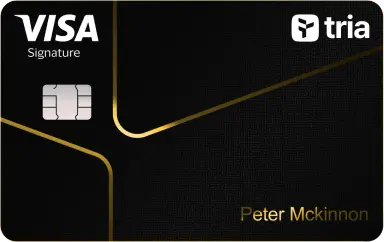
3. Tria Signature Card
High-Yield Mastery: 15% APY + Visa Signature Perks
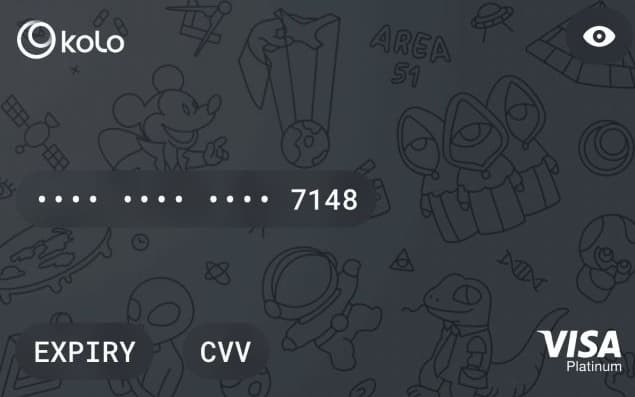
4. Kolo Card
Earn Bitcoin on Every Purchase: 5% BTC Cashback + Visa Platinum + 170+ Countries
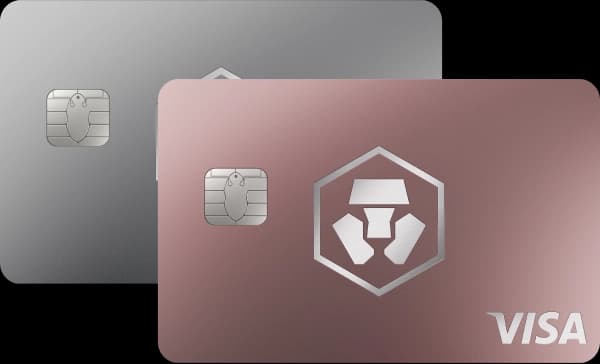
5. Private (Icy White / Rose Gold)
Elite Private Status: 4% Uncapped Cashback + Guests
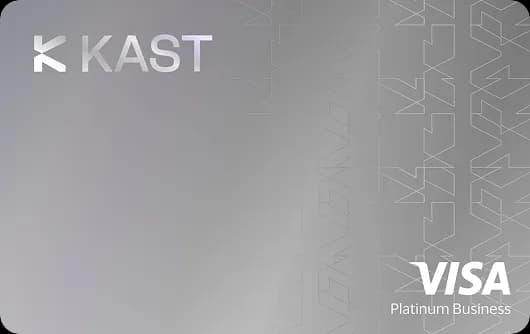
6. KAST K Card
Early Adopter Access: 2% Points + 4% $MOVE on Every Swipe
Crypto Card Regulation in Hong Kong
The SFC (Securities and Futures Commission, 证券及期货事务监察委员会) regulates crypto exchanges through its VASP licensing regime, introduced on June 1, 2023 under the Anti-Money Laundering and Counter-Terrorist Financing Ordinance (AMLO). Any platform operating a virtual asset exchange in Hong Kong or actively marketing to Hong Kong investors must hold an SFC VASP license. Existing platforms had until June 1, 2024 to submit license applications or cease operations.
The licensing process has been selective but is accelerating. As of February 2026, the SFC has granted licenses to 12 virtual asset trading platforms, including HashKey Exchange, OSL (BC Technology Group), and most recently Victory Fintech (VDX) (approved February 2026, the first new license since June 2025).
The SFC maintains an "Alert List" of unlicensed platforms, and several well-known global exchanges faced warnings during the transition period. The SFC's public register at sfc.hk shows all licensed entities.
The HKMA (Hong Kong Monetary Authority, 香港金融管理局) now oversees stablecoin regulation under the Stablecoins Ordinance, passed by the Legislative Council on May 21, 2025 and effective August 1, 2025. This replaced the earlier sandbox approach. Stablecoin issuers must obtain an HKMA license, maintain full reserve backing with high-quality liquid assets (segregated from operational funds), and hold at least HKD 25 million in paid-up capital.
First stablecoin licenses are expected in early 2026. For crypto card users, this means stablecoin-funded cards may eventually require the underlying stablecoin to be issued by an HKMA-licensed entity - though USDC and USDT (issued outside Hong Kong) remain usable for now.
Hong Kong maintains a dual licensing approach: the SFC handles exchange regulation while the HKMA handles banking and stablecoin matters. This is distinct from Singapore where the MAS handles everything under one roof.
Crypto.com has deep historical ties to Hong Kong (originally headquartered here). Bitget serves through APAC licensing. RedotPay is actually headquartered in Hong Kong, making it the only crypto card issuer natively based in the city.
The Hong Kong government's pro-Web3 stance since late 2022 (Policy Statement on Virtual Assets) has actively encouraged crypto businesses to set up in the city, reversing the previous cautious approach. Cyberport and the InvestHK agency have onboarded hundreds of Web3 companies. TOKEN2049 Hong Kong, Hong Kong Web3 Festival, and other events draw thousands of industry professionals annually. This policy direction makes card availability more likely to expand than contract.
The SFC maintains a public VASP register and an Alert List of unregistered platforms. Check sfc.hk for current license status of any platform you use.
Tax Treatment of Card Rewards in Hong Kong
Hong Kong does not levy capital gains tax. Spending crypto through a card is not a taxable event for individual investors. There is no GST or VAT on crypto transactions. This is the single most important fact for Hong Kong crypto card users: every dollar of cashback and every dollar of crypto appreciation spent through a card is retained in full.
Example: You bought 1 ETH at HKD 3,000 in 2020 and spend it when it is worth HKD 25,000 in 2026. The HKD 22,000 gain is completely tax-free. In Japan, this same gain would cost up to 55% in miscellaneous income tax (HKD 12,100). In Australia, up to 47% CGT. In South Korea, 22% once the delayed tax takes effect. In Hong Kong: HKD 0.
Exception - Profits Tax: If crypto trading constitutes your primary business activity (you trade professionally, it generates your main income, you have no other employment), profits may be subject to profits tax: 8.25% on the first HKD 2 million and 16.5% on amounts above (for corporations), or 7.5% and 15% respectively (for unincorporated businesses).
Personal card spending from a personal investment portfolio is not classified as business trading. The IRD (Inland Revenue Department) applies a source-based test: only profits arising in or derived from Hong Kong are taxable. The distinction between investment and trading activity follows the classic "badges of trade" analysis (frequency, volume, intention, holding period).
| Cashback Type | When Received | When Spent via Card | Total Tax Burden |
|---|---|---|---|
| BTC/ETH cashback | Not taxed | 0% (no CGT) | 0% |
| USDC cashback | Not taxed | 0% | 0% |
| Staking yield | Not taxed (individual) | 0% | 0% |
| Points/perks | Not taxed (rebate) | N/A | 0% |
No stablecoin strategy needed. Unlike most countries covered on this site, Hong Kong users have zero tax incentive to prefer stablecoins over volatile crypto for card funding. Spend whatever maximizes your rewards. If your BTC is up 500%, spend it freely, collect 8% cashback, and keep everything. The HKD-USD peg means USD-settled cards have near-zero FX conversion costs, so there is no hidden FX cost on top.
Salaries tax: Hong Kong's salaries tax (2% to 17%, capped at the standard rate of 15%) does not apply to crypto gains from personal investment. The low overall tax environment (no estate tax, no withholding tax on dividends, 15% standard rate on salaries) compounds the zero CGT advantage.
How to Apply from Hong Kong
Hong Kong crypto card applications require your HKID (Hong Kong Identity Card, 香港身份证), the smart card issued by the Immigration Department to all Hong Kong residents aged 11 and over. Permanent residents hold a three-star HKID; non-permanent residents (those who have not completed seven years of ordinary residence) hold a single-star HKID. Both work for crypto card KYC.
For non-permanent residents, some issuers may additionally require your passport and the visa label page showing your right to remain in Hong Kong. Common visa categories include the Employment Visa, Investment Visa, Quality Migrant Admission Scheme (QMAS), Top Talent Pass Scheme (TTPS, launched December 2022), and Dependant Visa.
Proof of Hong Kong address via utility bill (CLP Power or HK Electric for electricity, Towngas for gas, Water Supplies Department quarterly bill), bank statement (HSBC, Hang Seng, BOC HK, Standard Chartered), or government correspondence (IRD tax return, Rating and Valuation Department notice). The address must be a Hong Kong residential address, not a P.O. box.
SFC-licensed platforms (HashKey, OSL) offer streamlined eKYC verification using the HKID reader on NFC-enabled smartphones, enabling near-instant onboarding for Hong Kong residents. International card issuers may take 1-3 business days for manual verification.
RedotPay, being HK-headquartered, has the most streamlined local onboarding process. Crypto.com and Bitget also have well-established HK onboarding flows.
Physical cards ship to Hong Kong addresses within 3-7 business days via Hongkong Post or private courier (SF Express is particularly fast for domestic HK delivery). Virtual cards are available immediately for crypto cards with Apple Pay and Google Pay use. Both NFC and QR-code payments work widely at Hong Kong merchants.
Spending Tips for Hong Kong
Spend Appreciated Crypto Freely (Zero CGT Advantage)
Like Singapore, Hong Kong's zero CGT eliminates the stablecoin-only strategy that dominates card spending in Japan, Australia, Canada, and most of Europe. Spend your highest-appreciation BTC, ETH, or altcoins through your card, collect up to 8% cashback, and keep everything.
No per-transaction gain tracking, no tax forms, no stablecoin conversions needed. This simplicity is Hong Kong's core advantage.
Card Selection by Use Case
- Bitget (8%, 0.9% tx = approx. 7.1% net, free): Best all-around card with zero FX fee
- COCA (up to 8% with staking $COCA, 1% free, + 6% APY): Best for earning yield on idle stablecoins alongside maximum cashback
- Crypto.com (up to 5%): Best for metal card tiers with lounge access at HKIA
- KAST (2% cashback, free): Best free prepaid card for testing HKD day-to-day spend from existing stablecoin balances without moving into exchange VIP economics
COCA vs Bitget vs Crypto.com: Hong Kong Spending Math
All three are free at entry tier. No tax on any funding method.
| Monthly Spend | Bitget (8%, 0.9% tx) | COCA (up to 8%, 0% FX) | Tria Sig (4.5%, 0% FX) | Crypto.com Icy (4%, 0% FX) |
|---|---|---|---|---|
| HKD 8,000 | HKD 6,816/yr | HKD 7,680/yr | HKD 4,320/yr | HKD 3,840/yr + lounge |
| HKD 15,000 | HKD 12,780/yr | HKD 14,400/yr | HKD 8,100/yr | HKD 7,200/yr + lounge |
| HKD 25,000 | HKD 21,300/yr | HKD 24,000/yr | HKD 13,500/yr | HKD 12,000/yr + lounge |
| HKD 40,000 | HKD 34,080/yr | HKD 38,400/yr | HKD 21,600/yr | HKD 19,200/yr + lounge |
COCA leads on raw return with no transaction fee and adds 6% APY on deposits (requires staking $COCA for 8%; 1% at free Starter). Bitget pays in BGB with deeper exchange liquidity.
Tria Signature at 4.5% with 0% FX offers yield-linked rewards without volatile token exposure. Crypto.com Icy (4%, CRO stake) adds Priority Pass lounge access at HKIA. At HKD 25,000/month, Bitget's 7.1% net returns HKD 21,300/year — meaningful in Hong Kong's high-cost environment.
Spending Scenario: HKD 25,000/month (~USD 3,200)
| Funding Method | Annual Spend | Cashback (8%) | Tax | FX Savings (vs HSBC 1.5%) | Net Benefit |
|---|---|---|---|---|---|
| BTC (appreciated 400%) | HKD 300,000 | HKD 24,000 | HKD 0 | HKD 4,500 | HKD 28,500 |
| USDC (stablecoin) | HKD 300,000 | HKD 24,000 | HKD 0 | HKD 4,500 | HKD 28,500 |
| ETH (appreciated 200%) | HKD 300,000 | HKD 24,000 | HKD 0 | HKD 4,500 | HKD 28,500 |
All three rows are identical because there is no tax regardless of funding method. HKD 28,500/year (~USD 3,654) in combined cashback and FX savings. Pure profit.
The HKD-USD Peg Advantage
The Linked Exchange Rate System (LERS), maintained since 1983, keeps HKD within the 7.75-7.85 band against USD. This means USD-settled crypto cards have negligible FX conversion costs for Hong Kong users - typically 0.1-0.3% within the peg band, not the 1.5-2% that HSBC or BOC charge.
For other currencies when traveling (JPY in Japan, THB in Thailand, TWD in Taiwan, EUR in Europe), a 0% FX fee card saves 1.5-2% per transaction versus traditional bank cards.
The peg also means that holding USD stablecoins (USDC, USDT) is effectively the same as holding HKD - no currency risk. This is why Hong Kong users can comfortably hold 100% of their spending funds in USD-denominated stablecoins without FX concern, a luxury not available to users in Japan (JPY floats), South Korea (KRW floats), or Australia (AUD floats).
Local Payment Infrastructure
Octopus card (八达通) dominates transit (MTR, buses, ferries, minibuses, trams) and small-value payments (7-Eleven, Circle K, Maxim's, Cafe de Coral, McDonald's). Crypto cards complement Octopus for restaurant, retail, and larger merchant spending where Visa/Mastercard contactless is widely accepted. You cannot replace Octopus with a crypto card for transit, but you can use a crypto card for everything else.
Supermarkets and retail: ParknShop, Wellcome, AEON, CitySuper, Marks & Spencer Food, and Japanese supermarkets (Don Don Donki, YATA) all accept contactless Visa/Mastercard. Shopping malls (Harbour City, IFC Mall, Times Square, Pacific Place, K11 MUSEA, Elements) accept all international card networks.
Dining: From dai pai dong (大排档, outdoor food stalls) with newer payment terminals to Michelin-starred restaurants, card acceptance varies. Central, Tsim Sha Tsui, Causeway Bay, and Wan Chai have near-universal card acceptance. Older neighborhoods (Sham Shui Po, Yau Ma Tei) and wet markets still prefer cash or Octopus. Most restaurants in tourist and business areas accept contactless Visa/Mastercard.
Apple Pay and Google Pay penetration is very high. Samsung Pay also works widely. FPS (Faster Payment System) handles bank-to-bank transfers but does not interact with crypto cards. AlipayHK and WeChat Pay HK dominate certain merchant categories (especially those serving mainland Chinese tourists) but are app/bank-linked.
Cross-Border to Shenzhen
Hong Kong residents frequently cross into Shenzhen via Lo Wu, Lok Ma Chau, or the newer East Rail Line extension. While mainland China bans crypto trading, Visa/Mastercard acceptance in Shenzhen's upscale malls (MixC, Coco Park, KK ONE) and international hotels is growing. A crypto card can work for these specific venues, though WeChat Pay and Alipay dominate mainland payment infrastructure. The zero FX fee saves 1.5-2% versus HSBC when spending in RMB.
Subscription Optimization
Hong Kong's streaming subscriptions (Netflix, Disney+, Spotify, HBO Go, Viu, Apple TV+, YouTube Premium) are recurring charges that earn cashback month after month. At 8% cashback on HKD 300/month in subscriptions, that is HKD 288/year returned automatically. Crypto.com Icy and above offer Spotify and Netflix rebates.
Borrow-to-Spend (Position Preservation)
In Hong Kong, borrow-to-spend is about preserving long-term positions rather than tax optimization (since there is no CGT to avoid). ether.fi (3% cashback) lets ETH holders borrow against staked positions while continuing to earn staking yield.
The combined yield plus cashback creates a positive carry trade where you earn more on the collateral than you pay in borrowing costs. This is particularly attractive for Hong Kong's large professional investor community who hold significant crypto positions.
Supported Exchanges & Wallets in Hong Kong
Bitget serves Hong Kong through its APAC entity with 8% BGB cashback on the exchange-linked Visa debit (0% FX, 0.9% transaction fee). The Bitget Wallet Card (Mastercard prepaid, 1.7% FX with $400/month zero-fee quota) offers a wallet-based stablecoin spending alternative. Bitget has been expanding its Hong Kong-focused services.
Crypto.com has the longest history in Hong Kong of any card issuer, having originally been headquartered here before shifting to Singapore. Card tiers from Midnight Blue (1%) to Obsidian (5%).
The Icy White tier adds Priority Pass lounge access at HKIA Terminal 1 and Terminal 2 (the airport sees over 70 million passengers annually), plus Spotify and Netflix rebates. For frequent flyers through one of Asia's biggest hubs, the lounge benefit is highly practical.
COCA reaches Hong Kong with up to 8% cashback (scaling with staking $COCA tokens, 1% at free Starter) and 6% APY on stablecoin deposits. The non-custodial model means your funds stay in your wallet until spending. In a zero-CGT environment, the 6% APY is pure profit with no tax drag, making COCA's combined value proposition (yield plus cashback) particularly strong here.
RedotPay is headquartered in Hong Kong, making it the only crypto card issuer natively based in the city. RedotPay's prepaid Visa offers stablecoin-native spending with $1M daily limits and support for USDC, USDT, BTC, and ETH.
Being HK-based means local support, faster card delivery, and alignment with SFC regulatory developments. The Solana-edition card adds direct SOL spending. Chinese nationals in Hong Kong (with HKID) have the smoothest KYC process given RedotPay's APAC orientation.
Self-custody options: Hong Kong is one of Asia's largest DeFi and Web3 hubs, with hundreds of crypto companies based in Cyberport and Science Park. Avici (crypto-backed card) serves APAC with a borrow-against-holdings model.
Our exchange section for Hong Kong covers both SFC-licensed and international options. As of February 2026, 12 platforms hold full SFC VASP licenses. HashKey Exchange is the most prominent, offering spot trading for BTC and ETH pairs with HKD. OSL (BC Technology Group) is the longest-standing licensed platform. VDX (Victory Fintech) received the latest approval in February 2026.
None of the SFC-licensed platforms offer a Visa/Mastercard spending card, but they serve as regulated HKD-to-crypto on-ramps. For the HKD-to-USDC-to-card pipeline, SFC-licensed exchanges provide the compliance-vetted route, while Bitget offers faster processing through its APAC entity.
KAST (2% cashback, 2-minute KYC at basic tier) and xPlace (up to 2%, Solana self-custody) give Hong Kong users lighter-weight prepaid and self-custody options when the goal is to keep existing balances spendable without rebuilding the whole setup around exchange VIP programs. Jupiter (1%) serves Solana ecosystem users.
Hong Kong's combination of zero CGT, the HKD-USD peg, SFC regulatory clarity, near-universal card acceptance, and its position as Asia's Web3 capital make it one of the two most profitable markets globally for crypto card spending (alongside Singapore). No tax strategy is required - just maximize cashback and spend freely.
Written by SpendNode Editorial
Frequently Asked Questions
Is crypto card spending taxed in Hong Kong?
No. Hong Kong has no capital gains tax. Spending crypto through a card is completely tax-free for individual users. If crypto trading is your primary business, profits tax (15-16.5%) may apply, but personal card spending is not classified as business trading.
Which crypto card is best for Hong Kong?
COCA leads at up to 8% cashback with 0% FX plus 6% APY (requires staking $COCA, 1% at free Starter). Bitget offers 8% BGB with 0% FX (0.9% tx fee, 7.1% net). Tria Signature adds 4.5% with 0% FX and yield-linked rewards ($109/yr). Kolo delivers 5% BTC with 0% FX at $0. Crypto.com Icy adds 4% with HKIA lounge access (CRO stake). Wirex (up to 8%, 0% FX) is available through its 35-country coverage.
Does the HKD-USD peg help with crypto card FX costs?
Yes. The HKD-USD peg (7.75-7.85) means USD-settled crypto cards have near-zero FX conversion costs. For non-USD currencies (JPY, EUR, THB), the standard FX fee applies, so 0% FX fee cards are still valuable for travel.
How do crypto cards compare to HSBC or BOC debit cards?
Hong Kong bank debit cards offer minimal cashback and charge 1.5-2% on non-HKD transactions. Crypto cards offer up to 8% cashback and 0% FX fees. On HKD 20,000/month spending, an 8% card generates HKD 22,800/year in combined cashback and FX savings, all completely tax-free.
Other Countries
View all 108 countries →


Recent Updates to Best Crypto Cards in Hong Kong
- Removed Wirex (EEA/UK only, not available in Hong Kong) from intro table, topCardSlugs, topCardsRationale, and exchanges section. Removed Bybit (0 card variants) from regulatory section, comparison heading, and exchanges section. Fixed section heading 'Bitget vs COCA vs Bybit' to 'COCA vs Bitget vs Crypto.com' to match actual table content
- Reconciled COCA/Bitget ranking: COCA now consistently leads (8%, no tx fee, 0% FX, +6% APY) over Bitget (7.1% net after 0.9% tx fee) across intro, topCardsRationale, and comparison narrative
- Updated SFC VASP licensing from 2 platforms (HashKey, OSL) to 12 licensed platforms as of February 2026, including VDX (latest approval Feb 2026). Updated Stablecoins Ordinance from 'Bill introduced late 2024' to 'passed May 21, 2025, effective August 1, 2025' with HKMA licensing requirements (HKD 25M capital, full reserve backing)
- Removed false 'Wirex not available' claim (Wirex IS available). Expanded table from 3 to 6 cards (added Tria, Kolo, Wirex). Fixed Crypto.com to Icy 4%. Break-even Jade to Icy with Tria column. Updated topCardSlugs and FAQs