
Best Crypto Cards for Privacy-Focused Users (2026)
Compare crypto cards for privacy-focused users by self-custody model, wallet isolation, FX costs, KYC footprint, and how much transaction data each party can actually see.
Curated for Privacy-Focused Users
24 matching cards
Filtered by self custody spend
Let us be clear about what "privacy" means in the context of crypto cards: it does not mean anonymous. Every card on this page requires some level of KYC. Visa and Mastercard process every transaction through their networks. Your spending is visible to the card issuer, the payment processor, and the merchant, same as any other card.
What self-custody cards DO give you is control over your funds and separation from centralized exchanges. Your crypto stays in your wallet, an address you hold the keys to, until the exact moment you tap the card. No exchange holds your balance. No custodian can freeze your funds.
If the card issuer disappears tomorrow, your crypto is still in your wallet. That is the privacy these cards provide: not anonymity from authorities, but sovereignty over your own assets and minimized counterparty exposure.
We confirmed this distinction through hands-on wallet testing, because many users conflate privacy with anonymity. Privacy is about controlling who has access to what information about you. Anonymity is about hiding your identity entirely. Crypto cards provide the former. They cannot provide the latter.
If you are simply looking for the strongest cards overall, our main crypto card ranking gives the wider market before you narrow down to privacy tradeoffs.
Self-Custody Card OPSEC Overview
| Card | Cashback | FX Fee | Chain | Wallet Type | True Self-Custody | KYC Level |
|---|---|---|---|---|---|---|
| Gnosis Pay | 1-5% GNO | 0% (Visa rate on non-EUR) | Gnosis Chain | Safe smart account | Yes | Full |
| Payy | 0% | 0% USD / 1% other | Payy Network | Self-custodial (ZK) | Yes | Full |
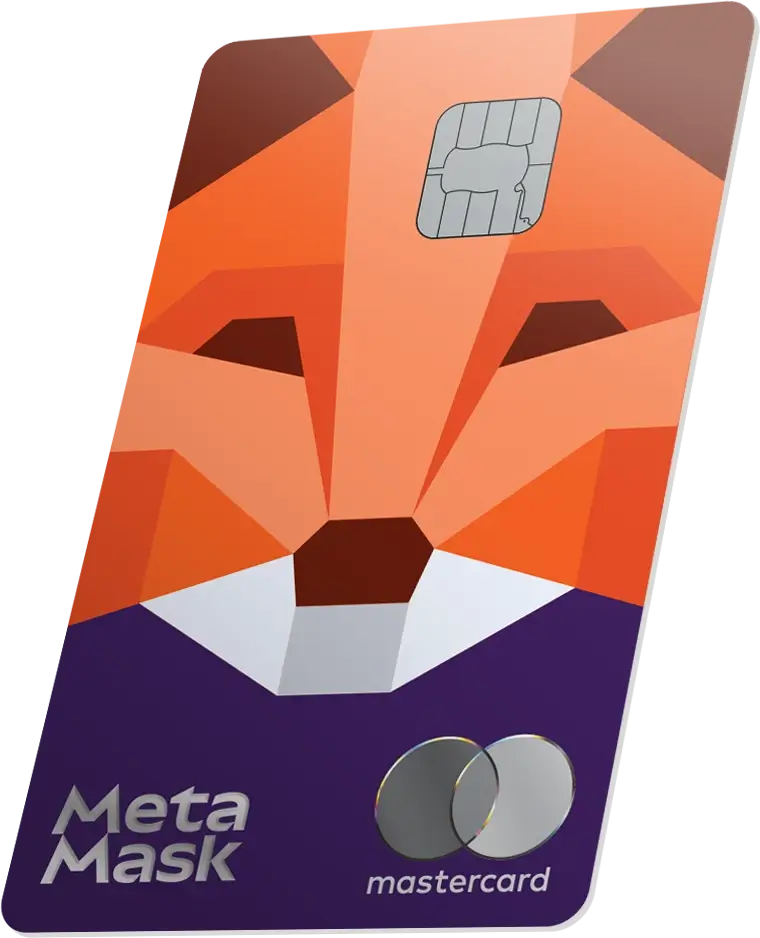
| MetaMask Virtual | 1% | 1% cross-border | Linea (L2) | MetaMask | Yes | Full |
| ether.fi Core | 3% | 1% | Ethereum / L2 | ether.fi protocol | Protocol-managed | Full |
| Bleap | 2% | 0% | Multi-chain | Any EVM wallet | Yes (AA) | Full |
| COCA | Up to 8% (1% free) | 0% | Multi-chain | COCA wallet (Privy) | Privy-managed | Full |
The critical columns are "True Self-Custody" and "KYC Level." Cards that connect to your existing wallet (Gnosis Pay, MetaMask Virtual, Bleap) give you the most control. Cards with issuer-specific wallets hold your keys in their infrastructure.
Other options worth noting: Ledger CL for hardware-signed transactions (1%, 1.75% FX), and MetaMask Metal ($199/yr, 3% on first $10K, 0% FX) as the premium MetaMask tier. For users who want to minimize banking entanglement with custodial trade-offs, see KAST K Card (2% MOVE points, 0.5% FX, full KYC via Sumsub) and RedotPay Virtual (tiered KYC starting from email-only).
What Privacy-Focused Users Need in a Crypto Card
True self-custody - you hold the private keys, not the card issuer
No exchange deposit required (fund directly from your wallet address)
On-chain settlement you can independently verify in a block explorer
Wallet separation - dedicated spending address, not your main holdings
Revocable permissions - you can withdraw funds or revoke access at any time
Top 6 Cards for Privacy-Focused Users
A small number of cards in our database let you hold your own private keys through the full transaction lifecycle. Gnosis Pay is the gold standard: a Safe smart account on Gnosis Chain where you can independently verify every settlement on-chain.
Payy is the only crypto card that settles transactions through zero-knowledge proofs - your wallet balance, spending amounts, and counterparties are invisible on-chain, giving you a level of on-chain privacy no other card offers (the trade-off: zero cashback and 1% FX on non-USD).
MetaMask Virtual connects to the wallet 30 million people already use, on Linea L2 with sub-cent gas - 1% cashback, 1% cross-border fee (Metal: 0% FX), and streamlined KYC make it the easiest way to keep spending inside a wallet setup many privacy-conscious users already trust.
ether.fi Core adds restaking yield on idle balances so your spending money works while it waits. Bleap takes a different approach with account abstraction, connecting to any EVM wallet without managing gas directly. COCA rounds out the list at 8% cashback via Privy-managed keys - not traditional self-custody, but your funds never sit on a centralized exchange.
1. Gnosis Pay Card
Your Keys, Your Card, Your Money
2. Payy Card
Private Stablecoin Spending: 0% Fees + ZK Proof Settlement
3. MetaMask Virtual Card
Sovereign Spending: 1% Cashback + Self-Custody + MetaMask Security

4. ether.fi Core Card
Zero Barriers: 3% Back on Every Purchase, No Stake Required
5. Bleap Mastercard
Secure DeFi Spend: Tiered USDC Cashback + 0% FX Fees
6. COCA Visa Card
Self-Banking: 8% Cashback + 6% APY + 0% FX
What $1,000/Month Looks Like
$80
/month in cashback (based on COCA Visa Card at 8%)
Scenario 1: Henrik, Security Researcher in Helsinki ($2,000/month)
Henrik works in infosec and practices what he preaches. He does not trust any entity to hold his funds and wants every transaction to require his explicit approval. He accepts lower cashback as the cost of sovereignty.
Setup:
- Primary: Gnosis Pay (Safe smart account, 4% GNO cashback)
- Hardware backup: Ledger CL (for large purchases over 500 EUR)
- Card wallet: Dedicated Safe on Gnosis Chain, daily spending limit set to 200 EUR
- Funding: Monthly USDC bridge from Ethereum mainnet to Gnosis Chain, converted to EURe
Monthly flow:
| Category | Card | Monthly Spend | Return |
|---|---|---|---|
| Groceries (S-Market, Lidl) | Gnosis Pay | $600 | $24 in GNO |
| Rent (SEPA transfer) | Gnosis Pay | $800 | $32 in GNO |
| Subscriptions | Gnosis Pay | $150 | $6 in GNO |
| Dining | Gnosis Pay | $250 | $10 in GNO |
| Travel (flights, hotels) | Ledger CL | $200 | $2 cashback |
| Total | $2,000 | $74/mo |
Annual result:
- Gnosis Pay cashback: $864 in GNO
- Ledger CL cashback: $24
- Ledger CL FX fee cost: -$42 (1.75% on $2,400)
- Gas (monthly bridge): -$120 (Ethereum L1)
- Net: $726/year
Compare to an exchange card at 4% flat: $960/year with zero gas costs. Henrik's sovereignty setup costs him $234/year in reduced returns. He considers this trivial compared to the cost of losing fund access if an exchange freezes his account.
Verdict: "I can verify every transaction on a block explorer. My Safe holds my funds until I explicitly approve a spend. If Gnosis Pay shuts down, I withdraw my EURe in five minutes. That is worth $234/year."
Scenario 2: Mara, Journalist in Mexico City ($1,500/month)
Mara covers political corruption and sources sensitive information. She wants to minimize the data footprint of her financial activity. Full KYC is acceptable (she files taxes normally), but she does not want her spending patterns sitting in an exchange database alongside her crypto holdings.
Setup:
- Primary: KAST K Card (2% MOVE points, full KYC via Sumsub in 2 minutes, 0.5% FX)
- Backup: RedotPay Virtual (email tier, different provider)
- No exchange accounts. Acquires USDC through P2P platforms.
- Never uses the card from her home IP
Monthly flow:
| Category | Card | Monthly Spend | Return |
|---|---|---|---|
| Groceries | KAST K Card | $400 | $8 MOVE |
| Coworking | KAST K Card | $200 | $4 MOVE |
| Transport (Uber, Metro) | KAST K Card | $150 | $3 MOVE |
| Dining | KAST K Card | $300 | $6 MOVE |
| Other | RedotPay | $450 | $2.25 |
| Total | $1,500 | $44.25/mo |
Annual result:
- KAST K Card cashback: $252 in MOVE (2% on $12,600 annual KAST spend, before 0.5% FX)
- KAST FX cost: -$63 (0.5% on $12,600)
- RedotPay cashback: $0 (no rewards program)
- RedotPay fees: -$119 (2.2% on $5,400 annual RedotPay spend)
- RedotPay card fee: -$10
- Net: $60/year
Mara gives up significant cashback (a full-KYC 8% card would return $1,440/year) for the reduced data footprint. The $1,380/year difference is the price of minimal banking entanglement. For her threat model, it is worth it.
Verdict: "My exchange-using colleagues have their entire financial life in one database. I have an email address on KAST and a separate email on RedotPay. Two siloed data sets, no exchange, no bank linked."
Scenario 3: Oleg, Software Developer in Tallinn ($3,500/month)
Oleg holds significant crypto from early ETH mining. He wants high cashback without sacrificing self-custody. He is comfortable with DeFi protocols but refuses custodial cards after losing funds in the FTX collapse.
Setup:
- Primary: COCA Elite (up to 8% cashback with staking 30K $COCA, 6% APY on idle balance)
- Security card: MetaMask Virtual (1% cashback + Rewards points, his own MetaMask wallet)
- COCA balance: $5,000 USDC (earning 6% APY)
- MetaMask card wallet: Separate from his main MetaMask (dedicated spending wallet on Linea)
Monthly flow:
| Category | Card | Monthly Spend | Return |
|---|---|---|---|
| Rent | COCA | $1,000 | $80 cashback |
| Groceries | COCA | $500 | $40 cashback |
| Subscriptions | MetaMask | $300 | $9 cashback |
| Dining/bars | COCA | $400 | $32 cashback |
| Transport | COCA | $300 | $24 cashback |
| Online purchases | MetaMask | $500 | $15 cashback |
| Other | COCA | $500 | $40 cashback |
| Total | $3,500 | $240/mo |
Annual result:
- COCA cashback: $2,592 (stablecoin)
- COCA idle yield on $5,000: $300
- MetaMask cashback: $288
- Total: $3,180/year
Oleg gets near-maximum cashback while maintaining self-custody on the MetaMask portion. He accepts that COCA's Privy wallet is not true self-custody but considers the 8% rate worth the trade-off for everyday spending. His high-value savings remain in his own hardware wallet with no card connection.
Verdict: "I split my trust. COCA holds my spending money because 8% is hard to pass up. MetaMask holds my backup because those are my keys. My actual savings are on a Ledger that has never connected to anything."
What Happens When Authorities Request Your Data
Every card issuer complies with law enforcement requests in their jurisdiction. Here is what they can and cannot provide:
| Data Type | Self-Custody Card | Exchange Card |
|---|---|---|
| Your identity (KYC) | Yes | Yes |
| Transaction history (card) | Yes | Yes |
| Wallet address (card) | Yes | Yes |
| Other wallet addresses | No (if isolated) | Yes (all exchange wallets) |
| Trading history | No | Yes |
| Deposit/withdrawal history | No | Yes |
| IP logs | Card app only | Full exchange + app |
| Other users you transacted with | No | Yes (internal transfers) |
A self-custody card with proper wallet isolation limits the data surface to: your identity, your card wallet address, and your card transaction history. An exchange card exposes everything, including your trading history, deposit sources, withdrawal destinations, and internal transfer recipients.
Multi-Card Strategy for Privacy-Focused Users
Who Sees What: The Data Flow of a Crypto Card Transaction
Privacy is about information flow. Here is exactly what each party sees when you tap your card for a $50 grocery purchase:
Your card issuer sees: Your KYC identity, your wallet address, your card balance, the merchant name, transaction amount, merchant category code (MCC), date, time, and your approximate location (from the merchant terminal).
Visa/Mastercard sees: Transaction amount, merchant name, MCC code, terminal location, card number (tokenized), authorization status. They do not see your crypto wallet or your on-chain history.
The merchant sees: Your card number (last 4 digits), transaction amount, authorization. They do not know you are using a crypto card.
On-chain observers see: The stablecoin transfer from your wallet to the payment processor's address, the amount, the timestamp, and both wallet addresses. They can see this wallet's entire transaction history.
Chain analysis firms see: Everything on-chain, plus they attempt to cluster addresses belonging to the same entity. If your card wallet ever interacted with your main wallet, they can link both to your KYC identity through the card issuer's records.
| Observer | Transaction Details | Your Identity | Your Holdings | Your On-Chain History |
|---|---|---|---|---|
| Card issuer | Full | Full (KYC) | Card wallet only | Card wallet only |
| Visa/Mastercard | Full | Card number only | No | No |
| Merchant | Amount + card last 4 | No | No | No |
| On-chain (public) | Amount + addresses | No (unless linked) | Card wallet only | Card wallet full history |
| Chain analysis | Amount + addresses | If clustered to KYC wallet | Clustered wallets | All linked wallets |
In our privacy ranking, the card issuer is the biggest data holder. They have your identity AND your wallet address. On-chain observers become dangerous only if they can link your card wallet to your other wallets. This is why wallet isolation is the single most important OPSEC practice.
The Custody Spectrum: What "Self-Custody" Actually Means
| Custody Level | Cards | You Hold Keys | Withdraw Without Issuer | If Issuer Is Subpoenaed |
|---|---|---|---|---|
| Full self-custody | Gnosis Pay, MetaMask, Ledger CL, Payy | Yes | Yes | Your funds are safe, data on file is shared |
| Protocol-managed | ether.fi, Solflare | Yes | Yes (queue) | Same, plus protocol data |
| Account abstraction | Bleap | Partial | Depends on recovery | Same, plus recovery guardian data |
| App wallet | COCA | Privy wallet | Privy-dependent | Privy may be compelled to share |
| Custodial | KAST, RedotPay, exchange cards | No | No | Funds and full data shared |
The Three Numbers Privacy Users Should Evaluate
Number 1: Data exposure surface (who holds what)
Count the entities that hold data linking your identity to your crypto activity:
| Card | Entities With Your Data | Data They Hold |
|---|---|---|
| Gnosis Pay | 2 (issuer + Visa) | KYC + card wallet address + transactions |
| Payy | 2 (issuer + Visa) | KYC + transactions (wallet balance hidden via ZK) |
| MetaMask | 2 (issuer + Visa) | KYC + MetaMask address + transactions |
| Ledger CL | 2 (issuer + Visa) | KYC + transaction history |
| COCA | 3 (issuer + Visa + Privy) | KYC + wallet + Morpho deposits |
| Exchange card | 3+ (exchange + issuer + Visa) | KYC + full exchange history + trading + wallet |
Fewer entities = smaller attack surface for data breaches, subpoenas, and leaks. Exchange cards are the worst because they link your trading history, deposit history, and card spending into a single data package.
Number 2: Sovereignty cost (cashback you give up for custody control)
| Monthly Spend | Best Self-Custody (Gnosis Pay 4%) | Best Non-Custodial (COCA 8%) | Best Custodial (exchange 8%) | Sovereignty Cost vs Custodial |
|---|---|---|---|---|
| $1,000 | $480/yr | $960/yr | $960/yr | $0-$480/yr |
| $2,000 | $960/yr | $1,920/yr | $1,920/yr | $0-$960/yr |
| $3,000 | $1,440/yr | $2,880/yr | $2,880/yr | $0-$1,440/yr |
| $5,000 | $2,400/yr | $4,800/yr | $4,800/yr | $0-$2,400/yr |
At $2,000/month, choosing Gnosis Pay over a custodial 8% card costs you $960/year in cashback. That is the price of true self-custody. COCA at 8% closes the gap to zero but introduces Privy wallet dependency. Your risk tolerance determines where on this spectrum you land.
Number 3: Address clustering risk
If your card wallet has any on-chain connection to your main wallets, chain analysis can link them. The risk increases with:
- Direct transfers between wallets (highest risk)
- Same bridge used for both wallets (medium risk)
- Same gas funding source (medium risk)
- Similar transaction patterns/timing (low but non-zero risk)
A dedicated card wallet funded through a bridge or intermediate address with no direct link to your main holdings is the minimum standard.
Wallet Isolation: Step-by-Step Setup
Step 1: Create a fresh wallet. New EOA (MetaMask/Rabby) or new Safe on the card's chain. This address must have zero transaction history.
Step 2: Fund through an intermediate step. Do NOT transfer USDC directly from your main wallet to your card wallet. Options:
- Bridge USDC from a different chain (breaks direct on-chain link on the card's chain)
- Use a CEX as an intermediary (deposit from main wallet, withdraw to card wallet, different withdrawal addresses)
- Use a privacy-preserving bridge if available on the card's chain
Step 3: Set a spending limit. Load only 2-4 weeks of spending money. Your card wallet is permanently linked to your KYC identity. Keep the minimum necessary balance.
Step 4: Never reuse. Do not use the card wallet for DeFi, governance votes, NFT mints, or any other on-chain activity. It is a single-purpose spending wallet.
Minimal KYC Options
For users who want to minimize personal data shared:
- KAST K Card: Full KYC via Sumsub in 2 minutes (ID + selfie), 2% MOVE points, 0.5% FX. See our KYC guide.
- RedotPay Virtual: Tiered verification starting with email. $10 one-time fee, 150+ countries, no cashback (2.2% all-in fees per transaction). Higher tiers require more verification.
These cards trade limits and features for reduced data collection. KAST still requires full KYC via Sumsub (ID + selfie), while RedotPay's tiered system starts with email-only verification at the lowest tier. The reason to consider them is not raw speed. It is that both give privacy-minded users a spending rail with less banking entanglement than a traditional issuer, at the cost of custodial wallet management.
The Privacy-vs-Cashback Decision Matrix
| Your Priority | Best Card | Cashback | FX | Custody | Trade-off |
|---|---|---|---|---|---|
| Maximum sovereignty | Gnosis Pay | 1-5% GNO | 0% (Visa rate on non-EUR) | Full (Safe) | GNO price volatility |
| On-chain privacy | Payy | 0% | 0% USD / 1% other | Full (ZK) | Zero cashback |
| Maximum cashback | COCA | Up to 8% (1% free) | 0% | Privy wallet | Not true self-custody |
| ETH yield + spend | ether.fi Core | 3% | 1% | Protocol-managed | 1% FX on international |
| Best balance | Bleap or MetaMask Virtual | 1-2% | 0% | Full (your wallet) | Moderate cashback |
Common Mistakes to Avoid
1. Connecting Your Main DeFi Wallet to a Card
The mistake: Using the same wallet that holds your LP positions, governance tokens, and airdrop claims as your card spending wallet.
The cost: Your card wallet is linked to your KYC identity. Chain analysis firms can now link your entire on-chain history, every DeFi position, every token swap, every governance vote, to your legal name and residential address. If you hold 50 ETH in DeFi positions and a chain analysis query connects your card wallet to those positions, your previously pseudonymous 50 ETH is now attributed to you.
How to avoid it: Create a fresh address with zero transaction history. Fund through a bridge or intermediate address. Never use the card wallet for any DeFi activity. Treat it as a permanently burned address from a privacy perspective.
2. Trusting "Non-Custodial" Marketing Without Testing
The mistake: Loading $5,000 into a card marketed as "non-custodial" without verifying you can actually withdraw independently.
The cost: If the issuer freezes your account (regulatory action, compliance flag, or arbitrary decision), your $5,000 is inaccessible. Some "non-custodial" wallets require the issuer's co-signature for withdrawals, making them custodial in practice.
How to avoid it: Before loading any significant amount, test the withdrawal flow. Load $50. Try to withdraw it to a different address without using the card issuer's app. Use only your keys and a block explorer or direct contract interaction. If you cannot, the issuer controls your funds regardless of marketing. Gnosis Pay, MetaMask, and Ledger CL pass this test.
3. Ignoring Token Approval Hygiene
The mistake: Granting unlimited token approval to a card's smart contract and never revoking it.
The cost: That approval persists forever unless explicitly revoked. If the contract is compromised (exploit, malicious upgrade, key leak), every approved token in your wallet is drainable in a single transaction. A $10,000 USDC balance with unlimited approval is $10,000 at risk.
How to avoid it: After you stop using any card, immediately revoke its token approval through Revoke.cash. While actively using a card, set specific spending limits rather than unlimited access. Cards with per-transaction approval models (Gnosis Pay Safe module, Ledger CL) eliminate this risk by design.
4. Funding Your Card Wallet Directly from Your Main Wallet
The mistake: Sending USDC from your main wallet (holding 100 ETH in DeFi positions) directly to your card wallet.
The cost: A single on-chain transfer creates a permanent, public link between your main wallet and your KYC-linked card wallet. Any chain analysis query on your card wallet now traces back to your main holdings. You have effectively doxxed your entire portfolio.
How to avoid it: Use an intermediate step: bridge through a different chain, use a CEX withdrawal to the card wallet (the CEX breaks the direct on-chain link), or use a privacy-preserving protocol. The goal is to prevent a single-hop trace from your card wallet to your main holdings.
5. Keeping More Than 30 Days of Spending on the Card
The mistake: Loading $10,000 into your card wallet because you do not want to deal with monthly top-ups.
The cost: If the card issuer experiences a security breach, regulatory freeze, or smart contract exploit, your maximum exposure is $10,000 instead of $2,000. The extra $8,000 earned zero additional benefit sitting in the card wallet (unless it is a yield-bearing card like COCA).
How to avoid it: Keep a maximum of 30 days of spending money in your card wallet. Set a monthly calendar reminder to top up. The minor inconvenience of monthly funding is worth the reduced exposure. For yield-bearing cards (COCA at 6% APY), the calculus changes slightly, but even then, cap your card wallet at 60 days of spending.
6. Using One Card for Everything
The mistake: Routing all spending through a single card, creating a complete spending profile in one issuer's database.
The cost: One data breach or subpoena exposes your entire spending history: where you eat, where you shop, where you travel, your subscription services, your charitable donations, everything.
How to avoid it: Split spending across two or more cards from different issuers. Use one for groceries and subscriptions, another for travel and dining. Each issuer sees only a partial picture of your spending. This does not defeat a determined adversary with subpoena power over multiple entities, but it raises the cost and complexity of profiling.
Tax Implications for Privacy-Focused Users
Privacy and tax compliance are not in conflict. You can minimize your data footprint while fully complying with tax obligations:
| Activity | Tax Treatment | Privacy Consideration |
|---|---|---|
| Card spend of USDC | Near-zero capital gain | Clean, minimal reporting |
| Cashback receipt (GNO, MOVE) | Varies (rebate vs income) | Track FMV at receipt |
| Selling cashback tokens | Capital gains | Creates exchange-linked record |
| P2P-acquired USDC | No event at acquisition | Must still track cost basis |
| Staking rewards on card balance | Income at receipt | Auto-reported by some issuers |
The cleanest tax approach: fund your card with USDC, spend USDC (near-zero gain), receive cashback tokens, hold them in your card wallet. You have one taxable event (possibly the cashback receipt), and the card issuer has transaction records you can export for tax reporting. See our tax-conscious guide for detailed jurisdiction rules.
Card Selection by Privacy Priority
Sovereignty maximalist: Gnosis Pay (Safe smart account, full on-chain verification, unilateral withdrawal, 0% issuer fees, Visa rate on non-EUR). Passes the "issuer goes offline, funds are safe" test.
On-chain privacy: Payy (ZK proofs hide sender, amount, and balance on-chain). The only card where your spending is cryptographically invisible to on-chain observers. Zero cashback and 1% FX on non-USD are the trade-off. Best for users with large stablecoin balances who do not want holdings inferred from card transactions.
Minimal banking entanglement: KAST K Card (2% MOVE points, full KYC via Sumsub, custodial) or RedotPay Virtual (tiered verification starting with email, custodial). Neither is self-custody, but both offer spending rails with less banking entanglement than traditional issuers.
High cashback + acceptable custody: COCA (up to 8% with staking 30K $COCA + 6% APY) offers the highest return among non-custodial options. Privy wallet is not true self-custody but is better than an exchange. Acceptable for most users.
DeFi-native privacy: MetaMask Virtual (your MetaMask wallet, Linea L2, 1% cashback, 1% cross-border). Connects to the wallet you already use.
Multi-card OPSEC stack: Use Bleap (any EVM wallet, 0% FX) for daily spending and Gnosis Pay for large purchases. Fund both through isolated wallets with no connection to your main holdings. Two issuers, two chains, two data silos.
Quick verdict: No crypto card offers true anonymity. Visa and Mastercard see every transaction. KYC links your wallet to your legal identity. What self-custody cards provide is fund sovereignty and minimized data exposure. Your crypto stays in your wallet until you explicitly approve a spend. No custodian can freeze your balance. If the issuer disappears, your money is safe.
The most important thing you can do is isolate your card wallet from your other wallets. One direct on-chain transfer between your card wallet and your main holdings undoes everything else. Create a fresh wallet, fund it through an intermediate step, load only what you need, and treat it as permanently linked to your legal identity.
The sovereignty costs $0-$960/year in reduced cashback depending on how strict your requirements are. For most people, Bleap or MetaMask Virtual at 1-2% with true wallet control is the right balance. For maximalists, Gnosis Pay with Safe smart accounts is the gold standard. For on-chain privacy specifically, Payy is in a class of its own - ZK proofs hide your balance and spending from public view, but the zero cashback means you pay in forgone rewards.
Disclaimer: SpendNode is a data comparison platform. We are not financial advisors. Crypto cards involve risks including asset volatility, custodial risk, and tax complexity. Verify all terms directly with issuers before applying.
Written by Aleksandar Dukic
Frequently Asked Questions
Are self-custody crypto cards anonymous?
No. Every legitimate crypto card requires KYC (government ID verification). The privacy benefit is custody and control - your funds stay in your wallet, not on an exchange - not anonymity. Visa and Mastercard process the fiat side of every transaction through their standard networks.
What if the card issuer shuts down?
With true self-custody, your funds remain in your wallet regardless of the issuer's status. You lose the ability to spend via the card, but your crypto is never at risk. This is the fundamental advantage over custodial exchange cards, where the exchange holds your funds.
Should I use a separate wallet for card spending?
Yes, always. Your card wallet is linked to your KYC identity. Using your main DeFi wallet connects your entire on-chain history to your legal name. Create a fresh address specifically for card spending and fund it separately.
How do I check if a card is truly self-custody?
Test it: load a small amount and immediately try to withdraw without the card issuer's involvement. Check the smart contract - can you move funds unilaterally, or does the issuer need to co-sign? If withdrawal requires the issuer's permission, it is custodial regardless of marketing language.
Recent Updates to Best Crypto Cards for Privacy-Focused Users
- Fixed ether.fi Core from Points to 3%. Gnosis Pay FX caveat added. COCA corrected to Up to 8% (1% free)
- Fixed KAST Standard to K Card with 2% MOVE points and 0.5% FX. Mara scenario recalculated ($375 to $60/yr)