
Best Crypto Cards for Traders (2026)
Exchange-linked cards with cashback that compounds your trading capital.
Featured

Curated for Traders
21 matching cards
Filtered by cashback, trading perks
You just closed a profitable futures position. The USDT is sitting in your exchange wallet. With a traditional bank setup, converting that profit to spendable cash means withdrawing to your bank, a process that takes one to three business days and costs a wire fee. An exchange-linked card makes those profits spendable in seconds.
Several major exchanges now offer cards that spend directly from your trading balance. The card is just the last mile between your exchange wallet and a merchant terminal. In this review, the real differentiator is not whether the card works, but how much it pays you back. Cashback rates range from under 1% up to 10% at the highest VIP tiers, and that cashback goes straight back into your exchange balance where you can compound it on your next trade.
But headline rates are misleading. The 10% number requires VIP status most traders will never reach. The actual cashback most exchange cardholders earn is 2-4%.
Understanding the gap between headline and realistic rates, knowing when to use your exchange card versus a flat-rate alternative, and building a profit-to-spending pipeline that minimizes tax events and preserves trading capital: that is what separates a trader who uses a card from a trader whose card works for them.
If you are not tied to exchange-linked spending, our best overall picks give the broader market picture before you narrow down to trading-balance cards.
2026 Exchange Card Comparison
| Exchange Card | Max Cashback | Base Rate | FX Fee | Tx Fee | Cashback Token | Region |
|---|---|---|---|---|---|---|
| Bitget Card | 8% | 2% | 0% | 0.9% | BGB | EEA, APAC |
| Wirex Elite | 8% | 0.5% | 0% | 0% | WXT/BTC | 35 countries |
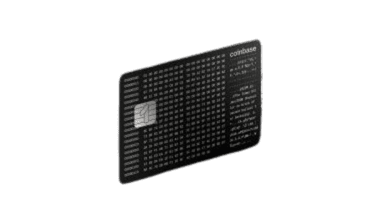
| Coinbase Card | 4% | 4% | 0% | 0% | Rotating crypto | US, EEA, UK |
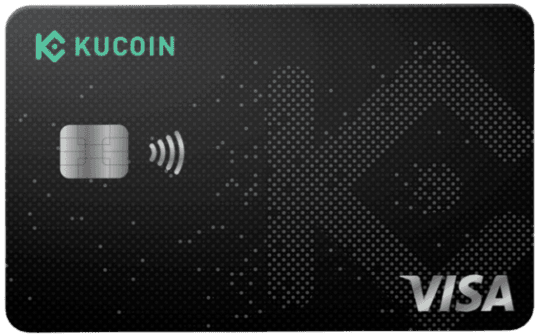
| KuCard Visa | 3% | 1% | 0% | 0% | KCS | EEA, APAC |
| Binance Mastercard | 2% | 0.1% | 2% | 0% | BRL | Brazil only |
| Uphold Elite | 4% | 4% | 0% | 0% | XRP | US |
| Nexo Card | 2% | 2% | 0.2% | 0% | NEXO | EEA, UK |
| Kraken Card | 1% | 1% | 0% | 0% | BTC/ETH | EEA, UK |
Bitget leads on raw cashback (8%) with 0% FX but takes 0.9% per transaction. Wirex Elite matches 8% for a flat $360/year fee with no token holdings. Coinbase and Uphold Elite both offer 4% flat with zero requirements, the honest answer for traders without VIP status.
Nexo earns its place through borrow-to-spend: keep your positions open and spend borrowed stablecoins at 2% cashback with 0.2% FX.
What VIP Status Actually Requires
The headline rates above are maximums. Here is what each exchange demands:
| Exchange | Base Rate | Max Rate | Requirement for Max | Capital at Risk |
|---|---|---|---|---|
| Wirex | 0.5% | 8% | $360/year (Elite tier) | $360 annual fee |
| Bitget | 2% | 8% | 50,000+ BGB (approx. $25,000+) | $25K in BGB |
| KuCoin | 1% | 3% | 1,000+ KCS (approx. $8,000+) | $8K in KCS |
| Coinbase | 4% | 4% | None | None |
| Uphold Elite | 4% | 4% | $99.99/year | $100 annual fee |
| Nexo | 2% | 2% | None (loyalty levels improve yield) | NEXO token for higher tiers |
| Kraken | 1% | 1% | None | None |
We verified these tier requirements against each exchange's documentation. For most traders, the realistic cashback rate is 2-4%, not the headline 8-10%. Coinbase is notable because its 4% is available immediately with no holdings requirement. If you do not already have significant exchange token positions, a flat-rate card often beats a VIP-tiered card at your actual level.
What Traders Need in a Crypto Card
Direct spending from exchange balance - no separate card wallet to manage
Cashback paid in crypto back to your trading account
VIP tier integration so trading volume improves card rewards
Instant access to realized profits - no withdrawal delay
High monthly spending limits ($25,000+ for active traders)
Top 5 Cards for Traders
At $3,000/month, a 1% cashback difference is $360/year flowing straight back to your trading balance. Bitget at 8% with BGB holdings is the realistic high-end for active spot and derivatives traders. Wirex Elite matches 8% for $360/year with no token holdings, a pure annual fee with predictable cost.
Coinbase and Uphold Elite both deliver 4% flat with zero token requirements, the honest answer for traders who lack VIP status. Nexo fills a different role entirely: borrow against your portfolio and spend without selling, which matters when your positions are appreciating faster than any cashback rate. Kraken rounds out the list at 1% with zero fees for EEA/UK traders who value transparent mid-market pricing and BTC/ETH cashback.

1. Bitget Card
Trade and Spend: Up to 8% BGB Cashback for Bitget Traders

2. Wirex Elite Card
Elite Travel Status: 8% Rewards + Priority Support
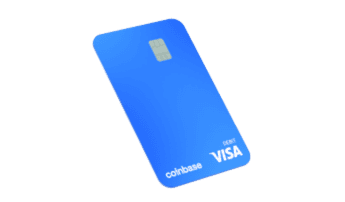
3. Coinbase Card (Prepaid Visa)
Safe & Simple: US Regulated Prepaid Visa with Rotating Crypto Rewards
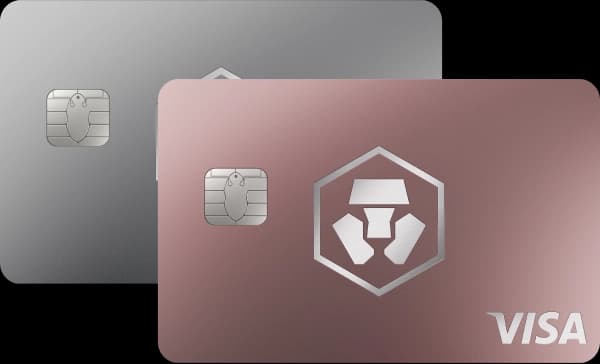
4. Private (Icy White / Rose Gold)
Elite Private Status: 4% Uncapped Cashback + Guests
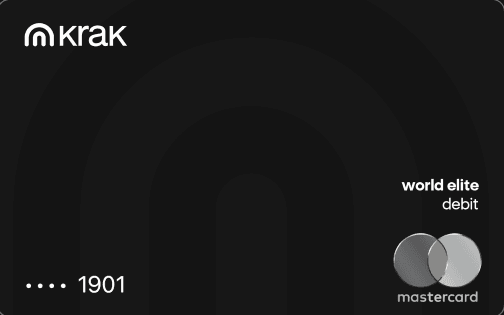
5. Krak Mastercard
Transparent Spending: Mid-Market Rates + 1% Back
What $3,000/Month Looks Like
$240
/month in cashback (based on Bitget Card at 8%)
Scenario 1: Alex, Derivatives Trader in Singapore ($4,000/month)
Alex trades spot and futures on Bitget, holding 25,000 BGB qualifying for the 6% cashback tier. He keeps his trading activity on Bitget and uses the card for all personal spending.
Setup:
- Primary: Bitget Card (6% tier, 0.9% tx fee = 5.1% net)
- Backup: RedotPay Physical (loaded with $1,000 USDC as emergency)
- Funding: Moves USDT profits from trading wallet to funding wallet weekly
Monthly flow:
| Category | Monthly Spend | Cashback (5.1% net) | Notes |
|---|---|---|---|
| Rent | $1,800 | $91.80 | Crypto-friendly landlord |
| Dining | $600 | $30.60 | Client dinners, hawker centers |
| Transport | $300 | $15.30 | Grab, MRT |
| Subscriptions | $200 | $10.20 | TradingView Pro, Bloomberg |
| Other | $1,100 | $56.10 | Groceries, tech, misc |
| Total | $4,000 | $204 |
Annual result:
- Cashback: $2,448 in BGB (5.1% net on $48,000)
- Cashback reinvested in trading at 25% annual return: additional $306
- BGB holding benefit: reduced maker fees on Bitget exchange
- Total card benefit: $2,754/year
Alex's card cashback ($2,448) compounds directly back into his trading capital. The BGB he holds for the card tier also qualifies him for lower trading fees, creating a dual benefit from a single token position.
Verdict: "I already held BGB for the trading fee discount. The card tier was free since I had the tokens anyway. That is the key - never buy exchange tokens just for the card."
Scenario 2: Rina, Spot Trader and Freelancer in Amsterdam ($3,000/month)
Rina trades spot crypto casually (no VIP status anywhere) and freelances as a translator. She has no exchange loyalty and wants the highest flat-rate return without locking capital in exchange tokens.
Setup:
- Primary: Coinbase Card (4% flat, no requirements)
- Secondary: COCA for idle balance yield (6% APY on $5,000 USDC buffer)
- No exchange token holdings, no VIP status
Monthly flow:
| Category | Card | Monthly Spend | Return |
|---|---|---|---|
| Groceries (Albert Heijn) | Coinbase | $500 | $20 cashback |
| Coworking (Spaces) | Coinbase | $350 | $14 cashback |
| Dining | Coinbase | $400 | $16 cashback |
| Transport (NS, Uber) | Coinbase | $200 | $8 cashback |
| SaaS (DeepL Pro, Notion) | Coinbase | $100 | $4 cashback |
| Other | Coinbase | $1,450 | $58 cashback |
| Total | $3,000 | $120/mo |
Annual result:
- Coinbase cashback: $1,440 (zero fees, zero requirements)
- COCA idle yield on $5,000 buffer: $300
- Total: $1,740/year
Compare to what she would earn on Bitget at base tier (2%): $720/year. Or on KuCoin at base tier (1%): $360/year. The flat-rate Coinbase card outperforms every exchange card at base tier by a wide margin.
Verdict: "I tried to make exchange VIP tiers work for three months. The math never added up at my volume. Coinbase at 4% flat is the honest answer."
Scenario 3: Viktor, Portfolio Manager in Zurich ($8,000/month)
Viktor manages a crypto fund and holds a diversified portfolio worth $500K+. He does not want to sell positions to fund daily spending. His goal: maintain full market exposure while spending from his portfolio.
Setup:
- Primary: Nexo (borrow against BTC/ETH, spend stablecoins)
- Backup: Wirex Elite (8% cashback, $360/yr)
- Collateral: 5 BTC ($500K) pledged on Nexo, borrowing $5K/month at 6% APR
Monthly flow:
| Category | Card | Monthly Spend | Cost |
|---|---|---|---|
| Rent | Nexo (borrowed) | $3,500 | $17.50 interest |
| Dining/entertainment | Wirex Elite | $1,500 | $0 (8% cashback earns $120) |
| Travel | Wirex Elite | $1,200 | $0 (8% cashback earns $96) |
| Other | Nexo (borrowed) | $1,800 | $9.00 interest |
| Total | $8,000 | $26.50 interest + $216 cashback |
Annual result:
- Interest cost on $60K borrowed: $3,600
- Wirex cashback: $2,592
- Nexo cashback (2%): $1,272
- Portfolio appreciation (BTC +25%): $125,000 unrealized
- Tax savings from not selling: approx. $15,000-$30,000 (avoided Swiss capital gains on unrealized)
- Net: -$3,600 interest + $3,864 cashback + $125K preserved exposure
The borrow-to-spend strategy only makes sense at Viktor's scale. His interest cost ($3,600/year) is a rounding error compared to the portfolio appreciation he preserves by not selling.
Verdict: "Selling BTC to pay for dinner is like selling Amazon stock to buy groceries. You do not liquidate appreciating assets for depreciating expenses. You borrow against them."
Multi-Card Strategy for Traders
How the Profit-to-Card Pipeline Actually Works
When a trader says "I spend my profits through my card," here is what mechanically happens across different funding methods:
Method 1: Direct exchange balance spend (simplest)
You hold USDT in your exchange funding wallet. You tap your exchange card at a restaurant for $80. The exchange debits $80 worth of USDT from your funding wallet, converts it to EUR through their payment processor, and the merchant receives EUR. Your funding wallet balance drops by $80 + any FX or transaction fee. Within 24-72 hours, cashback (1-8% depending on tier) appears in your funding wallet.
Method 2: Profit conversion pipeline (tax-optimized)
You close a profitable ETH long with $2,000 realized PnL. Step 1: Convert the $2,000 USDT profit to your funding wallet (most exchanges have a one-click transfer between trading and funding wallets). Step 2: Spend from the funding wallet via card. Because you already realized the gain when closing the trade, the card spend of USDT creates near-zero additional taxable gain. The capital gain tax event happened at trade close, not at card spend.
Method 3: Borrow-to-spend (position preservation)
You hold 3 BTC worth $300,000 and do not want to sell. Nexo lets you borrow against your BTC at 1.9-13.9% APR and spend the borrowed stablecoins via card. If BTC appreciates 20% over the year ($60,000 gain), your borrowing cost at 6% on $20,000 borrowed is $1,200, far less than the $60,000 upside you preserved. This only makes sense if you are confident your portfolio will appreciate faster than the interest rate.
The Three Numbers That Determine Your Real Card Return
Number 1: Your actual cashback rate (not the headline)
The gap between headline and reality is the biggest source of disappointment for trader cardholders. Here is the math at different tiers:
| Monthly Spend | Bitget (8% max) | Bitget (2% base) | Coinbase (4% flat) | Wirex Elite (8%) |
|---|---|---|---|---|
| $2,000 | $160/mo | $40/mo | $80/mo | $160/mo |
| $3,000 | $240/mo | $60/mo | $120/mo | $240/mo |
| $5,000 | $400/mo | $100/mo | $200/mo | $400/mo |
| Annual | $4,800 | $1,200 | $2,400 | $4,800 (minus $360 fee) |
At base tier, Bitget returns $1,200/year on $5K/mo spending. Coinbase returns $2,400 at the same spend level with no requirements. Wirex Elite matches Bitget's 8% max for a flat $360/year fee with no token holdings. The question is: do your exchange token holdings already qualify you for a higher tier? If not, Coinbase's flat 4% is your best option.
Number 2: Opportunity cost of holding exchange tokens
Reaching Bitget's 8% tier requires holding 50,000 BGB (approx. $25,000). That $25,000 could be deployed in trading. At even a conservative 20% annual trading return, the opportunity cost is $5,000/year. On $3,000/month spending, the cashback difference between 8% and 2% is $2,160/year. You are paying $5,000 in opportunity cost to earn an extra $2,160 in cashback, a net loss of $2,840.
This math changes if you believe BGB will appreciate, or if you already hold BGB for other reasons. But purely as a cashback optimization, locking $25K in an exchange token rarely makes sense unless your spending exceeds $7,000/month.
| BGB Held | Cashback Tier | Extra Cashback vs Base ($3K/mo) | Opportunity Cost (20% ROI) | Net Benefit |
|---|---|---|---|---|
| 0 | 2% | Baseline | $0 | Baseline |
| 10,000 ($5K) | 4% | +$720/yr | -$1,000/yr | -$280 |
| 25,000 ($12.5K) | 6% | +$1,440/yr | -$2,500/yr | -$1,060 |
| 50,000 ($25K) | 8% | +$2,160/yr | -$5,000/yr | -$2,840 |
Number 3: Total fee drag (FX + transaction + spread)
Exchange cards have different fee structures that are not always visible in the headline rate:
| Card | FX Fee | Tx Fee | Spread (estimated) | Total Fee on $1,000 International |
|---|---|---|---|---|
| Bitget | 0% | 0.9% | 0.1-0.2% | $10-$11 |
| Coinbase | 0% | 0% | 0.5-1.0% (on crypto spend) | $5-$10 |
| Kraken | 0% | 0% | 0.1-0.3% | $1-$3 |
Kraken has the lowest total fee drag. Bitget's 0.9% transaction fee adds up at scale. The spread on Coinbase is higher when spending crypto directly versus USDC.
Non-Exchange Cards Worth Considering
Not every trader needs an exchange-linked card. If your exchange's card is weak in your region, or you want to keep spending completely separate from trading:
- COCA: Up to 8% cashback (1% free, 8% at Elite with staking 30K $COCA), 0-1% FX, 6% APY on idle USDC balances. Park profits here between trades. The idle yield alone on $10K parked returns $600/year.
- Nexo: Spend against your portfolio without selling. Borrow against BTC/ETH at 1.9-13.9% APR. Keep your positions open while spending.
- Crypto.com: Tiered CRO staking with subscription rebates. Good if you already hold CRO from previous cycles.
- Wirex Elite: Up to 8% at $360/year. Works in 35 countries (EEA, UK, and select others). No exchange dependency.
The Exchange Dependency Risk
When your card is linked to your exchange, your spending ability is tied to that exchange's uptime and solvency. This is a risk most traders underestimate:
| Event | Impact on Exchange Card | Impact on Independent Card |
|---|---|---|
| Exchange maintenance (planned) | Card may decline for 2-4 hours | No impact |
| Exchange outage (unplanned) | Card non-functional | No impact |
| Regulatory freeze (e.g., SEC action) | Card frozen, funds inaccessible | No impact |
| Exchange insolvency | Funds at risk, card cancelled | No impact |
| Withdrawal suspension | Cannot add funds, limited spending | No impact |
This is why even dedicated exchange traders should maintain a secondary independent card (COCA, RedotPay, or KAST) loaded with at least one month of spending money. When your exchange goes down for maintenance during dinner, the backup card keeps your evening going.
Common Mistakes to Avoid
1. Splitting Trading Volume to Chase Card Perks
The mistake: Splitting trading volume across two exchanges because one has a better card rate at your tier.
The cost: A VIP tier drop from level 3 to level 2 on your primary exchange increases maker fees by 0.005%. On $500K remaining monthly volume, that costs $25/month ($300/year) in higher trading fees. The card improvement on the second exchange might add $50/month ($600/year) in cashback, netting you only $300/year, while adding complexity, a second tax reporting platform, and counterparty risk on two exchanges instead of one.
How to avoid it: Calculate the full cost: trading fee difference + withdrawal fees + tax complexity + time spent managing two platforms. In most cases, staying on one exchange and accepting its card rate produces better total economics.
2. Commingling Trading and Spending Capital
The mistake: Keeping card spending funds in the same wallet as trading capital.
The cost: You see a liquidation-worthy entry while your card spend is pending settlement ($500 held for 48 hours). You enter the trade with reduced capital, miss the target sizing, and the trade only covers half the position you wanted. Or worse: a large card purchase depletes your margin buffer, triggering a liquidation on an open position.
How to avoid it: Use separate sub-accounts on your exchange:
- Bitget: Funding Wallet (card) vs Spot/Futures
- KuCoin: Main Account (card) vs Trading Account
- Coinbase: Cash balance (card) vs Trading portfolio
Transfer a fixed monthly amount to your funding wallet. Do not touch it for trades.
3. Spending Volatile Assets Instead of Stablecoins
The mistake: Loading your card with BTC or ETH and spending directly from your crypto balance.
The cost: You spend $5,000 worth of ETH at $3,500/ETH (1.43 ETH). A month later, ETH is at $4,200. That ETH is now worth $6,000, meaning your dinner and groceries effectively cost you $6,000, not $5,000. Plus, every card transaction from a volatile asset creates a taxable disposal event at the current market price. At 20% gains tax, $1,000 appreciation on that spent ETH costs $200 in taxes.
How to avoid it: Convert realized trading profits to USDC or USDT before loading your card. The capital gain was already realized when you closed the trade. The card spend of a stablecoin creates near-zero additional taxable gain. See our tax-conscious guide for detailed rules.
4. Ignoring Total Fee Drag at Scale
The mistake: Focusing only on FX fees while ignoring transaction fees and spread.
The cost: Bitget charges 0% FX but 0.9% per transaction. At $5,000/month spending, that is $45/month ($540/year) in transaction fees, reducing an 8% headline rate to 7.1% net. On KuCoin, 0% FX but a lower cashback ceiling (3% max) means your net return is already capped. Neither card is as simple as the headline suggests.
How to avoid it: Calculate total fee drag: FX fee + transaction fee + estimated spread. Use the fee comparison table in this guide. At $5,000/month, even a 0.5% total fee drag costs $300/year. Multiply by 3 years and you are looking at $900 in fees you could have avoided on a card with 0% total fees like Kraken or Coinbase.
5. Paying Opportunity Cost for VIP Tiers Without Doing the Math
The mistake: Buying $25,000 in BGB to unlock Bitget's 8% cashback tier.
The cost: That $25,000 in a trading account earning 20% annually generates $5,000/year. The cashback upgrade from 2% to 8% on $3,000/month spending is worth $2,160/year. Net loss: $2,840/year, plus BGB price risk. If BGB drops 20%, you lose another $5,000 in token value.
How to avoid it: Only hold exchange tokens for VIP tiers if: (1) you already hold them for other reasons (trading, ecosystem belief), (2) your monthly spending exceeds $7,000 (breakeven point), or (3) you are confident the token will appreciate enough to offset the opportunity cost. Otherwise, use a flat-rate card like Coinbase (4%) and deploy that capital in trading.
6. Having No Backup Card
The mistake: Relying exclusively on your exchange card for all spending.
The cost: Your exchange goes down for maintenance, implements emergency withdrawal limits, or gets hit with regulatory action. You are stuck without a functional payment method. In the worst case (exchange insolvency like FTX), you lose your card AND the funds loaded on it.
How to avoid it: Maintain a secondary card from an independent provider, loaded with at least $1,000-$2,000 in stablecoins. COCA, RedotPay, or KAST all operate independently of any exchange. The opportunity cost of $2,000 parked in a backup card is trivial compared to the downside of being caught without payment capability.
Tax Implications for Traders
Traders already manage complex tax reporting. Adding a crypto card creates additional events:
| Funding Method | Tax Event at Card Spend | Best For | Worst For |
|---|---|---|---|
| USDC/USDT | Near-zero gain | Minimizing additional events | None |
| BTC/ETH (appreciated) | Capital gains on full appreciation | Zero-CGT jurisdictions (UAE, Singapore) | US, Germany (short-term) |
| Exchange token (BGB, OKB) | Capital gains on appreciation | Tokens you want to exit | Long-term holders |
| Fiat top-up | No crypto disposal | Maximum compliance | Defeats purpose of crypto card |
| Jurisdiction | Cashback Treatment | Card Spend (volatile asset) | Stablecoin Spend |
|---|---|---|---|
| US | Generally rebate (non-taxable) | Capital gains on appreciation | Near-zero gain |
| UK | Generally non-taxable | CGT on gains above 3,000 GBP/yr | Near-zero gain |
| Germany | Non-taxable rebate | Tax-free if held 1+ year | Near-zero gain |
| Singapore | No CGT | No CGT | No CGT |
| UAE | No CGT | No CGT | No CGT |
| Portugal | 28% on gains (held under 1 year) | 28% if held under 365 days | Near-zero gain |
| Switzerland | Generally non-taxable for individuals | No CGT for individuals | Near-zero gain |
The optimal strategy for most traders: realize gains in your trading activity, convert to stablecoins, transfer to funding wallet, spend from stablecoins. This creates no additional taxable events beyond what your trading already generates.
Card Selection by Trader Profile
Futures/derivatives trader with VIP tier: Use your exchange's card. VIP trading fee discounts are worth more than any card cashback difference. Bitget for derivatives and multi-chain DeFi, KuCoin for KCS ecosystem. Do not split volume.
Spot trader with no VIP status: Coinbase Card (4% flat, zero requirements, zero fees). At base tier, Coinbase outperforms every exchange-linked card. No capital locked in exchange tokens.
Portfolio holder who does not want to sell: Nexo (borrow against holdings at 1.9-13.9% APR). Only makes sense if your portfolio exceeds $50K and you expect appreciation above the borrow rate.
US-based trader: Coinbase Card (4%) or Gemini (up to 4% credit card, no exchange balance needed). See our US guide.
European trader: Widest selection globally. Every card on the comparison table is available in the EEA. Prioritize 0% FX cards if you spend across EUR and non-EUR currencies. See our Europeans guide.
APAC trader: Bitget, KuCoin, and Gate.io all serve APAC. RedotPay is a strong secondary for 150+ countries. See guides for Singapore, Hong Kong, or Japan.
Privacy-conscious trader: KAST K Card (full KYC in 2 minutes, 0.5% FX) or RedotPay Virtual (tiered verification). Both work when a trader wants a spending rail separate from the exchange account that holds the main trading stack.
DeFi-native who avoids CEXs: COCA (up to 8% cashback with staking $COCA, 6% APY) or ether.fi (3% cashback, restaking yield). See our DeFi users guide.
Key takeaway: A trader spending $3,000/month earns $1,080-$3,600/year in cashback depending on the card and tier. That is guaranteed alpha on money leaving your account anyway. But the real optimization is not chasing the highest headline rate. It is understanding your actual tier, calculating opportunity cost on locked tokens, keeping spending capital separate from trading capital, and maintaining a backup card for exchange downtime.
Even at a flat 4% with zero requirements, $1,440/year in cashback compounds into real trading capital over time. Pick the card that fits your actual situation, not the one with the biggest number on the marketing page.
Disclaimer: SpendNode is a data comparison platform. We are not financial advisors. Crypto cards involve risks including asset volatility, custodial risk, and tax complexity. Verify all terms directly with issuers before applying.
Written by Aleksandar Dukic
Frequently Asked Questions
Which exchange card pays the highest cashback?
Bitget reaches 8% with 0% FX. Wirex Elite offers 8% with a $360 annual fee. Coinbase goes to 4%. Binance is now Brazil-only at 2%. Base rates without staking or token holdings are significantly lower - typically 1-2%.
Can I spend profits immediately after closing a trade?
Yes. Exchange cards spend from your exchange balance. The moment a trade settles and profits appear in your wallet, they are available for card spending. No withdrawal to a bank account needed.
Does my trading VIP tier affect card rewards?
On Crypto.com, yes - your CRO staking tier directly improves cashback rates. On Bitget, the card rewards are tied to BGB token holdings rather than trading volume. Check your specific exchange's tier system.
Should I worry about exchange custody risk?
Exchange cards are custodial by definition - the exchange holds your funds. Only load spending money onto the card balance you plan to use. Keep the bulk of your portfolio in cold storage or self-custody. The card balance should be money you are comfortable leaving on the exchange.
Recent Updates to Best Crypto Cards for Traders
- Fixed Binance network from Visa to Mastercard and FX fee from 0% to 2%
- Updated KAST and RedotPay descriptions to reflect current verification and FX terms