Gnosis Pay Pitches Itself as the Visa Rails for Every Crypto Wallet
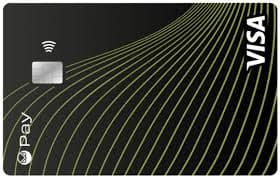
Gnosis Pay is no longer positioning itself as just another crypto card issuer. In a post on X, the team highlighted that any wallet can now tap into the "powerful combo" of Gnosis Pay and Monerium, alongside a growing roster of partners including Noah, Avenia, Aave, and Rotki. The message is clear: Gnosis Pay wants to be the payment layer that other wallets build on, not a walled garden competing with them.
The shift matters because it reframes the self-custodial spending debate. Instead of asking "which card should I get?", wallet developers can now ask "how do I add Visa spending to my existing product?" That is a fundamentally different value proposition, and it puts Gnosis Pay in a category closer to Stripe than to a traditional crypto card vendor.
The Stack: Monerium IBANs, Aave Yield, Noah Fiat, Rotki Tracking
What makes the Gnosis Pay ecosystem compelling is the composability. Each partner handles a distinct layer of the payment experience:
Monerium serves as the regulated electronic money institution. Licensed under Iceland's Financial Supervisory Authority, Monerium issues EURe, the most widely used EUR stablecoin on-chain with over 2 billion EURe processed. Every Gnosis Pay user gets a personal IBAN. When EUR arrives via SEPA transfer, Monerium automatically mints EURe into the user's wallet. When it is time to settle with Visa, issuers use Monerium's infrastructure for instant, cost-free EUR transfers. The entire flow, from bank deposit to card swipe, runs through regulated stablecoin rails.
Aave plugs in as the yield layer. Users can park idle stablecoins in Aave's lending pools and earn interest on funds that are not actively being spent. This creates a savings-account-like experience on top of a spending card, something traditional fintech apps offer but rarely with user custody of the underlying assets.
Noah handles global fiat on-ramps and off-ramps across 70+ countries with support for 50+ currencies. Backed by $22 million in seed funding and licensed in the US, Canada, and Europe, Noah provides the bridge for users who need to move between fiat and stablecoins without leaving the Gnosis ecosystem. Early adopters include Picnic, Zeal, Safe, and Gnosis HQ itself.
Rotki rounds out the stack with portfolio tracking and tax reporting. Premium Rotki users can connect their Monerium account to enrich transactions across supported chains with detailed bank transfer data, and link their Gnosis Pay controller to see merchant-level card transaction details. For anyone who has tried to reconcile DeFi yield and card spending at tax time, this integration is a significant quality-of-life upgrade.
Avenia provides additional on/off-ramp services, expanding the fiat gateway options available to wallets building on the stack.
Why "Any Wallet" Changes the Game
The traditional crypto card model is vertically integrated. Binance issues cards for Binance users. Coinbase issues cards for Coinbase users. Each card lives inside its own ecosystem, and switching means starting over with a new provider.
Gnosis Pay's open SDK model inverts this. By offering permissionless APIs for card issuance, KYC flows, and transaction management, any wallet, from hardware wallets to mobile-first apps, can white-label Visa spending without building payment infrastructure from scratch. The average integration time with Monerium is four weeks, according to Monerium's case study documentation.
This approach mirrors what happened with authentication (Auth0, Clerk) and payments (Stripe) in traditional software: the infrastructure became a layer that developers plugged into rather than a product they competed against. If Gnosis Pay executes on this vision, the number of self-custodial spending options could multiply rapidly without each wallet team needing to navigate Visa licensing, banking partnerships, and regulatory compliance independently.
What This Means for Gnosis Pay Cardholders
For existing Gnosis Pay Card users, the partner expansion means a richer experience without switching products. The Aave yield integration means idle EURe can generate returns. The Rotki integration simplifies tax reporting. Noah's expanded fiat rails mean more on-ramp options across more countries.
Gnosis Pay has also outlined 2026 plans that include USDC support (currently EURe only), expansion to 10+ new countries, and rewards programs. Combined with the existing cashback of up to 5% and the MiCA-compliant European issuance, these upgrades position the card as increasingly competitive against custodial alternatives from Binance and Crypto.com.
The card's core differentiator remains self-custody through Safe smart accounts. Your funds sit in a wallet you control until the moment of purchase. No exchange holds your balance. No custodian can freeze your spending power. That guarantee now comes with a full DeFi stack attached.
The Broader Push Toward Payment Infrastructure as a Service
Gnosis Pay's open infrastructure play fits a larger trend. The crypto card market is bifurcating into two camps: closed ecosystems where the card is a retention tool for an exchange, and open infrastructure where the card is a utility layer for the broader ecosystem.
On one side, exchanges like Bybit, KuCoin, and OKX use cards to keep users within their trading platforms. On the other, projects like Gnosis Pay and Bleap are building payment rails that any developer can access.
The infrastructure approach has a significant scaling advantage. Instead of acquiring cardholders one by one, Gnosis Pay can acquire wallet partners who bring their entire user base. If even a handful of major wallets integrate the stack, the number of people spending stablecoins via Visa could grow by orders of magnitude.
The risk is execution complexity. Coordinating Monerium for IBAN issuance, Noah for fiat rails, Aave for yield, and Rotki for tracking across multiple third-party wallet integrations is significantly harder than running a single vertically integrated card product. But if the DeFi composability thesis holds, that complexity is precisely what creates a moat.
Overview
Gnosis Pay is positioning its payment stack as open infrastructure rather than a closed card product. By combining Monerium's regulated IBAN and EURe issuance, Aave's yield layer, Noah's global fiat rails, Avenia's on-ramp services, and Rotki's portfolio tracking, the platform offers wallet developers a composable Visa spending solution they can integrate in weeks. The "any wallet" approach could accelerate self-custodial crypto card adoption significantly, though execution across this multi-partner stack remains the key challenge. With USDC support and 10+ new countries planned for 2026, Gnosis Pay is betting that the future of crypto spending is not one card to rule them all, but payment infrastructure embedded in every wallet.