Binance Automates the Tedious Part of Portfolio Margin
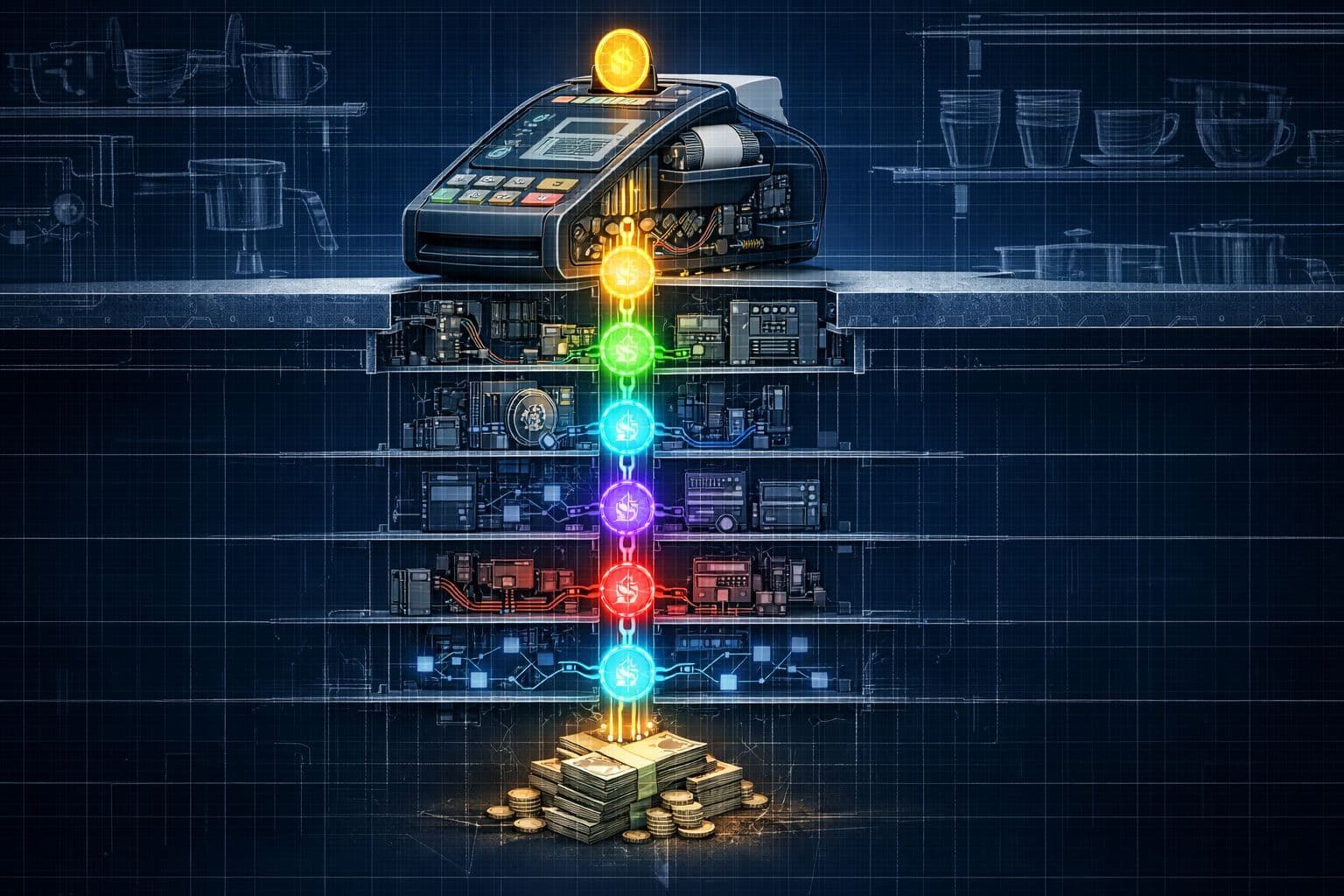
Binance has launched a new Auto Aggregate Balance feature for its Portfolio Margin accounts, designed to eliminate the manual process of transferring funds between sub-wallets. The feature, announced on February 8, 2026, allows traders to sweep all positive balances from their USDT-M and COIN-M Futures Wallets into their Cross Margin Wallet with a single click or API call.
For professional traders running complex multi-leg strategies across spot, futures, and margin, managing balances scattered across multiple sub-wallets has long been one of the most tedious operational tasks on centralized exchanges. Binance's update tackles this friction directly, reducing what was previously a series of manual transfers into a one-step aggregation.
Why Fund Fragmentation Matters for Active Traders
Portfolio Margin accounts on Binance are built for power users. Unlike standard isolated margin, Portfolio Margin evaluates risk across all positions holistically, potentially offering better capital efficiency and lower margin requirements. But that sophistication comes with complexity: funds can end up spread across USDT-M Futures, COIN-M Futures, Cross Margin, and spot wallets.
When a trader closes a profitable COIN-M position, those gains sit in the COIN-M Futures Wallet. To redeploy that capital into a spot trade or a USDT-M futures position, the trader previously had to manually transfer funds between wallets. During volatile markets, those extra steps cost time. In a liquidation scenario, fragmented balances can mean the difference between maintaining a position and getting stopped out, even when aggregate capital would have been sufficient.
The Auto Aggregate Balance feature addresses this by consolidating positive balances into the Cross Margin Wallet, which serves as the central hub for Portfolio Margin accounts. From there, funds are automatically available across all trading modes covered by the portfolio margin calculation.
How Auto Aggregate Balance Works
The mechanics are straightforward. Traders can trigger aggregation in two ways:
Manual trigger: Click the "Aggregate balances" button in the Portfolio Margin dashboard. The system scans all USDT-M and COIN-M Futures Wallets and transfers every positive balance to the Cross Margin Wallet.
API trigger: Send a POST request to the /papi/v1/auto-collection endpoint. This enables algorithmic traders and bot operators to build balance aggregation into their automated workflows, triggering it programmatically before executing new strategies.
There is one notable exception: BNB held in the USDT-M Futures Wallet is excluded from automatic transfers. This likely reflects BNB's dual role on the platform as both a trading asset and a fee discount token, where keeping a BNB balance in the futures wallet provides ongoing fee benefits.
The feature is capped at 10 uses per day. For most traders, this is more than sufficient given that aggregation is typically needed after closing positions or at the start of a new trading session. The limit likely exists to prevent API abuse or excessive internal transfer load.
What Portfolio Margin Traders Should Know
The practical impact depends on your trading style. Scalpers and high-frequency traders who rotate between USDT-M and COIN-M contracts multiple times per day will find the API integration particularly useful. Rather than building custom balance-checking scripts to monitor sub-wallet fragmentation, they can call the aggregation endpoint as a pre-trade step.
Swing traders and position managers benefit from the manual button. After closing a batch of positions, a single click consolidates all profits into the central wallet, ready for redeployment or withdrawal.
For traders using Binance's Portfolio Margin Pro, which offers enhanced collateral flexibility and cross-product margining, the aggregation feature works with the existing Auto-repay function. Together, these tools handle the two most common fund management tasks: consolidating scattered positive balances and automatically repaying borrowed assets.
One thing to watch: since BNB is excluded from auto-aggregation, traders who hold significant BNB positions in USDT-M futures will still need to manage those transfers manually. This is a minor limitation but worth noting for BNB-heavy portfolios.
The Broader Push Toward Frictionless Exchange UX
Binance's update fits a broader industry pattern. Centralized exchanges are increasingly competing not just on fees and listings but on operational convenience for professional traders. The friction of moving funds between sub-accounts and wallet types has been a persistent complaint across all major platforms, not just Binance.
Bybit's Unified Trading Account, for example, already pools margin across spot, derivatives, and options without requiring manual transfers. OKX's Portfolio Margin mode similarly offers cross-product netting. Binance's Auto Aggregate Balance brings its Portfolio Margin closer to this unified model, though the architecture still maintains separate wallets with an aggregation layer on top rather than a truly unified balance.
For crypto card users, the connection is indirect but relevant. Many Binance Card holders fund their spending from spot or earn wallets. Traders who can efficiently consolidate futures profits into their Cross Margin Wallet (which connects to spot) can more quickly move realized gains into spendable balances. It reduces the number of steps between "profitable trade" and "available for spending or withdrawal."
The API-first approach also signals Binance's continued focus on institutional and algorithmic traders, a segment that has grown significantly as crypto derivatives volumes have expanded. According to the platform's own data, Portfolio Margin accounts represent a disproportionate share of trading volume relative to their user count, making quality-of-life improvements for this cohort a strategic priority.
Overview
Binance's Auto Aggregate Balance feature removes one of the most persistent friction points for professional traders: manually transferring funds between sub-wallets within Portfolio Margin accounts. With a single click or API call, positive balances from USDT-M and COIN-M Futures Wallets are swept into the Cross Margin Wallet, ready for redeployment. The feature is capped at 10 uses per day and excludes BNB from automatic transfers. While not as seamless as fully unified account models offered by some competitors, it represents a meaningful step toward reducing operational overhead for Binance's most active traders.