
Best Crypto Cards for Frequent Travelers (2026)
Compare crypto cards for frequent travelers by lounge access, guest policy, 0% FX fees, ATM allowances, insurance coverage, and real annual travel value.
Featured

Curated for Frequent Travelers
30 matching cards
Filtered by lounge access, no fx fee
Your Amex Platinum costs $695/year and charges 2-3% on foreign transactions. A crypto card charges 0% FX and pays you cashback on top.
According to our data, if you spend $4,000/month across international destinations (business trips, conferences, holidays), the FX savings alone are worth $1,200/year before counting rewards. Add lounge access that rivals Priority Pass, and the math is not close.
Most cards on this page convert your stablecoin balance to the local currency at or near the interbank rate with zero issuer markup. Yen in Tokyo, pounds in London, reais in Sao Paulo. Some cards (Avici) carry a Visa cross-border fee of 0.4-1% on non-USD transactions, so check the fine print before assuming every card is truly 0%.
The differentiators are cashback rates, whether lounge access is included, what the entry cost is (staking, annual fee, or nothing), and whether the card includes travel insurance.
If lounge access and FX are only part of what you care about, our top-ranked crypto cards give the wider market before you narrow to travel perks.
Travel Card Comparison: Crypto vs Traditional
| Card | Max Cashback | Annual Fee | FX Fee | Lounge Access | Network | ATM Free Limit |
|---|---|---|---|---|---|---|
| Amex Platinum (trad.) | Points | $695 | 2-3% | Centurion + Priority Pass | Amex | N/A |
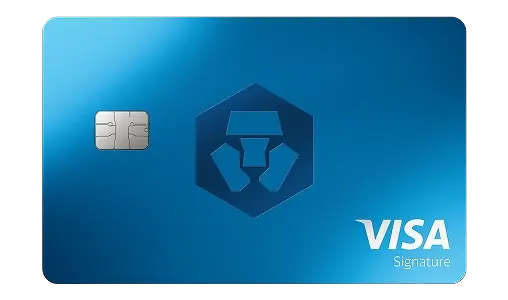
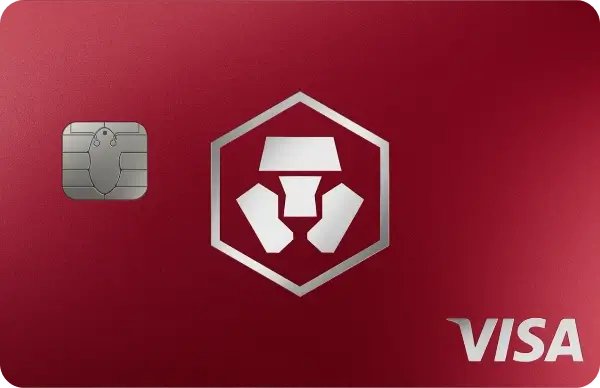
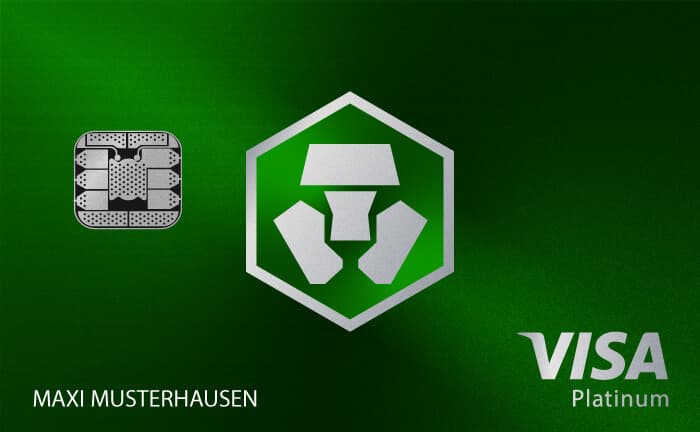
| CRO Obsidian | 5% | CRO stake | 0% | Priority Pass + guest | Visa | $1,000/mo |
| CRO Icy White | 4% | CRO stake | 0% | Priority Pass + guest | Visa | $800/mo |
| Wirex Elite | 8% | $360 | 0% | Priority Pass | Visa | $1,000/mo |
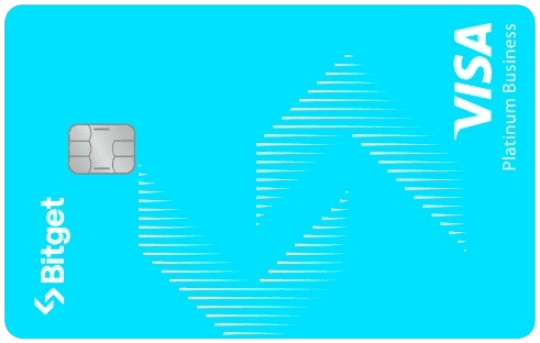
| Bitget Card | 8% | Free (0.9% tx) | 0% | No | Visa | Varies |
| COCA Visa | Up to 8% | Free ($COCA for tiers) | 0% | No | Visa | Varies |
| Avici Signature | 0% | $30 | 0% issuer (0.4-1% Visa cross-border on non-USD) | Visa Signature perks | Visa | Free |
| Tria Premium | 6% (up to 8%) | $250/yr | 0% | Lounge + Visa Signature | Visa | $0 ($750/day) |
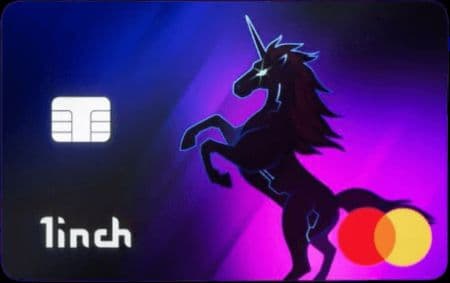
| 1inch | 2% | Free | 0% | No | Mastercard | Varies |
| Coinbase Card | 4% | Free | 0% | No | Visa | Varies |
| RedotPay | None | Free | 1.2% | No | Visa | 1.5% |
The table reveals the core trade-off: CRO Obsidian and Icy White are the only crypto cards combining cashback, lounge access, and 0% FX in one product, but they require CRO staking. Wirex Elite adds Priority Pass lounge access for $360/year. Avici Signature adds Visa Signature travel perks (travel insurance, purchase protection) for just $30/year but is not available in Europe.
If you want lounge access without staking, pair a high-cashback card (Bitget at 8%, COCA at 8%) with a standalone Priority Pass membership ($99-$469/year depending on tier). The crypto card's FX savings typically cover the Priority Pass cost and then some.
Amex Platinum vs Crypto Card: The Real Comparison
The Amex Platinum is the benchmark for travel cards. Here is exactly what you gain and lose by switching to crypto:
| Feature | Amex Platinum ($695/yr) | Crypto Card (0% FX, 4-8% CB) | Winner |
|---|---|---|---|
| FX fees | 2-3% on foreign transactions | 0% | Crypto |
| Cashback / rewards | Points (variable value, approx. 1-2%) | 4-8% direct cashback | Crypto |
| Lounge access | Centurion + Priority Pass + Delta Sky Club | Priority Pass (Icy White, Wirex Elite) | Amex (more networks) |
| Travel insurance | Comprehensive (trip delay, cancellation, baggage) | Avici Signature only | Amex |
| Purchase protection | Yes (120 days, up to $10K) | Avici Signature only | Amex |
| Car rental CDW | Yes | Avici Signature only | Amex |
| Hotel status | Hilton Gold, Marriott Gold | None | Amex |
| Airline credits | $200/year | None | Amex |
| Annual cost | $695 | $0-$360 | Crypto |
| Merchant acceptance | Limited (Amex not accepted everywhere) | Visa/Mastercard (universal) | Crypto |
The verdict for most travelers: Carry both. Use the Amex Platinum for flights and hotel bookings (insurance coverage, hotel status, airline credits). Use the crypto card for everything else (restaurants, transport, shopping, activities, ATMs).
At $4,000/month total travel spend with $2,000 on crypto card, the 8% cashback ($160/month = $1,920/year) more than covers both the Amex annual fee and any crypto card cost.
The verdict for budget-conscious travelers: Skip the Amex entirely. A Coinbase Card (free, US only) or Kraken (free, 1% cashback, 0% FX, EEA/UK) gives you 0% FX with zero annual cost. Buy standalone travel insurance for $30-80 per trip when needed.
Travel Insurance and Purchase Protection
Most crypto cards do not include travel insurance. This is the single largest gap compared to traditional premium cards:
| Card | Travel Insurance | Purchase Protection | Trip Cancellation | Car Rental CDW | Emergency Medical |
|---|---|---|---|---|---|
| Avici Signature | Yes (Visa Signature) | Yes | Yes | Yes | Yes |
| Tria Premium | No (Visa perks only) | Yes ($10,000) | No | Yes (auto rental CDW) | No |
| CRO Obsidian | Limited | No | No | No | No |
| Wirex Elite | No | No | No | No | No |
| Bitget Card | No | No | No | No | No |
| Amex Platinum (trad.) | Comprehensive | Yes | Yes | Yes | Yes |
How to cover the insurance gap: Buy standalone travel insurance (World Nomads, SafetyWing, or Allianz) for $30-$80 per trip, or use a card with partial coverage: Avici Signature ($30/year) includes comprehensive Visa Signature travel insurance.
Tria Premium ($250/year) includes Visa perks (auto rental CDW, baggage delay $500/event, baggage loss $1,000/event, concierge) but does NOT include trip cancellation or emergency medical - buy standalone insurance for those. Tria Premium adds $2,000 price protection and $10,000 purchase protection on top.
What Frequent Travelers Need in a Crypto Card
Zero FX fee across all currencies - not just major pairs
Airport lounge access through Priority Pass or equivalent network
Apple Pay or Google Pay for contactless transit taps (London Tube, Tokyo Metro)
ATM withdrawals with a free monthly allowance
No need to pre-load specific currencies - auto-convert at point of sale
Top 6 Cards for Frequent Travelers
At $4,000/month international spending, FX savings alone reach $1,200/year at typical bank rates. Crypto.com Obsidian and Icy White are the only crypto cards bundling lounge access, cashback, and 0% FX in one product - the Obsidian at 5% and Icy White at 4%, both with Priority Pass. Wirex Elite adds Priority Pass for $360/year without requiring any token staking.
Avici Signature brings Visa Signature travel perks (purchase protection, travel insurance) for $30/year - the cheapest way to cover the insurance gap crypto cards typically have. COCA at up to 8% cashback (1% free Starter, 8% at Elite with 30K $COCA) is the highest-cashback 0% FX card for travelers who buy a standalone Priority Pass.
Tria Premium combines 6% cashback (up to 8% with TRIA staking), 0% FX, 0% ATM fees ($750/day), lounge access, Visa Signature perks (auto rental CDW, baggage coverage, concierge), $2,000 price protection, and $10,000 purchase protection for $250/year - the most complete self-custodial travel package available. On $4,000/month, Tria Premium nets $2,630/year after its annual fee.
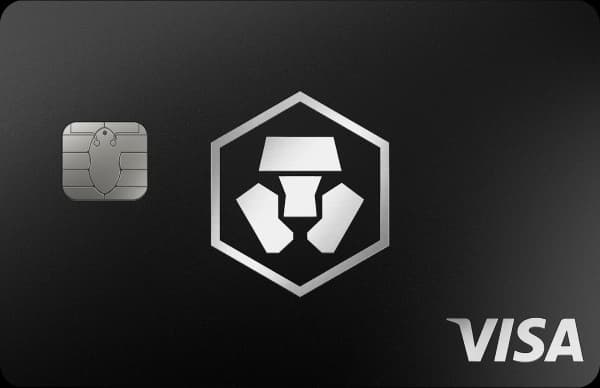
1. Private (Obsidian)
The Pinnacle: 5% Cashback + Private Jet Perks
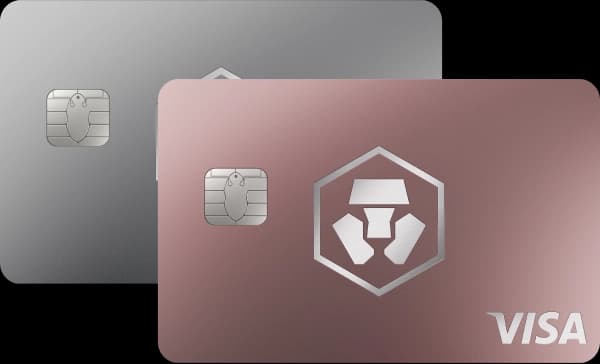
2. Private (Icy White / Rose Gold)
Elite Private Status: 4% Uncapped Cashback + Guests
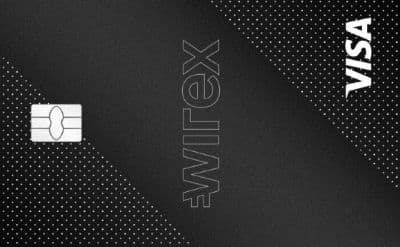
3. Wirex Elite Card
Elite Travel Status: 8% Rewards + Priority Support
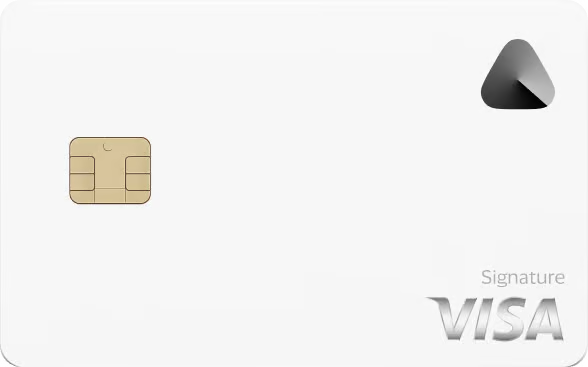
4. Avici Signature Card
Premium Self-Custody: Visa Signature Perks + Zero ATM Fees
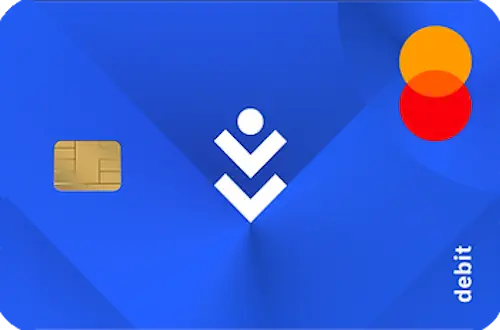
5. COCA Visa Card
Self-Banking: 8% Cashback + 6% APY + 0% FX
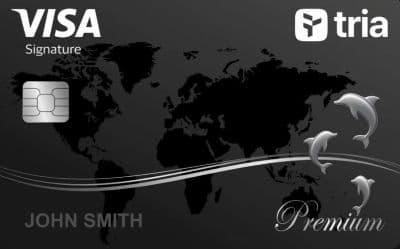
6. Tria Premium Card
Ultimate Web3 Luxury: 6% Cashback + Zero ATM Fees
What $4,000/Month Looks Like
$320
/month in cashback (based on Bitget Card at 8%)
Named Scenario: David, Management Consultant Based in NYC ($6,000/month travel spend)
Context: David flies internationally 2-3 times per month for client engagements. Destinations rotate between London, Frankfurt, Singapore, and Dubai. He currently uses an Amex Platinum ($695/year) for everything.
Current setup (Amex only):
- $6,000/month across flights ($2,500), hotels ($1,500), meals/transport ($1,500), shopping/misc ($500)
- FX fees: 2.5% on $4,500/month international spending (flights partly domestic) = $112.50/month = $1,350/year
- Amex rewards: approx. 1.5 cents per point, roughly $1,080/year in value
- Lounge access: 30+ visits/year (Centurion + Priority Pass)
- Insurance: comprehensive trip coverage
- Net position: $1,080 rewards - $695 fee - $1,350 FX = -$965/year
Optimized setup (Amex for flights/hotels + Bitget for everything else):
- Amex: $4,000/month (flights and hotels, for insurance and hotel status)
- Bitget Card: $2,000/month (meals, transport, shopping, client entertainment)
- FX fees: 2.5% on $4,000 Amex spend = $100/month. 0% on $2,000 Bitget spend.
- Bitget cashback: 7.1% net on $2,000 = $142/month = $1,704/year
- Amex rewards: approx. $720/year (on reduced spend)
- Net position: $1,704 + $720 - $695 fee - $1,200 FX = +$529/year
Annual improvement: $1,494. The switch from Amex-only to Amex + Bitget turns a $965/year loss into a $529/year gain.
"I kept the Amex for the insurance and hotel status. But shifting restaurants and transport to the Bitget Card was an instant $1,500/year improvement. The 8% cashback on client dinners alone is significant."
Named Scenario: Sophie and Thomas, German Couple, 4 Holidays Per Year
Context: Based in Munich. Four annual trips: 2 European (Mediterranean), 1 long-haul (Southeast Asia), 1 ski trip (Austria/Switzerland). Combined travel budget: $3,000/month averaged across the year.
Setup: Sophie carries Wirex Elite (Visa, 8% cashback, Priority Pass, $360/year). Thomas carries 1inch (Mastercard, 2% cashback, free). Different issuers, different networks.
Monthly flow:
-
Sophie: $2,000/month on Wirex (flights, hotels, restaurants, activities)
-
Thomas: $1,000/month on 1inch (transport, groceries at destination, shopping, ATM withdrawals)
-
Priority Pass: Sophie's card covers her only (no guest access on Wirex Elite). Thomas buys lounge access separately at $35/visit or they skip lounges on shorter flights.
-
EUR spending (Mediterranean trips): Zero FX conversion for both
-
SEA spending (long-haul): 0% FX on both cards, THB/VND conversion at network rate
Annual result:
- Sophie cashback: $1,920 (8% on $24,000)
- Thomas cashback: $240 (2% on $12,000)
- FX savings vs bank cards: $1,260 (3.5% on $36,000 combined)
- Wirex fee: -$360
- Lounge savings: $240 (Sophie, 8 visits x $30)
- Total: $3,300/year combined
"We used to both carry ING cards. Zero cashback, 2% FX on everything outside the eurozone. The Wirex plus 1inch combo gives us Visa plus Mastercard coverage and $3,300 per year in value we were leaving on the table."
Named Scenario: Kenji, Tokyo-Based Tech Worker, Biweekly Flights to Southeast Asia ($4,000/month)
Context: Kenji flies Tokyo to Bangkok or Saigon every two weeks for his remote team. Japan is heavily card-friendly in cities but cash-dominant in rural areas and many restaurants. Southeast Asia requires significant cash usage.
Setup: Bitget Card (Visa, 8%, 0% FX) as primary. RedotPay Virtual (Visa, instant issuance, 150+ countries) as backup. Local Japanese bank card for domestic ATM withdrawals.
Monthly flow:
- $2,500 on Bitget (hotels, restaurants in BKK/SGN, flights via Expedia, online shopping)
- $500 on RedotPay (backup spending, smaller merchants in SEA)
- $1,000 in cash (Japan restaurants, Thai street food, Vietnamese markets)
- ATM strategy: Withdraw $500 at 7-Eleven (Japan, free) before each trip. Withdraw $250 at Bangkok Bank ATM (lowest local fee) on arrival.
Annual result:
- Bitget cashback: $2,130 (7.1% net on $30,000)
- RedotPay cashback: $0 (no rewards program)
- RedotPay fees: -$132 (2.2% on $6,000)
- FX savings vs Japanese bank card: $1,680 (3.5% on $48,000)
- Total: $3,678/year
"7-Eleven ATMs in Japan accept everything and charge nothing. Bangkok Bank ATMs in Thailand charge 220 baht but less than other Thai banks. These two facts alone save me $300/year in ATM fees."
Business Traveler Annual Comparison ($4,000/month)
| Card Setup | FX Cost | Cashback/yr | Lounge Value | Total Annual | Cost |
|---|---|---|---|---|---|
| Amex Platinum ($695/yr) | -$1,200 (2.5%) | Points ($1,080) | $600 (15 visits) | -$215 | $695/yr |
| CRO Icy White (4%) | $0 | $1,920 | $600 (Priority Pass) | +$2,520 | $50K CRO stake |
| Bitget (8%) + Priority Pass ($469) | $0 | $3,408 | $600 (15 visits) | +$3,539 | $469/yr |
| Wirex Elite (8%, $360/yr) | $0 | $3,840 | $240 (lounge) | +$3,720 | $360/yr |
| COCA Elite (8%, staking 30K $COCA) | $0 | $3,840 | $0 | +$3,840 | Stake $COCA |
| Bank debit (2.5% FX, 0%) | -$1,200 | $0 | $0 | -$1,200 | Free |
The swing between a 2.5% FX bank card and the Bitget + Priority Pass setup is $4,739/year on the same spending. Even without lounge access, COCA at Elite tier ($3,840/year net, requires staking 30K $COCA tokens) dramatically outperforms the Amex Platinum on pure economics. The Amex still wins on travel insurance and purchase protection, which is why many frequent travelers carry both.
Leisure Traveler ($2,000/month, 4 trips/year)
| Card | Domestic Cashback | Travel FX Savings | Annual Total | Cost |
|---|---|---|---|---|
| Coinbase (4%, 0% FX) | $960 | $150 saved | +$1,110 | Free |
| COCA Elite (8%, 0% FX) | $1,920 | $150 saved | +$2,070 | Stake $COCA |
| Bitget (7.1% net, 0% FX) | $1,704 | $150 saved | +$1,854 | Free |
| Bank card (0%, 2.5% FX) | $0 | -$150 FX cost | -$150 | Free |
Even leisure travelers who only spend $500/month internationally save $150/year in FX fees. Add 4-8% cashback on their full $2,000/month spending and the annual value jumps to $1,110-$2,070. For couples traveling together, the value doubles when both partners carry a crypto card.
ATM Strategy by Region
Cash is unavoidable in many destinations. The cost depends on your card, the local ATM network, and your withdrawal strategy:
| Destination | Local ATM Fee | Best ATM Network | Withdrawal Strategy |
|---|---|---|---|
| Japan | Free (7-Eleven) | 7-Eleven, Japan Post | Use 7-Eleven exclusively, free for international cards |
| Thailand | 220 THB ($6) all ATMs | Bangkok Bank (lowest) | Large withdrawals ($300+) to minimize operator fees |
| Vietnam | 22,000 VND ($1) most ATMs | Vietcombank | Moderate withdrawals, operator fee is low |
| Germany | Free (most banks) | Any Sparkasse/Volksbank | Free ATM withdrawals common |
| UK | Free (most Link ATMs) | Link network | Free at most ATMs |
| Mexico | 30-50 MXN ($2-3) | BBVA, Banorte | Moderate withdrawals, avoid airport ATMs |
| Indonesia | Free (BCA, Mandiri) | BCA | Free at major banks, small daily limit |
Universal ATM rule: Withdraw larger amounts less frequently. A single $300 withdrawal at 2% card fee plus one $6 operator fee costs $12 total. Six $50 withdrawals at 2% plus six $6 operator fees cost $42 total. Same cash, 3.5x the cost.
Multi-Card Strategy for Frequent Travelers
The Four Numbers Every Traveler Should Check Before Applying
Number 1: True FX Rate (Not Just "0% FX Fee")
We track the actual conversion rate each card achieves versus the mid-market rate. "0% FX fee" means the card issuer charges no markup, but the crypto-to-fiat conversion might happen through a liquidity pool or OTC desk with its own spread. Some cards advertise 0% FX but embed 0.3-0.5% in the conversion spread.
How to verify: Make a small test purchase in a foreign currency. Check the converted rate against the live interbank rate on XE.com at that exact moment. If the difference is under 0.2%, the card is genuinely 0% FX. If it is 0.5%+, the issuer is hiding a spread.
| Hidden Cost | How It Works | Annual Impact at $4,000/mo |
|---|---|---|
| Embedded spread (0.3%) | Issuer's liquidity provider adds markup | -$144/year |
| Weekend spread (0.5-1%) | Wider spreads when forex markets are closed | -$240-480/year on weekend spending |
| Settlement timing | Card settles at later, worse rate | Varies |
Number 2: Lounge Guest Policy
A lounge card that only admits the cardholder is useless if you travel with a partner. The guest policy determines the real value:
| Card | Lounge Network | Cardholder | Guest Access | Both Partners? |
|---|---|---|---|---|
| CRO Obsidian | Priority Pass | Yes | Unlimited guests free | Yes |
| CRO Icy White | Priority Pass | Yes | 1 guest free | Yes (partner only) |
| CRO Jade | Priority Pass | Yes | No guests | No |
| Wirex Elite | Priority Pass | Yes | No guests | No |
| Standalone Priority Pass Select | Priority Pass | Yes | $35/guest | Pay per guest |
For couples, the Icy White tier is the minimum for shared lounge access. Jade tier gives the cardholder access but the partner waits outside. For families, even Icy White only covers one guest. The Obsidian tier covers unlimited guests but requires a significantly higher CRO stake.
Number 3: ATM Free Allowance
Cash is unavoidable in many destinations. Your card's ATM policy can quietly drain hundreds per year:
| Card | Free ATM/Month | ATM Fee After Limit | Local ATM Operator Fee |
|---|---|---|---|
| Avici Signature | Unlimited | N/A | Varies by country |
| CRO Obsidian | $1,000 | 2% | Varies by country |
| CRO Icy White | $800 | 2% | Varies by country |
| Wirex Elite | $1,000 | Varies | Varies by country |
| Ready Lite | $200 | Varies | Varies by country |
| Coinbase | Varies | 2.49% | Varies by country |
Pro tip: Local ATM operator fees are separate from your card's ATM fee. In Thailand, ATMs charge 220 THB ($6) per withdrawal regardless of your card. In Japan, 7-Eleven ATMs are free. In Germany, most ATMs are free for international Visa/Mastercard. Research local ATM fees before your trip.
Number 4: Insurance Coverage
If you book a $3,000 flight and the airline cancels, does your card cover the loss? For most crypto cards, the answer is no. Only Avici Signature includes comprehensive Visa Signature travel benefits. For every other crypto card, buy standalone trip insurance for bookings over $500.
The Two-Card Travel Strategy
The most effective setup for frequent travelers:
Card A: High-Cashback Daily Driver. This handles 80% of your travel spending: restaurants, transport, shopping, activities, small purchases. Bitget Card (8%, 0.9% tx fee, free), COCA (up to 8% with staked $COCA, 1% free tier), or Wirex Elite (8%, $360/year, Priority Pass lounge). Maximize raw cashback on volume spending.
Card B: Insurance/Lounge Card. Use this for flights, hotel bookings, and car rentals where insurance coverage matters. CRO Icy White (4%, Priority Pass + 1 guest, $50K CRO stake), Avici Signature ($30/year, Visa Signature travel insurance), or your existing Amex Platinum if you already have one.
Why two cards: No single crypto card combines the highest cashback rate with comprehensive travel insurance. By splitting, you get 8% cashback on everyday spending AND insurance protection on bookings.
The Two-Network Rule
Always carry one Visa and one Mastercard when traveling internationally. Coverage gaps are real:
| Region | Visa Coverage | Mastercard Coverage | Recommendation |
|---|---|---|---|
| Japan | Strong (except rural) | Weaker in rural areas | Visa primary, cash backup |
| Western Europe | Excellent | Excellent | Either works |
| Eastern Europe | Good | ATM advantage in some areas | Carry both |
| Southeast Asia | Strong in cities | Weaker in villages | Visa primary, cash for markets |
| US / Canada | Excellent | Excellent | Either works |
| Latin America | Good | Good (growing) | Carry both |
| Middle East | Good | Good | Either works |
| Africa | Varies widely | Varies widely | Carry both + cash |
Recommended pairings for network diversity:
- Bitget (Visa) + 1inch (Mastercard) = 8% + 2%, both free
- Wirex Elite (Visa) + 1inch (Mastercard) = 8% + 2%, one paid
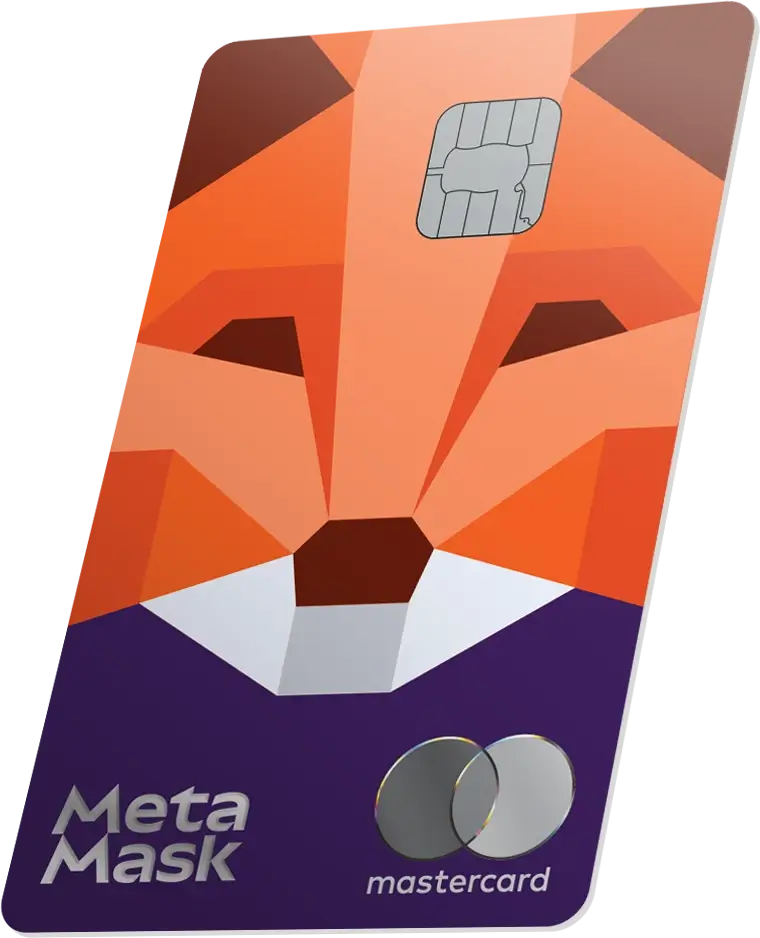
- Coinbase (Visa) + MetaMask (Mastercard) = 4% + points, both free
- COCA (Visa) + Bleap (Mastercard) = up to 8% + 2% (COCA requires staking $COCA for max rate)
Pre-Departure Financial Checklist
| Timeline | Action | Why It Matters |
|---|---|---|
| 2 weeks before | Load card with trip budget + 20% buffer in USDC | Avoid top-up stress with foreign connectivity |
| 1 week before | Set travel notification in card app | Prevents geographic fraud flags |
| 1 week before | Save support phone numbers offline | App may be inaccessible if phone dies or stolen |
| 1 week before | Research ATM fees at destination | Know which ATM networks are cheapest |
| Day before | Confirm card is active (small test purchase) | Catches frozen/expired cards before departure |
| Day before | Add card to Apple Pay / Google Pay | Contactless fallback if physical card is lost |
| At airport | Always decline DCC ("pay in local currency") | Saves 3-7% per transaction |
Pre-Trip Funding Strategy
Fund with USDC before each trip. No need to buy yen, euros, or pounds in advance. The card converts at the interbank rate at the moment of each transaction. This is simpler than carrying multiple currencies and dramatically cheaper than airport exchange bureaus (which charge 5-10% spread).
How much to load: Your estimated trip spending plus 20% buffer. A 2-week trip to Japan at $200/day = $2,800 estimated + $560 buffer = load $3,360 in USDC. The buffer covers emergencies, unexpected expenses, and the occasional splurge.
When to load: Before departure, on a weekday (some exchanges have slower processing on weekends). Do not wait until you are at the airport.
What if you run low mid-trip: Most exchange apps let you top up from your phone, but this requires internet access, exchange uptime, and SEPA/wire processing time. Never depend on mid-trip top-ups as your primary funding strategy.
Common Mistakes to Avoid
1. Paying 3-7% on Dynamic Currency Conversion (DCC)
What happens: A restaurant terminal in Barcelona asks "Pay in USD?" You tap yes because it seems convenient. The merchant's DCC rate includes a 5% markup. Your $47 dinner actually cost $49.35 in your currency.
Dollar cost: 3-7% per DCC transaction. If you accept DCC on 20% of transactions during a 2-week trip spending $3,000, that is $18-$42 lost on a single trip. Across 4 annual trips: $72-$168/year.
How to avoid it: Always select "local currency" at every terminal, ATM, and online checkout. Make it automatic. If a waiter asks, say "local currency please." If a terminal does not give you a choice and shows your home currency, ask the merchant to re-run it.
2. Single Card, Single Network, Single Point of Failure
What happens: Your only card (Visa) gets declined at a restaurant in rural Italy because the merchant only accepts Mastercard. Or your exchange goes into maintenance at 9 PM in Bangkok and your card stops working entirely.
Dollar cost: Emergency cash from a hotel front desk (10%+ markup). Tourist-rate currency exchange ($15-30 per transaction). The stress cost of being stranded without payment access in a foreign country.
How to avoid it: Two cards, two issuers, two networks. One Visa and one Mastercard from different companies. If one goes down, the other keeps working. Add a traditional Wise or Revolut card as a third backup for extreme scenarios.
3. Geographic Fraud Flags Freezing Your Card Abroad
What happens: You use your card in London on Monday and Bangkok on Wednesday. An automated fraud system flags the geographic impossibility and freezes your card. You are in Thailand with a frozen card and no backup.
Dollar cost: Emergency cash withdrawal from a traditional bank ($15-30 fee), tourist-rate exchange, and 1-3 days without your primary card while support reviews.
How to avoid it: Set travel notifications in the card app before every trip. Some issuers (Crypto.com, Coinbase) have in-app travel modes. Others require contacting support. Save your issuer's support phone number in your phone contacts (not just the app) so you can call from a borrowed phone if needed.
4. Running Out of Balance Mid-Trip
What happens: You estimated $2,000 for a 10-day trip but an unexpected hotel upgrade and a few expensive dinners push you to $2,800. Your card balance is $200 and you need to top up from a beach bar in Bali with spotty Wi-Fi.
Dollar cost: Stress and time. If the top-up fails (exchange maintenance, slow SEPA transfer, mobile internet too slow for 2FA), you fall back to a bank card at 2-3% FX or pay cash at tourist exchange rates (5-10% markup).
How to avoid it: Load 20% more than your estimated trip budget before departure. For a $2,000 estimated trip, load $2,400. The unused balance stays on the card for next time. Over-funding costs nothing. Under-funding costs time, stress, and money.
5. Not Knowing Local ATM Fees
What happens: You land in Bangkok and use the first ATM you see at the airport. It charges 220 THB ($6) operator fee plus your card's 2% withdrawal fee. You withdraw $100 and pay $8 in total fees (8% effective rate).
Dollar cost: $3-8 per unnecessary ATM fee. Across 10 withdrawals on a 2-week trip: $30-80 in avoidable fees.
How to avoid it: Research ATM fees at your destination before departure. Japan's 7-Eleven ATMs are free for international cards. Germany's Sparkasse ATMs are free. Thailand's ATMs all charge 220 THB, so withdraw $300+ at a time. In many countries, avoiding airport ATMs (higher fees) and using bank-owned ATMs (lower fees) saves $50+ per trip.
6. Trusting "0% FX" Without Verifying
What happens: Your card advertises "0% FX fee" but embeds a 0.5% spread in the conversion rate. You spend $4,000 on a 2-week trip and pay $20 in hidden spread without seeing a single fee line item.
Dollar cost: 0.3-0.5% on all foreign spending. At $4,000/trip x 4 trips/year = $48-$80/year in invisible losses.
How to avoid it: Run a test. Make a small purchase in a foreign currency. Compare the exact rate you received to the live interbank rate on XE.com at that moment. Do this once per card, then use our side-by-side card comparison to weigh spreads against lounge access, ATM limits, and annual fees. Cards that convert from stablecoins (USDC tolocal currency) typically have tighter spreads than cards that convert from volatile crypto.
What Happens When Your Card Gets Frozen Abroad
Four scenarios ranked by severity:
| Scenario | Severity | Resolution Time | What To Do |
|---|---|---|---|
| Declined transaction (wrong PIN or limit) | Low | Immediate | Re-enter PIN or switch to contactless. Try backup card. |
| Fraud flag (geographic) | Medium | 1-24 hours | Call support, verify identity, confirm travel. Use backup card. |
| Exchange maintenance | Medium | 2-24 hours | Wait. Use backup card from different issuer. |
| KYC reverification (card frozen) | High | 3-7 business days | Upload documents immediately. Use backup card for remaining trip. |
The KYC reverification scenario is the most dangerous for travelers. Some exchanges trigger random audits based on spending patterns, country changes, or regulatory requirements. Your card freezes until a support agent reviews your documents. If this happens on day 2 of a 14-day trip, you need a backup card from a different issuer to survive the remaining 12 days.
Card Selection by Travel Style
Conference/business traveler: Bitget Card (8% on all spending, free) or Wirex Elite (8%, $360/year, Priority Pass) + standalone travel insurance for flights. The combined setup beats the Amex Platinum on pure economics. See our business guide.
Backpacker/budget traveler: Coinbase Card (4%, free, US only) or Kraken (1%, 0% FX, 0% ATM, free, EEA/UK). No annual fees, no staking. Load with USDC and spend. See our students guide.
Full-time nomad (multi-country): COCA (up to 8%, 0% FX, 60 countries) or Wirex (up to 8%, 35 countries). Pair with Apple Pay/Google Pay for contactless everywhere. See our digital nomads guide.
Self-custody traveler: Tria Premium (6%, 0% FX, 0% ATM, lounge access, Visa Signature perks, $250/year). The only self-custodial card combining high cashback, Visa perks (auto rental CDW, baggage coverage, concierge), and free ATM withdrawals in one product. See our self-custody guide.
Luxury traveler: CRO Obsidian (5% + Priority Pass + unlimited guests + airport transfer) or Avici Signature (Visa Signature perks, travel insurance, $0 ATM, $30/year). See our high spenders guide.
Traveling couple: CRO Icy White (4%, Priority Pass + 1 guest, $50K CRO stake) or both partners on Wirex Elite ($720/year combined, each gets independent lounge access). See our couples guide and lounge guide.
APAC-based traveler: Bitget (8%, 0% FX) or Gate.io (debit, global). APAC exchanges have the widest acceptance in this region. RedotPay works in 150+ countries as a backup. See country guides for Singapore, Hong Kong, Thailand, or Japan.
US-based international traveler: Coinbase Card (4%, 0% FX) as primary. Fewer crypto card options than Europeans, but even 4% cashback with 0% FX dramatically outperforms most US bank cards internationally. Keep your traditional travel card for insurance. See our US guide.
European traveler: Kraken (1%, 0% FX, 0% ATM, Mastercard, EEA/UK) or COCA (1% free tier, up to 8% with staking 30K $COCA, 0% FX) for travel spending. Coinbase is US-only and not available to European residents.
Plutus offers up to 9% cashback and subscription rebates but charges 2.5% FX on non-domestic transactions, making it a poor travel card - use it for domestic EUR spending only. Add 1inch Mastercard for network diversity. See our Europeans guide.
Our take: A frequent traveler spending $4,000/month internationally saves $1,200/year in FX fees alone by switching from a traditional bank card to any 0% FX crypto card. Add 4-8% cashback and the total annual value reaches $3,000-$5,000.
The formula is simple: carry two cards on different networks (one Visa, one Mastercard), pre-load with USDC before every trip, always decline DCC at merchant terminals, and buy standalone travel insurance for flights when your card does not include it.
Even budget travelers spending $1,000/month internationally earn $480-$960/year in combined FX savings and cashback. The crypto card pays for itself on the first trip and generates returns on every trip after.
Disclaimer: SpendNode is a data comparison platform. We are not financial advisors. Crypto cards involve risks including asset volatility, custodial risk, and tax complexity. Verify all terms directly with issuers before applying.
Written by Aleksandar Dukic
Frequently Asked Questions
Which crypto card is best for international travel?
For combined travel benefits, Crypto.com Obsidian (5% cashback + Priority Pass lounge access + 0% FX) and Icy White/Rose Gold (4% + Priority Pass) are the strongest travel packages. For pure cashback at 0% FX with no staking, Bitget (8%) and Wirex Elite (8%, $360/year) lead.
How does a crypto card compare to Amex Platinum for travel?
Amex Platinum ($695/year) offers extensive lounge access, travel insurance, and hotel perks but charges FX fees on foreign transactions. Crypto cards offer 0% FX (saving $1,000+/year for heavy travelers) and competitive cashback but typically lack travel insurance and purchase protection. Many frequent travelers carry both.
Do crypto cards work at foreign ATMs?
Yes. Every card here runs on Visa or Mastercard, which are accepted at ATMs worldwide. Fee structures vary: some cards offer 2-3 free ATM withdrawals per month, others charge 1-2% per withdrawal. Check your card's specific ATM policy before relying on cash access abroad.
Can I tap my crypto card on public transit abroad?
If your card supports Apple Pay or Google Pay, it works on any contactless transit system - London's Tube and buses, Tokyo Metro, Sydney trains, and most European transit networks. Tap the phone or watch at the reader exactly as you would with any other contactless card.
Recent Updates to Best Crypto Cards for Frequent Travelers
- Fixed Crypto.com Icy White cashback from 5% to 4% and stake from $40K to $50K. Recalculated business comparison table
- Replaced KAST Standard with Kraken (0% FX, 0% ATM, EEA/UK) in budget and European traveler recommendations
- Fixed COCA FX from 0-1% to 0%. Corrected Coinbase as US-only throughout