Gemini Breaks Through New York's Staking Wall
Gemini, the New York-based crypto exchange founded by Cameron and Tyler Winklevoss, announced on February 10 that staking is now live for New York residents. The rollout marks the end of a years-long exclusion that prevented New Yorkers from earning proof-of-stake yield on one of the state's most prominent regulated exchanges.
The announcement was direct: "New York, staking is now live on Gemini. Start earning rewards today." For a state that has historically treated crypto staking as regulatory grey area, this is a significant milestone. Gemini operates as a New York Trust Company under the supervision of the New York Department of Financial Services (NYDFS), making it one of the most scrutinized crypto platforms in the country.
Why New York Matters More Than Any Other State
New York's BitLicense framework, established by NYDFS in 2015, has been the gold standard for restrictive crypto regulation in the United States. While other states took a hands-off approach, New York required explicit approval for virtually every crypto activity: transmitting, storing, buying, selling, and exchanging digital assets.
Staking was one of the last holdouts. For years, New York residents watched as users in other states earned passive yield on their ETH, SOL, and other proof-of-stake assets. Gemini's own support documentation previously listed the United States as a supported staking region "excluding New York." That exclusion is now gone.
The shift follows a broader regulatory thaw. In October 2025, Coinbase gained NYDFS approval to offer staking for Ethereum and Solana in New York, becoming the first major exchange to break through the barrier. Governor Kathy Hochul's administration provided the regulatory clarity that made it possible. Gemini's launch four months later suggests the NYDFS has established a repeatable approval framework rather than granting one-off exceptions.
What Gemini Staking Offers New Yorkers
Gemini's staking service supports multiple proof-of-stake assets, with Ethereum (ETH) and Solana (SOL) as the headline offerings. The platform advertises APY rates of up to 6.51% depending on the asset, with no minimum staking requirements and no transfer or redemption fees.
The fee structure splits into two tiers. Basic Staking carries a service fee of up to 30% of rewards (25% for EU users). For users who want lower fees and dedicated validator access, Staking Pro reduces the service fee to 15%. Both tiers allow users to unstake at any time, though standard unbonding periods apply depending on the network.
For context, Ethereum's current network staking yield hovers around 3-4% APY before fees, while Solana validators typically earn 6-8%. Gemini's advertised "up to 6.51%" aligns with Solana staking after the platform's fee cut. These rates fluctuate with network conditions, validator performance, and overall staking participation.
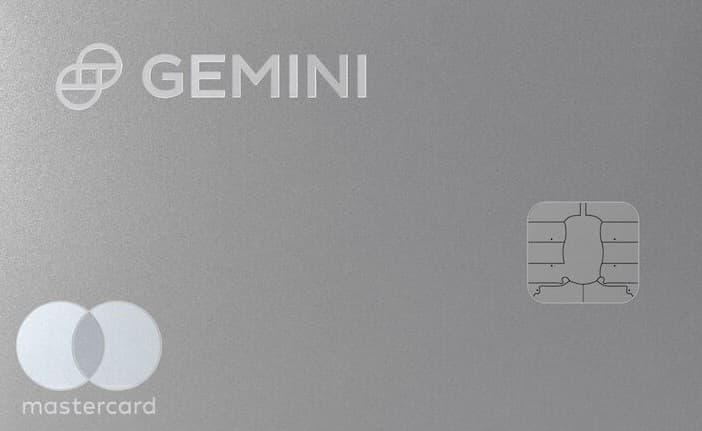
The timing also connects to Gemini's broader product strategy. The exchange recently launched the Gemini Solana Card, a credit card that automatically stakes SOL rewards at approximately 6% yield. New York residents who hold the card can now earn yield not just on their credit card rewards, but on their entire SOL and ETH holdings through the staking service.
What ETH and SOL Holders in New York Should Watch
If you're a New York resident who has been waiting for this, here's what to consider before staking.
Unbonding periods matter. Ethereum staking involves a withdrawal queue that can take days depending on network congestion. Solana's unstaking period is roughly 2-3 epochs (approximately 2-3 days). Your staked assets are not liquid during these windows.
Tax implications are real. New York State taxes crypto staking rewards as ordinary income at the time they are received. Combined with federal income tax, New York City residents could face effective tax rates above 40% on staking rewards. The IRS treats staking rewards as taxable income when received, not when sold. Keep records of every reward distribution.
Fee erosion is significant at 30%. Gemini's Basic Staking tier takes up to 30% of your rewards. On a 4% ETH staking yield, that reduces your net return to roughly 2.8%. Staking Pro at 15% improves this to about 3.4%. Compare this with self-custodial staking through services like Lido or Rocket Pool, where fees typically range from 5-10%, though those require more technical knowledge and carry smart contract risk.
Validator risk exists. While Gemini operates as a regulated custodian, staked assets are subject to slashing risk if validators misbehave or go offline for extended periods. Gemini has not publicly disclosed whether it covers slashing losses for users.
The Domino Effect: Who's Next?
Gemini is the second major exchange to launch staking in New York, following Coinbase's October 2025 approval. The pattern suggests NYDFS is working through applications methodically rather than blocking the category entirely.
Four states still restrict staking broadly: California, New Jersey, Maryland, and Wisconsin. Coinbase has estimated that residents of these states have collectively missed out on over $130 million in potential staking rewards due to regulatory restrictions. As New York, the traditional regulatory bellwether, opens up, pressure on these holdout states will intensify.
The federal landscape has also shifted. In May 2025, SEC staff guidance clarified that proof-of-stake staking does not inherently constitute a securities offering, provided certain conditions are met. This guidance, combined with the April 2025 stablecoin clarity framework, has given state regulators more confidence to approve staking products.
For the broader staking rewards ecosystem, Gemini's New York launch adds another on-ramp for institutional and retail participants. New York is home to many of the country's largest financial institutions, hedge funds, and high-net-worth individuals. Unlocking staking in this market could bring meaningful new capital into proof-of-stake networks.
The competitive implications extend to crypto card issuers as well. Cards that offer cashback rewards in stakeable assets become more attractive when holders can immediately stake those rewards. Gemini's Solana card already does this natively, and competitors like Coinbase will likely emphasize their own staking integration now that both platforms serve New York.
Overview
Gemini has launched crypto staking for New York residents, ending a years-long exclusion from one of crypto's most popular passive income features. The service supports ETH, SOL, and other proof-of-stake assets with no minimums and fees ranging from 15-30% of rewards. This makes Gemini the second major exchange to offer staking in New York after Coinbase broke through in October 2025. The move signals that NYDFS has established a clear framework for approving staking products, putting pressure on the four remaining holdout states. For New Yorkers, the practical impact is immediate: they can now earn yield on their crypto holdings through a regulated, insured platform without moving assets to out-of-state services or self-custodial solutions.