
Best Crypto Cards in Uganda (2026)
Compare crypto cards available in Uganda. East Africa's fastest-growing fintech market with no crypto ban, over 30 million Mobile Money accounts, and a young population driving digital adoption. Global crypto cards serve Uganda's tech-savvy urban population and diaspora.
Verified for Uganda
42 crypto cards available
Local currency: UGX
Uganda has the youngest population on Earth (median age 15.7) and one of Africa's highest mobile money adoption rates: over 30 million MTN MoMo and Airtel Money accounts serving 47 million people. This mobile-first generation is digitally comfortable but financially constrained. Mobile Money handles domestic payments well but cannot access Amazon, Netflix, Spotify, international SaaS subscriptions, or any cross-border e-commerce.
A crypto card bridges that gap with 0% FX fees and cashback rewards that no Ugandan bank card offers.
The economy is transforming. The East African Crude Oil Pipeline (EACOP, 1,443 km from Lake Albert to Tanzania's Tanga port) and the Tilenga/Kingfisher oil developments (TotalEnergies, CNOOC) are bringing Uganda into commercial oil production, with estimated peak production of 230,000 barrels/day once fully ramped. This brings foreign investment, international workers, and USD-denominated economic activity into a previously agricultural economy.
Kampala's tech scene (the Innovation Village, Outbox Hub, Hive Colab) is producing fintech startups at an accelerating rate. Binance P2P ranks Uganda among its top African markets by trading volume.
The shilling (UGX) has depreciated from approximately 2,500 UGX/USD in 2013 to 3,750+ UGX/USD, a 33%+ loss over a decade. Holding stablecoins on a crypto card preserves purchasing power that UGX bank deposits cannot.
Summary:
Which crypto cards are best in Uganda?
The best crypto cards in Uganda in October 2026 are Kolo Card, KAST K Card, Rizon Standard Card, and Tria Signature Card. The detailed ranking below explains the local tax, fee, and availability trade-offs.
| Crypto card | Base reward | Net after fees | Annual fee | FX fee | Type |
|---|---|---|---|---|---|
| 1% base2% for the first 30 days, then 1%; also capped at $1/EUR 1 per transaction ($2/EUR 2 during intro) and $100/EUR 100 per month | 1% | Free | 0% | Prepaid | |
| 1.5% base | 1% | Free | 0.5% | Prepaid | |
| Varies | - | Free | 1.7% | Crypto Backed Credit | |
| 4.5% base4.5% on the first $1,000/mo, then 1% | 3% | $109/year | 1% | Debit |
Best Card For Every Need in Uganda
Top 4 Crypto Cards in Uganda
Uganda's median age of 15.7 years makes it the youngest nation on Earth. A population born into MTN MoMo is ready for crypto cards the moment international purchasing power becomes the bottleneck. The UGX's 33% erosion over a decade makes stablecoin holding a passive savings strategy: USDC on a card outperforms Centenary Bank deposit rates in real terms before cashback enters the equation.
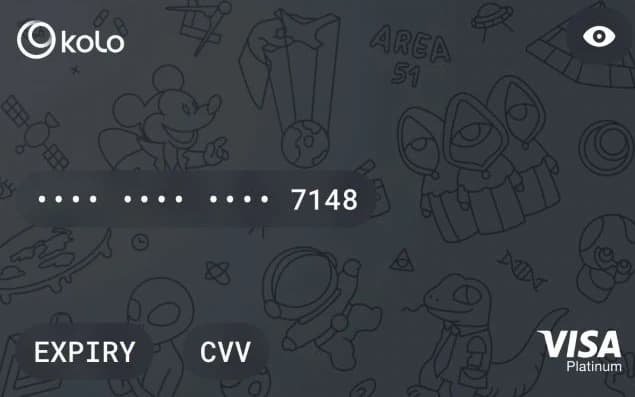
Kolo leads the list as the free 0%-FX card: 1% ongoing BTC cashback (2% for the first 30 days), capped at $100/month and $1 per transaction, with $0 annual fee.
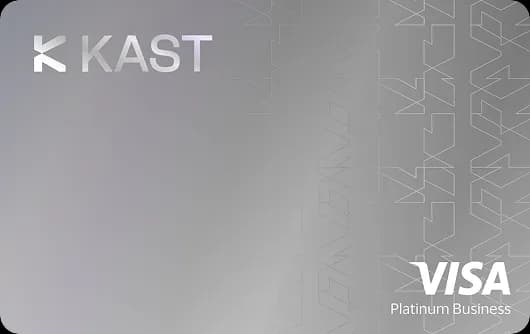
KAST pays 1.5% USD cashback on the first $2,000/month with $0 annual fee and 0.5-1.75% FX. It is the quickest route for mobile-money users who need international card access without a conventional bank relationship. Tria Signature pays 4.5% on the first $1,000/month and then 1%; after its 1% FX fee and 0.5% per payment, it breaks even on the annual fee at about $303/month.
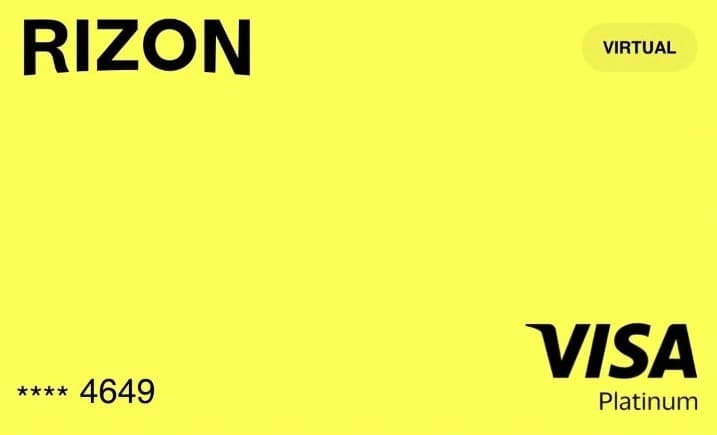
Rizon Standard fits this market's income levels on economics: a US-issued Visa Platinum for $1 with code spendnode, eligibility that follows the Ugandan passport rather than a bank relationship, USD account details ready for the incoming oil-sector dollar salaries, and ATM cash at a published $1 + 0.65%.
Free-plan rewards arrive as RizPoints rather than cashback, and non-USD spend is billed at 1.7% + $0.30, so Kolo and KAST keep the shilling-spend cashback while Rizon covers the dollar rail and the US card number that Amazon, SaaS billing, and international checkouts sometimes demand.
1. Kolo Card
Earn Bitcoin on Purchases: 2% for 30 Days, Then 1% (Capped) + Visa Platinum + 170+ Countries
2. KAST K Card
Free USD Cashback: 1.5% on First $2K/Month
3. Rizon Standard Card
A $1 US virtual Visa Platinum for passport holders the traditional card system skips.

4. Tria Signature Card
High-Yield Self-Custody: 15% APY + Visa Signature Perks
Complete list:
All 42 crypto cards available in Uganda in October 2026
This table includes every crypto card we currently track for Uganda. Rows marked Top pick are ranked and reviewed above.
| Crypto card | Max rewards | Annual fee | FX fee | Type | Custody |
|---|---|---|---|---|---|
1 Kolo CardTop pick | Up to 2% rewards | Free | 0% | Prepaid | Custodial |
2 KAST K CardTop pick | Up to 1.5% rewards | Free | 0.5% | Prepaid | Custodial |
3 Rizon Standard CardTop pick | Varies | Free | 1.7% | Crypto Backed Credit | Self-custody |
4 Tria Signature CardTop pick | Up to 4.5% rewards | $109/year | 1% | Debit | Self-custody |
| Up to 10% rewards | Free | 0% | Prepaid | Custodial | |
| Up to 8% rewards | Free | 0% | Debit | Custodial | |
| Up to 8% rewards | Free | 0% | Debit | Self-custody | |
| Up to 8% rewards | TBD | 0% | Prepaid | Custodial | |
| Up to 6% rewards | $250/year | 1% | Debit | Self-custody | |
| Up to 5% rewards | Free | 1% | Crypto Backed Credit | Self-custody | |
| Up to 5% rewards | TBD | 0% | Prepaid | Custodial | |
| Up to 5% rewards | Free | 1% | Debit | Self-custody | |
| Up to 4% rewards | Free | 1% / 1.8% | Debit | Hybrid | |
| Up to 4% rewards | Free | 0% | Crypto Backed Credit | Self-custody | |
| Up to 4% rewards | TBD | 0% | Prepaid | Custodial | |
| Up to 4% points | $99.99 | 1% | Debit | Hybrid | |
| Up to 3% rewards | $10000 | 0.5% | Prepaid | Custodial | |
| Up to 3% rewards | $199 | 0.5% | Crypto Backed Credit | Self-custody | |
| Up to 3% rewards | $299.9 | 0% | Prepaid | Custodial | |
| Up to 3% rewards | $129 | 1.2% | Prepaid | Custodial | |
| Up to 2.5% rewards | $83.88 | 1.02% | Crypto Backed Credit | Self-custody | |
| Up to 2% rewards | $1000 | 0.5% | Prepaid | Custodial | |
| Up to 2% rewards | Free | 1% | Crypto Backed Credit | Self-custody | |
| Up to 2% rewards | $49.9 | 0% | Prepaid | Custodial | |
| Up to 2% rewards | $999 | 0% | Crypto Backed Credit | Self-custody | |
| Up to 1.5% rewards | Free | 0.5% | Prepaid | Custodial | |
| Up to 1.5% rewards | $20/year | 1% | Debit | Self-custody | |
| Up to 1.5% rewards | $249 | 0.25% | Crypto Backed Credit | Self-custody | |
| Up to 1% rewards | Free | 1% | Crypto Backed Credit | Self-custody | |
| Up to 1% rewards | Free | TBD | Prepaid | Custodial | |
| Up to 1% points | Free | 1% | Debit | Hybrid | |
| Up to 1% rewards | $47.88 | 1.275% | Crypto Backed Credit | Self-custody | |
| Up to 1% rewards | $99 | 0.5% | Crypto Backed Credit | Self-custody | |
| Up to 0.5% rewards | Free | 1% | Crypto Backed Credit | Self-custody | |
| none | Free | 0% | Crypto Backed Credit | Self-custody | |
| none | $30 | 0% | Crypto Backed Credit | Self-custody | |
| none | Free | 0% | Prepaid | Custodial | |
| none | Free | 1% | Prepaid | Self-custody | |
| Varies | Free | 1.2% | Prepaid | Custodial | |
| Varies | Free | 1.2% | Prepaid | Custodial | |
| Varies | Free | 1.2% | Prepaid | Custodial | |
| points | Free | 1% | Debit | Self-custody |
Crypto Card Regulation in Uganda
Uganda's crypto regulatory environment is cautiously permissive. The Bank of Uganda (BOU) has issued public notices (2017, 2019, 2021) warning that cryptocurrencies are not legal tender, not regulated, and carry real risks. However, the BOU has not prohibited crypto ownership, trading, or use. The BOU's 2021 statement explicitly acknowledged the growth of crypto in Uganda and indicated that regulation rather than prohibition was being studied.
The Capital Markets Authority of Uganda (CMA) has explored regulatory approaches to digital assets. In 2022, the CMA proposed a regulatory sandbox framework that could eventually include crypto-related financial products. The Financial Intelligence Authority (FIA) handles AML/CFT under the Anti-Money Laundering Act (2013) and monitors suspicious financial transactions including potential crypto-related activity.
In November 2025, the BOU Governor delivered a keynote at the Kampala Blockchain Summit 2025, outlining 6 foundational pillars for crypto regulation: licensing and fit-and-proper standards, client asset protection, AML/CFT compliance, cybersecurity and operational resilience, market integrity and conduct, and transparency and data reporting. This is the most concrete signal yet that formal regulation is coming.
Separately, Uganda launched a CBDC pilot ("digital shilling") in partnership with Global Settlement Network (GSN) and local developer Diacente Group, deployed on a permissioned blockchain and backed by Ugandan treasury bonds as part of a $5.5 billion program to bring real-world assets on-chain.
The Uganda Communications Commission (UCC) regulates telecommunications and digital services. Mobile Money operators (MTN, Airtel) are regulated under both the BOU and UCC frameworks. URA's excise schedule lists a 0.5% duty on specified mobile-money withdrawals, not a 12% tax on all mobile-money transactions. It is not a crypto-card purchase tax.
84.5% of virtual asset activity in Uganda occurs on decentralized platforms, far above the Sub-Saharan average of 63.8%.
Uganda's regulatory approach is shifting from "watch and learn" to active framework-building. The BOU's 6 pillars and CBDC pilot signal formal regulation ahead, likely to formalize rather than ban. Crypto card usage remains legal and unrestricted.
Tax Treatment of Card Rewards in Uganda
Uganda has no specific cryptocurrency tax legislation. Under the Income Tax Act (Cap 340), crypto gains could fall under several categories.
Income Tax
From July 1, 2026, URA's resident-individual income-tax schedule starts at UGX 335,000 of monthly chargeable income, followed by 20%, 25%, and 30% bands; an additional 10% applies to income above UGX 10 million per month. These are general income-tax rates, not a published crypto-card tax schedule. Whether a particular crypto gain is taxable income still needs individual assessment.
Capital Gains
The Uganda Revenue Authority (URA) has not published a general rule assigning every personal crypto-card disposal to a particular income-tax category. Do not apply a property-disposal withholding rate to card spending without establishing that the transaction falls within that rule.
| Cashback Type | Tax When Received | Tax When Spent/Sold | Optimal Strategy |
|---|---|---|---|
| BTC/ETH cashback | Unclear (likely untaxed) | Unclear (no guidance) | Hold, track cost basis |
| Stablecoin cashback (USDC) | Unclear | Depends on cost and UGX value at disposal | Keep receipt and disposal records |
| Points/token cashback | Unclear (likely untaxed) | Unclear (no guidance) | Convert to stablecoin |
Stablecoin funding can reduce token-price volatility, but it does not settle the tax classification or eliminate UGX exchange-rate effects. Keep records of acquisition cost, card conversion value, and rewards; seek advice where the amounts are material.
How to Apply from Uganda
Crypto card applications from Uganda require the National Identity Card (Ndaga Muntu, issued by the National Identification and Registration Authority, NIRA). The National ID was rolled out in 2014 and contains a NIN (National Identification Number), biometric data, and photo. It is mandatory for Ugandan citizens over 16 and is used for SIM card registration, bank account opening, and government services.
Alternative identification: Ugandan passport (East African Community standard, issued by the Directorate of Citizenship and Immigration Control). Ugandan driver's license or Voter's card may also be accepted by some issuers. Proof of address via utility bills from Umeme (electricity), National Water and Sewerage Corporation (NWSC), or bank statements from Stanbic, Standard Chartered, Centenary Bank, or DFCU. Mobile bills from MTN Uganda, Airtel Uganda, or Africell also work.
KAST and RedotPay with fast KYC (2 min) are the most accessible for Ugandan users. Ugandan passports (EAC biometric standard) are recognized by most global issuers. Diaspora members with secondary residency may have broader issuer access.
Spending Tips for Uganda
Banking System: Colonial Institutions, Modern Friction
Uganda's banking sector is more competitive than many East African peers, but international card functionality remains weak. Stanbic Bank Uganda (Standard Bank subsidiary, largest by assets) issues Visa debit cards that work domestically but charge 2.5-3.5% FX markup on international transactions plus UGX 10,000-15,000 per cross-border transaction. International online purchase decline rates: 25-40%.
Standard Chartered Uganda offers better international connectivity for premium account holders but requires minimum balances of UGX 10,000,000+ (approx. USD 2,670). Centenary Bank (largest by customer base, over 3 million accounts, focused on micro and small enterprise) has limited international card capability.
DFCU Bank (formerly part of the Commonwealth Development Corporation) serves mid-market. Equity Bank Uganda (Kenyan parent) uses EAC connectivity.
The core friction: a Stanbic Visa card gets declined trying to pay for Netflix, Amazon frequently blocks Ugandan IP addresses, and Google Play/App Store payments fail through 3DS verification. The 0.5% excise duty on specified Mobile Money withdrawals adds cost to that funding route but does not apply to crypto-card purchases.
The Shilling Story: Steady Erosion
The UGX depreciation has been less dramatic than Nigeria or Ghana but relentlessly consistent:
- 2013: approx. 2,500 UGX/USD
- 2016: approx. 3,400 UGX/USD (post-2015 election uncertainty)
- 2020: approx. 3,700 UGX/USD (COVID impact)
- 2024-2025: 3,750-3,850 UGX/USD
A 33%+ loss over a decade. Bank of Uganda has managed the depreciation more smoothly than regional peers (no sudden crashes), but the steady erosion means a Centenary Bank savings account paying 8-10% annual interest in UGX loses 3-5% net against the dollar. USDC holdings on a crypto card appreciate 3-5% annually in UGX terms from depreciation protection alone, before cashback.
Card Selection by Use Case
- Free BTC cashback: Kolo (1% ongoing BTC, 2% for 30 days, capped $100/mo and $1/txn, on cashback crypto cards, $0, 0% FX)
- Best MTN MoMo-to-card bridge: KAST (1.5% USD cashback on first $2K/mo, $0, 0.5-1.75% FX)
- USDT cashback: Tria Signature (4.5% on first $1K/mo, then 1%, $109/yr, 1% FX + 0.5%/payment, ~3% net)
- Premium perks: Crypto.com Icy (4% + lounge access at EBB)
Break-Even Math: UGX Depreciation Context
All amounts in USD (UGX equivalent at approx. 3,750:1). Tax impact unclear. For Kolo, the 1% applies to purchases at or under $100; its $1-per-transaction cap reduces the rate on bigger single buys.
| Monthly Spend | Tria Sig (4.5% to $1K/mo, then 1%, $109/yr, 1% FX + 0.5%/payment) | KAST (1.5% USD, $2K/mo cap, free) | Kolo (1% BTC, free) |
|---|---|---|---|
| USD 100 | -USD 73/yr | USD 18/yr | USD 12/yr |
| USD 180 | -USD 44/yr | USD 32/yr | USD 22/yr |
| USD 400 | USD 35/yr | USD 72/yr | USD 48/yr |
| USD 800 | USD 179/yr | USD 144/yr | USD 96/yr |
Kolo's values assume purchases of $100 or less, where the $1-per-transaction cap does not reduce its ongoing 1% rate.
At the average formal sector income of approximately USD 180/month in Kampala, KAST leads the free cards in the table at USD 32/year, while Kolo at USD 22/year trades a lower rate for 0% FX and a free BTC depreciation hedge on everyday spend.
Tria Signature breaks even at about $303/month once its 1% FX and 0.5% fees are included; its draw is the USDT payout for higher-spending oil-sector and professional incomes. KAST at USD 32/year suits mobile-money users who want USD cashback rather than BTC accumulation.
Cost of Living by Area
Kololo/Nakasero (Kampala's diplomatic and business hilltop): Rent USD 500-2,000/month for apartments. Restaurants USD 10-30/meal. This is where embassies, Stanbic HQ, Standard Chartered, and the international community concentrate. Acacia Mall, Kisementi area, and Nakasero Hill restaurants all accept Visa/Mastercard. Best area for daily crypto card use.
Bugolobi/Ntinda (upper-middle-class residential): Rent USD 300-700/month. Garden City Mall, Lugogo Mall, and the Quality Supermarket chain accept cards. Growing restaurant scene with POS adoption.
Muyenga (hilltop residential): Rent USD 250-600/month. Some card acceptance at Tank Hill restaurants and the Muyenga strip. Primarily residential.
Entebbe (lakeside, airport city): Rent USD 200-600/month. Hotels near Entebbe International Airport (Victoria Serena, Imperial Resort Beach Hotel) accept cards. Growing expat community. The airport area has the best card infrastructure outside central Kampala.
Jinja (the Nile source, adventure tourism): Rent USD 100-300/month. Tourism-driven card acceptance at rafting companies (Nile River Explorers, Adrift), hotels along the Nile, and Source of the Nile viewpoint facilities. Otherwise cash and mobile money.
Northern Uganda (Gulu, Lira): Post-conflict reconstruction zones. Rent USD 50-150/month. No meaningful card infrastructure. Mobile Money only.
Oil and Gas: Uganda's Coming Transformation
The Lake Albert oil developments represent the largest single investment in East African history. TotalEnergies' Tilenga project (400+ wells, 190,000 bbl/day at peak) and CNOOC's Kingfisher project (40,000 bbl/day) will produce crude that flows through the 1,443 km heated EACOP pipeline to Tanzania's Tanga port, the longest heated crude oil pipeline in the world.
For the Ugandan economy, this means an influx of international contractors, oilfield service companies, and USD-denominated commerce that will transform western Uganda. Hoima (nearest town to the oil fields) is already seeing construction booms and international workers.
For this incoming workforce and the Ugandans servicing them, crypto cards provide international payment capability that Stanbic and DFCU cannot match. Equipment orders from Houston, Dubai, and Aberdeen (the three global oil service hubs) require reliable international Visa/Mastercard processing.
Gorilla Trekking: Tourism's Crown Jewel
Uganda's mountain gorilla trekking permits in Bwindi Impenetrable National Park cost USD 700 per person, deliberately cheaper than Rwanda's USD 1,500 to attract tourists who might otherwise choose Volcanoes National Park. Combined with Queen Elizabeth National Park (tree-climbing lions), Murchison Falls, and kibale chimpanzee tracking, Uganda's tourism sector generates USD 1.5-2 billion annually.
Safari operators, luxury lodges (Bwindi Lodge, Clouds Mountain Gorilla Lodge, Sanctuary Gorilla Forest Camp at USD 500-1,500/night), and adventure tourism companies primarily transact in USD. For Ugandan guides, drivers, and hospitality workers who receive USD tips, converting to USDC on Binance P2P and spending through a crypto card preserves that dollar value rather than losing 3-5% at a forex bureau.
The Diaspora and Remittance Corridors
Uganda receives approximately USD 1.2-1.5 billion in annual remittances:
UK (largest European corridor, 60,000+ Ugandans in London, Manchester, Birmingham): Historical Commonwealth connection. US (50,000+, concentrated in the DMV area, Atlanta, Dallas): Growing community in healthcare and academia. Kenya (Nairobi): EAC free movement drives heavy cross-border business traffic. South Africa (Johannesburg): Business and education corridor.
Gulf States (UAE, Saudi Arabia): Labor migration, primarily in construction and domestic work. Canada (Toronto, Calgary): Mining and oil sector connection.
Traditional remittance fees: 6-10% via Western Union/MoneyGram. Even MTN MoMo International charges 2-4%. USDC loaded onto a family member's crypto card in Kampala: zero transfer fee, plus cashback earned (Kolo 1% ongoing BTC, KAST 1.5% USD on the first $2K/month, etc).
Online Shopping and Subscriptions
The core frustration: Stanbic and Standard Chartered Visa cards fail to process international online transactions 30-40% of the time. Netflix, Spotify, Amazon, AliExpress, Steam, App Store, Google Play, Coursera, Udemy, Adobe, Canva, Notion - all require international card rails. Uganda's young population (median 15.7) is the most digitally active in East Africa, making the demand for these services acute.
Before crypto cards, the workaround was gift card resellers at 10-20% markup or asking diaspora relatives to make purchases.
Cross-Border EAC Spending
Uganda's EAC membership creates active spending corridors:
Kenya: Nairobi for shopping (Westgate, Two Rivers), medical tourism (Nairobi Hospital, Aga Khan), business, and education. The busiest cross-border corridor. Tanzania: Dar es Salaam for trade, Arusha and Serengeti for safari circuits that cross the Uganda-Tanzania border. Rwanda: Kigali for business and conferences. Border reopened in 2023 after 3 years of closure.
DRC: Eastern Congo trade through Kasese and Fort Portal borders. Dubai: The most common non-African destination for middle-class Ugandans: shopping (Dubai Mall, Deira), medical tourism, and trade sourcing.
Local Payment Infrastructure
Kampala has the best card acceptance in Uganda. Visa and Mastercard work at hotels (Serena Hotel, Sheraton, Protea/Marriott), supermarkets (Shoprite, Capital Shoppers, Game), restaurants in Kololo, Nakasero, and Bugolobi, and shopping centers (Acacia Mall, Lugogo Mall, Garden City, Village Mall). Apple Pay and Google Pay work through international card issuers.
Mobile Money dominates daily life: MTN MoMo and Airtel Money process a large share of daily payments. The 0.5% excise duty on specified withdrawals is a cost to check when moving money out of a wallet.
Cash remains dominant for markets (Owino Market, Nakasero Market), boda-bodas, and matatus. Outside Kampala and Entebbe, card acceptance is near zero.
Supported Exchanges & Wallets in Uganda
20 card vendors serve Uganda through global coverage, each addressing different needs within the Ugandan market.
Kolo delivers 1% ongoing BTC rewards (2% for the first 30 days), capped at $100/month and $1 per transaction, at $0 annual fee and 0% FX. In a country where the UGX has lost more than 33% over a decade, that BTC cashback adds another volatile asset exposure to the dollar-denominated spending balance.
Tria Signature has a 4.5% first band covering $1,000 per month, followed by 1%. Its 1% FX fee plus 0.5% per payment leave about 3% net on shilling spend in the first band, and its USDT cashback can take up to three months to arrive.
KAST at 1.5% USD cashback on the first $2,000/month with $0 annual fee and 0.5-1.75% FX is the most practical bridge from Binance P2P to international spending. Buy USDT with MTN MoMo on Binance P2P, withdraw to KAST wallet, and keep a prepaid card live without relying on a conventional bank relationship. The catch: KAST cashback holds for 14 days, redeems by hand, and only counts toward your next card purchase, never a cash withdrawal.
Crypto.com provides tiered rewards from Midnight Blue (0%, free entry) through Icy (4% + airport lounge access at Entebbe International (EBB), Nairobi's JKIA (NBO), and Dubai (DXB)).
RedotPay serves stablecoin-first users with the physical card adding ATM withdrawals in UGX. xPlace and Jupiter round out the Solana/DeFi options.
On-Ramps: Binance P2P Capital
No crypto exchanges are licensed by the Bank of Uganda or CMA. Binance P2P is the dominant on-ramp, and Uganda ranks among Binance's top African markets by volume. UGX pairs with MTN MoMo as the primary payment method create a direct mobile-money-to-crypto pipeline. Typical P2P markup: 2-4% above spot. The flow for most Ugandans: MTN MoMo transfer to Binance P2P seller, receive USDT, withdraw to crypto card wallet.
Yellow Card operated in Uganda and may resume operations as the regulatory environment clarifies. Chipper Cash (pan-African fintech) and Flutterwave provide fiat-to-crypto bridges through their payment networks. OTC trading through Telegram groups and the Kampala blockchain community (Innovation Village meetups, Outbox Hub sessions, Hive Colab events) handles larger volumes and acts as an education channel for new users.
The Kampala developer community is notable: Makerere University's computer science program, the Google Developer Group Kampala, and the growing freelance economy (Ugandans are among Africa's most active Upwork users) create a tech-savvy population that understands crypto and needs international payment tools.
Uganda's combination of the youngest population on Earth, high mobile money adoption, no crypto ban, incoming oil wealth, a tourism economy generating USD directly, and the largest P2P crypto trading volume in East Africa outside Kenya makes it one of the continent's more active markets for crypto card adoption.
Written by SpendNode Editorial
Frequently Asked Questions
Which crypto cards work in Uganda?
Uganda is served by globally available cards including Kolo (1% BTC ongoing, 2% for the first 30 days, free, 0% FX), KAST, Rizon, Tria Signature, and Crypto.com Icy. Visa and Mastercard acceptance is concentrated at hotels, malls, and restaurants in Kampala.
How is cryptocurrency taxed in Uganda?
No specific crypto tax legislation exists. Under general tax law, crypto gains could be subject to income tax at 30% for individuals or capital gains tax. The Uganda Revenue Authority (URA) has not issued crypto-specific guidance. A 0.5% excise duty applies to specified Mobile Money withdrawals, not to crypto card purchases.
Is crypto legal in Uganda?
Yes. Uganda has no crypto ban. The Bank of Uganda (BOU) has issued warnings about crypto risks but has not prohibited ownership or trading. In 2021, the BOU indicated interest in studying CBDCs but has not launched one. The Capital Markets Authority (CMA) has explored a regulatory sandbox for crypto-related financial products.
Can crypto cards help with remittances to Uganda?
Yes. Uganda receives approximately USD 1.3 billion in remittances annually (over 3% of GDP), primarily from the US, UK, South Africa, and the Gulf states. Traditional channels charge 7-10% in fees. Stablecoin-funded crypto cards can eliminate these costs and add cashback on top.
Other Countries
View all 112 countries →


Latest Page Changes to the Best Crypto Cards in Uganda Guide
- BOU Governor keynote at Kampala Blockchain Summit Nov 2025 - 6 foundational pillars for crypto regulation. CBDC pilot launched (digital shilling, GSN/Diacente, permissioned blockchain, treasury-bond-backed, $5.5B program). 84.5% of VA activity on decentralized platforms (above Sub-Saharan 63.8% average)