

Best Crypto Cards in Kazakhstan (2026)
Compare crypto cards available in Kazakhstan. KAST, COCA, and Crypto.com Icy are the main picks once tax, inflation, and stablecoin funding are priced in.
Verified for Kazakhstan
36 crypto cards available
Local currency: KZT
Kazakhstan is Central Asia's largest economy (GDP approximately $260 billion) and the region's most developed financial market. After China's mining ban in mid-2021, Kazakhstan briefly became the world's second-largest Bitcoin mining country with 18% of global hashrate. That status overwhelmed the electrical grid, caused nationwide power shortages, and triggered a regulatory reckoning that produced one of the most developed crypto frameworks in the post-Soviet space.
The Astana International Financial Centre (AIFC, established 2018 as an English-law jurisdiction modeled on Dubai's DIFC) hosts the Astana Financial Services Authority (AFSA), which licenses Digital Asset Trading Facilities (DATFs) and Digital Asset Custodians. Binance obtained AIFC registration, making Kazakhstan one of the few countries with a formally licensed Binance presence.
Domestically, Kaspi.kz dominates payments with over 13 million active users (in a population of 20 million). Kaspi Gold QR payments are accepted at nearly every merchant in the country, from Almaty malls to village shops. But the Kaspi ecosystem is Kazakhstan-centric.
International purchases, foreign subscriptions, and travel require international Visa or Mastercard acceptance. Major banks including Halyk, Kaspi, ForteBank, Jusan, Bank CenterCredit, and Otbasy issue international cards, often with a 2-4% FX markup.
A crypto card with 0% FX can reduce that conversion cost, although the card's other transaction and funding fees still matter.
The tenge (KZT) floats around 460-490/USD under the National Bank of Kazakhstan's (NBK) managed float. The tenge is volatile: it dropped from 380 to 510/USD during Russia's 2022 invasion of Ukraine before partially recovering. Stablecoin holdings provide a dollar-denominated hedge that KZT savings cannot.
Summary:
Which crypto cards are best in Kazakhstan?
The best crypto cards in Kazakhstan in October 2026 are COCA Visa Card, KAST K Card, Private (Icy White / Rose Gold), and RedotPay Solana Card. The detailed ranking below explains the local tax, fee, and availability trade-offs.
| Crypto card | Base reward | Net after fees | Annual fee | FX fee | Type |
|---|---|---|---|---|---|
| 1% baseup to 8% with a large $COCA stake; $15-$350/mo claim capacity by tier | 1% | Free | 0% | Debit | |
| 1.5% base | 1% | Free | 0.5% | Prepaid | |
| 4% baseneeds a $50k CRO stake to hold the tier | 4% | TBD | 0% | Prepaid | |
| 0% baseno standing cashback; launch promo ended | 0% | Free | 1.2% | Prepaid |
Best Card For Every Need in Kazakhstan
Top 4 Crypto Cards in Kazakhstan
Kazakhstan's 2026 income-tax schedule taxes qualifying individual gains at 10% up to an annual threshold and 15% on the excess. The funding asset therefore matters: recently acquired stablecoins can keep gains small.
COCA's 5% APY on eligible USD can outperform Kaspi Bank's 14-16% KZT deposits after accounting for 10-12% tenge inflation, while also avoiding direct KZT currency exposure. KAST bridges the gap between AIFC-regulated exchanges and the international spending that Kaspi's domestic QR ecosystem cannot reach.
RedotPay adds a stablecoin-native option that sidesteps CGT entirely. Crypto.com Icy White (4%) lounge access at Almaty, Astana, Istanbul, and Dubai airports serves the oil and gas professionals in Atyrau and Aktau.
We checked KZT conversion rates across all card issuers. KAST is the fastest first card: 1.5% USD cashback on the first $2,000/month, $0 annual fee, and basic-tier onboarding that works well with AIFC-licensed exchange balances. COCA offers up to 8% cashback plus 5% APY on eligible USD, with monthly reward claims limited to $15-$350 by tier.
AIFC-licensed exchanges provide a regulated on-ramp that most Central Asian countries lack.
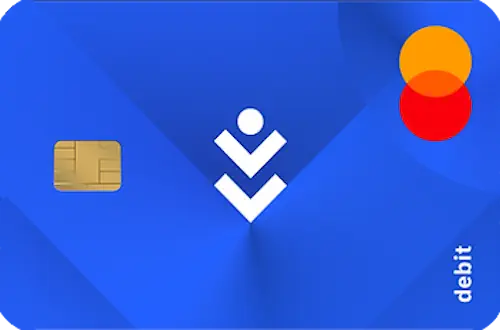
1. COCA Visa Card
Self-Banking: 8% Cashback + 5% APY + 0% FX
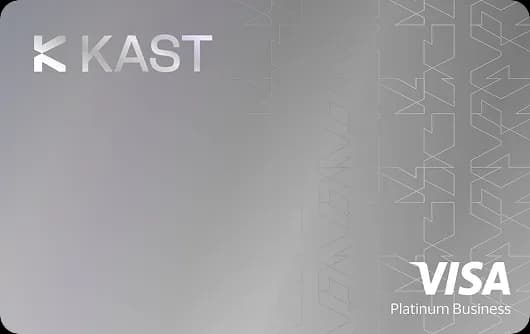
2. KAST K Card
Free USD Cashback: 1.5% on First $2K/Month
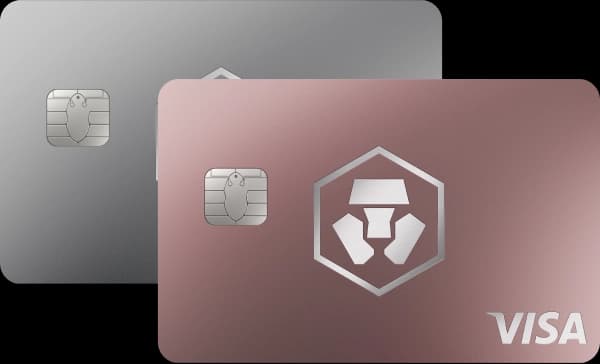
3. Private (Icy White / Rose Gold)
Private Tier: 4% Uncapped Cashback + Lounge Guest
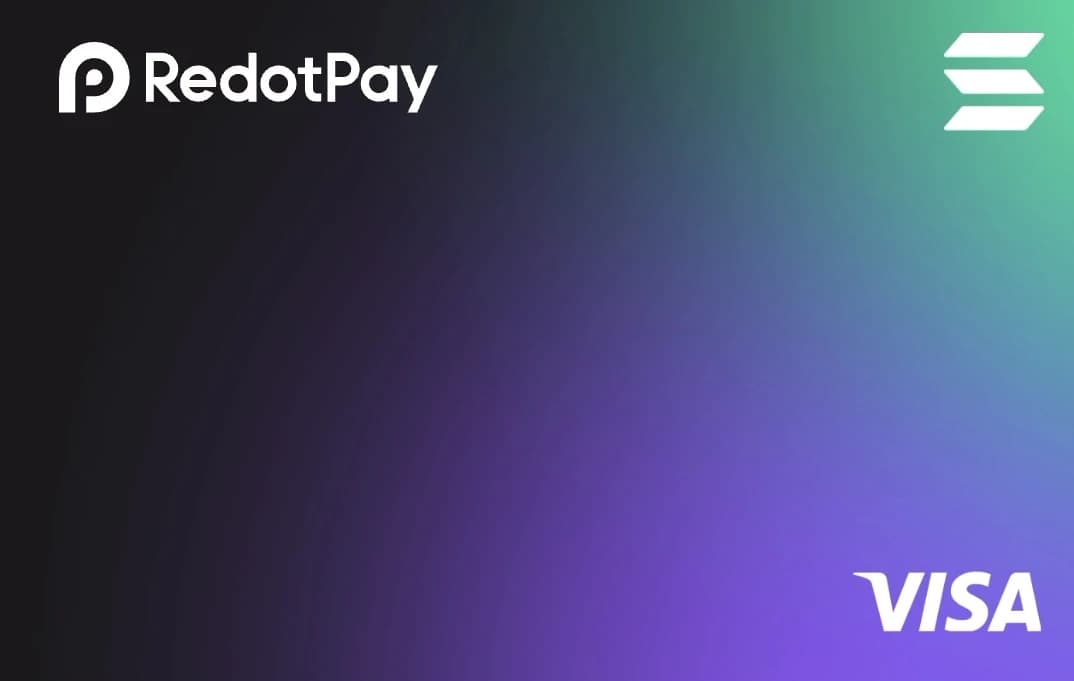
4. RedotPay Solana Card
Solana Goes IRL: Spend SOL Directly at 130M+ Merchants
Complete list:
All 36 crypto cards available in Kazakhstan in October 2026
This table includes every crypto card we currently track for Kazakhstan. Rows marked Top pick are ranked and reviewed above.
| Crypto card | Max rewards | Annual fee | FX fee | Type | Custody |
|---|---|---|---|---|---|
1 COCA Visa CardTop pick | Up to 8% rewards | Free | 0% | Debit | Self-custody |
2 KAST K CardTop pick | Up to 1.5% rewards | Free | 0.5% | Prepaid | Custodial |
3 Private (Icy White / Rose Gold)Top pick | Up to 4% rewards | TBD | 0% | Prepaid | Custodial |
4 RedotPay Solana CardTop pick | Varies | Free | 1.2% | Prepaid | Custodial |
| Up to 10% rewards | Free | 3% | Debit | Hybrid | |
| Up to 8% rewards | Free | 0% | Debit | Custodial | |
| Up to 8% rewards | TBD | 0% | Prepaid | Custodial | |
| Up to 6% rewards | $250/year | 1% | Debit | Self-custody | |
| Up to 5% rewards | TBD | 0% | Prepaid | Custodial | |
| Up to 4.5% rewards | $109/year | 1% | Debit | Self-custody | |
| Up to 4% rewards | Free | 0% | Crypto Backed Credit | Self-custody | |
| Up to 4% points | $99.99 | 1% | Debit | Hybrid | |
| Up to 3% rewards | $10000 | 0.5% | Prepaid | Custodial | |
| Up to 3% rewards | $199 | 0.5% | Crypto Backed Credit | Self-custody | |
| Up to 3% rewards | $299.9 | 0% | Prepaid | Custodial | |
| Up to 3% rewards | $129 | 1.2% | Prepaid | Custodial | |
| Up to 2% rewards | $1000 | 0.5% | Prepaid | Custodial | |
| Up to 2% rewards | Free | 0% | Prepaid | Custodial | |
| Up to 2% rewards | Free | 1% | Crypto Backed Credit | Self-custody | |
| Up to 2% rewards | $49.9 | 0% | Prepaid | Custodial | |
| Up to 2% rewards | $999 | 0% | Crypto Backed Credit | Self-custody | |
| Up to 1.5% rewards | Free | 0.5% | Prepaid | Custodial | |
| Up to 1.5% rewards | $20/year | 1% | Debit | Self-custody | |
| Up to 1.5% rewards | $249 | 0.25% | Crypto Backed Credit | Self-custody | |
| Up to 1% rewards | Free | TBD | Prepaid | Custodial | |
| Up to 1% points | Free | 1% | Debit | Hybrid | |
| Up to 1% rewards | $99 | 0.5% | Crypto Backed Credit | Self-custody | |
| Up to 0.5% rewards | Free | 1% | Crypto Backed Credit | Self-custody | |
| none | Free | 0% | Prepaid | Custodial | |
| cashback | Free | 1.75% | Prepaid | Self-custody | |
| cashback | $199 | 0.75% | Prepaid | Self-custody | |
| cashback | Free | 0.5% | Prepaid | Custodial | |
| none | Free | 1% | Prepaid | Self-custody | |
| Varies | Free | 1.5% | Debit | Custodial | |
| Varies | Free | 1.2% | Prepaid | Custodial | |
| points | Free | 1% | Debit | Self-custody |
Crypto Card Regulation in Kazakhstan
Kazakhstan has a dual regulatory framework for crypto that reflects its broader economic governance model: the AIFC as an English-law enclave within the country, and the general regulatory apparatus outside it.
AIFC Framework (Astana International Financial Centre): The AIFC, established in 2018 and modeled on the Dubai International Financial Centre (DIFC), operates under English common law with its own court system (AIFC Court, staffed by international judges including former UK Supreme Court justices).
The Astana Financial Services Authority (AFSA) regulates crypto through specific rules for Digital Asset Trading Facilities through:
- Digital Asset Trading Facilities (DATFs): Licensed platforms for crypto trading. Requirements include minimum capital (varies by tier), segregated client accounts, cyber security standards, and AML/KYC compliance.
- Digital Asset Custodians: Licensed custody services for institutional and retail crypto holders.
- Binance's AIFC registration (obtained 2022) makes Kazakhstan one of the few countries with a formally regulated Binance presence. This matters for compliance-conscious users.
National Framework (outside AIFC): The Agency for Regulation and Development of the Financial Market (ARDFM) oversees general financial regulation. In January 2024, Kazakhstan's broader Law on Digital Assets came into force, establishing a nationwide regulatory framework. The law defines digital assets, requires licensing for exchanges operating outside the AIFC, and imposes AML/KYC requirements on all crypto service providers.
The National Bank of Kazakhstan (NBK, Qazaqstan Ulttyk Banki) has stated that cryptocurrencies are not legal tender but has not banned ownership or trading. The NBK is developing a digital tenge (CBDC) pilot program, with testing conducted through selected banks in 2024-2025.
On January 17, 2026, President Tokayev signed a new banking law that formally integrates digital assets into the financial system. The NBK now decides which digital assets can be traded on licensed exchanges, creating a dual supervisory framework with the AIFC's AFSA. Licensed crypto exchanges and service providers operate under standards comparable to banks, including AML and investor protections.
A national crypto-custodial service based on the Central Depository is targeted for launch by May 2026. The law positions Kazakhstan as Eurasia's emerging crypto hub, with the CryptoCity initiative in Alatau aiming to become the region's first fully digitalized city with crypto payments.
Kazakhstan has since announced a presidential decree launching a broader digital-asset policy framework. Its measures are planned and should not be treated as fully operative until implementing rules take effect.
Mining regulation: After the post-China mining boom overwhelmed the electrical grid (causing nationwide power outages in January 2022), Kazakhstan imposed strict mining rules:
- Registration with the Ministry of Digital Development required
- Digital mining tax of 1 KZT per kWh of electricity consumed
- Subsidized electricity prohibited for mining (must use commercial rates)
- Mining banned during peak demand periods
- Equipment import registration required
The hashrate share dropped from 18% to approximately 6-8% after the regulations, but Kazakhstan remains a major mining country.
The AIFC launched a pilot in 2025 allowing regulated firms to pay regulatory fees in USDT/USDC, the first such program in Central Asia. AFSA also granted its first stablecoin issuer license, signaling growing institutional acceptance of digital assets within the regulated framework.
Crypto card usage is legal and unrestricted. The AIFC provides a regulated environment that gives institutional confidence, and the 2024 national law provides nationwide clarity.
Tax Treatment of Card Rewards in Kazakhstan
Kazakhstan's 2026 tax code introduced progressive individual rates: qualifying property gains are taxed at 10% up to 8,500 monthly calculation indices (MCI) of annual gain and 15% on the excess. At the 2026 MCI of KZT 4,325, that threshold is KZT 36.76 million. The rate is no longer universally flat, and classification of a particular digital-asset transaction still matters.
How the rates can affect crypto card spending:
Every disposal of crypto, including spending via a crypto card, is a taxable event. The taxable amount is the disposal value minus the acquisition cost.
Example - Almaty IT professional spending BTC: You acquired 0.05 BTC at $5,000 (KZT 2.3M) and it appreciated to $50,000 (KZT 23M). Spending KZT 23M via a crypto card: 10% on the KZT 20.7M gain = KZT 2,070,000 ($4,500) in tax. Cashback at Kolo's 1% ongoing rate (assuming purchases under its per-transaction cap) = KZT 230,000 ($500). Net result: negative KZT 1,840,000 ($4,000). BTC spending on heavily appreciated positions is a net loss.
Example - USDC funding: Same spending level (KZT 23M). USDC creates approximately zero capital gain. Cashback at Kolo's 1% ongoing rate = KZT 230,000 ($500). Tax: approximately KZT 0. Net result: positive KZT 230,000 ($500).
Mining income and the electricity-based digital-mining charge are separate issues from disposing of an investment through a card. Apply the relevant income classification and annual bracket rather than assuming a flat 10% rate to every mining receipt.
| Funding Method | Annual Spend (KZT 4.8M / $10,435) | Cashback (Kolo 1% BTC ongoing, capped) | Illustrative Tax (10% lower band) | Net Annual Benefit |
|---|---|---|---|---|
| BTC (appreciated 900%) | KZT 4,800,000 | KZT 48,000 | KZT 432,000 | -KZT 384,000 |
| USDC (stablecoin) | KZT 4,800,000 | KZT 48,000 | approx. KZT 0 | KZT 48,000 |
Stablecoin funding is the simplest way to keep disposal gains small. Collateral-backed borrowing can defer a sale in some circumstances, but its costs and risks must be included. Even a gain within Kazakhstan's 10% lower bracket can outweigh card rewards; larger annual gains may enter the 15% band. VAT applies to goods and services, while crypto-specific treatment depends on the transaction.
How to Apply from Kazakhstan
Crypto card applications from Kazakhstan require the Kazakhstani identity card (Zheke Kualik / Жеке куалiк), issued by the Ministry of Internal Affairs. The identity card contains the IIN (Individual Identification Number, Жеке сайкестендiру нөмiрi, 12 digits) which is the universal identifier for all government, banking, and financial services.
Alternative identification: Kazakhstani biometric passport (issued by the Ministry of Internal Affairs). Proof of address via utility bills from regional energy companies (KEGOC group), KazTransGas Aimak (gas), or telecom bills from Kcell, Beeline Kazakhstan, or Tele2 Kazakhstan. Bank statements from Kaspi Bank, Halyk Bank, ForteBank, or Jusan Bank work.
KAST and RedotPay are accessible with the Kazakhstani biometric passport. The passport is ICAO-compliant and well-recognized internationally. The growing Kazakhstani diaspora (Russia, Turkey, UAE, South Korea, US) may find host-country documents provide broader issuer options.
Spending Tips for Kazakhstan
Kaspi vs Crypto Card: Complementary, Not Competing
Kaspi.kz is one of the most successful fintech platforms in any emerging market. The Kaspi Gold card offers up to 1.5% cashback in KZT, QR payments at essentially every merchant, P2P transfers to any other Kaspi user (instant, free), bill payments, marketplace purchases, and travel booking - all in one super-app. Kaspi has effectively replaced cash for everyday purchases in Kazakhstan's major cities.
A crypto card does not compete with Kaspi domestically. Instead, it fills the international gap that Kaspi cannot:
- International e-commerce: Amazon, AliExpress international, Steam, Netflix, Spotify, YouTube Premium all require international Visa/Mastercard
- Cross-border travel spending: Istanbul, Dubai, Seoul, Bangkok - all common Kazakh travel destinations
- Foreign subscriptions: SaaS tools, cloud services, international education platforms
- Dollar-denominated savings: Kaspi deposits yield 14-16% in KZT but inflation runs 10-12%, giving 2-4% real return before currency movement. Eligible USD at 5% APY on COCA provides dollar-denominated yield.
Use Kaspi for domestic. Crypto card for international. This dual-track approach captures the best of both ecosystems.
Banking System: International Card Comparison
- Kaspi Bank: Kaspi Gold (domestic-only QR/contactless, up to 1.5% KZT cashback). Visa/Mastercard available but 2.5-3% FX markup.
- Halyk Bank (largest by assets, 600+ branches): Visa Infinite available for premium customers. 2-3% FX, KZT 10,000/year ($21.75) fee. Best international network among Kazakh banks.
- ForteBank: Visa Platinum with 2-3% FX, KZT 8,000/year ($17.40). Growing digital banking.
- Jusan Bank: Mastercard with 2.5% FX. Post-merger integration still ongoing.
- Bank CenterCredit: Visa/Mastercard with 3-4% FX. Conservative institution.
A crypto card saves 2-4% FX on every international transaction. At $400/month international spending ($4,800/year), that is $96-192/year in FX savings before cashback.
Card Selection by Use Case
- Starter: KAST (1.5% USD cashback on first $2K/mo, free, 0.5-1.75% FX). Cleanest route from AIFC-funded balances into live international spending.
- Stablecoin spending: RedotPay Solana (stablecoin-native, high limits). Best rate among zero-fee options.
- Tiered rewards + yield: COCA (up to 8% + 5% APY on eligible USD). Dollar-denominated savings + spending.
- Premium travel: Crypto.com Icy White (4% + lounge access). Valuable at Almaty (ALA), Astana (NQZ), and transit through Istanbul (IST) and Dubai (DXB).
- Self-custody: Cypher filled this slot, but it is shutting down after its acquisition by Nium, and no other self-custody card currently serves Kazakhstan.
Break-Even Math
Appreciated crypto can create taxable gains at the applicable 10% or 15% band. Recently acquired USDC can keep the gain small.
| Monthly Spend | KAST (1.5% USD, $2K/mo cap, free) | COCA Elite 8% (staking 30K $COCA) | Crypto.com Icy (4% + lounges) |
|---|---|---|---|
| $200 (KZT 92K) | $36/yr | $192/yr | $96/yr + lounges |
| $400 (KZT 184K) | $72/yr | $384/yr | $192/yr + lounges |
| $800 (KZT 368K) | $144/yr | $768/yr | $384/yr + lounges |
| $1,500 (KZT 690K) | $270/yr | $1,440/yr | $720/yr + lounges |
At $400/month (typical for an Almaty professional's international spending), KAST delivers $72/year in USD cashback plus roughly $36-100/year in FX savings versus Halyk Bank's 2-3% (depending on where KAST's 0.5-1.75% FX lands) = $108-172/year total benefit.
Cost of Living by Area
- Almaty - Medeu/Bostandyk (KZT 350,000-800,000/month, $760-1,740): Kazakhstan's commercial capital. Esentai Mall (luxury, Chanel/Dior), Mega Almaty (IKEA, H&M), Dostyk Plaza. Excellent international card acceptance along Dostyk Avenue, Al-Farabi Avenue, and Abai Avenue. Magnum (100+ stores, Kazakhstan's largest chain), Small, Galmart for groceries. Medeu ice rink and Shymbulak ski resort draw tourism.
- Almaty - Zhetysu/Alatau (KZT 200,000-400,000/month, $435-870): Working-class residential. ADK mall. Good Kaspi QR acceptance, limited international cards at smaller shops.
- Astana - Yesil/Saryarka (KZT 300,000-650,000/month, $650-1,415): Capital city, government and corporate. Khan Shatyr (Norman Foster-designed entertainment center), Mega Silk Way. Strong card acceptance in government district. Ministry of Digital Development and AIFC are based here. Extreme continental climate (-30C winters) means indoor spending is dominant.
- Astana - outskirts (KZT 150,000-300,000/month, $325-650): New developments, growing suburbs. Mall acceptance good, but residential areas rely on Kaspi.
- Shymkent (KZT 150,000-350,000/month, $325-760): Third city, southern hub. Mega Planet mall. Growing economy. Limited international card acceptance outside malls.
- Aktau/Atyrau (KZT 300,000-700,000/month, $650-1,520): Caspian oil cities. High incomes from energy sector (Tengiz, Kashagan fields). International card acceptance at hotels and restaurants serving expatriate community.
Online Subscriptions: Where the Kaspi Gap Hurts Most
Kaspi Gold handles domestic payments flawlessly, but international digital services expose the Kaspi ecosystem's limitation. Netflix ($7-23/month), Spotify, YouTube Premium, Steam, PlayStation Store, Adobe Creative Cloud, Figma, AWS, Google Cloud, GitHub, ChatGPT Plus, Coursera, and dozens of SaaS tools all require international Visa/Mastercard payment. Kaspi's international card variant charges 2.5-3% FX on these USD-denominated subscriptions. Halyk Bank and ForteBank charge similarly.
For Kazakhstan's 170,000+ IT professionals using $200-500/month in SaaS tools (development environments, cloud hosting, design software, project management), the FX cost is $48-180/year before counting personal subscriptions. A crypto card with low FX fees reduces this.
With KAST (0.5-1.75% FX, 1.5% USD cashback on the first $2K/mo), a developer spending $300/month on international subscriptions ($3,600/yr) saves roughly $27-72/year in FX versus Halyk's 2.5% plus earns $54/year in USD cashback = $81-126/year total benefit from subscriptions alone.
AliExpress (China-direct shipping popular in Kazakhstan for electronics and fashion), Wildberries (Russian marketplace with KZ presence), and Amazon (via Russian forwarding services or direct international shipping) add further international spending volume.
The Russian Tech Worker Migration
Post-2022, an estimated 100,000-200,000 Russian tech workers relocated to Kazakhstan (primarily Almaty), fleeing mobilization and sanctions. This wave expanded the tech-literate, crypto-aware professional class. Many brought crypto holdings and are natural crypto card users. The migration also drove up Almaty's cost of living by 20-30% in central districts.
Cross-Border Spending
Kazakhstan's geographic position and growing economy drive heavy cross-border spending:
- Istanbul: Kazakh Airlines, Air Astana, and Turkish Airlines connect daily for shopping (Grand Bazaar, Istiklal Avenue), medical tourism, and business.
- Dubai: Major trade and tourism corridor. Electronics, gold, and fashion wholesale.
- Seoul: Growing cultural and economic ties. 25,000+ Kazakhstanis in South Korea.
- Bangkok/Bali: Emerging leisure destinations for the Almaty professional class.
- Moscow/St. Petersburg: Historical ties remain despite geopolitical shifts. Large Kazakh community.
Local Payment Infrastructure
Kaspi.kz dominates with QR payments, P2P transfers, and the Kaspi Gold card. Apple Pay and Google Pay work through Kaspi and international issuers. Visa/Mastercard are widely accepted at chain retailers, restaurants, hotels, and malls in Almaty and Astana.
Green Bazaar (Almaty's central market) and other bazaars are primarily cash/Kaspi. Yandex Go and inDrive dominate ride-hailing. Outside Almaty and Astana, international card acceptance drops sharply: Kaspi and cash cover everything, but Visa/Mastercard are hit-or-miss.
Supported Exchanges & Wallets in Kazakhstan
Our exchange section for Kazakhstan covers both AIFC-regulated and global options. The AIFC-regulated framework provides a uniquely compliant exchange environment for Central Asia. Binance holds an AIFC license and operates with KZT fiat on-ramp, the most-used exchange in the country. AIFC-licensed DATFs provide regulated alternatives. Kaspi Bank offers limited crypto-adjacent services through partnerships. Binance P2P with KZT pairs handles additional volume.
KAST is the natural starting point for Kazakh users. 1.5% USD cashback on the first $2,000/month delivers clean returns on every transaction, and for Almaty's tech professionals (many of whom already hold crypto through AIFC-licensed exchanges) KAST is the cleanest bridge from crypto balances to international spending power.
COCA combines up to 8% cashback with 5% APY on eligible USD. Compare this with Kaspi's 14-16% KZT deposit rate: after 10-12% inflation, the real KZT yield may narrow to 2-4% before exchange-rate movement. COCA provides dollar-denominated exposure instead, but it is not a bank deposit and carries different wallet, issuer, and stablecoin risks.
Crypto.com Icy White appeals to the professional and energy-sector class. The Icy White tier (4% + airport lounge access) is valuable at Almaty International (ALA) and Astana Nursultan Nazarbayev (NQZ) airports, plus transit through Istanbul IST and Dubai DXB.
RedotPay provides stablecoin-native spending from a Hong Kong-based issuer. The Solana variant suits stablecoin-native spending. Kazakh biometric passports are well-accepted by global issuers.
xPlace remains the Solana/self-custody option, with tiered USDC cashback of 0.5-2% in Credit Mode, capped monthly.
Kazakhstan combines an AIFC-regulated framework, Binance's licensed presence, the dominant Kaspi digital payment culture, a growing tech sector (boosted by Russian tech migration), and Central Asia's largest economy. That makes it the region's most developed crypto card market. The dual-track model (Kaspi for domestic, crypto card for international) provides the best of both ecosystems.
Written by SpendNode Editorial
Frequently Asked Questions
Which crypto cards work in Kazakhstan?
Kazakhstan is served by globally available crypto cards including COCA, KAST, Crypto.com, and RedotPay. COCA pays 1% on its free tier and up to 8% behind $COCA staking, with 5% APY on eligible USD balances. Visa and Mastercard are widely accepted in Almaty and Astana.
Is cryptocurrency legal in Kazakhstan?
Yes. The Astana International Financial Centre (AIFC) regulates crypto activity through the Astana Financial Services Authority (AFSA). Licensed exchanges operate legally. Outside the AIFC, the Agency for Regulation and Development of the Financial Market (ARDFM) oversees general financial regulation. Mining was legalized with registration and electricity surcharges.
How is crypto taxed in Kazakhstan?
Individual income tax in Kazakhstan is a flat 10%. Capital gains from crypto disposals are classified as income from property sale and taxed at 10%. Mining income is subject to income tax plus a digital mining tax of 1 KZT per kWh of electricity consumed. The State Revenue Committee administers collection.
Why did Kazakhstan become a crypto mining hub?
After China banned crypto mining in mid-2021, Kazakhstan briefly became the world's second-largest Bitcoin mining country (18% of global hashrate) due to cheap coal-powered electricity. The government introduced a digital mining tax and registration requirements in 2022, and power shortages led to mining restrictions. Hashrate has since declined significantly.
Other Countries
View all 112 countries →


Latest Page Changes to the Best Crypto Cards in Kazakhstan Guide
- January 17, 2026 banking law integrating digital assets into financial system
- National Bank now controls which crypto can be traded on licensed exchanges
- National crypto-custodial service target (May 2026) and CryptoCity Alatau initiative
- Dec 2025 Parliament banking law (DFAs as legal category), AIFC stablecoin fee pilot
- Miners 75% AIFC sale requirement (up from 50%), 15% mining tax