
Best Crypto Cards in Guatemala (2026)
Guatemala runs on US remittances worth nearly a fifth of GDP. Compare the crypto cards that turn that dollar inflow into quetzal spending without heavy fees.
Verified for Guatemala
45 crypto cards available
Local currency: GTQ
Guatemala runs on two currencies that never appear on the same banknote. The official one is the quetzal (GTQ), issued by the Banco de Guatemala and protected by the Ley Monetaria. The unofficial one is the US dollar that arrives every month from a relative in Los Angeles, Houston, or New Jersey. In 2025 those family transfers reached roughly US$25.5 billion, close to a fifth of GDP, and the central bank reports that 60% of it goes straight to food, rent, and utilities.
For most Guatemalan households, the financial question is not "should I invest in crypto," it is "how do I get the dollars my family sent into a card I can swipe at La Torre without losing a tenth of them to fees." That is the gap a crypto card fills here.
This page is written for two readers who are really one family split across a border. The first is the person in Guatemala receiving money and spending in quetzales. The second is the relative in the United States sending it, currently paying Western Union or MoneyGram 5% to 9% on a US$300 transfer. A stablecoin loaded onto a card collapses both problems into one rail: USDC moves north to south for cents, then spends at the Banguat-adjacent interbank rate instead of a bank's 1-2% markup.
Crypto is not legal tender in Guatemala and the banking system treats it warily, but nothing prohibits a Guatemalan from holding USDT and spending it through a Visa or Mastercard.
Summary:
Which crypto cards are best in Guatemala?
The best crypto cards in Guatemala in October 2026 are ether.fi Core Card, KAST K Card, Tria Signature Card, Rizon Standard Card, Private (Icy White / Rose Gold), and Kolo Card. The detailed ranking below explains the local tax, fee, and availability trade-offs.
| Crypto card | Base reward | Net after fees | Annual fee | FX fee | Type |
|---|---|---|---|---|---|
| 3% base3% on the first $2,000/month, then 1% and 0.5% | 2.5% | Free | 0.5% | Crypto Backed Credit | |
| 1.5% base | 1% | Free | 0.5% | Prepaid | |
| 4.5% base4.5% on the first $1,000/mo, then 1% | 3% | $109/year | 1% | Debit | |
| Varies | - | Free | 1.7% | Crypto Backed Credit | |
| 4% baseneeds a $50k CRO stake to hold the tier | 4% | TBD | 0% | Prepaid | |
| 1% base2% for the first 30 days, then 1%; also capped at $1/EUR 1 per transaction ($2/EUR 2 during intro) and $100/EUR 100 per month | 1% | Free | 0% | Prepaid | |
| 0% baseno standing cashback; launch promo ended | 0% | Free | 1.2% | Prepaid |
ether.fi Core is the strongest free earner at the spending levels modeled here. It pays 3% in ETHFI on the first $2,000/month, 1% through $5,000, and 0.5% above, with a 0-0.5% FX margin.
For a household living off remittances, KAST is the practical starting point: no annual fee, fast KYC, and 1.5% USD cashback on the first $2,000 of monthly spend. Its cashback is timelocked for 14 days and can be spent only toward a later card purchase.
Kolo is the free alternative at 1% ongoing BTC (2% for the first 30 days, capped at $100/month and $1 per transaction) for anyone who would rather accumulate a little Bitcoin on each swipe than earn dollar cashback, and its 0% FX matters because most card spending here converts USD to quetzals at the till.
RedotPay is a free, no-token option for remittance-funded spending. There is no cashback to chase; the appeal is converting a USDC balance into dollar-to-quetzal card spending.
Higher earners in Guatemala City who fly out of La Aurora a few times a year may get more from Crypto.com Icy at 4% with Priority Pass lounge access.
Tria Signature is the self-custody pick for users who want to keep their own keys without locking up a volatile vendor token to do it.
Best Card For Every Need in Guatemala
Best for Max Cashback
Tria Signature Card
4.5% back
Highest verified rewards rate
View details →Best for No Fees
Private (Icy White / Rose Gold)
$0 annual + 0% FX
Zero annual fee and zero FX markup
View details →Best for Self-Custody
ether.fi Core Card
Your keys
Non-custodial — you control the wallet
View details →Top 7 Crypto Cards in Guatemala
Guatemala's defining financial fact is that dollars arrive from outside the country and get spent inside it, so the cards that win here are the ones that move a stablecoin cheaply and convert it to quetzals without a bank's cut, not the ones that optimize a tax bill.
Guatemala's territorial system can leave foreign-source gains outside local tax, but borrowing is not automatically a tax shelter. ether.fi Core leads on free rate at moderate spend with 3% ETHFI on the first $2,000/month. Users can spend supported stablecoins directly or choose collateral-backed borrowing, with interest, repayment, liquidation, and personal tax treatment to consider.
KAST remains the cleaner match for a remittance balance in practice, paying USD cashback on stablecoin-funded spending after fast KYC. Its rewards are timelocked for 14 days and spendable only toward a later card purchase. Kolo is the zero-fee BTC option at 1% ongoing after its first month, subject to its $100 monthly and $1-per-transaction caps.
RedotPay earns its place as the free, no-token corridor card that Guatemalan families already reach for when the goal is simply moving dollars cheaply. Rizon Standard follows on the corridor's structure itself: the family in Los Angeles and the household in Guatemala City are one unit split across a border, and Rizon issues both sides a US Visa Platinum with USD account details on the Guatemalan passport, for $1 with code spendnode.
Rewards on the free plan come as RizPoints rather than cashback, and quetzal spending carries 1.7% + $0.30, so KAST keeps the daily conversion lane while Rizon supplies the dollar account and the US card number. Crypto.com Icy stays for the La Aurora lounge for the Guatemala City professional who travels, and Tria Signature on self-custody for the reader who learned, watching the banks, that the safest account is the one no institution can freeze.
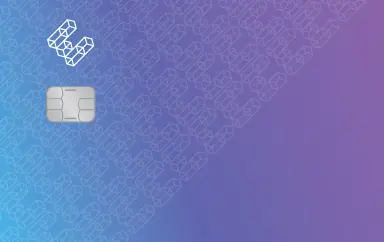
1. ether.fi Core Card
3% Back on the First $2,000 Each Month, No Stake Required
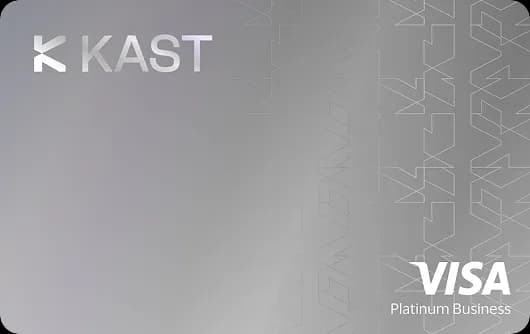
2. KAST K Card
Free USD Cashback: 1.5% on First $2K/Month
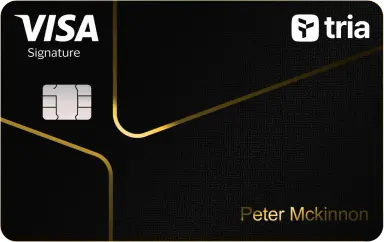
3. Tria Signature Card
High-Yield Self-Custody: 15% APY + Visa Signature Perks
4. Rizon Standard Card
A $1 US virtual Visa Platinum for passport holders the traditional card system skips.
5. Private (Icy White / Rose Gold)
Private Tier: 4% Uncapped Cashback + Lounge Guest
6. Kolo Card
Earn Bitcoin on Purchases: 2% for 30 Days, Then 1% (Capped) + Visa Platinum + 170+ Countries
7. RedotPay Solana Card
Solana Goes IRL: Spend SOL Directly at 130M+ Merchants
Complete list:
All 45 crypto cards available in Guatemala in October 2026
This table includes every crypto card we currently track for Guatemala. Rows marked Top pick are ranked and reviewed above.
| Crypto card | Max rewards | Annual fee | FX fee | Type | Custody |
|---|---|---|---|---|---|
1 ether.fi Core CardTop pick | Up to 3% rewards | Free | 0.5% | Crypto Backed Credit | Self-custody |
2 KAST K CardTop pick | Up to 1.5% rewards | Free | 0.5% | Prepaid | Custodial |
3 Tria Signature CardTop pick | Up to 4.5% rewards | $109/year | 1% | Debit | Self-custody |
4 Rizon Standard CardTop pick | Varies | Free | 1.7% | Crypto Backed Credit | Self-custody |
5 Private (Icy White / Rose Gold)Top pick | Up to 4% rewards | TBD | 0% | Prepaid | Custodial |
6 Kolo CardTop pick | Up to 2% rewards | Free | 0% | Prepaid | Custodial |
7 RedotPay Solana CardTop pick | Varies | Free | 1.2% | Prepaid | Custodial |
| Up to 10% rewards | Free | 3% | Debit | Hybrid | |
| Up to 8% rewards | Free | 0% | Debit | Custodial | |
10 | Up to 8% rewards | TBD | 0% | Prepaid | Custodial |
| Up to 6% rewards | $250/year | 1% | Debit | Self-custody | |
| Up to 5% rewards | Free | 1% | Crypto Backed Credit | Self-custody | |
| Up to 5% rewards | TBD | 0% | Prepaid | Custodial | |
| Up to 5% rewards | Free | 1% | Debit | Self-custody | |
| Up to 4% rewards | Free | 0% | Crypto Backed Credit | Self-custody | |
| Up to 4% rewards | Free | 1% / 1.8% | Debit | Hybrid | |
| Up to 4% rewards | Free | 0% | Crypto Backed Credit | Self-custody | |
| Up to 3% rewards | Free | 0.25% | Crypto Backed Credit | Self-custody | |
| Up to 3% rewards | Free | 0% | Crypto Backed Credit | Self-custody | |
| Up to 3% rewards | $10000 | 0.5% | Prepaid | Custodial | |
| Up to 3% rewards | $199 | 0.5% | Crypto Backed Credit | Self-custody | |
| Up to 3% rewards | $299.9 | 0% | Prepaid | Custodial | |
| Up to 3% rewards | $129 | 1.2% | Prepaid | Custodial | |
| Up to 2.5% rewards | $83.88 | 1.02% | Crypto Backed Credit | Self-custody | |
| Up to 2% rewards | $1000 | 0.5% | Prepaid | Custodial | |
| Up to 2% rewards | Free | 1% | Crypto Backed Credit | Self-custody | |
| Up to 2% rewards | $49.9 | 0% | Prepaid | Custodial | |
| Up to 2% rewards | $999 | 0% | Crypto Backed Credit | Self-custody | |
| Up to 1.5% rewards | Free | 0.5% | Prepaid | Custodial | |
| Up to 1.5% rewards | $20/year | 1% | Debit | Self-custody | |
| Up to 1.5% rewards | $249 | 0.25% | Crypto Backed Credit | Self-custody | |
| Up to 1% rewards | Free | 1% | Crypto Backed Credit | Self-custody | |
| Up to 1% rewards | Free | 1% | Debit | Self-custody | |
| Up to 1% rewards | Free | TBD | Prepaid | Custodial | |
| Up to 1% rewards | $47.88 | 1.275% | Crypto Backed Credit | Self-custody | |
| Up to 1% rewards | $99 | 0.5% | Crypto Backed Credit | Self-custody | |
| Up to 0.5% rewards | Free | 1% | Crypto Backed Credit | Self-custody | |
| none | Free | 0% | Crypto Backed Credit | Self-custody | |
| none | $30 | 0% | Crypto Backed Credit | Self-custody | |
| none | Free | 0% | Prepaid | Custodial | |
| Varies | Free | 1.7% | Prepaid | Custodial | |
| none | Free | 1% | Prepaid | Self-custody | |
| Varies | Free | 1.2% | Prepaid | Custodial | |
| Varies | Free | 1.2% | Prepaid | Custodial | |
| points | Free | 1% | Debit | Self-custody |
Crypto Card Regulation in Guatemala
Guatemala has not enacted Bill 6538's proposed crypto-asset licensing regime. The Ley Monetaria still names the quetzal as the monetary unit, while a separate AML law now expressly brings virtual-asset service providers into its scope.
In December 2017 Banguat and the Superintendencia de Bancos (SIB, the bank supervisor) issued a joint public warning stating that Bitcoin and other virtual assets are not legal tender, carry no state backing, and cannot be forced on anyone as payment. That warning, not a statute, is what has governed the space for the better part of a decade.
Crucially, the Ley Monetaria also lets private parties agree to settle obligations in foreign currency, which is the legal hook that makes dollar pricing and dollar savings normal here long before any crypto rule existed.
Bill No. 6538, the proposed crypto-assets law, remains distinct from the enacted AML framework. Congress continued discussing it in 2025.
The enacted Decree 15-2026, an AML law, takes effect September 17, 2026 and includes virtual-asset service providers among covered parties. Its implementation rules are still being developed. It is not the same as enacting Bill 6538, and it does not make crypto legal tender.
Card users should distinguish an overseas issuer's card from a locally regulated exchange or wallet service. Check the issuer's current eligibility and keep records of funding and disposals; do not assume the pending crypto bill is already in force.
Tax Treatment of Card Rewards in Guatemala
Guatemala taxes income on a territorial basis: a genuinely foreign-source capital gain can fall outside the SAT income-tax net. That makes the source of a card-funded crypto disposal important. An offshore platform alone does not prove foreign source; the underlying transaction and activity still matter.
Guatemalan-source capital gains can fall under the 10% rate in the Impuesto Sobre la Renta (ISR). That rate should not be applied automatically to card rewards or every crypto trade; classify the transaction before calculating tax.
Using an offshore exchange does not, by itself, establish that a later card-funded disposal is untaxed in Guatemala. Record the acquisition cost, the value at conversion or spend, and the route by which the card was funded.
| Cashback Type | When Received | When Spent | Tax question |
|---|---|---|---|
| USDC / USDT cashback | Receipt classification depends on terms | Record disposal value | Stable price does not settle receipt treatment |
| BTC cashback | Receipt classification depends on terms | Calculate any change in value | Source and applicable tax category need review |
Example. A Bitcoin reward worth Q1,000 when received is worth Q1,040 when spent. The Q40 appreciation is the amount to examine for a later gain, not the full Q1,040. If the gain is genuinely foreign-source, territorial taxation may leave it outside Guatemalan ISR; if it is Guatemalan-source and classified as a capital gain, the 10% rate could mean Q4 on that gain. The reward's treatment on receipt is a separate question.
Funding with USDC or USDT acquired near par can keep the gain on each disposal close to zero. It does not settle the source question, but it reduces the price movement that would otherwise need to be measured when the card is used.
How to Apply from Guatemala
Card issuers verify Guatemalan applicants against the DPI (Documento Personal de Identificación), the national ID card issued by RENAP (Registro Nacional de las Personas) that replaced the old cédula de vecindad. The 13-digit CUI (Código Único de Identificación) printed on the DPI is the primary identifier most platforms request. Some issuers also ask for the NIT (Número de Identificación Tributaria), the SAT tax number, particularly for higher limits or local payouts.
Proof of address is usually a recibo de servicios (a utility bill from EEGSA for electricity, or a water or telephone bill) or a recent bank statement (estado de cuenta) from Banco Industrial, Banrural, or BAC.
Virtual cards provision instantly for Apple Pay and Google Pay use, while physical cards from international issuers ship to Guatemalan addresses in roughly one to three weeks, often routed through a courier rather than the postal service.
Spending Tips for Guatemala
Start with the remittance dollar, not the cashback rate
For a family receiving US$300 monthly, a higher-cost cash remittance route charging US$15-27 in fees and exchange spread per transfer would cost US$180-324 over a year. That can outweigh card cashback at this spend level. Compare the actual route's all-in cost, including on-ramp, network, conversion, and cash-out charges; not every provider charges that much.
Route the same US$300 as USDC to a card wallet and the transfer cost falls to blockchain cents, then the money spends at the interbank rate instead of a bank's 1-2% markup. The cashback is the bonus. The killed remittance fee is the actual prize.
Card selection by use case
- Best free rate at moderate spend: ether.fi Core (3% ETHFI to $2K/mo, then 1% to $5K and 0.5% above; 0-0.5% FX; $0). Users can spend supported stablecoins directly or use optional collateral-backed borrowing.
- Remittance-funded household: KAST (1.5% USD on the first $2,000/mo, $0 annual, fast KYC). The cleanest path from a USDC balance to grocery and utility spending, though its cashback is timelocked 14 days and spendable only toward a later card purchase.
- Free BTC accumulator: Kolo (1% BTC ongoing, 2% for the first 30 days, capped $100/mo, 0% FX, $0). Saves a little hard money on every swipe, which fits a country that already trusts dollars over its own currency.
- Guatemala City traveler: Crypto.com Icy (4%, Priority Pass at La Aurora). Worth the CRO stake only for someone who flies several times a year.
- No-token stablecoin rail: RedotPay ($0 virtual, 1.2% FX). No cashback, but the most widely used card in remittance corridors for turning a USDC balance into daily spending without staking anything.
- Self-custody pick: Tria Signature (4.5% on the first $1,000/mo then 1%, 1% FX + 0.5%/payment, ~3% net, $109/yr) keeps your keys without a volatile token lockup.
Break-even on the cards that charge a fee
Most picks here are free, so the math only matters for the two cards with annual fees. Tria Signature's $109 fee (about Q840 at Q7.7 to the dollar) breaks even near $303/month of spend once its 1% FX and 0.5% per-payment fees cut the 4.5% headline to about 3% net. Crypto.com Icy has no annual fee but locks a CRO stake whose dollar value swings with the token, so treat the stake, not a fee, as the real cost.
| Monthly Spend | Kolo (1% BTC ongoing, free) | KAST (1.5% USD, free) | Tria Sig (4.5% to $1k/mo, $109/yr, 1% FX + 0.5%/payment) |
|---|---|---|---|
| Q4,000 ($520) | Q480/yr | Q720/yr | Q1,440 - Q840 = Q600/yr |
| Q8,000 ($1,040) | Q960/yr | Q1,440/yr | Q2,754 - Q840 = Q1,914/yr |
| Q15,000 ($1,950) | Q1,800/yr | Q2,700/yr | Q2,334 - Q840 = Q1,494/yr |
At Q4,000/month, KAST's 1.5% returns Q720/year and leads the paid-card comparison. Tria Signature returns Q600 net after its 1% FX, 0.5% per-payment charge, and Q840 annual fee, while Kolo returns Q480 at its 1% ongoing rate.
At Q8,000/month, Tria pulls ahead at Q1,914/year. KAST continues earning 1.5% until spending exceeds $2,000/month, while Kolo's 1% trails. The Kolo figures assume purchases at or under $100, where its per-transaction cap does not bite.
Free ether.fi Core remains inside its 3% band at every spending level shown and out-earns all three. Tria's case is its higher first-band rate for steady spenders who recover the annual fee.
Spending scenario: Q8,000/month in Zona 10
A single professional living comfortably in Guatemala City's safer zones (Zona 10, 14, or 15) runs roughly Q14,000 to Q18,000 a month all in: a one-bedroom in Zona 10 (the Zona Viva) rents for Q5,000 to Q9,000, groceries at La Torre or Paiz run Q700 to Q1,800, and the rest covers utilities, transport, and dining around Cuatro Grados Norte. Of that, perhaps Q8,000 is card-eligible (rent and the mozo are often cash or transfer).
| Funding | Annual Card Spend | Cashback (1%) | FX Cost | Net |
|---|---|---|---|---|
| USDC, 0% FX card (Kolo) | Q96,000 | Q960 (BTC) | Q0 | Q960 |
| USDC, 1% FX card | Q96,000 | varies | -Q960 | reduced |
| Local debit card | Q96,000 | Q0 | -Q1,920 (2% bank markup) | -Q1,920 |
The swing between a 0% FX crypto card and a Guatemalan bank debit card on the same Q96,000 of annual spending is about Q1,920 in FX alone, and about Q2,880 once Kolo's 1% cashback is added. That gap, not the headline reward, is the reason to carry one of these cards in a quetzal economy where the banks quote you a rate 1-2% off the Banguat reference every time you tap.
Funding routes: how the dollar becomes a balance
Guatemala has no friendly bank-to-exchange rail, so almost everyone funds through one of three routes. The dominant one is Binance P2P with GTQ, where local makers settle through Banco Industrial, BAC Credomatic, Banco G&T Continental, or Banco Promerica transfers; you buy USDT directly into your Binance wallet and forward it to the card. Bitget P2P works the same way and accepts orders from about US$5, useful for someone topping up small.
The third route skips the on-ramp entirely: the relative abroad already holds or buys USDC and sends it straight to the card wallet, so the Guatemala-side family never touches a P2P order at all. For the receiving household, that third route is the simplest, because it pushes the only technical step onto the sender, who is usually the more banked of the two.
Common mistakes that cost real quetzales
Mistake 1: Receiving remittances through Western Union out of habit. A family sending US$300/month keeps paying US$180 to US$324 a year in fees and spread that a USDC-to-card route would erase. How to avoid it: have the sender buy USDC once, learn the wallet-to-card transfer, and repeat it monthly.
Mistake 2: Loading Bitcoin instead of a stablecoin when the budget is tight. A receiving household lives swipe to swipe; if BTC drops 10% between the transfer and the grocery run, the week's food budget shrinks with it. How to avoid it: fund daily spending with USDC or USDT and keep any BTC accumulation (Kolo cashback) as a separate, optional savings layer.
Mistake 3: Funding crypto from the same bank account used for salary or business. Guatemalan banks are cautious about crypto-flagged transfers, and a frozen primary account is a far bigger problem than a slow P2P trade. How to avoid it: use a secondary account or a fintech for P2P funding and keep the main account clean.
The diaspora half of the family
About 1.6 to 2.7 million Guatemalans live in the United States, and they are the engine behind the US$25.5 billion that flowed home in 2025. For the sender, a crypto card is a remittance-replacement tool first and a spending card second. The math is blunt: at a 6% blended Western Union cost on US$300, that is US$18 a month, US$216 a year, handed to a money-transfer company.
Buying USDC on a US exchange (near-zero fee) and sending it to a relative's KAST or Kolo wallet on a low-fee chain like Solana or Polygon turns that US$216 leak into a few dollars of network fees, and the receiving relative still earns cashback on top. The friction is one-time learning, not recurring cost, and once the family runs the route once, it runs itself every month after.
The US corridor, in numbers
The corridor is almost entirely the United States. An estimated 1.6 to 2.7 million Guatemalans live in the US, concentrated in California, Texas, Florida, New York and New Jersey, and the Washington-Baltimore area, and they send the overwhelming share of the US$25.5 billion that reached Guatemala in 2025. From 2026 that flow carries a new cost.
The US One Big Beautiful Bill Act added a 1% federal excise tax on cash-funded remittances (cash, money orders, cashier's checks) effective January 1, 2026, collected at the counter by providers like Western Union and MoneyGram. The tax explicitly does not apply to transfers funded from a US bank account or a US debit or credit card.
That exemption is the quiet argument for the crypto route. A migrant who walks cash into a Western Union office now pays that company's fee, its exchange spread, and the 1% federal tax on top. A migrant who funds with a debit card instead, buying USDC and forwarding it to a relative's card wallet, sits outside the cash-remittance tax entirely and skips the Western Union fee as well.
| Method (US$300/mo) | Provider fee + spread | 1% cash tax | Annual cost |
|---|---|---|---|
| Western Union, cash at counter | ~5-9% (US$15-27) | +US$3/mo | ~US$216-360 |
| USDC via debit card to card wallet | ~US$0.50 network | exempt | ~US$6 |
On US$3,600 sent a year, that is the gap between a few hundred dollars handed to a transfer company and the US Treasury, and a few dollars of blockchain fees.
Local payment reality
Card acceptance is strong in Guatemala City, Antigua, and the department capitals, weaker in rural municipios where cash still rules. Contactless Visa and Mastercard work at the supermarket chains (La Torre, Paiz, Walmart and its Despensa Familiar and Maxi Despensa formats), at the malls (Oakland Mall, Miraflores, Cayalá), and at most Zona 10 and Antigua restaurants. Apple Pay and Google Pay work at major retailers in the capital.
Outside the cities, and at the mercado for produce that is genuinely 40-60% cheaper than the supermarket, you still need quetzal cash, which a 0% ATM allowance on a card can supply. One genuinely local twist sits at Lake Atitlán: in Panajachel, the Bitcoin Lake (Lago Bitcoin) circular economy has put Bitcoin acceptance into dozens of hotels, comedores, lanchas, and tuk-tuks since 2022, and Coincaex's BITPOS lets those merchants accept crypto while settling in local currency.
It is a real grassroots payment scene, not nationwide card infrastructure, but it is the one place in Guatemala where you can spend crypto without a Visa rail at all.
Supported Exchanges & Wallets in Guatemala
No card issuer is headquartered in Guatemala, so the market is built on global issuers reached through a local on-ramp, and the on-ramp is overwhelmingly Binance P2P. Its GTQ market settles through the country's main banks (Banco Industrial, BAC Credomatic, Banco G&T Continental, Banco Promerica), which makes it the default way Guatemalans turn quetzals into the USDT that feeds a card. Bitget is the other accessible exchange with a working P2P book and low minimums for small buyers.
The genuinely local layer is two-sided. On the receiving end, Banrural is the bank built for remittances, with the cheapest incoming wire fees and the deepest rural branch network, which is why so many family transfers still land there before being spent; Banco Industrial and BAC Credomatic round out the remittance-payout banks.
On the crypto-native end, Coincaex powers the BITPOS merchant terminals around Panajachel, and the Bitcoin Lake community remains the country's most concrete example of crypto used as money rather than as a card-funding asset.
Among the cards themselves, the globally available picks do the heavy lifting.
KAST, Kolo, and RedotPay suit the remittance household, Jupiter Global the DeFi-comfortable user, and Tria and MetaMask the self-custody holdout who wants no bank or exchange between their keys and their groceries.
What would change this market
Four things would reshape Guatemala's crypto card market, and three of them land in 2026. First, Bill 6538 becoming law moves the country from a 2017 warning to an SIB-registered, KYC-bound regime, with secondary rules expected around the middle of 2026; the day that happens, the informal P2P on-ramp everything here rests on begins to formalize.
Second, the SAT's promised 2026 tax guidance could either confirm that foreign-source crypto stays untaxed or pull card rewards into the local 10% net, which would flip the USDC-versus-Bitcoin funding calculus overnight. Third, the US 1% cash-remittance tax quietly pushes senders off the Western Union counter toward account-funded and crypto rails, the structural tailwind under every card on this page.
Fourth, and slower, is whether a regulated domestic on-ramp ever emerges so Guatemalans stop routing each quetzal through a P2P trade. Until then, the card that wins here is the one that turns a remittance dollar into quetzal spending with the least friction, and adapts first when registration arrives.
Written by SpendNode Editorial
Frequently Asked Questions
Which crypto cards work in Guatemala?
Guatemala is served by ether.fi Core, KAST, Tria Signature, RedotPay, Crypto.com, and Kolo. ether.fi Core is the strongest free earner at moderate spend: 3% ETHFI on the first $2,000/month, 1% through $5,000, and 0.5% above, with a 0-0.5% FX margin. KAST pays 1.5% USD on the first $2,000/month, although rewards are timelocked and usable only toward later card spending. Tria offers a higher first-band rate behind an annual fee, RedotPay prioritizes broad stablecoin utility over rewards, Crypto.com adds premium travel perks, and Kolo pays 1% ongoing BTC after its introductory month. A 0% FX card can also avoid the 1-2% markup Guatemalan banks commonly add over the Banguat reference rate.
Is cryptocurrency legal in Guatemala?
Crypto is legal to hold and use but is not legal tender. The Ley Monetaria makes the quetzal the only monetary unit and gives the Banco de Guatemala sole issuance rights; a December 2017 Banguat and SIB warning confirmed virtual assets have no state backing and cannot be forced as payment. Nothing prohibits ownership.
Bill No. 6538, introduced in Congress on May 12, 2025, would require crypto platforms to register with the Superintendencia de Bancos (SIB), run KYC, and report suspicious activity to the IVE, but it is still a bill, not enacted law.
How is crypto taxed in Guatemala?
Guatemala taxes territorially. Guatemalan-source capital gains are taxed at a flat 10% under the ISR, while foreign-source capital gains and investment income are not taxed by Guatemala. There is no crypto-specific statute yet, though the SAT has said tax guidance is coming in 2026. Spending offshore-bought stablecoins through a card generally does not create Guatemalan-source income, and funding with USDC or USDT keeps each disposal near zero regardless of how the 2026 rules land.
Can a crypto card replace Western Union for sending money to Guatemala?
Yes. On a US$300 transfer, Western Union or MoneyGram typically cost 5-9% (US$15-27) in fees and spread, which is US$180-324 a year. Buying USDC on a US exchange and sending it to a relative's card wallet on a low-fee chain like Solana or Polygon cuts that to network cents, and the receiving relative still earns cashback when they spend. The only real cost is the one-time learning curve.


