
Best Crypto Cards in Jamaica (2026)
Compare crypto cards available in Jamaica. Home to the BOJ's JAM-DEX CBDC, a remittance-dependent economy (16% of GDP), and growing fintech adoption. Global crypto cards serve Jamaicans with USD settlement and FX markups ranging from 0% to 1.75% depending on the card.
Verified for Jamaica
32 crypto cards available
Local currency: JMD
Jamaica receives approximately $3.6 billion in remittances annually, over 16% of GDP, mostly from the United States, United Kingdom, and Canada. In the World Bank's US-to-Jamaica comparison, the average total cost of a US$200 transfer was 6.06% in Q3 2025; some cash routes cost more.
A stablecoin-funded card can be cheaper for an eligible household, but acquisition, transfer, card, and cash-out costs must be compared with its actual remittance route.
Jamaica is also one of the first countries to launch a CBDC: JAM-DEX went live in June 2022 through the Bank of Jamaica, making it a Caribbean pioneer alongside the Bahamas (Sand Dollar).
Jamaica's economy is heavily USD-influenced. Hotel prices, car rentals, and many tourist-facing businesses quote in USD. The Jamaican dollar (JMD) floats around 155-160 JMD per USD and has depreciated steadily from 87 per USD in 2012, a 45%+ decline.
Crypto cards that settle in USD give Jamaicans access to the interbank exchange rate with little to no FX markup, compared to the 2-4% spreads charged by local banks and cambios (exchange houses). Combined with no capital gains tax for individuals, Jamaica offers one of the cleanest crypto card value propositions in the Caribbean.
National Commercial Bank (NCB, largest by assets, 40+ branches), Scotiabank Jamaica, JN Bank (Jamaica National), CIBC FirstCaribbean, and Sagicor Bank offer standard debit cards with zero cashback. Credit cards carry annual fees of $20-60 with 0.5-1% rewards at best, often restricted to specific merchant categories. Crypto cards at 2-5% cashback with $0 annual fee represent a generational upgrade.
Summary:
Which crypto cards are best in Jamaica?
The best crypto cards in Jamaica in October 2026 are Tria Signature Card, Private (Icy White / Rose Gold), Kolo Card, and KAST K Card. The detailed ranking below explains the local tax, fee, and availability trade-offs.
| Crypto card | Base reward | Net after fees | Annual fee | FX fee | Type |
|---|---|---|---|---|---|
| 4.5% base4.5% on the first $1,000/mo, then 1% | 3% | $109/year | 1% | Debit | |
| 4% baseneeds a $50k CRO stake to hold the tier | 4% | TBD | 0% | Prepaid | |
| 1% base2% for the first 30 days, then 1%; also capped at $1/EUR 1 per transaction ($2/EUR 2 during intro) and $100/EUR 100 per month | 1% | Free | 0% | Prepaid | |
| 1.5% base | 1% | Free | 0.5% | Prepaid |
14 card vendors serve Jamaica through LATAM and GLOBAL coverage. Tria Signature posts the highest no-stake rate: 4.5% USDT cashback on the first $1,000/month (then 1%), about 3% net after its 1% FX and 0.5% per-payment fees, with self-custody. It overtakes the free cards once spending clears roughly $600 a month, and its payout can take up to three months to arrive.
Kolo pays 1% ongoing BTC cashback, or 2% for the first 30 days, with no annual fee and 0% FX. Jamaica's zero individual CGT keeps the later appreciation of those rewards outside capital-gains tax for private holders.
KAST at 1.5% USD cashback on the first $2,000/month with $0 annual fee and 2-minute KYC is the fastest card for turning remittance-funded stablecoins into day-to-day spending, though its cashback is timelocked 14 days and spendable only toward a later card purchase.
Tria Signature at 4.5% on the first $1,000/mo (then 1%) with self-custody offers stablecoin cashback, though a 1% FX fee and 0.5% per payment net it to about 3%. Crypto.com Icy at 4% adds Priority Pass lounge access at Sangster (MBJ) and Norman Manley (KIN).
Best Card For Every Need in Jamaica
Best for Max Cashback
Tria Signature Card
4.5% back
Highest verified rewards rate
View details →Best for No Fees
Private (Icy White / Rose Gold)
$0 annual + 0% FX
Zero annual fee and zero FX markup
View details →Best for Self-Custody
Tria Signature Card
Your keys
Non-custodial — you control the wallet
View details →Top 4 Crypto Cards in Jamaica
Jamaica's $3.6 billion annual remittance corridor (16% of GDP, the highest ratio in LATAM) reduces card selection to a single question: how efficiently does diaspora money become local spending power?
Tria Signature holds the top slot on no-stake rate for professionals spending above roughly $600 a month, while Kolo's 1% ongoing BTC and zero FX fit users who prefer accumulating Bitcoin under the zero-CGT framework.
KAST turns USDC sent from a US exchange into spendable card balance with 1.5% USD cashback (capped at $2,000/month of spend), converting Western Union's 5-9% fee into a reward. Crypto.com Icy at 4% covers both Sangster (MBJ) and Norman Manley (KIN) with Priority Pass.
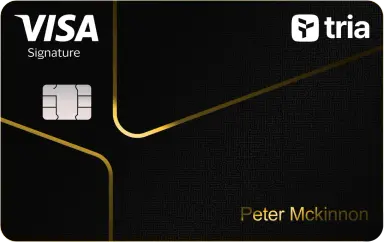
1. Tria Signature Card
High-Yield Self-Custody: 15% APY + Visa Signature Perks
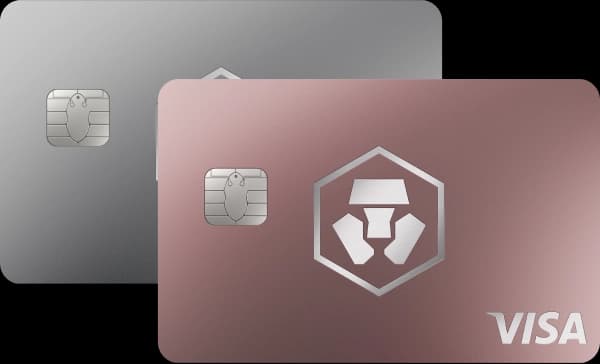
2. Private (Icy White / Rose Gold)
Private Tier: 4% Uncapped Cashback + Lounge Guest
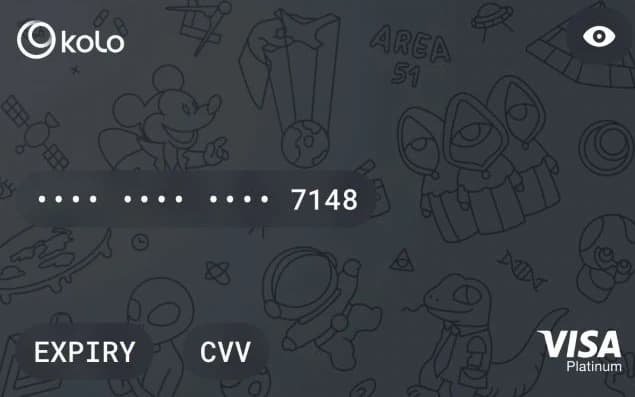
3. Kolo Card
Earn Bitcoin on Purchases: 2% for 30 Days, Then 1% (Capped) + Visa Platinum + 170+ Countries
4. KAST K Card
Free USD Cashback: 1.5% on First $2K/Month
Complete list:
All 32 crypto cards available in Jamaica in October 2026
This table includes every crypto card we currently track for Jamaica. Rows marked Top pick are ranked and reviewed above.
| Crypto card | Max rewards | Annual fee | FX fee | Type | Custody |
|---|---|---|---|---|---|
1 Tria Signature CardTop pick | Up to 4.5% rewards | $109/year | 1% | Debit | Self-custody |
2 Private (Icy White / Rose Gold)Top pick | Up to 4% rewards | TBD | 0% | Prepaid | Custodial |
3 Kolo CardTop pick | Up to 2% rewards | Free | 0% | Prepaid | Custodial |
4 KAST K CardTop pick | Up to 1.5% rewards | Free | 0.5% | Prepaid | Custodial |
| Up to 10% rewards | Free | 0% | Prepaid | Custodial | |
| Up to 10% rewards | Free | 3% | Debit | Hybrid | |
| Up to 8% rewards | Free | 0% | Debit | Custodial | |
| Up to 8% rewards | TBD | 0% | Prepaid | Custodial | |
| Up to 6% rewards | $250/year | 1% | Debit | Self-custody | |
| Up to 5% rewards | TBD | 0% | Prepaid | Custodial | |
| Up to 4% rewards | Free | 0% | Crypto Backed Credit | Self-custody | |
| Up to 3% rewards | $10000 | 0.5% | Prepaid | Custodial | |
| Up to 3% rewards | $199 | 0.5% | Crypto Backed Credit | Self-custody | |
| Up to 3% rewards | $299.9 | 0% | Prepaid | Custodial | |
| Up to 3% rewards | $129 | 1.2% | Prepaid | Custodial | |
| Up to 2% rewards | $1000 | 0.5% | Prepaid | Custodial | |
| Up to 2% rewards | Free | 1% | Crypto Backed Credit | Self-custody | |
| Up to 2% rewards | $49.9 | 0% | Prepaid | Custodial | |
| Up to 2% rewards | $999 | 0% | Crypto Backed Credit | Self-custody | |
| Up to 1.5% rewards | Free | 0.5% | Prepaid | Custodial | |
| Up to 1.5% rewards | $20/year | 1% | Debit | Self-custody | |
| Up to 1.5% rewards | $249 | 0.25% | Crypto Backed Credit | Self-custody | |
| Up to 1% rewards | Free | TBD | Prepaid | Custodial | |
| Up to 1% rewards | $99 | 0.5% | Crypto Backed Credit | Self-custody | |
| Up to 0.5% rewards | Free | 1% | Crypto Backed Credit | Self-custody | |
| none | Free | 0% | Prepaid | Custodial | |
| none | Free | 1% | Prepaid | Self-custody | |
| Varies | Free | 1.5% | Debit | Custodial | |
| Varies | Free | 1.2% | Prepaid | Custodial | |
| Varies | Free | 1.2% | Prepaid | Custodial | |
| Varies | Free | 1.2% | Prepaid | Custodial | |
| points | Free | 1% | Debit | Self-custody |
Crypto Card Regulation in Jamaica
Jamaica's crypto regulatory environment is shaped by the Bank of Jamaica (BOJ), which oversees monetary policy and financial regulation. The BOJ launched JAM-DEX (Jamaica Digital Exchange Currency) in June 2022, making Jamaica one of the first countries with a live CBDC alongside the Bahamas (Sand Dollar) and Nigeria (eNaira).
JAM-DEX operates through the LYNK digital wallet (developed by ePay Caribbean) and NCB Quisk (National Commercial Bank's digital app), functioning as legal tender for all debts public and private.
The BOJ distinguishes clearly between JAM-DEX (regulated, state-backed, JMD-denominated) and private cryptocurrencies (unregulated, not legal tender). The BOJ has issued warnings about crypto volatility but has not banned cryptocurrency ownership, trading, or use.
The Financial Services Commission (FSC) regulates securities and investments but has not classified most cryptocurrencies as securities. The Jamaica Stock Exchange (JSE) has explored blockchain-based settlement and operated a Canadian Securities Exchange blockchain pilot in 2018.
Jamaica's Proceeds of Crime Act (POCA) and the Financial Investigations Division (FID) apply AML/CFT requirements to financial transactions, including potential crypto-related activities. The Caribbean Financial Action Task Force (CFATF) conducts mutual evaluations that influence Jamaica's AML framework.
No specific VASP licensing framework exists yet, though CARICOM-level discussions on crypto regulation continue.
JAM-DEX adoption was initially slow but is accelerating: transaction values rose 550% in 2025 over 2024, though growth is driven by existing users transacting more frequently rather than a wave of new sign-ups. Merchant acceptance remains limited. The BOJ is pushing banks to accelerate Jam-Dex integration.
Importantly, JAM-DEX operates only in JMD, not USD, which limits its utility for the large USD-denominated segment of the economy.
Regulation took a concrete step in mid-2026. From June 11 to July 10, 2026 the FSC ran a public consultation on a full VASP licensing regime covering exchanges, custodians, brokers, advisers, wallet providers, and conversion services.
The proposal sets six licence classes, a J$16 million minimum capital floor, and quarterly independently-audited proof of reserves for platforms and custodians. It would take effect once the Virtual Asset Service Providers Act is enacted, so the framework is out for consultation rather than in force; only companies, not individuals or foreign-incorporated entities, could hold a licence.
Jamaica's CBDC leadership and absence of a crypto ban make it one of the more crypto-forward Caribbean nations. No restrictions exist on crypto card usage. The BOJ's practical stance prioritizes JAM-DEX promotion while tolerating private crypto activity.
Tax Treatment of Card Rewards in Jamaica
Our Jamaica tax breakdown highlights a major advantage: Jamaica has no specific cryptocurrency tax legislation as of 2026. Tax Administration Jamaica (TAJ) has not published guidance on the tax treatment of digital assets. The most important fact for crypto card users: Jamaica has no capital gains tax for individuals.
No Individual Capital Gains Tax
The Income Tax Act (Chapter 75:01) does not include a capital gains tax provision for individuals. Transfer tax exists for real estate (2% stamp duty + 2% transfer tax) but does not apply to movable assets including cryptocurrency. This means: buy BTC at $30,000, spend it through your card at $90,000, the $60,000 gain triggers zero tax. No holding period requirement, no annual threshold, no reporting obligation specific to crypto gains.
When Income Tax Might Apply
Jamaica's individual income tax rates are 25% on taxable income up to JMD 6 million and 30% above that threshold. The Ministry of Finance states that the general annual tax-free threshold rose to JMD 1,902,360 from April 1, 2026. Business-like crypto trading or reward income needs its own classification; the absence of a general capital-gains tax does not settle that question.
Occasional card spending from a personal crypto portfolio would not meet this threshold. GCT (General Consumption Tax) is 15% on most goods and services.
The Practical Reality
TAJ has not published a dedicated crypto-card tax form or comprehensive digital-asset disposal guidance. We have not identified a published enforcement action centered on private card-funded crypto spending. Neither point means TAJ cannot obtain transaction information or that taxable business income need not be reported. Keep acquisition, spending, and reward records.
This may change as Jamaica develops its digital economy framework alongside JAM-DEX.
| Cashback Type | Tax When Received | Tax When Spent/Sold | Optimal Strategy |
|---|---|---|---|
| BTC/ETH cashback | Personal purchase rebate may be outside income tax; check terms | No general individual CGT on private gain | Track receipt and later sale |
| Stablecoin cashback (USDC) | Personal purchase rebate may be outside income tax; check terms | Gain may be small | Keep conversion records |
| Points/token cashback | Classification depends on rights and redemption | Depends on later use | Track receipt and disposal |
Jamaica has no general capital-gains tax on a private individual's investment gain. That differs from business income and does not automatically make every card reward a tax-free rebate. Keep records of card funding and reward receipts.
How to Apply from Jamaica
Crypto card applications from Jamaica require the National Identification Card (NIDS card), administered by the National Identification and Registration Authority (NIRA). NIDS has been rolling out since 2024 to replace the previous patchwork of ID documents. Until full NIDS deployment, primary ID documents are:
Jamaican passport (issued by the Passport, Immigration and Citizenship Agency, PICA), Jamaican driver's license (issued by TAJ's licensing division), or Voter's ID (issued by the Electoral Office of Jamaica, EOJ).
Proof of address via utility bills from JPS (Jamaica Public Service, electricity), NWC (National Water Commission), FLOW/Digicel (telecoms), or Emera (gas). Bank statements from NCB, Scotiabank Jamaica, JN Bank, CIBC FirstCaribbean, or Sagicor Bank also work.
TRN (Taxpayer Registration Number) is Jamaica's tax identifier, a 9-digit number assigned by TAJ. Some issuers may request this. CARICOM member status provides additional document recognition across Caribbean member states (Barbados, Trinidad, Guyana, etc.).
Most global card issuers accept Jamaican passports without difficulty.
Spending Tips for Jamaica
The Remittance Revolution
Jamaica's $3.6 billion annual remittance flow is the country's second-largest source of foreign exchange after tourism. The traditional remittance corridor works like this: Jamaican in the US sends $200 through Western Union, recipient gets $182-190 after fees (5-9%).
With crypto: sender purchases USDC on a US exchange (zero or near-zero fee), sends to recipient's RedotPay or KAST wallet (zero blockchain fee on Solana), recipient spends through the card (0-1.75% FX depending on card, applied when JMD conversion occurs) and earns up to 2% cashback (Kolo BTC) or 1.5% USD cashback (KAST, on the first $2K/month). The $10-18 fee becomes a $3-4 reward, a $13-22 swing per $200 sent.
At Jamaica's remittance volume, even a small shift to crypto rails represents millions in saved fees. The BOJ has acknowledged this dynamic, which partly explains its tolerant stance toward private crypto despite the JAM-DEX push.
Banking System: Conservative Caribbean Model
NCB (National Commercial Bank) is the largest bank by assets, with 40+ branches islandwide. Standard chequing account: zero cashback debit, annual fee of $500-1,500 JMD. Credit cards (Visa/Mastercard): $3,000-10,000 JMD annual fee ($19-64), 0.5-1% rewards at best. Scotiabank Jamaica serves the middle-to-upper market with slightly better credit card rewards but higher fees.
JN Bank (Jamaica National) is the third-largest, rooted in the building society tradition (est. 1874). CIBC FirstCaribbean and Sagicor Bank round out the retail banking scene.
The pattern: zero debit rewards, minimal credit rewards with annual fees, and 2-4% FX markup on international transactions. A KAST at 1.5% USD cashback on the first $2,000/month with $0 annual fee and 0.5-1.75% FX outperforms every Jamaican bank debit and most credit products.
Card Selection by Use Case
- Self-custody cashback: Tria Signature (4.5% on first $1,000/mo, $109/yr, 1% FX + 0.5%/payment, ~3% net) - payout can take up to three months to arrive
- Premium perks: Crypto.com Icy (4% + airport lounge perks at MBJ/KIN + rebates)
- Free BTC cashback: Kolo (1% BTC ongoing, 2% for the first 30 days, capped $100/mo, $0, 0% FX, zero CGT on appreciation)
- Remittance corridor card: KAST (1.5% USD cashback on first $2K/mo, $0, 2-minute KYC)
Break-Even Math: Zero CGT Makes Everything Simpler
All USD. No CGT for Jamaican individuals. Zero tax tracking required.
| Monthly Spend | Tria Sig (4.5% to $1k/mo, $109/yr, 1% FX + 0.5%/payment) | Icy (4%, CRO stake) | Kolo (1% BTC ongoing, free) | KAST (1.5% USD, $2K/mo cap, free) |
|---|---|---|---|---|
| $200 | -$37/yr | $96/yr + lounges | $24/yr | $36/yr |
| $400 | $35/yr | $192/yr + lounges | $48/yr | $72/yr |
| $600 | $107/yr | $288/yr + lounges | $72/yr | $108/yr |
| $1,000 | $251/yr | $480/yr + lounges | $120/yr | $180/yr |
Jamaica's average monthly income is approximately $600. At that spending level, the staked Crypto.com Icy leads for CRO holders at $288/year plus lounges. Kolo at $72/year keeps its tax-free BTC angle under zero CGT.
Tria Signature breaks even on its $109 fee at about $303/month once its 1% FX and 0.5% per-payment fees cut the rate to about 3% net, and overtakes KAST's free 1.5% once spending passes roughly $600/month. KAST at $108/year is the pragmatic starter for remittance-funded households who want USD cashback rather than BTC accumulation. Kolo's modeled purchases stay at or below $100, avoiding any reduction from its $1 cap on each reward.
Cost of Living by Area
New Kingston/Liguanea (Kingston upscale): Rent $600-1,500/month. Business district, embassies, Emancipation Park, Sovereign Centre, Manor Park Plaza. Universal card acceptance at restaurants ($15-40/person), hotels (Courtyard Marriott, Hilton, Jamaica Pegasus), and retail. Professional class, expats, and diplomatic community.
Half Way Tree/Cross Roads (Kingston commercial hub): Rent $400-900/month. Retail center, Half Way Tree transport hub, clock tower landmark. Card acceptance at Liguanea Plaza, Mall Plaza, supermarkets. Mix of formal business and street-level commerce (cash-dominant at the transport terminus).
Montego Bay (MoBay) (tourism/second city): Rent $400-1,200/month. Hip Strip, Sam Sharpe Square, Sangster International Airport (MBJ). Tourist economy with universal card acceptance at hotels (Sandals, Secrets, Hilton Rose Hall), restaurants, and shopping. The "second capital" with growing non-tourism business.
Ocho Rios (tourism corridor): Rent $350-900/month. Dunns River Falls, Mystic Mountain, cruise ship port (3-4 ships daily in season). Tourist pricing with strong card acceptance. Quieter residential areas behind the strip.
Negril (beach tourism): Rent $300-800/month. Seven Mile Beach, Rick's Cafe, Norman Manley Boulevard. Tourist economy, card acceptance at resorts and restaurants. Cash-dominant at jerk centers and craft markets. Budget-to-luxury range.
Spanish Town/Portmore (Greater Kingston suburbs): Rent $200-500/month. Residential commuter areas. Card acceptance at supermarkets (Hi-Lo, PriceSmart, MegaMart) and commercial centers. Cash-dominant for daily needs. More representative of typical Jamaican spending patterns than tourist areas.
The Tourism Economy and Card Spending
Jamaica welcomed approximately 4.3 million visitors in 2025 (tourists plus cruise passengers), generating approximately $4.5 billion in revenue. Tourism provides approximately 30% of GDP directly and indirectly. For Jamaicans working in tourism (hotels, restaurants, tours, transport), tips often come in USD cash.
A crypto card provides a way to earn additional cashback on their own spending while the tourism economy around them is heavily card-based.
For visitors, a crypto card is superior to both cash exchange (5-8% cambio markup) and bank cards (2-4% FX fee). At KAST 1.5% USD cashback (capped at $30/month at the Standard tier) with 0.5-1.75% FX, a tourist spending $3,000 on a week-long vacation saves $30-105 in FX fees and earns up to $30 in cashback (Standard tier cap binds at $2K/month spend) compared to a typical US bank card.
Cross-Border and Online Spending
US (Miami, Fort Lauderdale, New York JFK): The dominant corridor. Multiple daily flights from Sangster (MBJ) and Norman Manley (KIN). Shopping trips to Miami for electronics and clothing are common. UK (London Gatwick): Historic colonial connection, large diaspora. Canada (Toronto): Second-largest diaspora. Caribbean (Caymans, T&T, Barbados): CARICOM mobility.
Online: Amazon US (via MyUS, ShipFromUS, or local consolidators), Netflix ($7-17/month), Spotify, and digital services charge in USD. SportsMax (Caribbean sports streaming), CVM TV, and TVJ online services.
Local Payment Infrastructure
Card acceptance in Jamaica is well-developed in urban and tourist areas. Visa and Mastercard contactless works at supermarkets (Hi-Lo, PriceSmart, MegaMart, Loshusan/General Foods), shopping centres (Sovereign Centre, Manor Park Plaza, Marketplace Kingston, Fairview Complex MoBay), hotels and all-inclusive resorts, and most restaurants in tourist zones and Kingston. Apple Pay and Google Pay are supported through international card issuers.
Cash remains significant in Jamaica, especially at local markets (Coronation Market in Kingston, Charles Gordon Market in MoBay), route taxis ($100-150 JMD per ride), street food vendors (jerk chicken $500-1,500 JMD), and rural areas. Lynx (local debit card network) dominates domestic card payments, but international Visa/Mastercard is accepted at most formal businesses.
Mobile banking growing through NCB Quisk, Scotia GO, and JN Money app. GCT (General Consumption Tax) is 15% on most goods and services.
Supported Exchanges & Wallets in Jamaica
14 card vendors serve Jamaica through LATAM and GLOBAL coverage. Zero individual CGT makes every funding method equally tax-efficient.
Kolo charges neither annual nor FX fees. Its BTC cashback is 2% for 30 days and 1% ongoing, capped at $100 per month and $1 for each transaction. Jamaica's zero CGT still makes BTC rewards especially clean under the tax framework described here.
Tria Signature at 4.5% on the first $1,000/mo with self-custody offers stablecoin cashback for users who prefer predictable returns, netting about 3% after its 1% FX and 0.5% per-payment fees.
Crypto.com Icy at 4% includes Priority Pass airport lounge access at Sangster (MBJ) and Norman Manley (KIN) plus Netflix, Spotify, and Amazon Prime rebates.
KAST at 1.5% USD cashback on the first $2,000/month with $0 annual fee is the most direct way for a Jamaican user to turn incoming stablecoins into a spendable prepaid balance. RedotPay serves stablecoin-first spenders. The Physical card adds ATM access for cash withdrawal at Jamaican ATMs.
xPlace remains the Solana/self-custody option.
On-Ramps: P2P Dominant
No crypto exchanges are licensed in Jamaica. Binance P2P (JMD pairs) is the primary on-ramp, with an active local trading community. Paxful historically had strong Jamaican presence before its 2023 shutdown. P2P trading via Telegram and WhatsApp remains active.
Jamaican fintech companies like WiPay (Caribbean payment processor) and Paymaster (bill payment) focus on traditional payments rather than crypto. NCB Quisk and the LYNK wallet (JAM-DEX) provide digital JMD rails but not crypto on-ramps.
A Jamaican family receiving $500/month from relatives in Brooklyn via Western Union loses $25-45 in fees per transfer. The same $500 loaded as USDC onto a Kolo card earns 1% ongoing BTC cashback ($5/month, $60/year) instead of losing money on the transfer.
For a New Kingston professional spending $600/month, Tria Signature nets about $107/year after all its fees and Kolo returns $72/year in BTC before any income treatment at receipt. No NCB debit card offers cashback at all.
Written by SpendNode Editorial
Frequently Asked Questions
Which crypto cards work in Jamaica?
Tria Signature (4.5% on the first $1,000/mo then 1%, $109/yr, with a 1% FX fee and 0.5% per payment netting about 3%, USDT cashback that can take up to three months to arrive) posts the highest cashback rate with self-custody. Crypto.com Icy (4%, CRO stake) adds lounge access at MBJ and KIN. Kolo (1% BTC ongoing, 2% for the first 30 days, capped at $100/month and $1 per transaction, $0, 0% FX) remains a simple free card, and KAST (1.5% USD cashback on first $2K/mo, $0, 0.5-1.75% FX, timelocked 14 days) is fastest for remittance-funded spending. Visa/Mastercard accepted at hotels, supermarkets, and tourist areas.
How is cryptocurrency taxed in Jamaica?
Jamaica has no capital gains tax for individuals. Crypto gains from card spending trigger zero tax. TAJ has not issued crypto-specific guidance. Business-level trading may be taxable as income at 25-30%. A proposed VASP Bill would formalize exchange licensing but is not expected to introduce CGT.
Is crypto legal in Jamaica?
Yes. Jamaica has no crypto ban. The Bank of Jamaica (BOJ) launched JAM-DEX, a CBDC, in 2022, making Jamaica one of the first countries with a live central bank digital currency. The BOJ distinguishes between the regulated JAM-DEX and unregulated crypto assets but has not prohibited crypto ownership or trading.
Can crypto cards help with remittances to Jamaica?
Yes. Jamaica receives approximately USD 3.5 billion in remittances annually (16% of GDP), mainly from the US, UK, and Canada. Traditional channels charge 5-9% in fees. Loading a crypto card with USDC and spending in Jamaica sharply reduces remittance costs and adds cashback on top; Kolo does it at 0% FX, while other cards charge up to 1.75%.
Other Countries
View all 112 countries →


Latest Page Changes to the Best Crypto Cards in Jamaica Guide
- VASP Bill (scheduled 2025/26) for exchange licensing and JAM-DEX 550% transaction growth in 2025