
Best Crypto Cards in Puerto Rico (2026)
Puerto Rico is a US territory with its own tax code. Act 60 can mean 0% crypto capital gains, with the same US-compliant card menu a mainland American can use.
Verified for Puerto Rico
35 crypto cards available
Local currency: USD
If you moved to Puerto Rico for Act 60, or you grew up in San Juan and already settle half your payments through ATH Movil, the crypto-card question here is unlike anywhere else on this site. Puerto Rico is a United States territory, so it shares the US dollar, the US banking system, and US federal financial rules. It also runs its own tax code, and that single split is why crypto investors have relocated here for over a decade.
That same status shapes the card menu. Because Puerto Rico residents are US persons, what they get is the US-compliant set, the same cards a mainland American can use: Gemini, Tria, Plasma One, ether.fi, KAST, and Oobit. The global-only cards that screen out US persons, like COCA and Bitget, are the ones off the table. So availability here looks like the mainland US; what actually drives the decision is tax, not which cards you can get.
Summary:
Which crypto cards are best in Puerto Rico?
The best crypto cards in Puerto Rico in September 2026 are Gemini Credit Card, Tria Signature Card, Plasma One Core Card, ether.fi Core Card, KAST K Card, and Oobit Visa Card. The detailed ranking below explains the local tax, fee, and availability trade-offs.
| Crypto card | Base reward | Net after fees | Annual fee | FX fee | Type |
|---|---|---|---|---|---|
| 1% baseup to 4% on select categories | 1% | Free | 0% | Credit | |
| 4.5% base4.5% on the first $1,000/mo, then 1% | 3% | $87 with code | 1% | Debit | |
| 3% base3% base, up to 5% on AI spend; ChatGPT Go rebate; $199/yr or 20k XPL | 2.5% | $199 | 0.5% | Crypto Backed Credit | |
| 3% base3% on the first $2,000/month, then 1% and 0.5% | 2.5% | Free | 0.5% | Crypto Backed Credit | |
| 1.5% base | 1% | Free | 0.5% | Prepaid | |
| 5% baseup to 10% in OOB at Level 2, no stake | 2% | Free | 3% | Debit |
One thing the table hides: the FX column barely matters here. Puerto Rico transacts in US dollars, so a card spent at a Plaza Las Americas store or a Condado restaurant never touches a currency conversion. The FX fees only bite when you travel off-island to a non-dollar country. For everyday San Juan spending, judge these cards on rewards, custody, and tax fit, not on the FX number.
For most residents the Gemini Credit Card is the anchor pick. It is a real Mastercard credit card issued by WebBank, available across all 50 states and Puerto Rico, with no annual fee, no foreign-transaction fee, and instant crypto cashback of up to 4% on gas, transit, EV charging, and rideshare (capped at $300/month, then 1%), 3% on dining, 2% on groceries, and 1% on everything else.
Tria Signature carries the highest everyday rate, 4.5% on the first $1,000/month, paid in USDT on a self-custodial Visa. Plasma One is the self-custodial Visa issued from Puerto Rico itself, pairing 3% base cashback with an AI-subscription rebate.
ether.fi Core pays stepped ETHFI rewards, with supported stablecoins and eligible collateral providing its two funding routes. KAST and Oobit round out the menu as free stablecoin spenders for users who keep balances in USDT or USDC.
The island holds two very different audiences, and the right card depends on which one you are. The first is the relocating investor: the trader, fund manager, or crypto founder who moved from the mainland to claim Act 60 and now pays 0% on post-move capital gains. For that person, spending appreciated crypto carries no Puerto Rico tax, so the card is just a convenience layer.
The second is the ordinary boricua resident with no decree, taxed under Puerto Rico's own code at 15% on long-term gains. For that person, every swipe of appreciated Bitcoin is a taxable disposition, and stablecoin funding is the only way to keep the card clean. The same card can be the right answer or the wrong one depending on which side of that line you sit.
Best Card For Every Need in Puerto Rico
Top 6 Crypto Cards in Puerto Rico
Puerto Rico's defining fact is that its residents are US persons living under a separate tax code, and both halves drive the card list. The US-person half means the menu mirrors the mainland US, with the global-only cards that screen out Americans (COCA, Bitget) dropping off. The separate-tax-code half means the cards are judged on how cleanly they handle a capital-gains disposition, not on headline cashback alone.
The Gemini Credit Card leads because it is a US-regulated credit card issued by WebBank and explicitly available to Puerto Rico residents under Gemini's areas-of-availability terms. It has no annual or FX fee and pays rewards in the selected crypto.
Its Mastercard credit line may suit residents seeking a conventional US credit-card account rather than a prepaid balance.
Tria Signature carries the highest everyday rate at 4.5% on the first $1,000 per month. Plasma One stands out for being issued from Puerto Rico itself, pairing 3% cashback with an AI-subscription rebate.
ether.fi Core earns its place through stepped ETHFI rewards and two funding modes. Its optional borrowing route may postpone a sale for ordinary residents, but it is less relevant to an Act 60 decree-holder already paying 0% on qualifying gains.
KAST and Oobit are the stablecoin workhorses: free, no token lock, and cleanest when funded with USDC or USDT so that each swipe books a near-zero gain. Oobit's headline 10% is real only on OOB-funded spend and capped near $1,000/month, so treat its effective return as closer to 3%.
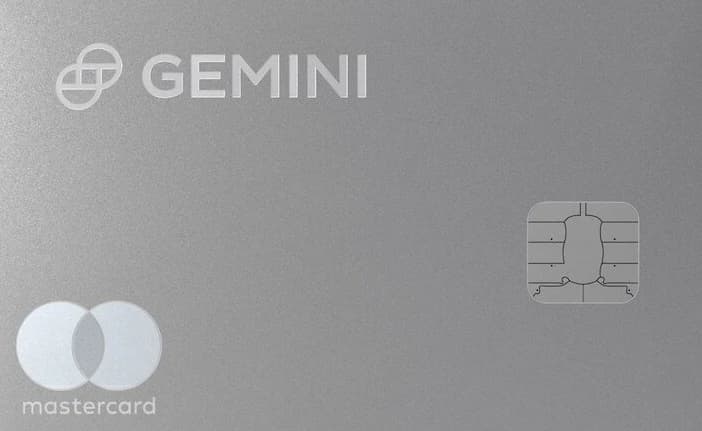
1. Gemini Credit Card
Category Crypto Rewards: 4% Gas/Transit/Rideshare, 3% Dining, 2% Groceries

2. Tria Signature Card
High-Yield Self-Custody: 15% APY + Visa Signature Perks

3. Plasma One Core Card
Self-Custodial Visa for AI Spenders - 3% Base, 5% on AI Spend, ChatGPT Go Rebate

4. ether.fi Core Card
3% Back on the First $2,000 Each Month, No Stake Required
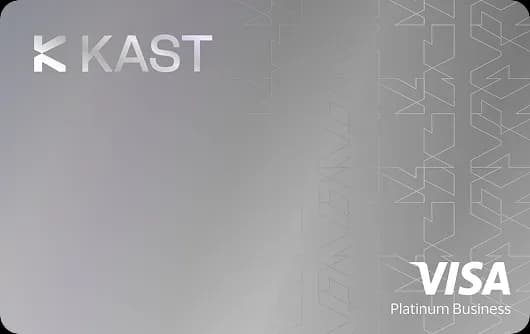
5. KAST K Card
Free USD Cashback: 1.5% on First $2K/Month

6. Oobit Visa Card
Spend Crypto Anywhere Visa Works - Self-Custody or In-App
Complete list:
All 35 crypto cards available in Puerto Rico in September 2026
This table includes every crypto card we currently track for Puerto Rico. Rows marked Top pick are ranked and reviewed above.
| Crypto card | Max rewards | Annual fee | FX fee | Type | Custody |
|---|---|---|---|---|---|
1 Gemini Credit CardTop pick | Up to 4% rewards | Free | 0% | Credit | Custodial |
2 Tria Signature CardTop pick | Up to 4.5% rewards | $87 with code | 1% | Debit | Self-custody |
3 Plasma One Core CardTop pick | Up to 3% rewards | $199 | 0.5% | Crypto Backed Credit | Self-custody |
4 ether.fi Core CardTop pick | Up to 3% rewards | Free | 0.5% | Crypto Backed Credit | Self-custody |
5 KAST K CardTop pick | Up to 1.5% rewards | Free | 0.5% | Prepaid | Custodial |
6 Oobit Visa CardTop pick | Up to 10% rewards | Free | 3% | Debit | Hybrid |
| Up to 10% rewards | Free | 0% | Prepaid | Custodial | |
| Up to 8% rewards | TBD | 0% | Prepaid | Custodial | |
| Up to 6% rewards | $200 with code | 1% | Debit | Self-custody | |
| Up to 5% rewards | TBD | 0% | Prepaid | Custodial | |
| Up to 4% rewards | Free | 0% | Crypto Backed Credit | Self-custody | |
| Up to 4% rewards | Free | 1% / 1.8% | Debit | Hybrid | |
| Up to 4% rewards | Free | 0% | Crypto Backed Credit | Self-custody | |
| Up to 4% rewards | TBD | 0% | Prepaid | Custodial | |
| Up to 3% rewards | Free | 0.25% | Crypto Backed Credit | Self-custody | |
| Up to 3% rewards | Free | 0% | Crypto Backed Credit | Self-custody | |
| Up to 3% rewards | $10000 | 0.5% | Prepaid | Custodial | |
| Up to 3% rewards | $299.9 | 0% | Prepaid | Custodial | |
| Up to 2% rewards | $1000 | 0.5% | Prepaid | Custodial | |
| Up to 2% rewards | Free | 0% | Prepaid | Custodial | |
| Up to 2% rewards | Free | 1% | Crypto Backed Credit | Self-custody | |
| Up to 2% rewards | $49.9 | 0% | Prepaid | Custodial | |
| Up to 2% rewards | $999 | 0% | Crypto Backed Credit | Self-custody | |
| Up to 1.5% rewards | Free | 0.5% | Prepaid | Custodial | |
| Up to 1.5% rewards | Free | 1% | Debit | Self-custody | |
| Up to 1.5% rewards | $249 | 0.25% | Crypto Backed Credit | Self-custody | |
| Up to 1% rewards | Free | 1% | Debit | Self-custody | |
| Up to 1% rewards | $99 | 0.5% | Crypto Backed Credit | Self-custody | |
| Up to 0.5% rewards | Free | 1% | Crypto Backed Credit | Self-custody | |
| none | Free | 0% | Crypto Backed Credit | Self-custody | |
| none | $30 | 0% | Crypto Backed Credit | Self-custody | |
| none | Free | 0% | Prepaid | Custodial | |
| cashback | Free | 0.5% | Prepaid | Custodial | |
| none | Free | 1% | Prepaid | Self-custody | |
| points | Free | 1% | Debit | Self-custody |
Crypto Card Regulation in Puerto Rico
Crypto cards in Puerto Rico answer to two regulators at once, because the island sits inside the US federal perimeter while keeping its own financial supervisor. Locally, the Oficina del Comisionado de Instituciones Financieras (OCIF), the Office of the Commissioner of Financial Institutions, licenses money transmitters under the Puerto Rico Money Transmitters Act (Title 7).
Any business that receives funds for transmission, including crypto transfer, needs an OCIF money-transmitter license, with a net-worth floor of $500,000 and a $500,000 surety bond. OCIF issued virtual-currency guidance in 2018 and continues to supervise digital-asset money services on the island.
Above OCIF sits the full federal stack. Because Puerto Rico is a US territory, FinCEN money-services-business registration and Bank Secrecy Act / anti-money-laundering rules apply directly, the SEC and CFPB reach the island, and card programs settle on the same Federal Reserve rails (ACH, and increasingly FedNow) as the mainland.
This is why a US-regulated issuer like Gemini can serve Puerto Rico residents with no special territorial workaround: to federal payment infrastructure, a San Juan ZIP code in the 006-009 range is a domestic US address.
A separate regime, the International Financial Entities framework under Act 273-2012, lets licensed entities run cross-border fintech, blockchain, and crypto-custody operations from the island. A 2024 reform raised the paid-in-capital requirement to roughly $10 million and increased OCIF licensing fees, tightening what had been a lightly policed channel.
Historically, Binance.US held a Puerto Rico money-transmitter license, a reminder that the island has been a deliberate booking location for crypto financial businesses, not just a residence for investors.
The historical inflection point is the relocation wave itself. Act 20 and Act 22 of 2012 first offered investors a 0% rate on Puerto Rico-source capital gains; Hurricane Maria in 2017, the 2020-2021 crypto bull market, and the consolidation of those laws into Act 60 of 2019 turned a trickle into a visible migration of crypto wealth to Dorado, Condado, and the San Juan metro.
That visibility drew federal attention: the IRS Large Business and International division opened a dedicated Puerto Rico Act 22/60 enforcement campaign, auditing whether claimants genuinely meet the bona-fide-residence tests. Before applying for any incentive, confirm you can actually pass the residency tests, because the IRS is now checking.
Tax Treatment of Card Rewards in Puerto Rico
Tax is the entire reason Puerto Rico exists as a crypto destination, and it splits sharply between residents who hold an Act 60 decree and those who do not.
Start with the federal rule. Under IRC Section 933, a bona-fide Puerto Rico resident generally excludes Puerto Rico-source income from US federal income tax. The IRS sourcing and residence rules still matter for crypto acquired before the move and for income with a mainland source; becoming a resident does not automatically convert every gain into Puerto Rico-source income.
The key timing issue is pre-move appreciation. Special sourcing rules can preserve US taxation of gain built up before Puerto Rico residence. Selling and rebuying may itself trigger a taxable disposal; it is not a free basis reset. Anyone planning a move around a large crypto position should model the sourcing with a US and Puerto Rico tax adviser before trading.
For the ordinary resident with no decree, Puerto Rico taxes crypto like the US does. Long-term capital gains (assets held over a year) carry a flat 15% rate; short-term gains fold into the regular brackets, which run from 0% up to 33% above $61,500 of net income.
Critically, spending appreciated crypto is a disposition, the same taxable event as selling. Buy 1 ETH at $2,000, let it run to $3,500, and pay for a $3,500 generator at Home Depot Bayamon with it, and you have realized a $1,500 gain. You report it to Hacienda on Form 482, due April 15.
| Funding asset | Gain per swipe | Practical tax result (ordinary resident) |
|---|---|---|
| Appreciated BTC / ETH | Large, on every purchase | 15% long-term or up to 33% short-term, each time |
| USDC / USDT (pegged) | Near zero | Effectively nothing to report |
| Card cashback in crypto | Income when received | Ordinary income, then a gain when later spent |
The lesson for non-decree residents is the same as on the US page: fund the card with stablecoins so each transaction books a near-zero gain, and take cashback in stablecoins too if you want to avoid a second taxable layer.
For a qualifying Act 60 decree-holder, Chapter 2 of Act 60 (the Individual Resident Investor grant, the former Act 22) can exempt eligible post-residency interest, dividends, and long-term capital gains from Puerto Rico income tax under the decree's terms.
That does not make every crypto-card disposal tax-free. The asset's acquisition date, gain source, holding period, residency, and decree terms still determine the result.
The decree is a contract with the government, administered by the Departamento de Desarrollo Economico y Comercio (DDEC), not an automatic status, and it comes with conditions: the 183-day presence test, the tax-home test, the closer-connection test, an annual charitable donation, and a home purchase. New residents must file IRS Form 8898 to start the bona-fide-residence clock.
Under Act 38-2026, new Individual Resident Investor applications filed from January 1, 2027 generally move to a 4% rate on qualifying interest, dividends, and long-term capital gains. The law extends the program through 2055; its application to an individual still depends on an approved decree and the statutory conditions.
The terms also tightened: the annual charitable donation rose to $15,000, and home-purchase and reporting conditions apply. Existing decrees retain their contractual terms. An application filed before 2027 is not itself a guarantee of a 0% result; approval, genuine residence, and eligible post-move gains are still required.
How to Apply from Puerto Rico
Applying for a crypto card in Puerto Rico is a US onboarding flow, not an international one, which is one of the few places the island's territory status makes life easier. Expect to provide a Social Security Number or ITIN, a US government photo ID (a US passport or a Puerto Rico Real ID driver's license issued by DTOP, the Departamento de Transportacion y Obras Publicas), and proof of a Puerto Rico address such as an AAA water bill or a LUMA / Genera electricity bill.
US-regulated issuers verify in the same way they do on the mainland. Gemini, for example, runs standard US KYC tied to your SSN, and approval is typically same-day for an existing Gemini exchange customer. Physical cards ship to Puerto Rico addresses as ordinary US domestic mail (ZIP codes 006xx through 009xx), so there is no international-shipping wait or customs step. For self-custodial cards like ether.fi, the wallet setup is the gating step rather than document review.
Spending Tips for Puerto Rico
The single most important move in Puerto Rico is to know which tax world you live in before you pick a funding asset. A decree-holder paying 0% can fund a card with appreciated Bitcoin and spend it freely. An ordinary resident doing the same thing is realizing a taxable gain on every coffee. Get that one decision right and the rest is optimization.
Card selection by use case
- Gemini Credit Card (up to 4% category cashback, $0 fee, US credit card): the default everyday card for almost everyone on the island. Real credit-line mechanics, no annual or FX fee, instant crypto rewards, and a federally regulated issuer.
- Tria Signature (4.5% to $1,000/month, $109/yr, self-custodial Visa): the highest everyday cashback rate, paid in USDT, for residents who want self-custody and no credit check.
- Plasma One (3% base plus a ChatGPT rebate, self-custodial Visa): the card issued from Puerto Rico itself, for users who want self-custody and an AI-subscription rebate on top of cashback.
- ether.fi Core (3% ETHFI on first $2K/mo, then 1% / 0.5%): direct stablecoin spending or optional collateral-backed borrowing; the tax value depends on the user's decree status and financing terms.
- KAST K Card (1.5% on first $2,000/month, $0 fee, prepaid): the simplest free stablecoin rail for someone who keeps a USDC balance and wants tap-to-pay without a credit check.
- Oobit (up to 10% on OOB-funded spend, ~3% net, $0 fee): a no-stake no-annual-fee debit option for USDT holders, best for moderate monthly spend given the cap.
Gemini vs ether.fi at real spending levels
Because the strongest two cards charge no annual fee, there is no break-even to clear; the comparison is about rewards rate and tax fit. The table assumes an ordinary (non-decree) resident funding with stablecoins, so disposition tax is near zero either way.
| Monthly spend | Gemini (blended ~2%) | ether.fi Core (banded 3%) | Edge |
|---|---|---|---|
| $2,000 | ~$480/yr | ~$720/yr | ether.fi on raw rate |
| $4,000 | ~$960/yr | ~$900/yr | Roughly even; banding starts to bite |
| $6,000 | ~$1,440/yr | ~$1,020/yr | Gemini on rate; ether.fi on self-custody |
ether.fi's 3% first band beats Gemini's blended ~2% up to about $2,000/month, but once ether.fi bands down (1% then 0.5% on higher monthly spend), Gemini's flat 2% pulls ahead for heavier spenders. Gemini also adds a real credit line, Mastercard purchase protections, and a chartered-bank backstop that a self-custodial card cannot match. Most residents end up carrying both: Gemini for credit-building and category spend, ether.fi or KAST for stablecoin everyday rails.
A San Juan monthly budget
Monthly costs for one person in the San Juan metro run around $3,000. A one-bedroom in Condado, Miramar, or Isla Verde rents for roughly $1,400-$1,900; the same unit in Rio Piedras or Bayamon is closer to $850-$1,100. Utilities are a real line item here, $150-$300 a month, because air-conditioning runs year-round and LUMA electricity rates are high.
Groceries cost more than the mainland because almost everything is imported under the Jones Act; a Pueblo or Econo basket runs noticeably above a Florida equivalent. The Dorado Beach enclave where many Act 60 arrivals settle is a tier above all of this, with rents that look like Miami.
At $3,000/month of card spend, a 3% card returns about $1,080 a year. Funding with stablecoins can limit price-driven gains on each disposal, but it does not settle the tax treatment of every transaction. Cashback is a separate question: an Act 60 decree covers qualifying capital gains, while rewards paid in crypto may be income when received.
Funding routes and local rails
This is the easy part. Puerto Rico is inside the US banking system, so there are no capital controls, no P2P workarounds, and no blocked exchange transfers. You move dollars from Banco Popular, FirstBank, or Oriental Bank to Coinbase, Gemini, or Kraken by ordinary ACH, buy USDC, and load the card.
ATH Movil, the Evertec-run instant-payment app used by more than two million people across all three banks and roughly 90 cooperativas (credit unions), handles the local peer-to-peer layer that a crypto card does not, so most residents pair the two: ATH Movil for splitting a bill, the crypto card for the purchase itself. Contactless and Apple Pay are accepted essentially everywhere a mainland US card would be.
Common mistakes
Mistake 1: Assuming Act 60 erases tax on crypto you already held. It does not. Gains that accrued before you became a bona-fide resident stay US-source and fully taxable by the IRS, regardless of when you sell. How to avoid it: establish residency first, then realize new gains; treat pre-move appreciation as a separate, US-taxable bucket and budget for it.
Mistake 2: Spending appreciated crypto without a decree. An ordinary resident who pays for a $2,000 flight with appreciated ETH realizes a taxable gain and owes 15% on it. How to avoid it: fund the card with USDC or USDT so each swipe books a near-zero gain, and keep appreciated assets for long-term holding.
Mistake 3: Claiming Act 60 without passing the residency tests. The IRS now audits this directly, and failing the 183-day, tax-home, or closer-connection test can unwind the whole 0% benefit plus penalties. How to avoid it: track your days, move your tax home genuinely, file Form 8898, and keep CPA-certified records from year one.
Mistake 4: Waiting until 2027 to apply. The 0% capital-gains rate is only available to applications filed by December 31, 2026; after that the rate is 4%. How to avoid it: if the decree is your plan, file in 2026, because the difference compounds across a 30-year grant.
Supported Exchanges & Wallets in Puerto Rico
The exchange layer in Puerto Rico is simply the US exchange layer, which is one of the deepest in the world. Coinbase, Gemini, and Kraken all serve Puerto Rico residents under their US licenses, with full USD on-ramps via ACH and wire from local banks.
Gemini is the natural pairing for the credit card; Coinbase is the broadest on-ramp; Kraken suits users who want staking and deeper order books. There is no Puerto Rico-specific exchange, and none is needed, because the island plugs directly into mainland US liquidity.
On the card side, the available issuers are the six covered above: Gemini, Tria, Plasma One, ether.fi, KAST, and Oobit. The absences matter too: COCA and Bitget do not serve US persons, and Puerto Rico residents are US persons, so neither is available here despite both being common across the rest of the Caribbean and Latin America.
Coinbase's own card is a plausible future addition, since Coinbase serves Puerto Rico as an exchange, but verify current card eligibility before counting on it. For current self-custody options, compare MetaMask and ether.fi, both of which list Puerto Rico as available.
What would change this market is a regulatory shift, not a local one. If a global issuer decided to build a US-compliant product, Puerto Rico would gain access automatically as part of the US footprint. Until then, the island's crypto-card menu stays defined by a single rule: if a card turns away Americans, it turns away Puerto Rico.
Written by SpendNode Editorial
Frequently Asked Questions
Does Act 60 really give 0% tax on crypto in Puerto Rico?
For bona-fide residents who hold an Act 60 Individual Resident Investor decree, yes: 0% Puerto Rico tax on post-residency long-term capital gains, dividends, and interest, so spending appreciated crypto carries no island tax.
Two caveats matter: gains that accrued before you moved stay US-source and fully taxable by the IRS, and the 0% rate is only available to applications filed by December 31, 2026. New applicants after that face a 4% rate, and the decree requires a 183-day presence test, a home purchase, and a $15,000 annual charitable donation.
Which crypto cards actually work in Puerto Rico?
Six cards serve the island, all of them US-compliant: the Gemini Credit Card (a US-regulated Mastercard, up to 4% crypto rewards, no annual or FX fee), Tria Signature (4.5% cashback on the first $1,000/month), Plasma One (a self-custodial Visa issued from Puerto Rico), ether.fi Core (3% in ETHFI on the first $2,000/month, then lower bands), KAST (a free prepaid Visa), and Oobit (a no-stake debit Visa).
Because Puerto Rico residents are US persons, the cards that exclude US users, COCA and Bitget among them, are not available here. Coinbase, Gemini, and Kraken all serve the island as exchanges with USD on-ramps.
Is spending crypto taxable if I do not have an Act 60 decree?
Yes. An ordinary Puerto Rico resident is taxed under the island's own code, which treats spending crypto as a disposition, the same as selling. Long-term gains (held over a year) are taxed at a flat 15%, and short-term gains fold into the regular brackets that reach 33%. Funding the card with USDC or USDT keeps the gain per transaction near zero, so the practical tax is minimal. You report gains to Hacienda on Form 482.
What do I need to apply for a crypto card in Puerto Rico?
A US onboarding, since Puerto Rico is a US territory: a Social Security Number or ITIN, a US passport or a Puerto Rico Real ID driver's license, and proof of a local address such as a LUMA electricity or AAA water bill. US-regulated issuers like Gemini verify against your SSN, often same-day, and ship physical cards as ordinary US domestic mail to 006xx-009xx ZIP codes, with no customs step.
How do I fund a crypto card from a Banco Popular account?
Directly. Puerto Rico is inside the US banking system, so there are no capital controls or blocked transfers. Move dollars by ACH from Banco Popular, FirstBank, or Oriental Bank to Coinbase, Gemini, or Kraken, buy USDC, and load the card. ATH Movil handles the local peer-to-peer layer that a card does not, so most residents use ATH Movil to split bills and the crypto card for purchases.


