
Best Crypto Cards in Liechtenstein (2026)
Liechtenstein taxes private crypto gains at zero and offers the full EEA card menu, all priced in Swiss francs, with only a modest wealth tax on holdings.
Verified for Liechtenstein
31 crypto cards available
Local currency: CHF
If you bank with LGT or LLB in Vaduz, or you commute in from Feldkirch or Buchs to a blockchain company in Schaan, the honest question is what a crypto card adds in a country that already taxes private crypto gains at zero. The answer here is cashback and currency, not tax. Liechtenstein removes the disposition problem that defines crypto cards almost everywhere else.
Liechtenstein is a paradox for this market: one of the smallest countries in the world, about 40,000 people, with the highest GDP per capita and a financial sector built for wealth. It uses the Swiss franc, sits inside the EEA for financial regulation, and in 2020 passed the first comprehensive blockchain law in the world. So the card menu is the full European one, and the only things that actually separate the cards are the rewards rate and how cleanly they handle a franc.
Summary:
Which crypto cards are best in Liechtenstein?
The best crypto cards in Liechtenstein in September 2026 are COCA Visa Card, KAST X Card, Bitpanda Visa Platinum Card, Gnosis Pay Card, Nexo Dual Card, and Plasma One Core Card. The detailed ranking below explains the local tax, fee, and availability trade-offs.
| Crypto card | Base reward | Net after fees | Annual fee | FX fee | Type |
|---|---|---|---|---|---|
| 1% baseup to 8% with a large $COCA stake; $15-$350/mo claim capacity by tier | 1% | Free | 0% | Debit | |
| 2% base | 1.5% | $1000 | 0.5% | Prepaid | |
| 1% base | 1% | Free | 0% | Debit | |
| 1% baseup to 5% with 100 GNO + OG NFT; weekly eligible-spend cap $250-$1,250 by tier | 1% | Free | 0% | Debit | |
| 1% baseneeds a $5,000 balance; up to 2% with NEXO loyalty | 0.8% | Free | 0.2% | Crypto Backed Credit | |
| 3% base3% base, up to 5% on AI spend; ChatGPT Go rebate; $199/yr or 20k XPL | 2.5% | $199 | 0.5% | Crypto Backed Credit |
The FX column carries more weight here than in a euro country. Liechtenstein spends in Swiss francs, but almost every crypto card settles in euros or dollars, so a franc purchase always crosses a currency line. A 0% FX card converts at close to the interbank rate; a 2.5% FX card quietly skims every coffee in Vaduz. For domestic spending, the 0% FX picks (COCA, Bitpanda, Gnosis Pay) are the ones that matter.
COCA is the anchor for most residents: a non-custodial Visa with up to 8% cashback, 0% FX, no annual fee, and 5% APY on eligible USD. In a country with no tax on private crypto gains, the combination of rate and low conversion cost is attractive. The top tier needs a staked $COCA position (the free Starter tier pays 1%) and has a $350 monthly claim capacity; the stake itself also sits in the wealth-tax base.
For an affluent resident, the premium pick is KAST's X Card: a chromoly metal Visa Infinite with 2% cashback plus 1% in points and a low 0.5% FX. The $1,000 fee is trivial in the world's richest country per capita, and the metal-card status and perks are the draw rather than squeezing the last basis point on FX.
Bitpanda is the conservative pick: an Austrian, MiCAR-regulated Visa with 0% FX and instant conversion across 240-plus assets. Its 1% cashback is modest, but the EEA license may matter more to some residents than a higher rate.
Gnosis Pay is the on-chain self-custody option (up to 5%, 0% FX). Nexo offers a credit line for holders who want liquidity without selling.
Two kinds of people get the most from these cards here. The resident HNWI or crypto entrepreneur holds appreciated crypto and can now spend it through a card with zero capital-gains tax, so the card is a clean cashback engine with no capital-gains drag on what you spend, rather than a tax headache.
The cross-border commuter from Austria or Switzerland earns in francs in Liechtenstein but is taxed at home, so the card is mostly an FX-and-cashback tool layered on a Swiss-franc salary. The right card depends on which of those you are.
Best Card For Every Need in Liechtenstein
Top 6 Crypto Cards in Liechtenstein
Because a private investor pays no tax on crypto gains, the usual disposition math disappears, and the picks come down to rewards rate, franc-conversion cost, and custody rather than tax efficiency. With no capital-gains drag, borrow-to-spend products lose most of their edge, and the cards that win are the ones that pay the most and convert francs the cheapest.
COCA leads because it pairs an up-to-8% headline rate with 0% FX and a non-custodial wallet, a combination that suits a tax-free, franc-denominated market. KAST's X Card takes second on a different axis: this is the wealthiest country per capita in the world, and a chromoly metal Visa Infinite with 2% cashback, 1% in points, and a low 0.5% FX is the natural premium pick for an affluent resident who can wave off the $1,000 fee.
Bitpanda comes next on trust rather than rate: MiCAR-licensed, German-language, and run from neighboring Austria, a 0% FX card from a regulated EEA issuer that carries real weight with Liechtenstein's conservative private-banking clientele even at only 1% cashback.
Gnosis Pay is the on-chain self-custody choice, with up to 5% and 0% FX. Nexo offers a crypto-backed credit line at near-zero FX for holders who want liquidity without selling. Its purpose here is to stay invested, not to defer a private capital-gains tax.
Plasma One adds a self-custodial Visa with an AI-subscription rebate.
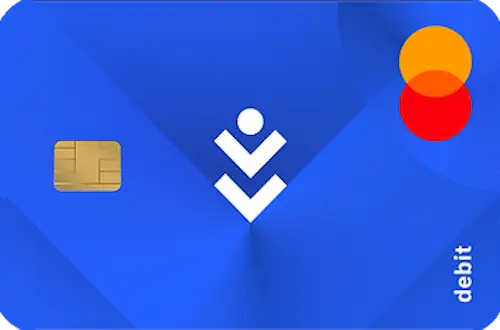
1. COCA Visa Card
Self-Banking: 8% Cashback + 5% APY + 0% FX
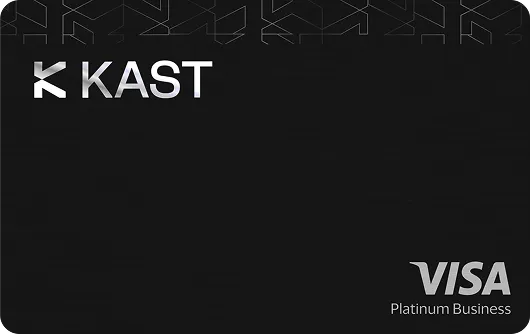
2. KAST X Card
Chromoly Metal Visa Infinite: 2% USD Cashback + 1% Points at $1,000/yr
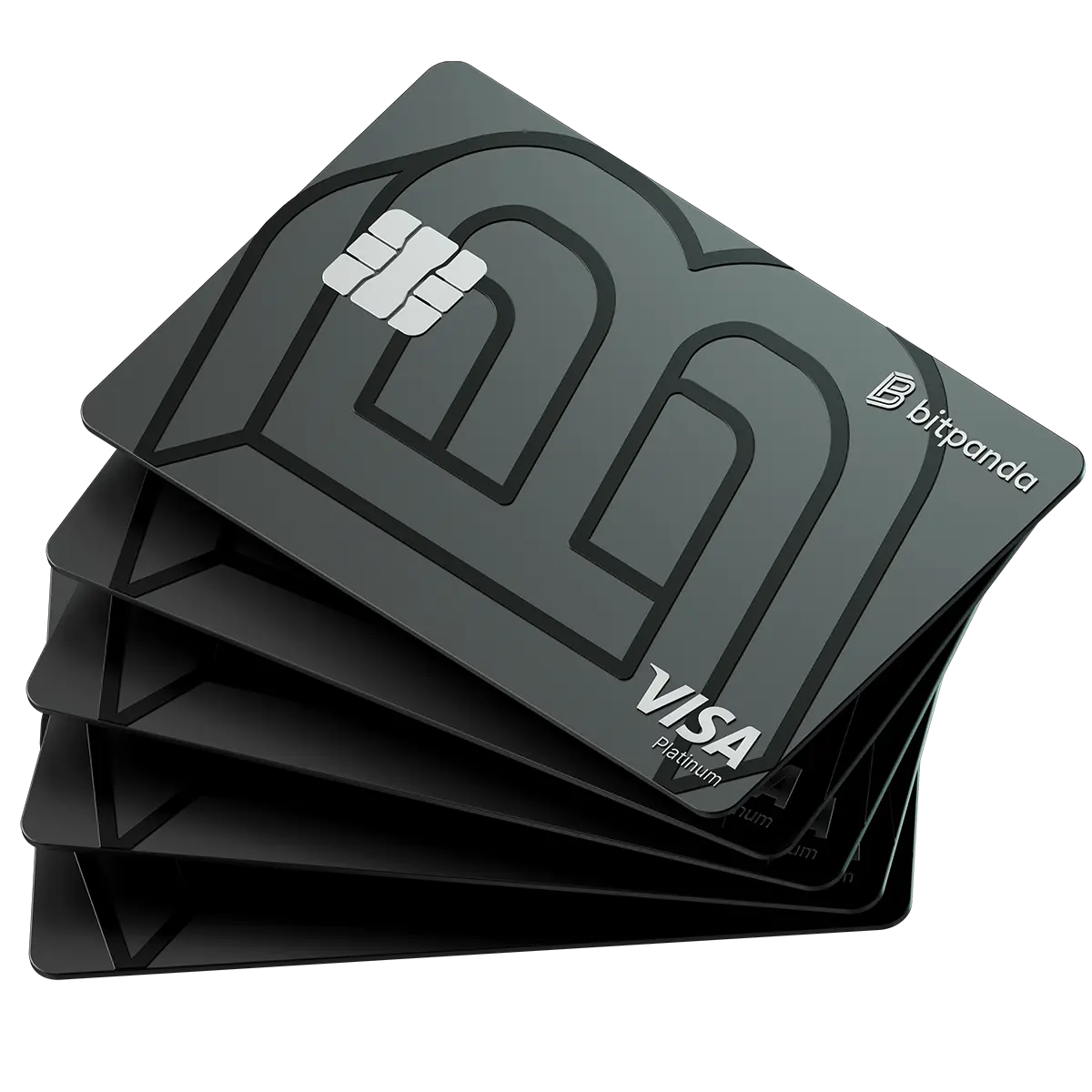
3. Bitpanda Visa Platinum Card
The EU Crypto Spending Card - 1% Back, Zero Fees
4. Gnosis Pay Card
Your Keys, Your Card, Your Money
5. Nexo Dual Card
Credit/Debit Toggle: 2% Rewards + Up to 14% APY on Idle Balance
6. Plasma One Core Card
Self-Custodial Visa for AI Spenders - 3% Base, 5% on AI Spend, ChatGPT Go Rebate
Complete list:
All 31 crypto cards available in Liechtenstein in September 2026
This table includes every crypto card we currently track for Liechtenstein. Rows marked Top pick are ranked and reviewed above.
| Crypto card | Max rewards | Annual fee | FX fee | Type | Custody |
|---|---|---|---|---|---|
1 COCA Visa CardTop pick | Up to 8% rewards | Free | 0% | Debit | Self-custody |
2 KAST X CardTop pick | Up to 2% rewards | $1000 | 0.5% | Prepaid | Custodial |
3 Bitpanda Visa Platinum CardTop pick | Up to 1% rewards | Free | 0% | Debit | Custodial |
4 Gnosis Pay CardTop pick | Up to 5% rewards | Free | 0% | Debit | Self-custody |
5 Nexo Dual CardTop pick | Up to 2% rewards | Free | 0.2% | Crypto Backed Credit | Hybrid |
6 Plasma One Core CardTop pick | Up to 3% rewards | $199 | 0.5% | Crypto Backed Credit | Self-custody |
| Up to 10% rewards | Free | 3% | Debit | Hybrid | |
| Up to 9% rewards | $240 | 2.5% | Debit | Non-custodial | |
| Up to 8% points | Free | 0.4% | Debit | Custodial | |
| Up to 4% rewards | Free | 0% | Crypto Backed Credit | Self-custody | |
| Up to 4% rewards | Free | 0% | Crypto Backed Credit | Self-custody | |
| Up to 3% rewards | Free | 0.5% | Crypto Backed Credit | Self-custody | |
| Up to 3% rewards | Free | 0.25% | Crypto Backed Credit | Self-custody | |
| Up to 3% rewards | Free | 0% | Crypto Backed Credit | Self-custody | |
| Up to 3% rewards | $10000 | 0.5% | Prepaid | Custodial | |
| Up to 3% rewards | Free | 0% | Debit | Custodial | |
| Up to 2% rewards | Free | 0% | Debit | Custodial | |
| Up to 2% rewards | Free | 0% | Debit | Self-custody | |
| Up to 2% rewards | Free | 0% | Debit | Custodial | |
| Up to 2% rewards | Free | 1% | Crypto Backed Credit | Self-custody | |
| Up to 1.5% rewards | Free | 0.5% | Prepaid | Custodial | |
| Up to 1.5% rewards | Free | 0.5% | Prepaid | Custodial | |
| Up to 1% rewards | Free | 1.75% | Debit | Self-custody | |
| Up to 1% rewards | Free | 1% | Debit | Self-custody | |
| Up to 1% rewards | Free | TBD | Prepaid | Custodial | |
| Varies | Free | 1.7% | Prepaid | Custodial | |
| cashback | Free | 1.75% | Prepaid | Self-custody | |
| cashback | $199 | 0.75% | Prepaid | Self-custody | |
| cashback | Free | 0.5% | Prepaid | Custodial | |
| none | Free | 1% | Debit | Self-custody | |
| Varies | Free | 1.5% | Debit | Custodial |
Crypto Card Regulation in Liechtenstein
Liechtenstein regulates crypto through two overlapping frameworks, supervised by one authority: the Financial Market Authority (FMA Liechtenstein). The national law is the Token and TT Service Provider Act (TVTG), the "Blockchain Act," in force since 1 January 2020 and the first comprehensive token-economy statute anywhere. It defines how tokens are issued and how "trustworthy technology" service providers (custody, exchange, token generation) must register and operate.
MiCAR governs EEA-harmonized crypto-asset services and asset-referenced and e-money tokens. The TVTG continues to cover areas outside MiCAR, including NFTs and the civil-law aspects of tokens. A card issuer or custodian serving Liechtenstein operates under one or both, depending on the product.
The FMA confirms that the MiCAR transition ended July 1, 2026. A TVTG registration alone no longer authorizes a service that requires MiCAR authorization.
The practical proof is Bank Frick, the Balzers private bank that combines a traditional securities account with regulated digital-asset custody under the TVTG. It has received a MiCAR authorization from the FMA, which lets it offer regulated crypto products across all 30 EEA countries from a Liechtenstein base.
LGT, LLB, and VP Bank handle the wealth-management side; Bank Frick is the one that actually bridges francs and on-chain assets. For a resident, this means crypto custody and on-ramping can sit inside a fully licensed local bank, not just an offshore app.
The historical inflection is the TVTG itself. By legislating the token economy in 2020, years ahead of MiCA, Liechtenstein deliberately positioned a 40,000-person principality as a blockchain domicile, attracting token issuers and custodians that wanted European legal certainty without waiting for Brussels. The 2024-2025 MiCA transition folded that head start into the EEA-wide regime rather than replacing it, leaving Liechtenstein with both a national blockchain law and an EEA passport.
Tax Treatment of Card Rewards in Liechtenstein
Tax is where Liechtenstein quietly beats almost every country on this site, through a wealth-tax structure that works nothing like the capital-gains model most countries use.
Start with the headline. Capital gains on private movable assets, including crypto and securities, are tax-exempt, with no holding period, for domestic and foreign assets alike. A private investor who buys Bitcoin and later sells it, or spends it through a card, realizes a gain that Liechtenstein simply does not tax. The only carve-out is gains on domestic real estate. So the disposition event that makes a card purchase taxable in the US, the UK, or Germany is a non-event here.
The trade-off is the wealth tax, levied not as a separate bill but folded into income tax. Your net wealth, crypto included, generates a notional yield (the Sollertrag, currently 4%) that is added to taxable income and taxed at your income rate. Income tax runs on a state rate topping out at 8% plus a municipal surcharge of roughly 150-180%, for a combined top rate near 22-24%. Applied to the 4% notional yield, that works out to under 1% of net wealth a year even at the top.
| Holding asset through the year | Tax on the gain when you spend | Tax on simply holding it |
|---|---|---|
| Appreciated BTC / ETH (private) | None (private capital gain, exempt) | In the 4% Sollertrag wealth base |
| Stablecoins (USDC / USDT) | None (private capital gain, exempt) | In the 4% Sollertrag wealth base |
| Staked token earning yield | None on the gain | Generally via the wealth base; confirm staking |
There is a neat second-order effect: income from assets already in the wealth-tax base is generally not taxed again, so interest on declared crypto is typically covered by the notional-yield calculation rather than charged separately. Staking rewards are a more specialized case, often handled through the same framework but worth confirming with a local adviser.
Because holdings sit in the wealth base, spending appreciated crypto through a card also does double duty: the gain is exempt, and the spend shrinks the wealth that the Sollertrag applies to next year.
Two limits matter. First, this is the treatment for a private investor. If your activity rises to organized, business-like trading, the gains become taxable business income, the same private-versus-commercial line Switzerland draws. Second, you must actually declare crypto holdings in your wealth tax return; the exemption is on the gain, not on disclosure. Corporate crypto activity is taxed under the flat 12.5% corporate income tax, and there is no VAT on crypto-as-payment.
The takeaway flips the usual advice. On most country pages we tell you to fund with stablecoins to avoid a taxable disposition. In Liechtenstein there is no disposition to avoid, so a private resident can fund a card with appreciated Bitcoin and spend it freely. Maximize cashback, mind the franc conversion, and declare the holdings.
How to Apply from Liechtenstein
Applying for a crypto card in Liechtenstein usually requires a valid passport or Liechtenstein/EEA identity card and proof of local address. Local banks may ask for more extensive KYC.
Residence is the gating step for many applicants. Liechtenstein caps residence permits, and many cross-border workers live in Austria or Switzerland. They should apply based on their actual country of residence.
For EEA-licensed cards (COCA, Bitpanda, Gnosis Pay, Nexo), verification mirrors the rest of the bloc and is usually same-day. For the local route, Bank Frick and LLB onboard against passport plus address, with LLB offering remote video onboarding for EU residents from CHF 50,000. Cross-border commuters generally hold the card against their home-country residence rather than a Liechtenstein one, which is worth confirming with the issuer before applying.
Spending Tips for Liechtenstein
The first move in Liechtenstein is to internalize that you are not playing the tax game everyone else plays. There is no capital-gains tax to dodge on a private holding, so you do not need to fund the card with stablecoins to stay clean. You fund it with whatever you want to spend, take the cashback, and only watch two things: the franc conversion and the wealth-tax declaration.
Card selection by use case
- COCA (up to 8%, 0% FX, $0, non-custodial, 5% USD APY): the default everyday card, with no issuer franc-conversion markup. The 8% tier needs a staked $COCA position; the free tier pays 1%.
- KAST X Card (2% plus 1% points, 0.5% FX, $1,000/yr, metal Visa Infinite): the premium pick for the affluent resident who wants a chromoly metal card and can carry the fee.
- Bitpanda Card (1%, 0% FX, $0): the regulated, German-language choice for residents who value a MiCAR license and an Austrian issuer over a higher rate.
- Gnosis Pay (up to 5%, 0% FX, $0): on-chain self-custody spending for the resident already running an EEA Safe wallet.
- Nexo (2%, 0.2% FX, $0): a crypto-backed credit line to spend against holdings while staying invested, with near-zero franc conversion.
- Plasma One (3% base, 0.5% FX): a self-custodial Visa with an AI-subscription rebate, for the crypto-native who wants perks beyond cashback.
The franc problem, in numbers
Because cards settle in euros or dollars, a Swiss-franc purchase converts every time. At a realistic CHF 4,000/month of card spend, a 2.5% FX card (such as Plutus) costs roughly CHF 1,200 a year in conversion alone, before any cashback. A 0% FX card costs nothing on conversion. COCA earns at 8% on this spend, but Elite's $350 monthly claim capacity limits withdrawals to about $4,200 a year, roughly CHF 3,300-3,400 depending on exchange rates. In a franc country, both FX and reward limits matter.
A Vaduz monthly budget
Costs in Vaduz are Swiss-tier. A one-bedroom in the capital rents for roughly CHF 1,500-2,500, and premium flats run to CHF 4,000; the secondary towns of Schaan, Balzers, and Eschen are 20-25% cheaper. Groceries land about 5% above New York prices because almost everything is imported and priced in francs, and a mid-range restaurant runs CHF 20-40 a head. A single resident spends roughly CHF 3,300/month before rent.
Salaries are the counterweight: the average is around CHF 9,650/month, so the median household clears its costs with room to spare. For a resident spending CHF 4,000/month on COCA's 8% tier with 0% FX, the headline earning exceeds the base claim capacity; up to $4,200 a year can be withdrawn before any capacity added through extra $COCA staking.
Funding routes and local rails
There is no friction here. Liechtenstein is in the EEA and in a currency union with Switzerland, so there are no capital controls and no blocked transfers. Move francs or euros from LLB, LGT, VP Bank, or Bank Frick to Kraken, Bitpanda, or directly into Bank Frick's own regulated custody, buy crypto, and load the card.
Bank Frick is the standout: a licensed local bank that trades and custodies digital assets under the TVTG, so the on-ramp can stay entirely onshore. Contactless and mobile payment are universal, and TWINT, the Swiss mobile-payment app, runs through Liechtenstein banks for domestic transfers.
Common mistakes
Mistake 1: Paying franc spend through a high-FX card. A 2.5% FX card on CHF 4,000/month costs about CHF 1,200 a year, often more than the cashback it pays. How to avoid it: for domestic spending use a 0% FX card (COCA, Bitpanda, Gnosis Pay) and keep high-FX cards for euro or dollar purchases only.
Mistake 2: Forgetting the wealth-tax declaration. The gain is tax-free, but crypto holdings still belong in your wealth tax return under the 4% Sollertrag. Leaving them off is the actual tax risk, not the spending. How to avoid it: declare your year-end crypto balances like any other asset; the rate is low, but the omission is what draws scrutiny.
Mistake 3: Crossing the private-to-commercial line without noticing. Frequent, leveraged, business-like trading can re-characterize your gains as taxable business income. How to avoid it: keep private investing genuinely private, and take advice before running anything that looks like a trading operation.
Mistake 4: Assuming Liechtenstein tax as a cross-border commuter. If you live in Austria or Switzerland and commute in, your tax home is usually there, not here. How to avoid it: apply the cross-border commuter rules to your salary and card, and do not assume the 0% gains treatment unless you are actually resident.
Supported Exchanges & Wallets in Liechtenstein
The exchange and custody layer in Liechtenstein is unusually deep for a country this size, because the banks themselves are in it. Bank Frick is the centerpiece: a TVTG-regulated, MiCAR-authorized bank offering digital-asset trading and custody alongside a normal securities account, so a resident can buy and hold crypto inside a licensed local institution. LGT, LLB, and VP Bank cover wealth management and increasingly tokenized-asset services for their private clients.
On the retail side, Bitpanda (Austrian, MiCAR-licensed) and Kraken both serve Liechtenstein residents with full euro on-ramps, and either pairs naturally with their respective cards.
Liechtenstein also has a home-grown exchange in LCX (Liechtenstein Cryptoassets Exchange), a locally registered CASP since 2020, though its MiCA authorization was still under FMA review as of mid-2026, so its EEA-client services paused when the transition period closed on July 1, 2026. Either way, residents plug into EEA liquidity and Swiss-franc banking at once.
The available card menu includes COCA, Bitpanda, Gnosis Pay, Nexo, Plasma One, KAST, Plutus, and self-custody options such as MetaMask and Ledger. Plutus reaches a higher headline rate (up to 9%) but charges a EUR 240/year-equivalent fee and 2.5% FX, which matters on franc spending.
Liechtenstein residence does not by itself determine whether a person is a US person. Applicants with US tax or citizenship status should check each issuer's restrictions separately.
What would change this market is not local, since the framework is already mature. The likelier shift is European: as MiCAR-passported card issuers scale across the EEA, a Liechtenstein resident gains access automatically. For now the principality offers something rare, a fully licensed crypto-banking stack, a zero-tax treatment of private gains, and the whole European card menu, all priced in Swiss francs.
Written by SpendNode Editorial
Frequently Asked Questions
Are crypto gains taxable in Liechtenstein?
No, not for a private investor. Capital gains on private movable assets, including crypto, are tax-exempt with no holding period, so selling or spending appreciated crypto through a card is not a taxable event.
The trade-off is the wealth tax: your net worth, crypto included, generates a notional 4% yield (the Sollertrag) that is added to income and taxed at your rate (a combined top near 22-24%), which works out to under 1% of net wealth a year. Organized, business-like trading is taxed as business income instead, and holdings must still be declared.
Which crypto cards work in Liechtenstein?
The full EEA menu serves residents: COCA (up to 8%, 0% FX, non-custodial smart wallet), the Bitpanda Card (MiCAR-regulated, 0% FX), Gnosis Pay (up to 5%, 0% FX), Nexo (crypto-backed credit, 0.2% FX), Plasma One, KAST, and Plutus, plus self-custody options like MetaMask and Ledger.
Because Liechtenstein uses the Swiss franc while cards settle in euros or dollars, the 0% FX cards (COCA, Bitpanda, Gnosis Pay) are the strongest for domestic spending.
How does the Swiss franc affect crypto card spending?
Liechtenstein spends in Swiss francs, but almost every crypto card settles in euros or dollars, so a franc purchase converts every time. A 0% FX card converts at close to the interbank rate; a 2.5% FX card costs roughly CHF 1,200 a year on CHF 4,000/month of spend, often more than its cashback. For domestic spending choose a 0% FX card, and reserve any high-FX card for euro or dollar purchases.
Who regulates crypto cards in Liechtenstein?
The Financial Market Authority (FMA Liechtenstein). Two frameworks apply: the Token and TT Service Provider Act (the TVTG, or Blockchain Act, in force since 2020) and the EU's MiCA, which Liechtenstein adopted through the EEA. MiCA covers EEA-harmonized crypto services while the TVTG covers what it does not, such as NFTs and the civil-law side of tokens. Bank Frick, a local bank, holds a MiCAR authorization from the FMA and offers regulated crypto custody onshore.
Do I need Liechtenstein residency to get a crypto card?
Many EEA-licensed cards onboard any EEA resident, though each issuer sets its own country eligibility, so confirm yours lists Liechtenstein. Verification is usually same-day against a passport and address.
Liechtenstein caps residence permits tightly, so much of the workforce commutes from Austria or Switzerland and banks against home-country residence. Cross-border commuters are generally taxed at home, not in Liechtenstein, so do not assume the 0% gains treatment unless you are actually resident.


