

Best Crypto Cards in Gibraltar (2026)
Gibraltar has no capital gains tax on crypto, runs the world's first DLT licensing regime (not MiCA), and spends in pounds. Residency decides who gets the 0%.
Verified for Gibraltar
21 crypto cards available
Local currency: GBP
If you run a DLT company on Main Street, or you are one of the 15,000 people who cross from La Linea every morning to work in town, the crypto-card question in Gibraltar turns on one fact: the Rock taxes crypto gains at zero. The answer, as in a small handful of other markets, is about cashback and currency, not tax. But who counts as a Gibraltar resident matters more here than almost anywhere else.
Gibraltar is a 33,000-person British Overseas Territory that turned itself into a crypto domicile on purpose. It uses the pound, left the EU with the UK, and in 2018 became the first jurisdiction in the world to write a purpose-built licensing regime for blockchain businesses. Xapo Bank, eToro, and LMAX Digital all run from here. So the card menu is the global, self-custody-friendly one rather than the EEA's, and the cards separate mostly on rewards and on how they handle a pound.
Summary:
Which crypto cards are best in Gibraltar?
The best crypto cards in Gibraltar in September 2026 are COCA Visa Card, Plasma One Core Card, KAST X Card, Oobit Visa Card, and MetaMask Virtual Card. The detailed ranking below explains the local tax, fee, and availability trade-offs.
| Crypto card | Base reward | Net after fees | Annual fee | FX fee | Type |
|---|---|---|---|---|---|
| 1% baseup to 8% with a large $COCA stake; $15-$350/mo claim capacity by tier | 1% | Free | 0% | Debit | |
| 3% base3% base, up to 5% on AI spend; ChatGPT Go rebate; $199/yr or 20k XPL | 2.5% | $199 | 0.5% | Crypto Backed Credit | |
| 2% base | 1.5% | $1000 | 0.5% | Prepaid | |
| 5% baseup to 10% in OOB at Level 2, no stake | 2% | Free | 3% | Debit | |
| 1% base | 0% | Free | 1% | Debit |
The FX column matters because Gibraltar spends in pounds, while almost every crypto card settles in dollars or euros. The local currency is technically the Gibraltar pound, pegged one-to-one to sterling and interchangeable with it, so a card purchase in town still crosses a currency line. A 0% FX card converts at close to the interbank rate; a 3% FX card skims every round at a Casemates Square bar. For domestic spending, COCA's 0% FX is the one to beat.
COCA is the anchor: a non-custodial Visa with up to 8% cashback, 0% FX, no annual fee, and 5% APY on eligible USD. With no tax on private crypto gains, the card fits a rate-and-FX strategy without exchange custody. The 8% tier needs a staked $COCA position; the free Starter tier pays 1%, and monthly reward claims range from $15 to $350 by tier.
Plasma One and MetaMask are self-custodial options for residents who want to control their spending funds.
KAST's X Card is the premium metal Visa Infinite option. Oobit is the no-stake tap-to-pay alternative, though its 3% FX charge matters on pound spending.
Two kinds of people use these cards here, and the tax gap between them is enormous. The Gibraltar resident, ordinarily resident on the Rock, pays zero on crypto gains and can spend appreciated coins through a card with no tax at all.
The cross-border worker who earns in Gibraltar but lives in La Linea or further into Andalusia is a Spanish tax resident, so Spain taxes their crypto gains at 19% to 28%, and the card is an FX tool on a pound salary, not a tax-free engine. The 0% headline belongs to residents only.
Best Card For Every Need in Gibraltar
Top 5 Crypto Cards in Gibraltar
Because a private investor pays no tax on crypto gains, the disposition math that dominates most country pages disappears, and the cards are judged on rewards rate, pound-conversion cost, and custody. Gibraltar's identity as a self-custody, DLT-licensed jurisdiction also pulls the list toward cards that keep your keys rather than custodial exchange products.
COCA leads on the combination this market rewards: up to 8%, 0% FX on pound spend, a non-custodial wallet, and 5% APY on eligible idle USD. Plasma One is the self-custodial Visa with a real perk stack, pairing 3% base cashback with an AI-subscription rebate, a natural second for a crypto-native resident.
KAST's X Card pays 2% plus 1% in points with 0.5% FX, but its annual fee makes it a high-spend choice.
Oobit works for someone already holding USDT who wants tap-to-pay without a token stake, though 3% FX is steep against the pound. MetaMask suits residents who already use its wallet and want to keep funds in self-custody until spending.
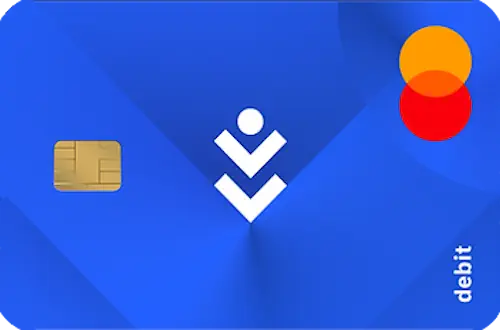
1. COCA Visa Card
Self-Banking: 8% Cashback + 5% APY + 0% FX
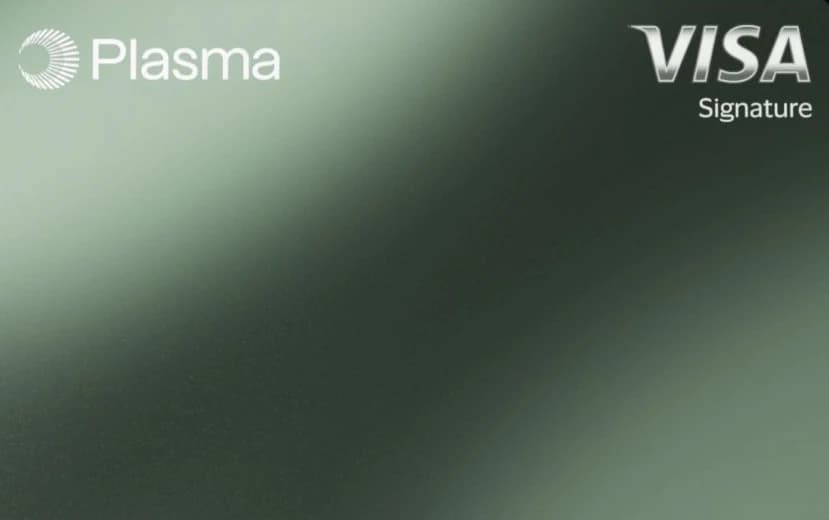
2. Plasma One Core Card
Self-Custodial Visa for AI Spenders - 3% Base, 5% on AI Spend, ChatGPT Go Rebate
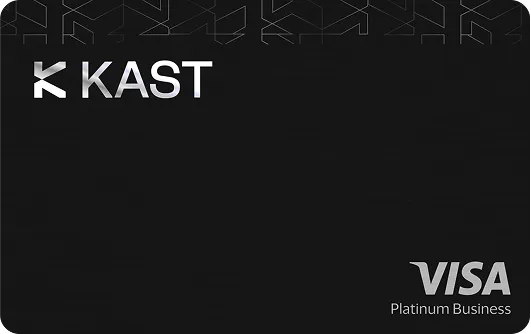
3. KAST X Card
Chromoly Metal Visa Infinite: 2% USD Cashback + 1% Points at $1,000/yr

4. Oobit Visa Card
Spend Crypto Anywhere Visa Works - Self-Custody or In-App
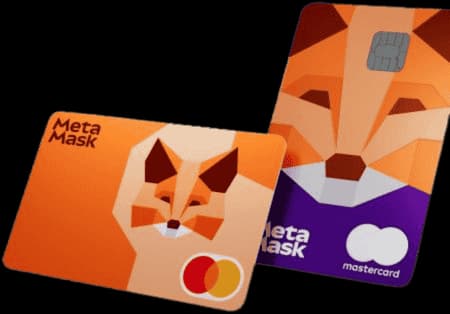
5. MetaMask Virtual Card
Sovereign Spending: 1% Cashback + Self-Custody + MetaMask Security
Complete list:
All 21 crypto cards available in Gibraltar in September 2026
This table includes every crypto card we currently track for Gibraltar. Rows marked Top pick are ranked and reviewed above.
| Crypto card | Max rewards | Annual fee | FX fee | Type | Custody |
|---|---|---|---|---|---|
1 COCA Visa CardTop pick | Up to 8% rewards | Free | 0% | Debit | Self-custody |
2 Plasma One Core CardTop pick | Up to 3% rewards | $199 | 0.5% | Crypto Backed Credit | Self-custody |
3 KAST X CardTop pick | Up to 2% rewards | $1000 | 0.5% | Prepaid | Custodial |
4 Oobit Visa CardTop pick | Up to 10% rewards | Free | 3% | Debit | Hybrid |
5 MetaMask Virtual CardTop pick | Up to 1% rewards | Free | 1% | Debit | Self-custody |
| Up to 10% rewards | Free | 0% | Prepaid | Custodial | |
| Up to 4% rewards | Free | 0% | Crypto Backed Credit | Self-custody | |
| Up to 4% rewards | Free | 0% | Crypto Backed Credit | Self-custody | |
| Up to 3% rewards | Free | 0.5% | Crypto Backed Credit | Self-custody | |
| Up to 3% rewards | Free | 0.25% | Crypto Backed Credit | Self-custody | |
| Up to 3% rewards | Free | 0% | Crypto Backed Credit | Self-custody | |
| Up to 3% rewards | $10000 | 0.5% | Prepaid | Custodial | |
| Up to 2% rewards | Free | 1% | Crypto Backed Credit | Self-custody | |
| Up to 1.5% rewards | Free | 0.5% | Prepaid | Custodial | |
| Up to 1.5% rewards | Free | 0.5% | Prepaid | Custodial | |
| Up to 1% rewards | Free | TBD | Prepaid | Custodial | |
| cashback | Free | 1.75% | Prepaid | Self-custody | |
| cashback | $199 | 0.75% | Prepaid | Self-custody | |
| cashback | Free | 0.5% | Prepaid | Custodial | |
| none | Free | 1% | Debit | Self-custody | |
| Varies | Free | 1.5% | Debit | Custodial |
Crypto Card Regulation in Gibraltar
Gibraltar regulates crypto under its own framework, not the EU's, and that distinction is the whole story. As a British Overseas Territory, Gibraltar left the EU with the United Kingdom, so MiCA does not apply here. Instead, the Gibraltar Financial Services Commission (GFSC) supervises crypto firms under the Financial Services (Distributed Ledger Technology) Regulations, the DLT framework introduced in 2018.
That framework was a genuine first. Gibraltar became the first jurisdiction anywhere to write a purpose-built licensing regime for businesses that store or transmit value using distributed ledger technology. It is principles-based, built on ten core principles covering honesty, custody, financial crime, and systems integrity, rather than a thick rulebook. A DLT provider license carries annual fees that scale with the firm's size and how complex it is to supervise.
The proof of the model is who set up shop. Xapo Bank holds a full Gibraltar banking license (granted in 2020) and runs crypto-native private banking; eligible fiat deposits are covered up to GBP 120,000 by the Gibraltar deposit guarantee scheme (crypto custody is not). eToro and LMAX Digital are licensed here too. For a resident, that means crypto custody and banking can sit inside a GFSC-regulated institution, and a card can be funded from an onshore, licensed account.
The historical inflection has two dates. The 2018 DLT regulations made Gibraltar an early magnet for crypto and online-gaming firms looking for legal certainty before MiCA existed. Then, in April 2026 the EU Council greenlit the UK-EU treaty on Gibraltar. It was signed on July 14, 2026 and entered provisional application on July 15, 2026, removing the land-border checks with Spain that the cross-border economy (half the workforce) had lived with since Brexit.
Routine checks moved to Gibraltar's airport and port instead.
By 2026, founders weigh Gibraltar against MiCA hubs on tax, substance, and reporting, and its pitch is a lighter, faster regime outside the EU perimeter.
Tax Treatment of Card Rewards in Gibraltar
Gibraltar's tax treatment of crypto is close to the simplest on this site: for a private investor, there is almost nothing to pay.
Gibraltar has no capital gains tax, no wealth tax, no VAT, and no sales tax. A resident who buys Bitcoin and later sells it, or spends it through a card, realizes a gain the territory does not tax at all. The one test that matters is the badges of trade: if your crypto activity is genuinely investing, the gain is capital and untaxed; if it is organized, business-like trading, it is treated as income and taxed under the income tax rules. Most ordinary holders fall on the capital side.
Income, by contrast, is taxed, and that catches employment and self-employment. Gibraltar runs two systems and assesses you under whichever costs less: the Allowances Based System (rates of 14%, 17%, and 39% across bands, with income under GBP 11,450 exempt) and the Gross Income Based System (a banded schedule topping out around 25-28% for higher earners). Crypto received as salary or as genuine trading income lands here; crypto held as an investment does not.
| Crypto activity (resident) | How Gibraltar treats it |
|---|---|
| Buying, holding, then spending appreciated crypto | Capital gain, untaxed (no CGT) |
| Card cashback on personal spending | Generally a rebate, not employment income |
| Organized, business-like trading | Income, taxed under the income tax system |
| Crypto paid as salary | Employment income, taxed under the income tax system |
Because there is no disposition tax, the advice that runs through most of this site, fund the card with stablecoins to avoid a taxable sale, is unnecessary for a Gibraltar resident. You can fund a card with appreciated Bitcoin and spend it directly.
The catch is residency, and it is a large one. Gibraltar taxes the ordinarily resident; the cross-border worker who lives in Spain is a Spanish tax resident and is taxed by Spain on worldwide crypto gains (the savings-income rates run 19% to 28%), plus Spain's declaration regime for foreign-held assets. Earning your salary in Gibraltar does not buy you Gibraltar's 0% on crypto unless you genuinely live on the Rock. Confirm your residency status before assuming the headline applies to you.
How to Apply from Gibraltar
Onboarding in Gibraltar is a GBP, UK-style flow rather than an EEA one. Expect to provide a passport or national identity card, proof of a Gibraltar address, and, for the local banks, the deeper KYC a private bank or DLT-licensed firm runs. Gibraltar issues its own civil ID, and residence is controlled, so a meaningful share of workers hold the card against a Spanish address instead.
For wallet-based cards such as COCA, Plasma One, and MetaMask, each issuer sets its own eligibility and KYC. Gibraltar appearing on a supported-country list does not guarantee approval. Custody models differ, from direct key control to managed smart wallets.
Xapo Bank requires passport and address checks. Cross-border workers generally apply using their Spanish residence and must follow Spanish tax reporting rules.
Spending Tips for Gibraltar
The first thing to settle in Gibraltar is which tax world you live in, because the answer changes everything. A Gibraltar resident pays nothing on crypto gains and can spend appreciated coins freely. A cross-border worker living in Spain is taxed by Spain and should treat the card the way a Spanish resident would. Everything below assumes you are actually resident on the Rock.
Card selection by use case
- COCA (up to 8%, 0% FX, $0, non-custodial, 5% USD APY): the default everyday card, with no issuer pound-conversion markup. The 8% tier needs a staked $COCA position; the free tier pays 1%.
- Plasma One (3% base plus a ChatGPT rebate, self-custodial Visa): the self-custody pick with a perk stack, fitting for a DLT-hub resident.
- KAST X Card (2% plus 1% points, 0.5% FX, $1,000/yr, metal Visa Infinite): the premium pick for the finance-sector resident who wants a chromoly metal card and can carry the fee.
- Oobit (up to 10% on OOB-funded spend, ~3% net, $0): a no-stake debit option, best kept for non-pound spend given its 3% FX.
- MetaMask (1%, 1% FX, $0): on-chain self-custody for the resident who runs a wallet and wants the card to match.
The pound problem, in numbers
Because cards settle in dollars or euros, a pound purchase converts every time. On GBP 2,500/month of card spend, a 3% FX card costs about GBP 900 a year in conversion before any rewards, while a 0% FX card costs nothing. So COCA's 8% tier returns roughly GBP 2,400 a year of cashback on that spend, where a high-FX card can hand much of its rewards back at the till. In a pound economy, the FX rate is the first thing to check, not the headline cashback.
Cost of living and the cross-border arbitrage
Gibraltar housing is among the most expensive in Europe per square metre, because the territory has nowhere to expand and demand from residents and firms never lets up. That math is why roughly 15,000 workers, close to half the workforce, live across the border in La Linea or further into Andalusia, where rent and groceries are a fraction of the Rock's while the salary stays at near-London levels.
Since the UK-EU treaty entered provisional application in July 2026, that commute runs without land-border checks.
For a resident actually living in Gibraltar and spending GBP 2,500/month on a 0% FX card at COCA's 8% tier, that is about GBP 2,400 a year in cashback, on top of paying no tax on the crypto behind it. The cross-border worker captures the FX value but not the tax break.
Funding routes and local rails
Gibraltar uses the pound and has no general capital controls. Residents may fund an exchange from a local bank such as Gibraltar International Bank, NatWest International, or Xapo Bank, subject to each bank's controls and the card issuer's funding rules.
Xapo provides a licensed onshore banking and Bitcoin custody route. Contactless acceptance is widespread, though not every merchant or card supports every mobile-wallet feature.
Common mistakes
Mistake 1: Assuming the 0% rate as a cross-border worker. Earning in Gibraltar but living in Spain makes you a Spanish tax resident, and Spain taxes crypto gains at 19% to 28%. How to avoid it: apply Spanish rules to your gains and reporting, and do not treat the Gibraltar headline as yours unless you are ordinarily resident on the Rock.
Mistake 2: Paying pound spend through a high-FX card. A 3% FX card on GBP 2,500/month costs around GBP 900 a year, often more than its cashback. How to avoid it: use a 0% FX card such as COCA for domestic spending, and reserve higher-FX cards for dollar or euro purchases.
Mistake 3: Letting investing drift into trading. Heavy, business-like trading can cross the badges-of-trade line and turn an untaxed capital gain into taxable income. How to avoid it: keep private investing genuinely private, and take advice before running anything that resembles a trading desk.
Supported Exchanges & Wallets in Gibraltar
For a territory of 33,000 people, the on-ramp layer is unusually deep, because the licensed firms are based here rather than passported in. Xapo Bank is the centerpiece: a GFSC-licensed bank that custodies Bitcoin, pays interest, and runs crypto-native private banking from Gibraltar. eToro and LMAX Digital are licensed under the same DLT regime, giving residents regulated trading and institutional liquidity onshore.
There is no Gibraltar-only retail exchange of note, and none is needed, because the global venues serve residents and the local banks bridge pounds and on-chain assets. The unusual thing is the concentration: a 33,000-person jurisdiction hosting a chartered crypto bank and several DLT-licensed firms is a direct result of getting the framework written first, in 2018.
On the card side, the menu comes mainly from global issuers rather than EEA-only programs: COCA, Plasma One, KAST, Oobit, and MetaMask, all covered in our main card rankings, serve residents. Their custody ranges from custodial balances to self-custody wallets. The EEA-only cards that dominate a euro market do not list Gibraltar, since it sits outside that perimeter, but the cards that bar US persons are no obstacle here.
What would change this market is regulatory rather than local: if Gibraltar's regime diverges further from MiCA, or the UK builds its own, the available stack will follow the licensing, not the geography.
Written by SpendNode Editorial
Frequently Asked Questions
Is crypto taxed in Gibraltar?
Not for a private investor. Gibraltar has no capital gains tax, no wealth tax, and no VAT, so selling or spending appreciated crypto is untaxed. The badges-of-trade test is the line: genuine investing stays capital and untaxed, while organized, business-like trading is treated as income.
Income itself is taxed. Crypto received as salary or as trading income falls under Gibraltar's income tax (two systems, assessed at the lower result, with top bands in the 25-39% range), but crypto held as an investment does not.
Which crypto cards work in Gibraltar?
Because Gibraltar sits outside the EEA, the menu is the global, wallet-based set rather than the EU's: COCA (up to 8%, 0% FX, non-custodial smart wallet), Plasma One (self-custodial Visa), KAST (including the premium X Card), Oobit, and MetaMask all serve residents.
The EEA-only cards (Bitpanda, Gnosis Pay, Nexo, and similar) do not list Gibraltar. Since the territory uses the pound, the 0% FX cards are strongest for domestic spending.
Do cross-border workers from Spain get Gibraltar's 0% rate?
No. The roughly 15,000 people who work in Gibraltar but live in La Linea or Andalusia are Spanish tax residents, so Spain taxes their worldwide crypto gains at 19% to 28%, plus Spain's foreign-asset reporting. Gibraltar's zero rate belongs to people who are ordinarily resident on the Rock. Earning a pound salary in Gibraltar does not, on its own, buy the tax break, so confirm your residency before assuming it.
Who regulates crypto in Gibraltar, and does MiCA apply?
The Gibraltar Financial Services Commission (GFSC), under the Financial Services (Distributed Ledger Technology) Regulations introduced in 2018, the first purpose-built crypto licensing regime in the world. MiCA does not apply: as a British Overseas Territory, Gibraltar left the EU with the UK. Xapo Bank, eToro, and LMAX Digital are all licensed here, so a resident can custody crypto inside a GFSC-regulated institution.
How does the Gibraltar pound affect crypto card spending?
Gibraltar spends in pounds (the Gibraltar pound is pegged one-to-one to sterling and used interchangeably), while crypto cards settle in dollars or euros, so a domestic purchase converts every time. A 0% FX card converts near the interbank rate; a 3% FX card costs about GBP 900 a year on GBP 2,500/month of spend. For everyday spending choose a 0% FX card, and keep higher-FX cards for dollar or euro use.


