
Best Crypto Cards in Iraq (2026)
Compare crypto cards available in Iraq. Kolo, Tria, Crypto.com Icy, ether.fi, and KAST offer dollar-denominated spending in a cash-heavy, partially dollarized economy where crypto faces a central bank ban.
Verified for Iraq
29 crypto cards available
Local currency: IQD
Iraq's formal banking system is underdeveloped and USD access is tightly controlled. Daily transactions run through Qi Card, ZainCash, and FastPay more than through traditional banks like Rasheed, Rafidain, or Trade Bank of Iraq. A crypto card adds reliable international spending power that bypasses these constraints.
Iraq's economy is heavily dollarized. USD circulates alongside the Iraqi dinar (IQD) in daily commerce, and the Central Bank of Iraq (CBI) manages the official exchange rate at 1,310 IQD per USD. A crypto card funded with stablecoins provides dollar-denominated purchasing power, international e-commerce access, and 0% FX fees without relying on Iraq's constrained banking channels.
Iraq has approximately 42 million people, with a GDP of around USD 270 billion (driven by oil, which accounts for 90%+ of government revenue). Despite the CBI's crypto ban, USDT usage has grown through P2P networks and Telegram groups, driven by the diaspora (4-5 million Iraqis abroad), cross-border trade, and the desire to hold digital dollars outside the formal banking system.
| Card | Max Cashback | Annual Fee | FX Fee | Card Type | Best For |
|---|---|---|---|---|---|
| Kolo | 2% BTC | $0 | 0% | Prepaid | Free BTC cashback, $0 annual, 0% FX |
| Tria Signature | 4.5% | $109/yr | 0% | Debit | Yield-linked rewards, 0% FX |
| Crypto.com Icy | 4% | CRO stake | 0% | Prepaid | Metal card + lounge access at BGW/EBL |
| ether.fi | 3% | $0 | 1% | Debit | Borrow-to-spend, staking yield |
| KAST | 2% | $0 | 0.5% | Prepaid | Quick prepaid bridge for dollarized spending |
| RedotPay | - | $0-$100 | 1.2% | Prepaid | Stablecoin spending |
| xPlace | 0.5-2% | $0-$5,000 | 1% | Debit | Tiered SOL cashback |
Best Card For Every Need in Iraq
Top 5 Crypto Cards in Iraq
Iraq's economy runs on dollars - from oil revenues to real estate prices to everyday electronics transactions - yet the Central Bank formally banned crypto in 2017. This paradox makes USDT the shadow dollar of Iraqi commerce, and crypto cards the bridge between P2P stablecoin holdings and international spending power.
Kolo's 2% BTC cashback at $0 annual and 0% FX still gives Iraqis a simple way to earn Bitcoin rewards on offshore-funded spending. KAST matters because it gives Iraqis who already hold stablecoins a quick 2% prepaid route into cross-border dollar spending without depending on a local bank-issued international card. Tria Signature adds 4.5% yield-linked rewards with 0% FX at $109/year. Crypto.com Icy delivers 4% cashback with lounge access at BGW and EBL. ether.fi Core gives ETH holders a borrow-to-spend route without selling into local uncertainty.
Based on our Iraq research, KAST is the cleanest prepaid bridge from dollarized stablecoin balances into everyday international card spending. Kolo offers 2% BTC cashback with $0 annual and 0% FX for users who want Bitcoin rewards instead of points.
Crypto.com Icy adds 4% cashback and airport lounge access. Card acceptance is concentrated in Baghdad's Karada and Mansour districts, and more developed in the Kurdistan Region (Erbil, Sulaymaniyah).
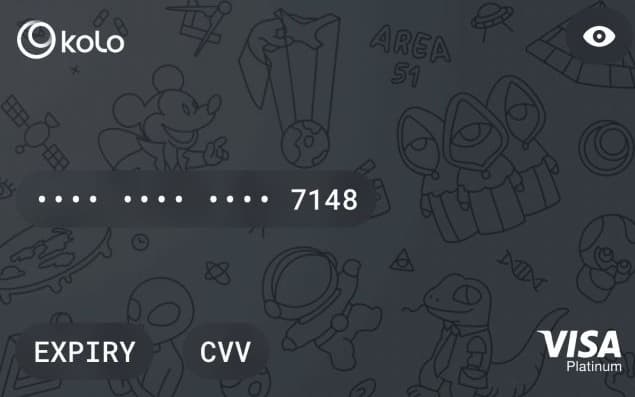
1. Kolo Card
Earn Bitcoin on Purchases: 2% BTC Cashback + Visa Platinum + 170+ Countries
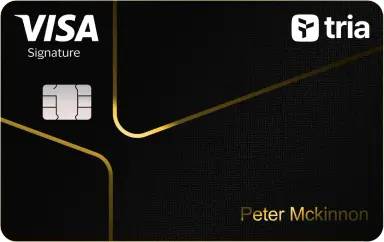
2. Tria Signature Card
High-Yield Mastery: 15% APY + Visa Signature Perks
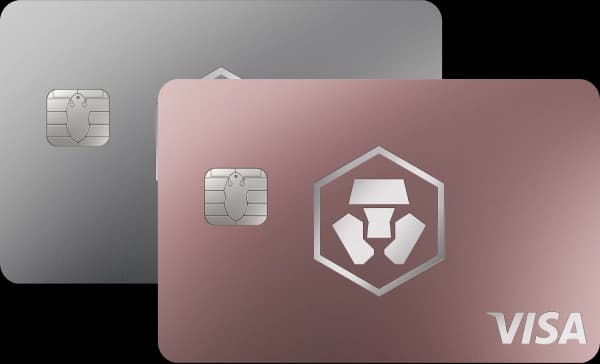
3. Private (Icy White / Rose Gold)
Elite Private Status: 4% Uncapped Cashback + Guests
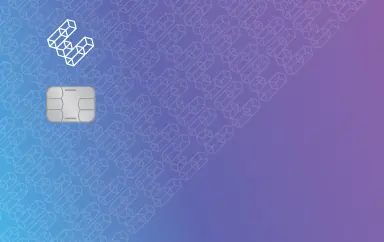
4. ether.fi Core Card
Zero Barriers: 3% Back on Every Purchase, No Stake Required
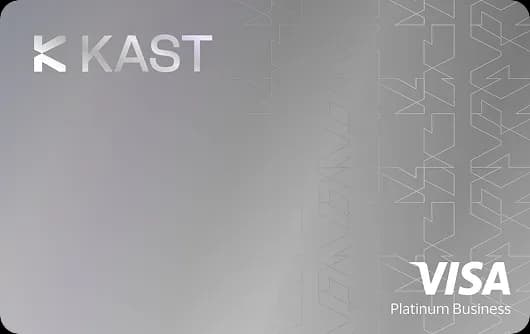
5. KAST K Card
Early Adopter Access: 2% Points + 4% $MOVE on Every Swipe
Crypto Card Regulation in Iraq
Iraq's crypto regulatory environment is restrictive. The Central Bank of Iraq (CBI) issued a directive in 2017 prohibiting banks, financial companies, and electronic payment service providers from dealing in cryptocurrencies. The ban covers trading, transfers, and holding crypto through regulated financial channels. The CBI cited money laundering risks, terrorism financing concerns, and the lack of regulatory oversight as justifications.
The Iraq Securities Commission (ISC) has not classified cryptocurrencies as securities and has not issued any separate crypto regulatory framework. The Anti-Money Laundering and Counter-Terrorism Financing Office operates under the CBI and monitors suspicious financial activity, but has limited capacity to enforce crypto-specific regulations.
The Kurdistan Region of Iraq (KRI), governed semi-autonomously, tightened its own stance in April 2025 when the Erbil General Security Directorate banned all cryptocurrency and forex transactions in the Kurdistan Region, citing a lack of legal frameworks and growing public losses tied to unregulated trading platforms. This represents a shift from the KRI's previously lax enforcement posture.
The CBI is also reportedly developing a Central Bank Digital Currency (CBDC) as a potential cash alternative to modernize the financial system.
Iraq has a formal crypto ban from the CBI, but enforcement on individual P2P activity is minimal. International crypto card issuers do not interact with Iraqi banks, so the CBI directive has limited practical impact on card usage. However, users should understand the legal risk.
Tax Treatment of Card Rewards in Iraq
Iraq's tax system is underdeveloped relative to the country's GDP. The General Tax Commission (Hay'at al-Dara'ib al-Amma) administers taxation under the Income Tax Law No. 113 of 1982 (amended).
Income Tax
Iraq applies progressive income tax on employment income: 3% on the first IQD 250,000 (approximately USD 190), 5% on IQD 250,001-500,000, 10% on IQD 500,001-1,000,000, and 15% above IQD 1,000,000 (approximately USD 763). The Kurdistan Region has similar rates but administers its own collection.
Capital Gains
Iraq does not have a separate capital gains tax for individuals. Investment income from property disposal is generally not taxed separately. Given the CBI ban on crypto, there is no framework for taxing crypto-specific gains. The General Tax Commission has not classified digital assets.
| Cashback Type | Tax When Received | Tax When Spent/Sold | Optimal Strategy |
|---|---|---|---|
| BTC/ETH cashback | Unclear (likely untaxed) | Unclear (no framework) | Hold, track basis |
| Stablecoin cashback (USDC) | Not taxed (rebate) | Near-zero gain | Spend anytime |
| Points/token cashback | Unclear (likely untaxed) | Unclear (no framework) | Convert to stablecoin |
Fund with stablecoins. Iraq's tax enforcement on individual crypto is non-existent, and the absence of capital gains tax for individuals makes all funding methods relatively safe. Stablecoins remain simplest for record-keeping.
How to Apply from Iraq
Crypto card applications from Iraq require the Iraqi National ID Card (Bitaqa al-Wataniyya), the unified biometric national ID issued by the Ministry of Interior's General Directorate of Nationality. The new National ID Card consolidates the older Civil Status ID (Hawiyya) and Nationality Certificate (Jinsiyya Iraqiyya) into a single biometric document.
Alternative identification: Iraqi passport (Jawaz Safar), issued by the General Directorate of Passports. The older Civil Status ID (Hawiyya Ahwaliyya) may still be accepted by some issuers if the new National ID has not been issued. Kurdistan Region ID documents are accepted as Iraqi national documents.
Proof of address via utility bills from the Ministry of Electricity (electricity), local water departments, or telecom bills from Zain Iraq, Asiacell, or Korek Telecom. Bank statements from Trade Bank of Iraq, Rasheed Bank, or Kurdistan International Bank also work.
KAST and RedotPay are the two prepaid routes that fit Iraqi users best when local documentation or bank relationships make mainstream international cards harder to keep active. For the large Iraqi diaspora (Jordan, UAE, Turkey, Sweden, Germany, UK, US), using host-country documents provides much broader issuer access and avoids complications with Iraqi-issued ID.
Spending Tips for Iraq
What Iraqi Banks Actually Offer (And Why They Are Not Enough)
Iraq's banking sector is one of the least developed in the Middle East relative to GDP. Rasheed Bank and Rafidain Bank (both state-owned, the two largest) serve primarily as salary payment channels for government employees. Trade Bank of Iraq (TBI) handles trade finance. Kurdistan International Bank (KIB) and RT Bank are among the better private options in the KRI.
| Bank | Debit Card | International Use | FX Rate | Digital Banking |
|---|---|---|---|---|
| Rasheed Bank | Qi Card linked | Very limited abroad | Official CBI rate | Minimal |
| Rafidain Bank | Qi Card linked | Very limited abroad | Official CBI rate | Minimal |
| Trade Bank of Iraq | Available | Limited | CBI rate + spread | Basic |
| Kurdistan International Bank | Visa/Mastercard | Works abroad | CBI rate + 2-4% | Better app |
| Cihan Bank (KRI) | Visa | Works abroad | CBI rate + 2-3% | Basic |
Most Iraqi bank cards are linked to Qi Card (Iraq's national payment switch) and have severe limitations abroad. International Visa/Mastercard cards from KIB or Cihan Bank work better but still carry 2-4% FX markup. A crypto card funded with USDC bypasses the entire Iraqi banking system, providing reliable international spending power.
The Electricity Factor
Iraq's chronic electricity shortage (the grid provides 12-18 hours/day in summer in many areas, requiring expensive private generators) means many Iraqis pay large monthly electricity bills to both the government utility and private generator operators. While these payments are typically cash, the broader point is that disposable income after utilities is constrained.
Crypto card cashback on the spending that IS card-eligible (online shopping, travel, subscriptions, Kurdistan Region retail) represents a meaningful return for Iraqi professionals.
The Dollarization Advantage
Iraq's partial dollarization means many prices, especially for electronics, imported goods, and real estate, are quoted in USD. We track Iraq-specific FX spreads - the CBI's official rate (1,310 IQD/USD) and the parallel market rate often diverge by 5-10%. Holding stablecoins eliminates this spread risk. A USDC-funded crypto card spends at the interbank rate, avoiding the parallel market premium entirely.
Card Selection by Use Case
- Free BTC cashback: Kolo (2% BTC, $0 annual, 0% FX)
- Quick prepaid dollar bridge: KAST (2% from cashback cards, $0 annual, 0.5% FX)
- Yield-linked rewards: Tria Signature (4.5%, $109/yr, 0% FX)
- Premium perks: Crypto.com Icy (4% + lounge access at BGW/EBL + rebates)
- Borrow-to-spend: ether.fi (3%, 1% FX, spend without selling)
KAST vs Kolo vs Crypto.com Icy Break-Even Math
All amounts in USD (IQD equivalent at official rate 1,310:1). No capital gains tax for individuals.
| Monthly Spend | KAST (2%, $0) | Kolo (2% BTC, $0) | Crypto.com Icy (4%, CRO stake) |
|---|---|---|---|
| USD 100 | USD 24/yr | USD 24/yr | USD 48/yr + lounges |
| USD 200 | USD 48/yr | USD 48/yr | USD 96/yr + lounges |
| USD 400 | USD 96/yr | USD 96/yr | USD 192/yr + lounges |
| USD 800 | USD 192/yr | USD 192/yr | USD 384/yr + lounges |
At Iraq's average monthly income (approximately USD 500 in Baghdad, higher in the Kurdistan Region), KAST at USD 120/year and Kolo at USD 120/year represent substantial value, especially when combined with avoiding parallel market FX spreads.
Spending Scenario: USD 200/month (Baghdad Professional, Stablecoin Funding)
| Funding Method | Annual Spend | Cashback (2%) | Tax (est.) | Net Cashback |
|---|---|---|---|---|
| USDC (stablecoin) | USD 2,400 | USD 48 | USD 0 | USD 48 |
| BTC (appreciated 150%) | USD 2,400 | USD 48 | USD 0 (no CGT) | USD 48 |
| IQD bank top-up | USD 2,400 | USD 48 | USD 0 | USD 48 |
USD 48/year (IQD 62,880) in cashback. All funding methods are tax-equivalent given the absence of individual capital gains tax, but stablecoin funding is operationally simplest and avoids IQD-USD conversion spreads.
Local Payment Infrastructure
The Kurdistan Region (Erbil and Sulaymaniyah) has the best card acceptance in Iraq. Visa and Mastercard work at hotels (Rotana Erbil, Divan Erbil, Grand Millennium Sulaymaniyah), shopping malls (Family Mall, Majidi Mall in Erbil, City Star Mall in Sulaymaniyah), and upscale restaurants.
Baghdad has growing acceptance at hotels (Baghdad Hotel, Al-Rashid Hotel), restaurants in Karada and Mansour districts, and shopping centers (Al-Mansour Mall, Baghdad Mall). Apple Pay and Google Pay work through international issuers for online transactions.
Cash (USD and IQD) dominates Iraq's economy. Qi Card (the most widely used electronic payment card), ZainCash (mobile wallet by Zain Iraq), and FastPay handle digital payments, but acceptance is limited compared to cash. Outside Baghdad and the Kurdistan Region, card acceptance is minimal. Basra has some hotel and mall acceptance, but Mosul, Najaf, Karbala, and other cities are overwhelmingly cash economies.
Cost of Living: Baghdad vs Kurdistan Region
Iraq's cost of living varies widely between regions. The Kurdistan Region (KRI) operates semi-autonomously with different economic conditions than federal Iraq.
| City/Area | 1-Bed Rent/Month | Groceries/Month | Card-Eligible Spending |
|---|---|---|---|
| Baghdad (Karada) | USD 300-600 | USD 150-300 | USD 200-500 |
| Baghdad (Mansour) | USD 400-800 | USD 150-300 | USD 250-600 |
| Erbil (Ankawa/Dream City) | USD 400-900 | USD 200-350 | USD 300-700 |
| Sulaymaniyah | USD 250-500 | USD 150-250 | USD 200-450 |
| Basra | USD 200-400 | USD 120-250 | USD 150-400 |
| Duhok | USD 200-400 | USD 130-250 | USD 150-400 |
The Kurdistan Region has higher costs but better infrastructure, more reliable electricity, and better card acceptance. Erbil's Dream City, Empire World, and Italian Village developments cater to a middle-to-upper class with card-ready spending habits.
The Kurdistan Economy: Iraq's Crypto Card Hub
The Kurdistan Region of Iraq (KRI) functions as a semi-autonomous entity with its own parliament, security forces (Peshmerga), and economic policy. The KRI's GDP per capita is higher than federal Iraq's, driven by oil production (approximately 450,000 barrels/day), construction, and trade. Erbil has attracted major foreign investment from Turkey, UAE, and Gulf countries.
Erbil specifically is the most card-friendly city in Iraq. Family Mall (one of the largest malls in the Middle East when it opened), Majidi Mall, Empire Mall, Rotana Hotel, Divan Hotel, and restaurants in the Citadel and Ankawa areas all have reliable Visa/Mastercard acceptance. The Kurdistan Region's relative stability makes it the practical base for crypto card usage in Iraq.
The Diaspora: 4-5 Million Iraqis Abroad
Iraq's diaspora is one of the largest in the Middle East, driven by decades of conflict:
- Jordan: 500,000+. Amman has a large Iraqi community. Business, professional services.
- UAE/Gulf: 300,000+. Concentrated in Dubai and Sharjah. Professional and labor migration.
- Turkey: 200,000+. Istanbul, Ankara. Growing community since 2014.
- Sweden: 150,000+. One of Europe's largest Iraqi communities. Sodertalje is nicknamed "Little Baghdad."
- Germany: 250,000+. Post-2015 refugee intake, growing professional class.
- UK: 100,000+. London, Manchester.
- US: 300,000+. Dearborn (Michigan), San Diego, Nashville.
For the diaspora, a crypto card serves dual purposes: personal spending efficiency in the host country, and a remittance bridge to family in Iraq. USDT transfers to a family member's crypto card in Baghdad or Erbil bypass the expensive and slow hawala/bank wire system.
Cross-Border Spending
Iraq's borders create natural FX spending corridors:
- Turkey (TRY): Iraq-Turkey trade exceeds $20 billion/year. Thousands of Iraqis travel to Istanbul, Trabzon, and Antalya for shopping, medical tourism, and vacation. TRY depreciation means zero-FX cards generate massive savings.
- Iran (IRR): Religious tourism (Mashhad, Qom) for Shia Iraqis. Cash-dominant but some card acceptance at hotels.
- Jordan (JOD): Medical tourism (Amman hospitals), business, and the Aqaba Free Zone for shopping.
- UAE (AED): Dubai shopping trips, Erbil-Dubai flights are frequent. Major FX savings.
- Kurdistan-Turkey border: Habur/Ibrahim Khalil crossing sees thousands of daily crossings for trade and shopping.
Online Shopping and International Subscriptions
Iraq's e-commerce is early but growing. Amazon does not ship directly to most of Iraq, but forwarding services from Turkey and UAE fill the gap. AliExpress ships to Iraq directly. Miswag (Iraqi e-commerce) and Orisdi (Iraqi marketplace) handle domestic purchases. In the Kurdistan Region, Toters handles delivery.
International subscriptions (Netflix, Spotify, PlayStation Plus, YouTube Premium) are billed in USD, which works in Iraq's favor given partial dollarization. A zero-FX crypto card ensures no additional markup on already dollar-denominated services.
The Oil Economy and Iraqi Spending Power
Oil accounts for 90%+ of government revenue. The federal budget (approximately $150+ billion for 2023-2025 three-year plan) funds a large public sector workforce. Government employees in Baghdad earn IQD 500,000-2,000,000/month ($380-1,530). Kurdistan Region government (KRG) employees earn similar or slightly higher. Oil workers, contractors, and the private sector professional class earn much more.
The professional class in Erbil and Baghdad represents the core crypto card demographic: USD-aware, internationally connected, and increasingly digital in their spending habits.
Supported Exchanges & Wallets in Iraq
No crypto exchanges are licensed in Iraq due to the CBI ban. The primary on-ramp is Binance P2P (IQD and USD pairs), which handles the vast majority of Iraqi crypto transactions. Telegram groups and WhatsApp networks handle P2P trading in Baghdad (Karada, Mansour, Karsh) and Erbil (Ankawa, Ainkawa, Dream City area). The Kurdistan Region's more liberal business environment has attracted crypto-adjacent fintech activity, though nothing formally licensed.
Among global card issuers, Kolo offers 2% BTC cashback at $0 annual and 0% FX. Tria Signature delivers 4.5% yield-linked rewards with 0% FX at $109/year.
Crypto.com provides metal tiers from Midnight Blue (0%) through Icy (4%, CRO stake required). ether.fi with the Core Card offers 3% cashback with 1% FX and borrow-to-spend without triggering disposal.
KAST provides 2% base rewards at $0 annual with 0.5% FX, particularly relevant for Iraqi users dealing with documentation challenges.
RedotPay offers Virtual (free) and Physical ($100) at 1.2% FX. xPlace provides tiered SOL cashback from Standard (0.5%) to Platinum (2%).
ZainCash and FastPay provide fiat digital payment infrastructure but do not integrate with crypto. The Iraqi diaspora (4-5 million, concentrated in Jordan, UAE, Turkey, Sweden, Germany, UK, US) drives large USDT remittance volume back to Iraq.
Iraq's partial dollarization, absence of individual capital gains tax, and growing USDT adoption make crypto cards a practical tool for the professional class and diaspora. The CBI ban limits formal channels but has not prevented widespread P2P activity. Card acceptance is best in the Kurdistan Region.
Written by SpendNode Editorial
Frequently Asked Questions
Which crypto cards work in Iraq?
Iraq is served by globally available crypto cards including Kolo (current 2% BTC headline, $0 annual, 0% FX), Tria Signature (4.5%, $109/yr, 0% FX), Crypto.com Icy (4%, CRO stake), ether.fi Core (3%, 1% FX), and KAST (2%, $0 annual, 0.5% FX). Card acceptance is limited to hotels and upscale merchants in Baghdad, Erbil, and Sulaymaniyah.
Is cryptocurrency legal in Iraq?
No. The Central Bank of Iraq (CBI) banned cryptocurrency trading and transfers in 2017. The directive prohibits banks and financial institutions from processing crypto transactions. However, enforcement on individual peer-to-peer crypto activity is minimal, and USDT usage has grown through Telegram and P2P channels.
How is crypto taxed in Iraq?
Iraq has no specific crypto tax legislation. The General Tax Commission applies income tax at 3-15% rates on employment income. Capital gains from investments are generally not separately taxed for individuals. Tax enforcement on crypto is non-existent given the CBI ban and the large informal economy.
Why is USDT popular in Iraq?
Iraq's economy is heavily dollarized, with USD circulating alongside the Iraqi dinar (IQD). The CBI controls the official USD-IQD exchange rate (1,310:1), but the parallel market rate diverges. USDT serves as a digital dollar for cross-border transfers, diaspora remittances, and savings outside the formal banking system.
Other Countries
View all 107 countries →


Recent Updates to Best Crypto Cards in Iraq
- Added April 2025 Erbil General Security Directorate ban on crypto/forex in Kurdistan Region
- Added CBI CBDC development plans
- Removed COCA (unavailable), MetaMask Virtual (US/EEA/UK only), Ledger CL (US/EEA/UK/LATAM only). Added Kolo (5% BTC, $0, 0% FX) and Tria Signature (4.5%, 0% FX, $109/yr)
- Corrected ether.fi FX from 0% to 1%. Fixed KAST FX from '0.5-1.75%' to 0.5%. Fixed Midnight Blue from 1% to 0%. Upgraded Crypto.com from Jade 3% to Icy 4%
- Rebuilt break-even comparison table with Kolo/KAST/Icy. Removed an incorrect COCA Elite 8% staking-tier column