

Best Crypto Cards in Senegal (2026)
Compare crypto cards available in Senegal. West Africa's second-largest francophone economy with CFA franc pegged to EUR at 655.957:1, a booming Mobile Money ecosystem (Orange Money, Wave, Free Money), and no explicit crypto ban. Dakar's tech scene drives regional adoption.
Verified for Senegal
31 crypto cards available
Local currency: XOF
Senegal is West Africa's second-largest francophone economy and, as of 2024, an emerging oil and gas producer. The Sangomar field (Woodside Energy, formerly Cairn Energy) began first oil in mid-2024, while the Greater Tortue Ahmeyim (GTA) LNG project with BP and Kosmos Energy is bringing gas production online.
These developments are transforming Senegal from a traditional peanut-and-fish economy into a petro-state in the making, with government revenue projections that could double the national budget within a decade.
Domestically, Wave (the Dakar-founded fintech backed by Stripe's Patrick Collison) disrupted West Africa's mobile money market by offering zero-fee transfers, forcing incumbents Orange Money and Free Money to slash their own fees. Together these platforms serve over 20 million mobile money accounts for a population of 17 million.
But mobile money stops at Senegal's borders. International e-commerce, foreign subscriptions, airline bookings, and cross-border online payments require Visa/Mastercard rails that no Senegalese mobile money or bank card reliably provides.
The CFA franc (XOF) is pegged to the euro at 655.957:1, guaranteed by the French Treasury through the BCEAO arrangement (headquartered in Dakar itself). This fixed peg means EUR-settled crypto cards convert at a known, stable rate. No FX volatility, no surprise devaluations. For Senegalese users, a 0% FX fee crypto card gives them the interbank EUR rate instead of the 3-5% spreads charged by CBAO or SGBS on international transactions.
| Card | Max Cashback | Annual Fee | FX Fee | Card Type | Best For |
|---|---|---|---|---|---|
| Kolo | 2% BTC | $0 | 0% | Prepaid | BTC cashback, zero fees |
| Tria Signature | 4.5% | $109 | 0% | Debit | Yield-linked rewards, 0% FX |
| Crypto.com Icy | 4% | CRO stake | 0% | Prepaid | Tiered rewards + lounge access |
| ether.fi | 3% | $0 | 1% | Debit | Borrow-to-spend, keep ETH |
| KAST | 2% | $0 | 0.5% | Prepaid | Fastest prepaid card for diaspora-funded spending |
| RedotPay | - | $0-$100 | 1.2% | Prepaid | Stablecoin spending |
| xPlace | 0.5-2% | $0 | 1% | Debit | Solana ecosystem |
| Jupiter | 4-10% JupUSD | $0 | 1% | Debit | DeFi-native spending |
Best Card For Every Need in Senegal
Top 4 Crypto Cards in Senegal
Senegal hosts the BCEAO headquarters in Dakar itself - when West Africa's central bank eventually regulates crypto, Senegalese users will be first to feel the impact. Until then, the combination of EUR 2.7 billion in annual remittances (over 10% of GDP) and Mouride trade networks already moving USDT makes crypto cards the natural next step.
Kolo at 2% BTC cashback with $0 annual fee and 0% FX converts daily spending into BTC savings on top of the FX benefit. KAST at 2% with lighter KYC converts the USDT that traders already hold into Visa spending power, without salary-linked bank card friction.
Tria Signature at 4.5% and 0% FX breaks even at approximately EUR 185/month, within reach for Dakar professionals. ether.fi at 3% and 1% FX protects against Senegal's 0-40% progressive tax bracket if gains are ever classified as income.
Based on our Senegal research, Kolo delivers 2% BTC rewards at $0 annual fee and 0% FX, converting diaspora-funded spending into BTC savings. KAST at 2% with $0 annual fee and 0.5% FX is the lowest-friction card for users funding from USDT balances.
Tria Signature at 4.5% and 0% FX suits professionals who can break even on $109/yr at EUR 185/month. ether.fi at 3% lets ETH holders spend without liquidating their position. For the 600,000+ Senegalese diaspora (mainly France, Italy, Spain, and the US), a crypto card provides a $0-annual-fee remittance channel that saves the 5-8% Western Union fees.
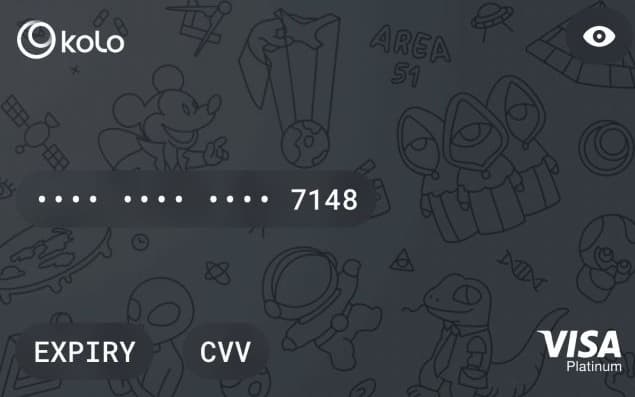
1. Kolo Card
Earn Bitcoin on Purchases: 2% BTC Cashback + Visa Platinum + 170+ Countries
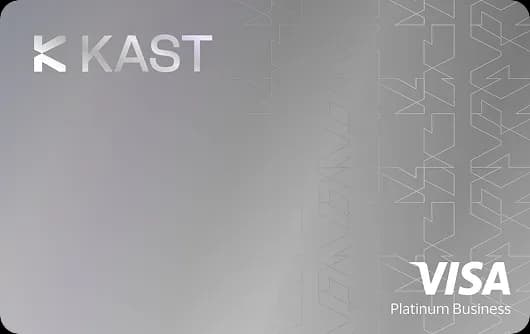
2. KAST K Card
Early Adopter Access: 2% Points + 4% $MOVE on Every Swipe
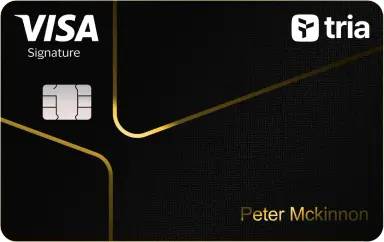
3. Tria Signature Card
High-Yield Mastery: 15% APY + Visa Signature Perks
4. ether.fi Core Card
Zero Barriers: 3% Back on Every Purchase, No Stake Required
Crypto Card Regulation in Senegal
Senegal's crypto regulation falls under the WAEMU framework governed by the BCEAO (Banque Centrale des Etats de l'Afrique de l'Ouest), headquartered in Dakar. The BCEAO's regulatory communications apply uniformly to all 8 member states. The BCEAO has repeatedly warned (2017, 2019, 2022) that cryptocurrencies are not legal tender, not regulated, and carry real risks. However, it has not explicitly banned crypto ownership or trading.
Senegal has a unique footnote in crypto history: in 2016, the Banque Regionale de Marches (BRM) partnered with eCurrency Mint to develop a blockchain-based digital currency called eCFA. The project attracted international attention but was ultimately abandoned as the BCEAO did not endorse it and opted instead to study CBDCs through its own channels.
The Senegalese financial regulator, the Commission Bancaire de l'UEMOA, oversees banking compliance. The Cellule Nationale de Traitement des Informations Financieres (CENTIF) handles AML/CFT under the WAEMU Anti-Money Laundering Directive. Crypto-specific AML requirements do not exist, but general suspicious transaction reporting obligations apply to all financial intermediaries.
Senegal's regulatory environment is identical to Ivory Coast's: permissive by omission. No ban, no protection. The BCEAO's headquarters in Dakar makes Senegal influential in any future WAEMU crypto regulation.
Tax Treatment of Card Rewards in Senegal
Senegal has no specific cryptocurrency tax legislation. Under the general tax code (Code General des Impots), crypto gains could be classified under multiple categories depending on the nature of the activity.
Personal Income Tax
Senegal applies progressive income tax (Impot sur le Revenu, IR) from 0% to 40%: 0% on the first XOF 630,000, 20% on XOF 630,001-1,500,000, 30% on XOF 1,500,001-4,000,000, 35% on XOF 4,000,001-8,000,000, 37% on XOF 8,000,001-13,500,000, and 40% above XOF 13,500,000 (approximately EUR 20,580). If crypto gains are classified as income, these rates apply.
Practical Situation
The Direction Generale des Impots et des Domaines (DGID) has not classified crypto disposals or published guidance on digital asset taxation. Tax collection infrastructure in Senegal is focused on VAT (18%), payroll taxes, and formal business profits. Individual crypto card spending is unlikely to attract tax enforcement in the current environment.
| Cashback Type | Tax When Received | Tax When Spent/Sold | Optimal Strategy |
|---|---|---|---|
| BTC/ETH cashback | Unclear (likely untaxed) | Unclear (no guidance) | Hold, track basis |
| Stablecoin cashback (USDC) | Not taxed (rebate) | Near-zero gain | Spend anytime |
| Points/token cashback | Unclear (likely untaxed) | Unclear (no guidance) | Convert to stablecoin |
In the absence of guidance, stablecoin funding is the safest approach. It avoids any potential future tax on volatile crypto disposals and keeps transactions clean for record-keeping purposes.
How to Apply from Senegal
Crypto card applications from Senegal require the Carte Nationale d'Identite (CNI, Carte d'Identite Biometrique CEDEAO), issued by the Direction de l'Automatisation du Fichier (DAF) under the Ministry of Interior. The CNI is mandatory for Senegalese citizens and contains biometric data, a NIN (Numero d'Identification Nationale), and an ECOWAS-standard format.
Alternative identification: Senegalese passport (Passeport de la Republique du Senegal, ECOWAS biometric passport), issued by the Direction de la Police de l'Air et des Frontieres. Carte de Sejour for foreign residents. Proof of address via utility bills from Senelec (Societe Nationale d'Electricite du Senegal, electricity), SDE/SEN'EAU (water distribution), or Orange/Free phone bills. Bank statements from CBAO (Groupe Attijariwafa bank), SGBS (Societe Generale), or Ecobank also work.
KAST and RedotPay with fast KYC (2 min) requirements are the most accessible options for Senegalese users. Senegalese passports (ECOWAS biometric standard) are well-recognized internationally. For diaspora members with French or European residency, using those documents provides broader issuer access.
Spending Tips for Senegal
Banking System: French Heritage, Local Friction
Senegal's banking sector is dominated by subsidiaries of French and Moroccan institutions, plus pan-African banks. CBAO (Compagnie Bancaire de l'Afrique Occidentale, Attijariwafa Bank subsidiary) is the largest commercial bank with extensive branches across Dakar. International card fees: 2.5-4% FX markup plus per-transaction charges on foreign purchases.
SGBS (Societe Generale de Banques au Senegal) serves the corporate market and upper-middle class with better international connectivity but still charges 2-3% on cross-border transactions.
BICIS (Banque Internationale pour le Commerce et l'Industrie du Senegal, BNP Paribas subsidiary) targets the expatriate and business segment. Ecobank Senegal offers pan-African reach but international online transaction decline rates are 25-40%. Banque Atlantique (part of the Moroccan Atlantic Banque group) serves the growing middle class.
The core issue is identical to Ivory Coast: even with a CBAO or SGBS Visa card, international online purchases from US merchants get blocked by fraud systems, 3DS failures, and BCEAO-mandated spending caps. A crypto card bypasses all of these by presenting as a European/global Visa/Mastercard to merchants.
The Diaspora Remittance Play
Senegal receives approximately USD 2.7 billion in annual remittances - over 10% of GDP, making it one of Sub-Saharan Africa's most remittance-dependent economies. The corridors:
France (300,000+ Senegalese, concentrated in Paris/Ile-de-France, Marseille, Lyon, Bordeaux): The largest single corridor. Traditional fees via Western Union: EUR 8-15 on a EUR 200 transfer (4-7.5%). Wave and Orange Money International have pushed fees down to 2-3% on this route, but crypto eliminates them entirely. A family member in Paris loading EUR 300 in USDC onto a RedotPay or KAST card held by family in Dakar: zero fee, instant arrival, and up to 2% cashback on top.
Italy (100,000+ Senegalese, mainly in Milan, Rome, Naples, Bergamo): Italy's Senegalese community is one of the largest African diasporas in Europe. Many work in manufacturing and services. Remittances typically go through informal hawala networks or MoneyGram at 5-8% fees.
Spain (80,000+, Madrid, Barcelona, Canary Islands), US (50,000+, New York, Atlanta, Washington DC), Other WAEMU (Ivory Coast, Mali, Gambia - the Senegambia corridor is especially active).
For a family receiving EUR 300/month in remittances, switching from Western Union (5-8% fee = EUR 15-24/month lost) to a USDC-loaded crypto card (0% fee + 2% cashback = EUR 6/month earned) represents a EUR 21-30/month improvement. Over a year, that is EUR 252-360 - more than a month's average income.
Card Selection by Use Case
- Free BTC cashback: Kolo (2% BTC on cashback cards, $0, 0% FX)
- Fastest diaspora-funded prepaid: KAST (2%, $0, 0.5% FX, lighter KYC)
- Yield-linked rewards: Tria Signature (4.5%, $109/yr, 0% FX)
- Premium perks: Crypto.com Icy (4% + lounge access at DSS)
- Hold ETH, spend EUR: ether.fi (3%, borrow against staked ETH, 1% FX)
Break-Even Math: CFA-EUR Peg Environment
All amounts in EUR (XOF equivalent at 655.957:1 peg). Tax impact unclear, likely minimal.
| Monthly Spend | Kolo (2%, free) | Tria Sig (4.5%, EUR 100/yr) | ether.fi (3%, free) | KAST (2%, free) |
|---|---|---|---|---|
| EUR 100 | EUR 24/yr | -EUR 46/yr | EUR 36/yr | EUR 24/yr |
| EUR 200 | EUR 48/yr | EUR 8/yr | EUR 72/yr | EUR 48/yr |
| EUR 400 | EUR 96/yr | EUR 116/yr | EUR 144/yr | EUR 96/yr |
| EUR 800 | EUR 192/yr | EUR 332/yr | EUR 288/yr | EUR 192/yr |
Our local cost analysis for Dakar confirms: at Senegal's average formal sector income (approximately EUR 200/month), Kolo at EUR 48/year is still meaningful when combined with FX savings and BTC accumulation. Tria Signature breaks even at EUR 185/month. KAST at EUR 48/year suits the lighter-KYC approach.
Cost of Living by Area
Almadies/Ngor (Dakar's upscale peninsula): Rent XOF 400,000-1,200,000/month (EUR 610-1,830) for apartments. Restaurants EUR 12-35/meal. This is where embassies, international organizations, and the expat community concentrate. Sea Plaza mall, restaurants along Route des Almadies, and the Ngor Island ferry area all accept Visa/Mastercard. Best area for daily card spending.
Plateau (CBD/historic center): Government offices, BCEAO headquarters, banks, and the Marche Kermel (artisanal market). Business lunch EUR 8-20. Card acceptance at hotels (Radisson Blu, King Fahd Palace) and formal restaurants. The African Renaissance Monument area draws tourists with card-accepting vendors.
Mermoz/Sacre-Coeur: Middle-class residential with growing commercial zones. Rent XOF 150,000-400,000 (EUR 230-610). Auchan hypermarkets accept cards. Growing number of restaurants and shops with POS terminals.
Ouakam/Mamelles: Mixed residential. Rent XOF 100,000-300,000 (EUR 150-460). Some card acceptance at supermarkets and the Sea Plaza vicinity. Primarily cash and Wave for daily purchases.
Parcelles Assainies/Guediawaye (popular neighborhoods): Rent XOF 50,000-150,000 (EUR 75-230). Mostly cash and mobile money. Card use limited to online purchases.
Diamniadio (new city, 30km from Dakar): The government's satellite city project includes a conference center, stadium (hosting 2026 events), and economic zone. Card infrastructure is being built alongside the city. Toll road (autoroute a peage) accepts cards.
The Mouride Economy and Touba
Senegal's Mouride brotherhood (a Sufi order) drives a large share of the informal economy. The holy city of Touba (estimated 1M+ residents, Senegal's second-largest city) hosts the Grand Magal pilgrimage that draws 3-5 million visitors annually.
Touba's economy runs on cash and mobile money, with massive informal trade networks extending to Mouride diaspora communities in New York (116th Street in Harlem is known as "Little Senegal"), Italy (Padova, Florence), and across Europe. These trade networks increasingly use USDT for cross-border value transfer, making crypto cards a natural next step for Mouride traders who already hold crypto but lack international spending tools.
Oil and Gas: Senegal's Economic Transformation
The Sangomar field (100,000+ barrels/day capacity at peak) and GTA LNG project are bringing billions in foreign investment. Woodside Energy, BP, Kosmos Energy, and their contractor chains are establishing operations in Dakar, with international workers who need USD/EUR spending capability. The petroleum revenue could reach USD 1-2 billion annually by the late 2020s, flowing through the FONSIS sovereign wealth fund and government budgets.
For the growing professional class around oil and gas services - engineers, logistics companies, legal firms, consultants - crypto cards provide the international payment capability that Senegalese bank cards cannot reliably deliver. Paying for equipment from Alibaba, software licenses from US vendors, or travel bookings to Houston or Perth (oil industry hubs) all require functional international card rails.
Online Shopping and Subscriptions
The same frustration as across WAEMU: CBAO and SGBS Visa cards get declined on international platforms. Netflix, Amazon, Spotify, App Store, Google Play, Adobe, Canva, Coursera, Duolingo Plus - all require international card rails that local bank cards fail to provide 30-50% of the time. Before crypto cards and Wave's international capabilities, Senegalese users relied on gift card resellers (10-20% markup) or diaspora family members abroad.
Cross-Border Spending
Gambia: The Senegambia corridor is one of West Africa's busiest. Banjul is functionally Dakar's weekend getaway. Cash and mobile money cross the border, but a crypto card works at Gambian hotels and tourist establishments.
France: The primary international destination. Direct flights Dakar-Paris (Air Senegal, Air France, Corsair). A crypto card eliminates CBAO's 3-5% international fees. For the 300,000+ Senegalese in France, using a crypto card on visits home avoids double-conversion fees.
Morocco: RAM flies Dakar-Casablanca. Growing business and educational corridor. Ivory Coast: Abidjan is a regional economic rival and partner. WAEMU free movement means CFA works across borders, but a crypto card adds merchant acceptance beyond CFA-zone infrastructure.
Local Payment Infrastructure
Dakar has the best card acceptance in West Africa alongside Abidjan. Visa and Mastercard contactless works at hotels (Radisson Blu, Terrou-Bi, King Fahd Palace, Pullman Dakar), supermarkets (Auchan, Casino, Exclusif), restaurants in Almadies, Ngor, and Plateau, and shopping centers (Sea Plaza, Dakar City, Centre Commercial Sahm). Apple Pay and Google Pay work through international card issuers for online and contactless payments.
Mobile Money dominates daily payments: Wave (zero-fee P2P, disrupted the entire WAEMU market from Dakar), Orange Money (still the largest by total accounts), and Free Money (from Free/Tigo) handle most transactions.
Cash remains essential for markets (Marche Sandaga, Marche HLM, Marche Kermel, Marche Castor), car rapides and Dakar Dem Dikk buses, and informal commerce. Outside Dakar, card acceptance is minimal. Saint-Louis, Thies, Kaolack, and Ziguinchor are predominantly cash and mobile money economies.
Supported Exchanges & Wallets in Senegal
Nine card vendors serve Senegal through global coverage, each suited to different segments of the Senegalese market.
Kolo delivers 2% BTC rewards at $0 annual fee and 0% FX. For Mouride traders and the Dakar tech community who already hold USDT and BTC, Kolo converts daily spending into BTC accumulation on top of the FX benefit. Tria Signature at 4.5% yield-linked rewards and 0% FX suits professionals in the emerging oil and gas sector.
KAST removes the friction that keeps most Senegalese off international card rails: $0 annual fee, 2% cashback, 0.5% FX, and lighter KYC. For traders moving between Dakar, Touba, and diaspora communities who already hold USDT from trade settlements, KAST converts those holdings into Visa spending power.
Crypto.com provides tiered rewards. The Midnight Blue (0%, free entry) is the base route. The Icy tier (4% + airport lounge access) suits frequent Dakar-Paris travelers: lounge visits at Blaise Diagne International Airport (DSS) and Charles de Gaulle save EUR 30-50 per trip.
ether.fi at 3% and 1% FX enables borrow-against-staked-ETH spending for the growing Senegalese crypto investor community. RedotPay serves stablecoin-first users with the physical card adding ATM withdrawals. xPlace and Jupiter serve Solana ecosystem users.
On-Ramps and the Dakar Tech Scene
No crypto exchanges hold BCEAO or Senegalese regulatory licenses. Binance P2P (XOF pairs, Orange Money and Wave as payment methods) is the dominant on-ramp. Typical P2P flow: buy USDT at 1-3% markup over spot, pay via Wave transfer (fastest settlement), USDT arrives in Binance wallet, then withdraw to card. Yellow Card operates in Senegal, providing a simpler interface for first-time buyers.
The Dakar tech ecosystem adds a unique layer. CTIC Dakar (West Africa's first tech incubator, operating since 2011) has produced dozens of startups, several blockchain-focused. Jokkolabs (co-working and innovation hub) hosts regular blockchain and DeFi meetups. Impact Hub Dakar connects local developers with global networks.
The developer community concentrated in Plateau and Almadies forms the early adopter base for crypto cards, with needs like paying for cloud hosting, SaaS subscriptions, and freelance platform withdrawals (Upwork, Fiverr).
Senegal's diaspora in France provides a natural bridge to European exchanges. Family members with French bank accounts can buy crypto on regulated European platforms and send to relatives' wallets in Dakar, creating a remittance channel that operates entirely outside the traditional banking and money transfer system.
Senegal's combination of CFA stability, emerging oil wealth, massive diaspora remittance flows (10%+ of GDP), the BCEAO's Dakar headquarters creating proximity to future regulation, and an active tech ecosystem make it one of West Africa's stronger markets for crypto card adoption. The primary value is not currency hedge (the CFA peg handles that) but international access - bridging the gap between a developed mobile money economy and the global digital commerce that local banking infrastructure cannot reach.
Written by SpendNode Editorial
Frequently Asked Questions
Which crypto cards work in Senegal?
Senegal is served by globally available crypto cards including Kolo (current 2% BTC cashback headline, $0, 0% FX), Tria Signature (4.5%, $109/yr, 0% FX), KAST (2%, $0, 0.5% FX), Crypto.com Icy (4%, CRO stake), and ether.fi (3%, borrow-to-spend). Visa and Mastercard are accepted in Dakar (Plateau, Almadies, Ngor, Sea Plaza). The CFA franc is pegged to EUR at 655.957:1.
How is cryptocurrency taxed in Senegal?
No specific crypto tax legislation exists. Under general tax principles, gains may be subject to the impot sur le revenu at progressive rates (0-40%). The Direction Generale des Impots et des Domaines (DGID) has not issued crypto guidance. Tax enforcement on individual crypto activity is minimal.
Is crypto legal in Senegal?
Crypto occupies a gray area. The BCEAO (central bank for all 8 WAEMU countries) warns against crypto but has not banned it. Senegal briefly explored a blockchain-based digital currency (eCFA) in partnership with Banque Regionale de Marches (BRM) in 2016-17 but the project was abandoned. No VASP licensing framework exists.
Can I use a crypto card in Senegal for daily purchases?
In Dakar, yes for many purchases. Visa and Mastercard work at hotels, supermarkets (Auchan, Casino), restaurants in Almadies and Plateau, and at Sea Plaza and Dakar City malls. Outside Dakar, card acceptance is very limited. Mobile Money (Orange Money, Wave, Free Money) dominates daily transactions.


