
Best Crypto Cards in Maldives (2026)
The Maldives earns billions in tourist dollars but rations them at home: MVR debit cards get $250/month for online shopping, $1,000 abroad, and street dollars trade far above the 15.42 peg. This guide compares the cards that give residents a dollar rail of their own.
Verified for Maldives
16 crypto cards available
Local currency: MVR
The Maldives runs one of the strangest currency systems in Asia. Tourism brings in several billion US dollars a year, yet the rufiyaa is hard-pegged at MVR 15.42 per dollar, usable reserves have run painfully thin, and dollars are rationed to the people who live there. On the street, a dollar has traded between MVR 17 and MVR 20 through 2024 and 2025, a premium of 25-30% over the official rate.
The rationing is concrete, and it is metered by category. Since November 11, 2025, Bank of Maldives caps MVR-account debit cards at $1,000 per month at overseas terminals, $250 per month for ordinary online shopping (a ceiling unchanged since 2020), and $3,000 for airline tickets, international hotel bookings, and overseas hospital payments.
Overseas ATM cash is capped at $125 per month plus a $10 fee per withdrawal, and certain online marketplaces carry surcharges of up to 30% on top. Only customers with a funded USD account escape the tiers, and getting dollars into that account is the whole problem.
A crypto card changes the geometry for one specific group: people whose income already arrives in dollars or stablecoins. Resort staff paid service charge in USD, freelancers billing foreign clients, seafarers, and the 100,000+ expatriate workers remitting wages home can hold USDT or USDC and spend it on a Visa rail whose monthly limit has nothing to do with the MMA's reserve position.
The pool of issuers serving the islands is small. SpendNode verified which cards ship to the Maldives and which only issue virtually, and the difference matters more here than in most markets.
Summary:
Which crypto cards are best in Maldives?
The best crypto cards in Maldives in October 2026 are KAST K Card, RedotPay Virtual Card, and Plasma One Lite Card. The detailed ranking below explains the local tax, fee, and availability trade-offs.
| Crypto card | Base reward | Net after fees | Annual fee | FX fee | Type |
|---|---|---|---|---|---|
| 1.5% base | 1% | Free | 0.5% | Prepaid | |
| 0% baseno standing cashback; seasonal promos only | 0% | Free | 1.2% | Prepaid | |
| 2% basefree tier; 2% on first $500/mo then 0.1%, in XPL | 1% | Free | 1% | Crypto Backed Credit |
Based on our Maldives research, KAST is the practical first card: the free tier costs nothing to try, earns 1.5% USD cashback on the first $2,000 of monthly spend, and KAST's shipping list includes the Maldives, so you can hold a physical Visa for in-person use.
RedotPay issues virtual cards instantly for $10 but cannot ship plastic to the islands. Plasma One suits USDT-native users who want the balance to keep earning while it waits.
Best Card For Every Need in Maldives
Top 3 Crypto Cards in Maldives
Every card decision in the Maldives flows from the dollar shortage: the state sells dollars at 15.42, the street sells them near 20, and BML meters foreign card spending by category, with online shopping squeezed hardest at $250 a month. KAST leads because it is free to open, pays 1.5% in USD instead of a token, and is the only issuer here that delivers a physical card to Male - an edge in an economy where wallet tap-to-pay has no official local launch.
RedotPay Virtual earns the second slot on ubiquity and speed: $10 once, a working Visa number in minutes, from an issuer that accepts Maldivian registration where many regional-only issuers do not. Plasma One takes the third slot for the stablecoin-first crowd; its Lite tier is free, self-custodial, and pays up to 5% variable yield on idle USDT while you spend against it.
Cypher also listed the Maldives, but its card program has closed, so it has no place on a list you would act on today.
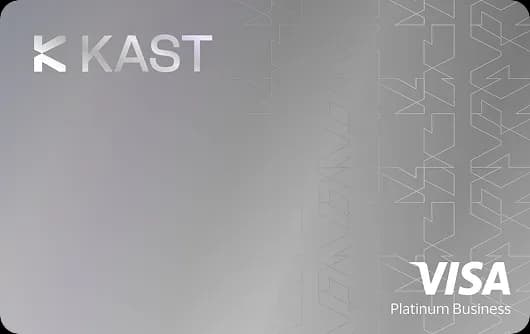
1. KAST K Card
Free USD Cashback: 1.5% on First $2K/Month
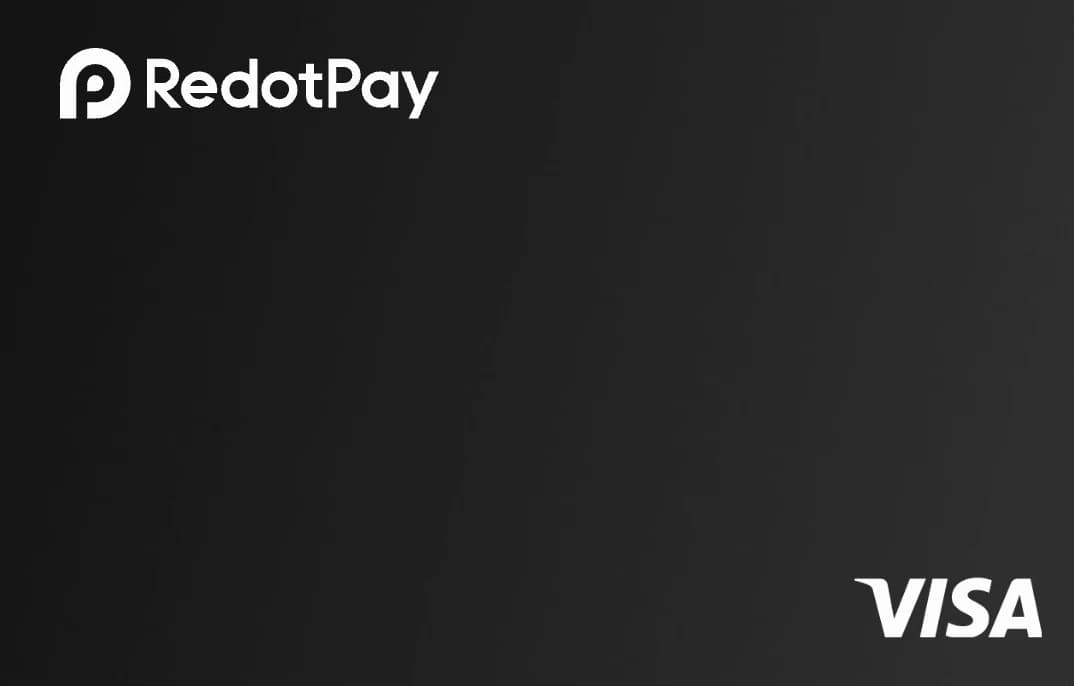
2. RedotPay Virtual Card
High-Capacity Global Spend: $1M Daily Limit + Instant Visa Payouts

3. Plasma One Lite Card
Free Self-Custodial Visa - 2% XPL Cashback, 0% APR, Up to 5% Variable Yield on Idle Balance
Complete list:
All 16 crypto cards available in Maldives in October 2026
This table includes every crypto card we currently track for Maldives. Rows marked Top pick are ranked and reviewed above.
| Crypto card | Max rewards | Annual fee | FX fee | Type | Custody |
|---|---|---|---|---|---|
1 KAST K CardTop pick | Up to 1.5% rewards | Free | 0.5% | Prepaid | Custodial |
2 RedotPay Virtual CardTop pick | Varies | Free | 1.2% | Prepaid | Custodial |
3 Plasma One Lite CardTop pick | Up to 2% rewards | Free | 1% | Crypto Backed Credit | Self-custody |
| Up to 10% rewards | Free | 0% | Prepaid | Custodial | |
| Up to 4% rewards | Free | 0% | Crypto Backed Credit | Self-custody | |
| Up to 4% rewards | Free | 0% | Crypto Backed Credit | Self-custody | |
| Up to 3% rewards | Free | 0.5% | Crypto Backed Credit | Self-custody | |
| Up to 3% rewards | Free | 0.25% | Crypto Backed Credit | Self-custody | |
| Up to 3% rewards | Free | 0% | Crypto Backed Credit | Self-custody | |
| Up to 3% rewards | $10000 | 0.5% | Prepaid | Custodial | |
| Up to 3% rewards | $199 | 0.5% | Crypto Backed Credit | Self-custody | |
| Up to 3% rewards | $129 | 1.2% | Prepaid | Custodial | |
| Up to 2% rewards | $1000 | 0.5% | Prepaid | Custodial | |
| Up to 1.5% rewards | Free | 0.5% | Prepaid | Custodial | |
| Up to 1% rewards | Free | TBD | Prepaid | Custodial | |
| Varies | Free | 1.2% | Prepaid | Custodial |
Crypto Card Regulation in Maldives
The Maldives Monetary Authority (MMA) is both central bank and financial regulator under the Maldives Monetary Act of 1981. Its position on crypto has been consistent since 2018: cryptocurrency is not legal tender, and no organization has been granted permission to operate exchanges or conduct financial transactions in virtual currencies.
That is a refusal to license rather than a criminal ban. Holding crypto is not an offense, but no domestic on-ramp can operate lawfully.
The Capital Market Development Authority (CMDA) regulates securities and has issued no digital-asset framework. AML oversight sits with the Financial Intelligence Unit housed inside the MMA.
The Foreign Currency Act (Law 32/2024) took effect on January 1, 2025. It imposes registration, deposit, and currency-exchange duties on covered tourism businesses. The Act repealed Regulation 2024/R-91; the MMA introduced implementing regulations in 2025.
The obligations and exemptions depend on the business category. A resort or guesthouse should use the current MMA rules when calculating its required dollar exchange.
Non-compliance draws fixed fines of up to MVR 1,000,000, alongside percentage-based daily penalties for ongoing breaches. The law exists because the peg was starving: usable reserves fell to around $73 million in 2024 against debt service of roughly $557 million in 2025 and about $1 billion in 2026.
Then there is the pivot. In May 2025 the government signed an $8.8 billion joint venture with Dubai-based MBS Global Investments to build the Maldives International Financial Centre (MIFC) in Male by 2030, marketed explicitly as a blockchain and digital-asset hub with zero corporate tax inside the zone. A state that licenses no exchange domestically is simultaneously courting global crypto capital offshore.
For cardholders the near-term meaning is simple: no local licensing regime exists yet, every issuer serving Maldivians is offshore, and the MIFC is the thing to watch for the first formal VASP framework.
Tax Treatment of Card Rewards in Maldives
The Maldives Inland Revenue Authority (MIRA) has published no crypto-specific guidance, so the general Income Tax Act (25/2019) applies. It is unusually kind to small earners. Resident individuals pay 0% on the first MVR 720,000 of annual income (about $46,700 at the peg), then 5.5% up to MVR 1.2 million, 8% to 1.8 million, 12% to 2.4 million, and 15% above that.
Gains from disposing of property, including intangible property, are consolidated into that same annual income rather than taxed under a separate capital gains regime. Read strictly, spending appreciated crypto is a disposal whose gain counts toward your annual income. In practice the 0% band absorbs it for most residents: a Male professional earning MVR 300,000 a year who realizes MVR 40,000 of crypto gains is still far below the MVR 720,000 threshold and owes nothing.
The math changes only at resort-management and business-owner income levels. Someone already earning MVR 900,000 a year sits in the 5.5% band, so an extra MVR 100,000 gain from spending appreciated BTC costs MVR 5,500. Fund the card with stablecoins and the gain rounds to zero.
| Funding Method | Annual Spend (MVR 120,000 / ~$7,780) | Rewards (KAST 1.5% USD) | Tax on Disposal Gain | Net Outcome |
|---|---|---|---|---|
| BTC bought years ago (large embedded gain) | MVR 120,000 | MVR 1,800 | MVR 0 if total income under 720K; 5.5-15% of gain above | Depends on bracket |
| USDT/USDC (stablecoin) | MVR 120,000 | MVR 1,800 | ~MVR 0 (no gain to realize) | MVR 1,800 |
| XPL cashback held and appreciating | - | 2% in XPL | Gain taxed as income only when disposed above threshold | Variable |
Two footnotes matter. Non-residents face a 10% capital gains withholding tax on Maldivian assets, collected by the buyer, which is a real estate mechanism unlikely to touch card spending. And the 3% remittance tax that expatriate workers paid between 2016 and 2020 was repealed with the Income Tax Act, so sending money out through formal channels no longer carries that charge.
Tax residency follows a 183-day rule, and residents are taxed on worldwide income - a detail Maldivians working abroad should check if they keep a permanent home in the islands.
How to Apply from Maldives
Maldivian applicants verify with the national identity card (Dhivehi Rayyithunge Kaadu), issued by the Department of National Registration, or a Maldivian passport. Offshore issuers recognize the passport far more reliably than the national ID, so use the passport as the primary document where the app allows a choice.
The 100,000+ expatriate workforce (largely Bangladeshi, Indian, and Sri Lankan nationals) applies with the home-country passport plus, where requested, the Maldivian work visa or employment approval. Proof of address is the usual friction point: utility bills from STELCO or MWSC, a bank statement from BML or Maldives Islamic Bank, or an employer letter for staff living on resort islands.
Verification at KAST and RedotPay is app-based and typically clears in minutes to a day. KAST will ship a physical card to a Maldivian address ($40 shipping on the free tier). RedotPay explicitly lists the Maldives on its card-delivery restriction list, so plan on RedotPay staying virtual-only here; the account and virtual Visa work normally. Plasma One is virtual-first everywhere.
Virtual cards can be added to Apple Pay or Google Pay wallets, a useful workaround given that contactless terminals in Male generally accept foreign wallet taps even though neither service has an official Maldives launch.
Spending Tips for Maldives
Match the card to where your dollars come from
The Maldives is not a cashback-optimization market. It is a dollar-access market, and the first question is how dollars reach you.
If you are paid service charge in USD (standard across resorts, often $200-800 a month on top of base salary), a stablecoin card turns that income into spendable money without queuing for scarce bank dollars. If you freelance for foreign clients, getting paid in USDC and spending from KAST skips the forced conversion into rufiyaa entirely. If your income is purely MVR, be honest about the math below before buying USDT at street rates.
Card selection
- KAST (free, 1.5% USD cashback on first $2,000/mo): The default pick. Stablecoin deposits convert 1:1 with no spread, cashback is paid in dollars, and the physical card covers in-person spending at home and abroad.
- RedotPay Virtual ($10 one-time, no rewards): The workhorse for online payments: subscriptions, flights, hotel bookings, app stores. Instant issue, 1% conversion plus 1.2% FX on non-USD charges.
- Plasma One (free Lite tier, 2% XPL on first $500/mo): Self-custodial and USDT-native, with up to 5% variable yield on the idle balance. Best for users who already live on Plasma-chain USDT and want the balance working between purchases.
- RedotPay Pro ($129/yr, 3% on Apple/Google Pay, first $600/mo): Only pencils out if you reliably tap through a phone wallet. At the full $600/month cap it returns $216 a year against the $129 fee, and the USDs rewards expire after 30 days, so treat it as a spending discount for disciplined wallet users.
Where the FX drag lands
Domestic spending in rufiyaa on a dollar-denominated card triggers an FX conversion on every tap: 0.5-1.75% at KAST, 1.2% at RedotPay, 1% at Plasma One. A BML card spending MVR at a Male supermarket pays none of that. Groceries belong on the bank card. The crypto card's territory is foreign and online spending, where the BML alternative is squeezed into category caps ($250 a month for ordinary online shopping, $1,000 at overseas terminals) or priced with the bank's own markup.
| Monthly foreign/online spend | KAST (1.5%, free) | Plasma One (2% to $500, free) | RedotPay Pro (3% wallet-pay, $129/yr) |
|---|---|---|---|
| $300 (MVR ~4,600) | $54/yr | $72/yr | -$21/yr (below break-even) |
| $500 (MVR ~7,700) | $90/yr | $120/yr | $51/yr |
| $1,000 (MVR ~15,400) | $180/yr | $132/yr (cap binds) | $87/yr (cap binds at $600) |
For context, monthly costs in Male run high by South Asian standards: a one-bedroom in the city centre rents for roughly MVR 10,000-18,000 ($650-1,170), Hulhumale runs somewhat less, groceries for one add MVR 3,000-6,000, and utilities MVR 1,500-3,000. A single professional's all-in month is commonly MVR 15,000-25,000 ($975-1,620), so the $250 online-shopping allowance covers a fraction of one month's spending, and even the $1,000 overseas-terminal cap runs out mid-trip.
Funding routes
- Dollar income direct: Resort service charge, seafarer wages, and freelance platform payouts received in USD or USDC go straight to the card. This is the clean route with no conversion loss.
- USD bank account: BML USD-account debit cards allow up to $3,000/day abroad ($5,000 on Visa Platinum), but the account only helps if you have dollar income to fill it; banks do not sell dollars freely at 15.42.
- Informal P2P: USDT trades in Telegram and Viber groups at the parallel rate, roughly MVR 17-20 per dollar depending on the week. The premium is the price of exit, and these groups carry counterparty risk; scams and disappearing sellers are documented regularly. We document the route because people use it. It is the riskiest entry on this list.
- Remittance corridor: Expatriate workers sending wages to Dhaka, Kerala, or Colombo pay 4-7% through conventional transfer operators. Stablecoin transfers cut the corridor cost to near zero, with the last mile handled by P2P on the receiving side.
The travel-abroad problem
Maldivians routinely fly to Colombo, Trivandrum, Bangalore, or Kuala Lumpur for healthcare and university, and this is where the BML caps bite hardest. The November 2025 changes helped, opening overseas hospital payments and raising the airline-and-hotel tier to $3,000.
But a serious procedure or a semester's tuition exceeds those tiers, day-to-day spending on the trip runs against the $1,000 terminal cap, and ATM cash abroad is still $125 a month. A stablecoin card funded from dollar income is the cleanest lawful backstop, since the issuer sets its limits under its own risk rules. Budget for the FX fee (0.5-1.75% on KAST) as the cost of certainty.
Mistakes to avoid
Mistake 1: Buying USDT at MVR 19 to chase 1.5% cashback. The 23% premium over the peg swamps every reward on the page; you lose roughly MVR 3,500 per $1,000 funded versus official-rate dollars. How to avoid it: Use crypto cards for income that already arrives in dollars or crypto; fund from MVR only when access itself, not return, is the goal.
Mistake 2: Expecting a RedotPay physical card or ATM cash. The Maldives is on RedotPay's delivery restriction list, and without plastic there are no ATM withdrawals. How to avoid it: Take KAST for the physical card ($40 shipping) and keep RedotPay for its virtual rail.
Mistake 3: Routing a guesthouse's tourist takings through a personal crypto card. Tourism businesses are bound by the Foreign Currency Act's registration, deposit, and mandatory exchange duties ($25 per tourist per month for Category B), with penalties up to MVR 1,000,000. Moving business dollars into personal crypto sidesteps those duties in a way regulators can trace. How to avoid it: Keep business FX compliance and personal spending strictly separate.
Mistake 4: Holding rewards in XPL and calling them dollars. Plasma One pays in its own token, and a 30% token drawdown converts a 2% reward into a loss. How to avoid it: Treat token cashback at a haircut, or convert on receipt; count only USD-denominated cashback (KAST) as money.
Supported Exchanges & Wallets in Maldives
No exchange is licensed to operate in the Maldives, and the MMA has said no permission will be granted under current law. There is no Binance MVR pair, no local order book, and no lawful domestic off-ramp into rufiyaa. What exists instead is a dollar-substitution economy: global exchange apps used for custody and trading against USDT, funded by dollar income or informal P2P, with cards as the spending layer.
KAST fits that structure best. Deposits in USDT or USDC convert 1:1 with no spread, the no-annual-fee Standard tier keeps the experiment free, and cashback lands in dollars.
It is also the only issuer on this page that puts a physical Visa in a Maldivian hand. In-person acceptance concentrates in Male supermarkets (Redwave, STO outlets), pharmacies, and the airport, while smaller island shops stay cash-based; a card you can hold covers that slice of daily life.
RedotPay supports Maldivian registration and KYC; the Maldives sits outside its restricted-countries list even as many regional issuers skip the market entirely. Virtual-only here because of its shipping restrictions, but for the online half of life (bookings, subscriptions, foreign tuition deposits) that is the half that counts.
Plasma One is the stablecoin-native option: self-custodial USDT with yield while idle and 2% back on the first $500 of monthly spend. Cypher previously listed the Maldives, but its card program and final withdrawal window are now closed.
At the luxury end, a handful of resorts led by Soneva have accepted BTC and ETH from guests since 2021 through third-party processors. The plumbing serves tourists rather than residents, but it normalized crypto payments in the one sector regulators treat most carefully.
The outlook hinges on the MIFC. If the free zone ships a real digital-asset licensing regime, the first regulated on-ramp for residents would follow, and the informal P2P premium would be its first casualty. Until then the Maldives remains what it is today: a country that earns dollars, rations dollars, and quietly routes the overflow through stablecoins.
Written by SpendNode Editorial
Frequently Asked Questions
Is crypto legal in the Maldives?
It sits in a gray zone. The Maldives Monetary Authority (MMA) has stated since 2018 that cryptocurrency is not legal tender and that no entity has been licensed to run exchanges or process crypto payments under the Maldives Monetary Act. Holding crypto is not criminalized, but the Foreign Currency Act (32/2024) requires domestic transactions to be settled in rufiyaa, so paying a Male shop directly in crypto is not compliant. At the same time, the government is building the Maldives International Financial Centre, an $8.8 billion blockchain-focused free zone announced in May 2025.
Do crypto cards get around BML's foreign spending limits?
The Bank of Maldives caps (since November 2025: $1,000/month at overseas terminals, $250/month for ordinary online shopping, $3,000 for airlines, hotels, and overseas hospitals, $125/month at foreign ATMs) apply to BML-issued cards on MVR accounts, so spend on a crypto card funded with USDT or USDC is not counted against them. That does not make the caps irrelevant: to fund the card from rufiyaa income you still have to acquire dollars or stablecoins, and informal channels price them 25-30% above the official 15.42 rate. The cards work best for people already paid in dollars or crypto, not as a cheap way to convert MVR savings.
How is crypto taxed in the Maldives?
MIRA has published no crypto-specific guidance. Under the Income Tax Act (25/2019), resident individuals pay 0% on the first MVR 720,000 of annual income, then 5.5% to 15% above that, and gains from disposing of assets are consolidated into that annual income. Most residents spending modest amounts stay inside the 0% band. Non-residents face a 10% capital gains withholding tax on Maldivian assets. Keep records: the rules were not written with crypto in mind and MIRA could clarify either way.
Which crypto cards actually work from the Maldives?
SpendNode verified three issuers that list the Maldives: KAST (all tiers, and it ships physical cards to the Maldives), RedotPay (registration and virtual cards supported, but physical card delivery to the Maldives is on RedotPay's no-ship list), and Plasma One (virtual-first, all three tiers). Cypher also served the Maldives, but its card program has closed.


