


Best Crypto Cards in Myanmar (2026)
Compare crypto cards available in Myanmar. KAST, RedotPay, and Crypto.com offer USDT spending power in a Tether-dominated economy where banking access is limited.
Verified for Myanmar
33 crypto cards available
Local currency: MMK
Myanmar's financial system has been in crisis since the February 2021 military coup. Bank runs, branch closures, and daily transaction limits pushed millions toward mobile wallets and, increasingly, Tether (USDT). The kyat (MMK) collapsed from approximately 1,350 per USD pre-coup to over 3,500 per USD by 2025, destroying savings held in local currency.
A crypto card funded with stablecoins provides what Myanmar's banking system cannot: dollar-denominated purchasing power, international e-commerce access, and zero FX fees on a Visa/Mastercard network that works globally.
USDT has become Myanmar's parallel currency. Cross-border trade with China and Thailand, diaspora remittances, and savings preservation all run on Tether. Telegram groups in Yangon, Mandalay, and border towns (Myawaddy, Tachileik, Muse) facilitate USDT-to-kyat and USDT-to-baht conversions daily. A crypto card bridges this USDT economy and the Visa/Mastercard merchant network, turning stablecoins into spendable purchasing power at any contactless terminal.
Important legal context: The Central Bank of Myanmar (CBM) declared cryptocurrency trading and use illegal in a 2020 directive. Enforcement has effectively collapsed since the 2021 coup. This page covers the practical reality, not a legal endorsement.
| Card | Max Cashback | Annual Fee | FX Fee | Card Type | Why It Fits Myanmar |
|---|---|---|---|---|---|
| Bitget | 8% BGB | Free | 0% + 0.9% tx | Debit | Highest free cashback, zero FX |
| Kolo | 5% BTC | $0 | 0% | Prepaid | 5% BTC cashback, $5/txn cap, $200/mo cap |
| KAST | 2% | Free | 0.5% | Prepaid | Quickest prepaid bridge from USDT to card spend |
| Crypto.com | Icy 4% | CRO stake | 0% | Prepaid | Tiered rewards + lounge access |
| RedotPay | - | Free-$100 | 1.2% | Prepaid | HK-based, stablecoin-native |
In our Myanmar guide, Bitget delivers the highest net return (7.1% after 0.9% tx fee) with zero FX. Kolo provides 5% BTC cashback with $0 annual fee and 0% FX. KAST is the quickest prepaid route from Telegram-market USDT into real card spending when NRC backlogs and passport delays make conventional onboarding unreliable.
RedotPay Solana suits the USDT/USDC-heavy user base. For the large Myanmar diaspora (Thailand, Malaysia, Singapore, Japan, South Korea), host-country documentation opens access to the full card lineup.
Best Card For Every Need in Myanmar
Top 5 Crypto Cards in Myanmar
Myanmar's banking system collapse since the February 2021 coup drove USDT into the role of parallel currency. Bitget's 8% BGB cashback (7.1% net after 0.9% tx fee) with zero FX provides the highest return for diaspora members with APAC documentation. Kolo's 5% BTC cashback with $0 annual fee and 0% FX suits moderate spenders.
KAST matters because it lets Yangon- and Mandalay-based users move smaller USDT balances from Telegram P2P markets into live card spending without waiting on a full domestic banking recovery. RedotPay Solana suits the USDT-native user base directly: Yangon and Mandalay Telegram groups already settle in Tether, and the stablecoin-native spending adds value to what is already their primary currency.
Self-custody wallet-based spending adds another layer for users who won't trust any institution with their dollar savings after watching banks impose MMK 500,000 daily ATM limits overnight.
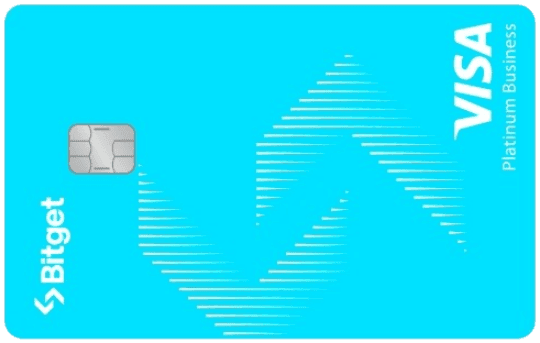
1. Bitget Card
Trade and Spend: Up to 8% BGB Cashback for Bitget Traders
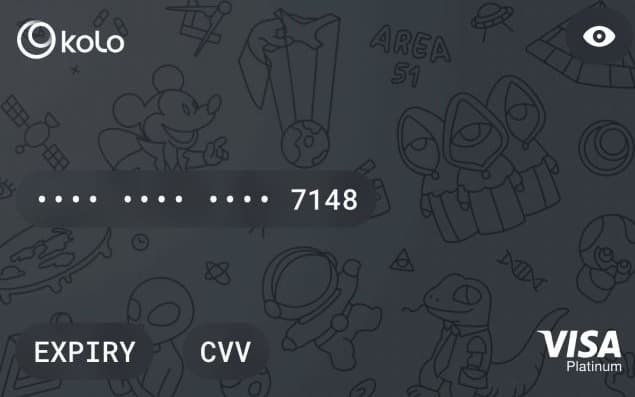
2. Kolo Card
Earn Bitcoin on Every Purchase: 5% BTC Cashback + Visa Platinum + 170+ Countries
3. KAST K Card
Early Adopter Access: 2% Points + 4% $MOVE on Every Swipe

4. ether.fi Core Card
Zero Barriers: 3% Back on Every Purchase, No Stake Required
5. RedotPay Solana Card
Solana Goes IRL: Spend SOL Directly at 130M+ Merchants
Crypto Card Regulation in Myanmar
Myanmar's crypto regulatory environment is restrictive on paper but largely unenforced since the coup. The Central Bank of Myanmar (CBM, Myanma Naingngandaw Banka) issued a directive in 2020 declaring cryptocurrency trading and use illegal, stating that digital currencies are not recognized as legal tender and that financial institutions are prohibited from facilitating crypto transactions. Violations were stated to carry penalties under the Foreign Exchange Management Law (2012).
After the February 1, 2021 military coup, the State Administration Council (SAC) maintained the CBM's crypto ban on paper. However, enforcement capacity collapsed alongside broader governance. The CBM's focus shifted to managing the kyat's freefall, imposing foreign exchange controls (mandatory conversion of export earnings to kyat at official rates), and preventing capital flight through traditional banking channels. Crypto enforcement fell far down the priority list.
The NUG (National Unity Government) and USDT: The parallel civilian government in exile took a sharply different approach. In early 2022, the NUG declared Tether (USDT) as an official currency for certain government transactions, fundraising, and civil servant salary payments.
This unusual move further legitimized USDT usage among the population sympathetic to the democratic resistance. NUG's digital infrastructure, including the Spring Development Bank operating via mobile apps, processes transactions in USDT.
Penalties: Up to five years in prison and fines of up to MMK 5 million (approximately $2,400) under the Anti-Money Laundering Law and Financial Institutions Law.
Key regulatory timeline:
- 2020: CBM Directive 9/2020 banning cryptocurrency
- 2021 Feb: Military coup. Banking system collapses. USDT adoption accelerates
- 2022: NUG declares USDT as official currency for some operations
- 2023-2025: De facto dual monetary system: MMK (formal) + USDT (informal/parallel). P2P volume up 300%+ since 2022
- 2024 May: CBM reissues public warning against crypto trading
- 2025 Jun: CBM launches Central Committee for Central Bank Digital Currency (digital kyat)
Myanmar has a formal crypto ban that is effectively unenforced. USDT usage is widespread and economically necessary. International crypto card issuers operate outside Myanmar's banking system, so the CBM directive has limited practical impact on card usage. Users should understand the legal risk on paper.
Tax Treatment of Card Rewards in Myanmar
Myanmar's tax system has been severely disrupted since the 2021 coup. The Internal Revenue Department (IRD) under the Ministry of Planning, Finance and Industry administers the Income Tax Law (1974, amended).
Income Tax Rates
Myanmar applies progressive personal income tax for residents: 0% on the first MMK 4,800,000 (approximately USD 1,370 at current rates), 5% on MMK 4,800,001-9,600,000, 10% on MMK 9,600,001-19,200,000, 15% on MMK 19,200,001-38,400,000, 20% on MMK 38,400,001-76,800,000, and 25% above MMK 76,800,000. Non-residents pay a flat 25%.
Practical Reality
The IRD has no crypto-specific guidance, classification, or enforcement capability. Tax collection has declined sharply since the coup, with the formal tax base shrinking as economic activity shifted to the informal sector. Individual crypto transactions are not monitored. The widespread use of USDT for everyday transactions operates entirely outside the formal tax system.
| Cashback Type | Tax When Received | Tax When Spent/Sold | Optimal Strategy |
|---|---|---|---|
| BTC/ETH cashback | No enforcement | No enforcement | Hold, track cost basis |
| Stablecoin cashback (USDC) | No enforcement | Near-zero gain | Spend anytime |
| Points/token cashback | No enforcement | No enforcement | Convert to stablecoin |
Fund with stablecoins. Myanmar's tax enforcement on individual crypto activity is effectively non-existent given current conditions, but stablecoin funding creates clean records under any future framework. The kyat's extreme volatility (3,500+ per USD versus the official rate of 2,100) means stablecoin holdings have appreciated over 150% against MMK since early 2021.
How to Apply from Myanmar
Crypto card applications from Myanmar require the Citizenship Scrutiny Card (CSC, also known as the National Registration Card or NRC), issued by the Ministry of Immigration and Population. The NRC uses a unique identifier based on state/division code, township code, registration type, and serial number (format: 12/BaHaNa(N)123456, where 12 = Yangon Region, BaHaNa = township, N = citizen type).
The NRC system predates digital ID and card issuance has been disrupted since the coup, with backlogs at township immigration offices.
Myanmar passport issuance has been severely backlogged since the coup, with wait times extending to months or years. The Passport Office under the Ministry of Immigration processes far fewer applications than pre-coup volumes. For those with existing valid passports, international issuers generally accept Myanmar passports for KYC.
Smart Card NRC (newer biometric version) is accepted where available but distribution has been incomplete.
Proof of address via utility bills from YESC (Yangon Electricity Supply Corporation), MESC (Mandalay Electricity Supply Corporation), or telecom bills from MPT (Myanmar Posts and Telecommunications, state-owned), Ooredoo Myanmar (operations disrupted, license revoked 2024), or Mytel (military-linked joint venture with Viettel). Bank statements from KBZ Bank (Kanbawza, largest private bank), CB Bank, or AYA Bank also work, though branch access has been limited.
For the Myanmar diaspora: The 3-5 million Myanmar nationals in Thailand (largest community), 150,000+ in Malaysia, 50,000+ in Singapore, and communities in Japan, South Korea, and the US should use host-country documents for card applications. Thai work permits, Malaysian MyKad, or Singapore FIN provide broader issuer access and avoid complications with Myanmar-issued ID.
KAST and RedotPay are the most usable prepaid options for Myanmar users who can document identity but cannot rely on a normal domestic bank relationship.
Spending Tips for Myanmar
The Kyat Collapse Strategy
The kyat's collapse from 1,350/USD (pre-coup) to 3,500+/USD destroyed purchasing power for anyone holding MMK savings. The official rate (2,100/USD) diverges massively from the parallel market rate (3,500+/USD), creating arbitrage and confusion.
Holding USDC or USDT via a crypto card effectively dollarizes spending: your purchasing power is denominated in USD, immune to further kyat depreciation. At current depreciation rates, someone who held $1,000 in USDC since February 2021 has "gained" over MMK 2,150,000 in kyat terms (from 1,350,000 to 3,500,000). This is not a gain, it is purchasing power preservation.
What Myanmar's Banking Crisis Means for Card Users
Before the coup, Myanmar's banking system was developing rapidly. KBZ Bank (Kanbawza, the largest private bank with 500+ branches), CB Bank, AYA Bank (military-linked), Yoma Bank, and AGD Bank were expanding digital services. The coup triggered immediate bank runs. The CBM imposed daily ATM withdrawal limits of MMK 500,000 (approximately USD 143 at current rates), later raised to MMK 2,000,000 but still restrictive. Bank-to-bank transfers were limited or frozen for weeks.
The result: Myanmar's formal banking system handles a fraction of pre-coup transaction volume. Many middle-class Myanmar citizens discovered that bank deposits could become inaccessible overnight. This experience drove USDT adoption far beyond the tech-savvy early adopters into the mainstream. A crypto card backed by stablecoins held in a non-custodial wallet or offshore exchange represents financial sovereignty that the domestic banking system cannot guarantee.
International E-Commerce: A Primary Use Case
In a country where import supply chains are disrupted and international goods are scarce or marked up heavily, online shopping from international merchants is one of the strongest use cases for a crypto card. Amazon (shipping via forwarders to Bangkok, then overland), AliExpress (direct to Myanmar addresses for some items), Shopee (Thailand/Malaysia versions with cross-border delivery), and iHerb (supplements, popular in Yangon) all accept Visa/Mastercard.
Software subscriptions (Adobe, Microsoft 365, Spotify, Netflix) require international card payment that domestic bank cards cannot always process due to SWIFT restrictions. A crypto card bypasses these restrictions entirely.
The Border Economy
Myanmar's border towns are the arteries of the USDT economy:
- Myawaddy (Karen State, Thai border): The largest trade crossing with Thailand. Thai baht and USDT are the de facto currencies. Crypto card spending in THB at Myawaddy-adjacent Thai malls (Mae Sot) earns cashback on cross-border shopping.
- Muse/Shweli (Shan State, Chinese border): The primary China-Myanmar trade corridor. Chinese yuan and USDT dominate trade settlement.
- Tachileik (Shan State, Thai border, opposite Mae Sai): Tourism and trade, THB widely accepted.
- Hpa-An and Mawlamyine (Mon/Karen): Growing P2P trading communities on Telegram.
For border town residents and traders, a crypto card converts their USDT working capital into card-spendable purchasing power on either side of the border.
Card Selection by Use Case
- Highest free cashback: Bitget (8% BGB, 7.1% net, 0% FX)
- Best free no-staking card: Kolo (5% BTC, $0, 0% FX, $200/mo cap)
- Quickest prepaid access from USDT: KAST (2%, $0, 0.5% FX)
- Stablecoin-native: RedotPay Solana (stablecoin-native, USDC-focused)
- Premium perks: Crypto.com Icy White (4% + cards with airport lounges at RGN + rebates)
- Tax deferral: ether.fi (3%, borrow-to-spend, 1% FX)
Bitget vs Kolo vs KAST: Myanmar Math
All amounts in USD (MMK equivalent at approx. 3,500:1). Tax impact effectively nil.
| Monthly Spend | Bitget (7.1% net, free) | Kolo (5% BTC, $200/mo cap) | KAST (2%, free) |
|---|---|---|---|
| USD 50 | USD 43/yr | USD 30/yr | USD 12/yr |
| USD 100 | USD 85/yr | USD 60/yr | USD 24/yr |
| USD 200 | USD 170/yr | USD 120/yr | USD 48/yr |
| USD 400 | USD 341/yr | USD 240/yr | USD 96/yr |
At Yangon's average formal-sector income (approximately USD 150-200/month), Bitget at USD 128/year and Kolo at USD 90/year add up. KAST at USD 36/year suits smaller balances. The combined value of cashback plus USD-denomination hedge makes stablecoin-funded cards one of the best financial tools available in the current crisis.
Cost of Living and Spending Tiers
- Yangon (Bahan/Kamayut/Sanchaung): USD 200-500/month rent (1-bed), USD 100-200 groceries, USD 50-150 dining. Best card acceptance.
- Yangon (outer townships): USD 100-250 rent, minimal card acceptance. Cash and KBZPay dominate.
- Mandalay: USD 100-300 rent, very limited card acceptance (select hotels and restaurants only).
- Naypyidaw: USD 80-200 rent, minimal card acceptance despite being the capital.
- Bagan/Inle Lake (tourist areas): Card acceptance at hotels and tourist restaurants only. Cash essential for local transactions.
Our Myanmar availability check confirms monthly card-eligible spending ranges from USD 30-300 depending on location and lifestyle.
Spending Scenario: USD 150/month Yangon Professional
| Category | Monthly | Annual | Where It Goes |
|---|---|---|---|
| Groceries | USD 40 | USD 480 | City Mart, Marketplace, Ocean Supercenter |
| Dining | USD 30 | USD 360 | Restaurants in Bahan/Kamayut, tea shops |
| Transport | USD 15 | USD 180 | Grab, taxis |
| Subscriptions | USD 15 | USD 180 | Netflix, Spotify, VPN (essential) |
| International shopping | USD 30 | USD 360 | Amazon via forwarder, AliExpress, iHerb |
| Misc (phone, SIM) | USD 20 | USD 240 | MPT/Mytel top-up, mobile data |
Total: USD 1,800/year. At 7.1% net (Bitget): USD 128/year (MMK 448,000). At 5% (Kolo): USD 90/year (MMK 315,000). At 2% (KAST): USD 36/year (MMK 126,000). The kyat-equivalent value is meaningful at any tier.
Internet Access and VPN Reality
Myanmar's junta has imposed periodic internet shutdowns, social media bans (Facebook, Twitter blocked since 2021), and mobile data restrictions. VPN usage is widespread and practically universal among the digitally active population, despite nominal illegality. Crypto card management (checking balances, topping up, managing wallets) requires internet access and often VPN connections to reach offshore exchange apps.
Stable 4G coverage exists in Yangon and Mandalay (primarily MPT and Mytel networks), with growing but unreliable coverage elsewhere. International crypto card apps (Bybit, Crypto.com, KAST) work via VPN without issues.
Myanmar's Tea Shop Culture
The lahpet thoke (pickled tea leaf salad) tea shop is Myanmar's equivalent of the European cafe: a social institution where business is conducted, news is shared, and meals are eaten. Tea shops are almost entirely cash-only (KBZPay QR accepted at some in Yangon, never cards). A crypto card will not work at tea shops.
This is important context: the card handles supermarkets, hotels, international shopping, and upscale dining, while cash and KBZPay handle the daily tea shop economy. Plan for dual carry.
Local Payment Infrastructure
Yangon has the best card acceptance in Myanmar, but it remains limited compared to neighboring countries. Visa/Mastercard contactless works at international hotels (Sule Shangri-La, Sedona, Lotte Hotel, Pan Pacific, Chatrium), upscale restaurants in Bahan, Kamayut, and Golden Valley, supermarkets (City Mart, Marketplace by City Mart, Ocean Supercenter), and shopping centers (Junction City, Myanmar Plaza, Sule Square).
Card acceptance in Yangon is approximately 20-25% of retail establishments.
Mobile wallets dominate daily transactions. KBZPay (KBZ Bank, 20+ million users, the de facto digital payment standard) processes QR payments at restaurants, shops, and markets. Wave Money (Yoma Group, originally joint venture with Telenor) serves both urban and semi-rural areas with an agent network. CB Pay (CB Bank) is a third option. These mobile wallets handle kyat transactions only and are bank-linked.
Cash remains essential for markets (Bogyoke Aung San Market/Scott Market, Theingyi Zay, Mingalar Market), buses (Yangon Bus Service), taxis, street food vendors (mohinga stands, shan noodle carts, tea shops), and all informal commerce. Outside Yangon, card acceptance drops to near zero. Mandalay has a handful of accepting merchants. Rural areas are entirely cash and mobile wallet economies.
The Remittance Lifeline
Myanmar's 3-5 million nationals in Thailand send billions in annual remittances. Traditional channels (bank wires, hundi/informal transfer) charge 5-15% with unfavorable FX rates (often using the official 2,100 rate rather than the parallel 3,500 rate).
USDT transfers via Telegram-based P2P networks have become the dominant remittance channel for the tech-literate diaspora. A crypto card on the receiving end converts these USDT transfers into spendable purchasing power at merchant terminals, completing the remittance loop with near-zero fees.
Supported Exchanges & Wallets in Myanmar
Our Southeast Asia coverage tracker shows no crypto exchanges are licensed in Myanmar. Binance P2P (MMK and USDT pairs) has been the dominant on-ramp, with Myanmar among Southeast Asia's most active P2P markets by volume. The P2P ecosystem operates primarily through Telegram groups, with verified traders in Yangon, Mandalay, and border towns facilitating USDT-to-kyat conversions at parallel market rates.
The card ecosystem for Myanmar users centers on accessibility. With banks blocking crypto transactions and VPN needed for most exchange apps, KAST at 2% with 0.5% FX is the quickest prepaid bridge from Telegram P2P USDT to live Visa spending for Yangon and Mandalay users navigating a broken banking system.
For the 3-5 million Myanmar nationals in Thailand, Bitget at up to 8% BGB via the exchange card works with APAC residency documentation. Crypto.com adds metal tiers. Wirex covers Standard and Elite.
Kolo at 5% BTC cashback with $0 annual fee and 0% FX provides the highest free return without exchange staking. Avici provides crypto-backed credit via Platinum and Signature.
ether.fi with the free Core Card lets ETH holders borrow rather than sell. RedotPay with Virtual, Solana, and Physical cards suits USDT-native users. xPlace and Jupiter serve Solana users.
Myanmar's situation is unique: a formal crypto ban coexists with one of Asia's highest rates of USDT adoption. The kyat's collapse has made dollar-denominated stablecoins an economic necessity for savings preservation, cross-border trade, and remittances. A crypto card turns this USDT economy into Visa/Mastercard spending power. For the diaspora, it is a remittance tool. For residents in Yangon, it is international purchasing access that the damaged banking system cannot provide.
Written by SpendNode Editorial
Frequently Asked Questions
Which crypto cards work in Myanmar?
Myanmar is served by APAC-region and globally available cards including Bitget (8% BGB, 0% FX), Kolo (5% BTC, 0% FX), KAST (2%, 0.5% FX), Crypto.com (Icy White 4%), ether.fi (3%, borrow-to-spend), and RedotPay (stablecoin-native). Card acceptance is concentrated in Yangon and Mandalay at hotels and international businesses.
Is cryptocurrency legal in Myanmar?
The Central Bank of Myanmar (CBM) banned crypto in 2020, declaring it illegal tender and prohibiting financial institutions from processing crypto transactions. However, enforcement has been minimal since the 2021 coup, and USDT has become a parallel currency for cross-border trade and remittances.
How is crypto taxed in Myanmar?
Myanmar has no specific crypto tax framework. The Internal Revenue Department (IRD) has not classified digital assets. Income tax rates range from 0% to 25% for residents. Given the current political situation, tax enforcement on individual crypto activity is effectively non-existent.
Why is Tether (USDT) so popular in Myanmar?
After the 2021 military coup disrupted banking services and the kyat collapsed from 1,350 to over 3,500 per USD, USDT became the de facto dollar substitute for cross-border trade, remittances from the diaspora, and savings protection. P2P USDT trading is widespread on Binance and through Telegram groups.
Other Countries
View all 107 countries →


Recent Updates to Best Crypto Cards in Myanmar
- COCA removed entirely (not in availableCountries list)
- MetaMask removed from topCardSlugs (US/EEA/UK only)
- Bitget and Kolo added to table and topCardSlugs (available via APAC/GLOBAL)
- KAST corrected from up to 12% to 2% with 0.5% FX throughout page
- Crypto.com 5% corrected to Icy White 4%
- Break-even table rebuilt with Bitget/Kolo/KAST (was KAST/COCA/Bitget)
- ether.fi added to card selection as borrow-to-spend option
- Regulatory: added CBM penalty specifics (5yr/5M kyat), May 2024 rewarning, Jun 2025 CBDC committee, P2P 300%+ growth
- FAQ updated: COCA removed, Kolo/Bitget/ether.fi added, KAST FX corrected