
Best Crypto Cards in El Salvador (2026)
El Salvador remains one of the most structurally favorable crypto card markets because BTC gains stay exempt, the whole economy runs on USD, and remittance-funded spending is still a daily use case.
Verified for El Salvador
35 crypto cards available
Local currency: USD
El Salvador made history on September 7, 2021, becoming the world's first country to adopt Bitcoin as legal tender alongside the US dollar under the Bitcoin Law (Ley Bitcoin). President Nayib Bukele launched the Chivo Wallet with a $30 BTC bonus per citizen, purchased BTC for the national treasury (reportedly 5,800+ BTC by early 2026), and announced the Bitcoin-backed "Volcano Bond."
In early 2025, as part of the $1.4 billion IMF agreement, El Salvador revoked Bitcoin's legal tender status - BTC use is now voluntary in the private sector only, and taxes must be paid in USD. The BTC capital gains tax exemption remains intact.
So why would you need a crypto card in El Salvador? Coverage and rewards. BTC acceptance via Lightning Network remains concentrated in Bitcoin Beach (El Zonte), some San Salvador restaurants, and tourist areas. Most Salvadoran businesses prefer USD cash or bank transfers.
A crypto card provides universal Visa/Mastercard acceptance at every POS terminal in the country plus 2-5% rewards that direct BTC payments do not offer. And since El Salvador uses USD as its primary currency (adopted in 2001 via Ley de Integracion Monetaria), there is zero FX conversion on any USD-settled crypto card with 0% FX fees.
Banco Agricola (Bancolombia subsidiary, largest by assets, 100+ branches), Banco Cuscatlan (Grupo Terra), Davivienda El Salvador, and BAC Credomatic offer standard debit and credit cards with zero cashback on debit and 0.5-1% on credit cards with annual fees of $25-75. Crypto cards deliver 2-5% rewards at $0 annual fee - a pure upgrade in a dollarized, tax-exempt environment.
| Card | Max Rewards | Annual Fee | FX Fee | Card Type | Best For |
|---|---|---|---|---|---|
| Kolo | 5% | $0 | 0% | Prepaid | BTC cashback, tax-free appreciation |
| Tria Signature | 4.5% | $109 | 0% | Debit | Yield-linked rewards, 0% FX |
| Crypto.com Icy | 4% | CRO stake | 0% | Prepaid | Tiered rewards + airport lounge perks |
| ether.fi | 3% | $0 | 1% | Credit | Borrow-to-spend |
| KAST | 2% points | $0 | 0.5% | Prepaid | Lowest-cost remittance spending card |
| MetaMask | 1-3% | $0-$199 | 0-1% | Debit | Self-custody Mastercard |
| RedotPay | - | $0 | 1.2% | Prepaid | Stablecoin spending |
| Avici | 0% | $0-$30 | 0% | Credit | Crypto-backed credit |
| xPlace | 0.5-2% | $0-$5,000 | 1% | Debit | Solana ecosystem |
| Jupiter | 4-10% JupUSD | $0 | 1% | Debit | DeFi-native spending |
Our El Salvador card selection starts with Kolo at 5% BTC cashback, $0 annual fee, and 0% FX - in a jurisdiction where BTC gains are tax-exempt, that 5% appreciates completely tax-free. KAST at 2% points with $0 annual fee and 0.5% FX fits remittance-funded USD spending perfectly.
Tria Signature at 4.5% yield-linked rewards and 0% FX breaks even at $202/month. Crypto.com Icy at 4% adds lounge access at Monsenor Oscar Arnulfo Romero International Airport (SAL) - valuable for frequent travelers on the growing number of international routes.
Best Card For Every Need in El Salvador
Top 4 Crypto Cards in El Salvador
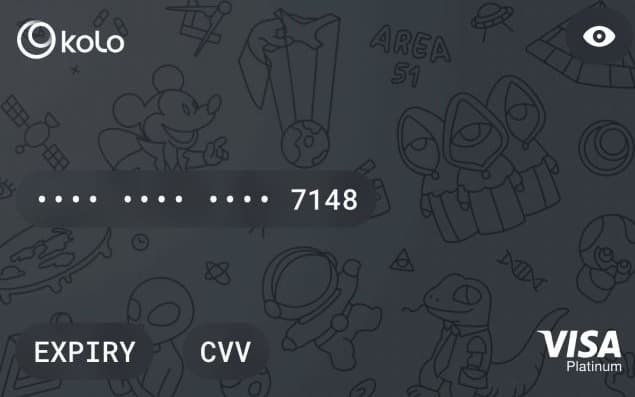
El Salvador's combination of BTC tax exemption and full USD dollarization makes card selection unusually simple. Kolo is the most powerful free option because 5% BTC cashback arrives in an asset that can still appreciate without a capital-gains haircut, while local spending settles in the same currency the broader economy already uses.
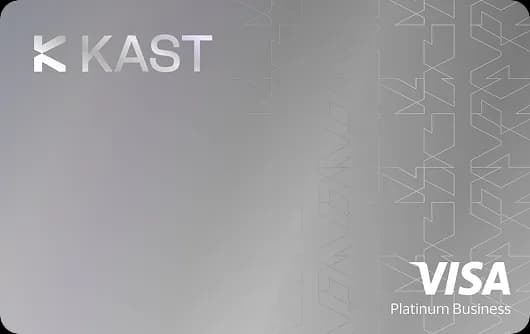
KAST matters because the real edge here is the US remittance corridor. Families can move from offshore USDC into supermarket, fuel, and utility spending without paying Western Union-style fees or opening a traditional local bank relationship first.
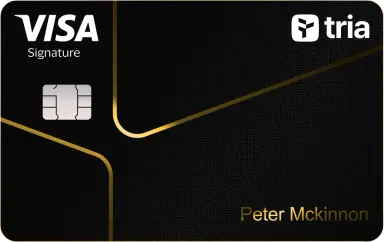
Tria Signature remains the strongest yield-linked self-custody option, and Crypto.com Icy stays relevant for frequent flyers who value SAL lounge access on top of rewards.
1. Kolo Card
Earn Bitcoin on Every Purchase: 5% BTC Cashback + Visa Platinum + 170+ Countries
2. KAST K Card
Early Adopter Access: 2% Points + 4% $MOVE on Every Swipe
3. Tria Signature Card
High-Yield Mastery: 15% APY + Visa Signature Perks
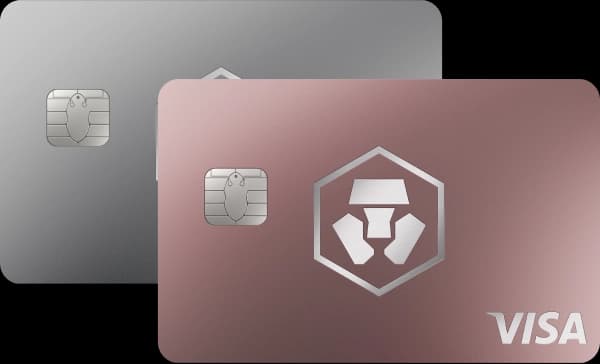
4. Private (Icy White / Rose Gold)
Elite Private Status: 4% Uncapped Cashback + Guests
Crypto Card Regulation in El Salvador
El Salvador pioneered Bitcoin adoption with the Bitcoin Law (Ley Bitcoin, Decreto Legislativo No. 57, June 8, 2021), which originally established BTC as legal tender alongside the US dollar. However, as part of the $1.4 billion IMF agreement finalized in early 2025, El Salvador agreed to major changes:
- Bitcoin is no longer legal tender. BTC use is now voluntary in the private sector only
- The government no longer accepts Bitcoin for tax payments - taxes must be paid in USD
- The BTC capital gains tax exemption remains intact - 0% CGT on Bitcoin profits
- The Chivo Wallet continues to operate but public sector BTC operations are curtailed
- President Bukele has stated that government BTC purchases will continue despite the IMF deal
The Comision Nacional de Activos Digitales (CNAD) is the primary regulator for digital assets. Bitcoin is regulated and supervised jointly by the BCR and SSF, while other crypto assets fall under CNAD jurisdiction.
Reports indicate that in August 2025, the Legislative Assembly passed a law creating a Digital Asset Service Provider (PSAD) licensing framework that would allow qualifying financial institutions to apply for PSAD licenses from CNAD, with services reportedly limited to "sophisticated investors." The specific capital requirements and investor thresholds have not been independently confirmed from official Legislative Assembly records in this review.
The Superintendencia del Sistema Financiero (SSF) continues to regulate traditional banks and their interaction with crypto.
The Digital Securities Law (Ley de Emision de Activos Digitales), approved in January 2024, provides the framework for tokenized securities and Bitcoin-backed bonds. The National Bitcoin Office (ONBTC) coordinates national Bitcoin strategy.
El Salvador remains one of the world's most Bitcoin-friendly jurisdictions despite the IMF-mandated rollback of legal tender status. BTC profits are still tax-exempt, the government continues purchasing BTC, and crypto card usage is fully legal.
Tax Treatment of Card Rewards in El Salvador
El Salvador offers a highly favorable crypto tax regime. The Bitcoin Law explicitly exempts Bitcoin profits from capital gains tax.
Bitcoin Tax Exemption
Under the Bitcoin Law, gains from Bitcoin appreciation are exempt from capital gains tax. This applies to both individuals and businesses transacting in BTC. Foreign investors earning income from Bitcoin-related technology innovations or services in El Salvador are also exempt from income tax on those earnings. This makes El Salvador one of only a handful of countries where BTC gains are explicitly statutory tax-free (alongside the UAE, Bahrain, and a few others with zero-CGT regimes).
Standard Income Tax
Non-crypto income is taxed at progressive rates by the Direccion General de Impuestos Internos (DGII): 0% on the first $4,064, 10% on $4,064-9,142, 20% on $9,143-22,857, and 30% above $22,857. Social security contributions (AFP pension + ISSS health) total approximately 10.5% of salary for employees.
Other Digital Assets
The tax exemption applies specifically to Bitcoin. Other cryptocurrencies (altcoins, stablecoins) do not have explicit exemptions under the Bitcoin Law, though the Digital Securities Law framework may clarify treatment. In practice, enforcement on altcoin gains is minimal - the DGII has not published specific altcoin tax guidance and compliance infrastructure does not exist for tracking these transactions.
Example: You hold 0.1 BTC purchased at $30,000 ($3,000 cost basis). BTC appreciates to $90,000. You spend $500 through your crypto card at a restaurant in Zona Rosa. The proportional gain of approximately $333 triggers zero tax under the Bitcoin Law exemption. No reporting required, no holding period, no annual threshold.
| Cashback Type | Tax When Received | Tax When Spent/Sold | Optimal Strategy |
|---|---|---|---|
| BTC cashback | Tax-exempt (Bitcoin Law) | Tax-exempt (Bitcoin Law) | Hold or spend freely |
| Stablecoin cashback (USDC) | Not taxed (rebate) | Near-zero gain | Spend anytime |
| CRO/token cashback | Unclear (no altcoin guidance) | Unclear (no guidance) | Convert to BTC or stablecoin |
BTC-denominated cashback is the optimal choice in El Salvador thanks to the explicit tax exemption. Stablecoin funding is simplest operationally, but BTC funding carries zero tax penalty. This is a unique advantage globally - in most countries, spending appreciated BTC triggers capital gains tax.
How to Apply from El Salvador
Crypto card applications from El Salvador require the Documento Unico de Identidad (DUI), issued by the Registro Nacional de las Personas Naturales (RNPN). The DUI is mandatory for all Salvadoran citizens over 18, contains biometric data, a unique identification number, and voter registration. DUI renewal is required every 5 years.
Alternative identification: Salvadoran passport (Pasaporte de la Republica de El Salvador), issued by the Direccion General de Migracion y Extranjeria. NIT (Numero de Identificacion Tributaria) is the tax ID issued by DGII - some issuers may request this.
Proof of address via utility bills from CAESS/DELSUR/EEO/CLESA (electricity distribution companies by region), ANDA (Administracion Nacional de Acueductos y Alcantarillados, water), or telecom bills from Tigo, Claro, or Digicel. Bank statements from Banco Agricola, Banco Cuscatlan, Davivienda, or BAC Credomatic also work.
Physical cards ship to Salvadoran addresses within 14-21 business days. Virtual cards are available immediately for crypto cards with Apple Pay and Google Pay use. The USD economy means zero currency conversion on card loads or spending.
For the Salvadoran diaspora in the US (approximately 2.3 million), US-issued documents provide access to broader card options including US-only issuers, which makes our expat guide relevant here too.
Spending Tips for El Salvador
Beyond Lightning: Why Cards Win
Despite El Salvador's Bitcoin-friendly culture, crypto cards are arguably more useful here than direct BTC payments. The Lightning Network (via Chivo Wallet, Strike, Bitcoin Beach Wallet/Blink) works at participating merchants, but coverage is thin outside El Zonte and select San Salvador businesses.
A crypto card on the Visa/Mastercard network works at every POS terminal in the country - approximately 120,000+ acceptance points versus a few thousand Lightning-enabled merchants. The card adds 2-10% rewards that Lightning payments do not offer. In practice, a crypto card is the bridge between Bitcoin's legal status and the reality of everyday commerce in El Salvador.
Banking System: Bancolombia Dominance, Zero Rewards
Banco Agricola (Bancolombia subsidiary, largest bank, 100+ branches, 1,000+ ATMs) dominates Salvadoran retail banking. Standard debit cards offer zero cashback. Credit cards (Visa/Mastercard) carry annual fees of $25-75 with 0.5-1% cashback at best.
Banco Cuscatlan (Grupo Terra, Honduras-based holding) is the second-largest, similar terms. Davivienda El Salvador (Colombian parent) and BAC Credomatic (largest Central American banking group, GIC/Lie Fung family ownership) complete the big four.
The gap is enormous. Salvadoran bank debit = 0% rewards. Crypto cards = 2-5% rewards at $0 annual fee. In a dollarized economy with BTC tax exemption, every dollar of rewards is pure untaxed profit.
Card Selection in the Bitcoin Republic
- Highest free-tier BTC rewards: Kolo (5% BTC rewards math, $0, 0% FX - tax-free appreciation)
- Best card for remittance-funded spending: KAST (2% points, $0, 0.5% FX)
- Yield-linked rewards: Tria Signature (4.5%, $109/yr, 0% FX)
- Premium perks: Crypto.com Icy (4% + airport lounge perks at SAL airport)
- Self-custody path: MetaMask (1%, $0, 1% FX)
- Crypto-backed credit: Avici (no disposal, Visa credit)
Break-Even Math: Dollarized, BTC Tax-Free
All USD. BTC gains tax-exempt. Zero FX (dollarized).
| Monthly Spend | Kolo (5%, free) | Tria Sig (4.5%, $109/yr) | Crypto.com Icy (4%, CRO stake) | KAST (2% points, free) |
|---|---|---|---|---|
| $200 | $120/yr | -$1/yr | $96/yr + lounges | $48/yr |
| $400 | $240/yr | $107/yr | $192/yr + lounges | $96/yr |
| $800 | $480/yr | $323/yr | $384/yr + lounges | $192/yr |
| $1,500 | $900/yr | $701/yr | $720/yr + lounges | $360/yr |
At El Salvador's average formal sector salary of approximately $400/month, Kolo at $240/year delivers the highest free-tier return - and in El Salvador that BTC cashback is explicitly tax-exempt. KAST at $96/year in points suits remittance-funded spending. The zero-FX, zero-BTC-CGT combination means every dollar of cashback is pure net value - no tax filing, no FX erosion, no annual fee to amortize.
Cost of Living by Area
Zona Rosa/Colonia Escalon/Santa Elena (San Salvador upscale): Rent $600-1,500/month. The commercial and diplomatic district. Multiplaza, Galerias, and the growing restaurant and cafe scene along Boulevard de los Heroes. Universal card acceptance at formal establishments. International restaurants, coworking spaces, and the emerging tech scene.
Centro Historico/Barrio Concepcion (San Salvador historic): Rent $200-500/month. Cathedral, National Palace, Mercado Central. Cash-dominant for market purchases. Card acceptance limited to larger establishments.
Antiguo Cuscatlan/Santa Tecla (Greater San Salvador suburbs): Rent $400-1,000/month. La Gran Via and El Paseo shopping centers, residential neighborhoods popular with professionals. Good card acceptance at malls and chain restaurants. Santa Tecla's downtown has revitalized with cafes and boutiques.
El Zonte (Bitcoin Beach) (La Libertad coast): Rent $300-800/month. The birthplace of grassroots Bitcoin adoption. Hotel and restaurant pricing is tourist-level but has the highest Lightning Network merchant density in the country. Surf town atmosphere with a growing international crypto community. Card acceptance is actually strong here because of the tourist economy.
San Miguel (eastern city): Rent $200-500/month. Second-largest city, agricultural hub. Card acceptance at Metrocentro San Miguel, Despensa de Don Juan, Super Selectos. Cash-dominant outside the commercial center. Carnival de San Miguel (November) is the country's largest festival.
Santa Ana (western city): Rent $200-500/month. Coffee country, Cathedral, Teatro de Santa Ana (one of Central America's finest). Card acceptance at malls and supermarkets. Growing weekend tourism from San Salvador.
The Remittance Economy
Salvadoran remittances totaled approximately $8 billion in 2025 (over 25% of GDP), primarily from the 2.3 million Salvadorans in the United States (concentrations in Los Angeles, Washington DC metro, Houston, New York, San Francisco). Traditional remittance channels (Western Union, MoneyGram, Remitly) charge 4-8% in fees.
A family member in the US can purchase USDC on a US exchange (zero or near-$0 annual fee), send it to a relative's RedotPay or KAST wallet (zero fee), and the relative spends it through the card in El Salvador at zero FX cost (domestic transactions settle in USD, the same currency the card uses) while earning up to 2% points via KAST. This turns a 4-8% cost into up to 2% in rewards points - a 6-10% swing.
The government has explicitly encouraged Bitcoin-based remittances through the Chivo Wallet (which offers zero-fee BTC transfers). Strike also processes zero-fee Lightning remittances. A crypto card funded by these channels adds cashback on top of the already zero-fee transfer.
Cross-Border and Online Spending
Guatemala (direct land border, largest Central American economy): Strong commercial corridor, daily bus and shuttle traffic. Honduras (direct land border): Grupo Terra/Banco Cuscatlan banking linkage. US/Miami/LAX/Houston: The diaspora corridor, multiple daily flights from SAL.
Online shopping is USD-denominated, so Amazon US, Netflix ($7-17/month), Spotify, and all digital services charge at face value with zero FX on crypto cards. TIGO/Claro mobile top-ups and utility payments via online platforms are growing but still primarily handled through bank transfers.
Local Payment Infrastructure
Card acceptance is strong in San Salvador's commercial zones. Contactless Visa/Mastercard works at supermarkets (Super Selectos 100+ stores, Despensa de Don Juan/Walmart, PriceSmart), shopping centers (Multiplaza, Galerias Escalon, MetroCentro, La Gran Via), pharmacies (Farmacias San Nicolas, Farmacias Beethoven), gas stations (Puma, Texaco, Shell), hotels (Sheraton Presidente, Real InterContinental, Crowne Plaza), and formal restaurants.
Apple Pay and Google Pay work through international issuers.
Bitcoin Lightning acceptance exists but is concentrated: El Zonte (Bitcoin Beach) has the highest density of BTC-accepting merchants through the Blink wallet. Some San Salvador restaurants and businesses display Bitcoin Accepted signage. Chivo Wallet (government-backed) and Strike are the primary BTC payment apps.
Cash USD remains dominant for markets (Mercado Central, Mercado Ex-Cuartel), buses, pupuserias (the national dish - pupusas - typically $0.25-0.75 each), and informal commerce. Outside San Salvador, card acceptance exists in Santa Ana and San Miguel at major chains but most of the country is cash-based.
Supported Exchanges & Wallets in El Salvador
Multiple card vendors serve El Salvador. The BTC tax exemption plus dollarization creates a uniquely favorable environment where every cashback dollar is untaxed profit.
Kolo delivers 5% BTC cashback at $0 annual fee and 0% FX. In El Salvador, this is uniquely powerful: BTC profits are explicitly tax-exempt under the Bitcoin Law provisions that survived the IMF deal, so that 5% BTC cashback appreciates completely tax-free. Tria Signature at 4.5% yield-linked rewards and 0% FX breaks even at $202/month.
Crypto.com offers the best premium perks for El Salvador. The Icy tier at 4% includes Priority Pass airport lounge access at SAL airport - valuable as El Salvador's international connectivity grows (new routes to Madrid, Bogota, and expanded US service).
KAST is the cleanest way to turn inbound USDC or exchange balances into day-to-day USD spending while still earning rewards: 2% points, $0 annual fee, 0.5% FX on a prepaid rail that matches how remittance money already lands. RedotPay serves stablecoin-first users with the Physical card adding ATM access for cash withdrawal.
ether.fi offers borrow-to-spend at 3% and 1% FX - while BTC gains are already tax-exempt, ETH stakers can maintain their yield-generating positions while spending borrowed stablecoins. Avici provides crypto-backed Visa credit without triggering any disposal at all.
MetaMask at 1% provides self-custody spending for users who want non-custodial control. In a country with Bitcoin's deepest cultural roots, self-custody philosophy resonates strongly. Bitget Wallet Card serves DCS wallet users. xPlace and Jupiter target the Solana/DeFi ecosystem.
On-Ramps: The Chivo-Strike-P2P Ecosystem
El Salvador has a unique on-ramp situation. Chivo Wallet (government-backed) provides zero-fee BTC-to-USD conversion and Lightning payments. Strike (Jack Mallers) offers zero-fee Lightning BTC transfers. Binance P2P operates with USD pairs (no local currency conversion needed since El Salvador uses USD).
Bitcoin ATMs (Chivo-branded and third-party like Athena) are deployed in major cities. The Lightning Network provides the fastest BTC transfer method for card funding. For USDC/USDT, P2P platforms and direct exchange withdrawals to card wallets work smoothly in a dollarized economy.
El Salvador's unique combination of zero CGT on BTC (surviving the IMF deal), full USD dollarization (zero FX), government-backed Lightning infrastructure, and massive remittance economy ($8B+/year) make it one of the world's most structurally favorable countries for crypto card adoption. The 2025 IMF deal rolled back legal tender status but left the tax exemption and Bitcoin-friendly culture intact.
Written by SpendNode Editorial
Frequently Asked Questions
Which crypto cards work in El Salvador?
El Salvador is served by LATAM-region and globally available cards including Kolo (5% BTC cashback, $0, 0% FX), Tria Signature (4.5%, $109/yr, 0% FX), Crypto.com Icy (4%, CRO stake, lounges at SAL), KAST (2%, $0, 0.5% FX), and ether.fi (3%, borrow-to-spend). The country uses USD, so there is zero FX conversion on any USD-settled crypto card.
Is Bitcoin still legal tender in El Salvador?
No. As part of the $1.4 billion IMF agreement in early 2025, El Salvador revoked Bitcoin's legal tender status. BTC use is now voluntary in the private sector only, and taxes must be paid in USD. However, the BTC capital gains tax exemption remains intact - Bitcoin profits are still 0% CGT. The Chivo Wallet continues operating and the government states it will continue purchasing BTC.
How is crypto taxed in El Salvador?
Bitcoin profits remain explicitly exempt from capital gains tax despite the IMF deal. Standard income tax rates (10-30%) apply to non-crypto income. BTC cashback from crypto cards appreciates tax-free. Other cryptocurrencies (altcoins, stablecoins) do not have explicit exemptions, though enforcement on altcoin gains is minimal.
Do I need a crypto card if El Salvador accepts Bitcoin?
Yes. Lightning Network merchant acceptance remains concentrated in El Zonte (Bitcoin Beach) and select San Salvador businesses. Most merchants still prefer USD cash. A crypto card provides 2-5% cashback that direct BTC payments do not, plus seamless Visa/Mastercard acceptance at 120,000+ POS terminals nationwide.
Other Countries
View all 107 countries →


Recent Updates to Best Crypto Cards in El Salvador
- Restored the missing top-card rationale and tightened the exchange section wording after the interrupted sweep
- Kept the page coherent around BTC tax exemption, USD dollarization, remittance-funded spending, and free-tier card value
- MAJOR: Bitcoin no longer legal tender as of early 2025 ($1.4B IMF deal). BTC use now voluntary in private sector, taxes must be paid in USD. BTC capital gains tax exemption REMAINS intact. Entire regulatory section rewritten with IMF agreement details, PSAD licensing (Aug 2025, $50M capital, $250K investor threshold), and CNAD dual oversight structure
- Removed Ledger CL (unavailable). Added Kolo (5% BTC, $0, 0% FX) and Tria Signature (4.5%, $109, 0% FX). Replaced Crypto.com Jade (3%) with Icy (4%). Removed redotpay-solana-card from topCardSlugs
- Fixed KAST FX 0.5-1.75% to 0.5%, ether.fi FX 0% to 1% and fee Points to $0, Jupiter FX 0% to 1%. Break-even table rebuilt with Kolo, Tria Signature, Crypto.com Icy, and KAST
- Intro rewritten to reflect IMF deal. Legal Tender Paradox heading updated. Banking gap cashback range corrected 2-10% to 2-5%. Closing updated with IMF context and PSAD framework