
Best Crypto Cards in Taiwan (2026)
Compare 20 crypto cards available in Taiwan. Crypto taxed as other income above TWD 670,000, FSC-regulated market, and strong tech infrastructure.
Verified for Taiwan
38 crypto cards available
Local currency: TWD
Taiwan has the world's highest density of convenience stores: over 13,000 across an island of 24 million people, roughly one for every 1,800 residents. 7-Eleven (6,700+), FamilyMart (4,000+), Hi-Life (1,500+), and OK Mart (900+) accept contactless Visa/Mastercard at every location. In a country where a crypto card works at the convenience store on every block, cashback compounds faster than almost anywhere else in Asia.
Taiwan's crypto tax framework adds a second advantage: gains from crypto are classified as "other income" (qi ta suo de) and are exempt from tax if total other income stays below TWD 670,000/year (approximately $20,800). For moderate card users, this means effectively zero tax on crypto card spending. Above the threshold, a flat 20% rate applies.
Combined with strong card acceptance in urban areas, a deep tech culture (Taiwan is home to TSMC, the world's most advanced semiconductor manufacturer), and a cost of living that makes cashback meaningful, Taiwan is one of APAC's most practical crypto card markets.
The Taiwan dollar (TWD) is not pegged to any major currency, so FX conversion applies on every card transaction. Cathay United, CTBC, and Fubon bank cards charge 1.5-2% FX markup on international transactions. A zero-FX crypto card eliminates this cost, adding a second layer of savings on top of cashback.
| Card | Max Cashback | Annual Fee | FX Fee | Card Type | Why It Fits Taiwan |
|---|---|---|---|---|---|
| Bitget | 8% BGB | Free | 0% + 0.9% tx | Debit | Highest free ceiling, zero FX on TWD |
| Crypto.com | Icy 4% | CRO stake | 0% | Prepaid | Airport lounge perks at TPE |
| KAST | 2% | Free | 0.5% | Prepaid | Free prepaid option for convenience-store-heavy daily spend |
| COCA | 8% | Free | 0% | Debit | Non-custodial + 6% APY |
Our Taiwan availability check confirms Bitget provides the best net return for most Taiwanese users: 8% BGB cashback with zero FX fee. The 0.9% transaction fee reduces the effective rate to approximately 7.1%, still the highest among zero-FX options.
Crypto.com adds lounge access at Taiwan Taoyuan International Airport (TPE, Taiwan's main international hub) and Taipei Songshan Airport (TSA, domestic and regional) on the Icy White tier (4%).
COCA combines 8% cashback with non-custodial 6% APY.
Best Card For Every Need in Taiwan
Top 5 Crypto Cards in Taiwan
Taiwan's TWD 670,000 tax-free threshold on "other income" creates a binary optimization: below the line, every dollar of cashback is untaxed; above it, 20% kicks in instantly. This makes ether.fi uniquely strategic here - borrowing against staked ETH generates no taxable disposal, letting Hsinchu tech workers spend without pushing their gains over the threshold.
Bitget's 8% BGB with zero FX earns its spot as the everyday workhorse at Taiwan's 13,000+ convenience stores, where contactless Visa/Mastercard works at every single location.
Crypto.com Icy White (4%) covers both Taoyuan (TPE) and Songshan (TSA) lounges, essential for an island where Japan, Korea, and Southeast Asia are all short-haul flights away.
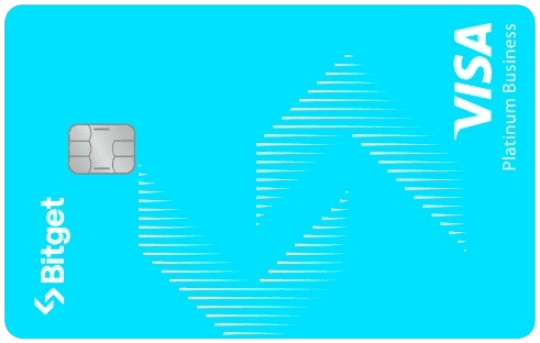
1. Bitget Card
Trade and Spend: Up to 8% BGB Cashback for Bitget Traders

2. ether.fi Core Card
Zero Barriers: 3% Back on Every Purchase, No Stake Required
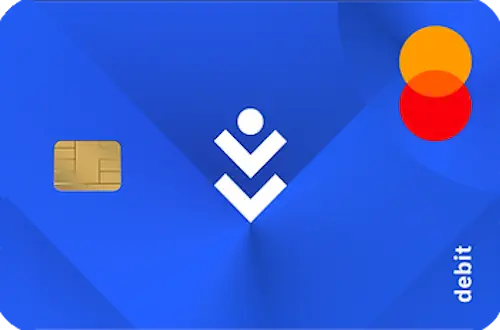
3. COCA Visa Card
Self-Banking: 8% Cashback + 6% APY + 0% FX
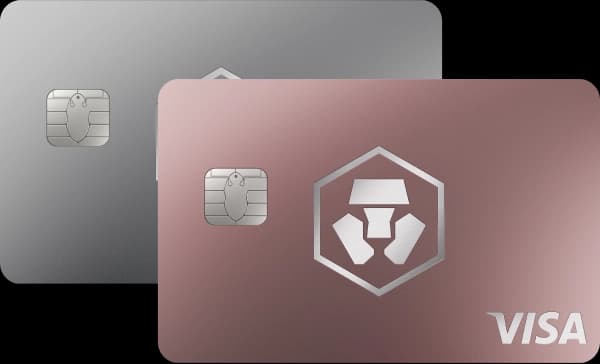
4. Private (Icy White / Rose Gold)
Elite Private Status: 4% Uncapped Cashback + Guests
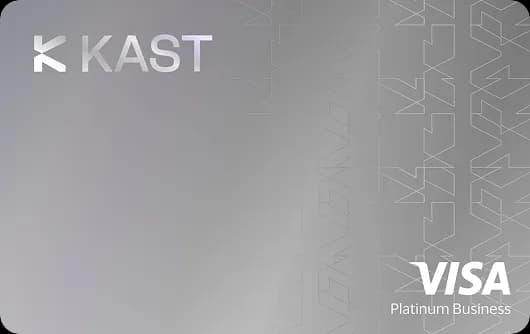
5. KAST K Card
Early Adopter Access: 2% Points + 4% $MOVE on Every Swipe
Crypto Card Regulation in Taiwan
The FSC (Jin Rong Jian Du Guan Li Wei Yuan Hui, Financial Supervisory Commission) is Taiwan's primary financial regulator. The FSC issued comprehensive VASP (Virtual Asset Service Provider) guidelines in September 2023, building on earlier 2021 framework guidance. All VASPs operating in Taiwan must register with the FSC, implement AML/KYC procedures compliant with the Money Laundering Control Act (xi qian fang zhi fa), and segregate customer assets from company assets.
Key FSC requirements (2023-2024 rollout):
- Customer asset segregation: Exchange-held crypto must be segregated from company assets and verified by independent auditors
- Third-party custody: Major exchanges required to use independent custodians
- Advertising restrictions: Balanced risk disclosures required, no promises of returns
- Monthly reporting: Registered VASPs submit transaction and asset reports to the FSC
The CBC (Zhongyang Yinhang, Central Bank of the Republic of China) oversees monetary policy and TWD management. The CBC has not banned crypto but maintains that it is not legal tender. The distinction is the same as in most countries: crypto cards settle through Visa/Mastercard networks, merchants receive TWD fiat, and the CBC's stance does not restrict card use.
Domestic exchanges: MaiCoin/MAX is Taiwan's largest FSC-registered exchange, offering TWD/crypto trading pairs. BitoPro (founded by BitoEX, which operated Taiwan's first Bitcoin ATM) and ACE Exchange also hold FSC registrations. None currently offer consumer spending cards.
In March 2025, the FSC announced a draft dedicated VASP Act (Virtual Asset Service Provider Act), moving beyond the existing guideline-based framework toward a formal licensing law. The Act is expected to pass by mid-2025, with subordinate regulations finalized approximately six months later.
Since January 1, 2025, all VASPs operating in Taiwan must complete AML registration with the FSC before providing services, and offshore VASPs must establish a local company or branch office. A regulated NT Dollar stablecoin framework is also planned for 2026. These developments signal Taiwan's transition from guidance-based oversight to a comprehensive legislative regime.
International card issuers serve Taiwanese residents through APAC entities. Bitget, Crypto.com, Wirex, KAST, COCA, RedotPay, ether.fi, xPlace, Jupiter, and Avici are available.
Tax Treatment of Card Rewards in Taiwan
Taiwan taxes crypto gains as "other income" (qi ta suo de) under Article 14 of the Income Tax Act. The critical threshold:
- Total other income (from ALL sources, not just crypto) below TWD 670,000/year: Exempt from tax, effectively zero rate
- Above TWD 670,000/year: 20% flat rate on the excess for residents
"Other income" includes crypto gains, freelance income not covered by other categories, prize winnings, and certain investment returns. If your ONLY source of other income is crypto card spending, the TWD 670,000 threshold provides substantial room.
| Annual Crypto Gains | Tax Bracket | Tax Due | Strategy |
|---|---|---|---|
| TWD 500,000 | Under threshold | TWD 0 | Tax-free |
| TWD 670,000 | At threshold | TWD 0 | Still tax-free |
| TWD 1,000,000 | Over threshold | TWD 66,000 (20% of TWD 330,000 excess) | Minimize gains above threshold |
| TWD 2,000,000 | Over threshold | TWD 266,000 | Significant tax, use USDC |
Our mistake section covers this threshold trap: track your cumulative crypto gains throughout the year. If approaching TWD 670,000, switch to USDC funding for the remainder of the year to avoid generating additional taxable gains. This strategy works because USDC spending creates near-zero gains regardless of volume.
For most moderate card users (TWD 50,000/month spend, 8% cashback = TWD 48,000/year in cashback), the gains from card spending alone will not breach the threshold. The risk comes from combining card spending gains with trading gains.
Cashback treatment: Cashback tokens received are included in other income at fair market value when received. If total other income stays under TWD 670,000, this is exempt. Above the threshold, cashback adds to taxable other income.
For ETH holders near the threshold: ether.fi lets you borrow against staked ETH without triggering a taxable disposal. This preserves your threshold headroom while accessing liquidity. If you are at TWD 600,000 in gains and need more card spending, borrowing instead of selling keeps you under TWD 670,000.
Tax filing: Reported on the annual Income Tax Return (zong he suo de shui shen bao) filed to the National Taxation Bureau (guo shui ju). Filing period: May 1-31 for the previous calendar year. The filing system accepts online submissions through the eTax portal.
How to Apply from Taiwan
Taiwanese crypto card applications require a Zhonghua Minguo Guomin Shenfen Zheng (ROC National ID Card) for citizens. The Tongyi Bianhao (Unified ID Number, format: one letter + nine digits) printed on the national ID is the primary identifier. Foreign residents need their ARC (Alien Resident Certificate, ju liu zheng) or APRC (Alien Permanent Resident Certificate) plus passport.
Proof of Taiwanese address: utility bills from Taipower (Taiwan Power Company, dian li gong si, electricity), Taiwan Water Corporation (zi lai shui gong si), telecom bills from Chunghwa Telecom (zhong hua dian xin, the largest carrier), Taiwan Mobile, FarEasTone, or Taiwan Star, bank statements from Cathay United, CTBC, E.Sun, Fubon, or Mega International Commercial Bank, or household registration transcript (hu ji teng ben).
FSC-registered exchanges (MaiCoin/MAX, BitoPro, ACE) offer streamlined KYC for Taiwanese residents using the National ID or ARC. Taiwan's Gold Card (jiu ye jin ka) program, a 3-year open work permit targeting foreign professionals in science, technology, economy, education, culture, arts, and finance, provides ARC-equivalent identification accepted by all major issuers.
Physical cards ship to Taiwanese addresses within 14-21 business days. Virtual cards are available immediately for Apple Pay and Google Pay, both of which have strong adoption in Taiwan. Apple Pay launched in Taiwan in 2017 and is accepted at all major convenience stores, department stores, and chain restaurants.
Spending Tips for Taiwan
What Taiwanese Bank Cards Actually Cost You
Taiwan's banking sector includes Cathay United Bank (guo tai shi hua yin hang, the largest private bank), CTBC Bank (zhong guo xin tuo shang ye yin hang), E.Sun Bank (yu shan yin hang), Fubon Bank (fu bang yin hang), Mega International Commercial Bank (zhao feng guo ji shang ye yin hang), and Taishin Bank. State-owned banks include Bank of Taiwan and Land Bank of Taiwan.
Taiwanese bank debit cards offer minimal cashback (0.2-0.5% on specific categories, often requiring minimum spend). Credit cards are more competitive (some offer 1-3% on specific categories) but require credit approval. FX fees on non-TWD transactions: 1.5-2% across all major banks.
| Category | Cathay United Debit | Crypto Card (Bitget 8%) | Annual Difference |
|---|---|---|---|
| Annual fee | TWD 0 | TWD 0 | TWD 0 |
| Cashback on TWD 40K/mo | TWD 960-2,400 (0.2-0.5%) | TWD 34,080 (7.1% net) | TWD 31,680-33,120 earned |
| FX on TWD 8K/mo non-TWD | TWD 1,440-1,920 | TWD 0 | TWD 1,440-1,920 saved |
| Total annual advantage | - | - | TWD 33,120-35,040 |
TWD 33,000+ per year. That covers 2-3 months of rent in most Taiwanese cities outside Taipei's Da'an/Xinyi districts.
Threshold Management: The TWD 670,000 Strategy
For most card users, the TWD 670,000 other income threshold provides a comfortable tax-free zone. At 8% cashback on TWD 50,000/month spending:
- Annual cashback: TWD 48,000
- Capital gains from spending appreciated crypto: depends on appreciation
- If you spend USDC: total gains near zero, well under threshold
- If you spend BTC appreciated 50%: gains of approximately TWD 200,000, still under threshold
The threshold becomes a concern only for heavy spenders or those combining trading gains with card spending gains. For card-only users spending under TWD 100,000/month, the threshold is almost impossible to breach via card spending alone.
Card Selection for Taiwanese Residents
- Bitget (8% BGB): Best exchange-linked card. Zero FX, 8% cashback, free.
- Crypto.com (Icy White 4%): Best for travelers. Airport lounge access at TPE (Taoyuan) and TSA (Songshan).
- COCA (8%): Non-custodial with 6% APY on holdings.
- KAST (2%, 0.5% FX): Free prepaid option for daily convenience store spend.
- ether.fi (3%): Borrow against staked ETH to stay under the TWD 670,000 threshold while accessing liquidity.
Cost of Living and Spending Scenarios
- Taipei: TWD 15,000-30,000 rent (1-bed, Da'an/Xinyi expensive, Zhongshan/Songshan moderate, Wanhua/Neihu affordable), TWD 8,000-15,000 groceries, TWD 5,000-12,000 dining
- Kaohsiung: TWD 8,000-18,000 rent, TWD 6,000-10,000 groceries, TWD 4,000-8,000 dining
- Taichung: TWD 8,000-18,000 rent, TWD 6,000-10,000 groceries
- Tainan: TWD 6,000-15,000 rent, TWD 5,000-9,000 groceries. Oldest city, incredible food culture.
- Hsinchu: TWD 10,000-22,000 rent (semiconductor/tech industry premium, TSMC headquarters). Hsinchu Science Park drives housing costs, but salaries are 30-50% above Taipei averages for engineering roles. TSMC, MediaTek, Realtek, and ASUS employees often receive RSU (restricted stock unit) grants in USD-denominated equity, creating natural FX exposure that stablecoin-funded crypto cards complement. The Zhubei (zhu bei) new city area adjacent to the science park has the highest concentration of young tech professionals outside Taipei.
Monthly card-eligible spending: TWD 25,000-80,000 ($780-2,500).
Spending Scenario: TWD 50,000/month Taipei Professional
| Category | Monthly | Annual | Where It Goes |
|---|---|---|---|
| Groceries | TWD 10,000 | TWD 120,000 | PX Mart, Carrefour Taiwan, Jason's Market |
| Dining | TWD 12,000 | TWD 144,000 | Restaurants, ramen shops, bian dang, cafes |
| Transport | TWD 1,280 | TWD 15,360 | Taipei MRT monthly pass (1,280), YouBike |
| Convenience stores | TWD 5,000 | TWD 60,000 | 7-Eleven, FamilyMart (daily purchases) |
| Subscriptions | TWD 2,000 | TWD 24,000 | Netflix, Spotify, gym, LINE premium |
| Shopping | TWD 8,000 | TWD 96,000 | Taipei 101, Breeze, SOGO, Uniqlo, momo |
| Travel/entertainment | TWD 11,720 | TWD 140,640 | HSR, flights, concerts, bars |
Total: TWD 600,000/year ($18,700). At 8% cashback: TWD 48,000/year ($1,500). Under the TWD 670,000 threshold: entirely tax-free if funded with USDC or lightly appreciated crypto.
Local Payment Infrastructure: The Convenience Store Economy
Taiwan's convenience store density creates an unusual spending pattern: 7-Eleven and FamilyMart are used for far more than snacks. Taiwanese 7-Elevens offer hot meals (bian dang boxes from TWD 65), coffee (City Cafe), bill payments, parcel pickup/drop-off (via convenience store logistics), photocopying, and even limited banking services. Many Taiwanese visit a convenience store multiple times daily. All accept contactless Visa/Mastercard.
Major retailers: PX Mart (quan lian fu li zhong xin, Taiwan's largest supermarket chain, 1,100+ stores), Carrefour Taiwan (jia le fu, 140+ stores), Jason's Market Place (premium groceries), Costco Taiwan (14 locations, membership cards), RT-Mart (da run fa, hypermarkets), SOGO (department stores), Breeze Center (wei feng), Shin Kong Mitsukoshi (xin guang san yue), Taipei 101 Mall.
Night markets (ye shi) are Taiwan's most iconic food institutions: Shilin Night Market (shi lin ye shi, Taipei's largest), Raohe Night Market (rao he ye shi, oldest), Ningxia Night Market (ning xia ye shi, food-focused), Liuhe Night Market (liu he ye shi, Kaohsiung). Night markets are overwhelmingly cash-only. Budget TWD 200-500 per night market visit.
Transit: Taipei Metro (MRT) uses the EasyCard (you you ka) or iPASS (yi ka tong). Direct contactless Visa/MC is NOT supported on the MRT itself, but EasyCard can be topped up at 7-Eleven using a card. THSR (Taiwan High Speed Rail, tai wan gao tie) from Taipei to Kaohsiung (TWD 1,490, 1.5 hours) can be booked and paid by card online or at ticket machines. TRA (Taiwan Railways Administration) tickets accept cards at stations.
Apple Pay and Google Pay adoption is high in Taiwan, particularly at convenience stores, department stores, and chain restaurants. Samsung Pay also has market presence.
Online Shopping and USD Subscriptions
Taiwan's e-commerce market runs through momo (fu bang mei ti ke ji, Taiwan's #1 e-commerce by revenue, operating momo Shopping and momo Mart), PChome 24h (wang lu jia ting, pioneered 24-hour delivery in Taiwan, now guarantees 6-hour delivery in Taipei), Shopee Taiwan (aggressive coupons and flash sales), Ruten (lu tian, Yahoo-backed auction/marketplace), and books.com.tw (bo ke lai, the "Amazon of Taiwan" for books and media). All accept Visa/Mastercard.
momo alone processed over TWD 100 billion in transactions in 2024.
International services billed in USD trigger FX conversion through bank cards. Netflix (TWD 270-390/month), Spotify (TWD 149/month), YouTube Premium (TWD 179/month), and Apple iCloud are all card-billable. For tech professionals, AWS, Google Cloud, GitHub, and JetBrains subscriptions add USD-denominated card spend. A zero-FX crypto card eliminates the 1.5-2% bank markup on every international subscription.
LINE Pay, JKOPay, and the Mobile Payment Gap
LINE Pay (partnered with iPASS, yi ka tong) is Taiwan's dominant mobile payment platform, leveraging LINE's messaging monopoly (21+ million users, nearly the entire population). JKOPay (jie kou kou, street pay) is the domestic challenger backed by PChome. Taiwan Pay is the government-backed option. None accept crypto card top-ups directly.
However, linking a Visa/Mastercard to LINE Pay works for in-store QR payments where contactless is not supported, bridging the gap between crypto cards and Taiwan's QR payment infrastructure.
Cross-Border Spending
Taiwan's international routes create FX spending opportunities:
- Japan (JPY): Taipei-Tokyo/Osaka is Taiwan's most popular international route. Japanese yen spending triggers 1.5-2% bank FX.
- South Korea (KRW): Growing K-pop/K-drama driven tourism. Korean won FX savings.
- Southeast Asia (THB, VND, PHP): Cheap flights from Taipei to Bangkok, Ho Chi Minh City, Manila.
- Hong Kong/Macau (HKD): Short flights, frequent travel.
A zero-FX crypto card saves on every international transaction.
Supported Exchanges & Wallets in Taiwan
Taiwan's FSC-registered domestic exchange ecosystem provides strong TWD on-ramps. MaiCoin (mai bi, Taiwan's largest crypto platform) operates the MAX Exchange (maicoin asset exchange) with full FSC registration, offering TWD/BTC, TWD/ETH, and TWD/USDT pairs via domestic bank transfer. The TWD/USDT pair is particularly important: it lets Taiwanese users buy USDC or USDT directly with TWD, enabling stablecoin-funded card spending with zero taxable gain.
BitoPro (bi tuo, founded 2018) operates both an exchange and BitoEX Bitcoin wallet service. BitoEX pioneered Taiwan's first Bitcoin ATMs inside FamilyMart convenience stores, allowing cash-to-BTC purchases (though with higher fees than exchange rates). ACE Exchange holds FSC VASP registration and focuses on retail traders. None offer consumer spending cards.
The international lineup available to Taiwanese residents splits into three practical tiers. For raw cashback at Taiwan's 13,000+ convenience store terminals, Bitget delivers 8% BGB through the exchange card with zero FX on TWD purchases. Crypto.com offers Icy White at 4% with CRO staking, or Midnight Blue at 0% with no stake requirement.
For travelers through Taoyuan (TPE) and Songshan (TSA), Crypto.com is the only issuer with airport lounge access at both airports on the Icy White tier (4%). Wirex covers dual tiers via Standard and Elite.
ether.fi is strategically important in Taiwan for threshold management: borrow against staked ETH to spend without generating taxable gains, keeping your total other income under TWD 670,000. The Core Card is free.
COCA pairs 8% cashback with non-custodial 6% APY - relevant for Hsinchu tech workers who prefer keeping keys off-exchange. Avici offers crypto-backed credit via Platinum and Signature for those who want to borrow rather than spend holdings.
For Taiwanese users who want a card that works for convenience-store-heavy daily spending before stepping into exchange VIP ladders or premium staking tiers.
KAST provides 2% cashback with 0.5% FX. RedotPay fits stablecoin-native users with Virtual, Solana, and Physical cards. xPlace and Jupiter round out the Solana-native options.
Taiwan's TWD 670,000 tax-free threshold, world-leading convenience store density, strong FSC regulatory framework, and deep tech culture make it one of APAC's most natural markets for crypto card adoption. For moderate spenders who stay under the threshold, every TWD of cashback is pure, untaxed profit.
Written by SpendNode Editorial
Frequently Asked Questions
Is crypto card spending tax-free in Taiwan?
Yes, if your total 'other income' (including crypto gains) stays under TWD 670,000/year. Above that threshold, gains are taxed at 20%. Most moderate card users will stay under the threshold with typical spending patterns.
Which crypto card is best for Taiwanese users?
Bitget Card: up to 8% BGB cashback, 0% FX (0.9% conversion fee per transaction), zero annual fee. The 0.9% conversion fee is lower than bank rates for TWD users. At TWD 50,000/month spending with gains under the threshold, all cashback is tax-free.
How does the TWD 670,000 exemption work?
Total 'other income' (including all crypto gains from card spending and trading) under TWD 670,000/year is exempt from filing. Above that, the entire amount is taxed at 20%. Plan annual crypto disposals to stay under this threshold.
Do MaiCoin or MAX offer crypto cards?
No. MaiCoin/MAX is Taiwan's largest domestic exchange but does not offer a Visa/Mastercard spending card. APAC exchange cards (Bitget) and globally available cards (KAST, Crypto.com, COCA) are the primary options.
Other Countries
View all 108 countries →


Recent Updates to Best Crypto Cards in Taiwan
- KAST corrected from up to 12% to 2% with 0.5% FX
- Crypto.com generic 5% corrected to Icy White 4%, topCardSlugs updated
- Crypto.com base tier claim corrected (0% not 5%)
- FSC VASP Act draft March 2025 noted, mandatory AML registration since Jan 1 2025