
Virtual vs Physical Crypto Cards 2026
Virtual vs physical crypto cards compared head to head. See which cards are virtual-only, physical-only, or both, with real limit differences, KYC timing, fee breakdowns, and spending scenarios across the current market.


Every crypto card issuer now launches virtual first. You sign up, pass KYC, and have a card number in your app within minutes. The physical card ships later, if it ships at all.
We carry both. The virtual card lives on our phones for daily tap payments and online purchases. The physical card sits in the wallet for the occasional ATM run or the rare terminal that still requires chip insertion. After a year of spending across both form factors, the honest answer is: most people only need the virtual card, but knowing when the physical one actually matters can save you money and frustration.
If you want the broader market view before narrowing it down to form factor, see our top card picks overall.
Below we compare both form factors head to head, with real limit differences, fee breakdowns, and four spending scenarios to help you decide. For individual card lists, see all virtual cards or all physical cards.
The Core Differences at a Glance
| Feature | Virtual Card | Physical Card |
|---|---|---|
| Issuance speed | 5-60 minutes | 5-21 business days (shipping) |
| Online shopping | Yes | Yes |
| Apple Pay / Google Pay | Yes (most cards) | Yes (if NFC-enabled) |
| ATM cash withdrawal | No | Yes |
| Chip-and-PIN terminals | No (NFC only) | Yes |
| Transaction security | Tokenized (unique code per tap) | Card number exposed at terminal |
| Lost/stolen risk | Phone compromise | Physical theft or skimming |
| KYC level required | Basic (email + ID) | Enhanced (address verification) |
| Typical limits | Same or lower | Same or higher |
| Cashback rate | Same as physical | Same as virtual |
| Cost to issue | Free to $10 | Free to $100 |
The table reveals the real trade-off: virtual cards win on speed, security, and cost. Physical cards win on universal acceptance (ATMs, chip terminals) and sometimes unlock higher limits. Cashback rates are identical across form factors for the same card tier.
Notable Cards Classified: Virtual, Physical, or Both
Understanding which cards offer which form factor is the first step in choosing the right one. Here are notable cards in our database sorted by availability.
Cards Available in Both Virtual and Physical
These cards issue a virtual number immediately and ship a physical card later. Both share the same balance and rewards rate.
| Card | Cashback | FX Fee | Annual Fee | Network | Custody | Region |
|---|---|---|---|---|---|---|
| ether.fi Core | 3% | 1% | Free | Visa | Self-custody | Global |
| ether.fi Luxe | 3% | 1% | Free | Visa | Self-custody | Global |
| ether.fi Pinnacle | 3% | 1% | Free | Visa | Self-custody | Global |
| Ready Metal | 3% | 0% | $120/yr | Mastercard | Self-custody | EEA/UK |
| 1inch | 2% | 0% | Free | Mastercard | Custodial | EEA/UK |
| Binance | 2% | 2% | Free | Mastercard | Custodial | Brazil |
| Gate.io Classic | 1-5% | 0.4% | Free | Visa | Custodial | Global |
| KAST Standard | 2% | 0.5% | Free | Visa | Custodial | Global |
| Coinbase | 4% | 0% | Free | Visa | Custodial | US |
| Bitpanda | 1% | 0% | Free | Visa | Custodial | EEA |
| Kraken | 1% | 0% | Free | Mastercard | Custodial | EEA/UK |
| Ledger CL | 1% | 1.75% | Free | Visa | Self-custody | US/EEA/UK/CA/CH/LATAM |
| Ready Lite | 0.5% | 1% | Free | Mastercard | Self-custody | EEA/UK |
| Wirex Standard | 0.5% | 0% | Free | Visa | Custodial | 35 countries |
| Avici Platinum | 0% | 0% | Free | Visa | Self-custody | 48 countries |
| Avici Signature | 0% | 0% | $200/yr | Visa | Self-custody | 48 countries |
Virtual-Only Cards (No Physical Option)
These cards exist only as digital card numbers. They work for online shopping and NFC tap payments but cannot be used at ATMs or chip-only terminals.
| Card | Cashback | FX Fee | Annual Fee | Network | Custody | Region |
|---|---|---|---|---|---|---|
| Tria Premium | 6% | 0% | $250/yr | Visa | Self-custody | Global |
| RedotPay Virtual | 0% | 1.2% | Free | Visa | Custodial | Global |
| RedotPay Solana | None | 1.2% | Free | Visa | Custodial | Global |
| Nexo | 2% | 0.2% | Free | Mastercard | Hybrid | EEA/UK/CH |
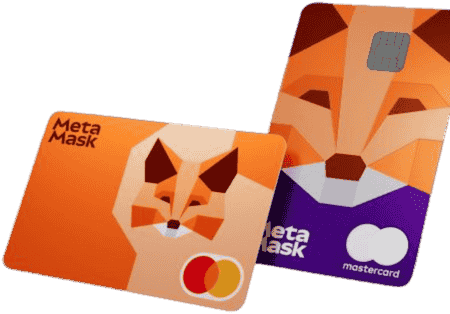
| MetaMask Virtual | 1% | 1% cross-border | Free | Mastercard | Self-custody | US, EEA, UK, CH, LatAm |
| Bleap | 2% | 0% | Free | Mastercard | Self-custody | EEA |
| Jupiter Global | 4-10% JupUSD | 1% / 1.8% | Free | Visa | Hybrid | Global |
| Solflare | 0% | 1% | Free | Mastercard | Self-custody | EEA/UK |
| Bitget Card | 8% | 0% | Free | Visa | Custodial | EEA/APAC |
| Bitget Wallet | 0% | 1.7% | Free | Mastercard | Custodial | EEA/UK/LATAM/APAC |
Physical-Only Cards (No Virtual Issuance)
A small category. These cards require waiting for physical delivery before any spending.
| Card | Cashback | FX Fee | Annual Fee | Network | Custody | Region |
|---|---|---|---|---|---|---|
| Tria Signature | 4.5% | 0% | $109/yr | Visa | Self-custody | Global |
| RedotPay Physical | 0% | 1.2% | $25 one-time | Visa | Custodial | Global |
| xPlace Silver | 1% | 1% | $200/yr | Visa | Self-custody | Global |
| BitPay | 0% | N/A | Free | Mastercard | Custodial | US |
Physical-only cards are increasingly rare. Most new issuers launch virtual-first.
When Virtual and Physical Limits Actually Differ
The assumption that physical cards automatically unlock higher limits is not always correct. Here is what actually changes by issuer.
| Issuer | Virtual Monthly Limit | Physical Monthly Limit | Limit Increase? |
|---|---|---|---|
| KAST (Standard) | $500/mo | $500/mo | No change |
| KAST (X Card) | $50,000/mo | $50,000/mo | No change |
| RedotPay | $50,000/mo | $50,000/mo | No change, but physical adds ATM |
| ether.fi | $20,000/mo | $20,000/mo | No change |
| 1inch | $20,000/mo | $20,000/mo | No change |
| Coinbase | $2,500/day | $2,500/day | No change |
| Bitpanda | $40,000/mo | $40,000/mo | No change |
| Ready Lite | $10,000/mo | $10,000/mo | No change |
| Ready Metal | $25,000/mo | $25,000/mo | No change, but physical adds $800/mo ATM |
The pattern is clear: most issuers apply identical spending limits to both form factors. The physical card's real advantage is ATM access, not higher POS limits. The exception is tiered programs (like KAST) where higher limits come from upgrading your tier, not from switching to physical.
Quick verdict: If your only reason for ordering a physical card is "higher limits," check the actual numbers first. You may already have the same limit on your virtual card.
Four Spending Scenarios Compared
Scenario 1: The Online-Only Spender ($2,500/month, zero ATM)
Who you are: E-commerce focused. Subscriptions, online shopping, digital services. Never touch an ATM. Apple Pay for coffee and groceries.
Verdict: Virtual-only is perfect. A physical card adds zero value.
| Card | Form Factor | Cashback | FX Fee | Annual Net Return |
|---|---|---|---|---|
| Coinbase (US) | Virtual | 4% | 0% | $1,200 |
| Bitget Card (EEA/APAC) | Both | 8% | 0% | $2,400 |
| 1inch (EEA) | Both | 2% | 0% | $600 |
| MetaMask Virtual | Virtual-only | 1% | 1% cross-border | $300 |
For online-only spenders, the top picks are virtual-first cards with 0% FX and high cashback. Ordering a physical card costs $0-$100 and adds nothing to your online experience.
Annual cost of choosing physical-only instead: If you signed up for RedotPay Physical ($25 issuance, 0% cashback, 1.2% FX) instead of Coinbase (free, 4% cashback, 0% FX), you would lose $1,560/year in net returns. Form factor choice has real financial consequences.
Scenario 2: The Cash-Dependent Traveler ($3,000/month, 25% ATM)
Who you are: Digital nomad or frequent traveler in cash-heavy regions. Need $750/month from ATMs. Rest is tap-to-pay.
Verdict: You need both. Virtual for daily taps, physical for ATM backup.
| Card | ATM Free Limit | ATM Overage | Cashback | FX Fee | Annual Net Return |
|---|---|---|---|---|---|
| Ready Metal | $800/mo | 2% over | 3% | 0% | $960 |
| ether.fi Core | $400/mo | 2% over | 3% | 1% | $636 |
| Kraken | $200/mo | 2% | 1% | 0% | $228 |
| RedotPay Physical | $200/mo | 2% | 0% | 1.2% | -$564 |
Ready Metal leads for travelers thanks to $800/month free ATM (covers the full $750 need), 0% FX, and 3% cashback. The $120/year fee pays for itself within the first month. Without ATM access (virtual-only), you would need a separate bank card for cash, adding complexity and likely extra FX fees.
Scenario 3: The Privacy-First User ($1,500/month, minimal KYC)
Who you are: Want to spend crypto with minimal identity exposure. Value speed and anonymity over premium rewards.
Verdict: Virtual with low KYC is ideal.
| Card | Form Factor | KYC Level | Cashback | FX Fee | Annual Net Return |
|---|---|---|---|---|---|
| RedotPay Virtual | Virtual-only | Basic | 0% | 1.2% | -$216 |
| KAST Standard | Both | Fast (2 min) | 2% | 0.5% | $270-$330 |
| MetaMask Virtual | Virtual-only | Basic | 1% | 1% cross-border | $180 |
| 1inch | Both | Standard | 2% | 0% | $360 |
Virtual cards generally require lighter KYC than physical cards because no shipping address verification is needed. In the EEA, issuers must perform address verification to send a physical card (AML/KYC regulations), but virtual issuance can proceed with basic identity checks only. This makes virtual cards the natural choice for privacy-conscious users, which is why they feature heavily in our privacy-focused users guide.
Scenario 4: The Premium Metal Collector ($8,000/month)
Who you are: Want the best physical card experience. Metal construction, lounge access, maximum limits. Willing to pay annual fees or stake tokens.
Verdict: Physical is the point. The virtual card is just the appetizer.
| Card | Material | Cashback | FX Fee | Annual Fee | Lounge | Annual Net Return |
|---|---|---|---|---|---|---|
| KAST X Card | Metal | 5% | 0.5% | $1,000/yr | No | $2,820-$3,640 |
| ether.fi Pinnacle | Metal | 3% | 1% | Free | Yes | $1,920 |
| Ready Metal | Metal | 3% | 0% | $120/yr | No | $2,760 |
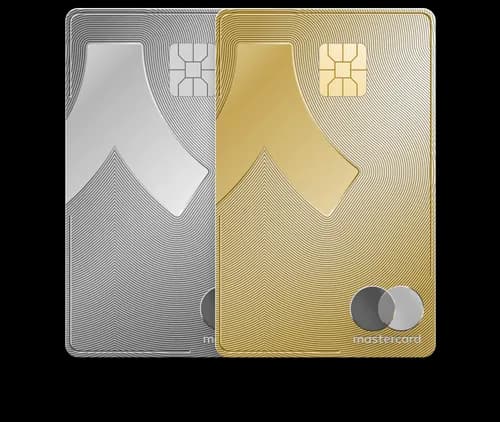
| Avici Signature | Metal | 0% | 0% | $200/yr | No | -$200 |
For premium spenders, the physical metal card is the product itself. Virtual issuance gets you started while shipping, but the metal card is what you are paying for. ether.fi Pinnacle stands out as the only metal card with airport lounge access and no annual fee (qualification through spending points or ETHFI staking).
KYC and Compliance: What Changes Between Form Factors
The form factor you choose affects how much identity verification the issuer requires and when.
Virtual card KYC (lighter, faster):
- Email address and phone number
- Government ID scan (passport, national ID)
- Selfie verification
- Processing time: 5-60 minutes
- No address verification required in most jurisdictions
Physical card KYC (enhanced, slower):
- Everything above, plus:
- Proof of address (utility bill, bank statement)
- Shipping address verification
- Processing time: 1-5 business days for KYC, plus 5-21 days shipping
In the EEA, the Fifth Anti-Money Laundering Directive (5AMLD) and MiCA framework require address verification for physical card delivery. This is why issuers can issue virtual cards faster - they can proceed with basic KYC while enhanced verification completes in the background.
Practical impact: If you need a card today, virtual is the only option. Physical cards require waiting for both KYC processing and shipping. The fastest physical card delivery we have seen is 5 business days (Bitpanda to EEA addresses). The slowest is 21+ days (RedotPay Physical for international shipping).
Cost Comparison: What Each Form Factor Actually Costs
| Cost Type | Virtual Card | Physical Card (Plastic) | Physical Card (Metal) |
|---|---|---|---|
| Issuance fee | Free to $10 | Free to $25 | Free to $200/yr |
| Replacement cost | Free (regenerate in app) | $10-$25 | $25-$50 |
| Shipping | N/A | Free to $15 | Free to $25 |
| Annual fee | Usually $0 | $0-$50 | $0-$10,000 |
| ATM access | N/A | Included | Included |
| Apple Pay / Google Pay | Included | Included | Included |
| Total first-year cost | $0-$10 | $0-$65 | $0-$10,225 |
The virtual card is almost always free. Physical plastic cards are generally free too, with only RedotPay Physical ($25 one-time) and xPlace Silver ($200/year) charging for issuance. Metal cards range from free (ether.fi Luxe/Pinnacle if you qualify) to $10,000/year (KAST Solana Gold).
Break-even math for physical card costs:
If a physical card costs $25 to issue and your cashback rate is 2%, you need $1,250 in spending to recover the issuance cost. At $3,000/month, that takes less than two weeks. The cost is trivial unless you are testing multiple cards.
If a metal card costs $120/year (Ready Metal) and adds 2.5% net benefit over the free tier (3% cashback + 0% FX vs 0.5% + 1% FX), you need $400/month to break even. At $1,500/month, the upgrade generates $330/year net profit after the fee.
Common Mistakes
Mistake 1: Waiting for the physical card instead of using virtual immediately
Cost: $45-$180 in missed cashback during 2-3 weeks of shipping.
At $3,000/month spending with 3% cashback, three weeks of waiting costs $135 in missed rewards. The virtual card earns the exact same cashback rate from day one. There is zero financial reason to wait.
How to avoid it: Add your virtual card to Apple Pay or Google Pay within minutes of signup. Start earning cashback immediately. The physical card is a bonus that arrives later.
Mistake 2: Paying for a physical card when you only shop online
Cost: $25-$200 in unnecessary issuance and annual fees.
If you never use ATMs and all your merchants accept NFC, a physical card adds no functionality. Yet some users default to ordering the physical card because it feels more "real." The RedotPay Physical at $25 or xPlace Silver at $200/year offer nothing over their virtual equivalents for online-only users.
How to avoid it: Audit your spending for one month. If zero transactions required a physical card (ATM, chip-and-PIN only terminal), stay virtual-only and save the fee.
Mistake 3: Assuming physical cards are more secure than virtual
Cost: Potential full balance loss from physical card theft or skimming.
Physical cards expose your actual card number at every chip-and-PIN terminal. They can be lost, stolen, or cloned via skimming devices. Virtual cards through Apple Pay and Google Pay use tokenization - merchants never see your real card number, and each transaction uses a unique code that cannot be replayed.
How to avoid it: Use virtual (mobile wallet) for all daily spending. Keep the physical card locked in your app and only unlock it for ATM withdrawals. Most issuer apps (Crypto.com, Coinbase, MetaMask) have instant freeze/unfreeze buttons.
Mistake 4: Ordering physical cards from multiple issuers "just to try them"
Cost: $50-$300 in cumulative issuance fees plus weeks of waiting per card.
Testing a new card should take five minutes, not five weeks. With a virtual card, you can make a $5 test purchase within minutes of signup and evaluate the app experience, conversion spread, and actual cashback rate before committing.
How to avoid it: Always start with the virtual card. Test with a small purchase. Only order the physical card if you confirm the card meets your needs and you actually need ATM or chip-PIN access. This saves both money and time.
Which Should You Get First?
The answer is almost always virtual first. Here is the decision framework:
Start with virtual if:
- You primarily shop online or use NFC tap-to-pay
- You want to test a card before committing
- You need a card today, not in two weeks
- You value the security of tokenized transactions
- You want the lowest possible entry cost ($0)
Add physical when:
- You need ATM cash withdrawals (the only feature virtual cannot replicate)
- You frequently encounter chip-and-PIN-only terminals (rare in 2026 but still common in some regions)
- You want a metal card for tier benefits (higher cashback, lounge access)
- You travel in regions where NFC acceptance is limited
Stay virtual-only if:
- You never withdraw cash from ATMs
- All your spending is online or at NFC-enabled terminals
- You prefer the security of tokenized mobile wallet payments
- You want zero ongoing costs
For most users in 2026, the ideal setup is one primary virtual card on your phone for daily spending and one physical card (from the same or different issuer) as a backup for ATM access. The virtual card handles 95%+ of transactions. The physical card handles the edge cases.
For deep dives into each category, see our full virtual card comparison and physical card comparison.
Tax Implications
The form factor does not change tax treatment. Every crypto-to-fiat conversion at point of sale is a taxable disposal event, whether the transaction happens via a virtual card tap or a physical card swipe.
One difference worth noting: ATM withdrawals (physical card only) create a clear, timestamped taxable event that some users overlook. Withdrawing $500 in cash from an ATM converts your crypto to fiat at that moment. If your crypto has appreciated since purchase, you owe capital gains on the difference.
Virtual card tax advantage: Digital transaction records through Apple Pay and Google Pay are automatically logged with exact timestamps, merchant names, and amounts. This makes cost-basis tracking easier than managing physical card receipts, especially for high-frequency spenders.
Loading your card with stablecoins (USDC, USDT) minimizes taxable gains regardless of form factor, since stablecoin-to-fiat conversions generate negligible capital gains.
For jurisdiction-specific guidance, see our country pages for the US, UK, Germany, and Singapore.
Disclaimer: SpendNode is a data comparison platform. We are not financial advisors. Crypto cards involve risks including asset volatility, custodial risk, and tax complexity. Verify all terms directly with issuers before applying.
Written by Aleksandar Dukic
Frequently Asked Questions
Can I have both a virtual and physical crypto card from the same issuer?
Yes. Most issuers that offer physical cards also issue a virtual card first. You use the virtual card immediately (via Apple Pay or Google Pay) while the physical card ships. Both share the same balance and earn the same cashback rate. Issuers with both include ether.fi, Coinbase, 1inch, Bitpanda, KAST, Kraken, Ledger, Ready, Wirex, Binance, Gate.io, and Avici.
Which crypto cards are virtual-only with no physical option?
Virtual-only cards with no physical option include MetaMask Virtual, RedotPay Virtual, RedotPay Solana, Bleap, Jupiter Global, Solflare, Nexo, and Tria Premium. These work for online shopping and NFC tap payments through Apple Pay or Google Pay, but cannot be used at ATMs or chip-and-PIN terminals that require a physical card.
Do I lose my virtual card when I get a physical card?
No. The virtual card remains active and usable alongside the physical card. Both are linked to the same account and balance. Many users keep using the virtual card (via mobile wallet) for everyday tap payments and reserve the physical card for ATM withdrawals.
Is a virtual crypto card safer than a physical one?
For everyday payments, yes. Virtual cards used through Apple Pay or Google Pay use tokenization, generating a unique code per transaction. Merchants never see your actual card number. Physical cards can be lost, stolen, or cloned via skimming. However, virtual cards depend on device security - if your phone is compromised, the card is exposed.
Do virtual and physical crypto cards have different spending limits?
Some issuers apply different limits. RedotPay caps virtual cards at $50,000/month and physical at $50,000/month (same). KAST virtual tiers start at $500/month and unlock up to $50,000 with physical premium tiers. Most issuers like ether.fi, 1inch, and Bitpanda set identical limits regardless of form factor.
Can I use a virtual crypto card at an ATM?
No. ATM withdrawals require a physical card with a chip. This is the primary functional limitation of virtual-only cards. If you need cash access, you must have a physical card or carry a separate bank card for ATM use.
Which form factor is better for international travel?
Both have advantages. Virtual cards let you start spending immediately in a new country via Apple Pay. Physical cards give you ATM access for cash-dependent regions. The ideal travel setup is both: a virtual card on your phone for daily tap payments and a physical card as backup for ATMs and terminals that do not accept NFC.
Do virtual crypto cards work everywhere physical cards do?
Almost. Virtual cards via Apple Pay or Google Pay work at any NFC-enabled terminal, which covers most retail locations in developed markets. The exceptions are: ATMs (physical only), chip-and-PIN terminals without NFC (physical only), and some self-service kiosks (parking meters, vending machines) that require card insertion.
Is the cashback rate different between virtual and physical?
No. Cashback rates are tied to your card tier or plan, not the form factor. Whether you tap your phone (virtual) or insert a physical card, you earn the same rewards. The exception is cards like RedotPay where the Virtual and Physical are separate products with different fee structures.
Should I get a virtual card first or wait for the physical?
Always start with the virtual card. At $3,000/month spending with 3% cashback, every week of waiting costs $22.50 in missed rewards. The virtual card is identical in function for online and NFC payments. Only order a physical card if you need ATM access or frequently visit merchants without NFC terminals.
Recent Updates to Best Virtual vs Physical Crypto Cards
- Moved Bitget Card from Both to Virtual-Only table. Fixed BitPay network to Mastercard
- Added human intro with firsthand experience