

Best Crypto Cards in Trinidad and Tobago (2026)
Compare crypto cards available in Trinidad and Tobago. The Caribbean's wealthiest economy per capita (oil and gas), zero individual CGT, and a TTD pegged near 6.8:1 USD. Cards like Kolo (current 2% BTC headline), Tria Signature (4.5%), and Crypto.com Icy (4%) serve T&T residents with USD settlement.
Verified for Trinidad and Tobago
34 crypto cards available
Local currency: TTD
Trinidad and Tobago is the wealthiest Caribbean nation per capita, powered by oil and natural gas revenues that fund one of the region's highest standards of living. GDP per capita of approximately $17,000 (PPP $28,000+) creates disposable income that makes crypto card cashback especially valuable. The TTD (Trinidad and Tobago dollar) is managed near a 6.8 TTD per USD soft peg by the Central Bank, providing unusual currency stability for the Caribbean.
There is no capital gains tax for individuals, no crypto ban, and the CBTT has been exploring blockchain technology since 2020. This combination of high income, tax efficiency, stable currency, and regulatory tolerance makes T&T one of the most attractive Caribbean markets for crypto card adoption.
The country's dependence on energy exports (oil, LNG, petrochemicals account for approximately 40% of GDP and 80% of export revenue) creates a natural diversification motivation: holding crypto diversifies away from TTD and commodity price volatility. USD-denominated crypto cards settle at the interbank TTD/USD rate with low or 0% FX fees, compared to the 2-3% spreads that Republic Bank, First Citizens, and RBC charge on foreign currency transactions.
Republic Bank (largest by assets, 50+ branches), First Citizens Bank (state-majority-owned, second-largest), RBC Royal Bank Trinidad (Canadian parent), Scotiabank T&T, and CIBC FirstCaribbean offer standard debit cards with zero cashback. Credit cards (Visa/Mastercard) carry annual fees of $100-350 TTD ($15-51) with 0.5-1% rewards at best. Crypto cards deliver 2-5% cashback at $0 annual fee - a major upgrade in a zero-CGT, stable-currency environment.
| Card | Max Cashback | Annual Fee | FX Fee | Card Type | Best For |
|---|---|---|---|---|---|
| Kolo | 2% BTC | $0 | 0% | Prepaid | Free BTC cashback, no fees |
| Tria Signature | 4.5% | $109 | 0% | Debit | Yield-linked rewards, 0% FX |
| Crypto.com Icy | 4% | CRO stake | 0% | Prepaid | Tiered rewards + airport lounge perks |
| ether.fi | 3% | $0 | 1% | Debit | Borrow-to-spend |
| KAST | 2% | $0 | 0.5% | Prepaid | Zero-fee everyday spending |
| RedotPay | - | $0-$100 | 1.2% | Prepaid | Stablecoin spending |
| Avici | 0% | $0-$30 | 0% | Credit | Crypto-backed credit |
| xPlace | 0.5-2% | $0 | 1% | Debit | Solana ecosystem |
| Jupiter | 4-10% JupUSD | $0 | 1% | Debit | DeFi-native spending |
We verified which cards ship to Trinidad and Tobago - Kolo delivers 2% BTC rewards at $0 annual fee and 0% FX as the simple free BTC option in T&T. In a zero-CGT jurisdiction, that BTC cashback appreciates tax-free.
Tria Signature at 4.5% yield-linked rewards and 0% FX suits energy professionals with higher monthly spend who can break even on the $109 annual fee quickly. Crypto.com Icy adds lounge access at Piarco International Airport (POS), valuable for energy sector professionals who travel frequently to Houston, Miami, London, and regional Caribbean destinations.
Best Card For Every Need in Trinidad and Tobago
Top 5 Crypto Cards in Trinidad and Tobago
T&T's oil-and-gas economy pays the Caribbean's highest salaries, and zero individual capital gains tax means every percentage point of cashback flows straight to the bottom line. Kolo's 2% BTC cashback at $0 annual fee and 0% FX remains a simple free BTC option, and in a zero-CGT jurisdiction that BTC appreciates without any tax drag.
Tria Signature at 4.5% yield-linked rewards and 0% FX breaks even on its $109 annual fee at just $202/month of spending. Crypto.com Icy at 4% is the natural fit for energy sector professionals who fly Houston, London, and Miami monthly - Priority Pass at Piarco (POS) plus global hub airports saves $300-600/year in lounge access alone.
KAST earns its place for residents who mainly need offshore balances turned into normal TTD spending at 2% cashback and $0 annual fee, while ether.fi at 3% preserves staking yield for ETH holders who want spending liquidity without selling.
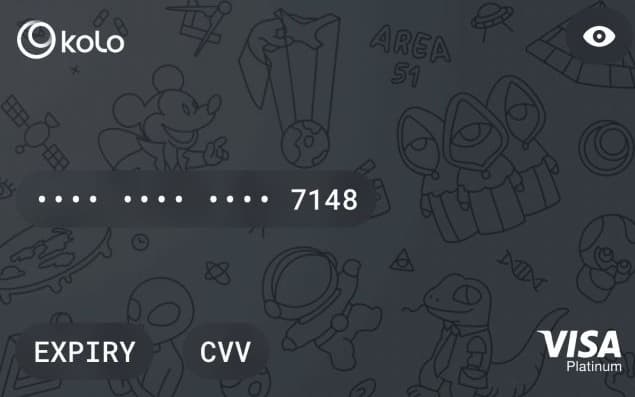
1. Kolo Card
Earn Bitcoin on Purchases: 2% BTC Cashback + Visa Platinum + 170+ Countries
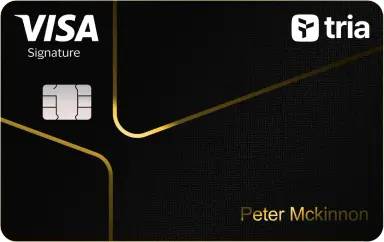
2. Tria Signature Card
High-Yield Mastery: 15% APY + Visa Signature Perks
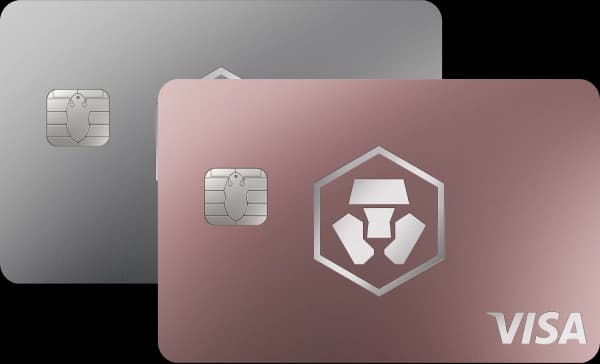
3. Private (Icy White / Rose Gold)
Elite Private Status: 4% Uncapped Cashback + Guests
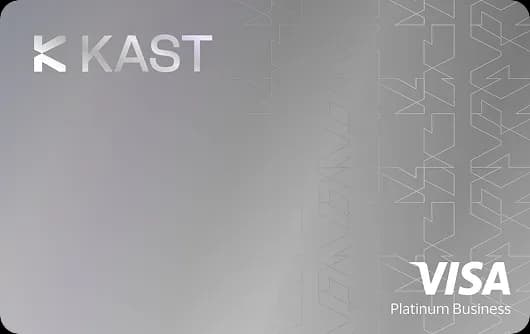
4. KAST K Card
Early Adopter Access: 2% Points + 4% $MOVE on Every Swipe

5. ether.fi Core Card
Zero Barriers: 3% Back on Every Purchase, No Stake Required
Crypto Card Regulation in Trinidad and Tobago
The Central Bank of Trinidad and Tobago (CBTT) is the primary financial regulator. The CBTT has issued multiple public notices (2017, 2019, 2021) warning about cryptocurrency risks and clarifying that crypto is not legal tender, not regulated by the CBTT, and not protected by deposit insurance. However, the CBTT has not prohibited crypto ownership, trading, or use. The CBTT's position is cautionary rather than restrictive.
The Trinidad and Tobago Securities and Exchange Commission (TTSEC) regulates securities and investment products. In 2020, the TTSEC published a draft framework for the regulation of virtual assets, proposing registration requirements for virtual asset service providers (VASPs), consumer protection measures, and disclosure requirements.
This earlier draft was superseded by the 2025 Act (see below). The TTSEC has warned the public about unregistered crypto investment schemes and now has formal enforcement powers under the new law.
The Financial Intelligence Unit of Trinidad and Tobago (FIUTT) applies AML/CFT requirements under the Proceeds of Crime Act (2000) and the Financial Obligations Regulations. Financial institutions must report suspicious transactions that could involve crypto.
The CBTT's Fintech Committee, established in 2020, has published discussion papers on CBDCs and distributed ledger technology. T&T is a member of CARICOM and participates in the Caribbean Financial Action Task Force (CFATF) mutual evaluations that influence the AML framework.
The Virtual Assets and Virtual Asset Service Providers Act, 2025 was passed by Parliament in November 2025 and received Presidential assent on December 23, 2025. The TTSEC is the designated supervisory authority. Virtual asset activities conducted as a business are temporarily prohibited until December 31, 2026, unless authorized through the Regulatory Sandbox.
April 7, 2026 deadline: VASPs that did not qualify for or receive Sandbox entry must have ceased all virtual asset activities and notified the TTSEC within 14 days. This effectively split the market into authorized Sandbox participants and shut-down operators.
Wallet service provider and virtual asset activity authorization will not be granted before December 31, 2027. The Act was driven by T&T's need to meet AML/CFT standards ahead of the fifth-round Caribbean Financial Action Task Force (CFATF) mutual evaluation, with an on-site review scheduled for March 2026.
Crypto card usage remains legal - internationally issued cards (Visa/Mastercard) are not T&T-based VASPs and fall outside the Act's scope. The Act targets domestic operators, not individual card users spending crypto through global issuers.
Tax Treatment of Card Rewards in Trinidad and Tobago
Trinidad and Tobago has no capital gains tax for individuals. This is the single most important tax fact for crypto card users, placing T&T alongside the UAE, Bahrain, Kuwait, and Jamaica among zero-CGT jurisdictions.
No Individual Capital Gains Tax
The Income Tax Act (Chapter 75:01) does not include a capital gains tax provision for individuals. Transfer tax exists for real estate (7% stamp duty is one of the Caribbean's highest, which pushes capital toward movable assets).
For crypto: buy BTC at $10,000, it appreciates to $90,000, spend $500 through your card at a restaurant in Ariapita Avenue. The proportional gain of approximately $444 triggers zero tax. No holding period requirement, no annual threshold, no reporting obligation specific to crypto gains.
Individual Income Tax
Income tax rates are 25% on the first TTD 1,000,000 (approximately $147,000) of chargeable income and 30% above that threshold. The Personal Allowance is TTD 84,000 ($12,350). If crypto trading is your primary business activity (frequent, systematic trading for profit), the Board of Inland Revenue (BIR) could classify profits as business income taxable at 25-30%. Occasional card spending from a personal portfolio would not trigger this.
Business and Corporation Tax
Corporation tax is 30% (35% for petrochemical and financial sector companies - reflecting T&T's energy-driven economy). Business Levy of 0.6% applies as a minimum tax. Green Fund Levy of 0.3% applies to gross revenues. These apply only to businesses, not individual crypto card users.
Supplemental Petroleum Tax and Energy Sector
T&T's tax system is heavily tilted toward the energy sector: SPT (Supplemental Petroleum Tax) rates up to 33% on oil and 35% on natural gas production. This is irrelevant to crypto card users but explains why individual tax rates are relatively moderate - the government funds itself primarily through energy revenues.
| Cashback Type | Tax When Received | Tax When Spent/Sold | Optimal Strategy |
|---|---|---|---|
| BTC/ETH cashback | Not taxed (rebate) | No CGT for individuals | Hold for appreciation |
| Stablecoin cashback (USDC) | Not taxed (rebate) | No CGT | Spend anytime |
| Points/token cashback | Not taxed (rebate) | No CGT | Hold or convert freely |
T&T's zero CGT makes all funding methods equally tax-efficient. Spend volatile crypto freely through your card without worrying about disposition tax. No cost basis tracking needed, no holding period optimization, no annual tax-loss harvesting.
How to Apply from Trinidad and Tobago
Crypto card applications from Trinidad and Tobago require the National Identification Card (National ID), issued by the Elections and Boundaries Commission (EBC). The National ID is the primary government-issued photo ID for T&T citizens. T&T is in the process of implementing a new National ID system with biometric data and chip technology.
T&T passport (issued by the Immigration Division, Ministry of National Security) is accepted by all major global card issuers. T&T driver's permit (issued by the Licensing Division) works as secondary ID.
Proof of address via utility bills from T&TEC (Trinidad and Tobago Electricity Commission), WASA (Water and Sewerage Authority), TSTT (Telecommunications Services of Trinidad and Tobago, state-owned), or FLOW/Digicel (mobile). Bank statements from Republic Bank, First Citizens, RBC, Scotiabank T&T, or CIBC FirstCaribbean also work.
BIR Number (Board of Inland Revenue registration number) is T&T's tax identifier. Some issuers may request this. CARICOM member status provides additional document recognition across Caribbean member states (Jamaica, Barbados, Guyana, Suriname, etc.). CSME (Caribbean Single Market and Economy) supports mobility and document recognition. Most global issuers accept T&T passports without difficulty.
Spending Tips for Trinidad and Tobago
Zero CGT: Spend Any Crypto Freely
T&T's absence of capital gains tax for individuals is the defining advantage. You can spend appreciated BTC, ETH, SOL, or any crypto through a card with zero tax liability on the gain. No need to track cost basis per transaction, no holding period strategy, no annual exemption calculations. This simplicity is rare globally - most countries require some form of gain calculation on crypto card spending. In T&T, spend and forget.
Banking System: Oil-Funded Conservatism
Republic Bank (largest bank, 50+ branches, 150+ ATMs) is the anchor of T&T retail banking. Standard savings account: zero cashback debit, TTD 100-250 annual fee on Visa/Mastercard debit. Credit cards: TTD 150-500 annual fee ($22-73), 0.5-1% cashback in points with restrictive redemption (airline miles require 25,000+ points for a domestic flight).
First Citizens (state-majority-owned, second-largest) offers similar products with slightly lower fees. RBC Royal Bank T&T (Canadian parent) targets the corporate and high-net-worth segment. Scotiabank T&T and CIBC FirstCaribbean serve the middle market.
Our local cost analysis for Port of Spain shows the FX markup is where banks extract the most value: Republic Bank charges 2.5-3% on non-TTD transactions, First Citizens 2-2.5%, RBC 2.5%. For T&T energy professionals who travel frequently (Houston for oil conferences, London for LNG markets, Miami for Caribbean hub), this adds up quickly. A crypto card at 0% FX saves 2.5-3% on every international transaction - before cashback even enters the equation.
Card Selection by Use Case
- Free BTC cashback: Kolo (2% BTC on crypto cards with cashback, $0 annual fee, 0% FX)
- Yield-linked rewards: Tria Signature (4.5%, $109/yr, 0% FX)
- Premium travel perks: Crypto.com Icy (4% + airport lounge perks at POS + Caribbean airports)
- Best fit for everyday TTD spending: KAST (2%, $0 annual fee, 0.5% FX)
- Borrow-to-spend: ether.fi (3%, preserves ETH staking yield)
- Crypto-backed credit: Avici (no disposal, Visa credit)
Break-Even Math: Energy Sector Income Context
All USD. Zero CGT for individuals. T&T income levels are among the Caribbean's highest.
| Monthly Spend | Kolo (2% BTC, free) | Tria Sig (4.5%, $109/yr) | Crypto.com Icy (4%, CRO stake) | KAST (2%, free) |
|---|---|---|---|---|
| $300 | $72/yr | $53/yr | $144/yr + lounges | $72/yr |
| $600 | $144/yr | $215/yr | $288/yr + lounges | $144/yr |
| $1,000 | $240/yr | $431/yr | $480/yr + lounges | $240/yr |
| $2,000 | $480/yr | $971/yr | $960/yr + lounges | $480/yr |
T&T energy sector professionals often earn $3,000-8,000/month. At $2,000/month card spending, Kolo delivers $480/year in BTC cashback. Tria Signature nets $971/year after its $109 fee (break-even at $202/month). Crypto.com Icy adds airport lounge access at Piarco (POS) and Caribbean airports, saving $25-50 per visit.
Cost of Living by Area
Westmoorings/Goodwood Park/Glencoe (Northwest Trinidad premium): Rent $4,000-10,000 TTD ($590-1,470). Diplomatic community, expatriate energy sector workers, Westmall, MovieTowne. Universal card acceptance. International restaurants, upscale shopping. The highest-income residential area.
St. Clair/Woodbrook/Newtown (Port of Spain central): Rent $3,000-7,000 TTD ($440-1,030). Queen's Park Savannah, Ariapita Avenue (the main dining and nightlife strip), National Museum, Queen's Royal College. Strong card acceptance at restaurants ($50-150 TTD per person), hotels (Hyatt Regency, Hilton, Courtyard by Marriott). The cultural and entertainment center.
San Fernando (south Trinidad industrial city): Rent $2,000-5,000 TTD ($295-735). Southern capital, oil refinery proximity (Pointe-a-Pierre), Gulf City Mall, San Fernando Hill. Card acceptance at malls and chain stores. The energy sector's operational base - many petrochemical workers live here.
Chaguanas (central Trinidad commercial hub): Rent $2,000-5,000 TTD ($295-735). T&T's most populated borough, Divali Nagar (Hindu festival grounds), Price Plaza, Mid Centre Mall. Growing commercial center with improving card acceptance. The Indo-Trinidadian cultural heartland.
Crown Point/Scarborough (Tobago): Rent $2,000-6,000 TTD ($295-880). ANR Robinson International Airport (TAB), Pigeon Point Beach, Buccoo Reef. Tourist economy with strong card acceptance at hotels and restaurants. Slower pace, nature-focused tourism. Store Bay and Fort King George.
Couva/Penal/Debe (Central-South Trinidad): Rent $1,500-3,500 TTD ($220-515). Agricultural areas, some industrial zones. Lower costs, cash-dominant outside commercial centers. Couva hosts the National Academy for the Performing Arts and growing commercial development.
The Energy Professional Advantage
T&T's economy revolves around Atlantic LNG (one of the world's largest LNG exporters), heritage oil production, and downstream petrochemicals (methanol, ammonia, urea). Energy companies (BP Trinidad, Shell Trinidad, BHP, EOG Resources, NGC, Petrotrin successor entities) employ thousands of professionals earning well above the national average.
These professionals travel frequently: Houston (energy capital, CERA Week, OTC conference), London (LNG trading), Miami (Caribbean hub), Curacao, Guyana (emerging oil play). A crypto card with 0% FX and lounge access at $0 annual fee is a natural fit - the FX savings alone on a $500/week travel expense is $12.50-15 per trip compared to Republic Bank's 2.5-3% markup.
Cross-Border and Online Spending
Caribbean CARICOM (Barbados, Jamaica, Guyana, Grenada, St. Lucia): CSME supports travel and economic ties. LIAT and Caribbean Airlines connect the islands. US (Miami, Fort Lauderdale, New York JFK): Major shopping and travel corridor. UK (London Gatwick/Heathrow): Historic Commonwealth connection, diaspora. Guyana (emerging oil economy): Growing T&T business investment.
Online: Amazon US (via SkyBox T&T, ShipToTrinidad, and other forwarding services), Netflix ($7-17/month), Spotify, DirecTV Caribbean, SportsMax (Caribbean sports streaming). All charge in USD with low or zero FX on crypto cards (0% on Kolo/Tria/Crypto.com, 0.5% on KAST, 1% on ether.fi/xPlace/Jupiter).
Local Payment Infrastructure
Card acceptance in T&T is well-developed by Caribbean standards. Visa and Mastercard contactless works at supermarkets (PriceSmart, Massy Stores, JTA Supermarkets, Tru Valu), shopping centres (Trincity Mall, West Mall, Grand Bazaar, Long Circular Mall, C3 Centre, Gulf City San Fernando, Price Plaza Chaguanas), hotels, and most restaurants in Port of Spain and San Fernando. Apple Pay and Google Pay are supported through international card issuers.
Linx (local debit card network, Central Bank-regulated) dominates domestic card payments - nearly every merchant POS accepts Linx. International Visa/Mastercard is also accepted at most formal businesses. FCB Mobile, RepublicMobile, and RBC Digital Banking provide mobile banking.
WiPay (T&T-founded fintech) processes digital payments. Cash remains common at local markets, doubles (roadside food stalls - a national institution), maxi-taxis, and rural areas. VAT is 12.5% on most goods and services (essential food items exempt).
Supported Exchanges & Wallets in Trinidad and Tobago
Ten card vendors serve Trinidad and Tobago through LATAM and GLOBAL coverage. Zero individual CGT means every funding method is equally tax-efficient, and the energy sector's high incomes justify premium card tiers.
Kolo delivers 2% BTC rewards at $0 annual fee and 0% FX - a simple free BTC option. In T&T's zero-CGT environment, that BTC cashback appreciates completely tax-free, unlike bank deposits at Republic Bank or First Citizens earning 1-3%.
Tria Signature at 4.5% yield-linked rewards and 0% FX breaks even on its $109 annual fee at $202/month of spending, well within reach for energy sector salaries.
Crypto.com is the premium play for T&T's traveling professional class. The Icy at 4% includes Priority Pass airport lounge access at Piarco International (POS) and major hub airports (Miami, Houston, London, New York).
For energy sector professionals traveling monthly, lounge access saves $300-600/year. Ruby at 2% adds Spotify rebate.
KAST is the lowest-cost everyday card for using offshore balances on ordinary TTD purchases: 2% cashback, $0 annual fee, 0.5% FX. ether.fi offers borrow-to-spend at 3% - while T&T has no CGT, the model preserves staking yield while providing spending liquidity, which matters for ETH holders.
Avici provides crypto-backed Visa credit for users who want to keep long-term holdings untouched. Bitget Wallet Card serves DCS wallet users. xPlace and Jupiter target the Solana/DeFi ecosystem.
On-Ramps: P2P in a Cash-Rich Economy
No crypto exchanges are headquartered in T&T. Binance P2P (TTD pairs) is the primary on-ramp. T&T's high disposable income and stable currency make P2P trading relatively liquid compared to smaller Caribbean nations.
WiPay (T&T-founded) focuses on traditional payments rather than crypto. International wire transfers from Republic Bank or First Citizens to global exchanges work but carry $150-300 TTD fees. Caribbean crypto communities (Cayman Islands, Bahamas, Barbados-based companies) influence regional adoption patterns.
T&T's zero individual CGT, stable TTD-USD near-peg, high disposable income from the energy sector, and well-developed card acceptance infrastructure make it the Caribbean's strongest crypto card market by spending power. The Virtual Assets Act 2025 provides regulatory clarity without restricting individual crypto card use, and the energy professional demographic provides a natural high-spending user base.
Written by SpendNode Editorial
Frequently Asked Questions
Which crypto cards work in Trinidad and Tobago?
T&T is served by globally available crypto cards including Kolo (current 2% BTC cashback headline, $0 annual, 0% FX), Tria Signature (4.5%, $109/yr, 0% FX), Crypto.com Icy (4%, CRO stake, 0% FX with Priority Pass lounges), KAST (2%, $0, 0.5% FX), and ether.fi (3%, borrow-to-spend). Visa and Mastercard are widely accepted in Port of Spain, San Fernando, and Chaguanas.
How is cryptocurrency taxed in Trinidad and Tobago?
Trinidad and Tobago has no capital gains tax for individuals. Personal income tax is 25% on the first TTD 1 million and 30% above. Crypto trading profits may be considered business income if frequent, but occasional crypto card spending is unlikely to trigger income tax. The Board of Inland Revenue (BIR) has not issued crypto-specific guidance.
Is crypto legal in Trinidad and Tobago?
Yes. The Virtual Assets and Virtual Asset Service Providers Act, 2025 was signed into law on December 23, 2025, establishing a regulatory framework under the TTSEC. VASP activities are temporarily prohibited until December 31, 2026 unless authorized through a Regulatory Sandbox. However, internationally issued crypto cards (Visa/Mastercard) are not T&T-based VASPs and remain fully legal to use.
Can I use a crypto card at local merchants?
Yes. Visa and Mastercard contactless works at most retailers in Port of Spain (Trincity Mall, West Mall, Long Circular Mall), San Fernando, and tourist areas in Tobago. Apple Pay and Google Pay are supported through international issuers. Cash is still common at local markets, doubles vendors, and maxi-taxis.
Other Countries
View all 107 countries →


Recent Updates to Best Crypto Cards in Trinidad and Tobago
- Added April 7, 2026 deadline for non-Sandbox VASPs to cease operations
- Fixed inconsistency where line 43 said framework 'not finalized into law' while line 49 documented the Act's passage
- Removed COCA (unavailable in T&T) and Ledger CL (unavailable) from table, recommendations, break-even, and exchanges. Added Kolo (5% BTC, $0, 0% FX) and Tria Signature (4.5%, $109, 0% FX) as top picks
- Replaced Crypto.com Jade (3%) with Icy (4%) as recommended tier. Removed redotpay-solana-card from topCardSlugs (0% rewards). Fixed KAST FX 0.5-1.75% to 0.5%, ether.fi FX 0% to 1% and fee Points to $0
- MAJOR regulatory update: Virtual Assets and Virtual Asset Service Providers Act 2025 passed Parliament Nov 2025, Presidential assent Dec 23, 2025. VASP activities prohibited until Dec 31, 2026 (Sandbox exceptions). Wallet authorization delayed to Dec 31, 2027. TTSEC designated authority. CFATF mutual evaluation March 2026
- Break-even table rebuilt with Kolo, Tria Signature, Crypto.com Icy, and KAST at T&T energy sector income levels. All calculations verified