


Best Crypto Cards in Paraguay (2026)
Compare crypto cards available in Paraguay. Kolo (current 2% BTC headline), Tria Signature (4.5%), and KAST (2%) serve South America's cheapest electricity market and growing Bitcoin mining hub.



Verified for Paraguay
34 crypto cards available
Local currency: PYG
Paraguay is South America's hydroelectric powerhouse. The Itaipu Dam (shared with Brazil, world's second-largest by annual output) and Yacyreta Dam (shared with Argentina) produce far more electricity than the country's 7 million people consume - Paraguay exports approximately 90% of Itaipu's output to Brazil and a large share of Yacyreta's to Argentina.
This surplus makes electricity among the cheapest in the world (approximately $0.03-0.05/kWh), attracting growing Bitcoin mining operations to Ciudad del Este and the Chaco region. For miners, a crypto card is the most direct path from mining revenue to spending power without an intermediate bank step.
The guarani (PYG) trades around 7,500-7,800 per USD. Paraguay's economy (GDP approximately $42 billion) is driven by agriculture (world's 4th-largest soybean exporter, major beef producer), hydroelectric exports, and the massive re-export trade through Ciudad del Este (electronics, clothing, and consumer goods flowing to Brazil).
The large informal economy and cross-border commerce with Brazil and Argentina create natural demand for dollar-denominated financial tools. Traditional banks offer zero cashback on debit and minimal rewards on credit products.
Banco Continental (largest private bank), Itau Paraguay, Sudameris (BBVA subsidiary), Vision Banco (microfinance leader), Banco Regional (agribusiness focus), and BROU (Banco Nacional de Fomento, state-owned) offer standard debit cards with zero cashback. Credit cards (Visa/Mastercard) carry annual fees of PYG 200,000-600,000 ($25-77) with 0.5-1% rewards in restricted points programs.
Crypto cards at 2-5% cashback with $0 annual fee represent a massive upgrade.
| Card | Max Cashback | Annual Fee | FX Fee | Card Type | Best For |
|---|---|---|---|---|---|
| Kolo | 2% | $0 | 0% | Prepaid | Free BTC cashback, no fees |
| Tria Signature | 4.5% | $109 | 0% | Debit | Yield-linked rewards, 0% FX |
| Crypto.com Icy | 4% | CRO stake | 0% | Prepaid | Tiered rewards + lounge access |
| ether.fi | 3% | $0 | 1% | Debit | Borrow-to-spend for ETH stakers |
| KAST | 2% | $0 | 0.5% | Prepaid | Lowest-cost card for USD, BRL, and PYG spending |
| RedotPay | - | $0-$100 | 1.2% | Prepaid | Stablecoin spending |
| Avici | 0% | $0-$30 | 0% | Credit | Crypto-backed credit |
| xPlace | 0.5-2% | $0 | 1% | Debit | Solana ecosystem |
| Jupiter | 4-10% JupUSD | $0 | 1% | Debit | DeFi-native spending |
In our Paraguay guide, Kolo remains a useful free BTC card: 2% BTC cashback at $0 annual fee and 0% FX. For miners converting BTC to spending power, direct card funding from mining payouts still avoids the bank step entirely.
KAST at 2% with $0 annual fee and 0.5% FX is the cheapest entry for users spending across PYG, USD, and BRL without premium tiers. Tria Signature at 4.5% and 0% FX suits miners with higher monthly spend who can break even on the $109 fee at $202/month.
Paraguay's high IRP exemption threshold (PYG 120 million, approximately $15,500) means most individual card users pay zero tax.
Best Card For Every Need in Paraguay
Top 4 Crypto Cards in Paraguay
Paraguay's $0.03-0.05/kWh hydroelectric surplus from Itaipu and Yacyreta created Ciudad del Este's Bitcoin mining cluster - and for miners, direct BTC-to-card funding is the shortest path from mining rig to restaurant. Kolo at 2% BTC cashback with $0 annual fee and 0% FX is still a clean fit for that loop, even if it is no longer a standout rewards play.
KAST at 2% serves the broader population at $450/month average income where $0 annual fee matters more than tiered rewards. Tria Signature at 4.5% and 0% FX suits miners with higher monthly spend, breaking even on $109/yr at just $202/month. ether.fi at 3% preserves ETH staking yield for holders who want spending liquidity without selling.
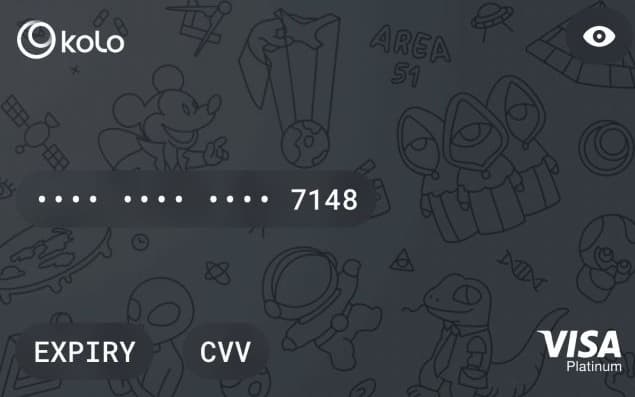
1. Kolo Card
Earn Bitcoin on Purchases: 2% BTC Cashback + Visa Platinum + 170+ Countries
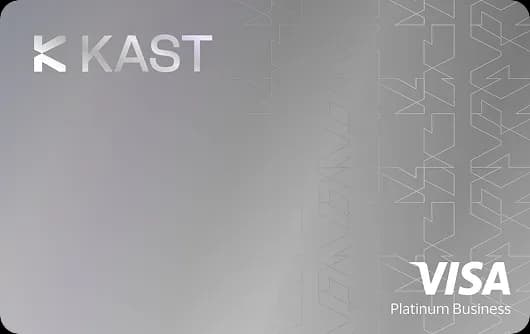
2. KAST K Card
Early Adopter Access: 2% Points + 4% $MOVE on Every Swipe

3. Tria Signature Card
High-Yield Mastery: 15% APY + Visa Signature Perks

4. ether.fi Core Card
Zero Barriers: 3% Back on Every Purchase, No Stake Required
Crypto Card Regulation in Paraguay
Paraguay's crypto regulatory framework is developing amid intense political debate. In July 2022, Paraguay's Congress passed Proyecto de Ley que Regula la Industria de Criptoactivos (Bill to Regulate the Crypto Asset Industry), which would have established SEPRELAD as the crypto regulator, created mining licenses, and set energy allocation rules.
President Mario Abdo Benitez vetoed the bill, arguing it needed revisions on energy consumption provisions because mining could strain Itaipu and Yacyreta allocations to Brazil and Argentina. He also raised concerns about tax treatment.
The Banco Central del Paraguay (BCP) does not recognize cryptocurrency as legal tender. The BCP issued communications in 2021 warning that crypto assets are not regulated and carry inherent risks, but has not banned crypto ownership or trading. The BCP's Resolucion No. 37/2021 required financial institutions to report suspicious crypto-related transactions but did not prohibit bank-to-exchange transfers.
SEPRELAD (Secretaria de Prevencion de Lavado de Dinero o Bienes) already applies AML/CFT requirements under Law No. 6497/2019 to financial activities that could include crypto transactions. VASPs operating in Paraguay are expected to comply with SEPRELAD reporting requirements, though enforcement is limited in practice.
Reports indicate that Law No. 7572/2025 on the Securities and Products Market may extend oversight to tokenized assets through the Securities Superintendency (SIV), though the full scope of crypto-specific provisions has not been confirmed from official Paraguayan government sources.
In late 2025, the Chamber of Deputies reportedly approved resolutions mandating registration for Bitcoin mining operations to enhance transparency and curb illegal mining. Industry sources cite approximately 45 licensed mining operations with around 20 more applications pending, though these figures have not been independently verified from official registries.
The government has also reportedly announced plans to mine Bitcoin using seized mining rigs.
In March 2026, the DNIT (Direccion Nacional de Ingresos Tributarios, formerly SET) issued Resolution 47, introducing mandatory reporting obligations for crypto holders and operators. Individuals and entities must disclose digital asset transactions exceeding $5,000 per year, including wallet addresses, blockchain networks, transaction hashes, dates, amounts, USD values, and fees.
The scope covers crypto-to-crypto trading, mining rewards, staking income, yield farming, airdrops, lending returns, and payments made with digital assets.
First filings are due in early 2027 for the 2026 fiscal year through DNIT's Marangatu tax management system. Critically, Resolution 47 does not create any new tax - it is a reporting-only measure that respects Paraguay's territorial taxation principle.
Paraguay's regulatory stance is permissive and moving toward formalization. Mining registration is tightening, DNIT reporting now tracks crypto activity, and crypto card usage remains legal and unrestricted.
Tax Treatment of Card Rewards in Paraguay
Paraguay's tax system, administered by the SET (Subsecretaria de Estado de Tributacion), is relatively simple compared to regional peers.
Personal Income Tax (IRP)
The Impuesto a la Renta Personal (IRP) applies to individuals at rates published by the DNIT: 8% on rentas y ganancias del capital, while IRP personal-service income uses 8%, 9%, and 10% bands. Income below PYG 120 million (approximately $15,500) is exempt.
Capital gains from the disposal of movable property (which likely includes crypto) fall under IRP.
This high exemption threshold is the key fact for most Paraguayan crypto card users. A person earning PYG 100 million annually ($12,900) and using a crypto card for spending could realize large crypto gains before reaching the IRP threshold. Only income from all sources combined above PYG 120 million triggers IRP.
Example: You earned PYG 80 million from employment. You realized PYG 30 million in crypto gains through card spending. Total = PYG 110 million. This is below the PYG 120 million threshold: zero IRP owed. If your total reached PYG 140 million, the taxable amount is PYG 20 million (140M - 120M), taxed at 8% = PYG 1.6 million ($206).
Business Income (IRE)
The Impuesto a la Renta Empresarial (IRE) applies a flat 10% on business profits. Mining operations structured as businesses would fall under IRE. The Regimen Simple (simplified regime for small businesses) applies a reduced effective rate for micro-enterprises.
IVA
Paraguay's IVA (VAT) is 10% on goods and services (5% reduced rate on some essentials). Financial services are exempt. No IVA applies to crypto card cashback.
| Cashback Type | Tax When Received | Tax When Spent/Sold | Optimal Strategy |
|---|---|---|---|
| BTC cashback | Likely untaxed below threshold | 8-10% IRP if above PYG 120M combined | Track total income vs threshold |
| USDC cashback | approx. 0% (rebate) | Near-zero gain | Spend anytime |
| CRO/token cashback | Likely untaxed below threshold | 8-10% IRP if above threshold | Convert to stablecoin |
Stablecoin funding eliminates all IRP concerns. For BTC miners and holders, the PYG 120 million IRP threshold means most individual users effectively pay zero. Paraguay has one of the most favorable combined tax+threshold environments in South America.
How to Apply from Paraguay
Crypto card applications from Paraguay require the Cedula de Identidad Civil (CI), issued by the Departamento de Identificaciones of the Policia Nacional. The CI is mandatory for all Paraguayan citizens and residents over 18. Paraguay's CI is one of the simplest national ID systems in South America - a single document number for all government and financial interactions.
Alternative identification: Paraguayan passport (Pasaporte de la Republica del Paraguay), issued by the Direccion General de Pasaportes. MERCOSUR format accepted for regional travel and identity verification.
Proof of address via utility bills from ANDE (Administracion Nacional de Electricidad, electricity), ESSAP (Empresa de Servicios Sanitarios del Paraguay, water), or telecom bills from Tigo, Personal, or Claro. Bank statements from Banco Continental, Itau Paraguay, Sudameris, Vision Banco, or Banco Regional also work.
Physical cards ship to Paraguayan addresses within 14-21 business days (longer for Ciudad del Este due to logistics). Virtual cards are available immediately for Apple Pay and Google Pay use.
For the Paraguayan diaspora (approximately 800,000+ abroad, mainly Argentina 500,000+, Spain 100,000+, Brazil, US), host-country documents provide broader issuer access.
Spending Tips for Paraguay
The Mining-to-Spending Pipeline
Paraguay's electricity costs (approximately $0.03-0.05/kWh from Itaipu and Yacyreta surplus) make it one of the world's cheapest mining locations, alongside parts of Kazakhstan and Russia. The mining community is concentrated in Ciudad del Este (near the Itaipu Dam) and the Chaco region (where ANDE industrial rates are lowest). Miners earning BTC can fund crypto cards directly, converting mining revenue to spending power without an intermediate bank step.
This avoids the typical friction: mine BTC, send to exchange, sell for PYG, deposit to bank, spend from bank. Instead: mine BTC, send to card wallet, spend with Visa/Mastercard and earn 2-10% cashback.
For a miner producing $1,000/month in BTC (a small operation by current standards), direct card funding saves approximately $20-50 in exchange fees and provides $20-100 in monthly cashback depending on card choice. Annualized: $480-1,800 in combined savings and rewards.
Banking System: Agriculture-Focused, Zero Rewards
Banco Continental (largest private bank, owned by Grupo Cartes) dominates retail banking with 80+ branches. Standard debit: zero cashback. Credit cards: PYG 200,000-500,000 annual fee ($26-64), 0.5-1% rewards in points. Itau Paraguay (Brazilian parent) serves the upper-middle and corporate market. Sudameris (BBVA subsidiary) offers premium products at premium prices.
Vision Banco is the microfinance leader, serving the unbanked and small business segment with 200+ outlets but minimal card rewards. Banco Regional (SAECA) focuses on agricultural financing (soy, beef, rice). Banco Nacional de Fomento (BNF) is the state-owned development bank.
The gap: zero debit rewards, minimal credit rewards with annual fees, and 3-5% FX markup on international transactions. A Kolo at 2% with $0 fee and 0% FX or KAST at 2% with $0 fee and 0.5% FX still outperforms every Paraguayan bank product.
Card Selection for Miners and Non-Miners
- Free BTC cashback: Kolo (2% BTC cards with cashback, $0, 0% FX)
- Yield-linked rewards: Tria Signature (4.5%, $109/yr, 0% FX)
- Premium perks: Crypto.com Icy (4% + lounge access at ASU airport)
- Cheapest entry for USD/BRL/PYG: KAST (2%, $0, 0.5% FX)
- Borrow-to-spend: ether.fi (3%, preserves ETH staking yield)
- Crypto-backed credit: Avici (no disposal, Visa credit)
Break-Even Math: Mining Revenue Context
All USD. IRP applies only above PYG 120M (approximately $15,500) combined income threshold.
| Monthly Spend | Kolo (2%, free) | Tria Sig (4.5%, $109/yr) | Crypto.com Icy (4%, CRO stake) | KAST (2%, free) |
|---|---|---|---|---|
| $200 | $48/yr | -$1/yr | $96/yr | $48/yr |
| $400 | $96/yr | $107/yr | $192/yr | $96/yr |
| $800 | $192/yr | $323/yr | $384/yr | $192/yr |
| $1,500 | $360/yr | $701/yr | $720/yr | $360/yr |
At the average monthly income of approximately $450, Kolo at $96/year on $400/month spending remains a useful free BTC accumulator, but no longer dominates the whole field on rewards alone.
KAST at $96/year is real money for budget-conscious users. For miners with higher income, Tria Signature breaks even at $202/month and Crypto.com Icy adds lounge access at ASU for business travelers on the Asuncion-Sao Paulo-Buenos Aires routes.
Cost of Living by Area
Villa Morra/Carmelitas/Las Mercedes (Asuncion upscale): Rent $400-1,200/month. Paseo La Galeria, Shopping Mariscal Lopez, the restaurant and nightlife district. Card acceptance is strong at malls, restaurants ($10-30/person), and formal businesses. The expat and business community.
Centro/Microcentro (Asuncion downtown): Rent $200-500/month. Traditional commercial district, Palacio de los Lopez (presidential palace), Catedral Metropolitana. Mix of formal retail (card-accepting) and street-level commerce (cash-dominant). Government offices, older commercial buildings.
Luque/San Lorenzo/Fernando de la Mora (Greater Asuncion): Rent $150-400/month. Working-class suburbs surrounding Asuncion proper. Luque hosts Silvio Pettirossi International Airport (ASU). Card acceptance at supermarkets (Stock, Superseis, Pueblo) and shopping centers, cash-dominant elsewhere. More representative of typical Paraguayan spending patterns.
Ciudad del Este (eastern border city): Rent $200-600/month. Paraguay's second city and commercial capital, sitting across the Ponte da Amizade (Friendship Bridge) from Foz do Iguacu, Brazil. The Zona Comercial operates as a massive duty-free-adjacent marketplace: electronics, clothing, perfumes, primarily serving Brazilian shoppers.
Commerce operates heavily in USD and Brazilian reais (BRL). Shopping Paris and other malls accept cards. The Bitcoin mining community is concentrated here due to proximity to Itaipu. Street commerce is cash-dominant (USD, BRL, PYG all circulate).
Encarnacion (southern border): Rent $150-400/month. Opposite Posadas, Argentina, on the Parana River. Carnival de Encarnacion (Paraguay's largest carnival), beach culture on the Costanera. Growing tourism with improving card acceptance.
Chaco Region (western frontier): Rent $100-300/month. Vast, sparsely populated (3% of population on 60% of territory). Mennonite colonies (Filadelfia, Loma Plata, Neuland) are the economic hubs - these communities run cooperatives with modern infrastructure including card-accepting supermarkets. Ranching, tannin extraction, and increasingly, Bitcoin mining operations taking advantage of ANDE industrial rates.
The Ciudad del Este Cross-Border Economy
Ciudad del Este is the third-largest free-commerce zone in the world after Miami and Hong Kong. Approximately 20,000-40,000 Brazilian shoppers cross the Friendship Bridge daily (reduced during pandemic, recovering). They buy electronics, clothing, and consumer goods at prices 20-50% below Brazilian retail (due to Paraguay's lower taxes: 10% IVA vs Brazil's effective 40-60% tax burden). This cross-border economy operates in USD, BRL, and PYG simultaneously.
For a crypto card user in Ciudad del Este, low or 0% FX fees are especially valuable when making purchases denominated in USD or when receiving payment in multiple currencies. The arbitrage economy also means higher income levels than typical Paraguayan cities, justifying higher-tier cards.
Cross-Border and Online Spending
Brazil (Friendship Bridge, daily commercial traffic): The dominant economic relationship. Electronics, appliances, clothing flow from CDE to Brazil. Argentina (Encarnacion-Posadas, commercial corridor): Growing, especially after Argentine peso devaluations make Paraguayan goods attractive. Bolivia/Uruguay: Mercosur links, moderate trade.
Online shopping: Amazon (via Miami forwarding services), MercadoLibre Paraguay (growing but smaller than Argentine/Brazilian markets), Tigo Shop (local electronics). Netflix ($7-17/month), Spotify, and digital services charge in USD with low or zero FX on crypto cards (0% on Kolo/Tria/Crypto.com, 0.5% on KAST, 1% on ether.fi/xPlace/Jupiter).
Local Payment Infrastructure
Card acceptance is strong in Asuncion and Ciudad del Este's formal commercial zones. Contactless Visa/Mastercard works at supermarkets (Stock 35+ stores, Superseis, Pueblo, Real), shopping centers (Shopping del Sol, Mariscal Lopez, Paseo La Galeria, Shopping Paris CDE), pharmacies (Farmacenter, Punto Farma), gas stations, hotels, and formal restaurants. Apple Pay and Google Pay work through international issuers.
Tigo Money (largest mobile wallet, Millicom-owned) and Personal Pay (Telecom Personal) handle mobile payments and P2P transfers. Bancard (Paraguay's interbank network) processes domestic card transactions.
Cash (PYG, USD in Ciudad del Este, BRL at border zones) remains dominant for markets (Mercado 4, Mercado de Abasto), street vendors, buses, and most of the informal economy. Outside Asuncion and Ciudad del Este, card acceptance drops sharply, especially in rural areas and the Chaco.
Supported Exchanges & Wallets in Paraguay
Ten card vendors serve Paraguay through LATAM and GLOBAL coverage. The high IRP exemption threshold (PYG 120M) means most individual users pay zero tax, and miners can fund cards directly from mining revenue.
Kolo delivers 2% BTC cashback at $0 annual fee and 0% FX. For miners converting BTC to spending power, direct card funding from mining payouts still earns additional BTC back, and below the PYG 120M IRP threshold that cashback is effectively tax-light.
Tria Signature at 4.5% yield-linked rewards and 0% FX breaks even at $202/month, well within reach for mining operations.
Crypto.com provides tiered rewards: Ruby at 2% with Spotify rebate, Icy at 4% with Priority Pass lounge access at Silvio Pettirossi (ASU) and Guarani International (CDE/AGT). The lounge access is valuable for business travelers on the Asuncion-Sao Paulo-Buenos Aires routes.
KAST provides the cheapest card for users already operating across PYG, USD, and BRL: 2% cashback, $0 annual fee, 0.5% FX, and a natural fit for a market where those currencies already circulate side by side.
ether.fi offers borrow-to-spend at 3% for ETH stakers who want to maintain yield while spending - the borrow model preserves on-chain positions for users above the IRP threshold. Avici provides crypto-backed Visa credit, useful for miners who want to maintain BTC exposure while spending.
Bitget Wallet Card adds DCS wallet spending under LATAM coverage. xPlace and Jupiter serve the Solana/DeFi ecosystem.
On-Ramps: Mining + P2P
No crypto exchanges are licensed in Paraguay (pending legislation). Binance P2P (PYG and USD pairs) is the primary on-ramp for non-miners. Buda.com (Chile-based) provides some fiat-to-crypto access. For the mining community, on-ramping is built-in: mining revenue arrives directly in BTC.
The Ciudad del Este mining community has created an informal but active P2P trading network via Telegram, with liquidity in PYG, USD, and BRL. Bitcoin ATMs exist in Asuncion (limited deployment).
Paraguay's unique combination of the world's cheapest hydroelectric power ($0.03-0.05/kWh), growing Bitcoin mining industry, high IRP exemption threshold (PYG 120M), multi-currency border economy (USD/BRL/PYG), and evolving regulatory framework make it one of South America's most naturally crypto-friendly markets.
For miners, the card-as-bridge-from-mining-to-spending model is uniquely compelling.
Written by SpendNode Editorial
Frequently Asked Questions
Which crypto cards work in Paraguay?
Paraguay is served by LATAM-region and globally available cards including Kolo (current 2% BTC cashback headline, $0 annual, 0% FX), Tria Signature (4.5%, $109/yr, 0% FX), Crypto.com Icy (4%, CRO stake), KAST (2%, $0, 0.5% FX), and ether.fi (3%, borrow-to-spend). Visa and Mastercard are widely accepted in Asuncion and Ciudad del Este.
Is cryptocurrency legal in Paraguay?
Yes. The 2022 mining regulation bill was vetoed. Reports indicate Law No. 7572/2025 may extend oversight to tokenized assets, and the Chamber of Deputies reportedly mandated mining registration in late 2025. The BCP does not recognize crypto as legal tender but has not banned ownership or trading. Crypto card usage is legal and unrestricted.
How is crypto taxed in Paraguay?
The personal income tax (IRP) is 8% on income between PYG 120M-150M (approx. $15,500-19,400) and 10% above. Income below PYG 120M is exempt. Capital gains fall under IRP. Most individual crypto card users with average $450/month income pay zero tax. The SET has not issued crypto-specific guidance.
Why is Paraguay a Bitcoin mining hub?
Paraguay's Itaipu and Yacyreta hydroelectric dams produce far more electricity than the country consumes, making electricity among the cheapest in the world (approx. $0.03-0.05/kWh). Industry sources report dozens of licensed mining operations. The Chamber of Deputies reportedly approved mining registration requirements in late 2025, and the government has announced plans to mine Bitcoin using seized rigs.
Other Countries
View all 107 countries →


Recent Updates to Best Crypto Cards in Paraguay
- Added DNIT Resolution 47 (March 2026) mandatory crypto reporting for transactions over $5,000/year
- Scope includes wallet addresses, blockchain networks, transaction hashes, mining, staking, airdrops, lending
- First filings due early 2027 via Marangatu system. Does not create new tax - reporting only
- Removed COCA (unavailable) and Ledger CL (unavailable) from table, recommendations, break-even, and exchanges. Added Kolo (5% BTC, $0, 0% FX) and Tria Signature (4.5%, $109, 0% FX) as top picks
- Replaced Crypto.com Jade (3%) with Icy (4%). Removed redotpay-solana-card from topCardSlugs (0% rewards). Fixed KAST FX 0.5-1.75% to 0.5%, ether.fi FX 0% to 1% and fee Points to $0
- MAJOR regulatory update: Law 7572/2025 formalizes tokenized asset oversight under SIV. December 2025 Chamber of Deputies mandated mining registration - 45 licensed operations, 20 pending. Government plans to mine BTC using seized rigs. DNIT authority over crypto transactions established
- Break-even table rebuilt with Kolo, Tria Signature, Crypto.com Icy, and KAST. All calculations verified against mining revenue context