


Best Crypto Cards in Cameroon (2026)
Compare crypto cards available in Cameroon. Central Africa's largest economy with the CFA franc (XAF) pegged to EUR at 655.957:1, booming Mobile Money adoption, and no explicit crypto ban despite BEAC warnings. Douala and Yaounde drive regional fintech growth.

Verified for Cameroon
31 crypto cards available
Local currency: XAF
Cameroon is Central Africa's largest economy (GDP approx. USD 45 billion), home to over 28 million people, and the economic engine of the CEMAC (Economic and Monetary Community of Central Africa) zone. MTN MoMo and Orange Money dominate domestic payments with over 15 million accounts, but those services stop at Cameroon's borders. A crypto card opens access to international e-commerce, subscription services, and cross-border payments with 0% FX fees.
The Central African CFA franc (XAF) is pegged to the euro at 655.957:1, the same rate as the West African CFA franc (XOF), guaranteed by the French Treasury through the BEAC arrangement. This fixed peg provides currency stability and makes EUR-settled crypto cards predictable in cost. Cameroon has a unique regional context: neighboring Central African Republic (CAR) briefly adopted Bitcoin as legal tender in April 2022 (the Sango Project), attracting global attention before the policy was reversed.
| Card | Max Cashback | Annual Fee | FX Fee | Card Type | Best For |
|---|---|---|---|---|---|
| Kolo | 2% BTC | $0 | 0% | Prepaid | BTC cashback, zero fees |
| Tria Signature | 4.5% | $109 | 0% | Debit | Yield-linked rewards, 0% FX |
| Crypto.com Icy | 4% | CRO stake | 0% | Prepaid | Metal tiers + lounge access |
| ether.fi | 3% | $0 | 1% | Debit | Borrow-to-spend, staking yield |
| KAST | 2% | $0 | 0.5% | Prepaid | Diaspora-funded spending and imported purchases |
| RedotPay | - | $0-$100 | 1.2% | Prepaid | Stablecoin spending |
| xPlace | 0.5-2% | $0 | 1% | Debit | Tiered SOL cashback |
| Jupiter | 4-10% JupUSD | $0 | 1% | Debit | Solana ecosystem |
Best Card For Every Need in Cameroon
Top 4 Crypto Cards in Cameroon
Cameroon watched its neighbor Central African Republic adopt and then reverse Bitcoin as legal tender in 2022 - a cautionary tale that left Cameroon's own crypto situation in regulatory limbo under BEAC's permissive-by-omission stance. The real driver is Silicon Mountain: Buea's tech community and Douala's bilingual trade professionals need international card rails that Afriland First Bank and SGBC simply cannot provide at 3-5% FX plus frequent declines.
Kolo at 2% BTC cashback with $0 annual fee and 0% FX remains a free BTC cashback option, converting spending into BTC savings on top of the FX savings. KAST at 2% with $0 annual fee and lighter KYC works when Binance P2P or diaspora transfers are already the funding source and the next step is getting that money into card spending.
Tria Signature at 4.5% and 0% FX breaks even at approximately EUR 185/month. ether.fi at 3% lets ETH holders avoid Cameroon's potential 16.5% IRCM capital gains classification by borrowing instead of selling.
We verified which cards ship to Cameroon. Kolo delivers 2% BTC cashback at $0 annual fee and 0% FX. KAST at 2% with $0 annual fee and 0.5% FX is the clearest prepaid option for diaspora-funded or P2P-funded spending. Tria Signature at 4.5% and 0% FX suits professionals who can break even at EUR 185/month. Card acceptance concentrates in Douala (economic capital) and Yaounde (political capital).
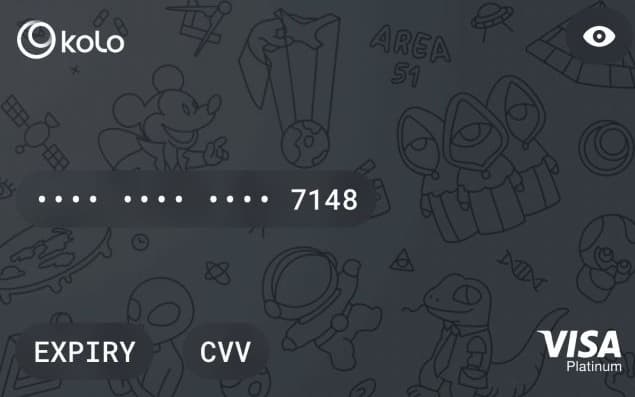
1. Kolo Card
Earn Bitcoin on Purchases: 2% BTC Cashback + Visa Platinum + 170+ Countries

2. KAST K Card
Early Adopter Access: 2% Points + 4% $MOVE on Every Swipe
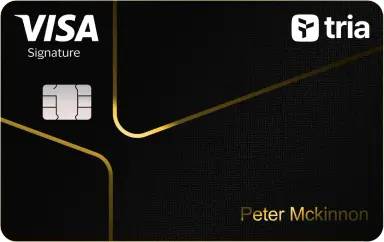
3. Tria Signature Card
High-Yield Mastery: 15% APY + Visa Signature Perks

4. ether.fi Core Card
Zero Barriers: 3% Back on Every Purchase, No Stake Required
Crypto Card Regulation in Cameroon
Cameroon's crypto regulation is governed by the CEMAC framework. The Banque des Etats de l'Afrique Centrale (BEAC) is the central bank for all 6 CEMAC member states (Cameroon, Central African Republic, Chad, Republic of Congo, Gabon, Equatorial Guinea). The BEAC has issued warnings about cryptocurrency risks and does not recognize crypto as legal tender. However, the BEAC has not explicitly banned crypto ownership or trading in Cameroon.
The Commission Bancaire de l'Afrique Centrale (COBAC) oversees banking regulation and has not issued crypto-specific directives for Cameroon. The Agence Nationale d'Investigation Financiere (ANIF) handles AML/CFT under the CEMAC Anti-Money Laundering Regulation. Crypto-specific AML requirements are minimal.
Cameroon's regulatory environment was complicated by the Central African Republic's adoption of Bitcoin as legal tender in April 2022. The BEAC publicly opposed CAR's decision, and the Sango Project was later scaled back. At the first CEMAC fintech forum held in Douala (January 29-31, 2024), the BEAC explicitly rejected calls from fintech companies to regulate cryptocurrencies, citing concerns that crypto could deplete the community's foreign exchange reserves.
A strict BEAC/COBAC directive prohibits banks and financial institutions from engaging in any cryptocurrency transactions. Despite these institutional barriers, a 2023 Ministry of Finance study found approximately 900,000 cryptocurrency users in Cameroon (6.76% of the active population), placing it 11th in Africa for crypto adoption.
Cameroon's regulatory stance is formally hostile at the institutional level (BEAC/COBAC banking prohibition) but permissive in practice for individual users. No law criminalizes individual crypto ownership or card usage. Use well-regulated international issuers that do not require Cameroonian bank intermediation.
Tax Treatment of Card Rewards in Cameroon
Cameroon has no specific cryptocurrency tax legislation. The General Tax Code (Code General des Impots) applies general income and capital gains principles that could extend to crypto.
Personal Income Tax
Cameroon applies progressive income tax (Impot sur le Revenu des Personnes Physiques, IRPP): 10% on the first XAF 2 million, 15% on XAF 2-3 million, 25% on XAF 3-5 million, and 35% above XAF 5 million (approximately EUR 7,622). Additional surcharges include centimes additionnels communaux (10% of IRPP) and a contribution for credit foncier.
Capital Gains Treatment
Capital gains from the sale of movable property (which may include crypto) are generally taxed at 16.5% (including IRCM, Impot sur le Revenu des Capitaux Mobiliers). However, no specific classification of crypto as a taxable asset has been established by the DGI.
| Cashback Type | Tax When Received | Tax When Spent/Sold | Optimal Strategy |
|---|---|---|---|
| BTC/ETH cashback | Unclear (likely untaxed) | Unclear (no guidance) | Hold, track basis |
| Stablecoin cashback (USDC) | Not taxed (rebate) | Near-zero gain | Spend anytime |
| Points/token cashback | Unclear (likely untaxed) | Unclear (no guidance) | Convert to stablecoin |
Fund with stablecoins to avoid ambiguity. Cameroon's tax enforcement on individual crypto activity is minimal, but stablecoin spending creates no taxable gain under any potential future framework.
How to Apply from Cameroon
Crypto card applications from Cameroon require the Carte Nationale d'Identite (CNI), issued by the Delegation Generale a la Surete Nationale (DGSN). The CNI is mandatory for Cameroonian citizens over 17 and contains a unique identification number. Both Francophone and Anglophone regions of Cameroon use the same CNI system.
Alternative identification: Cameroonian passport (Passeport de la Republique du Cameroun), issued by the Direction de l'Immigration. Proof of address via utility bills from ENEO (Societe nationale d'electricite, electricity), Camwater (Cameroon Water Utilities Corporation, water), or telecom bills from MTN Cameroon, Orange Cameroun, or Nexttel. Bank statements from Afriland First Bank, SGBC, Ecobank, or BICEC also work.
KAST and RedotPay remain the most workable prepaid options for Cameroonian users who are funding from stablecoins, diaspora transfers, or P2P balances rather than a conventional international bank relationship. Cameroonian passports are recognized by most global issuers. For diaspora members with French, European, or other secondary residency, using those documents may provide broader access.
Spending Tips for Cameroon
The CFA Peg: Stability and Its Limits
The XAF-EUR peg at 655.957:1 provides currency stability that most African nations lack - no naira-style crashes, no cedi-style debt crises. But the peg comes with trade-offs. The CFA franc's value is tied to ECB monetary policy decisions made in Frankfurt, not Yaounde. When the euro weakens against the dollar (as it did in 2022-2023), Cameroonian purchasing power for USD-denominated goods (electronics, subscriptions, international services) declines too. The CFA lost approximately 15% of its dollar value during the EUR/USD 2021-2022 decline.
Holding USDC or USDT pegged to USD provides a hedge against EUR/USD fluctuations that the CFA peg cannot offer. EUR-settled crypto cards convert at the guaranteed 655.957:1 rate, while USD-settled transactions at 0% FX provide direct dollar purchasing power. The key advantage: 0% FX on crypto cards versus the 3-5% markup Cameroonian banks charge on international transactions.
Card Selection by Use Case
- Free BTC cashback: Kolo (2% BTC cashback cards, $0, 0% FX)
- Best diaspora-funded prepaid: KAST (2%, $0, 0.5% FX)
- Yield-linked rewards: Tria Signature (4.5%, $109/yr, 0% FX)
- Premium perks: Crypto.com Icy (4% + airport lounge access at DLA/NSI)
Break-Even Math: CFA-EUR Peg Environment
All amounts in EUR (XAF equivalent at 655.957:1). Tax impact unclear, likely minimal.
| Monthly Spend | Kolo (2%, free) | Tria Sig (4.5%, EUR 100/yr) | ether.fi (3%, free) | KAST (2%, free) |
|---|---|---|---|---|
| EUR 100 | EUR 24/yr | -EUR 46/yr | EUR 36/yr | EUR 24/yr |
| EUR 150 | EUR 36/yr | -EUR 19/yr | EUR 54/yr | EUR 36/yr |
| EUR 300 | EUR 72/yr | EUR 62/yr | EUR 108/yr | EUR 72/yr |
| EUR 600 | EUR 144/yr | EUR 224/yr | EUR 216/yr | EUR 144/yr |
At Cameroon's average monthly income (approximately EUR 150), Kolo at EUR 36/year still matters when combined with FX savings and BTC accumulation. Tria Signature breaks even at EUR 185/month, viable for Douala/Buea professionals. KAST at EUR 36/year suits budget-conscious users.
Spending Scenario: EUR 150/month (Douala Professional, Stablecoin Funding)
| Funding Method | Annual Spend | Cashback (2%) | Tax (est.) | Net Cashback |
|---|---|---|---|---|
| USDC (stablecoin) | EUR 1,800 | EUR 36 | EUR 0 | EUR 36 |
| BTC (appreciated 150%) | EUR 1,800 | EUR 36 | Unclear | EUR 36 (likely) |
| XAF bank top-up | EUR 1,800 | EUR 36 | EUR 0 | EUR 36 |
EUR 36/year (XAF 23,614) in cashback with stablecoin funding. Stablecoin funding recommended to avoid future tax ambiguity.
What Cameroonian Banks Actually Cost You
Cameroon's banking sector serves a small fraction of the population (bank account penetration is approximately 15%). The banks that do operate charge high fees on international transactions.
| Bank | Debit FX Markup | Annual Card Fee | International Online | Cashback |
|---|---|---|---|---|
| Afriland First Bank | 3-5% | XAF 10,000-20,000 | Inconsistent | 0% |
| SGBC (Societe Generale) | 3-5% | XAF 15,000-25,000 | Better than average | 0% |
| Ecobank Cameroun | 3-5% | XAF 10,000-20,000 | Inconsistent | 0% |
| BICEC (Banque Populaire) | 3-5% | XAF 10,000-15,000 | Unreliable | 0% |
| UBA Cameroun | 3-5% | XAF 8,000-15,000 | Inconsistent | 0% |
The bigger issue is the low card penetration and frequent international declines, beyond even the FX markup. Most Cameroonian bank debit cards are declined by international online merchants. A crypto card funded with USDC resolves both problems: 0% FX and reliable Visa/Mastercard acceptance worldwide.
Cost of Living by City
| City/Area | 1-Bed Rent/Month | Groceries/Month | Card-Eligible Spending |
|---|---|---|---|
| Douala (Bonanjo/Bonapriso) | XAF 100,000-250,000 | XAF 60,000-120,000 | XAF 80,000-200,000 |
| Douala (Akwa/Bali) | XAF 60,000-150,000 | XAF 50,000-100,000 | XAF 60,000-150,000 |
| Yaounde (Bastos/Centre Admin) | XAF 80,000-200,000 | XAF 50,000-100,000 | XAF 70,000-150,000 |
| Yaounde (Mvan/Nsimeyong) | XAF 40,000-100,000 | XAF 40,000-80,000 | XAF 50,000-120,000 |
| Buea | XAF 30,000-80,000 | XAF 30,000-60,000 | XAF 40,000-80,000 |
| Bafoussam | XAF 25,000-60,000 | XAF 25,000-50,000 | XAF 30,000-70,000 |
Douala as the economic capital has the highest spending levels and card acceptance. Bonanjo (business district) and Bonapriso (upscale residential) concentrate most card-accepting merchants. Yaounde's Bastos neighborhood (diplomatic quarter) also has good card infrastructure.
Silicon Mountain: Cameroon's Tech Hub
Buea, on the slopes of Mount Cameroon, has earned the name "Silicon Mountain" - the country's most concentrated tech startup ecosystem. Companies like Njorku (pan-African job platform), Kamer Solutions, and ActivSpaces (tech incubator) operate here. The Anglophone tech community in Buea and Bamenda has international connections that make crypto adoption natural.
Combined with Douala's fintech scene, Cameroon has Central Africa's strongest tech workforce - professionals earning in both XAF and foreign currency who benefit most from stablecoin-based spending.
The Diaspora: $400M+ in Remittances
Cameroon's diaspora sends approximately $400-500 million in annual remittances (World Bank), primarily from France (largest Cameroonian diaspora, 300,000+ in Paris, Marseille, Lyon, Toulouse), Germany, Belgium, UK, US (Maryland, Texas, New York), and Canada (Quebec, given the francophone connection).
Traditional remittance channels (Western Union, MoneyGram, Express Union) charge 6-10% on the Central Africa corridor - among the most expensive globally. Sending XAF 100,000 ($152) costs XAF 6,000-10,000 in fees. The same amount sent as USDC to a crypto card costs under XAF 650. Over a year of monthly remittances, the saving is substantial.
Cameroon's Economy: Oil, Cocoa, and the Port of Douala
Cameroon is Central Africa's economic engine, contributing approximately 40% of CEMAC's combined GDP. The economy rests on four pillars: oil (produced in the Rio del Rey basin, declining but still notable), agriculture (world's 5th largest cocoa producer, plus coffee, banana, rubber, and palm oil), timber (tropical hardwoods from southern forests), and services centered around the Port of Douala.
Douala is Central Africa's busiest port, handling 95% of Cameroon's trade and serving as the main import gateway for Chad, Central African Republic, and northern Congo.
This trade-dependent economy means foreign currency flows constantly through Douala's business community. Import-export professionals, shipping agents, and customs brokers deal in USD, EUR, and NGN daily. The CFA peg handles the EUR side, but USD transactions through traditional banks carry 3-5% markup. A stablecoin-funded crypto card at 0% FX provides direct savings on every dollar-denominated transaction - from port equipment purchases to international shipping invoices.
Online Shopping
Cameroonian bank cards are frequently declined by international merchants. Key platforms: AliExpress (ships directly, extremely popular for electronics, clothing, and phone accessories), Amazon (via French Amazon.fr, shipping to Cameroon available for some items), Jumia Cameroun (domestic e-commerce, XAF pricing), Glotelho (Cameroonian electronics retailer).
International subscriptions: Canal+ (dominant pay-TV, XAF 20,000-50,000/month), Netflix, Spotify, Apple services. A crypto card provides reliable international acceptance that Cameroonian bank cards cannot match.
Cross-Border Spending and CEMAC Regional Trade
Cameroon's position as CEMAC's economic hub creates substantial cross-border spending. Nigeria (NGN, Cameroon's largest trade partner by far - $2B+ annual bilateral trade, the busy Ekok-Ikom and Amchide-Banki border crossings see thousands of daily crossers) is the most important corridor.
Gabon (XAF, Libreville business connections, oil industry), Equatorial Guinea (XAF, Malabo oil industry, construction), Central African Republic (XAF, Bangui-Douala trade corridor for manufactured goods), Chad (XAF, N'Djamena relies on Douala's port for 90% of imports), and France (EUR, Air France and Camair-Co fly Douala-Paris direct).
Within the CEMAC zone (Cameroon, Gabon, Congo, CAR, Chad, Equatorial Guinea), the shared CFA franc eliminates FX issues. But for Nigeria - Cameroon's most frequent cross-border destination - the NGN/XAF conversion through banks carries steep markups. And for France, UK, and non-CEMAC destinations, bank card FX charges of 3-5% add up quickly. A zero-FX crypto card eliminates these costs entirely, whether you are a Douala trader visiting Lagos or a tech professional attending a conference in Paris.
The Anglophone Dimension
Cameroon's Anglophone regions (Southwest and Northwest) have experienced major instability since 2016. The crisis has displaced hundreds of thousands and disrupted economic activity in cities like Bamenda and Buea. Many Anglophone professionals have relocated to Douala, Yaounde, or emigrated to Nigeria, the UK, and North America.
This displacement has accelerated crypto adoption in two ways: Anglophones abroad need to send money home (remittances to affected areas), and displaced professionals in Douala's tech scene bring international connections and digital-first financial habits.
The Bilingual Advantage
Cameroon is one of Africa's few bilingual countries (French and English are both official languages). This linguistic duality - French speakers in the Littoral, Centre, and West regions, English speakers in the Southwest and Northwest - creates connections to both francophone (France, Belgium, Quebec, Senegal) and anglophone (UK, US, Nigeria) diaspora networks. The bilingual professional class is naturally cosmopolitan and internationally connected, making them ideal crypto card users.
Local Payment Infrastructure
Card acceptance is concentrated in Douala and Yaounde. Visa and Mastercard work at hotels (Hilton Yaounde, Pullman Douala Rabingha, Akwa Palace), supermarkets (Mahima, Santa Lucia, Super U, Casino), restaurants in Bonanjo (Douala) and the Bastos/Centre Administratif area (Yaounde).
MTN MoMo (10+ million users, dominant provider), Orange Money, and Express Union Mobile Money handle most digital payments. Cash remains primary for markets (Marche Central Douala, Marche Mokolo Yaounde, Marche des Fleurs), taxis, and informal commerce. Outside Douala and Yaounde, card acceptance is rare - Bafoussam, Bamenda, Garoua, and other cities are cash and MoMo economies.
Supported Exchanges & Wallets in Cameroon
Our Cameroon availability check confirms no crypto exchanges are licensed domestically. Binance P2P (XAF pairs) is the primary on-ramp, though Binance's regulatory challenges across Africa have created uncertainty. Yellow Card serves some Cameroonian users with mobile money integration. Local P2P trading via Telegram and WhatsApp groups is active in the Douala and Buea tech communities.
The Silicon Mountain developer community uses international exchanges (Binance, KuCoin, Gate.io) for trading, then transfers stablecoins to cards for spending.
Kolo delivers 2% BTC cashback at $0 annual fee and 0% FX, converting spending into BTC savings on top of the FX benefit. Tria Signature at 4.5% yield-linked rewards and 0% FX suits professionals in the Douala trade sector.
Crypto.com provides tiered rewards from Midnight Blue (0%, free entry) through Icy (4% + lounge access). ether.fi with the Core Card at 3% and 1% FX offers borrow-to-spend: stake ETH, borrow against it, spend without capital gains ambiguity.
KAST at 2% cashback with $0 annual fee and 0.5% FX works best when diaspora or P2P-funded balances need to become an international prepaid card for merchant spending in Douala or Yaounde. RedotPay serves stablecoin-first users with the Physical card ($100, ATM). xPlace and Jupiter serve the Solana/DeFi ecosystem.
Cameroon's CFA-EUR peg, permissive-by-omission regulatory stance, Silicon Mountain tech community, and bilingual diaspora networks make it Central Africa's most viable crypto card market.
Written by SpendNode Editorial
Frequently Asked Questions
Which crypto cards work in Cameroon?
Cameroon is served by globally available crypto cards including Kolo (current 2% BTC cashback headline, $0, 0% FX), Tria Signature (4.5%, $109/yr, 0% FX), KAST (2%, $0, 0.5% FX), Crypto.com Icy (4%, CRO stake), and ether.fi (3%, borrow-to-spend). Visa and Mastercard acceptance concentrates in Douala and Yaounde. The XAF is pegged to EUR at 655.957:1.
How is cryptocurrency taxed in Cameroon?
No specific crypto tax legislation exists. Under the General Tax Code, capital gains may be subject to the impot sur le revenu des personnes physiques (IRPP) at progressive rates up to 35%. The Direction Generale des Impots (DGI) has not issued crypto-specific guidance. Enforcement on individual crypto activity is minimal.
Is crypto legal in Cameroon?
Crypto occupies a gray area. The BEAC (Banque des Etats de l'Afrique Centrale) oversees the Central African CFA zone (Cameroon, Chad, CAR, Congo, Gabon, Equatorial Guinea) and has warned against crypto without explicitly banning it. Notably, neighboring Central African Republic briefly adopted Bitcoin as legal tender in 2022 before reversing course.
Can I use a crypto card with MTN MoMo in Cameroon?
Not directly. MTN Mobile Money and Orange Money are separate payment networks from Visa/Mastercard. However, some services allow you to top up a crypto card from Mobile Money via third-party bridges. In practice, crypto cards serve a different use case: international purchases, global e-commerce, and cross-border spending that Mobile Money cannot handle.
Other Countries
View all 107 countries →


Recent Updates to Best Crypto Cards in Cameroon
- Removed COCA (unavailable) and redotpay-solana from topCardSlugs. Added Kolo (5% BTC, $0, 0% FX) and Tria Signature (4.5%, $109, 0% FX). Replaced Crypto.com Jade (3%) with Icy (4%), Midnight Blue 1% to 0%
- Fixed KAST from an overstated 'up to 12%' claim to the actual 2% base tier, and corrected the FX range to 0.5%. Fixed ether.fi FX from 0% to 1%, card type from Credit to Debit, and fee from Points to $0. Break-even rebuilt with local EUR spending tiers
- Exchanges section rewritten: removed COCA paragraph and KAST '12% across 7 tiers' fabrication. Added Kolo and Tria as lead picks. Rationale rewritten with Silicon Mountain context
- Regulatory update: BEAC explicitly rejected crypto regulation at Jan 2024 Douala fintech forum (foreign reserve depletion concerns). BEAC/COBAC directive prohibits banks from crypto transactions. Ministry of Finance 2023 study: 900,000 crypto users (6.76% active population, 11th in Africa)