


Best Crypto Cards in Cambodia (2026)
Compare 14+ crypto cards available in Cambodia. Dual USD-KHR economy, growing fintech adoption, and Southeast Asia's emerging crypto market.


Verified for Cambodia
35 crypto cards available
Local currency: USD
Cambodia runs on the US dollar. Not partially, not informally - USD is the primary transaction currency for anything above a few thousand riel. Salaries are paid in USD. Rent is quoted in USD. Supermarket receipts print in USD. The Khmer riel (KHR) circulates only for sub-dollar change (4,000 KHR = approximately $1).
For crypto card users, this dollarization is the single most important fact about Cambodia: a USD-settled crypto card works at Cambodian merchants with zero FX conversion, no currency mismatch, no hidden markups. You are spending dollars on a dollar card in a dollar economy.
This makes Cambodia the cleanest crypto card market in Southeast Asia. In Thailand, you lose 1-2% converting to baht. In Vietnam, dong conversion adds friction. In Cambodia, the entire transaction chain is USD from wallet to merchant. Combined with a cost of living where $800/month covers a comfortable Phnom Penh lifestyle, even modest 2-4% cashback translates into weeks of free groceries or dozens of restaurant meals.
Cambodia's crypto regulatory environment is grey rather than hostile. The NBC (National Bank of Cambodia) has not banned crypto but has not formally regulated it either. Meanwhile, the NBC's own Bakong platform, launched in 2020, is one of the world's first operational blockchain-based payment systems, demonstrating institutional comfort with the underlying technology even as crypto trading remains in a regulatory grey zone.
| Card | Max Cashback | Annual Fee | FX Fee | Card Type | Why It Fits Cambodia |
|---|---|---|---|---|---|
| Crypto.com | Icy 4% | CRO stake | 0% | Prepaid | Metal tiers, lounge access at PNH |
| Bitget | 8% BGB | Free | 0% + 0.9% tx | Debit | BGB staking tiers |
| Kolo | 5% BTC | $0 | 0% | Prepaid | 5% BTC cashback, $5/txn cap, $200/mo cap |
| KAST | 2% | Free | 0.5% | Prepaid | Phnom Penh's everyday USD spending |
Kolo delivers 5% BTC cashback with $0 annual fee and 0% FX - the highest free cashback rate in Cambodia's USD economy, where every dollar of cashback retains full value with zero conversion. KAST at 2% with $0 annual fee is the simplest prepaid route for everyday USD spending.
Crypto.com adds airport lounge access at Phnom Penh International Airport (PNH) on the Icy White tier (4%), useful for the frequent flyers who populate Cambodia's expat and nomad community.
Best Card For Every Need in Cambodia
Top 5 Crypto Cards in Cambodia
Cambodia runs on the US dollar - salaries, rent, supermarket receipts all priced in USD - which means every cent of cashback retains its full face value with low FX (0.5-1.75%) dilution, a benefit no other Southeast Asian crypto card market offers. Kolo's 5% BTC cashback (capped at $5/txn, $200/mo) with 0% FX suits an $800/month Phnom Penh lifestyle where every dollar of cashback retains full value.
Crypto.com Icy White (4%) adds lounge access at Phnom Penh International (PNH) and Siem Reap International (REP) - both airports Cambodia's frequent-flying nomad community passes through monthly for Thai visa runs and regional trips. KAST earns its place because it lets a Phnom Penh resident move wallet or exchange balances into ordinary USD spending without bundling in lounge-heavy premium tiers or exchange-status perks that add little in a dollarized daily-spend market.
ether.fi hedges against Cambodia's tax grey zone crystallizing: the NBC has not regulated crypto yet, but borrowing against staked ETH means no disposal event regardless of what rules eventually land.
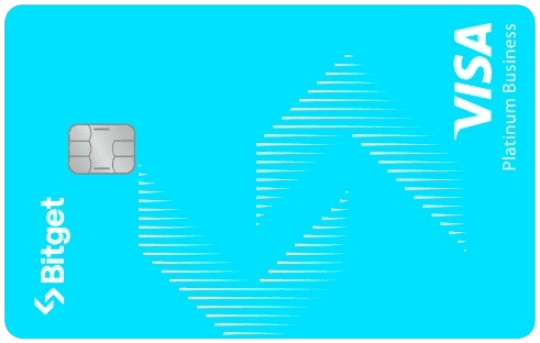
1. Bitget Card
Trade and Spend: Up to 8% BGB Cashback for Bitget Traders
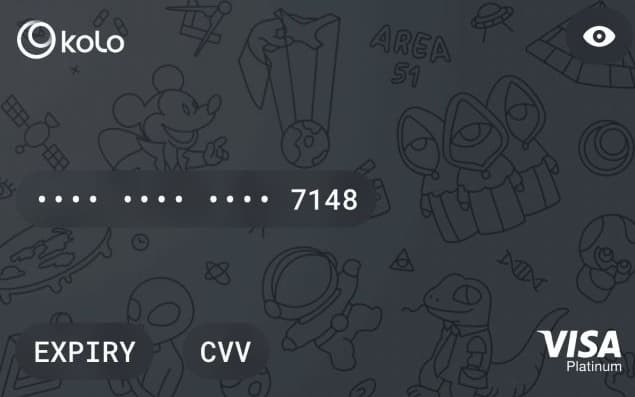
2. Kolo Card
Earn Bitcoin on Every Purchase: 5% BTC Cashback + Visa Platinum + 170+ Countries
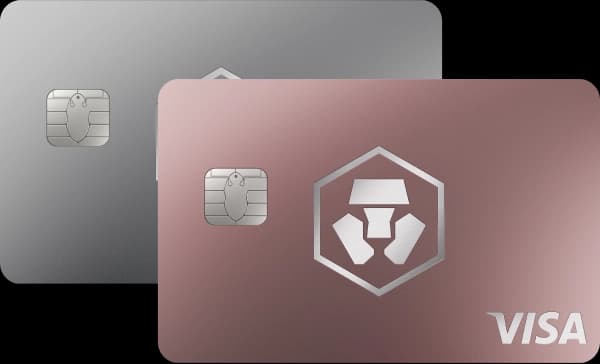
3. Private (Icy White / Rose Gold)
Elite Private Status: 4% Uncapped Cashback + Guests

4. KAST K Card
Early Adopter Access: 2% Points + 4% $MOVE on Every Swipe

5. ether.fi Core Card
Zero Barriers: 3% Back on Every Purchase, No Stake Required
Crypto Card Regulation in Cambodia
The NBC (National Bank of Cambodia, Thnakar Cheat Kampuchea) has maintained an ambiguous stance on crypto. A December 2017 NBC statement warned that cryptocurrency trading and circulation are unauthorized and carry risks, but stopped short of an outright ban on individual ownership. The SERC (Securities and Exchange Regulator of Cambodia) oversees capital markets and has not issued specific crypto licensing rules.
In practice, Cambodians trade crypto through international exchanges (Binance P2P is widely used for USD/USDT pairs) and hold assets in personal wallets without enforcement action. The grey zone means no consumer protection framework for crypto users, but also no prohibition on using internationally issued crypto cards.
Cambodia's Bakong payment system, developed with Japanese fintech company Soramitsu (using the Hyperledger Iroha blockchain), launched in October 2020. Bakong enables instant KHR and USD transfers between participating banks and payment providers.
By 2025, Bakong had over 9 million registered accounts (in a country of 17 million people) and processes both retail payments and cross-border transfers to Thailand (via PromptPay linkage). Bakong demonstrates that the NBC is blockchain-aware and blockchain-positive at the infrastructure level, even while maintaining caution about speculative crypto trading.
No specific crypto card licensing exists in Cambodia. Internationally issued Visa/Mastercard crypto cards work at Cambodian merchants through the standard card network infrastructure. The NBC has not specifically addressed or restricted their use.
Tax Treatment of Card Rewards in Cambodia
Cambodia's General Department of Taxation (GDT) has not issued specific guidance on cryptocurrency taxation. The existing tax framework applies general principles:
Tax on Profit (ToP): Businesses pay 20% on net profit. If crypto trading is conducted as a business activity, gains would fall under ToP.
Tax on Salary (ToS): Residents pay progressive rates on salary income: 0% up to KHR 1.5 million/month (approximately $375), then 5%, 10%, 15%, and 20% at higher brackets. If crypto gains are classified as income, the progressive ToS rates would apply.
Tax on Income (patent tax, etc.): Various taxes apply to specific income categories. Crypto does not fit neatly into existing categories.
In practice: Crypto tax enforcement in Cambodia is minimal. The GDT does not currently have mechanisms to track crypto transactions or request data from international exchanges. However, as Cambodia's tax administration modernizes (the GDT has been implementing electronic filing systems with ADB support), enforcement may increase. Compliance is recommended as regulation develops.
| Funding Source | Annual Spend | Cashback (5%) | Estimated Tax | Net Return |
|---|---|---|---|---|
| USDC (stablecoin) | $9,600 | $480 | Minimal/unclear | approx. $480 |
| BTC (appreciated) | $9,600 | $480 | Potentially 0-20% on gains | $384-480 |
USDC funding is recommended for simplicity and compliance certainty, even though current enforcement is minimal.
How to Apply from Cambodia
Cambodian crypto card applications require a ateur samkol khnhom (Cambodian national ID card, Khmer script) or likhit chlong den (Cambodian passport). Foreign residents need a valid passport plus a Cambodian business visa (E-class) or work permit. Tourist visa holders may face restrictions with some issuers.
The Cambodian national ID number (10 digits) is the primary identifier. Proof of address via utility bills from Electricite Du Cambodge (EDC) (electricity), Phnom Penh Water Supply Authority (PPWSA) (water), telecom bills from Smart Axiata, Cellcard, or Metfone (Cambodia's three mobile operators), bank statements from ABA Bank, ACLEDA Bank, or Canadia Bank, or a rental agreement.
Cambodia's address system is informal in many areas (street numbers are inconsistent, buildings may lack formal addresses outside central Phnom Penh). Some issuers accept bank statements with a Cambodian phone number as sufficient verification when formal address documentation is unavailable.
Physical cards ship to Cambodian addresses within 21-30 business days via international post. Virtual cards are the practical choice for immediate use and work with cards with Apple Pay and Google Pay at supported Cambodian merchants.
Spending Tips for Cambodia
What Cambodian Bank Cards Actually Cost You
Cambodia's banking sector is dominated by ABA Bank (Advanced Bank of Asia, the most popular retail bank, known for its mobile app with 8+ million users), ACLEDA Bank (Cambodia's largest bank by branch network, 270+ branches, originally a microfinance institution), Canadia Bank, Wing (Cambodia's largest mobile money platform, 10,000+ agents), and Prince Bank. International banks include ANZ Royal (acquired by J Trust) and Maybank Cambodia.
Standard Visa/Mastercard debit cards from Cambodian banks earn zero cashback. ABA Bank charges $1-3/month for premium account packages. International transaction fees: 2-3% on non-USD transactions (relevant for baht spending in border areas or online purchases in EUR/GBP). ATM fees at other banks' machines: $1-2.
The comparison with a crypto card:
| Category | ABA Bank Visa | Crypto Card (KAST 2%) | Annual Difference |
|---|---|---|---|
| Annual fee | $12-36 | $0 | $12-36 saved |
| Cashback on $800/mo | $0 | $192/yr | $192 earned |
| FX on non-USD spending | 2-3% | 0% | Varies |
| Total annual advantage | - | - | $204-228+ |
In Cambodia, $192/year in cashback covers 3-4 months of electricity bills or 40+ street food meals.
Why Cambodia Runs on Dollars (And Why That Matters)
Cambodia's dollarization dates to the 1992-93 UNTAC (United Nations Transitional Authority in Cambodia) peacekeeping mission, which flooded the economy with USD to pay 20,000+ international staff and fund reconstruction. The dollars never left.
Three decades later, approximately 80-90% of bank deposits and the majority of urban commercial transactions are denominated in USD. The NBC has pursued gradual de-dollarization (the 2020 Bakong launch was partly motivated by promoting KHR usage), but USD dominance is deeply entrenched.
For crypto card users, this creates a benefit no other Southeast Asian country offers: zero FX friction on both sides. Most crypto cards settle in USD or EUR. In a USD economy, USD-settled cards have zero conversion at the point of sale. Even EUR-settled cards face only the EUR/USD FX rate (typically very tight, no emerging-market spread). No other Southeast Asian country offers this: Thailand has THB, Vietnam has VND, Indonesia has IDR, all of which add FX conversion costs.
The KHR (riel) circulates for change below $1 (coins are not used in Cambodia, riel banknotes serve as fractional dollars). ATM withdrawals dispense USD. Hotel prices, restaurant menus, supermarket shelves - everything above $1 is priced in USD.
Card Selection for Cambodian Residents
- Kolo (5% BTC, $0, 0% FX): Highest free cashback. Capped at $5/txn and $200/mo.
- KAST (2%, 0.5% FX): Simplest low-cost USD spending card for day-to-day Phnom Penh spending.
- Crypto.com (Icy White 4%): Best for the expat/nomad class. Metal cards and lounge access at Phnom Penh International (PNH) and Siem Reap International (REP) add travel utility.
- RedotPay (stablecoin-native, high limits): Simplest stablecoin spending card. The Virtual Card is $10 to activate, works immediately.
Cost of Living: Why Cashback Goes Far
Our local cost analysis for Phnom Penh and Siem Reap confirms Cambodia is one of Southeast Asia's most affordable countries:
- Phnom Penh: $400-800/month rent (1-bed apartment, BKK1/Tonle Bassac upscale, Tuol Tom Poung/Russian Market area mid-range, Stung Meanchey cheaper), $150-250 groceries, $100-200 dining out. Comfortable lifestyle: $800-1,500/month total.
- Siem Reap: $250-500/month rent, $100-180 groceries, $80-150 dining. Popular nomad base near Angkor Wat. Total: $600-1,000/month.
- Sihanoukville: $300-600/month rent (varies dramatically by area, beachfront premium). Casino-resort development has changed the city's character.
- Kampot/Kep: $200-400/month rent. Emerging expat destinations with quiet coastal lifestyle.
Monthly card-eligible spending: $500-1,200. At 5% cashback on $800/month: $480/year. In Phnom Penh, that covers 2+ months of groceries or 60+ restaurant meals at mid-range establishments ($8 average).
Spending Scenario: $800/month Phnom Penh Nomad
| Category | Monthly | Annual | Where It Goes |
|---|---|---|---|
| Groceries | $200 | $2,400 | Lucky Supermarket, Thai Huot, Makro |
| Dining/cafes | $150 | $1,800 | BKK1 restaurants, co-working cafes, street food |
| Co-working | $80 | $960 | Factory Phnom Penh, Emerald Hub, SmallWorld |
| Transport | $50 | $600 | PassApp/Grab (moto/tuk-tuk), occasional rental |
| Subscriptions | $40 | $480 | Netflix, Spotify, VPN, cloud |
| Shopping/personal | $80 | $960 | Aeon Mall, TK Avenue, local shops |
| Travel | $200 | $2,400 | Vietnam/Thailand border trips, domestic flights |
Total: $9,600/year. At 5% cashback (USDC funded): $480/year. At 2% (KAST free tier): $192/year. Either amount is meaningful against Cambodia's cost of living.
Local Payment Infrastructure
Card acceptance in Cambodia is bifurcated. Modern retail and hospitality accept cards. Traditional markets and small shops are cash-only.
Card-accepting venues: Aeon Mall Phnom Penh and Aeon Mall Sen Sok (Cambodia's largest shopping malls, Japanese-owned, full Visa/MC contactless), Lucky Supermarket (6 locations, the expat grocery chain), Thai Huot (multiple locations), Makro (wholesale, now in Phnom Penh), international restaurant chains, mid-to-upscale Khmer restaurants in BKK1/Tonle Bassac/Riverside areas, hotels (from budget to luxury), and co-working spaces.
Cash-dominant venues: Central Market (Psar Thmei), Russian Market (Psar Tuol Tom Poung), Orussey Market, street food vendors, tuk-tuk drivers (though PassApp accepts cards), and smaller neighborhood shops. Rural Cambodia is almost entirely cash.
Wing is Cambodia's largest mobile money platform (10,000+ agent locations) and enables cash-to-digital conversion but does not integrate with crypto cards. ABA Mobile is Cambodia's most popular banking app, used for domestic transfers and bill payments.
Bakong is the interbank settlement layer and is growing into a consumer payment tool, but does not yet interact with the crypto card ecosystem. Bakong's QR payment system is expanding at merchants but operates outside the Visa/MC network. Cross-border Bakong-PromptPay interoperability with Thailand (launched 2023) enables instant transfers but only through banking channels.
Practical guidance: In Phnom Penh, a crypto card covers approximately 60-70% of daily spending (supermarkets, malls, restaurants, co-working, transport apps). The remaining 30-40% (markets, street food, small shops, tuk-tuk direct payments) requires USD cash. In Siem Reap, the card-accepting percentage drops to approximately 40-50% (concentrated around Pub Street/tourist hotels/Angkor ticket purchases). In provincial cities (Battambang, Kampong Cham, Kratie), cash dominates at 90%+.
Apple Pay and Google Pay availability is limited in Cambodia. NFC contactless works at modern terminals in malls and hotels, but many merchants still use chip-and-sign or chip-and-PIN.
Visas and the Expat Economy
Cambodia's visa regime is one of the most accessible in Asia. The E-class business visa (initially 1-month, extendable to EB 1-year multiple entry) allows foreigners to live and work in Cambodia without a formal work permit for many remote/freelance roles. The EB visa costs approximately $290/year to maintain.
No minimum income requirement, no employer sponsorship needed. This accessibility has attracted a substantial community of remote workers, online entrepreneurs, and crypto professionals.
The expat and nomad community concentrates in Phnom Penh's BKK1 (Boeung Keng Kang 1, the most developed area with international restaurants, co-working spaces, and Western grocery options), Tuol Tom Poung (Russian Market area, more affordable), and Siem Reap (particularly the Pub Street/Old Market area and emerging co-working spaces). A growing Kampot community attracts longer-term residents seeking coastal lifestyle at lower cost.
Cambodia does not tax worldwide income for non-residents. Tax residency is established by spending 182+ days in Cambodia. Even for tax residents, enforcement on foreign-sourced income (including crypto gains from international platforms) is minimal. This combination of easy visas, USD economy, low cost of living, and limited tax enforcement explains why Cambodia has become a quiet hub for crypto-native professionals.
Cross-Border Spending
Cambodia shares borders with Thailand (THB), Vietnam (VND), and Laos (LAK). All three currencies trigger FX fees on Cambodian bank cards. A zero-FX crypto card eliminates this for:
- Thailand border: Poipet/Aranyaprathet crossing (popular for visa runs), Siem Reap to Bangkok flights. Thai baht spending saves 2-3% vs bank cards.
- Vietnam border: Bavet/Moc Bai crossing (Phnom Penh to Ho Chi Minh City, 6 hours by bus). Vietnamese dong spending.
- Siem Reap/Bangkok flights: $50-120 round trip, frequent for nomads.
The Phnom Penh-Siem Reap-Bangkok-Ho Chi Minh City circuit is standard nomad routing, and each cross-border segment benefits from zero-FX card spending.
Supported Exchanges & Wallets in Cambodia
Our exchange section for Cambodia starts with a critical fact: the country has no regulated domestic crypto exchange. Trading happens through international platforms: Binance P2P is the most popular method for USD/USDT pairs (Cambodia's dollarization makes P2P efficient since both buyer and seller use USD). Huobi (now HTX), OKX, and Bybit also see Cambodian P2P activity. Local Telegram groups and Facebook communities facilitate peer-to-peer trading.
Kolo at 5% BTC cashback with $0 annual fee and 0% FX is the top free cashback card. Avici offers crypto-backed credit through Platinum and Signature tiers.
In Cambodia's grey tax environment, ether.fi lets holders borrow against staked ETH and spend without selling - avoiding dispositions entirely simplifies compliance if taxation rules eventually arrive. The Core Card is free.
For Cambodia's dollarized economy, KAST fits users who want a prepaid USD spending rail without moving into exchange-tier rewards first (the KAST Card sits neatly on Cambodia's dollar economy as a prepaid USD card).
RedotPay with Virtual, Solana, and Physical options suits stablecoin-native users. xPlace and Jupiter serve the Solana ecosystem.
Cambodia's dollarized economy eliminates the FX friction that plagues crypto card use in every other Southeast Asian market. A USD-settled crypto card in Phnom Penh works exactly as it would in New York or San Francisco, but your $480/year in cashback buys six times as much.
Written by SpendNode Editorial
Frequently Asked Questions
Is crypto legal in Cambodia?
Crypto trading is not formally regulated or explicitly banned for individuals. The NBC has warned about risks but launched Bakong (blockchain-based CBDC), showing openness to blockchain technology. Individual crypto ownership is tolerated.
Which crypto card is best for Cambodia?
Cambodia's USD economy means USD-settled crypto cards have zero FX conversion on most purchases. KAST K Card (2% cashback, $0 annual fee, 0.5% FX) nets the full 2% on USD transactions. For KHR-denominated purchases the 0.5% FX fee applies. Bitget (8% BGB, 0% FX) provides the highest raw return for exchange users.
Does Cambodia use the US dollar?
Yes. Cambodia's economy is heavily dollarized. USD circulates alongside the Khmer riel (KHR) for transactions above ~$1. Crypto cards denominated in USD work without any currency conversion.
What is Bakong?
Bakong is Cambodia's blockchain-based payment system launched by the NBC in 2020. It's one of the world's first operational CBDCs/digital payment systems. It demonstrates the NBC's openness to blockchain and digital financial innovation.
Other Countries
View all 108 countries →


Recent Updates to Best Crypto Cards in Cambodia
- COCA removed (not in availableCountries), replaced with Kolo
- KAST corrected from up to 12% to 2% with 0.5% FX
- Crypto.com 5% corrected to Icy White 4%
- NBC Prakas Dec 26 2024 allowing banks to handle stablecoins noted in web research
- Card selection and exchanges sections rebuilt with Kolo replacing COCA