
Best Cashback Crypto Cards 2026
Compare crypto cards with the highest cashback rates in 2026. Verified rewards from 1% to 10%, paid in BTC, USDT, or native tokens.

Crypto cashback cards return a percentage of every purchase back to you in digital assets. Spend $100 on groceries, get $3 in CRO, $4 in BTC, or $8 in BGB deposited to your wallet. Unlike traditional bank rewards that lose value to inflation, crypto rewards can appreciate over time - or depreciate if you receive them in a volatile token.
In SpendNode's cashback ranking, the difference between the best and worst card for your spending pattern can be thousands of dollars per year. A user spending $3,000/month on a card with a $25 monthly cap earns $300/year. The same user on an uncapped 3% card earns $1,080/year. Same spending, 3.6x the return. The details below explain exactly how to get the math right.
Top 10 Cashback Cards

1. KAST Pengu Luxe Card
Pudgy Penguins Luxe: 12% Cashback - KAST's Highest Rate

2. Plutus Visa Card
Your Daily Driver for 3% to 9% Cashback

3. Prime
The Apex: 8% Uncapped CRO Rewards + Private Account Manager
4. COCA Visa Card
Self-Banking: 8% Cashback + 6% APY + 0% FX on Direct Pairs

5. Wirex Elite Card
Elite Travel Status: 8% Rewards + Priority Support

6. Bitget Card
Trade and Spend: Up to 8% BGB Cashback for Bitget Traders

7. Tria Premium Card
Ultimate Web3 Luxury: 6% Cashback + Zero ATM Fees
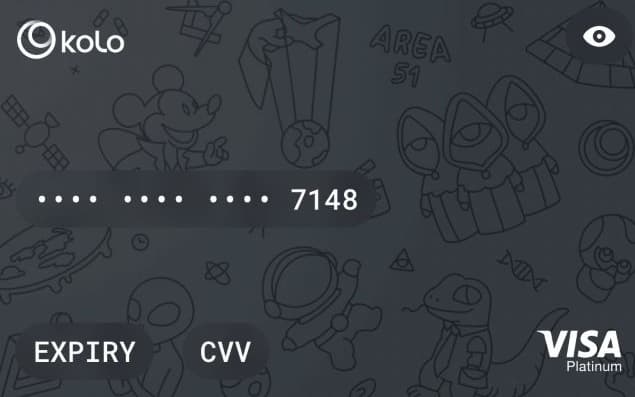
8. Kolo Card
Earn Bitcoin on Every Purchase: 5% BTC Cashback + Visa Platinum + 170+ Countries

9. OKX Mastercard Debit
Your Crypto, Your Way: Spend with OKX Mastercard
10. Gemini Credit Card
Category Crypto Rewards: 4% Gas, 3% Dining, 2% Groceries
2026 Cashback Market: At a Glance
The market has split into four camps: high-yield exchange cards with staking requirements, self-custody options that let you spend from your own wallet, US-focused credit cards with category rewards, and DeFi-native cards that let you borrow against staked assets.
| Issuer | Max Cashback | Primary Asset | Requirement | Custody |
|---|---|---|---|---|
| KAST | 12% | $MOVE | Pengu Luxe tier | Custodial |
| Bybit | 10% | Points / USDT | Supreme VIP Status | Custodial |
| Plutus | 9% | PLU | PLU staking required | Non-custodial |
| COCA | 8% | USDC | Hold $COCA (Elite tier) | Self-custodial |
| Bitget | 8% | BGB | Exchange card tier | Custodial |
| Wirex | 8% | WXT / BTC | Elite Ultimate Tier | Custodial |
| Crypto.com | 8% | CRO | $1M Prime Stake (5% at $500K Obsidian) | Custodial |
| OKX | 5% | OKB | OKB balance tiers | Custodial |
| Coinbase | 4% | Rotating (BTC/SOL) | No Stake | Custodial |
| Gemini | 4% | 50+ cryptos | No Stake (US only, credit card) | Custodial |
| ether.fi | 3% | ETH | No stake for Core tier | Self-custodial |
| Ready | 3% | STRK | Metal tier ($120/yr) | Self-custodial |
| MetaMask | 3% | ETH | Metal tier | Self-custodial |
| Binance | 2% | BRL (Brazil only) | No stake (capped 250 BRL/mo) | Custodial |
Quick picks: Coinbase or Gemini for US users who want hassle-free rewards with no annual fee. ether.fi Core or Ready Lite for self-custody advocates. Crypto.com Obsidian for high spenders willing to stake. KAST Pengu Luxe for the highest theoretical ceiling.
How Crypto Cashback Actually Works
When you tap your crypto card at a coffee shop and pay $5, several things happen in sequence. Understanding this flow is essential because each step introduces a potential cost or delay that affects your real return.
The Four Cashback Models
Model 1: Prepaid Exchange Card (Custodial). You sell crypto for fiat (USD/EUR) inside an exchange app and load it onto the card. When you spend, the card debits your fiat balance. Cashback is calculated on the fiat amount and credited as tokens. This is how Crypto.com, Bybit, Bitget, and OKX work. Your funds sit on the exchange between top-up and spending.
Model 2: Self-Custody / Just-in-Time (Non-Custodial). Your crypto stays in your own wallet until the exact moment you spend. The card issuer triggers a conversion only for the purchase amount. This is how Gnosis Pay, Ready, MetaMask, and Bleap work. No exchange holds your funds overnight. If the card issuer fails, your wallet balance is unaffected.
Model 3: Credit Card (US-Focused). A traditional credit card issued by a bank that pays rewards in crypto instead of airline miles. No crypto top-up needed. You swipe, the bank pays the merchant in fiat, and you receive crypto rewards on your statement. This is how Gemini Credit Card and Coinbase One Credit Card work. The simplest model for users who do not want to manage wallets or stablecoins.
Model 4: Points and Loyalty (Speculative). You earn "XP" or "Points" with no immediate market value. These convert to tokens when the project launches (TGE). This is how 1inch, xPlace, Solflare, and Gate.io work. Some cards like KAST offer both direct cashback (4% $MOVE) and points simultaneously. Points could be worth significant money at TGE - or nothing. See our airdrops and points guide for more detail.
How a Cashback Transaction Settles: Step by Step
Here is what happens when you tap a Crypto.com Plus card for a $75 dinner:
- You tap the card. The merchant's terminal sends the charge to Visa.
- Visa authorizes. Visa checks with Crypto.com that your prepaid balance covers $75. If yes, the transaction is approved in under 2 seconds.
- Your balance is debited. $75 is deducted from your card balance. If the merchant charges in a foreign currency, Visa converts at its wholesale rate and Crypto.com adds 0% FX markup.
- Cashback is calculated. The system applies your 2% rate: $75 x 2% = $1.50 in CRO. This counts toward your $25 monthly cap.
- CRO is credited. $1.50 worth of CRO appears in your Crypto.com App wallet, typically within 24 hours. The CRO is valued at the market price at the moment of crediting.
- You decide what to do with the CRO. Hold it, sell it for fiat, stake it, or transfer it to a self-custody wallet.
The critical detail in step 4: Once you have earned $25 in CRO this month (which happens at $1,250 in spending), every additional dollar you spend earns $0. The remaining $1,750 of a $3,000 month generates zero rewards. This is why understanding monthly caps matters more than understanding the headline rate.
What Earns Cashback and What Does Not
Card issuers use Merchant Category Codes (MCC) - four-digit codes assigned to every merchant by Visa or Mastercard - to determine which transactions qualify for rewards. When you swipe at a restaurant (MCC 5812), the card knows it is a dining purchase. When you pay at a gas station (MCC 5541), it knows it is fuel.
Transactions that typically earn cashback:
- Retail purchases (groceries, clothing, electronics)
- Dining (restaurants, cafes, food delivery)
- Online shopping (Amazon, merchant websites)
- Travel (hotels, flights, ride-sharing)
- Subscriptions (Netflix, Spotify, software)
Transactions that almost never earn cashback:
- ATM withdrawals (separate fee structure, never rewarded)
- Peer-to-peer transfers and money orders
- Government payments (taxes, fines, immigration fees)
- Buying crypto with the card (would create a cashback loop)
- Insurance premiums (on most cards)
- Gambling sites (excluded by most issuers and blocked entirely on some)
- Financial services transactions
The tricky edge cases: A purchase at a pharmacy that is coded as "health services" (MCC 8099) may not earn rewards even though you are buying toothpaste. A convenience store coded differently from a grocery store might earn a lower rate. The MCC is assigned by the merchant's payment processor, not by you - and you cannot change it. If a transaction does not earn the expected cashback, the MCC mismatch is almost always the reason.
Three Numbers That Determine Your Real Return
Every crypto cashback card is defined by three numbers. Marketing materials emphasize the first one and hide the other two.
Number 1: The Cashback Rate
This is the percentage you get back on eligible spending. It is the number in the headline: "Earn 8% cashback!" But the rate alone tells you very little without the other two numbers.
Number 2: The Monthly Cap
The maximum cashback you can earn in a single month, regardless of spending volume. This is the number that determines your effective rate - the cashback you actually receive divided by your actual spending.
| Card | Advertised Rate | Monthly Cap | Spending to Hit Cap | Effective Rate at $3,000/mo | Effective Rate at $5,000/mo |
|---|---|---|---|---|---|
| Crypto.com Plus | 2% | $25 | $1,250 | 0.83% | 0.50% |
| Crypto.com Pro | 3% | $75 | $2,500 | 2.50% | 1.50% |
| Crypto.com Icy White | 4% | None | N/A | 4.00% | 4.00% |
| Plutus Starter | 3% | 25 PLU | Varies | Varies | Varies |
| Coinbase | 4% | None | N/A | 4.00% | 4.00% |
| ether.fi Core | 3% | None | N/A | 3.00% | 3.00% |
| Ready Metal | 3% | $150 | $5,000 | 3.00% | 3.00% |
The insight: A user spending $5,000/month on Crypto.com Plus earns $25 (the cap), not $100 (the advertised 2%). Their effective rate is 0.50%. The same user on ether.fi Core (3%, uncapped) earns $150. An uncapped 3% card earns 6x more than a capped 2% card at this spending level.
Number 3: The Unlock Requirement
What you must do to activate the advertised rate. This is either a subscription fee, a token stake, a trading volume threshold, or nothing at all.
| Card | Rate | Requirement | Type | Lock Period |
|---|---|---|---|---|
| Crypto.com Plus | 2% | $4.99/mo or $500 CRO | Subscription or stake | Monthly or 12 months |
| Crypto.com Pro | 3% | $29.99/mo or $5,000 CRO | Subscription or stake | Monthly or 12 months |
| Crypto.com Icy White | 4% | $50,000 CRO | Stake only | 12 months |
| COCA Elite | 8% | Hold $COCA tokens | Balance (no lock) | None |
| Bybit Supreme VIP | 10% | Trading volume | VIP status | Ongoing |
| Coinbase | 4% | None | Free | N/A |
| Gemini | 4% | None | Free (US credit card) | N/A |
| ether.fi Core | 3% | None | Free | N/A |
| Ready Metal | 3% | $120/year | Annual fee | 1 year |
Cards with zero requirements (Coinbase, Gemini, ether.fi Core) give you the full rate from day one with no capital at risk. Cards with staking requirements (Crypto.com, Plutus) require you to buy and lock a volatile token - adding a hidden cost that can exceed the cashback itself.
Calculating Your Actual Cashback: Worked Examples
The headline rate is not your return. SpendNode's break-even analysis covers three real spending profiles showing what you actually earn after accounting for caps, fees, and token volatility.
Example 1: $2,000/month on Crypto.com Plus (Capped)
| Component | Calculation | Amount |
|---|---|---|
| Eligible spending | $2,000/month | $24,000/year |
| Cashback at 2% | $2,000 x 2% = $40, but capped at $25 | $25/month |
| Annual cashback | $25 x 12 | $300 |
| Subscription cost | $4.99 x 12 | -$59.88 |
| Spotify rebate (3 months) | $10.99 x 3 | +$32.97 |
| Net annual value | $273.09 | |
| Effective rate | $273 / $24,000 | 1.14% |
The advertised rate is 2%. Your effective rate after the cap, subscription, and rebate is 1.14%. You hit the $25 cap at $1,250 in spending - the remaining $750 each month earns nothing.
What if you switched to ether.fi Core (3%, uncapped, free)? $2,000 x 3% x 12 = $720/year. No cap, no subscription. 2.6x more annual return at the same spending level.
Example 2: $5,000/month on ether.fi Core (Uncapped)
| Component | Calculation | Amount |
|---|---|---|
| Eligible spending | $5,000/month | $60,000/year |
| Cashback at 3% | $5,000 x 3% | $150/month |
| Annual cashback | $150 x 12 | $1,800 |
| Annual fee | $0 | $0 |
| Token volatility | ETH rewards (sell immediately = $0 risk) | $0 |
| Net annual value | $1,800 | |
| Effective rate | $1,800 / $60,000 | 3.00% |
No cap, no fee, no staking. The full 3% applies to every dollar. If you hold the ETH rewards instead of selling, your return could be higher (ETH appreciates) or lower (ETH drops). Selling immediately locks in the 3%.
Example 3: $10,000/month Multi-Card Strategy
| Card | Monthly Spend | Rate | Monthly Cashback | Annual |
|---|---|---|---|---|
| Crypto.com Pro (first $2,500) | $2,500 | 3% | $75 (cap) | $900 |
| ether.fi Core (next $5,000) | $5,000 | 3% | $150 | $1,800 |
| Coinbase (remaining $2,500) | $2,500 | 4% | $100 | $1,200 |
| Total | $10,000 | $325 | $3,900 |
Using Crypto.com Pro for the first $2,500 (to get Spotify/Netflix rebates and lounge access), ether.fi Core for self-custody spending, and Coinbase for the highest uncapped rate (US). Total effective rate: 3.25% blended. Compare to using only Crypto.com Pro: $75/month capped = $900/year = 0.75% effective. The multi-card approach earns 4.3x more.
Token Volatility: The Hidden Cost of Native Token Cashback
When you receive cashback in CRO, BGB, PLU, or WXT, your reward is not $30 - it is 300 CRO tokens valued at $30 today. If CRO drops 30% next month, those tokens are worth $21. Your 3% cashback became 2.1% in real terms.
How Token Depreciation Erodes Your Returns
Crypto.com Pro (3% CRO cashback), $3,000/month spending, 12 months:
| CRO Price Scenario | CRO Earned | Value at Earning | Value After 12 Months | Effective Annual Rate |
|---|---|---|---|---|
| CRO +30% | 10,800 CRO | $900 (capped) | $1,170 | 3.25% |
| CRO flat | 10,800 CRO | $900 | $900 | 2.50% |
| CRO -30% | 10,800 CRO | $900 | $630 | 1.75% |
| CRO -50% | 10,800 CRO | $900 | $450 | 1.25% |
At -30%, your "3% cashback" is actually 1.75%. At -50%, it is 1.25% - barely better than a free card with no staking requirement.
The sell-immediately strategy: Most experienced users sell CRO rewards to USDC or fiat within 24 hours of receiving them. This locks in the full 3% (minus a small conversion spread) and eliminates all token price risk. Only hold rewards in native tokens if you are independently bullish on that token.
Compare with stablecoin cashback: Cards paying in USDC (like COCA or Bleap 2%) eliminate volatility entirely. $30 in USDC is $30 next month. The rate you see is the rate you get.
The Staking ROI Reality Check
High-tier cards require you to buy and lock tokens to unlock better rates. Before committing capital, run this formula:
True Annual ROI = (Annual Cashback + Rebates) - (Annual Fee) - (Staking Opportunity Cost) - (Token Depreciation Risk)
Worked Example: Crypto.com Pro via $5,000 CRO Stake
| Component | Value |
|---|---|
| Annual cashback ($3,000/mo, 3%, $75 cap) | $900 |
| Spotify rebate (6 months) | $65.94 |
| Netflix rebate (6 months) | $66.00 |
| Lounge access (4 visits x $40) | $160 |
| Gross annual value | $1,191.94 |
| Opportunity cost ($5,000 at 8% stablecoin yield) | -$400 |
| Net value (CRO flat) | $791.94 |
| Net value (CRO -20%) | -$208.06 |
| Net value (CRO -40%) | -$1,208.06 |
If CRO stays flat: Excellent return - $792 net on a $5,000 commitment (15.8%).
If CRO drops 20%: You lose $1,000 on the stake. After cashback and perks, you are down $208 for the year.
If CRO drops 40%: You lose $2,000 on the stake. All rewards are wiped out, and you are down $1,208.
The lesson: Staking-based cards are investment decisions disguised as cashback cards. You are betting that the token will not drop enough to erase your rewards. If you are not independently bullish on CRO/PLU/WXT, use a no-stake card instead.
The timing strategy: Staking during a market dip (when tokens are cheap) gives you more upside potential. Staking at an all-time high maximizes your downside risk. Some users wait for a 30%+ drawdown before committing to a staked tier.
Common Mistakes That Cost You Cashback
Mistake 1: Ignoring the Monthly Cap
The most expensive mistake in crypto cashback. A user spending $5,000/month on Crypto.com Plus (2%, $25 cap) earns $25 - not $100. They are leaving $75/month on the table because they never checked the cap. Over a year, that is $900 in missed rewards.
How to avoid it: Before applying for any card, divide the monthly cap by the cashback rate. That gives you the maximum useful monthly spend. For Crypto.com Plus: $25 / 2% = $1,250. Every dollar above $1,250 earns nothing. If you spend more than that, you need a higher tier or an uncapped card.
Mistake 2: Holding Volatile Reward Tokens Too Long
You earned $500 in CRO over 6 months. CRO drops 40%. Your $500 is now $300. You just lost $200 in cashback value by doing nothing.
How to avoid it: Set a rule: sell reward tokens to stablecoins or fiat within 24-48 hours of receiving them. This locks in the full cashback value. Only accumulate native tokens if you have an investment thesis for that specific token independent of the card.
Mistake 3: The Conversion Spread Trap
A card advertises "0% fees" but sells your crypto at 1.5% below the market rate when you top up. On a $3,000 monthly top-up, that is $45/month in hidden costs - more than many cards pay in cashback.
How to avoid it: Compare the rate you receive during top-up with the mid-market rate on CoinGecko. If the spread is consistently above 0.5%, consider funding your card with stablecoins (which have near-zero spread) instead of volatile crypto.
Mistake 4: Excluded Merchant Categories (MCCs)
You spend $200 on a gift card at a convenience store, expecting 3% back. The store's MCC is "convenience store" (5411), not "grocery" (5411). Your cashback: 0%. Or you pay your insurance through the card expecting rewards - insurance premiums are excluded on almost every crypto card.
How to avoid it: Government payments, insurance, peer-to-peer transfers, money orders, and crypto purchases are almost universally excluded. If you are unsure whether a merchant qualifies, test with a small purchase first and check your rewards the next day.
Mistake 5: Letting a Subscription Lapse Without Realizing
On Crypto.com Plus and Pro, your reward rate drops to 0% instantly when your subscription expires or stake ends. There is no grace period, no warning email, no partial rate. One day you earn 3%, the next day you earn nothing.
How to avoid it: Set a calendar reminder 7 days before your subscription renewal date or stake expiry. Crypto.com does not always send prominent notifications. Check your tier status in-app monthly.
Mistake 6: Using One Card for Everything
A user with $8,000/month spending puts it all on a single card with a $75 cap. They earn $75 every month and waste $5,500+ in spending potential. Two cards - one for the first $2,500 (capped) and one for the remaining $5,500 (uncapped) - would earn $240/month instead.
How to avoid it: If you spend more than your primary card's cap threshold, carry a second card for overflow spending. One Visa and one Mastercard also gives you network redundancy if one goes down for maintenance.
Cashback vs Reward Points vs Credit Card Rewards
Liquid Cashback (Direct Rebate)
You receive a real, tradeable token immediately after purchase. CRO, ETH, USDC, BGB, PLU, STRK, OKB - these all have market value today. You can sell them, stake them, or hold them.
Best for: Users who want immediate, quantifiable returns. Cards: Crypto.com (CRO), Coinbase (rotating), Gemini (50+ cryptos), ether.fi (ETH), Ready (STRK), COCA (USDC), OKX (OKB).
Reward Points (Speculative)
You earn XP, points, or loyalty credits with no current market value. Value is realized only if and when the project launches a token.
Best for: Users willing to gamble on a future token launch for potentially outsized returns. Cards: 1inch (XP), xPlace (XP), Solflare (points), Gate.io (points). KAST offers both 4% $MOVE cashback AND points on some tiers.
Credit Card Model (US Only)
A traditional credit card that builds credit history and pays rewards in crypto instead of cash or miles. No crypto wallet needed. No top-up process. Swipe, pay the statement, earn crypto.
Best for: US residents who want crypto exposure through spending without managing wallets or exchanges. Cards: Gemini Credit Card (4%/3%/2%/1% in 50+ cryptos), Coinbase One Credit Card (4%).
Advanced Play: The Multi-Card Cashback Strategy
Experienced users optimize returns by using different cards for different spending contexts:
Tier 1 - Daily purchases ($10-$100): Use a no-fee uncapped card like Coinbase (4%), ether.fi Core (3%), or Gemini (up to 4%). No conversion spread on small amounts.
Tier 2 - Large purchases ($500+): Use your highest-rate card. Crypto.com Obsidian (5%), Wirex Elite (8%), or COCA Elite (8%). On a $2,000 purchase, the difference between 3% and 8% is $100.
Tier 3 - International travel: Use a 0% FX card like Ready Metal (0% FX + 3% STRK), Gnosis Pay (0% FX + up to 5%), or Crypto.com (0% FX). A 2% FX fee on $5,000 of travel spending is $100 in lost value.
Tier 4 - Self-custody only: If you refuse to leave funds on an exchange, split across chains: ether.fi (Ethereum), Ready (Starknet), MetaMask Metal (multi-chain), Gnosis Pay (Gnosis Chain). Each card accesses a different DeFi ecosystem.
This multi-card approach can increase your effective blended cashback by 1-3% compared to using a single card for everything.
The 2026 Tax Guide for Crypto Cashback
Tax treatment varies by jurisdiction, but the general principles are consistent across most countries:
Earning cashback rewards: Most tax authorities (including the IRS and HMRC) treat cashback as a post-purchase rebate, not income. This means you do not owe tax at the moment you receive CRO, ETH, or USDC as cashback. The reward reduces the cost basis of your purchase, similar to a discount.
Selling or spending rewards: The moment you sell your CRO for USD, swap it for ETH, or spend it on another purchase, you trigger a capital gains event. Your gain or loss is calculated as: (sale price) - (value when you received the cashback). If you received $50 in CRO and sold it when it was worth $65, you owe capital gains tax on the $15 profit.
The stablecoin advantage: Receiving cashback in USDC or USDT creates near-zero capital gains events because the token price does not fluctuate. When you sell $50 USDC, you receive approximately $50 - no gain, no reporting complexity.
Record keeping: Since 2025, major card issuers are required to issue 1099-DA forms (US) or equivalent reports in the EEA. Track every reward receipt with the date, amount, and token price. Tools like Koinly, CoinTracker, and TokenTax can import transaction history from most crypto card platforms.
For a comprehensive treatment, see our crypto card tax manual.
Which Cashback Card Is Right for You?
For maximum rate: KAST Pengu Luxe (12%), Bybit Supreme (10%), or COCA Elite (8%) for users with high liquidity or token holdings. Note that KAST rewards are partially in pre-TGE $MOVE (speculative value).
For self-custody: ether.fi Core (3%, no annual fee) eliminates exchange bankruptcy risk. Ready Metal (3% STRK, 0% FX, Starknet) and MetaMask Metal (3%) are strong alternatives on different chains.
For US residents: Gemini Credit Card (4%/3%/2%/1% in 50+ cryptos) and Coinbase Card (4%). Zero friction, no staking, FDIC-insured fiat. The Gemini Solana Edition adds auto-staking yield on SOL rewards.
For lifestyle perks: Crypto.com Icy White (4% uncapped) bundles cashback with Spotify/Netflix rebates and airport lounge access. The lifestyle perks can add $500+/year in value beyond the cashback rate.
For Europeans: Gnosis Pay (up to 5%, 0% FX, self-custody), Ready Metal (3%, 0% FX, self-custody), or COCA (up to 8%, 0-1% FX, Morpho yield). Plutus (up to 9% with perks) is a domestic perk optimizer but now charges 2.5% FX on non-domestic transactions and caps eligible spend at EUR 250-1,000/month depending on plan (EUR 240/yr for Premium).
For budget-conscious: Bitpanda (1%, 0% FX, no annual fee, 600+ assets) and Ready Lite (0.5% STRK, free, self-custodial) earn rewards with zero upfront cost.
The verdict: The most profitable crypto cashback card is not the one with the highest headline percentage. It is the one where (cashback earned) minus (fees + cap losses + token depreciation + opportunity cost) produces the largest positive number for your spending pattern. A free 3% uncapped card almost always beats an 8% card that requires $100K in volatile token staking and caps rewards at $200/month. Do the math before you apply.
Frequently Asked Questions
Is crypto cashback better than traditional bank rewards?
It depends on your risk tolerance and which asset you receive. Stablecoin cashback (USDC/USDT) is functionally identical to traditional cashback but paid in digital dollars. Native token cashback (CRO, BGB, PLU) can appreciate or depreciate, adding an investment dimension that traditional cashback lacks. A 3% CRO reward that drops 30% in value is worse than a 1.5% fiat reward.
When does my crypto cashback appear in my wallet?
Most cards credit rewards within 24 hours of the transaction settling. Crypto.com and Bybit are typically same-day. Plutus distributes monthly with a 45-day vesting period. Ready credits STRK by the 15th of the following month. Check your specific card terms, as settlement timing varies.
Why do some cards charge a conversion fee on top of cashback?
Crypto cards on Visa and Mastercard networks must settle in fiat. When you load crypto onto a prepaid card, the issuer converts it to USD or EUR. Some charge an explicit conversion fee (0.9% to 1.75%), while others embed the cost in a wider exchange rate spread. Cards funded with stablecoins (USDC/USDT) avoid this because the conversion is 1:1.
Do I pay tax on crypto cashback rewards?
In most jurisdictions (including the US and EU), cashback is treated as a post-purchase rebate, not income. You do not owe tax when you receive it. However, when you later sell or spend those rewards, you trigger a capital gains event based on the difference between the value when received and when disposed. Track your cost basis from day one.
Which asset is best for receiving cashback?
Stablecoins (USDC/USDT) give you a predictable, inflation-neutral rebate with zero volatility risk. Native tokens (CRO, BGB, PLU) offer upside if the token appreciates but can lose value. BTC or ETH rewards let you DCA into blue-chip crypto through daily spending. Choose based on your conviction and risk tolerance.
What happens to my cashback if I return a purchase?
Most issuers deduct the cashback from your next reward cycle. If you earned $15 in CRO on a $500 purchase and then return the item, Crypto.com will subtract $15 from your next month's rewards. Some issuers process refund clawbacks differently, so check your card's terms.
Can I earn cashback on ATM withdrawals?
No. ATM withdrawals are excluded from cashback rewards on virtually every crypto card. They are also subject to separate fees (typically 2% above the free monthly allowance). Use your card for point-of-sale purchases to earn rewards; use ATMs only when you need physical cash.
Are there crypto cashback cards with no monthly cap?
Yes. Crypto.com Private tiers ($50K+ stake), COCA Elite (hold $COCA), ether.fi, KAST, Coinbase, and Gemini all offer uncapped rewards. Cards with caps (Crypto.com Plus at $25/month, Pro at $75/month) limit how much you can earn regardless of spending volume. Always check the cap before applying.
Can I use multiple crypto cards to maximize cashback?
Yes, and many experienced users do. A common strategy is to max out a capped card's spending threshold, then switch to an uncapped card for remaining purchases. Carrying one Visa and one Mastercard also provides network redundancy if one goes down.
What is the difference between cashback and reward points in crypto?
Cashback gives you a liquid token (CRO, ETH, USDC) immediately after purchase - you can sell it today. Reward points (1inch XP, xPlace XP, Solflare points) have no market value until the issuer launches a token (TGE). Points are speculative; cashback is real. Some cards like KAST offer both simultaneously.