
Best Self-custody spend Crypto Cards 2026
Spend directly from your own wallet without transferring funds to an exchange. Compare non-custodial and self-custody crypto cards.

Self-custodial crypto cards let you spend directly from your own wallet. No exchange deposit, no custodial risk, no trusting a company with your funds. When you tap a self-custodial card, the issuer pulls the exact amount from your on-chain balance, converts it to fiat, and settles with the merchant. Your remaining crypto never leaves your wallet.
SpendNode confirmed that the difference between the best and worst self-custody card is $2,640/year at $3,000/month spending, based on complete fee-by-fee analysis. COCA Elite at 8% cashback with 0-1% FX returns up to $2,880/year on domestic spending. Solflare with no cashback and 1% FX fee costs $360/year in FX charges alone, returning negative $360. Same wallet security, wildly different economics.
Top 10 Self-custody spend Cards
1. COCA Visa Card
Self-Banking: 8% Cashback + 6% APY + 0% FX on Direct Pairs
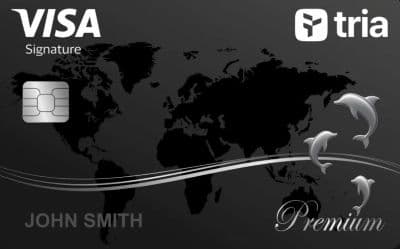
2. Tria Premium Card
Ultimate Web3 Luxury: 6% Cashback + Zero ATM Fees
3. Gnosis Pay Card
Your Keys, Your Card, Your Money
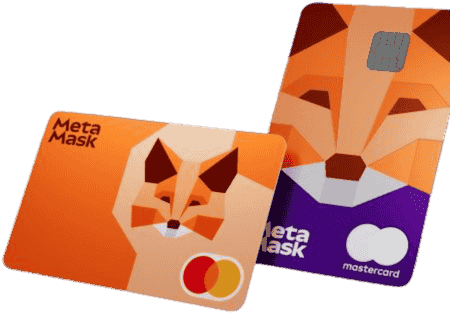
4. MetaMask Virtual Card
Sovereign Spending: 1% Cashback + 0% FX + MetaMask Security
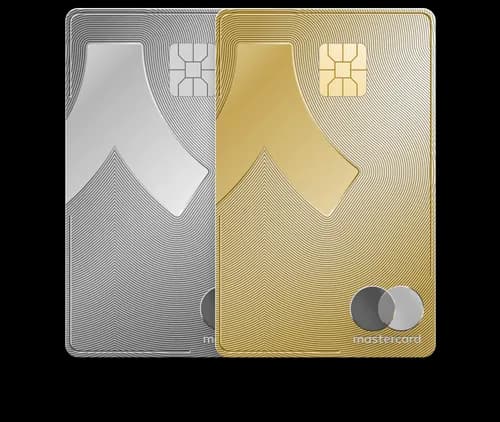
5. Ready Metal Card
Premium Self-Custody: 3% Back on Every Swipe, Zero FX

6. ether.fi Core Card
Zero Barriers: 3% Back on Every Purchase, No Stake Required
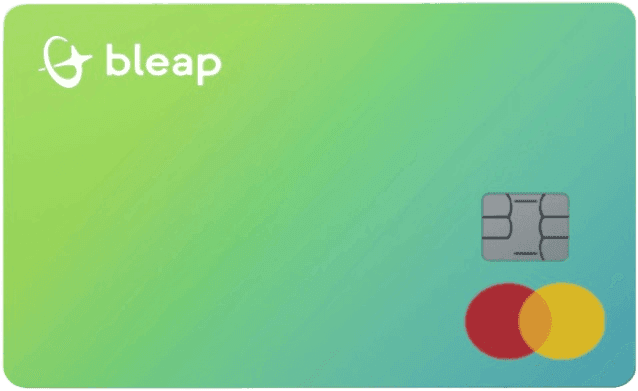
7. Bleap Mastercard
Secure DeFi Spend: 2% Back in USDC + 0% FX Fees

8. Xplace Platinum Club Card
The Platinum Club: 2% Cashback + Private Concierge + 1,400+ Lounges
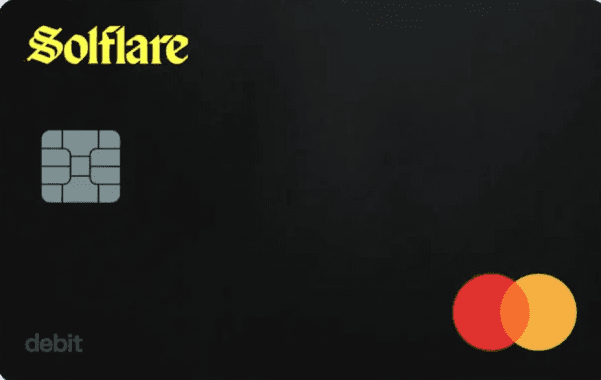
9. Solflare Card
Native Solana Spend: 0% Reload Fees + Airdrop Access
10. Avici Platinum Card
Zero-Fee Self-Custody: Deposit USDC, Spend USD Anywhere
Three Flavors of Self-Custody
The market splits into three camps: wallet-native cards that spend directly from existing wallets (MetaMask, Gnosis Pay, Solflare), smart-account cards with programmable spending limits (COCA, Bleap, Ready), and credit-line cards that lend against collateral you keep on-chain (ether.fi, Avici).
Self-Custody Card Comparison
| Card | Cashback | Annual Fee | FX Fee | Security Model | Chain | Region |
|---|---|---|---|---|---|---|
| COCA Elite | 8% USDC | Free | 0% | Account Abstraction | EVM | Global (54 countries) |
| Gnosis Pay | Up to 5% GNO | Free | 0% | Multi-Sig (Safe) | Gnosis Chain | EEA/UK |
| ether.fi Core | 3% | Free | 1% | Non-custodial | EVM | Global/US/EEA/UK |
| ether.fi Luxe | 3% | Free | 1% | Non-custodial | EVM | Global/US/EEA/UK |
| ether.fi Pinnacle | 3% | Free | 1% | Non-custodial | EVM | Global/US/EEA/UK |
| Ready Metal | 3% STRK | $120/yr | 0% | Smart Account | Starknet | EEA/UK |
| MetaMask Metal | 3% (first $10K/yr) | $199/yr | 0% | MPC | Linea/Base/Solana | 50+ countries |
| Bleap | 2% USDC | Free | 0% | Account Abstraction | Multi-chain | EEA |
| Tria Premium | 6% | $250/yr | 0% | Account Abstraction | Multi-chain | Global |
| MetaMask Virtual | 1% | Free | 0% | MPC | Linea/Base/Solana | 50+ countries |
| Ready Lite | 0.5% STRK | Free | 1% | Smart Account | Starknet | EEA/UK |
| xPlace Standard | XP points | Free | 1% + 1% tx | Non-custodial | Solana | Global |
| Solflare | Points (raffle) | Free | 1% | Non-custodial | Solana | EEA/UK |
| Avici Platinum | None | Free | 0% | Smart Contract Escrow | 12 chains | US/LATAM/APAC |
| Avici Signature | None | $30/yr | 0% | Smart Contract Escrow | 12 chains | US/LATAM/APAC |
| Jupiter Global | None (planned) | Free | TBD | Hybrid | Solana | Global |
Quick picks: COCA Elite for maximum cashback (8%) if you hold COCA tokens. ether.fi Core for US residents who want 3% with zero barriers. Gnosis Pay for Europeans who want zero fees and the strongest on-chain security (Safe multi-sig). MetaMask Virtual for streamlined-KYC self-custody in 50+ countries. Ready Metal for EEA/UK stablecoin spenders who want 3% back with 0% FX. Avici Platinum for non-European, non-custodial secured credit.
How Self-Custodial Spending Actually Works
The key difference from exchange cards: your funds never enter a company's balance sheet. Here is what happens at the register, step by step:
Step 1-7: A Single Card Tap (ether.fi Example)
- You tap your ether.fi card at a coffee shop for $4.50
- Visa sends an authorization request to ether.fi's payment processor
- The processor checks your on-chain collateral (staked ETH, USDC, or eETH in your wallet)
- A borrowing position is opened against your collateral for $4.50 in USD credit
- The merchant receives $4.50 through normal Visa rails
- Your on-chain collateral remains untouched (it secures the loan, not spent directly)
- You repay the $4.50 credit line from stablecoin balance or let the system auto-liquidate from collateral within 7 days
This "borrow-to-spend" model means you never sell your ETH. You spend against it. Tax-efficient and yield-preserving.
Three Security Architectures Compared
| Feature | Multi-Sig (Gnosis Pay) | MPC (MetaMask) | Account Abstraction (COCA, Bleap) |
|---|---|---|---|
| Key Storage | Multiple keys held by different parties | Single key sharded across secure enclaves | Programmable smart contract wallet |
| Transaction Speed | Instant (pre-authorized spending module) | Instant (MPC reassembles in memory) | Instant (paymaster handles gas) |
| Spending Limits | On-chain daily limits (configurable) | App-level limits | On-chain programmable limits |
| Recovery | Social recovery via guardians | Encrypted backup phrase | Biometric + social recovery |
| If Phone Lost | Guardians can recover | Backup phrase restores | Biometric re-auth on new device |
| Best For | Maximum security, teams | Familiar wallet UX | Best consumer experience |
| Example | Gnosis Pay (Safe, $100B+ TVL) | MetaMask (Baanx rails) | COCA (Privy, ERC-4337) |
Edge Cases: What Qualifies as Self-Custody
Not all cards labeled "self-custody" are equal. Here is the spectrum:
- Full self-custody: You hold the private key or control the smart contract. If the issuer disappears, your funds are safe. Examples: Gnosis Pay, MetaMask, Ready
- Non-custodial smart wallet: The issuer provides the wallet infrastructure but cannot access your funds without your signature. Examples: COCA, Bleap
- Borrow-against-collateral: Your collateral sits on-chain and you spend credit. The issuer can liquidate if your collateral ratio drops. Example: ether.fi, Avici
- Hybrid: Some components are custodial (fiat settlement account) while crypto stays on-chain. Example: Jupiter Global
All four models are safer than exchange custody, where the company holds 100% of your funds in pooled accounts.
The Cost of Sovereignty: Fee Comparison
Self-custody is not free. Every card charges something, whether through FX fees, transaction fees, or opportunity cost. Here is what each card actually costs at two spending levels:
| Card | FX Fee | Tx Fee | Conversion Fee | Annual Cost at $30K/yr | Annual Cost at $60K/yr |
|---|---|---|---|---|---|
| Gnosis Pay | 0% | 0% | 0% | $0 | $0 |
| COCA | 0% | 0% | 0% | $0 | $0 |
| MetaMask Virtual | 0% | 0% | Gas only | $4 (gas) | $8 (gas) |
| Avici Platinum | 0% | 0% | 0% | $0 | $0 |
| Ready Metal | 0% | 0% | 0% | $120 (annual fee) | $120 (annual fee) |
| Bleap | 0% | 0% | 0% | $0 | $0 |
| ether.fi Core | 1% | 0% | 0.2% crypto | $360 (FX+conv) | $720 |
| Ready Lite | 1% | 0% | 0% | $300 | $600 |
| Solflare | 1% | 0% | 1% reload | $600 | $1,200 |
| xPlace Standard | 1% | 1% | 0% | $600 | $1,200 |
SpendNode's self-custody database shows that the zero-fee cards (Gnosis Pay, COCA, Bleap, Avici) cost nothing beyond the annual fee. The 1% FX cards cost $300-600/year on $30,000 spending. That $600 gap at $60K/year is the real price difference between choosing the right and wrong self-custody card.
Worked Examples at Three Spending Levels
Profile 1: $1,000/month (Testing Self-Custody)
| Card | Cashback Rate | Monthly Cashback | Minus Annual Fee | Minus FX/Fees | Net Annual Value |
|---|---|---|---|---|---|
| COCA (1% Starter) | 1% | $10 | $0 | $0 | $120/yr |
| ether.fi Core | 3% | $30 | $0 | -$10 FX | $240/yr |
| MetaMask Virtual | 1% | $10 | $0 | $0 | $120/yr |
| Ready Lite | 0.5% | $5 | $0 | -$10 FX | -$60/yr |
| Gnosis Pay (1% base) | 1% | $10 | $0 | $0 | $120/yr |
| Bleap | 2% (capped) | $10 (cap) | $0 | $0 | $120/yr |
| Bank debit card | 0% | $0 | $0 | $0 | $0/yr |
At $1,000/month, ether.fi Core wins with $240/year net even after the 1% FX fee. The FX cost is only relevant for international spending, so domestic-only users see the full $360/year. Bleap hits its 10 USDC/month cap at $500/month spending, making the effective rate just 1% at this volume.
Profile 2: $3,000/month (Committed Self-Custody User)
| Card | Cashback | Annual Return | Minus Costs | Net Annual Value |
|---|---|---|---|---|
| COCA Elite (8%, hold 30K COCA) | 8% | $2,880 | $0 | $2,880 (+ COCA risk) |
| COCA Premium (5%, hold 3K COCA) | 5% | $1,800 | $0 | $1,800 (+ COCA risk) |
| Gnosis Pay (3%, hold 10 GNO) | 3% | $1,080 | $0 | $1,080 (+ GNO risk) |
| ether.fi Core | 3% | $1,080 | -$360 FX | $720 |
| Ready Metal | 3% STRK | $1,080 | -$120 fee | $960 (+ STRK risk) |
| MetaMask Virtual | 1% | $360 | $0 | $360 |
| Bleap | 2% (capped) | $120 (cap) | $0 | $120 |
| Custodial alternative: Bybit | 10% | $3,600 | -$180 FX | $3,420 |
At $3,000/month, the gap between self-custody and custodial becomes clear. Bybit at 10% custodial generates $3,420/year. The best self-custody option, COCA Elite at 8%, generates $2,880/year. The $540/year difference is the annual cost of keeping your funds in your own wallet. For context, users who had funds on FTX lost everything. The insurance premium of self-custody is $540/year at this spending level.
Profile 3: $8,000/month (High Spender)
| Card | Annual Cashback | Costs | Net Value | Effective Rate |
|---|---|---|---|---|
| COCA Elite (8%) | $7,680 | $0 | $7,680 | 8.0% |
| Gnosis Pay (5%, 100 GNO) | $4,800 | $0 | $4,800 | 5.0% |
| ether.fi Core (3%) | $2,880 | -$960 FX | $1,920 | 2.0% |
| Ready Metal (3%) | $2,880 | -$120 fee | $2,760 | 2.9% |
| MetaMask Virtual (1%) | $960 | $0 | $960 | 1.0% |
At $8,000/month, COCA Elite dominates the self-custody space at $7,680/year net. Ready Metal offers the best value among stablecoin-only cards at $2,760/year with zero FX and genuine Starknet self-custody. The ether.fi 1% FX fee erodes $960/year at this volume, making domestic-only spending the better use case for ether.fi cards.
Three Self-Custody Users: Real Monthly Flows
Elena: DeFi Researcher in Berlin ($2,000/month)
Elena spent 2022 watching exchange collapses. She will never hold funds on a centralized platform again. Security matters more than maximum cashback.
Setup: Gnosis Pay (Safe multi-sig, 3% GNO cashback with 10 GNO holding, 0% FX, EURe settlement).
| Item | Monthly Value | Annual Value |
|---|---|---|
| 3% cashback on $2,000 | $60 in GNO | $720 |
| FX fee savings (vs 1% card) | $20 saved | $240 |
| Annual card fee | $0 | $0 |
| Security model | Safe multi-sig ($100B+ TVL) | N/A |
| Net annual value | $960 |
Token risk: 10 GNO holding (approx. $3,000). If GNO drops 30%, the $900 paper loss takes 1.25 years to recover via cashback. GNO rewards are also volatile. Elena's verdict: "I sleep better knowing my funds sit in a Safe wallet, not on a company server. The $900 risk on 10 GNO is the price of not being the next FTX headline."
Ryan: Software Engineer in Austin ($4,000/month)
Ryan holds 15 ETH in staked positions and refuses to sell any of it. He wants to spend fiat without triggering capital gains events.
Setup: ether.fi Core (3% cashback, borrow-to-spend against staked ETH, Visa).
| Item | Monthly Value | Annual Value |
|---|---|---|
| 3% cashback on $4,000 | $120 | $1,440 |
| FX fees (1%, domestic only) | $0 (all USD) | $0 |
| Capital gains avoided | $0 taxable events | Significant |
| ETH yield continues | approx. 3.5% on staked ETH | Preserved |
| Net annual value | $1,440 |
Tax advantage: Because ether.fi uses borrow-to-spend, Ryan never sells his ETH. No taxable disposal means no capital gains. If he had sold $4,000/month in ETH instead, with a $2,000 average cost basis, he would owe taxes on $24,000/year in capital gains. At the 15% long-term rate, that is $3,600/year in tax. The borrow-to-spend model saves Ryan $3,600/year in taxes on top of the $1,440 in cashback. Ryan's verdict: "I spend $48K/year and never sell a single wei. My staked ETH keeps earning yield while I buy coffee with it."
Yuki: Freelance Translator in Tokyo ($1,200/month)
Yuki works with clients across 5 countries, gets paid in USDC, and travels 3-4 months per year. She needs a card that works everywhere with zero FX friction.
Setup: MetaMask Virtual (1% cashback, 0% FX, streamlined KYC, 50+ countries) as primary + COCA Standard (3%, 300 COCA, 0-1% FX, 50% off subscriptions) as backup.
| Item | Monthly Value | Annual Value |
|---|---|---|
| 1% cashback on $800 (MetaMask) | $8 | $96 |
| 3% cashback on $400 (COCA) | $12 | $144 |
| 50% off Netflix + Spotify (COCA) | $14.74 | $177 |
| FX savings (vs 1% card on $600 intl) | $6 saved | $72 |
| Net annual value | $489 |
Why two cards: MetaMask Virtual issues instantly with streamlined KYC, works in 50+ countries, and connects to her existing MetaMask wallet. COCA covers subscriptions and higher-volume spending. If either card goes down while she is abroad, the other keeps working. Yuki's verdict: "Two self-custody cards on two different networks means no single point of failure. I have never been stranded without a working payment method."
The Hidden Costs and Risks
Token Volatility on Cashback Rewards
Several self-custody cards pay cashback in volatile tokens. Here is what happens to your rewards at different price scenarios:
| Card | Reward Token | Annual Cashback ($3K/mo) | If Token -30% | If Token -50% | If Token +50% |
|---|---|---|---|---|---|
| COCA Elite | USDC | $2,880 | $2,880 (stable) | $2,880 (stable) | $2,880 (stable) |
| ether.fi Core | Mixed | $1,080 | Varies | Varies | Varies |
| Ready Metal | STRK | $1,080 | $756 | $540 | $1,620 |
| Gnosis Pay | GNO | $1,080 | $756 | $540 | $1,620 |
COCA paying in USDC eliminates volatility risk entirely. Ready and Gnosis Pay rewards in STRK and GNO respectively can lose 30-50% of their dollar value if the token price drops. Sell volatile token rewards immediately if you want predictable returns. Hold only if you have conviction in the token.
The COCA Token Holding Requirement
COCA's 8% rate requires holding 30,000 COCA tokens (no staking or lockup). But the token itself is volatile:
| COCA Balance | Tier | Cashback | If COCA Drops 30% | Paper Loss | Years to Recover via Cashback ($3K/mo) |
|---|---|---|---|---|---|
| 0 COCA | Starter | 1% | $0 | $0 | N/A |
| 300 COCA | Standard | 3% | -$90 | $90 | 0.1 years |
| 3,000 COCA | Premium | 5% | -$900 | $900 | 0.5 years |
| 30,000 COCA | Elite | 8% | -$9,000 | $9,000 | 3.1 years |
At the Elite tier, a 30% COCA price drop wipes out 3.1 years of cashback gains at $3,000/month spending. Start at Starter (0 COCA, 1% cashback) and only upgrade tiers if you have genuine conviction in the COCA token.
Smart Contract Risk
Self-custody does not eliminate all risk. It shifts risk from exchange insolvency to smart contract vulnerabilities. Every self-custody card relies on smart contracts that could contain bugs. Mitigating factors:
- Gnosis Pay uses Safe, which secures $100B+ in TVL and has never been exploited
- COCA uses Privy with ERC-4337, audited infrastructure
- Ready uses Starknet smart contracts (Argent's battle-tested wallet codebase)
- MetaMask uses Baanx payment rails with MPC key sharding
Five Mistakes That Cost Self-Custody Users Money
Mistake 1: Keeping Your Entire Portfolio in Your Spending Wallet
Your spending wallet should hold 1-2 weeks of expenses, not your life savings. A self-custodial card linked to a wallet with $50,000 in assets is a $50,000 target. If your phone is compromised, the attacker has access to everything connected to that wallet.
Cost of this mistake: Up to your entire wallet balance. A compromised spending wallet with $50,000 means $50,000 at risk. A spending wallet with $500 means $500 at risk.
How to avoid it: Use a three-wallet structure: cold storage (Ledger, Trezor) for 95% of holdings, warm wallet for weekly refills, spending wallet with 1-2 weeks of expenses only. Refill the spending wallet from the warm wallet weekly. Gnosis Pay also lets you set on-chain daily spending limits as an additional safeguard.
Mistake 2: Ignoring Cashback Caps
Bleap advertises 2% cashback but caps it at 10 USDC/month ($120/year). At $1,000/month spending, you hit the cap at $500. Every dollar above $500 earns 0% cashback. At $3,000/month, your effective rate drops to 0.33%.
Cost of this mistake: $600/year at $3,000/month (the difference between 2% uncapped at $720/yr and Bleap's capped $120/yr).
How to avoid it: Before choosing a card for its cashback rate, check the monthly cap. COCA, ether.fi, Gnosis Pay, and MetaMask have no monthly caps. Bleap is best for low spenders under $500/month where the cap does not bind.
Mistake 3: Paying 1-2% FX Fees When 0% Cards Exist
At $30,000/year in international spending, a 1% FX fee costs $300. xPlace Standard with its 1% FX + 1% transaction fee costs $600/year.
Cost of this mistake: $300-600/year depending on FX fee level and international spending volume.
How to avoid it: Switch to a low/zero FX self-custody card. Gnosis Pay, Bleap, Avici, and Ready Metal charge 0% FX. COCA charges 0% on direct stablecoin pairs and 1% on indirect. If you travel or spend internationally, this is a significant upgrade. Domestic-only spenders can safely ignore FX fees.
Mistake 4: Choosing a Card Based on Security Model Instead of Total Cost
Multi-sig (Safe) is technically the most censorship-resistant architecture. But if Gnosis Pay is not available in your region and you choose a high-fee alternative just for the security label, you lose money.
Cost of this mistake: $300-960/year in unnecessary fees. A digital nomad in Southeast Asia who uses xPlace (1% FX + 1% tx fee) instead of MetaMask Virtual (0% FX) pays $720/year extra on $3,000/month spending.
How to avoid it: Filter by your region first, then compare total cost. ether.fi Core or MetaMask Virtual with MPC security and global availability are the practical choices for non-European users. All self-custody models (MPC, multi-sig, account abstraction) are safer than exchange custody.
Mistake 5: Not Calculating the Break-Even on Token-Gated Tiers
COCA requires holding tokens to unlock higher cashback. Gnosis Pay requires holding GNO. The question: does the extra cashback from a higher tier pay for the cost of acquiring and holding the required tokens?
Cost of this mistake: $750+ in year one if the token drops 25%. At $3,000/month: COCA Standard (300 COCA, 3%) earns $1,080/year. COCA Premium (3,000 COCA, 5%) earns $1,800/year. The upgrade gives $720/year more. If 3,000 COCA costs $3,000 to buy, the upgrade pays for itself in 4.2 years assuming zero price change. But a 25% COCA drop costs $750 in paper loss, making the upgrade negative for 5+ years.
How to avoid it: Start at the lowest tier (0 tokens). Track your actual monthly spending for 3 months to calculate the cashback gap between tiers. Only upgrade when the annual cashback difference exceeds the token purchase cost divided by 2 (a conservative 2-year payback target). Never buy issuer tokens with money you cannot afford to lose.
Tax Implications of Self-Custody Spending
Self-custody cards create different tax events depending on the spending model:
| Spending Model | What Happens | Taxable Event? | Tax Advantage |
|---|---|---|---|
| Borrow-to-spend (ether.fi, Avici) | Loan against collateral, spend fiat credit | No (loan, not sale) | Avoid capital gains entirely |
| Direct USDC spend (COCA, Ready, Bleap) | USDC converted to fiat at point of sale | Minimal (stablecoin, near-zero gain) | No volatile asset disposal |
| Direct crypto spend (Gnosis Pay EURe) | EURe converted to EUR | Minimal (stablecoin peg) | Near-zero gain on conversion |
| Token cashback received (GNO, STRK, PLU) | Purchase rebate, not income | When sold at profit | Track cost basis from receipt |
| USDC cashback (COCA, Bleap) | Stablecoin credited | Near-zero | No volatile gain to track |
The borrow-to-spend model (ether.fi, Avici) is the most tax-efficient. You never sell your crypto, so you never trigger a taxable disposal. Your staked ETH keeps earning yield while you spend against it. In contrast, direct-spend cards that sell your crypto at the point of sale create a taxable event on every transaction. For tax-conscious users holding appreciated crypto, the borrow-to-spend model can save thousands per year in capital gains tax (see Ryan's scenario above: $3,600/year in avoided taxes at $4,000/month spending).
Token cashback (GNO from Gnosis Pay, STRK from Ready) is treated as a purchase rebate in most jurisdictions, not as income. But when you sell those tokens at a profit, you owe capital gains on the appreciation. Every monthly cashback creates a new tax lot. Set up auto-sell to USDC if you want to avoid tracking dozens of tax lots per year.
Self-Custody Card Types Explained
Wallet-Native Cards
Cards that plug directly into an existing wallet app. No separate account needed.
- Best for: Users who already have a MetaMask or Solflare wallet and want to add spending capability
- Cards: MetaMask Virtual (1%, 0% FX, 50+ countries), MetaMask Metal (3% on first $10K, $199/yr, US available), Solflare (points, EEA/UK), Jupiter Global (no rewards yet)
Smart-Account Cards
New wallet created with programmable spending limits, social recovery, and gasless transactions.
- Best for: Users who want the strongest consumer protections (biometric auth, daily limits, recovery options) without managing raw private keys
- Cards: COCA (up to 8%, Privy ERC-4337), Bleap (2% capped, Unlimit issuer), Ready Lite (0.5%, Starknet) and Ready Metal (3%, 0% FX), Gnosis Pay (up to 5%, Safe multi-sig)
Credit-Line Cards (Borrow to Spend)
Deposit collateral on-chain, receive a USD credit line. You spend fiat without selling crypto.
- Best for: ETH holders who want to spend without triggering taxable sales, and USDC holders who want a credit card experience
- Cards: ether.fi (3% cashback, spend against staked ETH), Avici Platinum (0% FX, no rewards, USDC escrow) and Avici Signature ($30/yr, lounge access)
Card Selection by Region and Use Case
US Residents
ether.fi Core (3% cashback, no staking, Visa) is the strongest US option. MetaMask Virtual (1%, 0% FX, Mastercard) as backup on a different network. Avici Platinum if you want secured credit with zero fees (check state eligibility, 20 states excluded).
Europeans (EEA/UK)
Gnosis Pay (up to 5%, 0% everything, Safe security) for EURe spenders. Ready Metal (3% STRK, 0% FX, Mastercard) for USDC spenders who want stablecoin simplicity. Bleap (2% USDC, 0% FX) for privacy-conscious users who value account abstraction.
High Spenders ($5K+/month)
COCA Elite (8%, 0-1% FX, 0% annual fee) dominates on cashback if you can hold 30,000 COCA. Without token holdings, ether.fi Core at 3% flat with no cap is the best guaranteed rate. Ready Metal for EEA/UK users who want 3% with 0% FX and no cashback cap.
Budget-Conscious / Beginners
MetaMask Virtual (1%, 0% FX, free) or Ready Lite (0.5%, free, EEA/UK) to test self-custody spending with zero commitment. Both issue virtual cards instantly so you can try before ordering physical.
Solana Ecosystem Users
Jupiter Global for USDC spending from Jupiter wallet. Solflare for points and raffle rewards (EEA/UK). xPlace for XP farming toward future airdrop.
Maximum Security
Gnosis Pay using Safe multi-sig ($100B+ TVL, never exploited) is the gold standard for on-chain security. Set daily spending limits on-chain. Even if someone steals your phone and card, they cannot exceed the programmed daily limit.
The Bottom Line
The best self-custody card is not the one with the highest cashback headline. It is the one where (Annual Cashback - Annual Fees - FX Costs - Token Holding Risk) = Highest Positive Number at your actual monthly spending volume and in your actual region. COCA at 1% with zero COCA tokens and 0-1% FX beats a 5% card that requires holding volatile tokens worth 10x your annual cashback. ether.fi Core at 3% with no staking in the US beats Gnosis Pay at 5% if you cannot use Gnosis Pay because you live in Texas. Run the break-even math on token-gated tiers before buying any issuer token, and keep 95% of your holdings off the spending wallet.
Frequently Asked Questions
How does a self-custodial card differ from a Coinbase or Binance card?
With Coinbase or Binance, you deposit funds into their servers and they control the keys. With a self-custodial card (like MetaMask, Gnosis Pay, or Ready), your assets stay in your own wallet or smart contract until the exact moment you tap the card. If the issuer goes down, your funds remain on-chain and accessible through any Web3 interface.
Do I need gas to spend crypto with these cards?
It depends on the card. Gnosis Pay subsidizes all gas fees to zero. MetaMask uses Linea L2 where gas is under $0.01. Ready on Starknet charges no gas. Cards on Ethereum mainnet would cost $2-5 per transaction, but no self-custody card currently routes through mainnet for payments.
What happens if the card issuer goes bankrupt?
Your funds stay on-chain in your wallet or smart contract. Unlike exchange-based cards where funds are pooled in company accounts, self-custodial cards never take possession of your crypto. The Visa/Mastercard rails would stop working, but your assets remain yours.
Is self-custody worth the lower cashback rates?
At $3,000/month spending, COCA Elite (8% self-custody) earns $2,880/year while Bybit (10% custodial) earns $3,600/year. The $720 gap is the annual cost of sovereignty. But if an exchange freezes withdrawals (as FTX did), the entire balance is at risk. Self-custody users lost zero when FTX collapsed.
Can I use self-custodial cards with Apple Pay and Google Pay?
Yes. MetaMask, ether.fi, COCA, Ready, xPlace, and Bleap all support Apple Pay, Google Pay, or both. The tap-to-pay experience is identical to any bank card.
Which self-custody card has the highest cashback?
COCA Elite offers up to 8% cashback in USDC, but requires holding 30,000 COCA tokens. Without token holdings, ether.fi Core at 3% flat cashback with no staking requirement is the highest guaranteed rate. Gnosis Pay reaches 5% but requires holding 100+ GNO plus an OG NFT.
Are self-custodial cards available in the United States?
Yes. ether.fi (all tiers), MetaMask (Virtual and Metal), Avici (30 states), and COCA are available to US residents. Gnosis Pay, Ready, Bleap, and Solflare are limited to EEA and UK.
What security model is safest for a self-custodial card?
Multi-sig (Gnosis Pay using Safe) offers the strongest censorship resistance because multiple parties must sign. MPC (MetaMask) provides the smoothest consumer experience with instant approvals. Account Abstraction (COCA, Bleap) adds programmable spending limits. All three are safer than exchange custody.
Do I need to understand DeFi to use a self-custody card?
No. Cards like MetaMask Virtual and Ready Lite work like any prepaid card. You load USDC, tap the card, and the balance updates. The self-custody happens in the background. You do not need to interact with smart contracts, manage gas, or understand blockchain mechanics.