
Best Physical Cards Crypto Cards 2026
Compare the best physical crypto cards by cashback, ATM limits, FX fees, metal vs plastic tradeoffs, and how well they work for travel, chip-and-PIN checkout, and cash access.

A physical crypto card is the bridge between your digital assets and the real world. Tap it at a coffee shop, insert it at a gas station, or slide it into an ATM to withdraw cash. The merchant sees a normal Visa or Mastercard transaction. Your crypto balance decreases. Cashback arrives in your wallet.
Physical crypto cards range from free plastic with no cashback to premium metal with 6% rewards, 0% FX, and airport lounge access. At $3,000/month spending, the difference between the best and worst physical card exceeds $3,000/year in net returns.
If you want the broader market view before narrowing it down to plastic and metal, start with our best cards overall.
Top 8 Physical Cards Cards

1. Tria Premium Card
Ultimate Web3 Luxury: 6% Cashback + Zero ATM Fees

2. Gate Card Classic
Direct Exchange Spending: Visa Platinum + Up to 5% Cashback

3. ether.fi Core Card
Zero Barriers: 3% Back on Every Purchase, No Stake Required
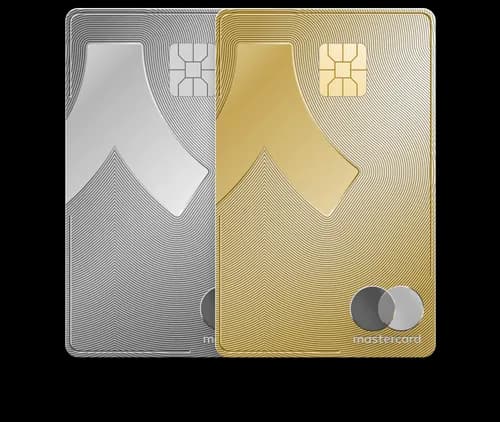
4. Ready Metal Card
Premium Self-Custody: 3% Back on Every Swipe, Zero FX
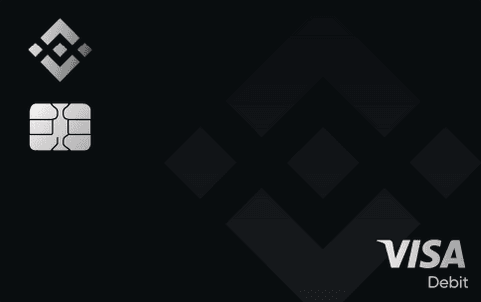
5. Binance Mastercard
Spend Crypto in Brazil: Up to 2% Back in BNB

6. Krak Mastercard
Transparent Spending: Mid-Market Rates + 1% Back
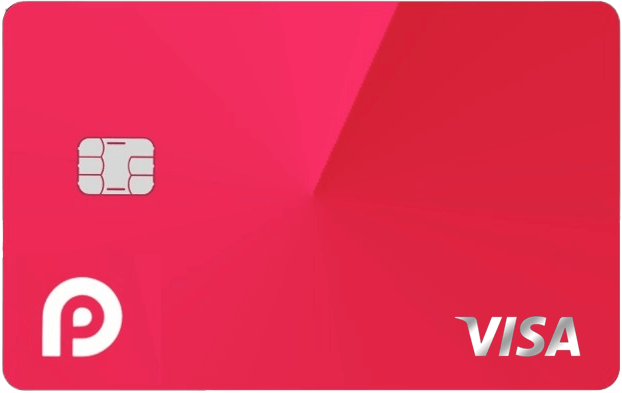
7. RedotPay Physical Card
The Tangible Off-Ramp: Physical Visa + ATM + $1M Daily Limits

8. Private (Obsidian)
The Pinnacle: 5% Cashback + Private Jet Perks
Three Numbers That Matter
Metal and plastic, Visa and Mastercard - Covering custodial and self-custody options. Physical is required for ATM access and chip-and-PIN merchants.
5-21 days shipping - The wait for a physical card. Every issuer listed here also offers a virtual card within minutes, so you can start earning cashback immediately while the physical card ships.
$3,000+/year gap - The net return difference between the best physical card (6% cashback, 0% FX) and the worst (0% cashback, high FX) at $3,000/month. Material (metal vs plastic) does not determine value. The fee structure does.
Notable Physical Crypto Cards Compared
| Card | Cashback | FX Fee | Annual Fee | Network | Custody | Material | Region |
|---|---|---|---|---|---|---|---|
| Tria Premium | 6% | 0% | $250/yr | Visa | Self-custody | Metal | Global |
| Crypto.com Obsidian | 5% | 0% | $500K CRO stake | Visa | Custodial | Metal | Global |
| Gate.io Classic | 1-5% | 0.4% | Free | Visa | Custodial | Plastic | Global |
| ether.fi Core | 3% | 1% | Free | Visa | Self-custody | Plastic | Global/US/EEA/UK |
| Ready Metal | 3% STRK | 0% | $120/yr | Mastercard | Self-custody | Metal | EEA/UK |
| Binance | 2% | 2% | Free | Mastercard | Custodial | Plastic | Brazil |
| Kraken | 1% | 0% | Free | Mastercard | Custodial | Plastic | EEA/UK |
| RedotPay Physical | 0% | 1.2% + 1% conv. | $100 issuance | Visa | Custodial | Plastic | 150+ countries |
Metal vs. Plastic: Is the Premium Upgrade Worth It?
Physical crypto cards come in two materials, and the price gap is significant:
Plastic cards. Free to $100 one-time fee. Typically 5g weight, standard chip-and-PIN, contactless NFC. Cards from ether.fi Core, Kraken, Gate.io, Binance, and RedotPay Physical are plastic. Functional and effective.
Metal cards. $120/yr to $500K+ in staking requirements. Stainless steel construction, 15-22g weight, premium feel. Cards from Tria Premium, Crypto.com (Pro and above), ether.fi (Luxe/Pinnacle/VIP), Ready Metal, and Wirex Elite.
The honest assessment: metal cards do not perform better at terminals or ATMs. The premium is about tier benefits (higher cashback, lounge access, larger ATM limits) and status. If two cards offer the same cashback rate and one is metal, the metal card is not worth an annual fee premium for functionality alone.
Every Metal Crypto Card Compared
| Metal Card | Cashback | FX Fee | Annual Fee | Access Requirement | ATM Free Limit | Lounge | Custody |
|---|---|---|---|---|---|---|---|
| Tria Premium | 6% | 0% | $250/yr | Payment | Free (0% ATM) | Yes (Visa Airport Companion) | Self-custody |
| Crypto.com Obsidian | 5% | 0% | $500K CRO stake | Stake | Free (no ATM fee) | Yes (Priority Pass + guest) | Custodial |
| Ready Metal | 3% | 0% | $120/yr | Payment | $800/mo | No | Self-custody |
| ether.fi Luxe | 3% | 1% | Free | 10K pts/mo or 15K ETHFI | $400/mo | Yes | Self-custody |
| ether.fi Pinnacle | 3% | 1% | Free | 50K pts/mo or 100K ETHFI | $800/mo | Yes | Self-custody |
Upgrade Break-Even Math
The question is not "is metal better?" but "at what spending level does the upgrade pay for itself?"
| Upgrade Path | Free Card | Metal Card | Extra Cashback | Extra Costs (FX, Fee) | Break-Even Monthly Spend |
|---|---|---|---|---|---|
| Ready Lite to Ready Metal | 0.5% CB, 1% FX | 3% CB, 0% FX | +2.5% CB, +1% FX saved | $120/yr fee | $286/mo |
| ether.fi Core to Luxe | 3% CB, 1% FX | 3% CB, 1% FX | Same CB, same FX | 10K pts or 15K ETHFI stake | $0 (free if you qualify) |
| Tria Virtual to Tria Premium | 1.5% CB, 0% FX | 6% CB, 0% FX | +4.5% CB | $230/yr extra ($250 vs $20) | $426/mo |
Best upgrade value: Ready Lite to Ready Metal breaks even at just $286/month. At $1,500/month spending, the upgrade earns $528/year net after the $120 fee. This is the most accessible metal card upgrade in the market.
Tria Virtual to Tria Premium breaks even at $426/month. The jump from 1.5% to 6% cashback (both at 0% FX) makes this the highest-ROI premium upgrade for global users.
ether.fi tier upgrades are free if you accumulate enough Membership Points through spending or stake ETHFI. No annual fee at any tier. The only "cost" is the staking requirement, which carries token price risk (see below).
The Staking Requirement Trap
Several metal cards require you to stake (lock) tokens to access or maintain your tier:
- Crypto.com: Pro (Royal Indigo/Jade Green) is now $299.90/yr subscription. Icy White/Rose Gold requires $50,000 CRO stake. Obsidian requires $500,000.
- ether.fi: Luxe requires 15,000 ETHFI stake. Pinnacle requires 100,000 ETHFI.
The risk: staked tokens can lose value while locked. If CRO drops 50%, you cannot sell during the lock period. This happened to thousands of Crypto.com users during the 2022 bear market.
How to evaluate staking cards: Calculate the guaranteed annual cashback value at your expected spending level. If the cashback alone does not justify the staking requirement's opportunity cost (what you could earn by deploying that capital elsewhere at 5-8% APY), the metal tier is not worth it. Only upgrade if you would hold the token anyway regardless of the card benefit.
When metal is genuinely worth it: When the tier upgrade includes meaningfully better economics without staking risk. ether.fi Luxe (metal, 3% cashback, free) vs ether.fi Core (plastic, 3% cashback, free) - the metal card is free if you earn enough points through spending alone, no staking required. Ready Metal at 3% with 0% FX vs Ready Lite at 0.5% with 1% FX justifies the $120/year upgrade at any spending level above $286/month - and the fee is flat cash, not a volatile token stake.
ATM Withdrawal: The Physical Card Advantage
The one thing a physical card does that a virtual card cannot: withdraw cash from an ATM. This matters for:
- Travel in cash-dependent regions: Parts of Southeast Asia, Africa, Latin America, and Eastern Europe still rely heavily on cash. A physical card with a decent ATM allowance is essential.
- Emergency access: Even in card-friendly countries, ATM access provides a backup when POS terminals go down or shops do not accept cards.
- Local currency at interbank rates: Combined with 0% FX fees, ATM withdrawals can be cheaper than airport currency exchange (which typically charges 3-10% markup).
Most physical crypto cards offer $200-$800/month in free ATM withdrawals before charging 2% on the excess. At $500/month cash needs, the free allowance covers most users.
Three Spending Scenarios
The Cash-Dependent Traveler: $2,500/month (30% ATM)
Profile: Travels in cash-heavy regions, needs reliable ATM access, wants no FX fees.
Best pick: Ready Metal - 3% STRK cashback, 0% FX, $800/mo free ATM, metal, self-custody.
| Metric | Ready Metal | ether.fi Core | Kraken | RedotPay Physical |
|---|---|---|---|---|
| Monthly spend | $2,500 | $2,500 | $2,500 | $2,500 |
| ATM per month | $750 | $750 | $750 | $750 |
| Cashback rate | 3% | 3% | 1% | 0% |
| Annual cashback | $900 | $900 | $300 | $0 |
| Free ATM limit | $800/mo | $400/mo | $200/mo | $200/mo |
| ATM overage cost | $0 | $84/yr | $132/yr | $132/yr |
| FX fee | 0% | 1% | 0% | 1.2% |
| Annual FX cost | $0 | $300 | $0 | $360 |
| Annual fee | $120 | $0 | $0 | $25 one-time |
| Net annual return | $780 | $516 | $168 | -$492 |
Ready Metal wins for cash-heavy travelers thanks to its $800/month free ATM allowance (highest among budget-friendly options) combined with 0% FX and 3% cashback. The $120/year annual fee pays for itself within one month of heavy ATM use. ether.fi Core is the runner-up with the widest global coverage.
The European Daily Driver: $3,000/month
Profile: EEA-based, uses the card for everyday purchases, values self-custody and 0% FX.
Best pick: Ready Metal for self-custody value or Kraken for zero-cost simplicity.
| Metric | Ready Metal | Kraken | ether.fi Core |
|---|---|---|---|
| Monthly spend | $3,000 | $3,000 | $3,000 |
| Cashback | 3% STRK | 1% | 3% |
| Annual cashback | $1,080 | $360 | $1,080 |
| FX fee | 0% | 0% | 1% |
| Annual FX cost | $0 | $0 | $360 |
| Annual fee | $120 | $0 | $0 |
| Custody | Self-custody | Custodial | Self-custody |
| Net annual return | $960 | $360 | $720 |
For European everyday physical card spending, Ready Metal leads at $960/year net with uncapped 3% STRK and 0% FX. Kraken is the zero-cost Mastercard option for users who want simplicity. ether.fi Core has the widest global coverage but the 1% FX fee reduces its net return for international spending.
The Premium Status Seeker: $8,000/month
Profile: Wants the best physical card experience: metal, lounge access, highest cashback, willing to stake or pay annual fees.
Best pick: Tria Premium for best value, Crypto.com Obsidian for maximum perks.
| Metric | Tria Premium | Crypto.com Obsidian | ether.fi Pinnacle |
|---|---|---|---|
| Monthly spend | $8,000 | $8,000 | $8,000 |
| Cashback | 6% | 5% | 3% |
| Annual cashback | $5,760 | $4,800 | $2,880 |
| Annual fee | $250 | $500K CRO stake | $0 (100K ETHFI stake) |
| FX fee | 0% | 0% | 1% |
| Custody | Self-custody | Custodial | Self-custody |
| Material | Metal | Metal | Metal |
| Net annual return | $5,510 | $4,800 + lounges | $1,920 |
Tria Premium leads on net return at $5,510/year with 6% cashback, 0% FX, and 0% ATM fees in a self-custodial metal card. Crypto.com Obsidian adds Priority Pass with a guest and subscription rebates but requires a $500K CRO stake. ether.fi Pinnacle is the self-custody alternative with no annual fee but 1% FX reduces its international value.
Common Mistakes with Physical Crypto Cards
Mistake 1: Waiting for the physical card instead of using the virtual one
Cost: $60-$240 in missed cashback during 2-3 weeks of shipping.
Many issuers provide a virtual card instantly while the physical card ships. Users who wait for the physical card before starting to spend miss weeks of cashback. At $3,000/month with 4% rewards, three weeks of waiting costs $180.
How to avoid it: Add your virtual card to Apple Pay or Google Pay immediately after signup. Start earning cashback from day one while the physical card is in transit.
Mistake 2: Exceeding the free ATM allowance without tracking
Cost: $50-$300/year in ATM overage fees.
Most physical crypto cards charge 2% on ATM withdrawals above the free monthly limit. A user who withdraws $1,500/month on a card with a $200/month free limit pays 2% on $1,300, or $312/year. Many users do not realize they have exceeded the limit until they see the fee deducted.
How to avoid it: Know your card's free ATM limit before your first withdrawal. Plan larger, less frequent withdrawals to stay within the allowance. If you consistently need more than $800/month in cash, consider a second card with a higher ATM limit.
Mistake 3: Not reporting a lost physical card immediately
Cost: Potentially your entire card balance if the card is used before it is frozen.
Unlike a virtual card protected by biometric authentication, a lost physical card with contactless enabled can be used for small purchases (under the contactless limit) without PIN verification. Some cards allow up to $100 per contactless tap.
How to avoid it: Freeze your card immediately through the issuer's app the moment you notice it is missing. Most apps (Crypto.com, Coinbase, MetaMask) have a one-tap freeze button. Report the loss to the issuer within 24 hours to limit liability.
Mistake 4: Choosing a physical-only card without checking virtual availability
Cost: 2-3 weeks of zero usage while waiting for delivery.
Some users sign up for physical crypto cards without checking whether a virtual card is also available. If the issuer only provides a physical card (no virtual option), you cannot spend until it arrives in the mail. This is increasingly rare but still applies to some legacy cards.
How to avoid it: Confirm virtual card availability before signing up. Most modern crypto cards (ether.fi, Gate.io, Kraken, Ready, Tria) offer both virtual and physical.
Tax Implications
Physical crypto card transactions have identical tax treatment to virtual card transactions. The card material does not change the tax event.
ATM withdrawals have a unique tax consideration. When you withdraw cash from an ATM using a crypto card, the conversion from crypto to fiat occurs at that moment. This is a taxable disposal event. If you withdraw $500 and your crypto has appreciated since purchase, you owe capital gains on the appreciation. This catches many users off guard because ATM withdrawals feel like "accessing your own money" rather than a taxable event.
Stablecoin loading minimizes ATM tax impact. If you load your card with USDC or USDT, ATM withdrawals convert stablecoins to fiat at approximately 1:1, generating negligible taxable gains.
For jurisdiction-specific guidance, see our country guides for the US, UK, Germany, and Australia.
What Changes Next for Physical Crypto Cards
Biometric cards. Fingerprint sensors embedded in physical cards are entering the crypto card market. This would combine the security of biometric authentication (currently only available through mobile wallets) with the universal acceptance of physical cards. Early pilots are underway from Mastercard partners.
Dual-interface metal. Current metal cards sometimes have NFC range limitations due to their material. Next-generation metal cards use improved antenna designs for reliable contactless taps at the same distance as plastic cards.
On-demand physical cards. Some issuers are testing instant physical card printing at partner locations (airports, coworking spaces), allowing users to get a physical card in minutes rather than waiting for shipping. This would eliminate the virtual-first waiting period entirely.
Declining cash dependency. As contactless payments and mobile wallets become universal, the unique advantage of physical cards (ATM access) becomes less critical. The trend is moving toward virtual-first, physical-as-backup. However, for travelers and users in developing markets, physical cards remain essential for the foreseeable future.
Disclaimer: SpendNode is a data comparison platform. We are not financial advisors. Crypto cards involve risks including asset volatility, custodial risk, and tax complexity. Verify all terms directly with issuers before applying.
Written by Aleksandar Dukic
Frequently Asked Questions
What is a physical crypto card?
A physical crypto card is a tangible Visa or Mastercard that works at ATMs and point-of-sale terminals worldwide. It functions identically to a bank debit or credit card at the merchant level, but draws from your crypto balance or wallet. Physical cards support chip-and-PIN, contactless NFC, and ATM cash withdrawals.
What is the difference between a metal and plastic crypto card?
Metal crypto cards are made from stainless steel or similar alloy, weigh 15-22 grams (vs 5g for plastic), and are typically associated with premium tiers that offer higher cashback, lounge access, and larger ATM limits. Functionally, metal and plastic cards work identically at terminals and ATMs. The premium is primarily about tier benefits, not the card material.
How long does shipping take for a physical crypto card?
Shipping times range from 5 to 21 business days depending on the issuer and your location. European issuers (Ready, Kraken) typically ship within 5-10 business days to EEA addresses. Global issuers (Crypto.com, RedotPay) can take 14-21 days for international delivery. Most issuers also offer a virtual card immediately while the physical card ships.
Can I withdraw cash from an ATM with a crypto card?
Yes. Physical crypto cards work at any ATM displaying the Visa/Plus or Mastercard/Cirrus logo. Most cards offer a free monthly ATM allowance (typically $200-$800) before charging 2% on additional withdrawals. Crypto.com Obsidian and ether.fi Pinnacle offer the highest free ATM limits.
Do physical crypto cards support contactless payments?
Yes. All physical crypto cards in our database support NFC contactless payments. Simply tap the card at any contactless terminal, same as a traditional bank card. The contactless limit varies by country (typically $50-$100 per tap without PIN).
Which physical crypto cards are metal?
Premium metal cards include: Tria Premium ($250/yr, 6%, self-custody), Crypto.com (Pro and above), ether.fi (Luxe, Pinnacle, VIP), Ready Metal ($120/yr), and Wirex Elite ($360/yr). Metal cards are generally associated with higher tiers and cost more (annual fee or staking requirement).
Is a physical card safer than a virtual card?
Not necessarily. Physical cards can be lost, stolen, or cloned via skimming. Virtual cards used through Apple Pay or Google Pay use tokenization and biometric authentication, making them harder to compromise. The safest approach is using a virtual card for everyday spending and keeping the physical card as a backup for ATMs.
Do I need both a physical and virtual crypto card?
It depends on your needs. Virtual-only works for online and NFC tap payments. Physical is required for ATM withdrawals and merchants that only accept chip-and-PIN. Most users benefit from having both: virtual for daily spending (faster, more secure) and physical for ATM access and backup.
Recent Updates to Best Physical Cards Crypto Cards
- Added Tria Premium and Crypto.com Obsidian to main comparison. Added RedotPay Physical with correct fees
- Fixed Crypto.com staking amounts ($50K Icy, $500K Obsidian)