
Best Crypto Cards in Lebanon (2026)
Compare crypto cards available in Lebanon. Kolo, xPlace, and KAST offer dollar-denominated spending in a country where banking collapse drove massive crypto adoption and USDT became a lifeline.
Verified for Lebanon
12 crypto cards available
Local currency: LBP
When your bank statement says USD but the money is trapped, discounted, or inaccessible, a stablecoin card stops being a fintech product and becomes your only reliable dollar rail.
Lebanon has three kinds of dollars now. The first is the Lollar - the USD that sits in your SGBL or Byblos Bank account, nominally denominated in dollars but worth a fraction of the real dollar because the bank will not release it at face value. Tens of billions in deposits remain effectively frozen since October 2019.
The second is fresh cash - physical USD bills that circulate in Beirut's "fresh dollar" economy, accepted at face value at restaurants in Gemmayzeh, supermarkets like Spinneys, and anywhere that prices in actual dollars.
The third is USDT - a digital dollar that lives outside the banking system, cannot be frozen by a bank board, and transfers from a cousin in Sydney to a wallet in Achrafieh in minutes.
A crypto card is the bridge from the third rail to the Visa/Mastercard network. Fund with USDT, tap at a POS terminal, spend at 0% FX. No Lollar. No bank intermediary. No withdrawal limit.
Then, in March 2026, the Israel-Hezbollah conflict escalated into a ground invasion of southern Lebanon - the second crisis layered on top of the banking collapse. Thousands killed, large-scale displacement, and significant infrastructure destruction according to multiple news sources. Ceasefire talks began in mid-April and produced a conditional agreement by early June, but it remains fragile and contested on the ground.
The war has not changed the financial infrastructure described on this page - stablecoins still transfer, cards still work at terminals in Beirut - but it has made the diaspora remittance pipeline even more critical for families who were already living on it.
Three representative profiles show who uses a crypto card here. Rami, an architect in Achrafieh paid $2,000/month in fresh dollars by an international firm, refuses to route any income through a Lebanese bank after watching his family's savings become Lollars overnight.
Nadia, part of the 8-14 million Lebanese diaspora, sends AUD 500/month from Melbourne to her parents in Jounieh and wants it to arrive as spendable dollar value, not an OMT cash pickup losing 5%.
Tarek, a freelance developer working from the Beirut Digital District, earns in USDC through Upwork and needs a card that spends it without converting to lira.
Remittances represent a massive share of Lebanon's economy - the World Bank in January 2026 noted that strong remittance inflows continue to support private consumption and the dollarization of wages. For a country of 5.5 million residents (plus 1.5 million Syrian refugees), diaspora money is not supplementary income. It is the economy.
Summary:
Which crypto cards are best in Lebanon?
The best crypto cards in Lebanon in October 2026 are Kolo Card, KAST K Card, and Xplace Basic Card. The detailed ranking below explains the local tax, fee, and availability trade-offs.
| Crypto card | Base reward | Net after fees | Annual fee | FX fee | Type |
|---|---|---|---|---|---|
| 1% base2% for the first 30 days, then 1%; also capped at $1/EUR 1 per transaction ($2/EUR 2 during intro) and $100/EUR 100 per month | 1% | Free | 0% | Prepaid | |
| 1.5% base | 1% | Free | 0.5% | Prepaid | |
| 0.5% base0.5% in USDC on Credit Mode spend; cashback capped at $10/mo, $2,000/mo card limit | 0% | Free | 1% | Crypto Backed Credit |
Best Card For Every Need in Lebanon
Top 3 Crypto Cards in Lebanon
The card recommendation in Lebanon is shaped by one fact: the banking system froze $72-82 billion in deposits. Every card pick here starts from "does not require a Lebanese bank account" and "accepts stablecoin funding directly."
Every card here is bank-independent and stablecoin-funded, so the tie breaks on rate and simplicity. Kolo leads at 1% ongoing BTC cashback (2% for the first 30 days), capped at $100/month and $1 per transaction, with $0 annual fee and 0% FX - a simple way to earn Bitcoin without touching the local banking system.
KAST is the simplest prepaid path for users who just want to load USDT and spend: 1.5% USD cashback on the first $2,000/month, $0 annual fee, 0.5-1.75% FX, no bank application, no Lollar-denominated account. For Rami, who refuses to route fresh-dollar income through any Lebanese bank, KAST is the cleanest path from USDT to daily spending.
For Nadia's parents receiving remittance USDC in Jounieh, Kolo turns that diaspora money into BTC savings on every purchase.
xPlace suits Tarek's profile: freelancer income in USDC, kept in his own custody until the moment of spending. The free Basic card pays 0.5% USDC in Credit Mode capped at $10 a month, so Kolo and KAST both out-earn it; what it uniquely offers here is the Solana wallet model.
For anyone in Lebanon who has experienced a bank freezing their savings, keeping crypto in a self-custody wallet before loading a card carries a meaning that goes beyond cashback - no intermediary stands between your assets and your spending.
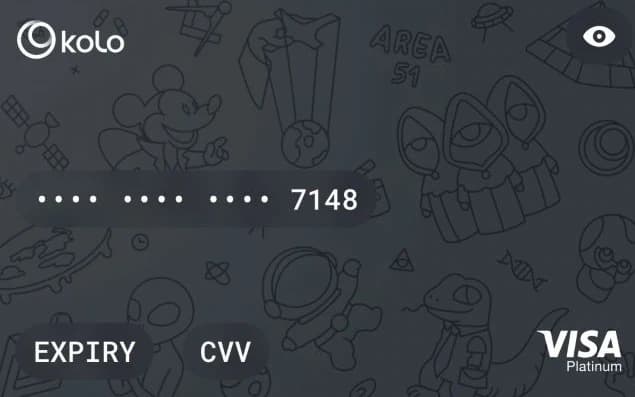
1. Kolo Card
Earn Bitcoin on Purchases: 2% for 30 Days, Then 1% (Capped) + Visa Platinum + 170+ Countries
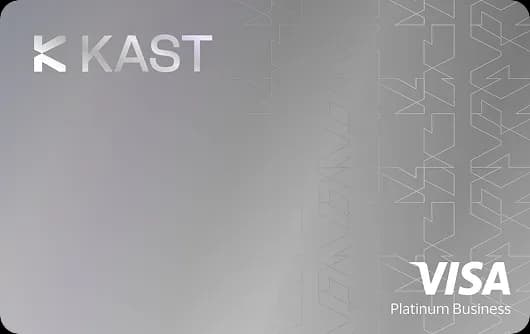
2. KAST K Card
Free USD Cashback: 1.5% on First $2K/Month
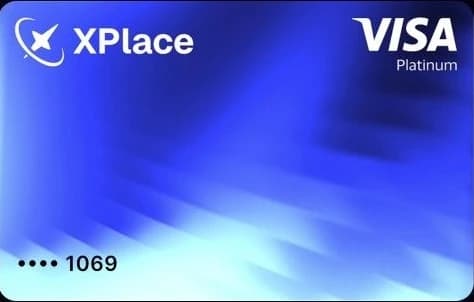
3. Xplace Basic Card
Free Visa Entry, with 10% Off a Paid Upgrade Using SPENDNODE
Complete list:
All 12 crypto cards available in Lebanon in October 2026
This table includes every crypto card we currently track for Lebanon. Rows marked Top pick are ranked and reviewed above.
| Crypto card | Max rewards | Annual fee | FX fee | Type | Custody |
|---|---|---|---|---|---|
1 Kolo CardTop pick | Up to 2% rewards | Free | 0% | Prepaid | Custodial |
2 KAST K CardTop pick | Up to 1.5% rewards | Free | 0.5% | Prepaid | Custodial |
3 Xplace Basic CardTop pick | Up to 0.5% rewards | Free | 1% | Crypto Backed Credit | Self-custody |
| Up to 8% rewards | Free | 0% | Debit | Custodial | |
| Up to 3% rewards | $10000 | 0.5% | Prepaid | Custodial | |
| Up to 2% rewards | $1000 | 0.5% | Prepaid | Custodial | |
| Up to 2% rewards | $999 | 0% | Crypto Backed Credit | Self-custody | |
| Up to 1.5% rewards | Free | 0.5% | Prepaid | Custodial | |
| Up to 1.5% rewards | $249 | 0.25% | Crypto Backed Credit | Self-custody | |
| Up to 1% rewards | $99 | 0.5% | Crypto Backed Credit | Self-custody | |
| cashback | Free | 0.5% | Prepaid | Custodial | |
| none | Free | 1% | Prepaid | Self-custody |
Crypto Card Regulation in Lebanon
Lebanon does not have a clear crypto regulatory framework because the state has spent the last six years failing to stabilize the banking system itself.
The Banque du Liban (BDL) issued Circular No. 13147 in 2014 warning banks and financial institutions against dealing in cryptocurrencies. The circular was a warning, not a prohibition on individual ownership or trading. No follow-up legislation has been passed. The Capital Markets Authority (CMA) has not classified cryptocurrencies as securities. The Special Investigation Commission (SIC) handles AML/CFT but has no crypto-specific directives.
The BDL itself faces allegations of operating the financial engineering scheme that contributed to the crisis. The banking sector remains largely insolvent.
In 2025, parliament passed banking reform legislation and amended banking secrecy laws - both prerequisites for the stalled IMF program. A financial gap law addressing the shortfall between deposits and bank assets was drafted in late 2025. The reforms represent progress on paper but have not yet returned a single dollar of frozen deposits to account holders.
In this context, regulating individual crypto usage is neither a priority nor practically enforceable. There is no individual-use prohibition and no dedicated licensing regime. The practical situation for Rami, Nadia, and Tarek: crypto card usage is unregulated, tolerated, and for many people the only functioning dollar rail available.
Tax Treatment of Card Rewards in Lebanon
Lebanon's tax system has been weakened by the economic crisis. The Ministry of Finance and the General Directorate of Taxation administer tax collection under the Income Tax Law (Legislative Decree No. 144, 1959, amended).
Income Tax
Lebanon applies a schedular tax system with different rates for different income types. Salaries: 2% to 25% (progressive). Business profits: 17% (flat). Investment income (interest, dividends): 10% (flat). VAT is 10%. Capital gains from property: 15%. The system does not specifically address crypto gains.
Practical Situation
The economic crisis has devastated tax collection. Government revenue collapsed alongside GDP (which shrank from approximately USD 55 billion in 2018 to under USD 20 billion). The informal economy has expanded massively. Tax enforcement on individual crypto activity is non-existent, and the Ministry of Finance has issued no crypto guidance.
| Cashback Type | Tax When Received | Tax When Spent/Sold | Optimal Strategy |
|---|---|---|---|
| BTC/ETH cashback | Unclear (likely untaxed) | Unclear (no framework) | Hold, track basis |
| Stablecoin cashback (USDC) | Not taxed (rebate) | Near-zero gain | Spend anytime |
| Points/token cashback | Unclear (likely untaxed) | Unclear (no framework) | Convert to stablecoin |
Stablecoin funding is the clear choice. In Lebanon's situation, the tax question is secondary to the fundamental need for accessible, unfrozen dollar holdings. USDC and USDT provide what the banking system cannot.
How to Apply from Lebanon
Crypto card applications from Lebanon require the Lebanese National ID Card (Bitaqa Hawiyya), issued by the General Directorate of Personal Status (al-Ahwal al-Shakhsiyya) under the Ministry of Interior. The ID contains a registry number tied to the family civil registry (Qaid al-Nufus).
Alternative identification: Lebanese passport (Jawaz Safar Lubnani), issued by the General Security (al-Amn al-Am). Lebanese driving license may be accepted by some issuers.
Proof of address via utility bills from Electricite du Liban (EDL, electricity), Ogero (landline/internet), or telecom bills from touch (MIC1) or Alfa (MIC2). Bank statements from Bank of Beirut, Byblos Bank, or Blom Bank also work, though bank statements may reflect frozen "Lollar" balances rather than actual accessible funds.
KAST and Kolo are the most accessible prepaid options for Lebanese users. Lebanese passports are well-recognized internationally. For the massive Lebanese diaspora (Brazil, Australia, France, US, Canada, West Africa, Gulf states), using host-country documents is strongly recommended for broader issuer access.
Spending Tips for Lebanon
The Three Dollar Rails
Lebanon's crisis created a multi-tier currency system that makes a simple concept - "how much is a dollar?" - impossibly complicated.
Rail 1: Lollar. Your SGBL, Byblos, or Blom Bank account says $50,000, but withdrawals remain restricted and the market values trapped deposits at a steep discount. Parliament passed banking reform legislation in 2025, and a proposed Deposit Recovery Fund would issue long-term bonds to depositors.
These measures have not restored ordinary access to banked dollars. Many Lebanese families with large USD balances have been unable to access most of their savings since 2019.
Rail 2: Fresh cash. Physical USD bills circulating at face value. The economy that Beirut runs on. Prices at Spinneys, Carrefour, restaurants in Gemmayzeh, hotels like Le Gray and the Phoenicia - all quoted in fresh dollars. Salaries at international organizations and NGOs are paid in fresh USD. The LBP floats around 89,000-89,500/USD, stable since mid-2023 but meaningfully worth nothing for savings purposes.
Rail 3: USDT. A digital dollar that cannot be frozen by a bank board, converts instantly from a diaspora wallet, and loads onto a card in minutes. This is what Nadia sends from Melbourne. This is what Tarek earns on Upwork. This is what a crypto card spends.
Cost of Living in the Fresh Dollar Economy
| Area | 1-Bed Rent/Month | Groceries/Month | Card-Eligible Spending |
|---|---|---|---|
| Beirut (Achrafieh/Gemmayzeh) | USD 400-900 | USD 200-400 | USD 400-800 |
| Beirut (Hamra/Ras Beirut) | USD 300-700 | USD 200-400 | USD 350-700 |
| Jounieh/Kaslik | USD 250-600 | USD 150-300 | USD 250-550 |
| Tripoli | USD 150-400 | USD 100-250 | USD 150-400 |
| Sidon/Saida | USD 150-350 | USD 100-200 | USD 150-350 |
Middle-class Beirut households spend USD 400-800/month in fresh dollars. At 1.5% USD cashback through KAST (under the $2K/month cap), that is $72-144/year, though KAST's reward is locked for a fortnight, redeemed by hand, and can only offset your next card spend rather than be cashed out.
Kolo's ongoing rate delivers $48-96 in BTC on the same spending band. The larger value is access to dollar-funded card spending without relying on a Lebanese bank card with restricted international functionality.
Cashback by Monthly Spend
All amounts are fresh USD, not Lollar. Figures are gross rewards before FX fees: KAST charges 0.5-1.75% and Kolo 0%. Kolo's 1% applies fully to purchases of $100 or less because each transaction is capped at $1 of cashback.
| Monthly Spend | KAST (1.5% USD, $2K/mo cap, $0) | Kolo (1% BTC, $0) |
|---|---|---|
| USD 200 | USD 36/yr | USD 24/yr |
| USD 400 | USD 72/yr | USD 48/yr |
| USD 800 | USD 144/yr | USD 96/yr |
| USD 1,500 | USD 270/yr | USD 180/yr |
Kolo's table values use the full 1% ongoing rate and therefore assume individual purchases of no more than $100; larger tickets earn less because cashback is capped at $1 per transaction.
How Diaspora Money Reaches Beirut
The 8-14 million Lebanese diaspora sends over $6 billion/year home. Here is how it actually moves:
| Channel | Cost on $500 | Speed | How It Works |
|---|---|---|---|
| USDT on Tron | Under $1 | Minutes | Sender buys USDT, sends to recipient wallet, loads card |
| OMT cash pickup | $15-35 (3-7%) | Hours | Cash pickup at OMT branch, recipient gets LBP or USD |
| Western Union | $15-35 (3-7%) | Hours | Cash pickup, similar to OMT |
| Bank wire | $25-50 + FX spread | Days | Arrives as Lollar in frozen account - worst option |
Nadia sends AUD 500/month from Melbourne. Through OMT, her parents receive roughly $465-485. Through USDT-to-KAST, her parents receive $500 in card balance with 1.5% USD cashback ($7.50/month, $90/year, under the $2K/month cap). Annual difference on the remittance fee alone: $180-420 kept instead of lost, plus $90/year in cashback earned.
For the diaspora in Brazil (7M+ Lebanese descent), Australia (250K+), France (250K+), the US (500K+), Canada (200K+), Gulf states (400K+), and West Africa (250K+), this math applies to every monthly transfer.
Mistakes That Cost Real Money
1. Sending money home via bank wire. Any USD that arrives in a Lebanese bank account becomes a Lollar - trapped, discounted, and subject to withdrawal limits. A $10,000 wire sent to a Lebanese bank in 2021 is now worth a fraction of that in accessible value. USDT sent to a wallet would have preserved the full amount outside the banking system.
2. Holding savings in LBP "because it stabilized." The lira has held around 89,000/USD since mid-2023, but that stability came after a 98% collapse. Any future shock - the war, a political crisis, a BDL policy change - could restart the slide. Rami keeps zero LBP beyond what he needs for the next 48 hours.
3. Using a Lebanese bank card for international purchases. Lebanese bank cards often have restricted international functionality and daily limits. Even when they work, the FX conversion runs through the bank at unfavorable rates. A crypto card funded with USDT bypasses the banking system entirely.
4. Not applying for a card while documents are current. Lebanon's General Security (passport authority) has processing backlogs. If your passport expires and renewal takes months, you may lose access to international card applications. Apply while documents are valid.
Card Selection by Use Case
- Fresh-dollar spending: KAST (1.5% USD cashback on first $2K/mo, $0, 0.5-1.75% FX)
- BTC savings: Kolo (1% ongoing BTC, 2% for 30 days, capped $100/mo and $1/txn, $0, 0% FX)
- Self-custody (freelancer USDC): xPlace (free Basic tier at 0.5% USDC in Credit Mode, capped $10/mo; paid tiers to 2%, capped monthly; Solana self-custody)
Local Payment Infrastructure
Beirut card acceptance has partially recovered post-crisis. Visa and Mastercard work at hotels (Le Gray, Four Seasons, Phoenicia InterContinental), restaurants in Gemmayzeh, Mar Mikhael, Hamra, and Achrafieh, supermarkets (Spinneys, Carrefour, Le Charcutier), and shopping centers (ABC Achrafieh, ABC Dbayeh, City Centre Beirut). Apple Pay and Google Pay work through international issuers.
Whish Money, OMT, and Bob Finance provide mobile payment and money transfer services. Outside Beirut, card acceptance is limited - Tripoli, Sidon, and Jounieh have some coverage at larger merchants, but most of the country runs on cash (USD and LBP). The March 2026 war has disrupted infrastructure in southern Lebanon and parts of the Bekaa Valley. Beirut's core commercial areas remain operational.
Supported Exchanges & Wallets in Lebanon
Who Spends in Beirut
Beirut's fresh-dollar economy supports several overlapping populations, all of which are natural crypto card users:
Tech and freelancers. The Beirut Digital District (BDD, Mar Mikhael) hosts startups and freelancers. Anghami (NASDAQ IPO) came from here. Lebanese developers on Upwork and Fiverr earn in USD and prefer to receive payment in USDT or USDC rather than route it through a bank. Tarek's profile is common - USDC income, crypto card spending, zero bank dependency.
NGO and international organizations. UNHCR (serving 1.5M Syrian refugees), UNICEF, WFP, MSF, ICRC, and dozens of international NGOs pay staff in fresh USD. Card-eligible budgets of USD 1,000-3,000/month. The war has expanded this presence further.
University graduates. AUB (founded 1866), LAU, USJ, USEK, and Balamand produce highly educated graduates. Many emigrate post-crisis (accelerating the brain drain), but those who stay work in tech, finance, or international organizations. Students and young professionals spending USD 200-500/month on subscriptions, dining, and online shopping are a natural demographic.
Dining and hospitality. Despite everything, Gemmayzeh and Mar Mikhael on Friday and Saturday nights see significant spending (USD 50-200 per outing). Spinneys, Carrefour, Zaatar w Zeit (30+ locations), Roadster Diner (15+ locations), and surviving hotels (Le Gray, Phoenicia, Four Seasons) cater to diaspora visitors and international organizations.
Cross-Border and Online Spending
Lebanon imports approximately 80% of its consumer goods. Online shopping has surged post-crisis: Amazon (via UAE forwarding), AliExpress, Shein, iHerb. International subscriptions (Netflix, Spotify, Adobe, Apple services) are billed in USD. Lebanese bank cards are often unreliable for international transactions - a crypto card may be the only consistent way to shop online.
Travel corridors: Turkey (medical tourism, Istanbul flights frequent and cheap, TRY weakness amplifies savings), Cyprus (short flight, some Lebanese relocated post-crisis), UAE (Dubai as business hub), Jordan (medical tourism in Amman), Europe (Paris and London for the professional diaspora).
How Money Gets In
No crypto exchanges are licensed in Lebanon. Binance P2P (USDT/USD and USDT/LBP pairs) is the primary on-ramp. Telegram and WhatsApp groups facilitate P2P trading in Hamra, Achrafieh, and Verdun. Rain (Bahrain-based) serves some Lebanese users.
For the diaspora, on-ramping happens in the host country: buy USDC on a local exchange in Sydney, Montreal, or Dubai, send to the recipient's wallet on Tron, and the recipient loads a card. No Lebanese banking system involved at any step.
What Comes Next
Lebanon's banking system promised that a dollar in the bank was a dollar. It was not. That betrayal - not inflation, not volatility, but the destruction of the idea that a deposit equals money you control - is what makes Lebanon's relationship with crypto different from most countries.
The March 2026 war added physical destruction on top of financial destruction. The Banking Sector Recovery Law passed in 2025 but has not returned a dollar of frozen deposits. The IMF program remains stalled. The proposed Deposit Recovery Fund with 40-year bonds is, for most depositors, indistinguishable from never getting the money back.
Against this, the stablecoin rail works. USDT transfers from Melbourne to Achrafieh in minutes. A card funded with USDC spends at any Visa terminal in Beirut. No bank intermediary. No Lollar conversion. No 40-year wait.
For Rami, Nadia, and Tarek, a crypto card is not a financial product. It is the answer to a question that every Lebanese person has been asking since October 2019: if the bank cannot be trusted with my dollars, what can?
Written by SpendNode Editorial
Frequently Asked Questions
Which crypto cards work in Lebanon?
Lebanon is served by Kolo, KAST, and xPlace. Kolo pays ongoing BTC rewards, KAST offers a free prepaid route, and xPlace's free Basic card pays 0.5% USDC in Credit Mode capped at $10/month, so it earns its place on self-custody rather than rewards. Card acceptance is strongest at hotels and larger merchants in Beirut.
Is cryptocurrency legal in Lebanon?
Lebanon has no specific crypto legislation. The Banque du Liban (BDL) issued a 2014 circular warning banks against crypto but did not ban individual ownership or trading. The banking crisis since 2019 has made the BDL's authority over personal financial choices largely irrelevant, and USDT adoption has surged as a dollar substitute.
How is crypto taxed in Lebanon?
Lebanon has no specific crypto tax legislation. The income tax system applies rates of 2-25% on various income categories. However, tax collection has been severely weakened by the economic crisis and institutional collapse. Crypto-specific enforcement is non-existent.
Why did Lebanon adopt crypto so quickly?
The banking crisis starting in October 2019 froze deposits, imposed unofficial capital controls, and devalued the lira from 1,507 to over 89,500 per USD (a 98% collapse). Banks became untrusted custodians overnight. USDT provided what banks could not: accessible, transferable dollar holdings outside the frozen banking system.
Other Countries
View all 112 countries →


Latest Page Changes to the Best Crypto Cards in Lebanon Guide
- xPlace cut the free Basic card's Credit Mode cashback to 0.5% USDC with a $10 monthly cap, effective September 14, 2026. We moved xPlace to the bottom of this page's rankings accordingly
- RedotPay removed from the recommended cards as it does not serve Lebanon