


Best Crypto Cards in Costa Rica (2026)
Compare 14+ crypto cards available in Costa Rica. No specific crypto tax legislation, digital nomad visa, and growing Bitcoin Beach-style communities.
Verified for Costa Rica
34 crypto cards available
Local currency: CRC
Costa Rica occupies a singular position in LATAM crypto adoption. The country's territorial tax system means foreign-source income - including most crypto gains from global exchanges - is generally not subject to income tax.
Combined with the Bitcoin Jungle community in Uvita (a functioning Bitcoin circular economy modeled on El Salvador's Bitcoin Beach), a digital nomad visa (Ley de Nomadas Digitales, 2022) that has attracted thousands of remote workers, and no explicit crypto ban, Costa Rica has become one of the most crypto-integrated countries in Latin America without any formal legislation.
Banco Nacional, BAC San Jose (BAC Credomatic), and Scotiabank Costa Rica debit cards earn zero cashback and charge 2-4% FX markup on non-CRC purchases. The colon (CRC) trades at approximately 510-520 CRC/USD, but the spread varies significantly between banks.
For international spending, subscriptions, and cross-border e-commerce, crypto cards provide FX fees from 0% to 1.75% plus cashback that Costa Rican banks cannot match. The dual-currency nature of the economy - tourist zones price in USD while residential areas use CRC - makes low-FX cards particularly valuable for residents who move between both pricing systems daily.
| Card | Max Cashback | Annual Fee | FX Fee | Card Type | Best For |
|---|---|---|---|---|---|
| Kolo | 5% BTC | $0 | 0% | Prepaid | Tax-free BTC stacking for nomads |
| Tria Signature | 4.5% | $109 | 0% | Debit | Self-custody yield on spending |
| Crypto.com Icy | 4% | CRO stake | 0% | Prepaid | Airport lounge perks at SJO/LIR + rebates |
| ether.fi | 3% | $0 | 1% | Debit | Borrow-to-spend, preserve ETH |
| MetaMask | 3% | $199 | 0% | Debit | Self-custody Mastercard |
| KAST | 2% | $0 | 0.5% | Prepaid | Quick setup for Bitcoin Jungle users |
| MetaMask Virtual | 1% | $0 | 1% | Debit | Free self-custody card |
| xPlace | 0.5-2% | $0 | 1% | Debit | Solana ecosystem |
| Avici | 0% | $0 | 0% | Credit | Crypto-backed credit |
| RedotPay | 0% | $0 | 1.2% | Prepaid | Stablecoin spending |
| Jupiter | 4-10% JupUSD | $0 | 1% | Debit | DeFi-native spending |
Ten card vendors serve Costa Rica through LATAM and GLOBAL coverage. Kolo at 5% BTC cashback with $0 annual fee and 0% FX delivers the highest free-tier return - in Costa Rica's territorial tax environment, all 5% is effectively pure profit. Tria Signature at 4.5% with self-custody and 0% FX suits users who prefer stablecoin yield over BTC exposure.
Crypto.com Icy at 4% adds Priority Pass lounge access at both Juan Santamaria (SJO) and Daniel Oduber Quiros (LIR) airports. KAST at 2% is the instant starter for Bitcoin Jungle users and newly arrived digital nomads.
Best Card For Every Need in Costa Rica
Top 4 Crypto Cards in Costa Rica
Costa Rica's territorial tax system means foreign-source crypto gains are likely exempt from income tax entirely - turning every cashback percentage point into pure profit with zero tax drag. Kolo at 5% BTC cashback with $0 annual fee and 0% FX is the strongest free-tier card for this environment, and the BTC rewards compound tax-free.
Tria Signature at 4.5% with self-custody appeals to nomads in Guanacaste and Uvita who prefer stablecoin yield over BTC volatility. KAST is the instant starter for Bitcoin Jungle's Lightning community and newly arrived digital nomad visa holders. MetaMask Virtual ranks high because Costa Rica's organically crypto-native culture values self-custody in a way that distinguishes it from most LATAM markets.
Crypto.com Icy at 4% covers both SJO and LIR with Priority Pass - important since Guanacaste-based nomads fly through Liberia, not San Jose.
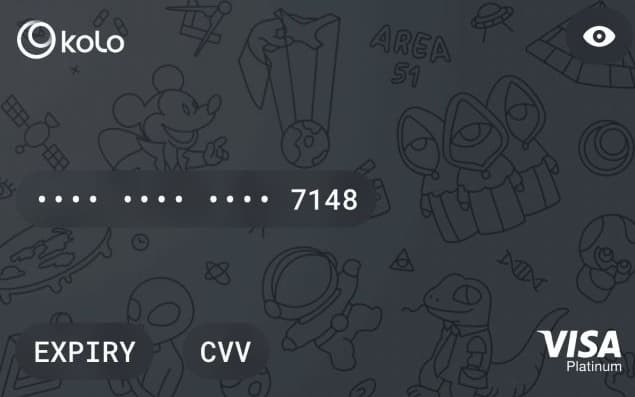
1. Kolo Card
Earn Bitcoin on Every Purchase: 5% BTC Cashback + Visa Platinum + 170+ Countries
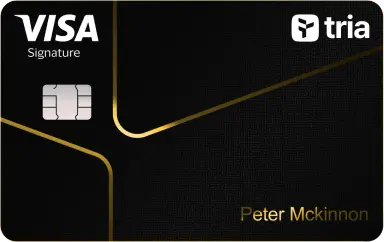
2. Tria Signature Card
High-Yield Mastery: 15% APY + Visa Signature Perks
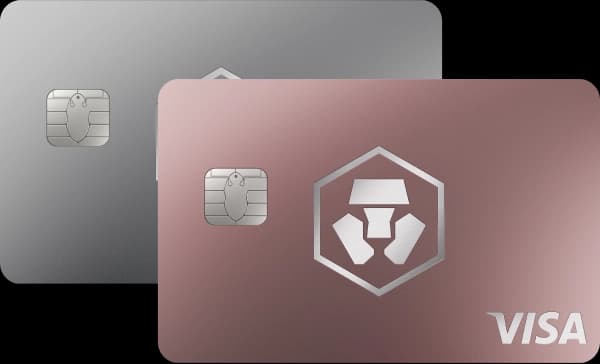
3. Private (Icy White / Rose Gold)
Elite Private Status: 4% Uncapped Cashback + Guests
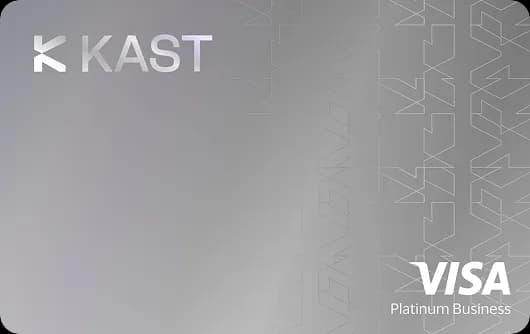
4. KAST K Card
Early Adopter Access: 2% Points + 4% $MOVE on Every Swipe
Crypto Card Regulation in Costa Rica
Costa Rica has no specific crypto legislation. The BCCR (Banco Central de Costa Rica) has stated crypto is not legal tender but has not banned individual ownership or trading. The SUGEVAL (Superintendencia General de Valores) oversees securities markets, and the SUGEF (Superintendencia General de Entidades Financieras) regulates financial institutions, but neither has issued comprehensive crypto frameworks.
The regulatory approach is permissive by default. Costa Rica's Ley de Nomadas Digitales (Digital Nomad Law, 2022) attracts remote workers who commonly use crypto, and the government has not moved to restrict this activity.
Bill 22.837, currently under legislative review, would formally bring Virtual Asset Service Providers (VASPs) under the AML/CFT framework by requiring SUGEF registration - notably a compliance checkpoint rather than a full operating license.
The CONASSIF (Consejo Nacional de Supervision del Sistema Financiero) has the authority to issue broader crypto guidance but has prioritized other financial stability measures. Bitcoin ETFs entered Costa Rica's banking system in 2025, signaling growing institutional acceptance.
The Bitcoin Jungle project in Uvita, Osa Peninsula, demonstrates grassroots crypto adoption at scale. Restaurants, surf shops, hotels, and local businesses accept Bitcoin/Lightning payments. This community emerged organically in 2021-2022, inspired by El Salvador's Bitcoin Beach. The government has not interfered.
Costa Rica's lack of crypto-specific regulation, combined with its territorial tax system and established crypto communities, creates a de facto permissive environment that has attracted significant crypto-native populations.
Tax Treatment of Card Rewards in Costa Rica
Costa Rica uses a territorial tax system administered by the DGT (Direccion General de Tributacion). Only Costa Rican-source income is taxed. Foreign-source income, including most crypto gains from global exchanges, is generally not subject to income tax. This is the single most important fact for Costa Rican crypto card users.
For domestic-source income, progressive rates apply: 0% up to CRC 4,181,000 annually, 10% from CRC 4,181,000-6,244,000, 15% from CRC 6,244,000-10,414,000, 20% from CRC 10,414,000-20,872,000, and 25% above CRC 20,872,000.
Example: You bought BTC on Binance (global exchange) at USD 30,000 and spent it through your card when BTC was at USD 90,000. The gain is from a foreign source. Under the territorial system, likely tax = CRC 0. However, if you mined BTC using Costa Rican electricity or earned crypto from a Costa Rican client, that income is likely Costa Rican-source and taxable.
| Cashback Type | When Received | When Spent via Card | Total Tax Burden |
|---|---|---|---|
| BTC cashback (foreign source) | Likely 0% | Likely 0% (foreign) | approx. 0% |
| BTC cashback (Costa Rican source) | Up to 25% | Up to 25% on gain | Up to 25% + 25% |
| USDC cashback | Likely 0% | approx. 0% (minimal gain) | approx. 0% |
We verified Costa Rica's territorial tax system as of 2026 - it remains the country's killer advantage. Foreign-source crypto gains are likely exempt from income tax. This means cashback is pure profit, and spending appreciated crypto from global exchanges carries no tax penalty. However, the DGT has not issued explicit crypto guidance. Consult a local tributarista (tax advisor) to confirm your specific situation.
How to Apply from Costa Rica
Costa Rican crypto card applications require a cedula de identidad (Costa Rican national ID card, 9 digits) for citizens, or a pasaporte plus DIMEX (Documento de Identidad Migratoria para Extranjeros) for foreign residents. Digital nomad visa holders use their passport plus the nomad visa documentation from the DGME (Direccion General de Migracion y Extranjeria).
Proof of Costa Rican address via recibo de servicios (utility bill from ICE for electricity/internet, AyA for water, or JASEC/CNFL for regional electricity), estado de cuenta (bank statement from Banco Nacional, BAC, Scotiabank, or Banco de Costa Rica), or contrato de arrendamiento (rental agreement, common for digital nomads).
Physical cards ship to Costa Rican addresses within 14-21 business days from international issuers. Virtual cards are available immediately for cards with Apple Pay and Google Pay use. Costa Rica's 95%+ internet penetration makes virtual card activation straightforward.
Spending Tips for Costa Rica
Banking System: Solid Infrastructure, International Limitations
Costa Rica's banking sector is among LATAM's most stable, backed by OECD candidacy (advanced stage) and high human development indicators. Banco Nacional (largest state-owned bank, 160+ branches) charges 2-3% FX markup on international purchases and maintains conservative international transaction limits.
BAC San Jose (BAC Credomatic, largest private bank in Central America) offers the best international connectivity but charges 2.5-4% on non-CRC transactions. Scotiabank Costa Rica provides Canadian-parent connectivity with 2-3% FX markups. Banco de Costa Rica (second state-owned bank) and Banco Popular (cooperative bank, largest by depositors) round out the major players.
The critical comparison: a BAC San Jose Visa on a USD 100 Amazon purchase costs approximately CRC 53,000-54,000 (including 2.5-4% FX spread). A crypto card at 0% FX converts at the Visa/Mastercard interbank rate, costing approximately CRC 51,500-52,000 (even cards at 1-1.75% FX undercut bank markups). Plus cashback. Over CRC 500,000/month (approx. USD 960) in international spending, the FX savings reach CRC 300,000-480,000/year - before any cashback.
Territorial Tax Strategy: Maximize Foreign Source
Costa Rica's territorial tax system transforms the crypto card value proposition. In most LATAM countries, spending crypto triggers capital gains tax at 15-40%. In Costa Rica, if your crypto was acquired on a global exchange and appreciated in value on that global exchange, the gain is foreign-source and likely exempt. This means:
- BTC bought on Binance/Coinbase, spent via card in Costa Rica: Likely 0% tax on the gain
- USDC purchased on any global exchange, spent via card: 0% gain + likely 0% tax
- Cashback received in crypto tokens: Likely 0% tax (foreign-source reward)
The result: Kolo at 5% BTC cashback is effectively 5% pure profit with no tax drag. In Colombia (39%) or Chile (40%), that same cashback could be reduced to 3-3.1% after tax on the receipt event. Tria Signature at 4.5% delivers similar tax-free returns with stablecoin yield instead of BTC exposure. Costa Rica's territorial system makes high-cashback cards dramatically more effective.
Card Selection by Use Case
- Highest free-tier: Kolo (5% BTC cards with cashback, $0, 0% FX)
- Self-custody yield: Tria Signature (4.5%, $109/yr, 0% FX)
- Premium perks: Crypto.com Icy (4% + airport lounge perks at SJO/LIR)
- Nomad starter: KAST (2%, $0, 0.5% FX)
- Self-custody Mastercard: MetaMask (1%, free)
- Crypto-backed credit: Avici (no disposal, Visa credit)
Break-Even Math: Kolo vs Tria Signature vs Crypto.com Icy
Territorial tax: foreign-source crypto gains likely zero tax. All cashback effectively pure profit. CRC amounts at approx. 515 CRC/USD.
| Monthly Spend | Kolo (5% BTC, free) | Tria Sig (4.5%, $109/yr) | Icy (4%, CRO stake) | KAST (2%, free) |
|---|---|---|---|---|
| CRC 400,000 ($776) | CRC 240,000/yr | CRC 160,000/yr | CRC 192,000/yr + lounges | CRC 96,000/yr |
| CRC 650,000 ($1,262) | CRC 390,000/yr | CRC 295,000/yr | CRC 312,000/yr + lounges | CRC 156,000/yr |
| CRC 1,000,000 ($1,942) | CRC 600,000/yr | CRC 484,000/yr | CRC 480,000/yr + lounges | CRC 240,000/yr |
| CRC 1,500,000 ($2,913) | CRC 900,000/yr | CRC 753,000/yr | CRC 720,000/yr + lounges | CRC 360,000/yr |
Kolo leads on raw cashback at every spending level, but rewards arrive in BTC (price-volatile). Tria Signature breaks even on its $109 (CRC 56,135) fee at CRC 104,000/month ($202). KAST is the better fit for new arrivals and Bitcoin Jungle users who want card spend live without a complex setup. Crypto.com Icy is compelling for frequent SJO/LIR travelers - lounge visits save CRC 12,500-20,000 each.
Cost of Living by Area
Escazu/Santa Ana (San Jose metropolitan upscale west): Rent CRC 500,000-1,500,000/month (USD 960-2,900). Multiplaza Escazu, CIMA Hospital district, and Avenida Escazu lifestyle complex have universal card acceptance. The expat epicenter - international schools (Country Day, Lincoln), upscale restaurants, and most foreign embassies. Highest card acceptance rate in Costa Rica.
Rohrmoser/La Sabana (San Jose upper-middle): Rent CRC 350,000-800,000/month. Lincoln Plaza, Sabana business district. Good card acceptance at restaurants along Paseo Colon and Boulevard de Rohrmoser. Growing coworking scene.
Heredia/San Pedro (university belt): Rent CRC 250,000-500,000/month. Near UCR (Universidad de Costa Rica) and UNA. Mall Oxigeno, Mall San Pedro. Card acceptance at chains and malls, but sodas (local eateries, CRC 3,000-5,000 for a casado) and ferias prefer cash.
Manuel Antonio/Quepos (Pacific coast): Rent CRC 400,000-1,200,000/month (tourist premium). Virtually all tourist-facing businesses accept cards and often price in USD. Restaurants, hotels, and tour operators have near-universal Visa/Mastercard acceptance. This is where the dual-currency economy is most visible.
Tamarindo/Nosara (Guanacaste): Rent CRC 500,000-1,500,000/month. Beach towns with heavy expat/digital nomad populations. USD pricing is standard. Card acceptance excellent at restaurants, surf shops, yoga studios. These towns have higher crypto adoption than San Jose due to the nomad demographic.
Puerto Viejo/Caribbean coast: Rent CRC 200,000-600,000/month. More bohemian, more cash-oriented than the Pacific coast. Small restaurants and Caribbean-style sodas prefer cash. Tourist lodges and mid-range restaurants accept cards. Bitcoin Jungle-style Lightning adoption has not reached the Caribbean side yet.
Bitcoin Jungle and the Crypto Community
Bitcoin Jungle in Uvita (Osa Peninsula, southern Pacific coast) is LATAM's most organic crypto circular economy. Unlike El Salvador's top-down Bitcoin mandate, Bitcoin Jungle emerged from the community - expats, surfers, local business owners who adopted Lightning Network payments voluntarily. The Tico Times, Costa Rica's English-language newspaper, has covered the project extensively.
Restaurants, hotels, tour companies, and even the local farmers market accept Bitcoin. The community has its own wallet (Bitcoin Jungle wallet) and merchant directory.
Beyond Uvita, Costa Rica's broader crypto community is concentrated in the GAM (Gran Area Metropolitana - San Jose, Escazu, Heredia) and Guanacaste beach towns. Meetups, hackathons, and crypto networking events happen monthly in San Jose. The country's combination of territorial tax, stable democracy, universal healthcare, and tropical climate has attracted a disproportionate share of crypto-native remote workers compared to its 5.2 million population.
Digital Nomad Visa
Costa Rica's Ley de Nomadas Digitales (2022) offers a 1-year renewable visa for remote workers earning USD 3,000+/month from foreign sources. Tax exemption on foreign income is built into the territorial system - nomad visa holders pay zero Costa Rican income tax on their remote earnings.
This creates a natural crypto card user base: people earning in USD/EUR/crypto, spending in CRC/USD locally, who benefit from low or 0% FX fees and cashback. The visa requires proof of income, health insurance, and clean criminal record. Processing time: 15-30 days through the DGME.
The Dual Currency Economy
Tourist areas (Manuel Antonio, Tamarindo, La Fortuna, Monteverde, Drake Bay) price in USD. Residential areas (San Jose, Heredia, Alajuela, Cartago) price in CRC. A crypto card denominated in USD works natively in tourist zones at exact parity. In CRC zones, the card network handles conversion at the interbank rate - still 2-4% better than what BAC San Jose or Banco Nacional charge on their own CRC-to-USD conversions.
For digital nomads moving between zones, the crypto card becomes the universal payment tool: USD pricing at the beach, CRC pricing in the Central Valley, zero FX friction in either direction.
Cross-Border Spending
Panama (direct flights and bus, 8-16 hours by road): Shopping destination at Multiplaza, Albrook Mall. Panama also uses USD (balboa pegged 1:1), so zero FX on crypto card. Nicaragua (Penas Blancas border): Common for business and family connections. Cordoba is weak - crypto card avoids unfavorable cambio rates.
US/Miami: The classic Central American shopping route. Direct flights from SJO and LIR (Liberia/Guanacaste). Colombia (growing tourism corridor): Direct flights SJO-BOG, SJO-MDE. Mexico (Cancun/CDMX): Vacation and business.
Online Shopping and Subscriptions
Netflix (CRC 4,200-11,700/month), Spotify, Amazon (shipped via Aeropost, Jetbox, or Box Correos - Miami forwarding services that are essential for Costa Rican online shoppers), iCloud, Google One, Steam, PlayStation Store. BAC San Jose and Banco Nacional charge 2-4% FX on these USD-denominated subscriptions. Amazon.com does not ship directly to Costa Rica for most items, making forwarding services a way of life. A crypto card eliminates the FX markup on these already-surcharge-heavy purchases.
Local Payment Infrastructure
Card acceptance is strong in the GAM (Gran Area Metropolitana) and tourist areas. Contactless Visa/Mastercard works at malls (Multiplaza, Lincoln Plaza, City Mall), supermarkets (Auto Mercado, Walmart/MasxMenos, PriceSmart), pharmacies (Fischel, La Bomba), and modern restaurants.
SINPE Movil (central bank mobile payment system) dominates domestic P2P transfers - 4M+ registered users on a 5.2M population. It connects all banks but does not support crypto. Sodas (local restaurants serving casados for CRC 3,000-5,000) and ferias del agricultor (Saturday farmers markets) remain cash-heavy. Apple Pay and Google Pay work at major retailers.
Supported Exchanges & Wallets in Costa Rica
Ten card vendors serve Costa Rica through LATAM and GLOBAL coverage. The territorial tax system makes Costa Rica uniquely valuable for high-cashback cards - no tax drag means maximum yield retention.
Kolo delivers the highest free-tier return at 5% BTC cashback with $0 annual fee and 0% FX. For Bitcoin Jungle community members already accumulating sats, Kolo's BTC rewards align naturally with the Lightning-first culture.
Tria Signature at 4.5% with self-custody offers stablecoin yield for nomads who prefer predictable returns. Both cards have 0% FX, eliminating any CRC-to-USD conversion drag.
Crypto.com offers the most structured tier system. The Icy White at 4% adds Priority Pass airport lounge access at both Juan Santamaria (SJO) and Daniel Oduber Quiros (LIR) airports - valuable for Guanacaste-based nomads flying through Liberia.
KAST is the cleanest prepaid starter at 2% cashback and $0 annual fee, suited for Bitcoin Jungle community members and new digital nomad visa arrivals.
ether.fi Core at 3% with 1% FX provides borrow-against-staked-ETH functionality. While Costa Rica's territorial system already minimizes tax, ether.fi's yield-bearing deposits make it attractive for ETH holders who want spending liquidity without selling.
MetaMask at 1% provides free self-custody spending - control your keys, spend at any Visa/Mastercard terminal. xPlace targets Solana ecosystem users. Jupiter enables DeFi-native spending from the Jupiter aggregator.
On-Ramps: P2P and Regional Exchanges
Binance P2P is Costa Rica's primary crypto on-ramp. CRC pairs are available with payment via Banco Nacional, BAC, or SINPE Movil transfers. Spreads are typically 2-3% above spot - tighter than most Central American markets but wider than Colombia or Mexico. Bitso (Mexico-founded, LATAM's largest exchange) has expanded Central American coverage, offering an alternative to P2P for users who prefer exchange-style order books.
Local crypto adoption is concentrated in two communities: the Bitcoin Jungle ecosystem in Uvita (Lightning-native, Bitcoin-focused) and the GAM tech community in San Jose/Escazu (more Ethereum/DeFi-oriented). Both communities use global exchanges for on-ramping, with SINPE Movil-to-exchange transfers as the most common fiat bridge.
A digital nomad in Tamarindo spending CRC 800,000/month ($1,553) on Kolo at 5% BTC cashback accumulates CRC 480,000/year ($932) in tax-free BTC rewards - enough to cover two months of groceries at Auto Mercado. For a Guanacaste-based remote worker flying through LIR monthly, Crypto.com Icy adds lounge access worth CRC 150,000-240,000/year on top of 4% cashback. Costa Rica's territorial tax system turns every cashback point into pure profit that no BAC San Jose credit card can match.
Written by SpendNode Editorial
Frequently Asked Questions
Is crypto taxed in Costa Rica?
Costa Rica uses a territorial tax system - foreign-source income is not taxed. Most crypto gains from global exchanges are likely foreign-source and untaxed. Bill 22.837 would formalize VASP registration under SUGEF but does not change tax treatment. Consult a local tributarista for your specific situation.
Which crypto card is best for Costa Rica?
Kolo (5% BTC cashback, $0 annual fee, 0% FX) is the strongest free option. Tria Signature (4.5%, $109/yr, 0% FX) offers self-custody stablecoin yield. Crypto.com Icy (4%, CRO stake) adds Priority Pass at both SJO and LIR airports. All cashback is likely tax-free under the territorial system.
What is Bitcoin Jungle?
Bitcoin Jungle is a grassroots Bitcoin adoption project in Uvita, Costa Rica, similar to Bitcoin Beach in El Salvador. Local businesses accept Bitcoin via Lightning Network. It demonstrates organic crypto adoption in a tourist community.
Does Costa Rica have a digital nomad visa?
Yes. The Ley de Nomadas Digitales (2022) offers a 1-year renewable visa for remote workers earning $3,000+/month from foreign sources. Tax exemption on foreign income makes it attractive for crypto users.
Other Countries
View all 108 countries →


Recent Updates to Best Crypto Cards in Costa Rica
- Removed COCA (unavailable) and Ledger CL (unavailable) from table, recommendations, and all editorial sections
- Added Kolo (5% BTC, $0, 0% FX) and Tria Signature (4.5%, $109, 0% FX) as new top picks alongside Crypto.com Icy (4%)
- Added Bill 22.837 VASP registration proposal and Bitcoin ETF banking entry (2025) to regulatory section
- Fixed KAST FX from 0.5-1.75% to 0.5%, ether.fi fee from Points to $0 and FX from 0% to 1%, Crypto.com generic 5% to Icy 4%
- Rebuilt break-even table with CRC amounts at local spending levels comparing Kolo, Tria Signature, Icy, and KAST