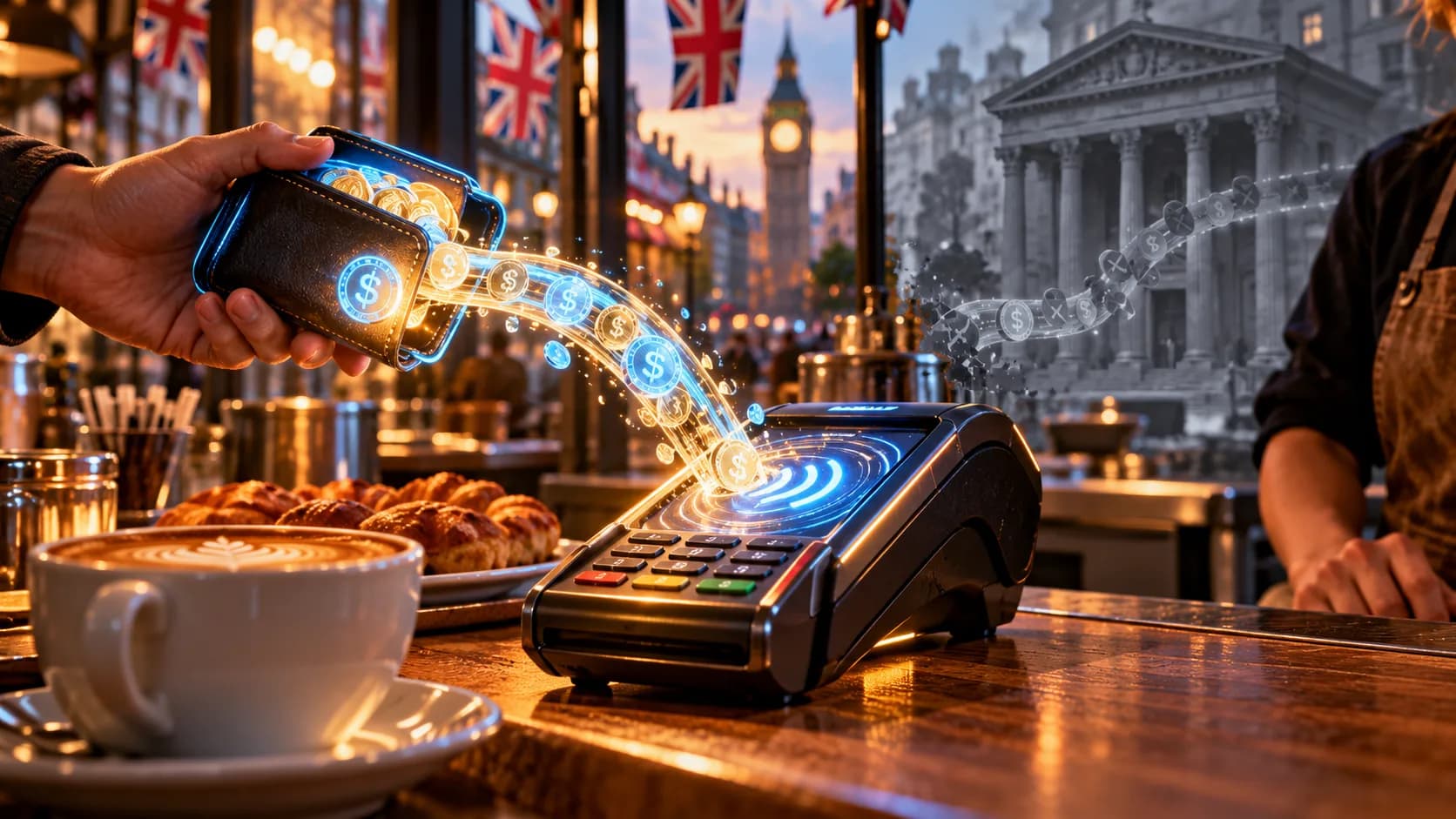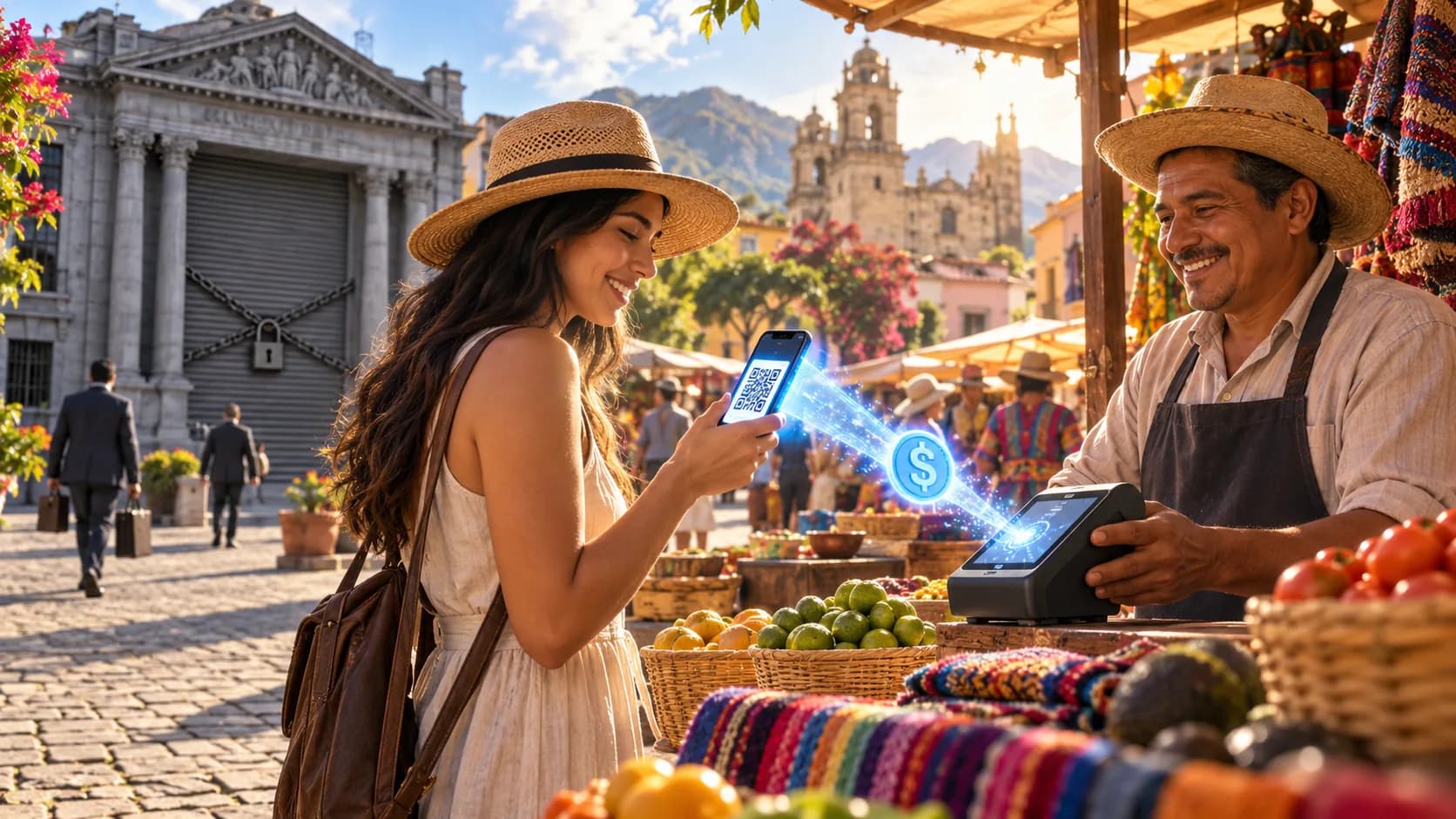
KuCoin has turned on its Scan & Pay feature for everyday purchases in Brazil, Argentina, and Peru, letting users settle a merchant bill directly from a crypto balance instead of converting to local currency through a bank first. The company announced the rollout on its official X account on September 8, 2026, framing it around a familiar friction point: selling USDT and waiting on a bank transfer before you can actually spend.
Scan & Pay sits inside KuCoin Pay, the exchange's merchant payments layer. A user scans a merchant QR code and pays from a USDT balance held in the app, with the conversion handled at the point of sale. For the three launch markets, that turns a multi-step cash-out into a single scan.
Three markets with real dollarization demand
The choice of Brazil, Argentina, and Peru is not random. All three have large populations already holding dollar-pegged stablecoins as a savings and payment habit, and Argentina in particular has leaned on USDT as an inflation hedge for years. Letting people spend that balance at a checkout, rather than routing it back through a peso or real bank account, removes the step where fees and delays usually pile up.
For a shopper in Argentina, the pitch is straightforward: a USDT balance becomes spendable without a bank as intermediary. The same applies in Brazil, where QR-based payment via Pix is already the national default, and in Peru, where digital wallet adoption has climbed steadily.
The launch incentives, read plainly
KuCoin paired the rollout with promotions: a First Scan bonus of up to $8 in welcome packages on a payment of $10 or more, a Power-Up Challenge offering VIP mystery boxes up to $888 USDT for three or more scans totaling $500, and a separate 100 USDT social giveaway. These are acquisition offers, not permanent economics. The lasting change is the payment rail itself, not the sign-up sweeteners, and readers should treat the bonus figures as time-limited campaign terms rather than a standing rate.
Scan-to-pay versus a card
Scan & Pay is not a card product. It works where a merchant displays a compatible QR code, which favors regions where QR payments are already routine. That is a real limitation compared with a Visa or Mastercard debit product that works at any terminal, including the pre-authorization holds at gas stations and hotels that QR flows sidestep entirely.
KuCoin also runs a separate card, the KuCard Visa debit, for users who want tap-to-pay acceptance rather than QR scanning. The two serve different moments: the card for broad terminal coverage, Scan & Pay for direct stablecoin settlement in markets where QR is the norm. Anyone weighing KuCoin's payment options should match the tool to where they actually spend.
One cost note worth keeping in view: even a direct USDT payment is rarely free. The conversion spread applied at the point of sale is where the real charge tends to sit, so a "no bank" payment is not automatically a no-cost one.
Overview
KuCoin has extended Scan & Pay to Brazil, Argentina, and Peru, giving users in three high-demand stablecoin markets a way to pay merchants directly from a USDT balance via QR code. The feature removes the sell-to-bank step but depends on QR acceptance and carries a conversion spread at checkout. The launch bonuses are temporary; the payment rail is the durable part. For everyday spending, it complements rather than replaces KuCoin's Visa debit card, which covers standard card terminals.