
Best Staking Crypto Cards 2026
Cards that reward you for staking tokens. Compare yield-linked tiers, APY bonuses, and staking requirements across verified issuers.
Featured

Card staking locks your crypto tokens to unlock premium card tiers with higher cashback, lounge access, and subscription rebates. You earn dual returns: staking yield on the locked tokens plus enhanced card benefits on every purchase.
The gap between smart and reckless staking is enormous. A $500 CRO stake on Crypto.com Ruby earns 2% cashback plus $168/year in Spotify rebates, yielding 34% effective return on the stake at $3,000/month spending. A $50,000 CRO stake on Crypto.com Icy White earns the same Spotify rebate plus Netflix, adding only $186/year extra on 100x the capital. At the low end, staking is brilliant. At the high end, it is a token bet dressed as a card perk.
Top 9 Staking Cards
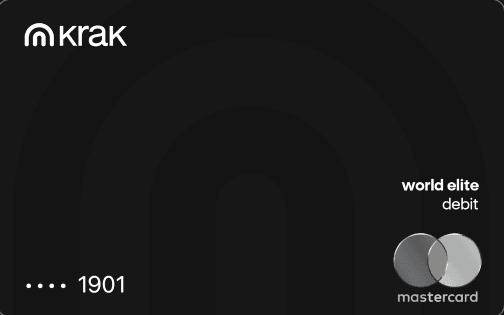
1. Krak Mastercard
Transparent Spending: Mid-Market Rates + 1% Back

2. Plus (Ruby Steel)
Entry-Level Staking: $500 Stake + 2% Cashback
3. COCA Visa Card
Self-Banking: 8% Cashback + 6% APY + 0% FX on Direct Pairs
4. Gemini Credit Card: Solana Edition
Auto-Staked SOL Rewards: 4% Category Cash Back + ~6% Staking Yield
5. Plutus Visa Card
Your Daily Driver for 3% to 9% Cashback

6. Gnosis Pay Card
Your Keys, Your Card, Your Money

7. Tria Premium Card
Ultimate Web3 Luxury: 6% Cashback + Zero ATM Fees

8. ether.fi Core Card
Zero Barriers: 3% Back on Every Purchase, No Stake Required
9. Nexo Dual Card
Hybrid Spend Mastery: 2% Rewards + 3.6% APY Balance
Three Numbers That Matter
172% effective yield - According to SpendNode data, Crypto.com Ruby ($500 CRO stake) generates $858/year in combined staking yield, cashback, and Spotify rebate at $3,000/month spending. The best risk-adjusted staking deal in crypto cards.
5.2 years to recover - If CRO drops 50% while you hold the Icy White stake ($50,000), it takes 5.2 years of card benefits to break even. At Ruby ($500), recovery takes just 3.5 months. Stake size determines risk.
Up to 3.6% via Krak Vaults (UK only) - Kraken offers up to 3.6% APY through Krak Vaults with no lockup and no token risk (25% performance fee). The card itself charges 0% fees with 1% cashback. Available to EEA/UK residents; Vaults are UK only.
Three Types of Card Staking
The market has split into three models: token lockup staking (Crypto.com, Plutus), yield products (Kraken via Krak Vaults UK only, COCA, Nexo), and auto-staking on rewards (Gemini Solana).
Complete Staking Comparison
| Card | Staking Model | Lock Requirement | Yield/APY | Cashback | Annual Fee | Region |
|---|---|---|---|---|---|---|
| CRO Ruby | CRO lockup | $500 / 12 months | ~6% on CRO | 2% | $60/yr or stake | Global |
| CRO Royal Indigo | CRO lockup | $5,000 / 12 months | ~6% on CRO | 3% | $360/yr or stake | Global |
| CRO Icy White | CRO lockup | $50,000 / 12 months | ~6% on CRO | 4% | Stake only | Global |
| CRO Obsidian | CRO lockup | $500,000 / 12 months | ~6% on CRO | 5% | Stake only | Global |
| CRO Prime | CRO lockup | $1,000,000 / 12 months | ~6% on CRO | 8% | Stake only | Global |
| Kraken | Balance yield (Vaults) | $0 (no lockup) | Up to 3.6% via Vaults (UK only) | 1% | $0 | EEA/UK |
| COCA | Balance yield | Hold COCA tokens | 6% on stablecoins | Up to 8% | $0 | Global |
| Nexo | Loyalty levels | Hold NEXO tokens | Varies by level | Up to 2% | $0 | EEA/UK |
| Gemini Solana | Auto-stake rewards | $0 | ~6% on SOL rewards | 4% category | $0 | US |
| ether.fi Core | Points system | Free (earn points) | Points to ETHFI | 3% | $0 | Global |
| ether.fi Luxe | Points system | 10K points | Points to ETHFI | 3% | $0 | Global |
| Plutus | PLU lockup | 1-40,000 PLU | Extra perk slots + higher cashback | 3-9% | GBP 6.99-19.99/mo | EEA/UK |
| Binance | BNB holding | BNB VIP levels | N/A | Up to 2% | $0 | Brazil |
| Gnosis Pay | GNO staking (optional) | OG NFT or GNO holding | N/A | Up to 5% | $0 | EEA |
| Tria Signature | Yield-linked | $109/yr | Up to 15% APY | 4.5% | $109 | Global |
| Tria Premium | Yield-linked | $250/yr | Up to 15% APY | 6% | $250 | Global |
Quick picks: Kraken for zero-lockup yield (up to 3.6% APY via Krak Vaults, UK only; card available EEA/UK). Crypto.com Ruby for the best low-stakes tier unlock ($500 CRO for Spotify rebate). COCA for the highest balance yield (6% APY on stablecoins with self-custody). Gemini Solana for passive compounding (auto-stake 4% SOL rewards at ~6% yield).
How Token Lockup Staking Works
Crypto.com CRO Staking (Step by Step)
- Purchase CRO tokens on the Crypto.com exchange or app
- Navigate to the Card section and select your target tier (e.g., Ruby = $500 CRO)
- Lock the CRO for a 12-month period. The tokens cannot be withdrawn during this time
- Your card tier activates immediately: cashback rate increases, rebates unlock
- CRO staking yield (~6% APY) accrues weekly, paid in CRO to your wallet
- After 12 months, you can unstake or re-lock. Unstaking immediately downgrades your tier
- If you chose subscription instead ($4.99/mo for Ruby), you skip staking but get no yield
Edge cases: If CRO drops below the tier threshold during your lockup, your tier stays active until the lockup expires. You do not need to top up. If you unstake at the end and CRO has dropped, you receive fewer dollars than you locked but the same number of CRO tokens.
Yield on Balances (No Lockup)
Kraken (UK only, via Krak Vaults), COCA, and Nexo offer yield without any lockup period. COCA and Nexo pay yield on card/stablecoin balances. Kraken requires depositing into a separate Vault product.
- Kraken: Up to 3.6% APY via Krak Vaults (UK only, 25% performance fee). Deposit into Vault required - not earned on card balance directly. Card available EEA/UK
- COCA: 6% APY on stablecoin deposits. Self-custody wallet. No lockup. Global
- Nexo: Variable yield based on NEXO loyalty level (Base to Platinum). Dual credit/debit modes
The key difference: lockup staking gives you higher card tiers. Balance yield gives you passive income without tier upgrades.
The Dual ROI Framework
Card staking generates returns from two sources simultaneously. The "effective yield" is much higher than the staking APY alone.
Formula: (Staking APY x Staked Amount) + (Enhanced Cashback x Annual Spend) + (Rebate Value) = Total Annual Return
| Tier | Stake | Staking Yield (6%) | Cashback at $3K/mo | Rebates | Total Annual Value | Effective Yield on Stake |
|---|---|---|---|---|---|---|
| Ruby (sub) | $0 | $0 | $720 (2%) | $168 (Spotify) | $828 | N/A (no stake) |
| Ruby (stake) | $500 | $30 | $720 (2%) | $168 (Spotify) | $858 | 172% |
| Royal Indigo (stake) | $5,000 | $300 | $1,080 (3%) | $354 (Spotify+Netflix) | $1,734 | 35% |
| Icy White | $50,000 | $3,000 | $1,440 (4%) | $354 | $4,794 | 9.6% |
| Obsidian | $500,000 | $30,000 | $1,800 (5%) | $534 | $32,334 | 6.5% |
| Kraken (no stake) | $0 | Up to 3.6% via Vaults (UK only) | $360 (1%) | $0 | $360 + UK Vault yield | N/A |
| COCA (no stake) | $0 | 6% on stablecoins | $1,080 (3%) | $390 | $1,470 + yield | N/A |
Key insight: Ruby via subscription ($4.99/mo) delivers $828/year with zero token risk. Ruby via stake delivers $858/year but with $500 in CRO exposed to price swings. The extra $30/year from staking yield is not worth the token risk for most users. However, at the Royal Indigo tier, staking yield ($300/year) starts to matter.
Worked Examples at Three Spending Levels
Low Spender: $1,000/month
| Component | CRO Ruby (Sub) | Kraken | COCA (300 COCA) |
|---|---|---|---|
| Annual cashback | $240 (2%) | $120 (1%) | $360 (3%) |
| Staking yield | $0 | Up to 3.6% via Vaults (UK only) | 6% on stablecoins |
| Subscription rebates | $168 (Spotify) | $0 | $390 (50% off 5 services) |
| Card cost | -$60/yr | $0 | $0 (hold 300 COCA) |
| Net annual value | $348 | $120 + yield | $750 + yield (COCA risk) |
At $1,000/month, COCA dominates if you accept COCA token risk. Without token risk, CRO Ruby via subscription wins at $348/year.
Medium Spender: $3,000/month
| Component | CRO Royal Indigo (Stake) | COCA Premium (5K COCA) | Kraken + Gemini SOL |
|---|---|---|---|
| Annual cashback | $1,080 (3%) | $1,800 (5%) | $360 + $1,440 = $1,800 |
| Staking yield | $300 (6% on $5K) | 6% on stablecoins | Up to 3.6% Vault (UK only) + 6% on SOL rewards |
| Subscription rebates | $354 (Spotify+Netflix) | $390 (5 services) | $0 |
| Token at risk | $5,000 CRO | 5,000 COCA | $0 |
| Net annual value | $1,734 (+ CRO risk) | $2,190 (+ COCA risk) | $1,800 + yield (no token risk) |
At $3,000/month, COCA Premium generates $2,190/year but requires holding 5,000 COCA tokens. The zero-token-risk alternative is splitting spend between Kraken (0% fees, 1% cashback; yield via Vaults UK only) and Gemini Solana (4% category cashback with auto-staked SOL, US only).
High Spender: $8,000/month
| Component | CRO Icy White ($50K stake) | COCA Elite (25K COCA) | Wirex Elite (no stake) |
|---|---|---|---|
| Annual cashback | $3,840 (4%) | $7,680 (8%) | $7,680 (8%) |
| Staking yield | $3,000 (6% on $50K) | 6% on stablecoins | $0 |
| Subscription rebates | $354 | $390 | $0 |
| Lounge access | Unlimited + guest | None | None |
| Token at risk | $50,000 CRO | 25,000 COCA | $0 |
| Card cost | $0 (stake-only) | $0 | $360/yr |
| Net annual value | $7,194 (+ CRO risk) | $8,070 + yield (COCA risk) | $7,320 (no risk) |
At $8,000/month, pure cashback on Wirex Elite ($7,320/year, zero token risk) competes with staking cards. Crypto.com Icy White adds $3,000 in staking yield plus lounge access, but puts $50,000 at risk. The staking yield must cover potential token drops. See the high-spender guide for the full multi-card strategy.
Gemini Solana: The Compounding Loop
Gemini Solana Edition is the only card that automatically compounds your rewards. Here is how the math works over 3 years at $2,000/month spending:
| Year | Annual Spend | 4% SOL Rewards | ~6% Auto-Stake Yield | Cumulative SOL Held | Total Value (if SOL stable) |
|---|---|---|---|---|---|
| Year 1 | $24,000 | $960 | $29 | $989 | $989 |
| Year 2 | $24,000 | $960 | $88 | $2,037 | $2,037 |
| Year 3 | $24,000 | $960 | $150 | $3,147 | $3,147 |
Over 3 years, the auto-staking yield adds $267 on top of $2,880 in base rewards. The compounding is modest at low balances but grows meaningfully over time. The catch: you are accumulating SOL, so if SOL drops 50%, your $3,147 becomes $1,574. This strategy is best for users who are long-term bullish on Solana. US only, $0 annual fee.
Token Volatility Risk: The Staking Trap
The biggest risk in card staking is not the lockup period. It is the token price moving against you while you cannot sell.
| Tier | Stake | Scenario: Token -30% | Scenario: Token -50% | Annual Card Value | Years to Recover -50% |
|---|---|---|---|---|---|
| Ruby | $500 | -$150 | -$250 | $858 | 0.3 years |
| Royal Indigo | $5,000 | -$1,500 | -$2,500 | $1,734 | 1.4 years |
| Icy White | $50,000 | -$15,000 | -$25,000 | $4,794 | 5.2 years |
| Obsidian | $500,000 | -$150,000 | -$250,000 | $32,334 | 7.7 years |
| Plutus (Hero 2K PLU, 4%) | Varies | -30% of PLU value | -50% of PLU value | GBP 480/yr extra perks | Depends on PLU price |
The Ruby exception: SpendNode's annual cost calculation confirms that at $500, a 50% CRO drop costs $250. The card generates $858/year in total value. You recover the loss in 3.5 months. This is why Ruby is the only tier where staking genuinely makes sense for most users. At every higher tier, the recovery period stretches to years.
The Subscription vs. Staking Decision
Crypto.com offers both subscription and staking paths to the same tiers. The choice depends on your CRO outlook.
| Tier | Subscription Cost | Stake Amount | Staking Yield | Subscription Saves if CRO Drops | Staking Wins if CRO Rises |
|---|---|---|---|---|---|
| Ruby | $60/yr ($4.99/mo) | $500 CRO | $30/yr | CRO drops > 6% | CRO rises > 6% |
| Royal Indigo | $360/yr ($29.99/mo) | $5,000 CRO | $300/yr | CRO drops > 1.2% | CRO rises > 1.2% |
| Icy White | N/A (stake only) | $50,000 CRO | $3,000/yr | N/A | N/A |
Decision rule: If you expect CRO to drop more than 6% (Ruby) or 1.2% (Royal Indigo) during the 12-month lockup, choose the subscription. If you are bullish on CRO, stake. At the Icy White tier and above, there is no subscription option: you must stake or use a different card.
Tax Treatment of Staking Rewards
United States (IRS)
Staking rewards are taxed as ordinary income at fair market value when received. If you receive $30 in CRO staking yield, you owe income tax on $30 at your marginal rate. If you later sell the CRO at a higher price, you owe capital gains tax on the appreciation. At a 24% marginal rate, your $300/year Royal Indigo staking yield nets $228 after tax.
European Union
Treatment varies significantly by country:
| Country | Staking Reward Tax | Capital Gains on Staked Tokens | Notes |
|---|---|---|---|
| Germany | Income tax at receipt | Tax-free after 1-year hold | Extended 10-year rule removed |
| Portugal | 0% (personal) | 28% if held < 1 year | Favorable for stakers |
| France | 30% PFU (flat tax) | Included in PFU | Simple but high rate |
| Slovenia | 0% until 2026 | 0% until 2026 | Transitional period |
| Luxembourg | Income tax | Tax-free after 6 months | Shortest hold period in EU |
See the tax-conscious guide and individual country pages for jurisdiction-specific rules.
Five Mistakes with Card Staking
Mistake 1: Staking $50,000 for $354/Year in Rebates
Crypto.com Icy White gives Spotify + Netflix rebates worth $354/year on a $50,000 CRO stake. That is a 0.7% return from rebates alone. A 5% savings account on $50,000 earns $2,500/year. Only stake at the Icy tier if the combined value (4% cashback + lounges + staking yield + rebates) justifies the token risk at your spending volume.
Mistake 2: Ignoring the Subscription Alternative
Crypto.com Ruby via subscription ($4.99/month) gives you the same 2% cashback and Spotify rebate as the $500 CRO stake, with zero token risk. The subscription costs $60/year. The staking yield on $500 CRO is only $30/year. You pay $30/year more in subscription fees than you earn in staking yield, but you eliminate all downside risk.
Mistake 3: Not Selling Staking Rewards Immediately
CRO staking yield is paid weekly in CRO. If CRO drops 20% between payment and sale, your $300/year yield becomes $240/year. Over 3 years, that is $180 lost. Convert staking rewards to stablecoins the day you receive them unless you have a specific thesis on CRO appreciation.
Mistake 4: Comparing Staking APY Without Total Cost
Tria Premium advertises up to 15% APY but costs $250/year. Kraken offers up to 3.6% APY via Krak Vaults (UK only, 25% performance fee). On a $5,000 balance, Tria yields $750 minus $250 fee = $500 net. Kraken Vault yields approx. $135 net (2.7% after performance fee) with $0 card fees. Tria wins on yield, but you must verify the 15% rate is consistently achievable and factor in the annual fee. Always calculate net yield after all fees.
Mistake 5: Locking Up Tokens at All-Time Highs
If CRO is at an all-time high and you stake $5,000, a 60% correction (common in crypto) costs $3,000 while your annual card value is $1,734. You need 1.7 years of full card benefits to break even. Stake during bear markets when token prices are low. Your dollar amount buys more tokens, and the upside potential is higher.
Three Staking Sub-Types Explained
1. Token Lockup Staking (Crypto.com, Plutus)
Lock native tokens for a fixed period (typically 12 months) to unlock higher card tiers. You earn staking yield on the locked tokens AND enhanced card benefits. Risk: token price drops while locked.
Best for: Users who believe in the platform's token and want maximum card benefits. Cards: Crypto.com (CRO), Plutus (PLU for extra perk slots), Gnosis Pay (GNO for higher cashback).
2. Balance Yield (Kraken, COCA, Nexo)
Earn interest on your card balance or stablecoin deposits without locking anything. No tier upgrades, just passive income on funds you plan to spend. Risk: platform/smart contract risk only (no token price risk if using stablecoins).
Best for: Users who want yield without token exposure. Cards: Kraken (up to 3.6% APY via Vaults, UK only; card EEA/UK), COCA (6% APY, self-custody), Nexo (variable, loyalty-based).
3. Auto-Staking on Rewards (Gemini Solana)
Your cashback rewards are automatically staked to earn additional yield. Gemini Solana Edition pays 4% category rewards in SOL, then auto-stakes the SOL at ~6% yield. You earn rewards on your rewards.
Best for: US users who want compounding returns and are bullish on Solana. The auto-staking creates a compounding loop: spend, earn SOL, SOL earns yield, yield earns more SOL.
Card Selection by Use Case
Zero Token Risk
Kraken (up to 3.6% APY via Krak Vaults UK only, 1% cashback, 0% FX, $0 annual fee, EEA/UK). No staking required. No token exposure. UK users earn yield via Vaults; EEA users get 0% fees + 1% cashback without yield.
Best Entry-Level Stake
Crypto.com Ruby via $500 CRO stake. The lowest-risk tier unlock in the market. 2% cashback + Spotify rebate + ~6% staking yield. Recovers a 50% token drop in under 4 months of card usage.
Highest Balance Yield with Self-Custody
COCA (6% APY on stablecoins, up to 8% cashback, 50% off subscriptions, non-custodial). The most complete yield-plus-card package with self-custody security.
US Residents: Compounding Rewards
Gemini Solana Edition (4% category rewards auto-staked in SOL at ~6% yield). The only card that automatically compounds your cashback into staking returns with zero manual action.
Europeans Who Want Staking Perks
Plutus (PLU staking for extra perk slots) + Gnosis Pay (GNO holding for up to 5% cashback). Both are EEA/UK-native. Gnosis Pay has 0% FX; Plutus now charges 2.5% on non-domestic transactions.
High Spenders with Conviction
Crypto.com Royal Indigo ($5,000 CRO stake, 3% cashback, lounge access, Spotify+Netflix rebates). The best value-per-dollar staked at medium spending volumes ($3,000-5,000/month).
The Bottom Line
The most valuable staking card is not the one with the highest APY. It is the one where (Annual Card Value - Card Cost - Expected Token Loss) = Highest Positive Number. Crypto.com Ruby via subscription ($4.99/mo) and Kraken (up to 3.6% APY via Vaults UK only, $0 card cost) are the only staking-related options with guaranteed positive returns and zero token risk. Every tier above Ruby requires you to bet on token price stability. If you want yield without betting on any token, COCA at 6% APY on stablecoins is the safest high-yield option, provided you trust the platform and smart contracts. Do the math at your spending volume before locking up capital.
Frequently Asked Questions
How does card staking differ from DeFi staking?
Card staking locks tokens to unlock card benefits (higher cashback, lounge access, rebates) while sometimes earning yield on the locked tokens. DeFi staking only generates yield. Card staking provides dual utility: card perks plus potential token appreciation.
What is the minimum amount needed to start staking for a card?
Crypto.com Ruby requires a $500 CRO stake (12-month lockup) or a $4.99/month subscription with no staking. Plutus requires as little as 500 PLU (Adventurer tier) for an extra perk slot. COCA requires holding 300 COCA tokens for Standard tier benefits. Kraken requires no staking and pays 1% cashback with 0% fees. UK users can access up to 3.6% APY via Krak Vaults (not available in EEA).
Can I unstake my tokens early?
Most cards require 12-month lockups. Crypto.com requires a full 12-month CRO stake. Unstaking early typically forfeits rewards and immediately downgrades your card tier, losing premium cashback rates, lounge access, and subscription rebates.
Is staking for a crypto card worth it in 2026?
At the Ruby level ($500 CRO), the risk is manageable and the Spotify rebate alone covers the opportunity cost. At higher tiers ($5K+), you need the combined value of cashback, rebates, and lounge access to justify the token risk. At $50K+ tiers, the math rarely works unless you are already bullish on CRO.
What happens if my staked token drops 50%?
Your card tier stays active for the remainder of the lockup period, but you lose $250+ on a $500 stake. At the $5,000 Pro tier, a 50% drop costs $2,500 while you earn roughly $315/year in staking yield. It takes 8 years of yield to recover that loss.
Do staking rewards compound automatically?
No. Crypto.com pays CRO staking rewards weekly but does not auto-compound. You must manually restake earned CRO. Kraken offers up to 3.6% APY via Krak Vaults (UK only, 25% performance fee). COCA pays 6% APY on stablecoins with automatic reinvestment.
Which cards pay yield without requiring a token lockup?
Kraken offers up to 3.6% APY via Krak Vaults (UK only, not on card balance directly, 25% performance fee). COCA pays up to 6% APY on stablecoins with no lockup. Nexo pays yield based on your loyalty level. Gemini Solana Edition auto-stakes your SOL rewards at approximately 6% yield.
Are staking rewards taxable?
In the US, staking rewards are taxed as ordinary income at fair market value when received. In the EU, treatment varies: Germany taxes staking as income but capital gains are tax-free after 1 year of holding. Portugal maintains 0% on personal crypto staking. Track your cost basis from the day you receive each reward.
What is the difference between staking for tiers and yield on balances?
Staking for tiers (Crypto.com, Plutus) locks tokens to unlock better card features like higher cashback and lounge access. Yield products (Kraken Krak Vaults UK only, COCA, Nexo) pay interest without locking tokens. Tier staking carries token price risk. Balance yield carries platform/smart contract risk.