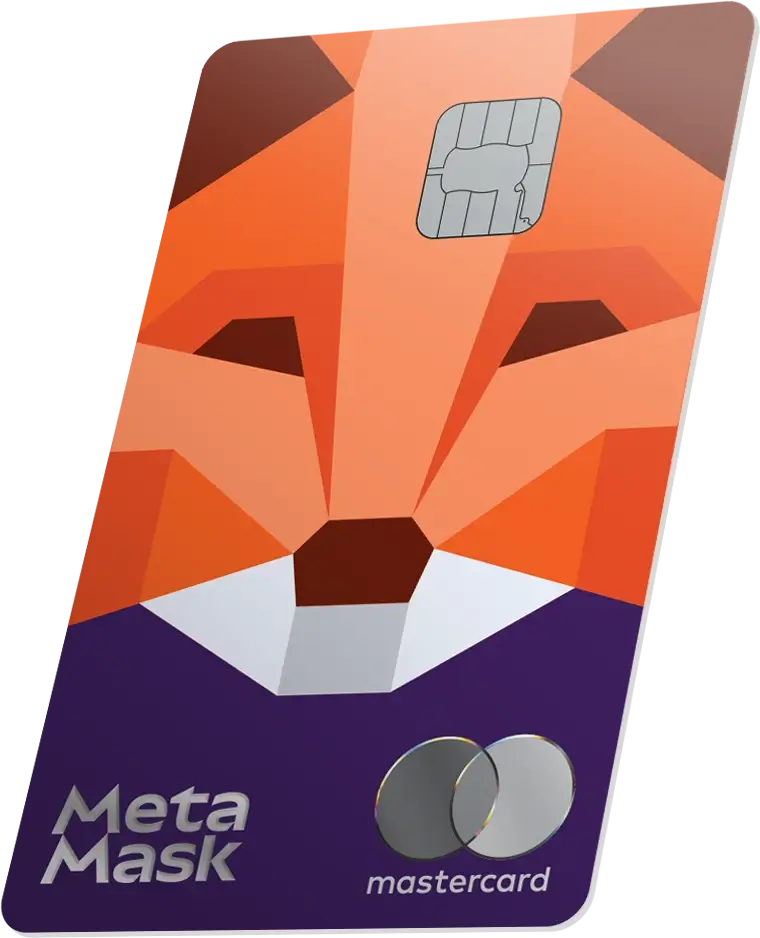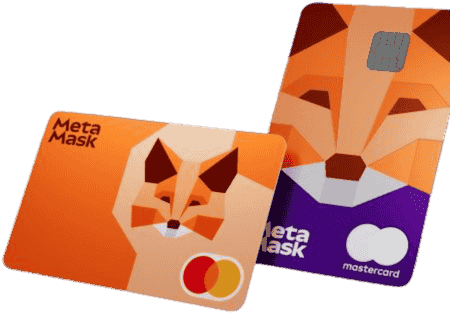

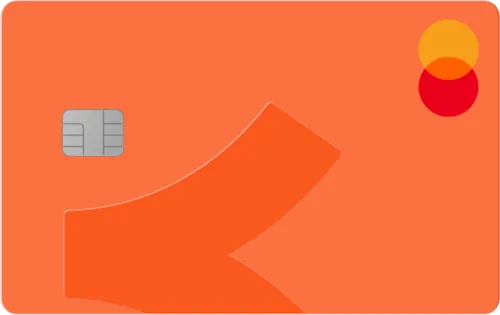
The MetaMask Card is a self-custodial Mastercard debit card program (not a credit card) built by ConsenSys in partnership with Baanx and Mastercard, offering two tiers - Virtual (free, 1% cashback, $10K/month) and Metal ($199/year, 3% on first $10K/yr then 1%, $50K/month) - with 0% FX fee, multi-chain spending from Linea, Base, and Solana wallets, 9 supported assets including Aave-wrapped tokens, Apple Pay and Google Pay. Metal is now live in the US via Cross River Bank, with international availability coming soon. MetaMask has a 4.74-star App Store rating from 73,625 reviews.
Metal Card Update (Feb 27, 2026): MetaMask Metal is now live in the US for $199/year via Cross River Bank. Cashback is 3% on the first $10,000 spent annually, then 1% above that. International availability coming soon. Virtual tier (free, 1%, 50+ countries) is unchanged.
The Most Trusted Name in Crypto Wallets, Now With a Spending Card
SpendNode's cost-per-month model covers every self-custodial crypto card on the market, and MetaMask is the most widely used self-custodial wallet in crypto, with over 30 million monthly active users. The MetaMask Card extends this trust into physical spending: connect your on-chain wallet to a Mastercard that works at 150M+ merchants, and your crypto stays in your wallet until the exact moment of purchase.
No exchange deposits. No custodial risk. No top-ups. The same wallet that holds your DeFi positions, NFTs, and tokens now also powers your spending card. This is what self-custodial spending looks like at scale - backed by ConsenSys (one of the most funded companies in crypto), Baanx (FCA-authorized UK fintech), and Mastercard (global payment network).
The headline combination that no competitor matches: 0% FX fee + self-custody + Mastercard acceptance at 150M+ merchants. ether.fi offers 3% cashback but charges 1% FX. Gnosis Pay offers 0% FX but is EEA/UK only. Ready offers self-custody but charges 1% FX on Lite. MetaMask is the only self-custodial card with truly zero foreign exchange fees.
The Ecosystem: Two Tiers
Virtual Card - Free, Instant Activation
- Annual fee: $0
- Cashback: 1%
- FX fee: 0% (Mastercard mid-market rate, no MetaMask markup)
- Monthly limit: $10,000
- Card format: Virtual only (Apple Pay, Google Pay)
- Availability: 50+ countries, instant activation
- Best for: Everyday self-custodial spending with zero fees
Metal Card - Premium, $199/Year
- Annual fee: $199/year
- Cashback: 3% on first $10,000/year, then 1%
- FX fee: 0%
- ATM fee: 2%
- Monthly limit: $50,000
- Card format: Premium physical metal card
- Availability: US live (Cross River Bank), international coming soon
- Best for: International spenders who want 0% FX + self-custody in a metal card
Technology: Multi-Chain Spending From Your Wallet
The MetaMask Card supports three blockchain networks:
- Linea - ConsenSys's own L2 with sub-penny gas fees (lowest cost)
- Base - Coinbase's L2 (broad DeFi ecosystem)
- Solana - High-throughput chain (non-EVM option)
How Spending Works
- Your tokens sit in your MetaMask wallet on Linea, Base, or Solana
- You tap Apple Pay or your physical card at a merchant
- A smart contract converts the exact amount needed to fiat
- Mastercard settles with the merchant
- Cashback (1% or 3%) is credited to your account
- MetaMask Rewards points are earned (1 point per $1 spent)
No conversion spread from MetaMask. Per SpendNode's latest update, the settlement uses Mastercard's mid-market exchange rate with zero MetaMask markup. This is genuinely 0% FX - not "0% from us but the network charges you" like some competitors.
9 Supported Assets
| Asset | Type | Networks |
|---|---|---|
| USDC | Stablecoin | Linea, Base, Solana |
| USDT | Stablecoin | Linea, Base |
| wETH | Wrapped ETH | Linea, Base |
| EURe | EUR stablecoin | Linea, Base |
| GBPe | GBP stablecoin | Linea, Base |
| mUSD | MetaMask USD | Linea |
| amUSD | Aave-wrapped USD | Linea |
| aUSDC | Aave USDC | Linea |
| aBasUSDC | Aave Base USDC | Base |
The Aave-wrapped token support is unique: you can spend yield-bearing positions (amUSD, aUSDC, aBasUSDC) directly without unwrapping first. Your tokens continue earning Aave yield until the moment they are spent.
Fee Structure
| Fee | Virtual | Metal |
|---|---|---|
| Annual fee | $0 | $199/year |
| Cashback | 1% | 3% (first $10K/yr, then 1%) |
| FX fee | 0% | 0% |
| ATM fee | N/A (virtual) | 2% |
| Conversion spread | 0% | 0% |
| Monthly limit | $10,000 | $50,000 |
Annual Returns
Metal earns 3% on the first $10,000 spent annually, then 1% on all spending above that threshold.
| Monthly Spend | Annual Spend | Virtual (1%) | Metal (3% on $10K, then 1%) | Metal Net (after $199 fee) |
|---|---|---|---|---|
| $1,000 | $12,000 | +$120/yr | $320 | +$121/yr |
| $2,000 | $24,000 | +$240/yr | $440 | +$241/yr |
| $3,000 | $36,000 | +$360/yr | $560 | +$361/yr |
| $5,000 | $60,000 | +$600/yr | $800 | +$601/yr |
With 0% FX, the returns are identical whether spending domestically or internationally. The $10K cap means Metal's blended rate converges toward 1% as spending increases - at $5K/month, the effective rate is 1.33%.
Rewards: Cashback + MetaMask Points
Both tiers earn two parallel reward streams:
- Cashback: 1% (Virtual) or 3% on first $10K/yr then 1% (Metal) on every purchase
- MetaMask Rewards: 1 point per $1 spent, unlocking fee discounts and future reward allocations within the MetaMask ecosystem
The points system is separate from cashback - you earn both on every transaction.
Trust, Security, and Regulation
- ConsenSys: Parent company of MetaMask, one of the most funded and trusted Ethereum infrastructure companies
- Baanx: FCA-authorized UK fintech handling card issuance and compliance
- Mastercard: Global acceptance at 150M+ merchants with zero fraud liability
- Self-custodial: Your funds remain in your wallet until spend. No exchange custody risk
- KYC required: Identity verification through Baanx per banking regulations
- Operating history: MetaMask wallet has operated since 2016 (10 years) with no major security breaches
The tripartite partnership (ConsenSys + Baanx + Mastercard) provides regulatory backing and longevity that smaller crypto card startups cannot match. ConsenSys alone has raised over $700M in funding.
Availability
- 50+ countries including US, Canada, UK, EU, and Latin America (Argentina, Brazil, Chile, Colombia, Mexico, Panama, Uruguay)
- Apple Pay and Google Pay on both tiers
- Virtual card: Instant issuance
- Physical card: Metal ($199/yr, US available, intl coming soon)
- KYC via Baanx (FCA-authorized)
MetaMask vs Competitors
| Feature | MetaMask Virtual | ether.fi Core | Ready Lite | Gnosis Pay | KAST Pengu |
|---|---|---|---|---|---|
| Annual fee | $0 | $0 | $0 | $0 | $0 |
| Cashback | 1% | 3% | 0.5% | Up to 4% | 6% |
| FX fee | 0% | 1% | 1% | 0% | TBD |
| Custody | Self-custodial | Self-custodial | Self-custodial | Self-custodial | Custodial |
| Chains | 3 (Linea/Base/Sol) | Ethereum | Starknet | Gnosis Chain | N/A |
| Assets | 9 | USDC/eETH | USDC | EURe | USDC/USDT |
| Network | Mastercard | Visa | Mastercard | Visa | Visa |
| Regions | 50+ countries | US/UK/EEA | EEA/UK | EEA/UK | 170+ countries |
After testing every self-custody alternative:
MetaMask vs ether.fi: ether.fi offers 3x the cashback (3% vs 1%) but charges 1% FX. On 100% international spending, MetaMask Virtual nets +1% while ether.fi Core nets +2%. On domestic spending, ether.fi's 3% beats MetaMask's 1%. For international-heavy spenders, the gap narrows significantly.
MetaMask vs KAST Pengu: KAST offers 6x the cashback (6% vs 1%) but is custodial. MetaMask wins on self-custody, multi-chain support (3 chains vs none), and platform trust (73K+ reviews vs 10). KAST wins decisively on raw rewards.
MetaMask vs Gnosis Pay: Both offer self-custody and 0% FX. Gnosis Pay's cashback (up to 4% with GNO staking) can exceed MetaMask's 1%. But MetaMask supports 3 chains vs 1, 50+ countries vs EEA/UK, and has vastly more user validation.
Our Take
Use MetaMask Card if:
- You want self-custodial spending with 0% FX fees (unique combination)
- You already use MetaMask as your primary wallet
- You hold assets on Linea, Base, or Solana and want to spend directly
- You value platform trust and track record (10 years operating, 30M+ users)
- You want Aave-wrapped token spending (yield-bearing positions)
- Start with the free Virtual Card; upgrade to Metal ($199/yr) in the US for 3% on the first $10K
Look elsewhere if:
- You want maximum cashback: KAST Pengu (6% free), ether.fi Core (3% free)
- You want to borrow against staked ETH: ether.fi (spend without selling)
- You want EEA self-custody with higher cashback: Ready Metal (3%, 0% FX, $120/year)
- You need 170+ country access: KAST or RedotPay
Sources and Verification
All card specs, fees, and tiers verified from:
Frequently Asked Questions
Is the MetaMask Card self-custodial?
Yes. Your funds remain in your personal wallet until the exact moment of purchase. You do not deposit funds into a centralized exchange wallet.
Which networks does the MetaMask Card support?
Spending routes through Linea, Base, or Solana depending on asset and region.
Can I use the card with Apple Pay or Google Pay?
Yes, both the Virtual and Metal cards can be added to Apple Pay and Google Pay immediately after issuance.
What is the difference between Virtual and Metal?
Virtual offers 1% cashback with instant activation and $0 annual fee. Metal offers 3% cashback on the first $10,000/year (then 1%) with a premium physical card for $199/year. Metal is available in the US; international availability coming soon.
Is the MetaMask Card a credit card?
No. The MetaMask Card is a self-custodial Mastercard debit card, not a credit card. You spend directly from your MetaMask wallet - there is no credit line, no APR, and no credit check. For crypto-backed credit card options, see our reviews of Gemini, ether.fi, Nexo, and Avici.
App Store (73.8K ratings)
Source: Apple App Store - Updated Invalid Date