

Best Crypto Cards in Panama (2026)
Compare 30+ crypto cards available in Panama. Zero income tax on foreign-source income, USD as legal tender. Top picks: Kolo (5% BTC, free), Tria Signature (4.5%, self-custody), Crypto.com Icy (4%, lounges at PTY).
Verified for Panama
34 crypto cards available
Local currency: USD
Panama is LATAM's premier financial hub and, alongside Ecuador, one of only two fully dollarized economies in Latin America. The Panamanian Balboa is pegged 1:1 to the USD and circulates alongside US dollars as legal tender - meaning every crypto card transaction settles in USD with zero currency conversion.
Combined with a territorial tax system (zero tax on foreign-source income), an International Banking Center hosting 70+ banks, and a business-friendly legal framework, Panama offers what may be the most favorable crypto card environment in the Americas.
Banco General (largest by assets), Banistmo (HSBC-descended, now Bancolombia-owned), BAC International (BAC Credomatic), and Global Bank debit cards earn zero cashback and charge 1-3% FX markup on non-USD international purchases. Since Panama uses USD natively, domestic purchases carry no FX fee on any card - the crypto card advantage here is pure cashback on spending where traditional Panamanian bank cards offer none.
| Card | Max Cashback | Annual Fee | FX Fee | Card Type | Best For |
|---|---|---|---|---|---|
| Kolo | 5% BTC | $0 | 0% | Prepaid | Tax-free BTC stacking on USD spending |
| Tria Signature | 4.5% | $109 | 0% | Debit | Self-custody yield on daily spending |
| Crypto.com Icy | 4% | CRO stake | 0% | Prepaid | Airport lounge perks at PTY + rebates |
| ether.fi | 3% | $0 | 1% | Debit | Borrow-to-spend, preserve ETH |
| MetaMask | 3% | $199 | 0% | Debit | Self-custody Mastercard |
| KAST | 2% | $0 | 0.5% | Prepaid | Free card for direct USD spending |
| xPlace | 0.5-2% | $0 | 1% | Debit | Solana ecosystem |
| Avici | 0% | $0 | 0% | Credit | Crypto-backed credit |
| RedotPay | 0% | $0 | 1.2% | Prepaid | Stablecoin spending |
| Jupiter | 4-10% JupUSD | $0 | 1% | Debit | DeFi-native spending |
Panama's card access is among the strongest in LATAM. Kolo leads the free-tier cards at 5% BTC cashback with $0 annual fee and 0% FX - in a dollarized, zero-tax economy every cent of that 5% is pure profit. Tria Signature at 4.5% yield-linked rewards with self-custody and 0% FX appeals to users who prefer stablecoin returns over BTC volatility.
Crypto.com Icy at 4% with 0% FX adds Priority Pass lounge access at Tocumen International Airport (PTY), Copa Airlines' hub connecting the Americas. KAST at 2% with $0 annual fee is the simplest entry for stablecoin spending in a USD economy.
Best Card For Every Need in Panama
Top 5 Crypto Cards in Panama
Panama's "triple zero" - zero tax on foreign-source crypto gains, zero FX conversion in a fully dollarized economy, and zero annual fee on the best cards - means every cent of cashback is pure profit with no optimization required. Kolo at 5% BTC cashback with $0 annual fee and 0% FX delivers the highest free-tier return in this environment, and the BTC rewards compound tax-free since both receipt and later appreciation are foreign-source.
Tria Signature at 4.5% with self-custody gives users who prefer stablecoin yield over BTC exposure a zero-FX alternative. Crypto.com Icy at 4% earns its spot for Priority Pass lounge access at Tocumen (PTY), where Copa Airlines hub users pass through 10+ times per year. ether.fi Core at 3% preserves on-chain ETH positions for DeFi-active users, and KAST at 2% is the zero-commitment starter card for direct stablecoin spending.
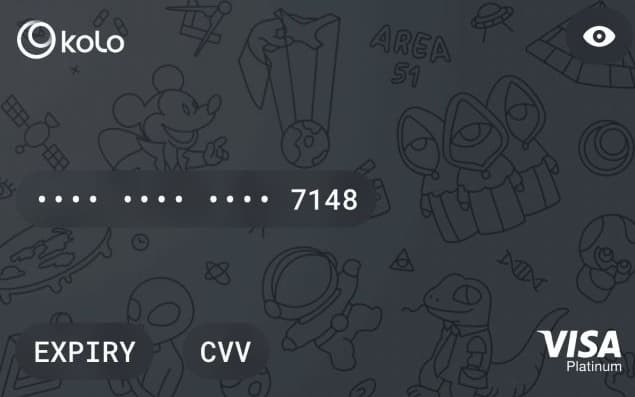
1. Kolo Card
Earn Bitcoin on Every Purchase: 5% BTC Cashback + Visa Platinum + 170+ Countries
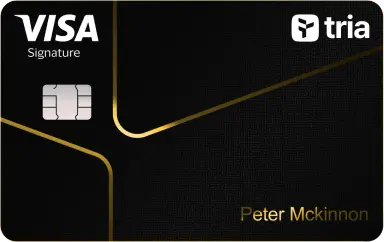
2. Tria Signature Card
High-Yield Mastery: 15% APY + Visa Signature Perks
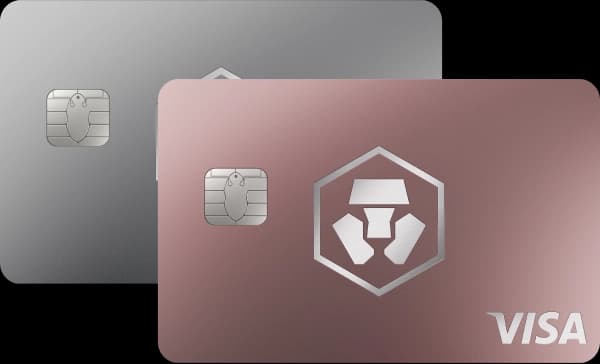
3. Private (Icy White / Rose Gold)
Elite Private Status: 4% Uncapped Cashback + Guests

4. ether.fi Core Card
Zero Barriers: 3% Back on Every Purchase, No Stake Required
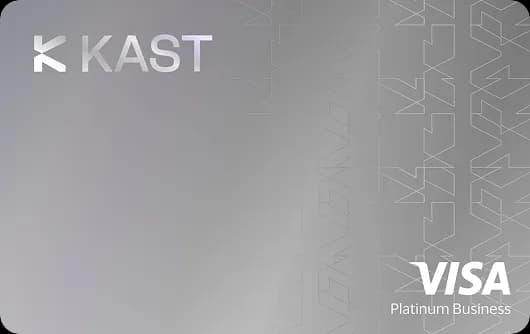
5. KAST K Card
Early Adopter Access: 2% Points + 4% $MOVE on Every Swipe
Crypto Card Regulation in Panama
Panama does not have comprehensive crypto-specific legislation, though it has come closer than most LATAM countries. The SBP (Superintendencia de Bancos de Panama) regulates the banking sector including the International Banking Center's 70+ licensed banks. The SMV (Superintendencia del Mercado de Valores) oversees securities markets. Neither has issued comprehensive crypto frameworks, though both have published guidance on digital asset risks.
In April 2022, Panama's National Assembly passed Bill 697 (Ley de Criptoactivos) with broad bipartisan support. The bill would have: (1) established a VASP licensing framework under the SMV, (2) allowed Bitcoin and other cryptocurrencies as payment for civil and commercial obligations, (3) created a regulatory sandbox for crypto innovation, and (4) permitted crypto for tax payments to the DGI (Direccion General de Ingresos).
President Laurentino Cortizo partially vetoed the bill in June 2022, citing AML/CFT concerns and FATF compliance risks. In July 2023, Panama's Supreme Court declared the entire Bill 697 unconstitutional, siding with the executive's objections and effectively ending the first attempt at comprehensive crypto legislation.
Bill 247, introduced in 2025, represents a more targeted attempt to regulate digital assets. It directly addresses Bill 697's constitutional shortcomings and incorporates lessons from MiCA in Europe and other LATAM frameworks. Bill 247 focuses on VASP licensing and consumer protection without the controversial payment-for-tax and civil-obligation provisions that triggered the original veto. Legislative progress has been slow, with committee hearings ongoing.
Panama's FATF history adds context. The country was on the FATF "grey list" (increased monitoring) from June 2019 until October 2023, when it was finally removed after enacting Law 129/2020 (beneficial ownership registry) and strengthening the UAF's enforcement capacity. Any crypto legislation must now be crafted to avoid re-triggering FATF scrutiny, which partly explains the cautious approach to revised Bill 697.
The UAF (Unidad de Analisis Financiero) applies AML/CFT obligations under Law 23/2015 and its 2020 amendments, covering suspicious financial transactions including crypto-related activities. The International Banking Center's banks operate under strict SBP oversight but do not offer crypto services directly. Some fintech companies (Towerbank Digital, Nequi Panama) are exploring digital asset integration under existing banking licenses.
Panama's regulatory stance is permissive by default. Individual crypto ownership, trading, and card spending are legal and unrestricted. The Supreme Court's rejection of Bill 697 and the slow progress of Bill 247 mean formal regulation remains distant, but neither limits existing activity. The October 2023 FATF grey list removal has stabilized Panama's international financial standing.
Tax Treatment of Card Rewards in Panama
Panama uses a territorial tax system. Income from foreign sources is not taxed. Since most crypto trading occurs on global platforms, crypto gains are generally classified as foreign-source income and are tax-free for Panamanian residents.
Domestic-source income is taxed at progressive rates: 0% on the first $11,000, 15% on $11,000-50,000, and 25% above $50,000. Only crypto services provided to Panamanian clients or crypto businesses operated within Panama may generate domestic-source taxable income.
Example: You bought BTC on a global exchange at $30,000 and spent it through your card in Panama when BTC was at $90,000. The $60,000 gain is from a foreign source (global exchange). Under the territorial system, tax = $0.
| Cashback Type | When Received | When Spent via Card | Total Tax Burden |
|---|---|---|---|
| BTC cashback (foreign source) | 0% | 0% (foreign) | 0% |
| BTC cashback (domestic source) | Up to 25% | Up to 25% | Varies |
| USDC cashback (foreign source) | 0% | approx. 0% | 0% |
Example 2: You earn $500/month in BTC cashback from your card. The BTC was earned from a global card issuer (foreign source). Tax = $0. You later sell the BTC when it has doubled. The gain occurred on a foreign-held asset. Tax = $0. Compared to Chile (up to 40% on both events) or Peru (8-30%), the Panama difference on $6,000/year in cashback is $2,400-$4,800 in tax savings.
Example 3: You operate a consulting business serving Panamanian clients from Panama City. Income = domestic source, taxed at 15-25%. You invest crypto profits on Binance (global). Trading gains = foreign source, tax = $0. Card spending of those gains = $0 tax.
The critical distinction is where the income/gain is sourced, not where you are physically located. All major crypto exchanges (Binance, Bybit, Crypto.com) are foreign entities, making gains on these platforms foreign-source by default.
For most crypto card users, Panama offers zero tax on crypto gains. The territorial system eliminates any need for stablecoin-only strategies. Spend BTC, ETH, or any token - the tax treatment is the same: $0 on foreign-source gains. This is Panama's single greatest structural advantage over every other LATAM market.
How to Apply from Panama
Panamanian crypto card applications require a cedula de identidad personal (Panamanian national ID card, issued by the Tribunal Electoral) or pasaporte for citizens. Foreign residents need a passport plus permiso de residencia or carnet de residente from the Servicio Nacional de Migracion.
Proof of address via factura de servicios publicos (utility bill from Naturgy/Gas Natural for gas, ENSA for electricity, IDAAN for water), estado de cuenta bancario (bank statement from Banco General, Banistmo, Global Bank), or contrato de alquiler (rental agreement).
Physical cards ship to Panamanian addresses within 14-21 business days. Virtual cards are available immediately for Apple Pay and Google Pay use. The USD economy means no currency conversion on card loads or spending.
Spending Tips for Panama
The Triple Zero: Tax + FX + Fees
Panama's combination of zero tax (territorial system, foreign-source exemption), zero FX (dollarized economy, USD = USD), and zero annual fee options (Kolo, KAST) creates the cleanest crypto card value proposition in the Americas. Every dollar of cashback is pure profit. No tax optimization needed, no FX calculation, no annual fee amortization.
At Kolo 5% BTC cashback with $0 annual fee and 0% FX: spend $2,000/month and earn $100/month in BTC, $1,200/year, entirely tax-free. No staking required, no tiers to manage. Tria Signature at 4.5% with self-custody adds stablecoin yield for users who prefer predictable returns over BTC price exposure, breaking even on the $109 annual fee at just $202/month in spending.
Banking System: International Hub, Domestic Limitations
Panama's International Banking Center (Centro Bancario Internacional) hosts 70+ licensed banks including global names (Citibank, HSBC, Banco General). But retail banking products are conservative.
Banco General (largest by assets, most branches) charges zero FX on domestic USD spending (since everything is USD) but offers zero cashback on debit cards. Credit cards exist (Visa/Mastercard from most banks) with annual fees of $30-100 and minimal rewards (0.5-1%). Banistmo (now Bancolombia-owned) and BAC International offer similar terms. Global Bank targets the business community.
The gap: Panamanian banks offer zero cashback on debit and minimal on credit. Crypto cards fill this gap with 2-5% cashback at zero annual fee. This is a pure upgrade, not a trade-off.
Card Selection by Use Case
- Highest free-tier: Kolo (5% BTC crypto cards with cashback, $0, 0% FX)
- Self-custody yield: Tria Signature (4.5%, $109/yr, 0% FX, self-custody)
- Premium perks: Crypto.com Icy (4% + airport lounge perks at PTY)
- Position preservation: ether.fi Core (3%, $0, borrow-to-spend)
- No-cost starter: KAST (2%, $0, 0.5% FX)
- Crypto-backed credit: Avici (no disposal, Visa credit)
- Self-custody Mastercard: MetaMask Metal (3% capped at $10K/yr, $199)
Break-Even Math: Kolo vs Tria Signature vs Crypto.com Icy
Zero tax. Zero FX on Kolo, Tria, and Icy. All figures in USD at 1:1 parity.
| Monthly Spend | Kolo (5% BTC, free) | Tria Sig (4.5%, $109/yr) | Icy (4%, CRO stake) | KAST (2%, free) |
|---|---|---|---|---|
| $800 | $480/yr | $323/yr | $384/yr + lounges | $192/yr |
| $1,500 | $900/yr | $701/yr | $720/yr + lounges | $360/yr |
| $2,500 | $1,500/yr | $1,241/yr | $1,200/yr + lounges | $600/yr |
| $4,000 | $2,400/yr | $2,051/yr | $1,920/yr + lounges | $960/yr |
Kolo leads on raw cashback at every spending level, but rewards arrive in BTC (price-volatile). Tria Signature breaks even on its $109 fee at $202/month and suits users who prefer stablecoin yield over BTC exposure. Crypto.com Icy is the pick for frequent travelers through PTY - Tocumen is Copa Airlines' hub, and Priority Pass lounge access at $25-50/visit saves $250-500/year on 10+ annual transits.
Cost of Living by Area
Punta Pacifica/Costa del Este (Panama City luxury): Rent $1,500-4,000/month. Multiplaza Pacific, PH Ocean Park, and the Cinta Costera restaurant strip have universal card acceptance. International banking community, law firm executives, and expats.
El Cangrejo/Bella Vista (Panama City upper-middle): Rent $800-1,800/month. Via Espana commercial corridor, El Carmen restaurants. Strong card acceptance at formal establishments. Growing cafe and restaurant scene.
Casco Viejo/Calidonia (historic center): Rent $600-1,500/month (Casco Viejo tourist premium). UNESCO-area restaurants and boutique hotels accept cards. Street vendors and local fondas in Calidonia are cash-only.
Panama Oeste/Coronado (beach communities): Rent $600-1,500/month. Coronado's Towncenters, El Valle de Anton. Growing expat retirement community with good card acceptance at commercial centers. Weekend destination from the city.
Boquete (highland retirement): Rent $500-1,200/month. Highland town attracting North American retirees (similar to Cuenca, Ecuador). Good card acceptance at restaurants and coffee shops. The coffee capital of Panama (Geisha coffee, the world's most expensive).
Colon/Free Zone (Atlantic coast): Rent $400-900/month. Colon Free Zone (Zona Libre de Colon) is the world's second-largest free trade zone after Hong Kong. Business-to-business commerce dominates. Downtown Colon has limited card acceptance outside the Free Zone.
The Colon Free Zone Economy
The Zona Libre de Colon (ZLC) is the Western Hemisphere's largest and the world's second-largest free trade zone after Hong Kong. Over 2,500 companies import and re-export goods worth USD 10B+ annually, primarily electronics, textiles, pharmaceuticals, and luxury goods to Caribbean and Central American markets. ZLC businesses transact overwhelmingly in USD, and the zone's import/export economy generates significant international payment volume.
For business professionals working within or supplying the ZLC, crypto cards provide cashback on the high-volume B2B-adjacent spending (travel, accommodation, client entertainment) that traditional Panamanian bank cards offer zero rewards on.
A Kolo card at 5% BTC cashback on $3,000/month in business-related spending generates $1,800/year in tax-free BTC rewards. Tria Signature at 4.5% on the same spend returns $1,511/year after the $109 fee, in stablecoin yield rather than BTC.
The Hub Airport Advantage
Tocumen International Airport (PTY) is Copa Airlines' hub and the major connection point between North and South America. Over 18M passengers/year.
Crypto.com Icy at 4% cashback includes Priority Pass covering Copa Club and other lounges at PTY, plus Netflix, Spotify, and Amazon Prime rebates. For Panama-based business travelers connecting through PTY frequently (to Bogota, Lima, Mexico City, Miami, Sao Paulo), lounge access saves $25-50 per visit - 10+ trips/year returns $250-500 in lounge value alone.
The Expat and Residency Economy
Panama's Friendly Nations Visa (Visa de Paises Amigables) fast-tracks residency for citizens of 50+ countries (including the US, UK, most of the EU, Australia, Japan, South Korea, and Israel), requiring only a $5,000 bank deposit at a local bank or proof of employment. Processing takes 3-6 months through the Servicio Nacional de Migracion.
The Pensionado Visa (Jubilado/Pensionado) offers retirees with $1,000+/month in pension income discounts of 25-50% on flights, restaurants, entertainment, medical care, and utility bills - one of the most generous retiree incentive programs in the world.
These programs have attracted 100,000+ foreign residents, with concentrations from the US (Florida retirees, NY finance professionals), Colombia (business migration), Venezuela (political migration), and Europe. For expats receiving income in USD from abroad (territorial tax = zero tax on foreign-source income), crypto cards add 2-5% cashback on spending they are already doing in a dollarized economy.
A US retiree on a $3,000/month pension spending $2,500/month on a Kolo card at 5% BTC cashback earns $1,500/year in tax-free BTC rewards. The same retiree using a US bank debit card would earn $0 in cashback and potentially pay 1-3% foreign transaction fees despite Panama being USD-denominated (many US banks still charge FTFs on non-US merchant-coded transactions).
Cross-Border and Online Spending
Colombia (Copa Airlines hub connection, strong business corridor): Direct flights PTY-BOG/MDE, 90 minutes. Copa operates 6+ daily frequencies to Bogota alone. Costa Rica (direct flights PTY-SJO, also overland bus via Paso Canoas border): Growing tourism and retirement migration link. US/Miami: The classic connection, 10+ daily flights on Copa, American, and others. Miami is 3 hours from PTY. Mexico (CDMX/Cancun): Business and leisure, Copa hub connections.
Online Shopping in a Dollarized Economy
Online shopping is naturally USD-denominated in Panama, which eliminates the primary crypto card advantage (FX savings) for domestic e-commerce. Amazon US delivers to Panama directly or via Miami forwarding services (Mailboxes Etc, AirBox Express, PuntoMio), Netflix ($7-23/month), Spotify, Disney+, and all digital services charge at face value.
The crypto card advantage for online shopping is pure cashback: 2-5% on purchases where Banco General and Banistmo debit cards offer zero. At $200/month in subscriptions and online purchases, a KAST card at 2% returns $48/year, while Kolo at 5% returns $120/year in BTC - all tax-free under the territorial system.
Local Payment Infrastructure
Card acceptance is excellent in Panama City. Contactless Visa/Mastercard works at malls (Multiplaza, Albrook Mall, MetroMall, AltaPlaza), supermarkets (Super 99, Riba Smith, El Rey, PriceSmart), pharmacies (Farmacias Arrocha, Super Farmacia), gas stations, and restaurants.
Yappy (Banco General's mobile payment platform) dominates domestic P2P transfers. Nequi Panama (Bancolombia/Banistmo-launched) is expanding. Cash remains common at mercados (Mercado de Mariscos, Mercado de Abastos), diablos rojos (informal buses), and smaller shops outside the city. Apple Pay and Google Pay work at major retailers.
Supported Exchanges & Wallets in Panama
Ten card vendors serve Panama through LATAM and GLOBAL coverage. The zero-tax, zero-FX combination means every cashback dollar is pure profit.
Kolo delivers the highest free-tier return in Panama: 5% BTC cashback with $0 annual fee and 0% FX. In a dollarized economy with zero tax on foreign-source gains, the 5% is clean profit with no FX drag or tax erosion. The $5/transaction and $200/month cashback caps are generous enough for most consumer spending.
Tria Signature at 4.5% yield-linked rewards offers self-custody and stablecoin-based returns for users who prefer predictable value over BTC volatility, with 0% FX and $109/year fully recovered at $202/month in spending.
Crypto.com offers the best premium perks for Panama-based travelers. The Icy White at 4% includes Priority Pass airport lounge access at Tocumen (PTY) plus Spotify, Netflix, and Amazon Prime rebates.
KAST is the straightforward free card for stablecoin spending: 2% rewards, $0 annual fee, 0.5% FX. ether.fi Core at 3% with 1% FX preserves on-chain positions for users who want liquidity without selling - less about tax deferral in zero-tax Panama, more about maintaining ETH exposure.
For self-custody spending, MetaMask Metal (3% capped at $10K/yr spend, then 1%, $199/yr) and MetaMask Virtual (1%, free) serve wallet-based users. Bitget Wallet Card adds DCS wallet access under LATAM coverage. xPlace and Jupiter serve the Solana community.
On-Ramps: Banking Hub Advantage
Panama's International Banking Center creates unique on-ramp possibilities. While SBP-regulated banks do not offer crypto services directly, the density of international banks makes wire transfers to global exchanges relatively frictionless.
Binance P2P operates with USD pairs - a major advantage over PEN, CLP, or COP-denominated P2P in other LATAM markets. Spreads on USD/USDT pairs are typically under 1%, tighter than any other LATAM corridor. Payment methods include Banco General bank transfer, Banistmo transfer, Nequi, and Yappy.
Bitcoin ATMs operate in Panama City (Multiplaza area, Casco Viejo, Obarrio), though fees run 5-8% above spot. For larger amounts, OTC desks operate in Panama City's financial district (Obarrio/Punta Pacifica), serving the expat and business community. The overall on-ramp ecosystem benefits from Panama's permissive stance - banks do not systematically block transfers to crypto exchanges the way some Colombian or Argentine banks do.
A retiree in Boquete spending $2,000/month on Kolo at 5% BTC cashback accumulates $1,200/year in tax-free BTC - more than the average Banco General savings account pays in interest on a $50,000 deposit. For a ZLC importer spending $4,000/month, Tria Signature returns $2,051/year in stablecoin yield after fees. Panama's triple-zero structure (zero tax, zero FX, zero annual fee on the best cards) makes crypto cards a straightforward upgrade over every traditional Panamanian banking product.
Written by SpendNode Editorial
Frequently Asked Questions
Is crypto spending tax-free in Panama?
Yes, for most users. Panama's territorial tax system means foreign-source income is not taxed. Since crypto gains from global exchanges are foreign-source, they're tax-free. Only domestic-source crypto income (serving Panamanian clients from within Panama) is taxed at 15-25%.
Which crypto card is best for Panama?
Kolo (5% BTC cashback, $0 annual fee, 0% FX) is the strongest free option in a dollarized economy where every cent of cashback is tax-free profit. Tria Signature (4.5%, $109/yr, 0% FX) offers self-custody stablecoin yield. Crypto.com Icy (4%, CRO stake) adds Priority Pass lounge access at Tocumen (PTY).
Does Panama use the US dollar?
Yes. The US dollar is legal tender alongside the Balboa (pegged 1:1). Crypto cards settling in USD have zero FX conversion costs. This eliminates the 1-3% FX markup common in other LATAM countries.
Is crypto regulated in Panama?
Panama lacks comprehensive crypto legislation. Bill 697 (2022) was partially vetoed and later declared unconstitutional by the Supreme Court in July 2023. Bill 247, introduced in 2025, is a more targeted replacement focused on VASP licensing. The environment remains permissive - crypto is legal and widely used.
Other Countries
View all 108 countries →


Recent Updates to Best Crypto Cards in Panama
- Removed COCA (unavailable in Panama) from table, recommendations, scenarios, break-even math, and exchanges section
- Removed Ledger CL (unavailable in Panama) from card selection
- Added Kolo (5% BTC, $0, 0% FX), Tria Signature (4.5%, $109, 0% FX), and Crypto.com Icy (4%, lounges) as new top picks
- Added Supreme Court July 2023 ruling declaring Bill 697 unconstitutional and Bill 247 (2025) as replacement legislation
- Fixed KAST FX from 0.5-1.75% to 0.5%, ether.fi FX from 0% to 1%, Jupiter FX from 0% to 1%, Crypto.com generic 5% to Icy 4%